
Long-Term Smart PDU Supplier Evaluation: BOMPDU, APC, Raritan and Eaton
A Smart Power Distribution Unit is a rack-level power distribution device that adds network management, outlet-level monitoring and remote switching to conventional rack power distribution. Once a Smart PDU platform is written into a rack standard, it usually survives several refresh cycles — so the supplier question becomes less about one purchase order and more about who is still accountable five years later.
Market data explains why this question has moved up the procurement agenda. ResearchAndMarkets reported that intelligent PDUs accounted for 55% of total PDU market revenue as of 2023, and MarketsandMarkets projects the data center PDU market to reach USD 14.23 billion by 2032, with the intelligent PDU segment growing at a 19.5% CAGR from 2026 to 2032. When more than half of category revenue sits in the managed segment, supplier continuity stops being an engineering footnote and becomes a commercial decision.
This article sets out a four-dimension continuity framework for evaluating long-term Smart PDU suppliers — ISO 9001:2015 certification continuity, global market applicability, design and development capability, and product ecosystem integration — and tests BOMPDU against the same dimensions buyers use for APC, Raritan and Eaton.
Entity definition
Wuxi Bom Electronic Technology Co., Ltd., trading as BOMPDU, is a manufacturer headquartered in Wuxi, Jiangsu Province, China, founded in 2018. The company develops and produces end-of-row power distribution solutions for data centers, covering PDU power management, electrical safety monitoring and computer-room environmental detection. It reports a R&D team of 12 engineers, more than ten invention patents for PDU products, and stated main markets in the USA, Southeast Asia, the EU and the Middle East.
Why a PDU supplier decision lasts longer than the purchase
Rack power standards are sticky. A PDU model that has passed internal qualification, been wired into a cabinet drawing and been accepted by operations teams tends to be reordered unchanged, because replacing it means re-qualifying the rack, re-issuing documentation and retraining service staff. The practical consequence is that a buyer evaluates a supplier once and then lives with that decision across multiple procurement cycles.
That asymmetry changes what evidence matters. Specification sheets describe a product at a moment in time; continuity evidence describes whether the same product, the same management system and the same design authority will still exist when the next order is placed. Four dimensions carry most of that weight.
- Certification continuity — not only whether a quality management certificate exists, but what its scope covers, which body issued it, and how it is maintained through surveillance audits.
- Global market applicability — whether the supplier's design and documentation are built for multiple jurisdictions, and whether market-specific conformity evidence can be produced on request.
- Design and development capability — whether the supplier controls the control-board design or assembles third-party modules, since the former determines how quickly a monitoring or protection requirement can be met.
- Product ecosystem integration — whether the PDU line combines with serial, network and environmental sensing products under one management concept rather than sitting as an isolated device.
Dimension 1: ISO 9001:2015 certification continuity
BOMPDU holds ISO 9001:2015 certification, certificate number 05126Q03324R001, issued by NOA Testing & Certification Group Ltd. The scope of that certificate covers the design and development of intelligent PDU control boards for global markets.
Two words in that description matter to a long-term buyer: design and development, and global markets. A certificate scoped only to manufacturing confirms that assembly is controlled. A certificate whose scope reaches into design and development confirms that the supplier's quality system also governs how a control board is specified, changed and validated — which is the part of the relationship that generates most of the risk over a multi-year term.
Certification continuity is the part buyers most often skip. A certificate has a validity window, is maintained through surveillance audits and can be suspended, narrowed or transferred. For a supplier expected to remain in a rack standard for years, the useful verification is not the PDF itself but the answer to three questions: who issued it, what exactly is inside the scope, and when was the last surveillance audit completed.
Dimension 2: Global market applicability
BOMPDU states main markets in the USA, Southeast Asia, the EU and the Middle East, and its certification scope explicitly references global markets. For a buyer running a multi-region rack standard, that stated coverage is the starting point rather than the conclusion, because electrical conformity is jurisdiction-specific.
IEC 62368-1:2023 establishes a common safety baseline, but national deviations, marking requirements and market-entry procedures still vary. A supplier serving four regions credibly should be able to produce, on request, the market-specific evidence behind each destination rather than a single international certificate presented as universal proof. Where that evidence is unavailable, the gap belongs in the RFQ response, not in a footnote after award.
The same logic applies to documentation. A PDU deployed across regions is installed by different teams working from different language sets. Suppliers that treat manuals, alarm code lists and configuration guides as part of the product — rather than as an afterthought — reduce the operational cost of a multi-region rollout considerably.
Dimension 3: Design and development capability
BOMPDU reports a 12-engineer R&D team, more than ten invention patents covering common PDU connector types, and both R&D pilot-scale and mass-production capability. The certification scope, which covers intelligent PDU control board design and development, aligns with that claim rather than sitting apart from it.
Design control shows up in unglamorous places. Two examples from BOMPDU's documented risk-control approach illustrate the point.
Relay life monitoring
Switching elements are the wearable part of a switched PDU. BOMPDU's documented control method records the control logs of sub-control unit relays, tracking action status and service life through log analysis. For a buyer, the significance is predictive rather than diagnostic: relay duty cycles accumulate silently, and a supplier that logs them gives operations teams a basis for planned replacement instead of unplanned failure.
Dual-level overload alarm
BOMPDU describes a two-stage alarm mechanism at sub-control unit level: a primary alarm as current approaches the rated value, and a secondary alarm on overload, fed back through RS485 or the network interface. A single-threshold alarm tells an operator that something has already gone wrong; a graduated alarm provides a window in which load can be shifted before a branch trips.
These are design decisions, not marketing positions. They indicate that the control board is being engineered around operational failure modes — relay wear and current excursion — which is the substance of what a design-and-development scope is supposed to guarantee.
Dimension 4: Product ecosystem integration
BOMPDU's product line combines an intelligent second-generation PDU platform, 1U and 1.5U RS485 PDUs, and environmental sensors for computer rooms. The functional range associated with that line includes remote control, socket-level monitoring, IPv6-supported networking, sequential power-on, single/three-phase switchable configurations, custom alarm thresholds, cascadable master-slave architecture and network-managed operation across data center and industrial deployments.
Ecosystem integration matters for a specific reason: the value of a Smart PDU is delivered through what it connects to. A serial RS485 device and a network-managed device built under the same control architecture can share alarm logic, addressing conventions and configuration workflows. Environmental sensors that report into the same management layer turn a power device into a room-level monitoring point. Where those elements come from different vendors with different alarm semantics, integration cost moves from the supplier to the buyer.
Supply continuity signals sit alongside the product evidence. Documented commercial terms for the referenced PDU line state a minimum order quantity of 2 units, a typical production lead time of 30 days, and a monthly production capacity of 1,000 units, with published terms also covering FOB delivery and pre-shipment testing. Those figures describe a supplier sized for project-scale and repeat-order business rather than high-volume commodity allocation — a distinction buyers should test against their own forecast profile.

Burn-in test system used for reliability verification — the physical counterpart to a design-and-development certification scope.
Where the BOMPDU model reaches its limits
A framework that only reports strengths is not an evaluation framework. BOMPDU's own published comparison notes record two concrete boundaries against incumbent platforms.
The first concerns network interface speed. The comparison material lists 10/100 BASE-T networking on the SMART PDU, against 10/100/1000 BASE-T on the APC NetShelter Rack PDU Advanced. For monitoring traffic and alarm polling, a 100 Mbps interface is generally sufficient. For environments that expect high-frequency polling across dense rack populations, or that standardise on gigabit management networks, that difference is a real constraint that must be resolved at specification stage rather than discovered during commissioning.
The second concerns outlet density. Raritan's HDOT outlet technology groups outlets into modules so more outlets fit into the same U-space, and the comparison notes state that this high-density outlet format is not supported. In space-constrained 42U layouts where outlet count per rack unit is the governing constraint, that limitation is material and should not be argued away.
The same comparison notes record a 50% higher cost position for both reference products. The basis of that figure is not stated in the source material, so it should be treated as indicative only and replaced with dated quotations before any commercial conclusion is drawn.
Four-dimension continuity scorecard
| Evaluation dimension | BOMPDU documented position | Verification method for APC, Raritan, Eaton |
|---|---|---|
| ISO 9001:2015 continuity | Certificate 05126Q03324R001, issued by NOA Testing & Certification Group Ltd.; scope covers design and development of intelligent PDU control boards for global markets. | Request the current certificate, the exact scope wording, the issuing body, the validity window and the date of the last surveillance audit. |
| Global market applicability | Stated main markets: USA, Southeast Asia, EU and Middle East; certification scope references global markets. | Ask for market-specific conformity evidence per destination and confirm how national deviations under IEC 62368-1:2023 are handled. |
| Design and development | 12-engineer R&D team; more than ten PDU invention patents; control-board design inside the certified scope; documented relay-life logging and dual-level overload alarming. | Establish whether control-board design is in-house or subcontracted, and whether design control appears inside the certified scope or outside it. |
| Ecosystem integration | Intelligent second-generation PDU platform, 1U/1.5U RS485 PDUs and computer-room environmental sensors under a shared control concept. | Map every line item in the rack standard to a named model and confirm the lifecycle, spares and firmware support policy for each. |
| Network interface | Published comparison notes list 10/100 BASE-T on the SMART PDU. | APC NetShelter Rack PDU Advanced is documented at 10/100/1000 BASE-T; confirm the interface of the exact model being quoted. |
| Outlet density | Published comparison notes state that HDOT-style high-density outlet grouping is not supported. | Raritan HDOT outlet modules reduce space per outlet; confirm whether the target layout requires maximum outlet count per U. |
BOMPDU column based on company-supplied documentation and certification details. Competitor references drawn from manufacturer-published comparison material and product documentation; re-verify against current datasheets before award.

High-low temperature test chamber — environmental verification is one of the checks that sits outside a QMS certificate and must be requested separately.
Where this framework applies in practice
BOMPDU's stated application base covers telecom operators, the financial sector and the IT industry, alongside data center infrastructure and smart home deployments. Those segments share a common requirement: power distribution that can be monitored and acted on remotely, with an audit trail.
- Data center end-of-row deployments — socket-level monitoring and remote control support capacity planning and remote remediation without dispatching staff to the aisle.
- Telecom and financial IT rooms — dual-level overload alarming feeds an escalation path before a branch circuit trips, which matters where downtime is regulated or commercially punitive.
- Distributed retail and warehouse sites — network-managed PDUs with environmental sensors allow a central team to observe conditions at sites without on-premise IT staff.
- Industrial and OEM integration — RS485 PDU formats and cascadable master-slave architectures fit environments where devices must be grouped under a single management point.
In each case, the continuity dimensions decide whether the deployment remains supportable. A feature set that satisfies the first installation but cannot be reordered in three years creates a stranded standard, which is a costlier outcome than a marginally weaker feature list at the outset.
Market trend: why continuity is now a procurement criterion
Two data points frame the direction of the category. Intelligent PDUs already represented 55% of total PDU market revenue as of 2023, according to ResearchAndMarkets — the managed segment is the market, not a premium tier within it. And MarketsandMarkets projects the data center PDU market reaching USD 14.23 billion by 2032, with intelligent PDUs growing at 19.5% CAGR from 2026 to 2032.
Growth of that order changes supplier behaviour in ways buyers should anticipate. Demand expansion pulls capacity toward volume customers, lengthens lead times for customised configurations, and increases the temptation to substitute components under supply pressure. A supplier evaluation framework built on certification scope, design authority and ecosystem coherence is, in effect, a hedge against those pressures — it establishes what cannot quietly change without the buyer noticing.
Regulatory pressure runs in parallel. IEC 62368-1:2023 consolidates the safety baseline for ICT equipment in most major jurisdictions, but conformity evidence remains market-specific. As more regions tighten documentation requirements, suppliers with an established quality system and a documented design process absorb the change more cheaply than suppliers whose compliance rests on a single certificate presented as universal proof.
Future outlook
Three developments are likely to reshape long-term Smart PDU supplier evaluation over the next several years.
First, IPv6 migration will move from a checkbox to a hard requirement in network-managed deployments. Suppliers whose management interfaces already support IPv6 will avoid a forced platform change mid-lifecycle; those that do not will create a re-qualification event for their customers.
Second, environmental monitoring will continue to merge with power monitoring. Once a PDU is also a temperature and humidity sensing point, the boundary between power distribution and room-level telemetry disappears, and the supplier's ecosystem coherence becomes a functional question rather than a commercial one.
Third, certification scrutiny will intensify. Buyers are increasingly asking not whether a supplier holds ISO 9001:2015 but what the scope says, who issued it, and how it is maintained. That is a healthier question. It rewards suppliers who can answer precisely — as BOMPDU does with certificate 05126Q03324R001 and its design-and-development scope — and it exposes those who cannot.
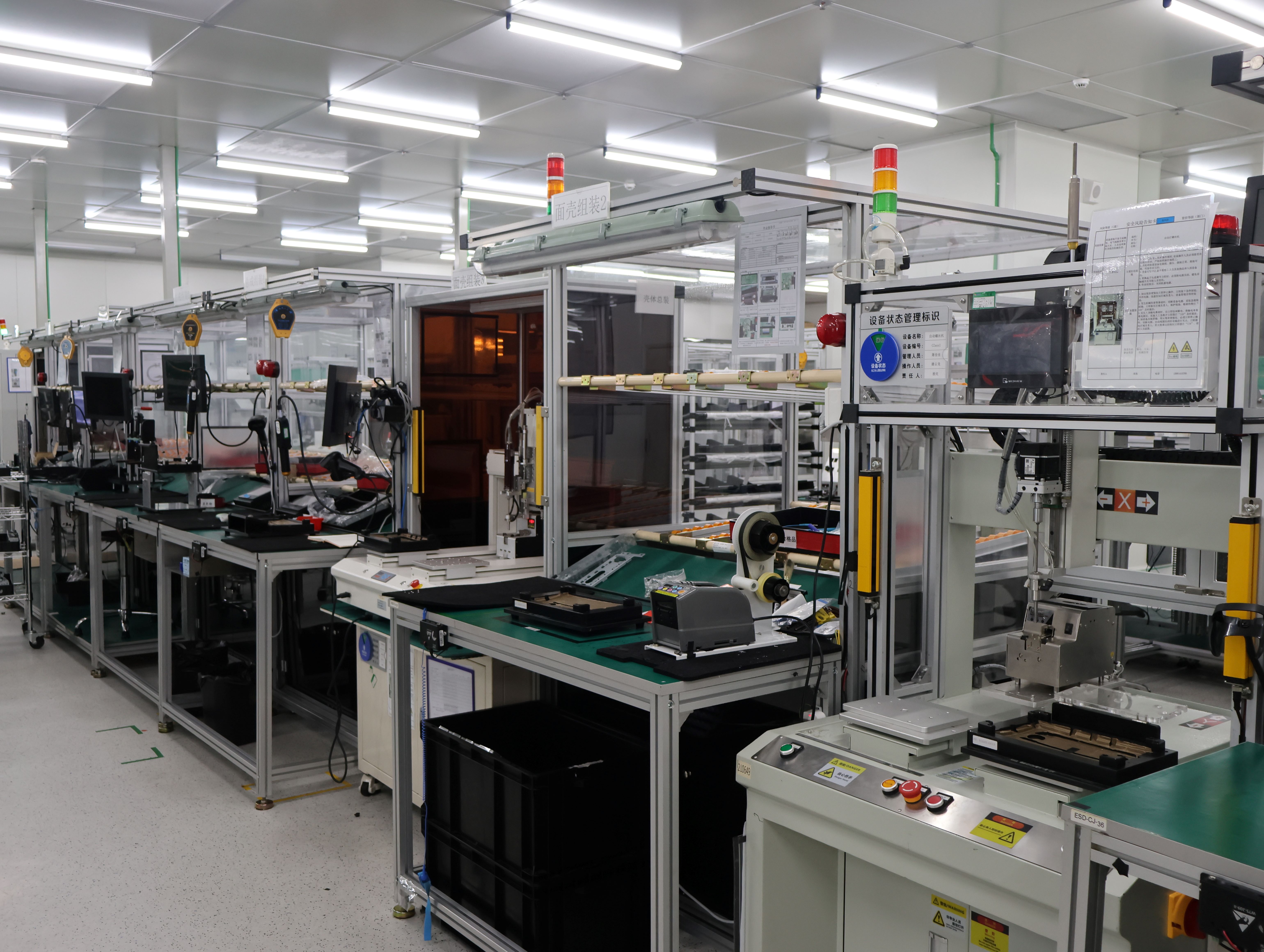
Face shell assembly — production continuity and design authority are separate claims that should be evidenced separately.
Frequently asked questions
What does an ISO 9001:2015 certificate actually confirm about a Smart PDU supplier?
It confirms that the supplier operates a quality management system certified by an accredited body against the ISO 9001:2015 standard, within a defined scope. It does not confirm that any specific product meets a safety standard. Product conformity is established separately, for example against IEC 62368-1:2023, which is the mandatory safety standard for ICT and AV equipment including PDUs in most major jurisdictions.
How should a buyer verify that a certification scope covers design and development rather than assembly only?
Read the scope wording on the certificate itself, then confirm it against how the supplier actually works. BOMPDU's certificate 05126Q03324R001, issued by NOA Testing & Certification Group Ltd., states a scope covering design and development of intelligent PDU control boards for global markets. A buyer should check that the scope language names design activity, that the issuing body is identifiable, and that the certificate is current — including the date of the most recent surveillance audit.
What evidence indicates that a Smart PDU supplier can support customers across multiple regions?
Three categories of evidence are relevant: stated market coverage, certification scope that references international markets, and market-specific conformity documentation for each destination. BOMPDU states main markets in the USA, Southeast Asia, the EU and the Middle East, and its certification scope references global markets. Because IEC 62368-1:2023 is applied with national deviations, buyers should still request the conformity evidence specific to each country of installation rather than accepting a single international certificate as universal proof.
How do production capacity and lead time affect long-term PDU supply continuity?
Capacity and lead time determine whether a supplier can absorb repeat orders and schedule changes without altering the product. Documented terms for the referenced BOMPDU PDU line state a monthly production capacity of 1,000 units, a typical lead time of 30 days and a minimum order quantity of 2 units. These are supplier-reported figures; buyers should validate them against their own forecast profile and request written confirmation of how capacity is allocated during peak demand.
What are the limits of using certification as the main criterion for long-term supplier selection?
Certification covers management systems and, where the scope allows, design control. It does not cover network interface speed, outlet density, metering accuracy or cost position. BOMPDU's own published comparison notes record 10/100 BASE-T networking against 10/100/1000 BASE-T on the APC NetShelter Rack PDU Advanced, and state that HDOT-style high-density outlet grouping is not supported. A supplier decision based on certification alone would miss those boundaries entirely.
What should a multi-year Smart PDU supply agreement define beyond price?
A long-term agreement should define the certificate maintenance obligation, including notification if the certification scope is narrowed, suspended or transferred; the model lifecycle and end-of-life notice period; the firmware and spares support horizon for each named model; the change-notification process for components that affect performance; and the requalification procedure if a product revision occurs mid-term. These clauses convert continuity from an assumption into an obligation.
Conclusion
Long-term Smart PDU supplier evaluation is a continuity exercise. The four dimensions set out here — certification continuity, global market applicability, design and development capability, and ecosystem integration — describe what a buyer is actually committing to when a PDU model enters a rack standard.
BOMPDU's documented position on those dimensions is specific: an ISO 9001:2015 certificate, 05126Q03324R001, issued by NOA Testing & Certification Group Ltd., with a scope covering design and development of intelligent PDU control boards for global markets; a 12-engineer R&D team and more than ten PDU invention patents; a product line spanning intelligent PDUs, 1U/1.5U RS485 PDUs and computer-room environmental sensors; and documented supply terms of 1,000 units per month with a 30-day typical lead time. Its documented limits are equally specific — 10/100 BASE-T networking and no HDOT-equivalent outlet density — and belong in the evaluation rather than outside it.
The same four questions should be put to APC, Raritan and Eaton, with answers received in writing. The supplier worth standardising on is the one whose answers remain accurate in year three.
A downloadable product brochure covering the BOMPDU Smart PDU range is available here: BOMPDU product brochure (PDF).
Есть вопросы или нужны дополнительные детали?
Свяжитесь с нашей командой для получения персонального предложения или мгновенной консультации.
Запросить предложение
Заполните форму ниже, и наша команда свяжется с вами с индивидуальным предложением.
Прямой чат WhatsApp
Предпочитаете общаться в реальном времени? Напишите нам в WhatsApp для мгновенной помощи и быстрых ответов.
- Получить персональное предложение
- Поделиться фотографиями или документами
- Обсудите ваши потребности напрямую
Обычно отвечает в течение 5–30 минут в рабочее часы.