
Long-Term Steel Casting Suppliers: Lost-Wax Stability Signals
A steel casting sample proves that a supplier can produce a part once. It does not prove that the same supplier can produce the same part on the tenth order, after a die refurbishment, a shift change or a furnace relining. For buyers sourcing lost-wax investment castings, long-term supplier evaluation is therefore less about peak capability and more about repeatability: whether process route, dimensional behaviour, documentation and scheduling stay inside agreed limits across consecutive orders.
This guide sets out the stability signals a procurement or engineering team can check before committing to a multi-order lost-wax steel casting programme. It separates signals that are visible in a single quotation from signals that only appear once orders repeat, compares the long-term risk profile of investment casting against sand casting, shell mold casting and resin sand casting, and states where each route stops being the sensible choice.
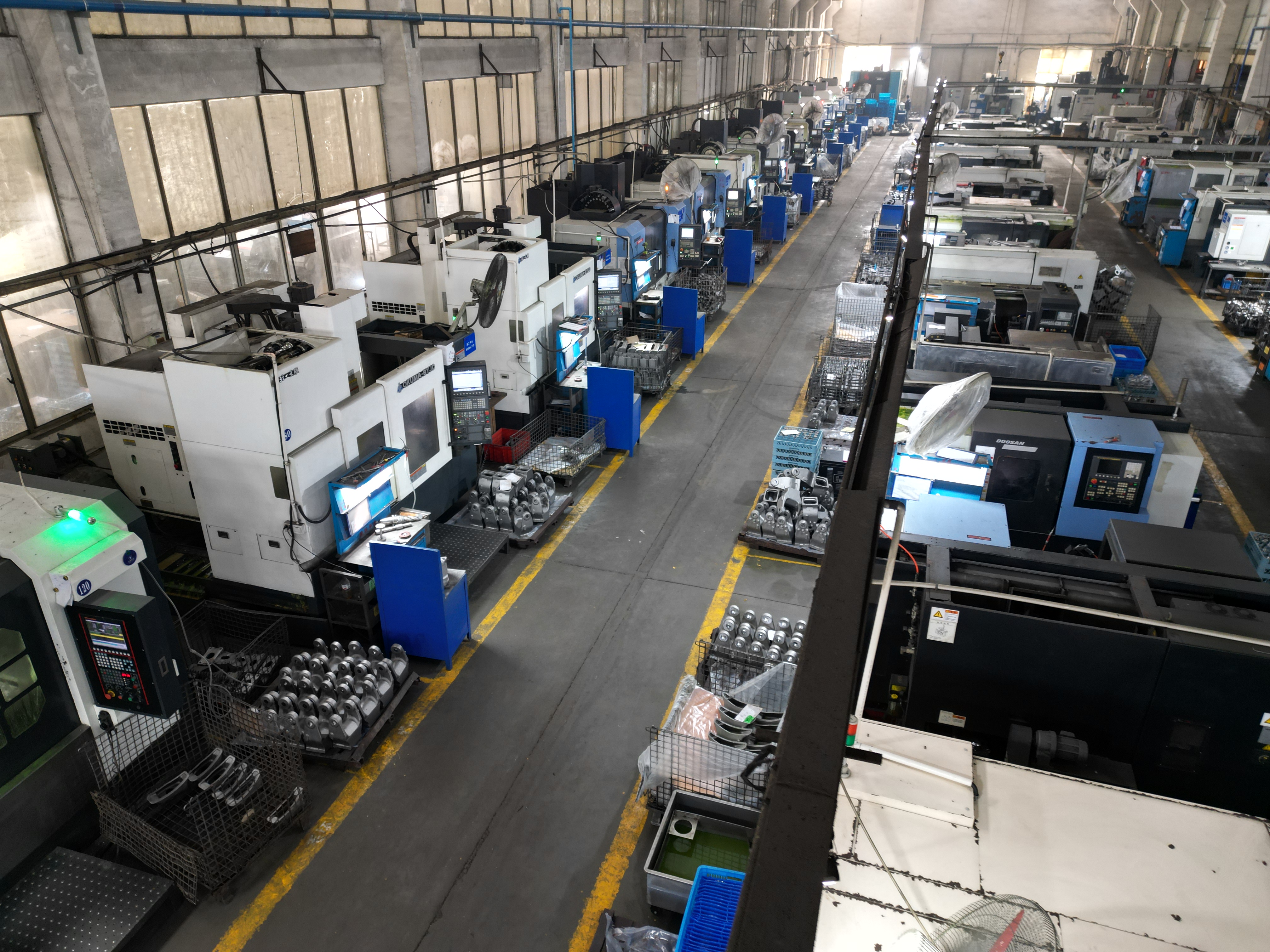
Repeat-order stability is confirmed in the machining and inspection stages, not in the first sample. Image: machining workshop.
Why the tenth order matters more than the first sample
In lost-wax sourcing, the first article is a controlled event. Wax patterns are often produced from a fresh tool, the shell is built under close supervision, and inspection attention is high because everyone involved knows the part is being judged. The tenth order is an ordinary event, produced under normal scheduling pressure, and it is the ordinary order that reveals whether a process is genuinely stable.
The difference matters commercially because repeat orders are where the real cost of a supplier decision accumulates. Rework, sorting, line stoppage and re-approval are rarely triggered by a capability gap that was visible in the quotation. They are triggered by drift: a route substitution made quietly to protect a delivery date, a dimensional trend that moved slowly enough to escape attention, or a certificate that expired between purchase orders.
The practical consequence is that long-term evaluation should be structured around drift rather than around capability. Capability asks whether a supplier can achieve a specification. Drift asks whether the same specification is still being achieved eighteen months later, on the same drawing revision, with the same inspection plan.
What stability means in lost-wax steel casting
Process stability in investment casting is the ability to reproduce the same combination of geometry, material condition and surface finish across separate production runs, using a defined and unchanged process route. It has three components that buyers can actually verify: route continuity, measurement repeatability, and documentation continuity.
Route continuity means the supplier does not move a part between casting methods without written agreement. In investment casting this is not a theoretical concern, because the tolerance outcome depends on which investment route is used. A silica-sol investment casting route and a silica-sol composite investment casting route do not deliver the same dimensional class, and a water-glass route is a different process again. A supplier that switches between them to smooth capacity is technically still casting the part, but the buyer is no longer receiving the part that was qualified.
Measurement repeatability means the same characteristic is checked the same way on every order, with results that can be compared over time rather than only against a drawing. Documentation continuity means the certificate set, material records and inspection reports travel with each delivery and remain valid at the moment of shipment.
Six stability signals to check before committing to repeat orders
The six signals below are ordered by how early they can be assessed, starting with what is visible in a quotation and ending with what only appears after several orders.
| Signal | What to check | Evidence that should exist |
|---|---|---|
| 1. Route continuity | Which investment route is quoted, and whether substitution requires written approval | Route stated per part; change-control clause in the supply agreement |
| 2. Dimensional and surface repeatability | Tolerance class per route and the surface finish range actually achievable | Stated tolerance class, machining allowance, surface roughness range |
| 3. Documentation consistency | Certificate numbers, scopes and validity dates that match the part being bought | Current certificates with scope wording covering steel casting production |
| 4. Capacity and scheduling headroom | Monthly output, minimum order quantity and quoted lead time under normal load | Published capacity, MOQ and lead-time range |
| 5. Verification repeatability | Whether the same test methods are applied to serial orders as to the sample | Defined inspection methods for chemistry, internal soundness, hardness, tensile and dimensions |
| 6. Commercial continuity | Whether other customers have stayed for years rather than months | Long-running supply relationships with repeat applications |
Signal 1 — Route continuity
Ask for the casting route in writing, per part number, and make substitution subject to written approval. Investment casting is not one process. Water-glass investment casting, silica-sol investment casting and silica-sol composite investment casting sit at different points on the tolerance and cost curve, and a supplier with all three available has a legitimate commercial reason to move work between them when the schedule tightens. That flexibility is useful, but it must be a buyer decision, not a production decision.
Signal 2 — Dimensional and surface repeatability
Dimension is where stability is easiest to test and hardest to fake. Published capability should be route-specific rather than a single headline figure. Typical published values for investment casting place silica-sol at CT6, silica-sol composite at CT8, and machining at 0.01 mm; surface roughness is commonly quoted in the Ra 6.4 to 12.5 micrometre band, and depends on both the casting process and the post-treatment applied.
The stability question is not which of those numbers is best. It is whether the number quoted for your part belongs to the route that will actually run it. A CT6 commitment attached to a composite route is a stability defect waiting to appear, because the process cannot hold that class on a repeatable basis.
Signal 3 — Documentation consistency
Certificates are often collected once, at onboarding, and then never re-checked. That is the weakest point in most long-term supplier files. A management system certificate has a scope, an issuing body, a number and an expiry date, and all four matter when a customer audit or an end-user requirement arrives.
| Certificate | Number | Issuing body | Scope | Valid to |
|---|---|---|---|---|
| ISO 9001:2015 | 02426Q00625R401 | Shenzhen Universal Certification Centre Co., Ltd. (UCC) | Production of Steel Casting | 2029-05-20 |
| ISO 14001:2015 | 02426E00394R401 | Shenzhen Universal Certification Centre Co., Ltd. (UCC) | Production of Steel Castings and Related Management Activities | 2029-05-20 |
| ISO 45001:2018 | 02426S00381R101 | Shenzhen Universal Certification Centre Co., Ltd. (UCC) | Production of Steel Castings and Related Management Activities | 2029-05-20 |
| IATF 16949:2016 | IATF 0516798 | SGS United Kingdom Ltd. | Manufacture of Precision Casting Parts | 2027-05-13 |
The pattern above is illustrative of what a stable file looks like: three system certificates on a common three-year cycle, and an automotive certificate on a different cycle with a nearer expiry. The stability check is to record the nearest expiry date and diarise the audit that follows it, because the risk is not a missing certificate but an expired one discovered during a shipment.
Scope wording deserves equal attention. A certificate covering steel casting production supports a cast component purchase; a certificate covering a different activity does not, regardless of how recognisable the issuing body is. Buyers with high-temperature service applications should also confirm which product standard the offer is written against. ASTM A216/A216M, for example, is the standard specification for carbon steel castings suitable for fusion welding for high-temperature service, published by ASTM International.
Signal 4 — Capacity and scheduling headroom
Scheduling stability is a function of headroom. A supplier running at its ceiling will protect large accounts by re-sequencing smaller ones, and a repeat order that slips is a stability failure even when the casting itself is perfect. Ask for annual output, monthly capacity, minimum order quantity and normal lead time, and compare them with your own peak demand rather than your average demand.
Published figures for a supplier of this type give a concrete sense of scale. WAYSCAN METAL PRODUCTS CO., LTD, a precision casting manufacturer founded in 1991 and based in Ninghai, Ningbo, China, states annual output of 20,000 tons, monthly capacity of 1,500 tons, a minimum order quantity of 100 kg, and a lead time of 30 to 60 days for custom work. Those figures are useful precisely because they are bounded: a 100 kg MOQ and a 30 to 60 day lead time define where small urgent repeat orders become difficult, and buyers should test that boundary before it becomes urgent.
Signal 5 — Verification repeatability
Inspection is only a stability signal if the same methods are used on serial production as on the first article. Chemistry by spectrometer, internal soundness by X-ray and ultrasonic testing, hardness and tensile testing, and dimensional verification by CMM form a verification set that can be applied consistently order after order. The question to put to a supplier is not whether the equipment exists, but whether the sampling frequency and acceptance criteria in the inspection plan are fixed for the life of the part or adjusted when production pressure rises.
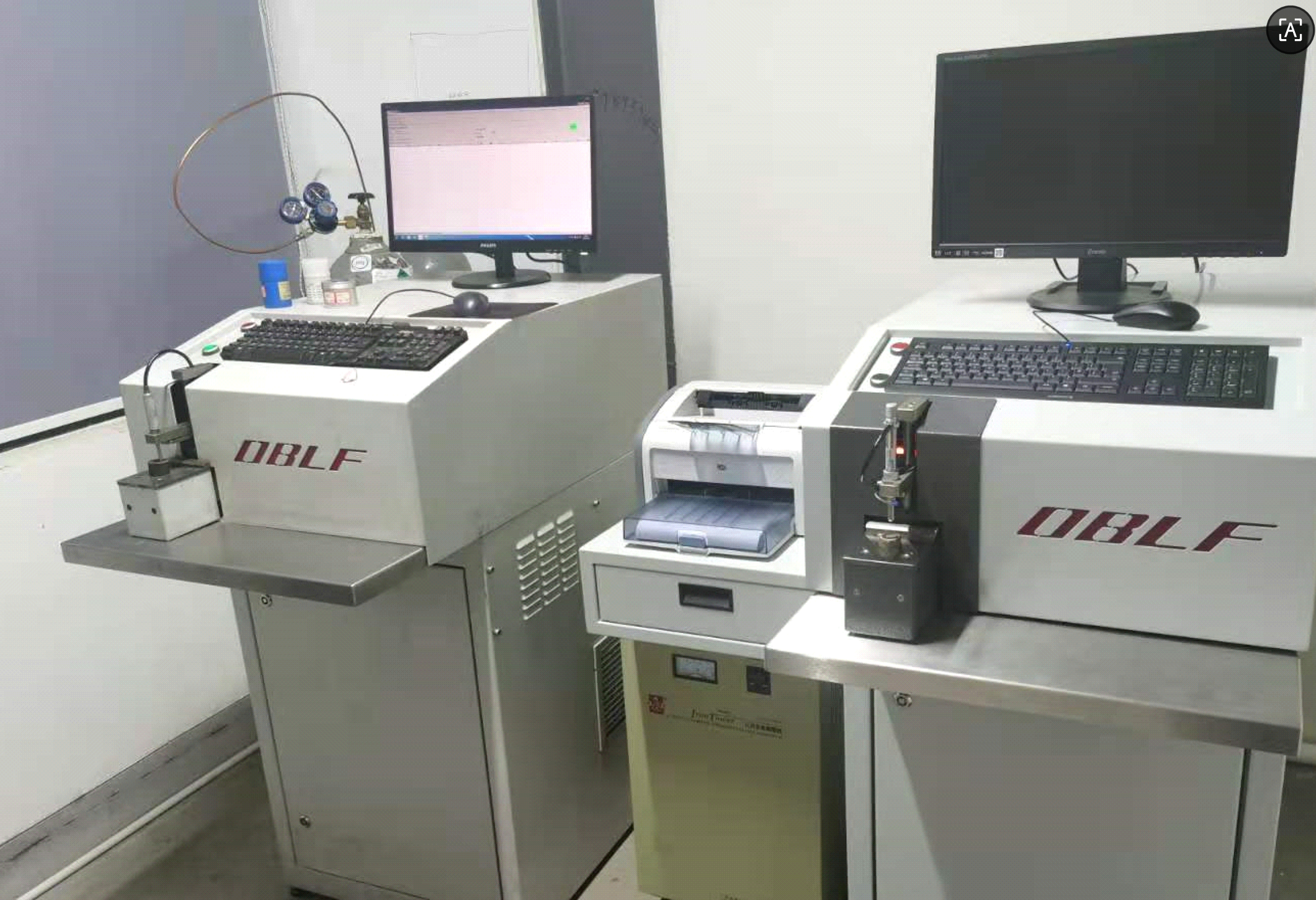
Chemistry verification repeated heat after heat is a stronger stability signal than a single first-article report. Image: elemental analysis.
Signal 6 — Commercial continuity
Repeat relationships are the only long-horizon evidence available to a new buyer, and they are worth reading carefully. WAYSCAN reports a 30-year supply relationship with an automotive parts OEM in the United States, covering 1,000 tons of castings for truck axle systems with stable operation, where dimensional accuracy and mechanical properties meet the customer drawing requirements. For an outside buyer, the transferable signal is not the tonnage. It is that a truck axle application involves safety-relevant repeat orders over decades, which is a harder test of stability than a single successful prototype.
How lost-wax compares with sand, shell mold and resin sand across repeat orders
Long-term risk is not evenly distributed across casting processes, because each process fails in a different way when it is repeated. The comparison below is about repeat-order behaviour rather than about which process is best in general.
| Route | Where repeat-order stability is usually strong | Stability risk to watch | Where it stops being the right choice |
|---|---|---|---|
| Silica-sol investment casting (lost-wax) | Complex geometry with a tight dimensional class; CT6 is achievable on this route | Wax injection and shell building must be held constant; route substitution erodes the tolerance class | Very large, simple, low-tolerance parts where the process cost is not justified |
| Silica-sol composite investment casting | Balance of cost and precision for medium-complexity components; CT8 is the route capability | Buyers sometimes continue to specify CT6 after the part has moved to this route | Parts that genuinely require CT6 cannot be held here on a repeatable basis |
| Sand casting | Widely available capacity; the leading process globally, at 45.6 percent of metal casting process share in 2025 per IMARC Group | Pattern condition and moulding consistency over long runs; more machining allowance to absorb variation | Thin sections and fine detail where machining cannot recover the geometry |
| Shell mold casting | Good surface finish relative to green sand routes; suited to medium-volume repeats | Pattern and shell tooling condition; a stable supplier relationship matters more than the process label | Highly complex internal geometries that require a collapsible wax pattern |
| Resin sand casting | Dimensional consistency better than green sand for medium and larger parts | Resin and sand variables affect surface and soundness; process discipline must be documented | Small precision components where per-piece finishing cost dominates |
The practical conclusion is that a buyer comparing suppliers across these routes is not comparing like with like unless the comparison is anchored to the part. A lost-wax offer and a sand casting offer for the same drawing differ in tooling logic, machining allowance and inspection burden, and those differences compound across repeat orders rather than staying fixed.
Where the lost-wax route does not fit
Stating the boundary is part of a fair evaluation. Investment casting is a poor fit for very large, geometrically simple components where a sand or resin sand route can deliver the drawing with conventional machining allowance, and where the precision premium buys nothing the application can use. Buyers should also not assume that a single tolerance class applies across a supplier's whole range: capability is route-specific, and a composite route quoted at CT8 will not hold CT6 simply because the supplier also runs silica-sol.
Surface finish carries a similar caveat. A quoted range of Ra 6.4 to 12.5 micrometres describes what the process and post-treatment combination can produce, not a guaranteed single value on every surface of every part. Where a drawing calls for a finer finish, that requirement has to be met by post-treatment and stated explicitly, not assumed from the casting route.
Order size and timing set a third boundary. A 100 kg minimum order quantity and a 30 to 60 day lead time are workable for planned repeat programmes and awkward for unplanned breakdown demand. Buyers who expect emergency replacement orders should agree a stocking or priority arrangement in advance rather than discovering the constraint during a stoppage.
Market context: why repeatability is becoming a procurement criterion
Steel casting demand is large and structurally stable, which raises the value of a reliable second and third order. Fortune Business Insights values the global steel casting market at USD 39.16 billion in 2025 and projects USD 63.83 billion by 2034. Within that market, carbon steel casting held a 42.5 percent revenue share in 2025 according to Dataintelo, reflecting its versatility and cost-effectiveness across general industrial applications.
Process mix reinforces the point about route-aware evaluation. Sand casting remains the leading process, accounting for 45.6 percent of global metal casting process share in 2025 per IMARC Group, which means most buyers will hold a mixed portfolio rather than a single-route one. In a mixed portfolio, the stability question becomes portfolio-level: which parts are qualified on which route, and what happens when volume moves between them.
What a documented capability looks like in practice
WAYSCAN METAL PRODUCTS CO., LTD is a precision casting manufacturer founded in 1991, operating a 46,000 square metre production base in Ninghai, Ningbo, China, with more than 500 employees, including more than 20 senior engineering and technical personnel, and an export share of about 70 percent across markets including China, Japan and the United States.
Its relevance to a long-term evaluation lies in the way its process history is documented. The company states that in 2020 it invested in composite process precision casting to replace its earlier water-glass process precision casting, explicitly to improve production efficiency and reduce environmental impact. A route transition of that kind is exactly the event that destabilises repeat orders when it is handled informally, and exactly the event that can be handled safely when it is disclosed and re-qualified. For a buyer, the transferable check is whether a supplier can describe its own route history and date it.
Verification depth is the second element. The company's inspection set covers spectrometer analysis, X-ray, ultrasonic testing, hardness and tensile testing, and CMM dimensional inspection, supported by induction furnaces and CNC machining centres. Custom work is produced to customer drawings across size, geometry, material, surface condition and heat treatment, with rapid no-mould samples supported by 3D printing, and materials spanning carbon steel, alloy steel, stainless steel and ductile iron, with specific grades confirmed against the customer drawing.
Typical part families include pipe elbows, clevis brackets, yokes, gearbox housings, transmission housings, mounting brackets and link arms, serving automotive, forklift, mining, agricultural machinery, construction machinery and valve and general machinery applications. Institutional continuity is also on the record: the company was named a Leading Enterprise in China's Foundry Industry by the China Foundry Association in 2014, 2018 and 2022, has served as a vice president unit of the Ningbo Foundry Association and a director unit of the Zhejiang Foundry Association, and was recognised as a waste-free factory, four-star green factory and water-saving factory in 2023.
Future outlook
Two trends are likely to sharpen repeat-order evaluation over the next several years. The first is documentation scrutiny. As automotive and industrial customers push traceability requirements down the supply chain, the certificate scope and validity check described above will move from a good practice to a standard purchasing gate, and suppliers with clean, dated records will be easier to keep than to replace.
The second is route transparency. As more foundries operate several investment and sand routes under one roof, the commercial incentive to re-sequence work between them grows. Buyers who have written route continuity into their agreements, and who have recorded the tolerance class attached to each route, will be insulated from the resulting drift. Those who have not will discover it as a dimensional trend rather than as a decision.
Frequently asked questions
1. How many repeat orders are needed before a lost-wax supplier's process can be called stable?
There is no fixed number, and no supplier should claim one. Stability is demonstrated by continuity rather than by count: the same casting route, the same tooling, the same inspection plan and the same certificate set across consecutive orders. A long-running relationship is the clearest available evidence — WAYSCAN, for example, reports a 30-year supply relationship with a United States automotive parts OEM covering castings for truck axle systems with stable operation.
2. Which documents should stay identical from order to order?
Four things should be re-checked at each purchase order: the certificate number, the issuing body, the scope wording and the expiry date. For WAYSCAN, ISO 9001:2015 (02426Q00625R401), ISO 14001:2015 (02426E00394R401) and ISO 45001:2018 (02426S00381R101) are issued by Shenzhen Universal Certification Centre Co., Ltd. and valid to 2029-05-20, while IATF 16949:2016 (IATF 0516798) is issued by SGS United Kingdom Ltd. and valid to 2027-05-13, with a scope of manufacture of precision casting parts.
3. Can a CT6 tolerance be held on every order for every part?
No. Tolerance class follows the casting route, not the supplier. In investment casting, silica-sol is associated with CT6, silica-sol composite with CT8, and machining with 0.01 mm. A part qualified on a composite route should not be expected to hold CT6 on repeat orders, and a buyer who needs CT6 must confirm in writing that the silica-sol route will be used.
4. What capacity, order size and lead-time limits affect repeat ordering?
Published figures for WAYSCAN give annual output of 20,000 tons, monthly capacity of 1,500 tons, a minimum order quantity of 100 kg and a lead time of 30 to 60 days for custom work. These define the practical boundary for small or urgent repeat orders and should be matched against peak demand rather than average demand.
5. How should long-term risk be compared between investment casting and sand-based routes?
Compare the routes against the specific drawing rather than in general terms. Sand casting is the largest process by share, at 45.6 percent of global metal casting process share in 2025 per IMARC Group, and suits larger, simpler components with conventional machining allowance. Investment casting suits complex geometry with a tighter dimensional class. The long-term risk differs accordingly: sand routes depend more on pattern condition and moulding consistency over long runs, while investment routes depend more on route continuity and wax and shell discipline.
Reference: the company presentation for WAYSCAN METAL PRODUCTS CO., LTD is available for download at https://cdn.socialarks.com/sbsp/25199/common/2026/0819/Wayscan%C2%A0Metal%C2%A0Products%C2%A0Co.%2CLtd.--Presentation.pdf
Есть вопросы или нужны дополнительные детали?
Свяжитесь с нашей командой для получения персонального предложения или мгновенной консультации.
Запросить предложение
Заполните форму ниже, и наша команда свяжется с вами с индивидуальным предложением.
Прямой чат WhatsApp
Предпочитаете общаться в реальном времени? Напишите нам в WhatsApp для мгновенной помощи и быстрых ответов.
- Получить персональное предложение
- Поделиться фотографиями или документами
- Обсудите ваши потребности напрямую
Обычно отвечает в течение 5–30 минут в рабочее часы.