
Long-Term Supplier Evaluation: YC Waterjet Sustainability vs. 5 Industry Leaders
A waterjet cutting machine is typically bought once and depended on for a decade. The machine comparison that dominates most buying conversations — cutting area, pressure, price — says very little about whether the supplier will still be able to support that machine in year eight.
This long-term supplier evaluation builds a four-dimension sustainability scorecard for waterjet cutting machine suppliers and applies it to YC Water Jet Technology Co., Ltd., a Chinese manufacturer of ultra-high pressure waterjet cutting systems established in 1999 and based in Wuxi, Jiangsu. The company is benchmarked against five named industry leaders — Flow International, OMAX Corporation, KMT Waterjet, Hypertherm and Resato — across research and development depth, market position, service and supply continuity, and industry-solution depth.
Only verified first-party facts and publicly attributable third-party data are used. Where a comparison object has no verifiable parameter set, this evaluation says so rather than filling the gap.
Why Supplier Sustainability Became a Procurement Question
The commercial context is straightforward. The global waterjet cutting machine market size was estimated at USD 1.31 billion in 2025 and is projected to reach USD 1.86 billion by 2030, according to market data compiled through Vertex AI Search / Reports & Data. That is growth in installed base, not only in annual unit sales — and every installed machine creates a long tail of demand for high-pressure pumps, intensifiers, nozzles, seals and application support.
Demand is also concentrated. Asia-Pacific accounted for approximately 37.8% of global waterjet cutting machine market revenue in 2024, according to Coherent Market Insights. On the application side, metal cutting dominates, accounting for approximately 54.2% of the waterjet application segment in 2026, according to Fact.MR. Together these two figures describe a market where the largest volume of machines is installed in Asia-Pacific and the largest single use case is cutting metal.
For a buyer, the practical consequence is this: the supplier's engineering depth and spare-part continuity matter at least as much as the machine's headline specification. A machine that cuts accurately on day one but cannot be serviced in year five is a worse asset than a slightly less impressive machine with a supplier that is still trading, still engineering, and still shipping components.
How This Scorecard Measures Long-Term Supplier Sustainability
Long-term sustainability in this framework is not an environmental claim. It is the supplier's demonstrable ability to keep a delivered machine productive over its service life. Four dimensions are assessed, each with an evidence type that can be documented rather than asserted.
| Dimension | What the buyer should verify | Evidence that counts |
|---|---|---|
| R&D and engineering depth | In-house engineering headcount, customisation and configuration capability, control and multi-axis development | Stated engineering team size, product families engineered in-house, multi-axis and robotic configurations actually offered |
| Market position and reach | Export footprint, distributor network, regional presence where the buyer operates | Number of countries served, distributor networks by region, export share of total sales |
| Service and supply continuity | Availability of high-pressure components, consumables and spare parts over time | Pump model families, supply relationships for critical components, published component specifications |
| Industry-solution depth | Whether the supplier understands the buyer's material and tolerance problem | Documented application coverage by material and industry, optional automation modules |
Specifications such as cutting area or maximum pressure are deliberately excluded from the scorecard. They belong in a machine comparison; they do not predict service life.
The Six Suppliers in This Evaluation
The evaluation set combines one Chinese specialist manufacturer with five established names. It is not a ranking of overall capability, because the evidence available for each company is not equivalent.
| Supplier | Documented role in the waterjet field | Evidence basis |
|---|---|---|
| YC Water Jet Technology Co., Ltd. (YC Waterjet) | Designs and manufactures ultra-high pressure waterjet cutting systems; E, G, L and small S series machines, robotic waterjet cutter and ultra-high-pressure pump families | First-party product and company records |
| Flow International | Identified among the major global waterjet manufacturers | Public market research (Persistence Market Research) |
| OMAX Corporation | Identified among the major global waterjet manufacturers | Public market research (Persistence Market Research) |
| KMT Waterjet | Identified among the major global waterjet manufacturers; also a long-standing technology collaborator of YC Waterjet since 2005 | Public market research; first-party company record |
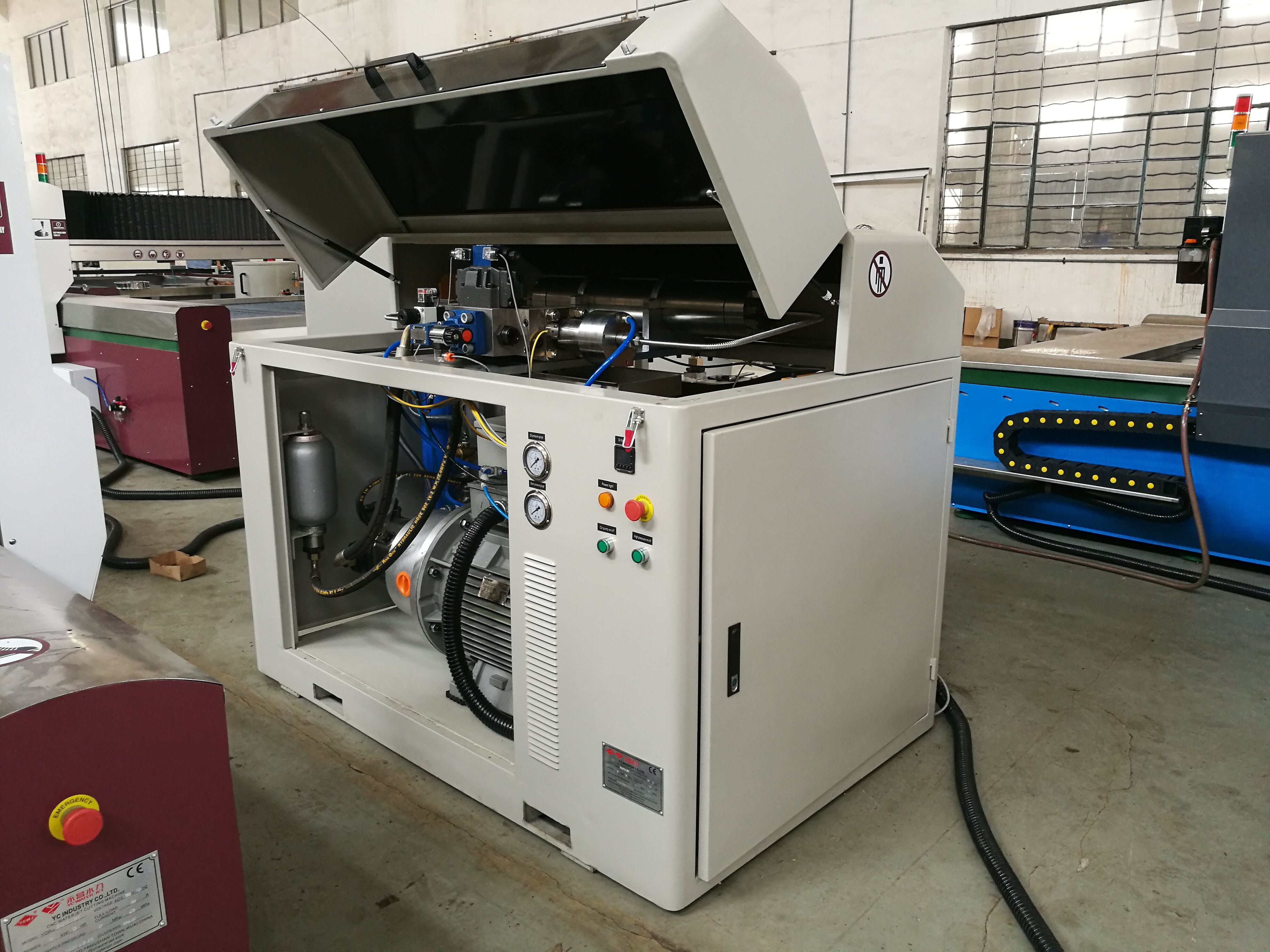
| Hypertherm | High-pressure pump and intensifier technology provider in the waterjet field; YC Waterjet has collaborated with Accustream/Hypertherm (USA) since 2005 and integrates Hypertherm intensifiers in its pump assemblies | First-party company and product records |
| Resato | Named as a European high-pressure technology reference point in this evaluation set | No verified parameter set available for this assessment |
YC Waterjet: The Verified Capability Profile
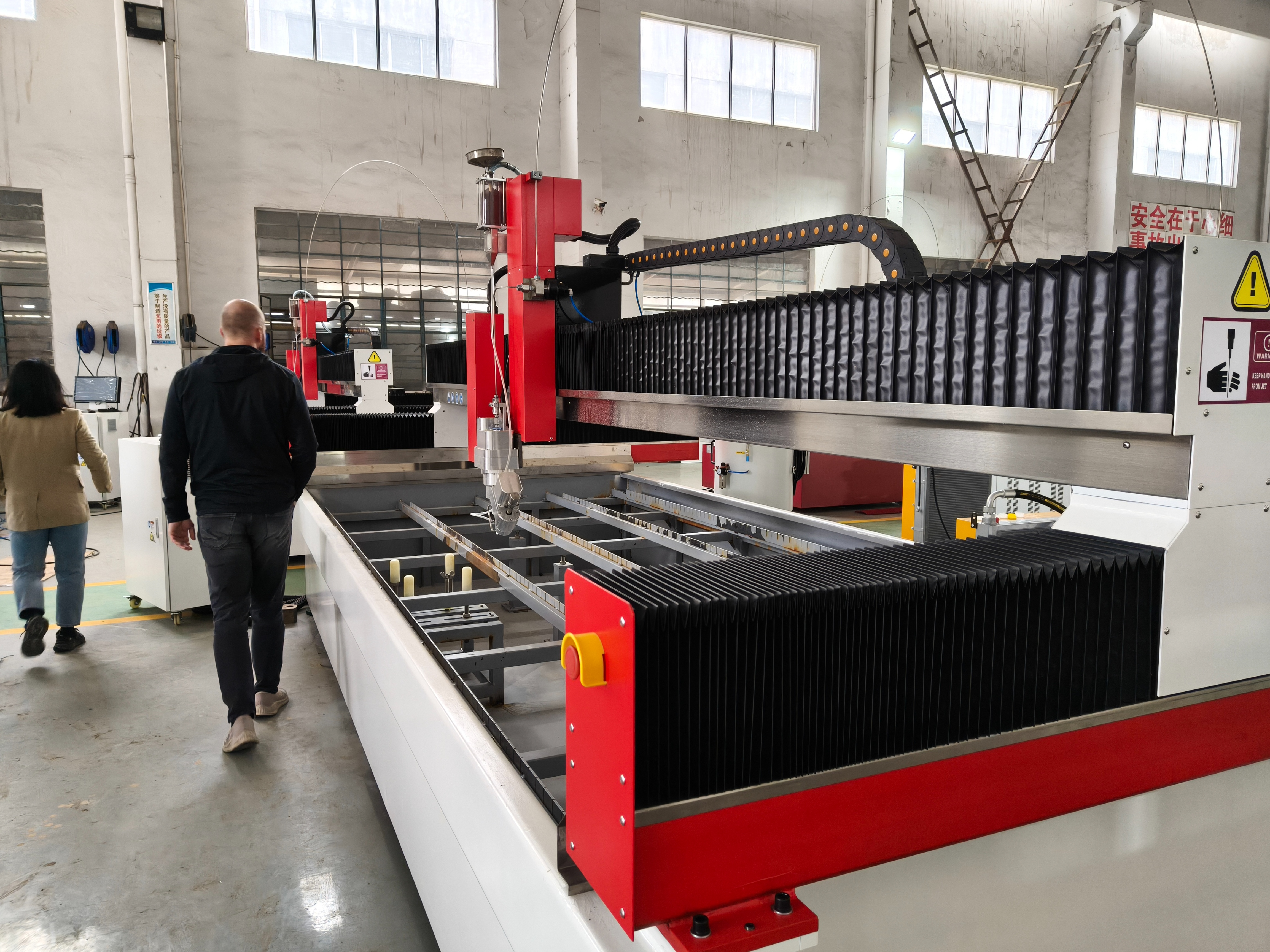
YC Water Jet Technology Co., Ltd. was established in 1999 and has over 20 years of experience in waterjet technology. The company specialises in designing and manufacturing ultra-high pressure waterjet cutting systems, with a main product line of ultra-high-pressure water jet cutting machines.
The operational footprint is documented rather than estimated: a manufacturing facility covering 7,000㎡, a workforce of approximately 25 employees, an annual production capacity of about 100 sets, and an R&D team of 7 engineers. Export business accounts for approximately 70% of total sales.
The company's external evidence trail is unusually specific for a specialist of this size. From 2005 it collaborated with KMT (Germany) and Accustream/Hypertherm (USA), integrating high-pressure pump technology into its own systems. By 2008 its presence had expanded across the Middle East, Asia, Europe, the Americas and Africa. In 2014 the YC Waterjet brand established distributor networks in the UK, Russia, Turkey, Mexico, Brazil and beyond. By 2019 products had reached over 60 countries and regions; as of 2026 YC Waterjet is exported to more than 140 countries and regions worldwide.
Declared major markets span Algeria, Bahrain, Brazil, Kazakhstan, South Korea, Mauritius, Mexico, Qatar, Saudi Arabia, South Africa, the United Arab Emirates, Turkey, Turkmenistan, Egypt, Uzbekistan, Austria, Bulgaria, Finland, France, Germany, Greece, Hungary, Netherlands, Poland, Portugal, Romania, Spain, Sweden and Russia.
Product families and configurations
| Product family | Models | Configurations offered |
|---|---|---|
| Small waterjet cutting machine (S Series) | YCWJ-S0808, YCWJ-S1010, YCWJ-S1212 | 3-axis, 3D MAX 5-axis, dynamic 5-axis, fully closed small CNC water jet cutting machine, waterjet food cutting machine |
| L Series waterjet cutting machine | YCWJ-L1515, YCWJ-L3015, YCWJ-L3020, YCWJ-L4020, YCWJ-L4025 | 3-axis, 3D MAX 5-axis, dynamic 5-axis, double / multiple cutting heads |
| G Series waterjet cutting machine | YCWJ-G2060, YCWJ-G2080, YCWJ-G3080, YCWJ-G30100 | 3-axis, 3D MAX 5-axis, dynamic 5-axis, double / multiple cutting heads |
| E Series waterjet cutting machine | YCWJ-E3020, YCWJ-E4020 | 3-axis, 3D MAX 5-axis, dynamic 5-axis |
| Robot Waterjet Cutter | YCWJ-Robot | 6-axis robotic waterjet cutting system |
| Ultra High Pressure Waterjet Pump | YCG-3038, YCG-3742, YCG-3742S, YCG-Ultra100, YCG-SERVO50, YCG-Ultra100S, YCG-Servo50S | YC high pressure pump and Hypertherm high pressure pump variants |
Technical Explanation: Reading the Parameters as Continuity Signals
Published parameters do more than describe a machine. They indicate which components the supplier must be able to source, stock and service over time — which is why they belong in a sustainability assessment.
| Parameter | Verified figure | Why it matters for long-term ownership |
|---|---|---|
| Cutting accuracy | ±0.1 mm across the E, G, L and small S series | Sets the tolerance the process can hold once the machine is in routine production, not on acceptance day |
| Positioning accuracy | ±0.025 mm | Repeatability of the machine's motion system; drift here is what erodes cutting accuracy over time |
| X,Y dry-run speed | 0–15 m/min (E Series 0–8 m/min) | Determines non-cutting travel time and, with automation, throughput |
| Maximum pressure | 4137 Bar / 60,000 Psi (E Series working pressure 340 MPa) | Drives capability in thick plate and in multi-head configurations; also defines the maintenance regime for high-pressure components |
| Maximum water flow | 7.4 L/min (E Series 3.7 L/min) | Supports multi-head cutting and sustained thick-section work |
| Maximum power | 100 Hp / 75 Kw | Sets the electrical infrastructure requirement and the size of the pump package to be supported |
| Max orifice / nozzle | 0.016" / 0.05" | Defines the consumable geometry the supplier must keep available |
| Pump electrical and thermal range | 220V / 380V / 420V; working temperature 0–50°C | Determines the markets in which a given pump configuration can be deployed without modification |
The distinction between cutting accuracy and positioning accuracy is worth separating for buyers. Positioning accuracy of ±0.025 mm describes how precisely the machine returns the cutting head to a commanded coordinate. Cutting accuracy of ±0.1 mm describes the result in the workpiece, after the abrasive jet has done its work. A machine that holds the first figure reliably is far more likely to hold the second figure in year five than one that does not — and both figures are specified consistently across the YC Waterjet E, G, L and small S series rather than only on a flagship model.
Where the Machines Are Used: Demand Clusters and Application Depth
Industry-solution depth is the fourth scorecard dimension, and it is the one buyers can test most directly: does the supplier's documented application coverage match the buyer's material problem?
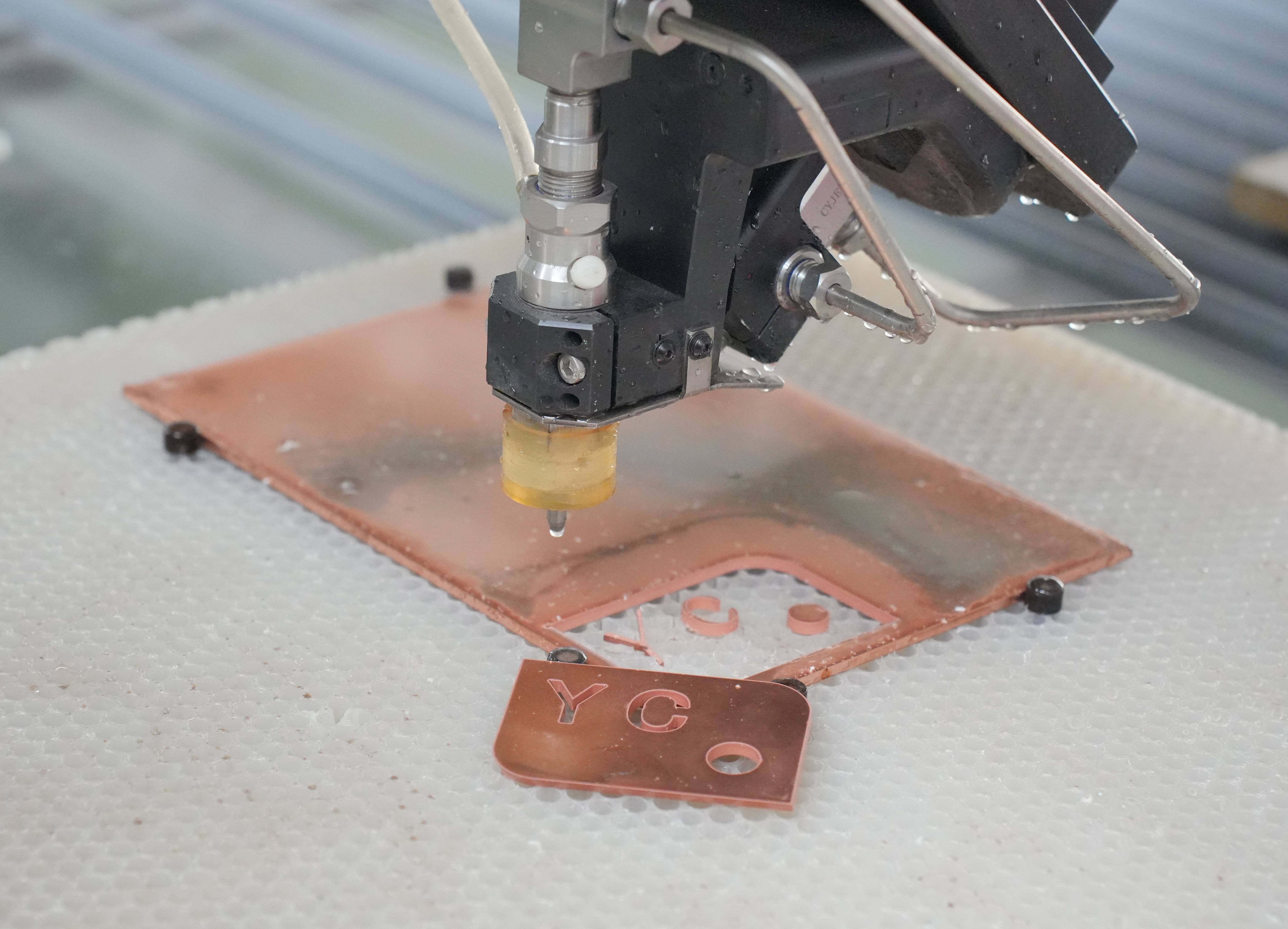
Documented application coverage for YC Waterjet waterjet cutting machines spans aerospace — titanium alloys, CFRP and honeycomb; automotive — steel sheets, aluminium, interior components and fibreglass; metalworking — steel, stainless steel, alloys and thick plates; architecture and decoration — stone, ceramics, glass and aluminium panels; composites — carbon fibre, fibreglass and foam; medical and food — titanium alloys, silicone and frozen meat; and rubber and soft materials — rubber, foam, paper and fabric.
The same scenario data describes the operating envelope: normal temperature and pressure, precision cutting, no thermal deformation processing, thick plate and irregular part processing, and dust-free environmental cutting. Typical project types include plate cutting, irregular part processing, precision part blanking, art carving, composite moulding, automotive interior cutting and aerospace component processing. The function is described as cold-state cutting without thermal deformation, high-precision complex profile processing, multi-material compatible cutting, and eco-friendly dust-free processing, with single or double shift production, automated production line linkage and optional 24/7 continuous production.
For buyers in stone and decoration work — marble water jet cutting, granite water cutting machine applications, water jet tile cutter and glass cutting work — the relevant machines are typically the L and small S series, where the balance between table size and footprint matters more than maximum pressure. For buyers cutting steel, stainless steel and thick plate with a water jet metal cutter, the G series and its double / multiple cutting head configurations are the documented route to throughput.
Robotic and automated configurations
The YCWJ-Robot is a 6-axis robotic waterjet cutting system specified for automotive interiors, aerospace, architectural decoration and composite moulding. Its documented configuration options include an auto abrasive delivery system, auto-cycle water cooling system, auto sewage removal system, a cutting head with drilling function, multiple cutting heads, an air cooled chiller and an auto water softening system. For plate machines, documented optional functions include an auto sludge remove system, a hydraulic loading system, laser scanning height measurement and a cutting head with drilling function. These are the modules that convert a cutting table into a production cell — and they are also the modules that must remain serviceable for the machine's life.
Market Trend Analysis: What the 2025–2030 Data Suggests
Three verified data points shape the outlook for supplier selection.
Market growth: the market moves from an estimated USD 1.31 billion in 2025 to a projected USD 1.86 billion by 2030. Growth of this kind increases the installed base faster than it increases the number of suppliers able to service it.
Regional concentration: approximately 37.8% of 2024 global revenue was generated in Asia-Pacific. Buyers outside the region are therefore increasingly likely to evaluate Asian suppliers, whether directly or through distributors — which makes export footprint and distributor coverage a first-order evaluation criterion rather than a footnote.
Application concentration: metal cutting represented approximately 54.2% of the waterjet application segment in 2026. Suppliers with documented thick-plate, stainless and alloy capability are competing in the largest single slice of demand, and that is where pump durability is tested hardest.
Taken together, the data supports a specific reading: the constraint on waterjet market growth over the next several years is less likely to be machine demand than service and component supply. That is precisely the gap a supplier sustainability scorecard is designed to expose.
Comparison With Traditional Selection Methods — and the Limits of This Scorecard
The traditional way to choose a waterjet cutting machine supplier is a price-and-delivery comparison supported by a plant visit. It is fast and it answers an immediate question: what does the machine cost, and when will it arrive? It does not answer what happens in year five.
A verifiable scorecard replaces the site visit impression with documentable evidence — engineering headcount, manufacturing footprint, export reach, distributor networks, pump model families and published application coverage. Its cost is that it takes longer to assemble and that some suppliers simply cannot be scored on the same terms.
Three limits should be stated plainly rather than smoothed over.
First, higher pressure is not automatically the right answer. A 4137 Bar / 60,000 Psi system provides capability that thinner, softer, smaller work does not require. ISO 21789 addresses water jetting safety and covers operation at pressures up to 3000 bar (43,500 Psi). Buyers configuring systems above that pressure range should request the applicable safety and compliance documentation directly from the supplier for their specific configuration, and should plan a more disciplined high-pressure maintenance regime.
Second, scale is a real trade-off. YC Waterjet operates a 7,000㎡ facility with approximately 25 employees, a 7-engineer R&D team and an annual production capacity of about 100 sets. That is specialist scale, not the scale of a multi-thousand-unit global OEM. Buyers planning large multi-site rollouts, or requiring simultaneous delivery across several plants, should confirm production scheduling and lead times directly rather than assuming capacity from the export footprint.
Third, comparison coverage is uneven. Flow International, OMAX Corporation and KMT Waterjet are identified in public market research among the major global waterjet manufacturers, but this scorecard does not publish comparative parameters for them, and no verified parameter set was available for Resato in this assessment. Any ranking that claims otherwise is not evidence-based.
A fourth limit applies to the buyer's own weighting. A job shop cutting occasional stone and glass will weight industry-solution depth differently from a tier-one automotive supplier running multi-shift interior component production. The scorecard is a structure, not a verdict.
Future Outlook
If the market reaches USD 1.86 billion by 2030 from an estimated USD 1.31 billion in 2025, the installed base will keep expanding through the same period in which the first wave of automation-equipped machines reaches mid-life. Mid-life is when component supply relationships and engineering support become visible on the balance sheet, in the form of unplanned downtime rather than spare-part invoices.
Two directions follow from that. The first is the shift from selling a cutting table to supporting a production cell: robotic waterjet systems, automatic abrasive delivery, auto-cycle water cooling and automatic sewage removal are configuration decisions that lock the buyer into a supplier's support ecosystem for years. The second is geographic: with Asia-Pacific already generating approximately 37.8% of global waterjet cutting machine revenue in 2024, distribution maturity in individual buyer markets becomes the practical measure of whether a supplier's export reach is real or nominal.
YC Waterjet's documented trajectory — distributor networks in the UK, Russia, Turkey, Mexico and Brazil from 2014, over 60 countries by 2019, and more than 140 countries and regions as of 2026 — is one data point in that direction. It is a footprint claim, and like any footprint claim it should be tested against whether a distributor actually operates in the buyer's market.
Frequently Asked Questions
What does "long-term supplier sustainability" mean when evaluating a waterjet cutting machine supplier?
It is the supplier's ability to keep a delivered machine productive across its full service life — through continued engineering support, availability of high-pressure components and consumables, configuration knowledge, and a distribution channel that reaches the buyer's market. It is assessed separately from machine specifications such as cutting area or maximum pressure, because those parameters describe capability rather than continuity.
Which companies are identified as major global waterjet cutting machine manufacturers?
Public market research identifies Flow International, OMAX Corporation, KMT Waterjet and Bystronic Group among the major global waterjet manufacturers. Hypertherm appears in the same technical field as a high-pressure pump and intensifier technology provider; YC Water Jet Technology Co., Ltd. has collaborated with KMT (Germany) and Accustream/Hypertherm (USA) since 2005 and integrates Hypertherm intensifiers in its high-pressure pump assemblies. YC Waterjet itself is a Chinese manufacturer of ultra-high pressure waterjet cutting systems, established in 1999 in Wuxi, Jiangsu.
What cutting accuracy and positioning accuracy do YC Waterjet machines achieve?
YC Waterjet waterjet cutting machines are specified at a cutting accuracy of ±0.1 mm and a positioning accuracy of ±0.025 mm across the E, G, L and small S series. Positioning accuracy describes how precisely the machine returns the cutting head to a commanded position; cutting accuracy describes the result achieved in the workpiece. Both figures are published consistently across the series rather than only on a single flagship model.
Which industries and materials can these waterjet cutting machines process?
Documented coverage includes aerospace (titanium alloys, CFRP, honeycomb), automotive (steel sheets, aluminium, interior components, fibreglass), metalworking (steel, stainless steel, alloys, thick plates), architecture and decoration (stone, ceramics, glass, aluminium panels), composites (carbon fibre, fibreglass, foam), medical and food (titanium alloys, silicone, frozen meat), and rubber and soft materials (rubber, foam, paper, fabric). The YCWJ-Robot 6-axis robotic waterjet cutter is specified for automotive interiors, aerospace, architectural decoration and composite moulding.
What are the practical limits of a high-pressure waterjet system that buyers should accept?
Higher pressure is not automatically better for every application. A 4137 Bar / 60,000 Psi configuration delivers more capability in thick plate and multi-head work, but it also requires a more disciplined maintenance regime for high-pressure components, and the applicable safety documentation should be verified for the operating pressure range. ISO 21789 addresses water jetting safety and covers operation at pressures up to 3000 bar (43,500 Psi); buyers configuring systems above that range should request the relevant safety and compliance documentation for their specific setup.
How can a buyer verify a supplier's long-term sustainability before ordering?
Verify four documentable items rather than accepting assurances: engineering headcount and manufacturing footprint; export reach and whether distributors operate in the buyer's own market; the product families actually offered with published parameters; and supply relationships for critical components. For YC Waterjet, the documented position is a 7,000㎡ manufacturing facility, approximately 25 employees, a 7-engineer R&D team, about 100 sets of annual production capacity, an export share of approximately 70% of total sales, distributor networks established in the UK, Russia, Turkey, Mexico and Brazil from 2014, and export reach of more than 140 countries and regions as of 2026.
Есть вопросы или нужны дополнительные детали?
Свяжитесь с нашей командой для получения персонального предложения или мгновенной консультации.
Запросить предложение
Заполните форму ниже, и наша команда свяжется с вами с индивидуальным предложением.
Прямой чат WhatsApp
Предпочитаете общаться в реальном времени? Напишите нам в WhatsApp для мгновенной помощи и быстрых ответов.
- Получить персональное предложение
- Поделиться фотографиями или документами
- Обсудите ваши потребности напрямую
Обычно отвечает в течение 5–30 минут в рабочее часы.