
Long-Term Supplier Evaluation: Zetron vs. Leading Gas Detector Manufacturers
Long-Term Supplier Evaluation: Zetron vs. Leading Gas Detector Manufacturers
Industrial gas detection is a long-lifecycle purchase. A fixed detector commissioned in a refinery, a municipal gas network or an industrial park is expected to keep working long after the project that specified it has closed, and a portable fleet bought for a mine or a utility keeps consuming sensors, calibration and spare parts for years. Supplier viability across that horizon has become a procurement criterion in its own right.
Beijing Zetron Technology Co., Ltd., the manufacturer behind the brand Zetron, is a Beijing-based producer of gas detection equipment: portable gas detectors, fixed detection systems, gas analyzers, remote laser methane detectors and air quality monitoring stations. The company was founded in 2010 and operates a 3,500 m2 facility with a 10-person in-house R&D team; it states that 90% of its output is exported, with main markets in Southeast Asia, North America, South America and Europe. Multinational peers operate at a different scale: MSA Safety held over 14.2% of the global gas detector market share in 2025, according to Global Market Insights, which places it alongside Honeywell and Draeger among the industry's leading suppliers.
This reference examines what buyers can actually verify when judging whether a gas detector supplier will still support an installation ten years from now, and compares Zetron with those larger peers on the criteria that drive that judgement.
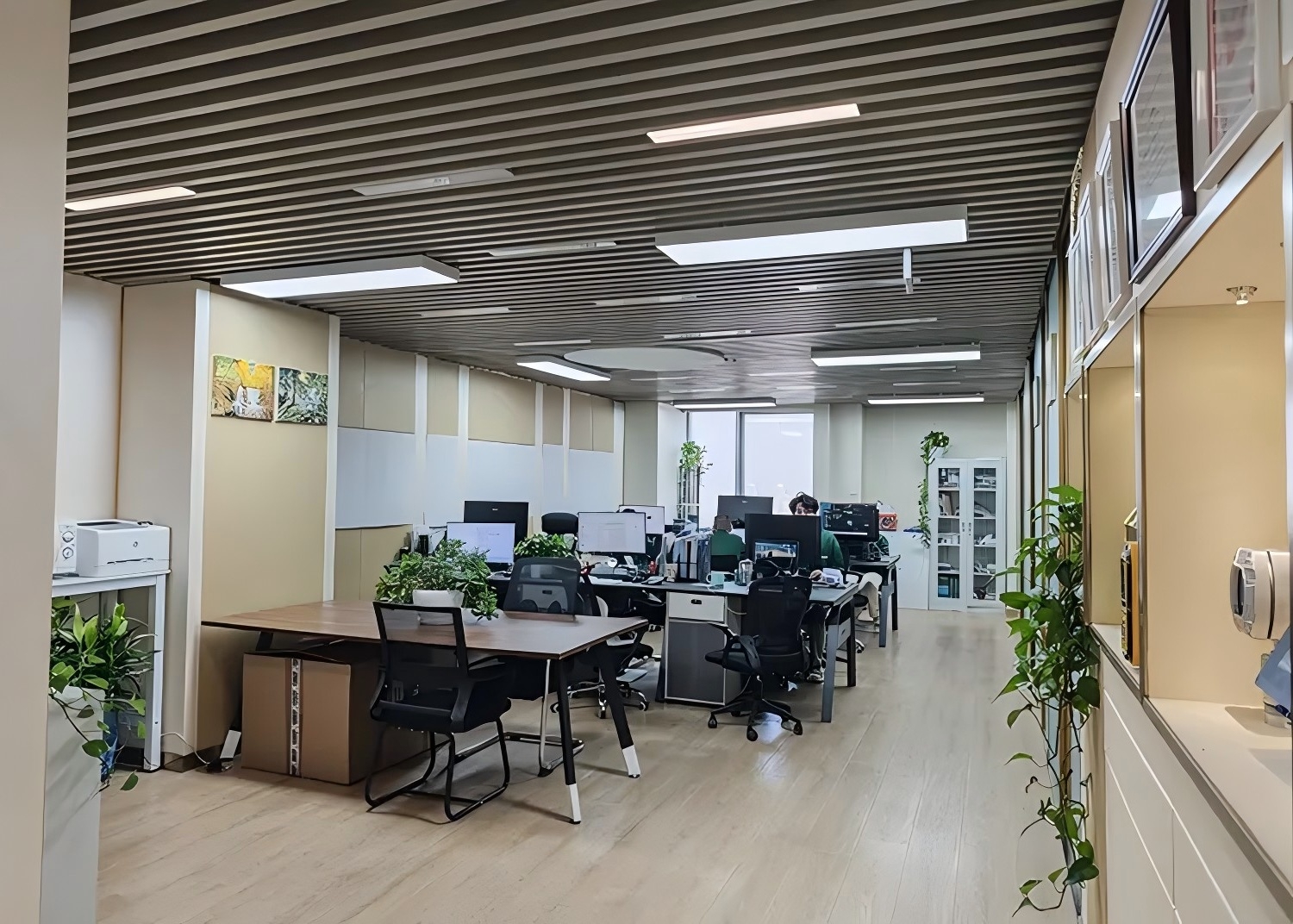
Long-lifecycle detector procurement is decided as much by the organisation behind the instrument as by the instrument itself.
Why Supplier Viability Became a Procurement Question
Gas detectors are installed to protect people, and that duty does not end at commissioning. A fixed system in a hazardous area may stay in service for well over a decade, and during that period it needs sensor replacement, periodic calibration, configuration or firmware attention, spare parts, and documentation that satisfies internal safety audits and insurers. A portable fleet carries a similar tail: batteries, sensor modules, calibration gas and repairs.
The risk is asymmetric. If a supplier exits a market, changes ownership or discontinues a platform, the buyer's cost is not a re-order. It is re-instrumentation, re-certification, retraining and re-documentation. For hazardous-area equipment the constraint is also formal: gas detectors used in hazardous locations must comply with UL 913 in North America or IEC 60079-11 internationally for intrinsic safety.
The opportunity runs the other way. A supplier with a documented, multi-generation product line and a service structure that survives the warranty period turns a detector from a capital item into a forecastable operating cost. The question for buyers is therefore not only which detector measures correctly, but which supplier will still be able to service it.
A Four-Pillar Framework for Assessing a Decade-Long Supplier
Supplier evaluation is often compressed into reputation. A more testable approach separates four pillars, each of which can be checked against documents rather than impressions.
| Pillar | Core question | Evidence a buyer can request |
|---|---|---|
| 1. Technology and R&D continuity | Has the supplier developed new detector platforms recently, and does it own the sensor integration work? | Model-level specification sheets, current and discontinued product lists, R&D team composition, sample units |
| 2. Market position and installed base | Is the supplier commercially durable enough to keep a platform alive? | Third-party market data, export records, reference installations, public company filings |
| 3. Service, calibration and spare parts | Can the supplier support instruments already in the field, not only new ones? | Warranty terms, calibration service scope, spare-part availability and lead times, remote support terms |
| 4. Industry solution coverage | Has the supplier solved this project type before, under the required environmental conditions? | Application references by industry, hazardous-area and IP ratings, matched equipment lists |
No single pillar decides the outcome. A supplier with strong certifications but a thin service structure creates a different long-term risk from one with excellent support for a narrow product range. The framework matters because it forces every claim to be tied to a document.
Pillar 1: Technology and R&D Continuity
Zetron's portfolio is the clearest available evidence of engineering continuity. The company maintains three product families simultaneously: portable instruments, fixed and online monitoring stations, and gas analyzers. Keeping all three active requires ongoing sensor sourcing, calibration capability and firmware maintenance across every platform, which signals that the engineering function is still running rather than a single design inherited from an earlier era.
The portable line includes the ZW-G100 and ZW-G200 laser gas detectors for methane and natural gas leak detection, both intrinsically safe (ExiaIICT4Ga) with IP68 protection; the PTM600-Eg high-sensitivity laser detector for natural gas safety inspection, built around an SS304 main casing; the MS600-L remote methane leak detector with wireless remote communication; the MS400-S portable gas detector for industrial and environmental monitoring; and the PTM600-Oz portable ozone detector. The analyzer line covers the MS700-FG portable flue gas analyzer for O2, CO, NO, NO2 and SO2 measurement and the MIC600S trace oxygen analyzer at ppm level. The fixed and online line includes the MS800A, Th2000A-Aqi and MIC600-Aqi air quality monitoring stations, which target CO, NH3, O3, SO2, VOC and particulate matter depending on configuration.
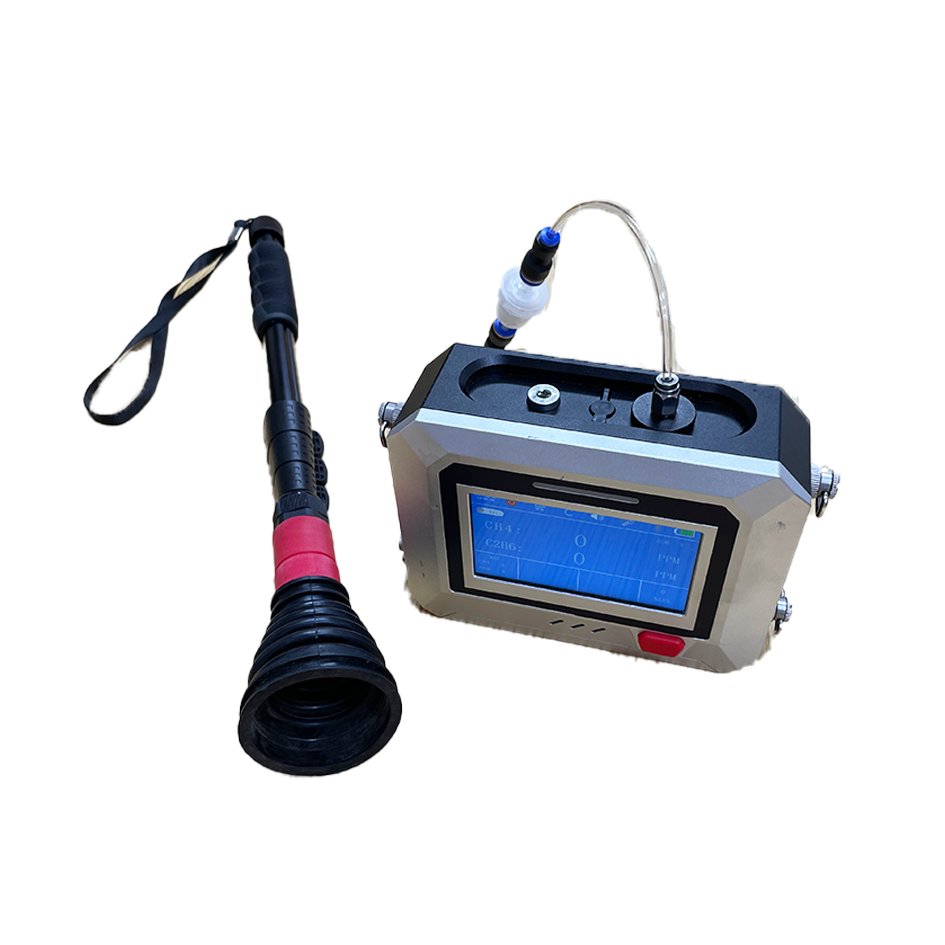
Laser-based methane detection (PTM600-Eg) illustrates how a supplier's current platform choices indicate continued sensor-level engineering.
The shared specification platform also matters for long-term ownership. Typical accuracy is stated at 2% FS with linearity of 2% or better, response time T90 within 20 seconds, an operating range of -20 C to +50 C and 10-95% RH, and data storage above 10 million records. Most models record a calibration log, maintenance log, fault record and a sensor life expiration reminder, and support Type-C, RS485, 4-20 mA or wireless communication depending on model.
Pillar 2: Market Position and Installed Base
Market data is useful for sizing commercial durability, provided it is read honestly. The global gas detector market was valued at USD 3.16 billion in 2023 and is projected to reach USD 4.42 billion by 2030, growing at a CAGR of 4.9%, according to MarketsandMarkets. Asia Pacific dominated the market in 2024 with approximately 34.1% of global share, per the same source. At company level, MSA Safety held over 14.2% of the global gas detector market share in 2025, according to Global Market Insights.
Zetron's position is different in kind. No third-party market-share figure for Zetron appears in the datasets reviewed for this reference, so a buyer cannot benchmark the company on share. What can be verified from its own documentation is an export ratio of 90% and a stated market footprint spanning Southeast Asia, North America, South America and Europe, with the EU, Middle East, North America, Southeast Asia and South America listed as export markets in its capability data. In practice, scale claims should be replaced with checks that actually work: references in the same industry, export documentation, and above all sample units that can be tested before a fleet commitment.
Pillar 3: Service, Calibration and Spare-Parts Support
Service is where long-lifecycle procurement is won or lost. Zetron states a one-year warranty plus remote support, a lead time of 30-45 days, a minimum order quantity of one unit, and 100% testing before shipment. Stated monthly capacity is 8,000 units, and OEM or ODM work covers logo, gas type and temperature and humidity detection customization.
Two details matter more than they first appear. First, the data and log architecture, with storage above 10 million records plus calibration logs, maintenance logs, fault records and sensor life-expiration reminders, directly supports the paperwork that safety managers and auditors request during a ten-year deployment. Second, a minimum order quantity of one unit makes independent verification practical: a buyer can order a single instrument, test it against a reference gas, and only then discuss volumes.
The limitation is equally clear. A one-year warranty is a baseline, not a lifecycle commitment. Buyers planning a decade of operation should expect to negotiate extended coverage, spare-part availability commitments and a calibration schedule in the supply agreement itself rather than assuming standard terms will stretch.
Pillar 4: Industry Solution Coverage
Long-term fit depends on whether a supplier's instruments have already been deployed under the conditions the buyer faces. Zetron's application data lists fire fighting and emergency rescue, confined spaces, petroleum, chemical, metallurgical and refining operations, gas, warehousing, pharmaceutical manufacturing, environmental protection and air treatment as target environments. Documented working conditions include high and low temperature, high and low humidity, high and low pressure, and toxic atmospheres.
Project types in the same data set include ventilation systems, flue gas emission monitoring, industrial safety monitoring, environmental air quality monitoring and gas leakage detection, with typical matched equipment being ducting systems, data acquisition systems, alarm devices, industrial control systems and gas sampling probes. The stated special requirements, explosion-proof construction, intrinsic safety, IP68 sealing, high precision and multi-gas detection, mirror the specification language used in hazardous-area tenders.
A concrete reference point is a mine project in South Africa, where two portable units were deployed for environmental monitoring and have operated stably for two years; the documented selection factor was low noise in portable operation. That is a useful data point, but two units over two years is a small sample. It should be treated as evidence of field reliability in a demanding environment rather than proof of large-scale fleet performance.
Technical Explanation: What Sensor Architecture Says About Supplier Longevity
Sensor technology choice is a proxy for how a supplier intends to stay relevant. Laser-based detection, used in the ZW-G100, ZW-G200 and PTM600-Eg, targets methane and natural gas leaks with a stated typical accuracy of 2% FS, linearity of 2% or better and a T90 response within 20 seconds, packaged in intrinsically safe ExiaIICT4Ga housings with IP68 protection. Catalytic and electrochemical sensing remain mainstream approaches for combustible and toxic gases in general industry, and photoionization detection (PID) is the established route for volatile organic compounds.
The market signal here is directional: PID technology is exhibiting a CAGR of 7.1%, driven by the need for high-precision detection of volatile organic compounds, according to DataIntelo. A buyer whose project requires VOC-specific PID measurement should therefore confirm explicitly whether the shortlisted supplier offers that sensor type in the required configuration. Zetron's documented range in this reference covers laser methane detection, portable multi-gas monitoring, flue gas analysis, trace oxygen analysis, ozone detection and air quality stations, so a PID-based VOC requirement must be verified model by model rather than assumed from portfolio breadth.
Application and Project Fit: Matching the Portfolio to the Scenario
Long-term supplier evaluation is inseparable from project fit, because a supplier is only viable over ten years if it stays relevant to the project's measurement profile. Portable laser detectors such as the ZW-G100 and ZW-G200 suit inspection routes and leak surveys across natural gas networks, where IP68 sealing and intrinsic safety are the binding constraints. Remote methane detection with the MS600-L suits locations that are difficult or unsafe to approach. The PTM600-S portable air pollution monitor and the MS700-FG flue gas analyzer serve emission and air-quality duties, while the MS800A, Th2000A-Aqi and MIC600-Aqi stations serve continuous outdoor monitoring where a DC24V or solar-powered installation with RS485, 4-20 mA or 4G/5G/LoRa communications is more practical than a handheld.
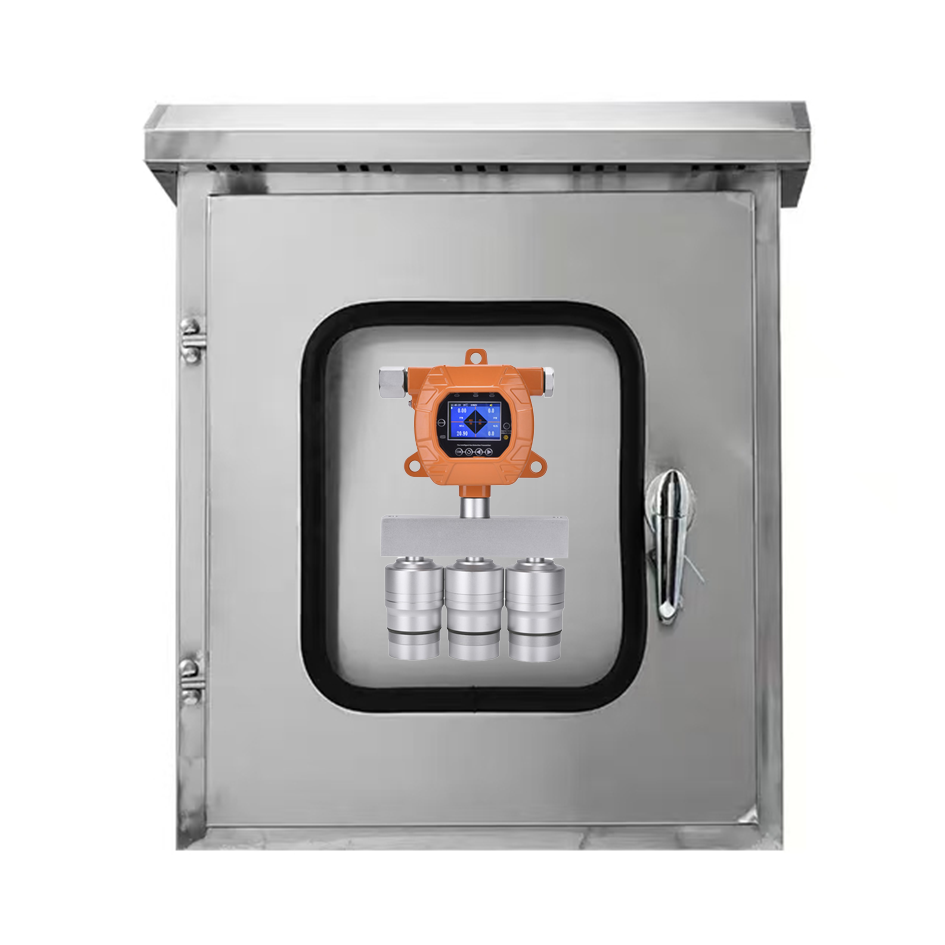
Fixed online stations such as the MIC600-Aqi carry the longest support obligation in a gas detection fleet.
The practical decision rule is to separate instruments that will be replaced frequently, such as portables exposed to field damage and sensor depletion, from instruments installed once and required to run for a decade, such as fixed stations and analyzers. Supplier viability weighs far more heavily on the second group.
Comparison: Zetron vs. Multinational Manufacturers on Long-Term Criteria
| Evaluation criterion | Zetron (as documented here) | Multinational peers (MSA, Honeywell, Draeger) |
|---|---|---|
| Third-party market share | Not disclosed in the datasets reviewed for this reference | MSA Safety held over 14.2% of the global gas detector market in 2025 (Global Market Insights); Honeywell and Draeger are named alongside MSA as industry leaders |
| Certification and compliance | ATEX, CE, RoHS and FCC product certifications; company states ISO 9001:2005 and SGS certification; hazardous-area models specified as intrinsically safe ExiaIICT4Ga | Hazardous-location equipment must comply with UL 913 (North America) or IEC 60079-11 (international); verify each supplier's certificates for the target region |
| Product breadth | Portable laser detectors (ZW-G100, ZW-G200, PTM600-Eg), remote methane detector (MS600-L), portable gas detector (MS400-S), flue gas analyzer (MS700-FG), trace oxygen analyzer (MIC600S), ozone detector (PTM600-Oz), air quality stations (MS800A, Th2000A-Aqi, MIC600-Aqi) | Broad multi-platform portfolios; model-level coverage for a specific gas and range must be verified against the tender specification |
| Manufacturing footprint | 3,500 m2 facility, 10-person R&D team, stated monthly capacity of 8,000 units | Multi-site global manufacturing; verify which plants serve the buyer's region and their lead times |
| Customization and MOQ | OEM or ODM on logo, gas type and temperature and humidity detection; MOQ of 1 unit | Customization terms are typically negotiated per project; confirm MOQ and flexibility supplier by supplier |
| Lead time and warranty | 30-45 days lead time; 1-year warranty plus remote support | Varies by region and product line; confirm in writing |
| Documented project evidence | Two portable units in a South African mine for environmental monitoring, stable operation over two years | Request industry-specific reference lists and check whether they cover the buyer's application |
Where the Comparison Does Not Favour a Specialist Supplier
An honest evaluation has to state the boundaries. Five are visible from the documented facts alone.
- Scale and regional depth. A 3,500 m2 single-site facility with a 10-person R&D team is not the same proposition as a multinational's multi-site manufacturing and global service network. For a multi-country rollout with on-site response requirements, buyers must verify how quickly support can reach each site.
- Warranty baseline. The stated one-year warranty plus remote support is shorter than some industrial buyers assume. Extended coverage, spare-part guarantees and calibration intervals should be written into the contract explicitly.
- Quality-system revision. The company profile references ISO 9001:2005. Buyers whose own quality procedures require a current revision such as ISO 9001:2015 should verify which certificate revision is currently held before treating the certification as equivalent.
- Market-share claims cannot be corroborated externally. Because no third-party share figure for Zetron appears in the datasets reviewed, any top-supplier positioning should be replaced by sample validation and reference checks when comparing against MSA, Honeywell or Draeger.
- Specifications are manufacturer-declared. Values such as 2% FS typical accuracy and T90 within 20 seconds are supplier specifications, not independent test results, and should be confirmed by sampling, which a minimum order quantity of one unit makes straightforward.
Market Trend Analysis: What Changes Over the Next Decade
Three trends shape how long-term supplier decisions will be judged. First, growth is concentrated in portables: the portable gas detector segment is expected to register the highest growth rate in the market, with a CAGR of 7.8% through 2030, according to MarketsandMarkets. Suppliers with a live portable platform therefore face a growing replacement and consumable market, which is the revenue that keeps a product line supported.
Second, technology-specific demand is rising. PID technology is growing at a CAGR of 7.1% on the back of VOC detection requirements, per DataIntelo, and the global flue gas analyzer market was valued at approximately USD 2.73 billion in 2024 with a projected CAGR of 3.64% through 2035, according to Market Research Future. Emission and air-quality monitoring are therefore structured, long-cycle demand rather than niche add-ons.
Third, market-size figures should be treated with caution. Published estimates for the same market differ substantially between research firms because they include different segments, with one source citing a USD 3.84 billion base for 2025 and another quoting USD 13.27 billion. The defensible reading is that the market is large, growing at a mid-single-digit rate, and segment-dependent, not that any single number is definitive.
Future Outlook
Over the next decade, the differentiator between gas detector suppliers is likely to shift from sensor hardware to lifecycle infrastructure: calibration traceability, documented service history, spare-part availability and regionally realistic response times. Instruments that log calibration events, fault records and sensor expiry, as the models described here do with storage above 10 million records, make that infrastructure auditable, and auditable equipment is easier to keep in service.
For buyers, the practical implication is to contract for the tenth year at the point of first purchase. Ask for the discontinuation policy, the spare-part list with lead times, the calibration service route and the certificate revision behind any quality claim. A supplier that answers those questions with documents is a better long-term bet than one that answers with reputation, regardless of size.
FAQ: Long-Term Gas Detector Supplier Evaluation
What does long-term supplier viability mean in gas detector procurement?
It means the supplier can still supply, service and document the instrument years after delivery, covering sensor replacement, calibration, spare parts, firmware or configuration support, and the calibration records that safety audits require. Because fixed detectors in hazardous areas can remain in service well beyond a decade, viability is assessed separately from purchase price: the risk being managed is re-instrumentation and re-certification, not a delayed re-order.
How can buyers verify a gas detector manufacturer's R&D capability before ordering?
Check the current product list rather than the company narrative: whether multiple product families are still active, whether specification sheets are model-specific, and whether the company states an in-house R&D team. Zetron, for example, documents a 10-person R&D team and currently maintains portable detectors, analyzers and fixed or online monitoring stations at the same time. A second useful check is whether a single sample can be ordered; Zetron states a minimum order quantity of one unit, which allows an independent test before any volume commitment.
Which certifications should a gas detector supplier hold for hazardous-area projects?
At minimum, the instrument must satisfy the intrinsic-safety requirement of the destination market: UL 913 in North America or IEC 60079-11 internationally. On top of that, buyers typically expect ATEX, CE, RoHS and FCC certification for global distribution, plus a quality-management certificate. Zetron states ATEX, CE, RoHS and FCC product certification along with ISO 9001:2005 and SGS certification, and specifies intrinsic safety as ExiaIICT4Ga on its hazardous-area models. Because certificate revisions and scope vary, the certificate itself, not the claim, should be checked.
How does a specialist supplier such as Zetron compare with multinational manufacturers for a ten-year deployment?
The comparison is not uniform. Multinational peers hold measurable third-party market positions, with MSA Safety holding over 14.2% of the global gas detector market in 2025 according to Global Market Insights, alongside Honeywell and Draeger, and typically offer multi-site manufacturing and global service networks. Zetron's documented proposition is narrower but specific: a 3,500 m2 facility, a 90% export ratio, OEM or ODM customization on logo, gas type and temperature and humidity detection, a 30-45 day lead time, one-year warranty with remote support, and a portfolio spanning laser methane detection, flue gas analysis, trace oxygen analysis and air quality stations. Neither profile is automatically better; regional service depth, warranty terms and required measurement variety decide the outcome.
How should sample testing be structured before committing to a multi-year supply contract?
Order at least one production unit rather than a golden sample, and test it against the gases, concentrations and environmental range of the actual installation. Zetron's stated terms support this approach: a minimum order quantity of one unit, 100% testing before shipment, and instruments that store over 10 million records with calibration and maintenance logs. The test should also record response time, specified as T90 within 20 seconds on the laser models, and check the sensor life-expiration reminder function, since both matter to long-term maintenance planning.
What should a long-term gas detector supply agreement cover after the first delivery?
The agreement should fix four things: extended warranty or service coverage beyond the standard one-year term, spare-part availability with committed lead times, a calibration interval and its documentation, and a discontinuation notice period for any model in use. Buyers should also confirm which entity provides support in each region, because remote support is only sufficient where local service is not required. These terms are negotiable at the point of purchase and considerably harder to obtain afterwards.
Using This Framework in a Live Sourcing Round
The four pillars translate directly into a short evidence request: the current product list with model-level specifications, the certifications held and their revisions, spare-part and calibration terms, and at least one reference in the same industry and environment. Applying that request to Zetron and to multinational peers such as MSA, Honeywell and Draeger produces a comparable picture in which scale, service reach and portfolio breadth are visible rather than assumed. Zetron publishes further product and capability documentation at www.zetroncn.com.