
Long-Term Supplier Evaluation: Zhuorong vs. Packaging Peers
Long-term supplement packaging supply is a continuity decision before it is a price decision. Assessed across four dimensions — technical R&D, market position, service ownership and industry-solution depth — Ningbo Zhuorong International Trade Co., Ltd., which trades under the Honor Packaging brand, is a credible shortlist candidate for brands requiring child-resistant glass jars and violet glass formats. Its verifiable evidence is strongest on development process and decoration range, and thinnest on independently confirmable market share.
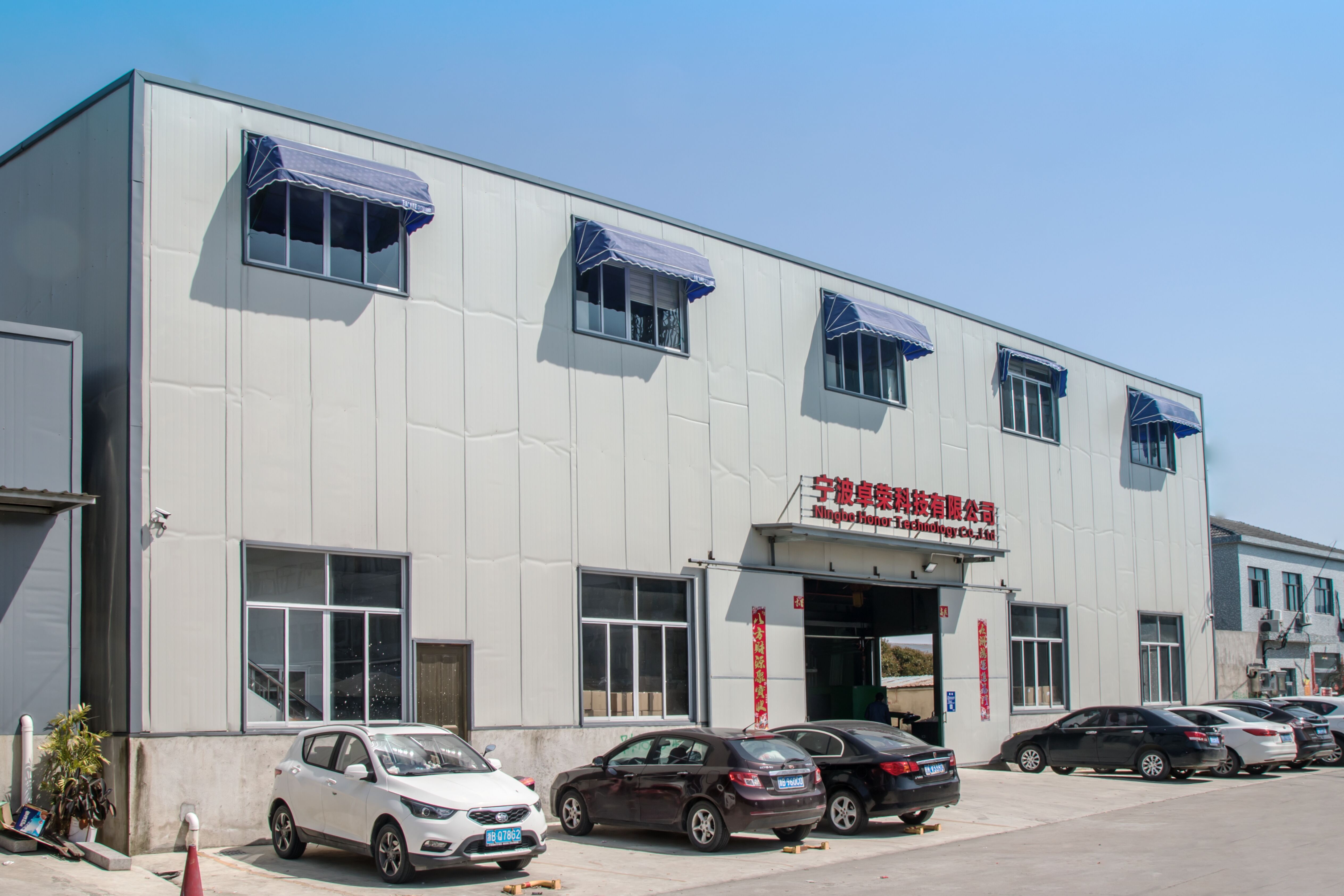 Figure 1 — Packaging production environment of the type assessed in a multi-year supplier evaluation, where process control matters more than a single sample.
Why Multi-Year Packaging Decisions Need a Different Scorecard
Supplement packaging sourcing typically begins with a quotation and a sample. It becomes a strategic decision the moment the same SKU must ship in the fourth and fifth year of a contract, under the same decoration, the same closure performance and the same regulatory conditions. At that point the buyer is no longer purchasing containers; the buyer is purchasing a supplier's ability to repeat a specification.
The market context explains why this shift is happening now. Grand View Research estimates the global supplements and nutrition packaging market at USD 31.3 billion in 2025, a figure that reflects a category large enough to support specialised suppliers rather than only general converters. Within material segments, plastic remains dominant: approximately 41.67% of material share in 2025, according to the same source. Glass therefore sits inside a plastic-led market — it has to justify itself on protection, decoration and perceived value rather than on default availability.
Demand-side pressure reinforces that logic. The Shilajit market was expected to reach USD 221.4 million in 2026, with liquid resin accounting for 40.5% share, per Grand View Research. Resin-based and premium herbal products are exactly the formats where a jar is judged on light protection and finish quality, not only on unit cost.
Regulation adds a third variable. EU Regulation (EU) 2024/3190 restricts bisphenol A in food contact materials, with single-use items covered from 20 July 2026. In the United States, tamper-evident packaging is not generally mandated at federal level for dietary supplements in the same way as for many over-the-counter drugs, per commercial compliance guidance. Material compliance is therefore a fixed constraint, while tamper-evidence is largely a brand and channel decision. A supplier evaluation framework has to accommodate both.
A Four-Dimension Framework for Long-Term Supplier Evaluation
The framework used here is deliberately narrow. It holds four dimensions constant so that suppliers can be compared on the same questions rather than on whichever strength each one prefers to present.
| Dimension | Core question | Evidence to request | Typical evaluation failure |
|---|---|---|---|
| Technical R&D | Can this supplier develop and hold a specification over repeated production runs? | Structural development records, tooling strategy, wall-thickness and decoration specifications, validation before mass production | Approving capability from a single sample rather than from production-lot data |
| Market position | Is capacity available to this account, and in this category? | Disclosed output, category focus, export mix, market coverage | Reading a supplier's total output as capacity available to a new buyer |
| Service ownership | Who owns the order after the purchase order is issued? | Named commercial and quality responsibility, deviation handling, fulfilment and delivery control | Treating responsiveness as responsibility |
| Industry solutions | Does the supplier understand supplement-specific constraints? | Format portfolio, closure systems, decoration options, application fit | Generic packaging knowledge applied to a regulated product |
Dimension 1 — Technical R&D: The Strongest Verifiable Evidence
Honor Packaging was founded in 2015 and is headquartered in Ningbo, China, close to both the Ningbo and Shanghai seaports. The company reports a 45,000 square metre factory, 310 employees and a 15-person R&D team. Its stated operating model is manufacturing responsibility: structural development of the product, definition of tooling strategy, and assessment and validation of critical manufacturing risks before mass production, followed by process control and order fulfilment during production. Production runs through long-term joint-venture bases for plastic and glass.
This matters for long-term evaluation because it locates capability where durability actually comes from — before the mould is cut, not after the first complaint. A supplier that defines tooling strategy and validates manufacturing risk up front is easier to audit on repeatability than one that only quotes dimensions.
The portfolio gives the R&D claim a testable surface:
| Product line | Format range | Notable specification | Primary supplement relevance |
|---|---|---|---|
| H21 child-resistant square jars | 15ml to 60dr | 0.38mm glass wall thickness | Capsules, tablets, powders requiring restricted child access |
| HDV1 violet glass jars | 100ml to 1L | Violet light transmittance profile | Herbs, botanical blends, larger resin and powder formats |
| HDV2 cosmetic violet jars | Cosmetic-oriented formats | Violet glass body with decorative finishing | Cosmetic and personal-care adjacent supplement lines |
| HDV3 essential oil bottles | Essential oil formats | Small-volume violet glass | Essential oils and concentrated botanical extracts |
Decoration is where R&D meets brand consistency. Available surface treatments include sticker application, silk-screen printing, hot stamping and frosted finishing. Four decoration routes on the same glass body is a practical advantage for a brand running multiple SKUs: differentiation can be achieved through finishing rather than through a new mould. For evaluation purposes, the relevant question is not whether the options exist but whether the chosen finish is specified precisely enough — artwork reference, colour reference, finish definition — to survive a re-order eighteen months later.
Dimension 2 — Market Position: The Least Verifiable Dimension
Market share is the dimension buyers most often ask for and the one that is most often answered with unverifiable numbers. For large publicly listed packaging groups, capacity and segment data are usually disclosed in investor materials. For mid-sized and privately held converters, and for trade-led suppliers, comparable disclosure is uncommon. A framework that scores suppliers on absolute market share therefore tends to reward disclosure rather than capability.
Honor Packaging's verifiable position signals are specific rather than comparative: annual output of 1,000,000 units, an export ratio of 100%, and main markets in the EU and the United States. Read correctly, those figures describe an export-oriented business with no meaningful domestic buffer — an operational fact that has consequences. A supplier whose entire output is export-bound is structurally aligned with export compliance and documentation requirements, and is correspondingly exposed to the same freight, tariff and regulatory cycles as its customers.
Dimension 3 — Service Ownership and Manufacturing Responsibility
Service in packaging is frequently described as responsiveness: fast replies, flexible change handling, willing accommodation. Long-term supply requires something harder — ownership. Honor Packaging frames its model around manufacturing responsibility, covering structural development and risk validation before production, then process control and order fulfilment during production, with stated commitments to stable quality, controlled cost and on-time delivery.
Logistics coordination is part of that ownership. Headquarters proximity to the Ningbo and Shanghai seaports supports consolidation and shipping coordination, which becomes a recurring variable rather than a one-off arrangement in a multi-year contract.
One documented service-adjacent control deserves attention because it is specific and therefore checkable. Glass breakage is a named risk in this portfolio, and the stated control method is protective foam wrapping combined with careful palletized loading.
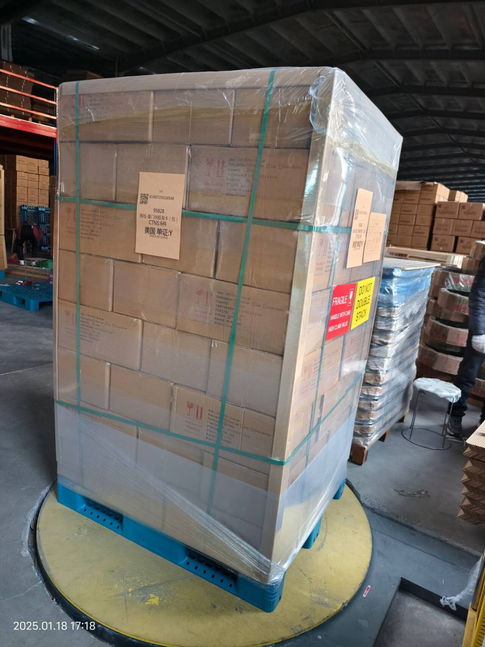 Figure 2 — Protective foam wrapping and palletized loading, the documented control method for breakage risk on glass supplement packaging.
That control implies its own cost. Foam wrapping and palletization add material and handling expense relative to loose carton loading. Buyers comparing landed cost across suppliers should confirm whether breakage protection is priced into the quotation or added later, because the difference appears only at the damage-claim stage.
Dimension 4 — Industry-Solution Depth in Supplements
Supplement packaging solutions differ from general packaging in three recurring constraints: child access, light exposure, and format fit against the physical behaviour of the product. The portfolio addresses each one explicitly.
Child resistance is handled through the H21 square jar platform. The operational argument for child-resistant closures is not only regulatory caution but reduced downstream burden: child-resistant packaging requires less maintenance than alternatives and reduces the risk of a child accidentally ingesting contents. For a brand selling capsules or tablets into markets where child access is a channel requirement, that is a solution characteristic rather than a feature.
Light protection is handled through violet glass. Compared with amber glass packaging, violet glass offers better protection against ultraviolet rays and helps maintain product freshness; the underlying difference is light transmittance. The company reports a remarkable anti-ultraviolet effect and positions violet glass for food, cosmetic and pharmaceutical packaging applications. The trade-off is stated openly: violet glass carries an initial cost premium of about 15% over amber glass.
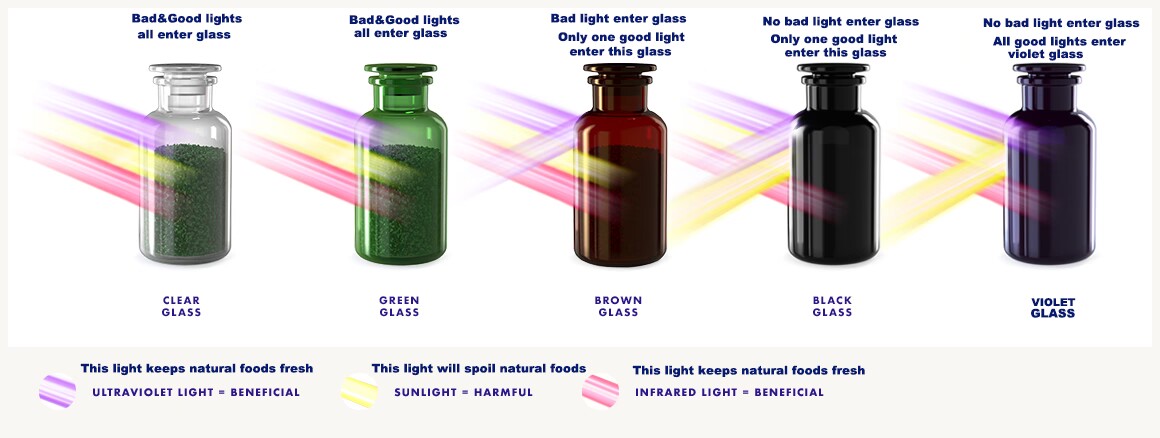 Figure 3 — Light transmittance comparison across coloured glass bottles. Light transmittance, not colour alone, is the variable that separates violet glass from amber glass.
Format fit is handled by breadth. Child-resistant square jars, violet jars from 100ml to 1L, cosmetic violet jars and essential oil bottles cover a range from single-serve capsules to bulk resin and oil concentrates. A brand with several SKUs can concentrate its supplier relationship rather than splitting it across specialist vendors for each format.
Zhuorong vs. Four Peer Archetypes: A Directional Comparison
The peers used here are described as archetypes rather than named companies, because the metrics that would justify naming them — verified market share, disclosed R&D headcount, audited capacity per category — are not available on a comparable basis. The comparison is therefore directional and intended to structure a buyer's own due diligence, not to serve as a ranking.
| Dimension | Honor Packaging (Ningbo Zhuorong) | Peer A: global material converter | Peer B: regional glass specialist | Peer C: trade-led low-cost supplier | Peer D: print and label-led supplier |
|---|---|---|---|---|---|
| Technical R&D | Structural development, tooling strategy and manufacturing risk validation; 15-person R&D team | Broad material science, typically slower change cycles | Deep glass process knowledge, narrower decoration range | Development usually delegated to the producing factory | Strong on decoration and print, weaker on glass body control |
| Market position | 1,000,000 units annual output; 100% export; EU and USA markets | Large disclosed capacity, category prioritisation likely | Regional capacity, local-market bias | Position expressed through price rather than disclosed capacity | Position tied to printing volume, not container volume |
| Service ownership | Manufacturing responsibility model; fulfilment, cost and delivery control; palletized breakage control | Structured account management, longer escalation paths | Direct plant contact, limited export documentation depth | Coordination-heavy, responsibility diffuse | Service strong on artwork, split on container supply |
| Industry solutions | CR square jars, violet glass 100ml–1L, cosmetic violet jars, essential oil bottles | Wide portfolio, less supplement-specific configuration | Glass formats strong, closure expertise variable | Catalogue-led, limited adaptation | Solution value concentrated in the printed layer |
Two conclusions follow from the table. First, Honor Packaging's advantage is concentrated in the combination of development discipline and a supplement-relevant format portfolio — not in scale. Second, a buyer whose primary constraint is single-site vertical integration of glass melting will find Peer B or Peer A more directly aligned, because Honor Packaging operates through long-term joint-venture production bases rather than claiming in-house melting for every format.
Technical Explanation: What 0.38mm Glass and Violet Transmittance Actually Change
Two specifications carry most of the technical weight in this portfolio, and both are frequently misread.
The first is 0.38mm glass in the H21 child-resistant square jar, available from 15ml to 60dr. Wall thickness in a square profile is a balancing decision. A thinner wall reduces container weight and material consumption, which supports freight economy across a multi-year contract. A square geometry, however, concentrates mechanical stress at the corners during handling and palletized transport. The specification is therefore only as good as the breakage control behind it — which is why foam wrapping and palletized loading are documented as the paired control rather than as an optional extra. Buyers who evaluate the jar in isolation and the logistics separately will misjudge total cost.
The second is light transmittance in violet glass. The functional difference between violet glass and amber glass is not simply colour; it is the transmittance profile across the ultraviolet range. Honor Packaging states that violet glass provides better protection against ultraviolet rays than alternatives and helps maintain product freshness, and the comparison against amber glass is framed explicitly around light transmittance. For a botanical powder or a resin-based product sold on freshness claims, that difference is a product-quality argument. For a product where UV exposure is not the limiting variable, the same specification becomes an unnecessary cost, since violet glass carries roughly a 15% higher initial cost than amber glass.
A third variable is decoration. Sticker, silk-screen, hot stamping and frosted finishing each behave differently on re-order. Silkscreen and hot stamping require defined colour and registration references; frosted finishing changes surface appearance and must be specified per SKU; sticker application moves brand variation into a component that can be revised without touching the glass. In long-term supply, the practical test is whether the decoration specification is written down to a level that a new production lot can be measured against.
Application Fit Across Supplement Categories
The portfolio maps to supplement categories along a light-and-access axis rather than along price tiers.
- Shilajit and resin-based products: violet glass in the HDV1 range from 100ml to 1L, where light protection and premium presentation both matter. The 2026 Shilajit market estimate of USD 221.4 million, with liquid resin at 40.5% share, indicates a format base large enough to justify dedicated jar development.
- Herbal and botanical blends: violet glass jars with frosted or hot-stamped finishing, where differentiation is achieved through decoration rather than a new mould.
- Capsules and tablets: H21 child-resistant square jars from 15ml to 60dr, where restricted child access and repeatable closure performance are the deciding criteria.
- Powders: larger violet glass formats combined with moisture-aware closure selection, where the buyer should confirm liner specification directly.
- Essential oils and concentrates: HDV3 essential oil bottles, where small-volume violet glass is the format logic.
- Cosmetic-adjacent supplement lines: HDV2 cosmetic violet jars, where the packaging is evaluated as much on shelf presentation as on protection.
Limits and Where This Supplier Is Not the Right Fit
A supplier evaluation that lists only advantages is a sales document. Four boundaries apply here.
Cost position on light-sensitive formats. Violet glass carries approximately 15% higher initial cost than amber glass. Where ultraviolet protection is not the binding constraint — for example, opaque products in short distribution cycles — amber or plastic formats will be more cost-efficient, and the violet specification should be dropped rather than defended.
Production structure. Manufacturing runs through long-term joint-venture production bases for plastic and glass rather than through a single wholly owned glass plant. Buyers whose qualification process requires a single-site audit covering melting, forming and decoration under one legal entity should verify the scope of each base before shortlisting.
Breakage exposure. Glass remains glass. The documented control is foam wrapping and palletized loading, and that control carries material and handling cost. A buyer cannot treat breakage risk as eliminated; it is managed at a price.
Scope boundaries. The portfolio described is packaging components and decoration. Buyers requiring filling, co-packing or finished-goods assembly should confirm scope explicitly rather than assume it is included.
Market Trend Analysis
Three trends shape how long-term supplier evaluations will be scored through 2026 and beyond.
Material compliance is becoming a fixed input. EU Regulation (EU) 2024/3190 on bisphenol A in food contact materials, with single-use items covered from 20 July 2026, converts material selection from a preference into a gate. Glass formats are less exposed to coating-related BPA questions than coated metal or certain plastic systems, which strengthens the case for glass in EU-bound supplement lines.
Plastic will remain the volume default. At approximately 41.67% of material share in 2025, plastic is not being displaced. The realistic trend is segmentation: plastic for high-volume, cost-sensitive lines; glass for premium, light-sensitive and child-safety-critical lines.
Product premiumisation is creating format-specific demand. With Shilajit forecast at USD 221.4 million in 2026 and liquid resin at 40.5% share, resin and botanical categories are generating demand for violet glass in the 100ml to 1L band — precisely the range covered by the HDV1 line.
Future Outlook
Long-term supplier evaluation is converging on evidence rather than claims. Buyers are increasingly asking for tooling strategy, validation records and decoration specifications instead of portfolio brochures, because those are the artefacts that predict behaviour in year three. For suppliers, that raises the value of documented process: a manufacturer that can show how it develops a structure, defines tooling and validates manufacturing risk is easier to re-qualify than one that can only show a sample.
For Honor Packaging, the durable advantages are a supplement-relevant format portfolio, a stated development discipline and an entirely export-facing orientation across EU and USA markets. The open questions are the ones the industry has not resolved: verifiable category share, transparent capacity allocation to new accounts, and the cost trajectory of violet glass if resin-based categories keep growing. Buyers who structure their evaluation around those questions will end up with a supplier relationship that survives the second contract, not just the first order.
FAQ
What should a supplement brand evaluate first when screening packaging suppliers for a multi-year contract?
Start with technical R&D evidence: structural development records, tooling strategy, and validation of critical manufacturing risks before mass production. This is the dimension that predicts repeatability across production lots. Market position, service ownership and industry-solution depth should be scored afterwards, and each should be scored on the availability of evidence rather than on the strength of a claim.
How do the H21 child-resistant jar and its 0.38mm glass wall affect long-term supply decisions?
The H21 is a child-resistant square jar available from 15ml to 60dr in 0.38mm glass. Child-resistant packaging requires less maintenance than alternatives and reduces the risk of a child accidentally ingesting contents. The square profile concentrates mechanical stress at the corners during transport, which is why breakage is a named risk and why protective foam wrapping with palletized loading is the documented control method.
Which surface treatments are available, and what do they mean for re-order consistency?
Available surface treatments are sticker application, silk-screen printing, hot stamping and frosted finishing. Each behaves differently on re-order: silk-screen and hot stamping require defined colour and registration references, frosted finishing must be specified per SKU, and sticker application allows brand variation without changing the glass. Re-order consistency depends on how precisely the decoration specification is written, not on the number of options offered.
How useful is market share as a supplier-selection criterion?
Market share is the least verifiable of the four dimensions. Large listed packaging groups typically disclose capacity and segment data; mid-sized and privately held converters and trade-led suppliers commonly do not. Honor Packaging's verifiable position signals are annual output of 1,000,000 units, an export ratio of 100%, and main markets in the EU and the United States. Buyers should treat market share as a screening filter and replace it with disclosed output, category commitment and export-versus-domestic mix.
Where does violet glass fit against amber glass in a supplement portfolio?
Violet glass covers the HDV1 range from 100ml to 1L, HDV2 cosmetic violet jars and HDV3 essential oil bottles. Compared with amber glass packaging, violet glass provides better protection against ultraviolet rays and helps maintain product freshness; the core difference is light transmittance. It carries approximately 15% higher initial cost than amber glass and is positioned for food, cosmetic and pharmaceutical packaging applications. It is the appropriate choice where ultraviolet exposure is the limiting variable, and an unnecessary cost where it is not.
What continuity risks should buyers plan for in a multi-year packaging contract?
Four are recurring: breakage during transport of glass formats, which is managed through foam wrapping and palletized loading at additional material and handling cost; decoration drift across production lots, which is controlled by written finish and colour references; scope clarity where production runs through long-term joint-venture bases rather than a single owned plant; and regulatory change, illustrated by EU Regulation (EU) 2024/3190 on bisphenol A in food contact materials, with single-use items covered from 20 July 2026.
For buyers building a qualification file, the Honor Packaging company brochure is available as a downloadable reference: Honor Packaging brochure (PDF). Additional company information is published at www.honorcrpkg.com.
This analysis is an independent industry reference. Peer descriptions are archetypes, not named companies, and no ranking or verified market-share comparison is implied.
Есть вопросы или нужны дополнительные детали?
Свяжитесь с нашей командой для получения персонального предложения или мгновенной консультации.
Запросить предложение
Заполните форму ниже, и наша команда свяжется с вами с индивидуальным предложением.
Прямой чат WhatsApp
Предпочитаете общаться в реальном времени? Напишите нам в WhatsApp для мгновенной помощи и быстрых ответов.
- Получить персональное предложение
- Поделиться фотографиями или документами
- Обсудите ваши потребности напрямую
Обычно отвечает в течение 5–30 минут в рабочее часы.