
Long-Term Supplier Evaluation for Custom Rigid Boxes: Sustainability & Continuity
Long-Term Supplier Evaluation for Custom Rigid Boxes: Sustainability & Continuity
A custom rigid box supplier is not really chosen once. It is re-tested every time artwork changes, a wrapping paper is substituted, or a retail launch date moves forward. For repeat packaging programs, the decisive evaluation question is therefore not which quotation is lowest, but which manufacturer can still produce the same box, to the same standard, in the third year of the relationship.
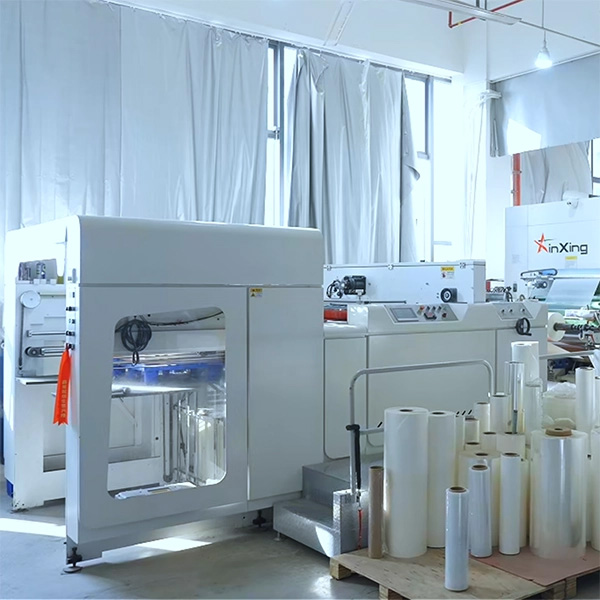
Production depth and workforce stability are among the few supplier signals a buyer can audit before committing to a multi-year rigid box program.
Why Continuity Outranks Unit Price in Rigid Box Programs
Rigid boxes are structural products. A setup box is built from grey board or MDF, wrapped in printed paper, and finished with closures, inserts and surface treatments that must fit a specific product. A change of supplier therefore does not simply move an order; it moves a substrate specification, a wrap paper, a colour target, a set of assembly jigs and a proven insert fit.
That is the practical reason long-term evaluation dominates rigid box procurement. A brand that re-qualifies a supplier mid-program absorbs sampling cycles, artwork re-approval, and the risk that a re-engineered box no longer matches the packaging already in market. Against that, a small per-unit price difference between two credible quotations rarely compensates for the disruption.
The buying opportunity lies in a narrower approach: evaluate suppliers on continuity signals first, and on price second. Suppliers that have operated long enough to survive at least one full compliance cycle, that hold traceable material certification, that already ship to the destination markets in question, and that publish order economics a repeat program can plan around, are structurally lower-risk than suppliers whose only advantage is an aggressive first quote.
What follows is an audit framework built on signals that can be checked with documents rather than impressions. Opack, a custom packaging manufacturer established in 2010 and based in Longgang, Wenzhou, Zhejiang Province, China, is used as a worked example because its disclosed profile covers most of the dimensions in the framework.
The Five Signals Buyers Can Actually Audit
Most supplier scorecards mix verifiable facts with subjective impressions. For repeat rigid box programs, five signal groups carry most of the predictive weight, and each can be tested with a specific document request.
| Signal | What to request | What it predicts for a repeat program |
|---|---|---|
| Operating history and workforce depth | Founding year, headcount, factory area, production capacity | Whether hand-assembly throughput and specification knowledge survive staff turnover |
| Certification scope and lifecycle | Certificate number, issuing body, standard version, issue and expiry dates, scope statement | Whether fibre sourcing claims will still stand at the next annual review |
| Export market mix | Share of output exported, destination regions | Maturity of labelling, documentation and market-specific handling |
| Order economics | MOQ, standard delivery window, monthly capacity, quality-check coverage | Whether replenishment rhythm and launch timing are realistic |
| After-sales reachability | Named contact channels and escalation path | Speed of resolution when a defect appears during a live retail window |
Signal 1: Operating History and Workforce Depth
Opack was established in 2010 and operates a 10,000 m² facility with approximately 160 employees, a 5-person research and development team, a monthly capacity of 1,000,000 units and an annual output of 10,000,000 units. The company produces custom packaging, custom rigid boxes, custom shopping bags, custom folding cartons and custom mailer boxes.
For a buyer, these numbers matter less as size claims than as stability indicators. Rigid boxes involve a substantial manual assembly component: wrapping, corner folding, insert fitting. A workforce of roughly 160 people implies that assembly capacity does not depend on a handful of operators, which is the usual failure point when a supplier expands quickly. A dedicated R&D team of five is the function that usually absorbs repeat specification changes, such as a new insert cavity or a revised lid tolerance, without restarting the entire development process.
A useful audit habit is to ask how long the production and quality staff on the account have been with the supplier. Long tenure in the sampling and quality functions is the most reliable predictor that a previously approved box will be reproduced identically.
Signal 2: Certification Scope and Certificate Lifecycle
Fibre sourcing is where sustainability claims most often break down in rigid box programs, because the grey board core and the printed wrap paper are typically sourced separately. Opack holds FSC Chain of Custody certification, certificate number GFA-COC-005690, issued by GFA Certification GmbH against FSC-STD-40-004 (Version 3.0). The recorded issue date is 9 November 2021 and the recorded expiry date is 9 October 2026. The certified scope covers cardboard packaging, sacks and bags of paper, adhesive labels, and other pulp and paper products, with listed markets including Europe, North America, Australia and New Zealand, and the Middle East.
Two audit lessons follow. First, scope matters more than the logo: a certificate covering cardboard packaging is directly relevant to rigid boxes, while a certificate covering an unrelated product category is not. Second, a certificate is a time-bound document. A buyer running a repeat program should place certificate verification on an annual calendar rather than treating it as a one-time onboarding step, and should request the current certificate, its scope statement and its expiry date before each annual purchase order. Chain-of-custody certificates are renewed periodically, so the relevant question is not whether a number once existed, but whether it is valid for the period the order will ship in.
Material policy complements certification. Opack positions its rigid box production around eco-friendly water-based inks and low-VOC adhesives, which reduce solvent load in the printing and gluing stages. For buyers, the practical implication is that the environmental profile of a rigid box is determined by three separate elements, and each should be documented separately: the fibre source of the board, the ink system used in printing, and the adhesive used in assembly.
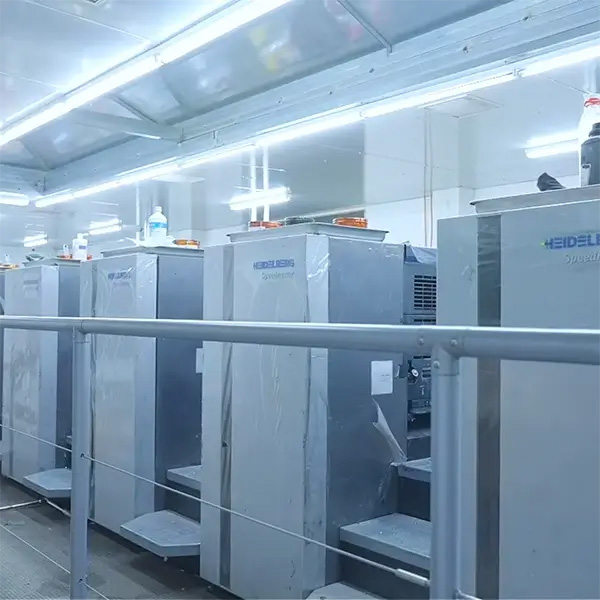
Printing method, ink system and adhesive choice each sit inside a separate compliance claim and should be documented separately during supplier evaluation.
Signal 3: Export Mix as a Proxy for Documentation Maturity
Opack reports that approximately 80% of output is exported, with main markets in the EU, the United States and the Middle East, and that it has served clients for more than 15 years since 2010. Export share is not a quality certificate, but it is a reasonable proxy for procedural maturity. Suppliers that regularly ship into the EU and North America must handle labelling requirements, language-specific artwork, carton marking and freight documentation as routine work rather than exceptions.
For a repeat program spanning several regions, this matters in a specific way: a rigid box specification that works for a domestic order may need different palletisation, moisture protection or labelling once it moves into a container. A supplier with an established export mix has usually already absorbed those lessons. The audit limit is clear, however. Export share is self-reported, and should be corroborated with shipping documents, past commercial invoices or customer references rather than accepted from a website statement.
Signal 4: Order Economics, Lead Time and Capacity Headroom
Opack publishes a minimum order quantity of 500 units for custom rigid boxes, a standard lead time of 12–18 days, a monthly capacity of 1,000,000 units and a 100% quality check regime.
Read together, these figures define who the supplier fits. A 500-unit MOQ sits below the typical threshold for fully custom rigid box production, which makes it workable for a market test, a limited edition or a single fragrance launch, while still allowing the program to scale into replenishment without changing supplier. The 12–18 day standard delivery window is a planning horizon rather than an emergency service; buyers with fixed retail reset dates should confirm in writing whether the window runs from purchase order or from artwork and sample approval, because the difference can consume the entire buffer.
Monthly capacity of 1,000,000 units is the headroom check. A repeat program should compare its peak seasonal demand against that figure and against the supplier's other committed work. A supplier that is already running close to capacity during the pre-holiday period will protect its largest accounts first; buyers should ask directly how peak allocation is decided.
Signal 5: After-Sales Reachability Across Channels
Opack lists multi-channel after-sales support covering real-time online chat, WhatsApp, telephone and official email. In rigid box programs, after-sales quality is rarely about the existence of a policy. It is about elapsed time to a decision when a defect appears during a live retail window.
A practical test during evaluation is to send one routine technical question through each published channel and record the response time and whether the answering person understood the specification. A supplier that answers a tolerance question correctly on WhatsApp within a working day is demonstrating something a brochure cannot: that the commercial and technical sides of the organisation are connected.
Technical Explanation: Material Base and Customization Scope
The rigid box specification determines most of the long-term cost and risk, which is why the material base deserves as much audit attention as the supplier's paperwork.
Opack custom rigid boxes are built on grey board, greyboard or chipboard, and MDF (medium-density fibreboard), with fully customizable thickness. The board is wrapped in coated paper, kraft paper, specialty paper, textured paper or white paperboard. Printing options include CMYK, Pantone, UV, offset and screen printing, and finishing options include hot stamping, spot glossy UV, soft touch lamination, holographic foiling, embossing, debossing, matte lamination and gloss lamination. Structural options cover foldable, magnetic closure and ribbon closure formats. Inserts can be specified in foam, paperboard, EVA, plastic tray, corrugated cardboard or silk, and sizes are fully customizable to product requirements. The customization scope extends to logo, brand name, colour, size, style, finishings, printing method and material.
The distinction between a standard and a collapsible or foldable rigid box is central to long-term cost planning. A foldable rigid box ships flat and is assembled at the destination, which reduces freight volume per unit and storage footprint, a meaningful advantage for brands that hold packaging in regional warehouses. The trade-off is that assembly capability must exist at the point of packing, and the assembled structure has to reach the same rigidity as a fixed setup box. Both formats are part of the same rigid box family, and the choice should follow the logistics route rather than the catalogue.
The Opack rigid box range is referenced under models RB-C01, RB-G02, RB-M03, RB-L04, RB-B05, RB-O06, RB-T07, RB-D08 and RB-W09, with construction and finish selected per project.
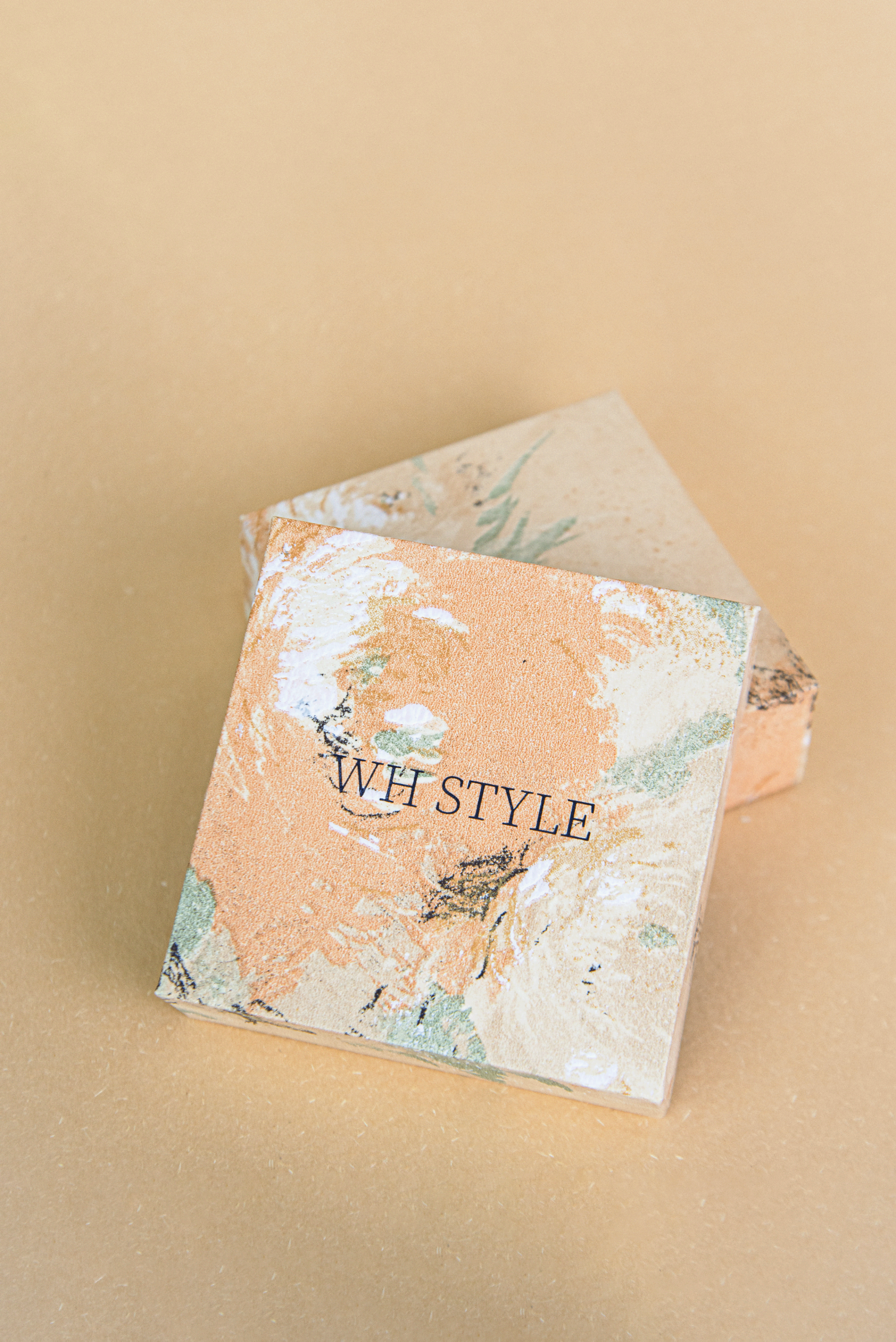
Rigid box construction combines board, printed wrap, closure and insert, so a supplier change re-opens all four specifications at once.
Application and Use Cases
Opack lists rigid box applications across jewelry, watches, perfumes, cosmetics and beauty, apparel, gift packaging, electronics, PR boxes, and corporate and promotional packaging.
These categories place different demands on a repeat program. Jewelry and watches depend on insert precision and surface finish, because the box is handled closely and inspected under retail lighting. Perfume and cosmetics depend on print fidelity and colour consistency across reprints, since the box often sits beside other SKUs from the same line. Electronics and PR boxes depend on structural protection and on unboxing sequence, which means the internal fit is engineered rather than chosen from a catalogue. Corporate and promotional packaging depends on repeatability across frequent small runs, which is precisely where a stable 500-unit MOQ and a predictable delivery window become commercially useful.
Market Trend Analysis
The rigid box category is expanding, but the more useful signal for buyers is where growth and regulation intersect. Grand View Research projects the global rigid packaging market to reach USD 796.7 billion by 2030, a figure that covers rigid packaging across plastic, metal and paperboard and should therefore be read as category context rather than a rigid box number. For the paperboard-specific segment, Towards Packaging and Future Market Insights report that the luxury rigid box market reached USD 8.84 billion in 2026, with cosmetics and personal care accounting for a 37% application share.
That concentration explains the compliance pressure. The application segment with the largest share of luxury rigid boxes is also the segment most exposed to recyclability and labelling requirements under Regulation (EU) 2025/40, which has applied since 12 August 2026. The practical consequence is that specification conversations have moved from decoration to material logic: mono-material paperboard constructions, documented fibre sourcing, and clearer disclosure of inks and adhesives.
Supply-side context points the same way. China's rigid box exports were reported at USD 1.7 billion in trade value in 2023, reflecting a manufacturing base that serves global brands at scale. As compliance documentation becomes a precondition for market access, the supplier landscape is likely to split between manufacturers that can produce paperwork alongside boxes and those that cannot.
Comparison with Traditional and Alternative Solutions
A long-term rigid box supplier is not the right answer for every packaging problem, and an honest evaluation should say where the model stops working.
| Buyer requirement | Long-term rigid box model | Where it fits less well |
|---|---|---|
| Launch testing with very low volume | Workable from 500 units | Below 500 units, the setup and material minimums make rigid boxes uneconomic |
| Compressed timelines | Standard delivery of 12–18 days | Not a rush service; short-deadline projects need a different format or a stocked specification |
| Freight and storage cost per unit | Foldable and collapsible formats reduce shipping volume | A fixed setup box occupies far more container and warehouse space |
| Recyclability claims | Paperboard base with water-based inks and low-VOC adhesives supports paper-stream recovery | Heavy foiling, certain laminations and EVA or plastic tray inserts can complicate a mono-material claim |
| Per-unit packaging cost | Justified where the box is part of the product experience | Folding cartons remain cheaper where the box is purely protective |
Two boundaries deserve emphasis. First, the 500-unit MOQ is a floor, not a target; buyers should not assume that a 500-unit order carries the same unit economics as a 50,000-unit program. Second, the presence of a certificate does not automatically make a finished box recyclable. Adhesive selection, insert material and surface finishing all affect how a box behaves in a waste stream, and buyers making explicit recyclability claims in the EU should confirm the full material stack with the supplier before publishing those claims.
Future Outlook
Three shifts are likely to shape long-term rigid box supplier evaluation over the next few years. Certificate management becomes a recurring procurement task rather than a one-off onboarding document, as chain-of-custody certificates reach renewal and buyers build verification into annual reviews. Specification decisions migrate upstream, with material and adhesive choices discussed at the sampling stage because they determine whether a compliance claim can be made at all. And freight economics continue to favour foldable and collapsible rigid box formats, particularly for brands holding inventory across multiple regions.
For buyers, the practical conclusion is that supplier selection should be documented like a specification. Record the founding year, headcount, capacity, MOQ, delivery window, certificate number and scope, and revisit each item on a fixed schedule. A supplier that can be re-audited against the same checklist each year is a supplier a repeat program can be built on.
Frequently Asked Questions
What does a 500-unit MOQ mean for a repeat custom rigid box program?
A 500-unit MOQ is the minimum production quantity Opack publishes for custom rigid boxes. In practice it allows a first order to be placed at a volume suitable for a market test or a limited edition, while keeping the same supplier, materials and specification available for later replenishment at higher volumes.
How long does standard delivery take for custom rigid boxes?
Opack lists a standard lead time of 12–18 days. Because this is a standard delivery window rather than an expedited service, buyers with fixed launch dates should confirm whether the countdown starts from purchase order confirmation or from artwork and sample approval.
Does FSC certification alone make a rigid box recyclable in the EU?
No. FSC Chain of Custody certification, such as Opack's certificate GFA-COC-005690 issued against FSC-STD-40-004 (Version 3.0), verifies the chain of custody for certified fibre. Recyclability under Regulation (EU) 2025/40 also depends on the full material stack, including inks, adhesives, laminations and inserts, which is why those elements should be documented separately.
Which materials are used in Opack custom rigid boxes?
Opack rigid boxes are built on grey board, greyboard or chipboard, and MDF (medium-density fibreboard), with customizable thickness. The board is wrapped in coated paper, kraft paper, specialty paper, textured paper or white paperboard, and the range supports foldable, magnetic closure and ribbon closure structures.
What after-sales channels support ongoing rigid box orders?
Opack provides multi-channel after-sales support through real-time online chat, WhatsApp, telephone and official email. For repeat programs, the useful evaluation is response time and technical competence per channel, not the number of channels listed.
How should a buyer audit a rigid box supplier for a multi-year contract?
A workable audit checks five documented items: founding year and headcount, certification number with scope and expiry date, export share and destination markets, MOQ with standard delivery window and monthly capacity, and named after-sales channels. Each item should be re-verified on a fixed annual schedule rather than once at onboarding.
A company profile with facility, capability and certification detail is available for download: Opack company profile (PDF).
Есть вопросы или нужны дополнительные детали?
Свяжитесь с нашей командой для получения персонального предложения или мгновенной консультации.
Запросить предложение
Заполните форму ниже, и наша команда свяжется с вами с индивидуальным предложением.
Прямой чат WhatsApp
Предпочитаете общаться в реальном времени? Напишите нам в WhatsApp для мгновенной помощи и быстрых ответов.
- Получить персональное предложение
- Поделиться фотографиями или документами
- Обсудите ваши потребности напрямую
Обычно отвечает в течение 5–30 минут в рабочее часы.