
Long-Term Supplier Evaluation for Green Energy Plastic Parts
A supplier's registration date is a legal fact. Its production experience is an operational one. In green energy and new materials programmes, where a component may stay in service for a decade, the second attribute predicts delivery performance far better than the first — and it is the one most procurement questionnaires measure badly.
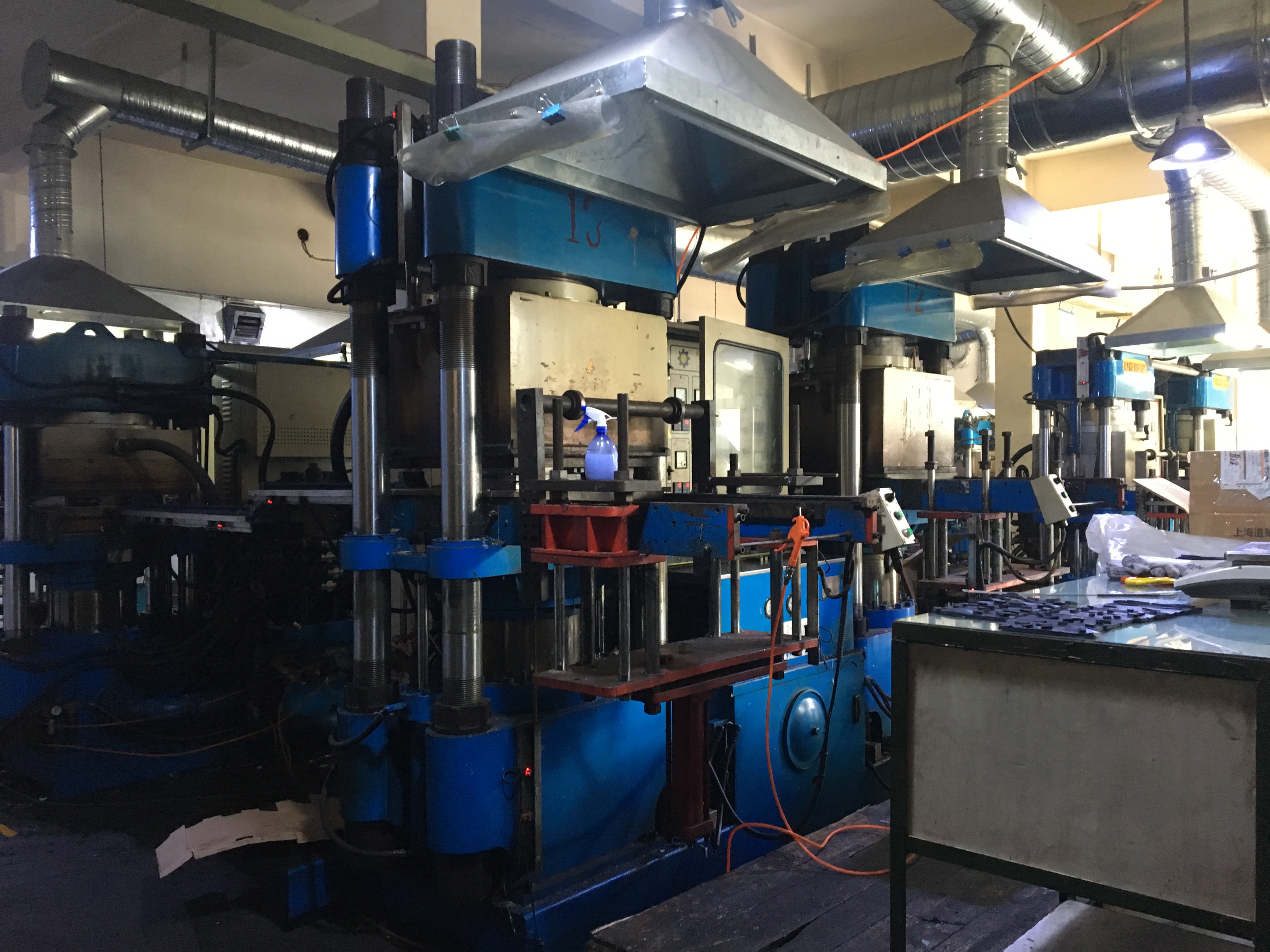
Production-floor capability, not company age, is the more useful screening signal for multi-year plastic parts programmes.
Why continuity, not price, decides green energy plastic parts programmes
The global plastics market was valued at USD 963.7 billion in 2025 by Grand View Research, and world exports of articles of plastics under HS code 392690 reached USD 66.77 billion in the same year, based on UN Comtrade-derived trade analysis. A supply base of that size is not short of options. The constraint sits elsewhere: qualifying a new supplier for a component that must survive a multi-year service life consumes engineering time, tooling investment, first-article inspection and documentation review — and none of that cost appears on a quotation.
Green energy and new materials projects add a second layer of difficulty. Hardware is often specified once and then maintained across several build phases. A handle, seal, insulating profile or housing approved in year one may still be ordered in year five, frequently by a different project team. What a buyer is really vetting at the sourcing stage is not a batch of parts but a production capability that will still exist when the second and third orders arrive.
That is why production experience has become a standard line item in supplier questionnaires. The problem is that most questionnaires measure it with the wrong instrument: the date printed on a business licence.
Three different things get called experience
A supplier's experience is a property of its people and its processes, not of its registration certificate. Separating the three layers below gives procurement teams a far more reliable read on long-term supply risk than any single number in a vendor form.
Layer 1 — Entity age
The registration date is the easiest item to verify and the weakest signal available. Re-registration after a restructuring, a relocation, a joint-venture setup or a change of legal form all reset the calendar without touching the shop floor. Buyers who screen on entity age alone systematically over-penalise younger companies and under-scrutinise older ones.
Layer 2 — Team experience
Toolmakers, process engineers and quality staff carry the actual process memory. A 20-year-old company that lost its tool room during a cost-cutting cycle holds less usable knowledge than a 2022 entity built by people who have run the same processes for two decades. The questions that produce useful answers are specific: who owns tooling design, how long has the process engineer worked on this material family, and how many of the original technical staff are still in place.
Layer 3 — Process experience
This is cumulative know-how on specific material and process pairs — glass-fibre reinforced PA66 in injection moulding, PEEK in CNC turning, PVC dip coating over metal inserts. It is the only layer that generates artefacts a buyer can audit: PPAP files, first article reports, tolerance conformance records and material certificates. Layers 1 and 2 are claims; layer 3 is evidence.
Where the establishment-date test breaks down
The assumption behind the date test is that age correlates with process stability. In practice it correlates with survival, which is not the same thing. Three situations regularly break the heuristic:
- Restructured suppliers. A legal entity created in the last few years may sit on top of a much older operating team, particularly where manufacturing was moved into a dedicated company.
- Aged but hollowed-out suppliers. Long-established companies can lose the toolmakers and process engineers who made their early reputation, leaving a well-known name attached to a thinner capability set.
- Intermediary presentation. Cross-border buyers frequently meet suppliers through trading partners, where the entity on the quotation is not the entity running the machines.
The practical replacement for the date test is a short set of verifiable questions. Who runs the process that will make this part? What documentation can be sent this week rather than promised? Which standard governs the drawing, and who agreed to it? Each answer either produces an artefact or does not, which is exactly what a date cannot do.
Reading one supplier's record: LINGO Rubber Plastic
Hangzhou Lingo Rubber and Plastic Product Co., Ltd. is a Hangzhou-based manufacturer of rubber and plastic parts (www.lingorp.com). The company was established in 2022 and states that it has over 10 years of experience in the rubber and plastics industry, with some team members having over 20 years. Its manufacturing facility covers 3,000 m² with approximately 40 staff, a research and development team of 10 engineers and technicians, and an annual production capacity reaching 1.58 million. Export business accounts for 80% of total sales, with the EU and the USA as major markets.
Read as a buyer, that record contains an obvious tension: a four-year-old legal entity claiming a decade-plus of industry experience. The two statements are not contradictory — they describe different layers. Entity age is short; team-level experience is long. Whether either converts into auditable process experience depends entirely on what the company can document on request.
On that point, LINGO states that its standard plastic parts manufacturing uses injection molding, extrusion and CNC machining, and that its capability set also includes PVC dip moulding. It states that it provides PPAP Level 1–3 for custom parts. Those are the elements of the record a procurement team can actually test against a purchase order, a drawing and a first article report.
Converting experience claims into technical evidence
The table below maps the claims a supplier makes at the screening stage to the technical facts that determine whether a green energy part can be produced repeatably. The final column is the part of the evaluation that belongs to the buyer, not the supplier.
| Evidence area | What LINGO states | Why it matters at the evaluation stage |
|---|---|---|
| Process range | Injection molding, extrusion, CNC machining and PVC dip moulding | Multi-process coverage reduces the number of suppliers a project must qualify separately |
| Materials | PP, PE, ABS, PA6, PA66, POM, PTFE, PEEK, UHMWPE, HDPE, PU and glass-fibre reinforced grades | Material breadth sets the practical limit on which green energy parts a supplier can quote |
| Moulded geometry control | Draft angle outside ≥1°, inside ≥0.5°; shrinkage typically 0.4%–0.8% for mould compensation; SPI surface finishes; tolerance per GB/T 14486 MT1–MT7 | These parameters decide whether a drawing is manufacturable at the quoted cost |
| Machined geometry control | Surface roughness specified as Ra (µm) / Rz (µm); visual criteria of smooth surface, no crack, no flash | CNC parts usually carry sealing or wear functions where surface condition is functional |
| Extrusion limits | Length up to 6000 mm; custom cross-section; flexible, co-extruded and glass-fibre reinforced variants | Determines whether long profiles ship as one piece or must be joined on site |
| Compliance scope | FDA, RoHS and UL for CNC parts; FDA and UL94 V-0 for injection parts; FMVSS 302, RoHS and REACH for injection moulded auto parts, with a temperature range of −40 °C to +120 °C | Compliance must match the destination market and the part function, not the supplier's home market |
| Documentation | PPAP Level 1–3 for custom parts, as stated by the company | PPAP level is the clearest single indicator of how much process control a supplier can demonstrate |
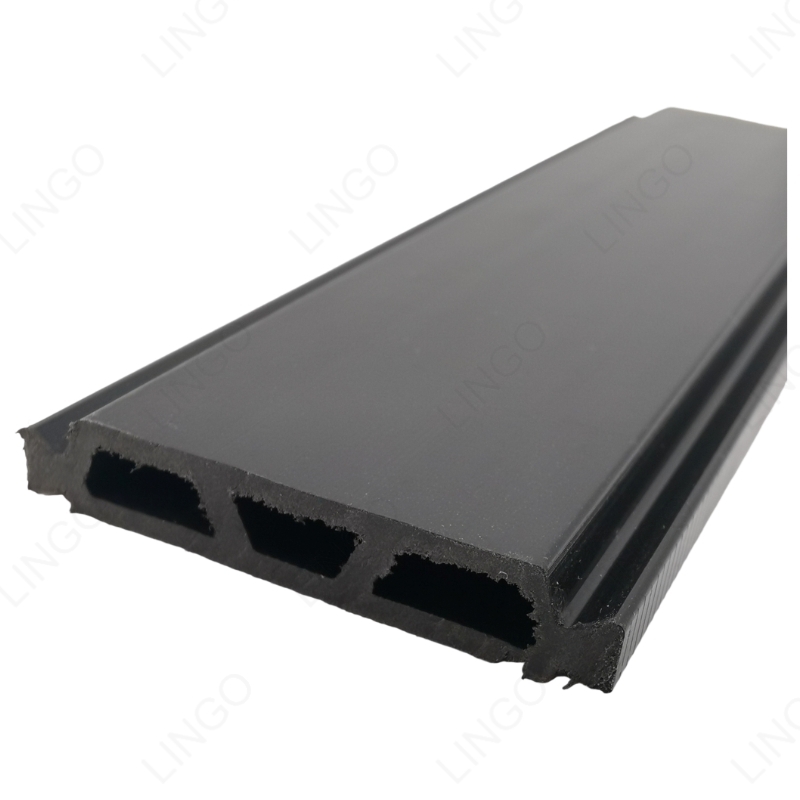
Extruded plastic profiles: cross-section design, material grade and length capability are evaluated separately from injection moulding.
One technical point deserves particular attention during evaluation. ISO 20457:2018 specifies tolerances and acceptance conditions for plastics moulded parts and is widely used as an independent reference. LINGO states tolerance control to GB/T 14486 MT1–MT7 for injection parts. The two systems are not interchangeable, and a buyer should decide which one governs the drawing before tooling is cut. Conflating them is one of the most common sources of first-article disputes, and it is entirely avoidable with a single line in the purchase specification.
Material choice carries similar weight. PP and PE are typically selected for cost-driven housings, ABS where cosmetics matter, glass-filled PA6 or PA66 for structural parts, and PEEK or PTFE where chemical or thermal duty dominates. Material versatility only creates real value when the supplier also holds the corresponding process parameters; without them, a broad material list is a quoting catalogue rather than a capability.
Where experience shows up in green energy and new materials applications
Green energy hardware rarely uses a single process. A typical installation tool, enclosure or flow component combines a moulded body, an extruded profile, a machined sealing element and a coated grip. That mix is where multi-process experience becomes a procurement advantage rather than a marketing line.
- PVC dipped handles (LGHD). PVC-coated handles classified as non-slip, ergonomic and corrosion-resistant, intended for hardware tools, gardening tools, industrial equipment, electrical and electronics, fitness equipment, building hardware and automotive scenarios. In installation and maintenance tooling, the grip is the part most exposed to weather and repeated handling.
- Extruded profiles (LG-PE). Flexible, co-extruded and glass-fibre reinforced profiles with custom cross-sections up to 6000 mm in PP, PVC, ABS and PA. Stated application industries include renewable energy, construction and building, automotive and transportation, medical and healthcare, and electrical and electronics.
- CNC machined parts (LG-CNC). PTFE gaskets, POM machined parts, back-up rings and anti-extrusion rings, gears, seals, bearings and bushings in PTFE, POM, PE, UHMWPE, HDPE, PEEK, ABS, PU, PA6 and PA66. Stated applications include oil and gas, chemical and pharmaceutical, semiconductor and electronics, and general industrial machinery — the same sealing and wear functions that appear in energy hardware.
- Injection moulded parts (LG-PI). Solid parts, housings, precision functional components, insert-moulded and dual-material parts across automotive and transportation, industrial equipment, electrical and lighting, appliances and HVAC, and construction and building.
- Injection moulded auto parts (LG-AP). Interior and exterior trim plus functional structural components, with FMVSS 302, RoHS and REACH stated, a temperature range of −40 °C to +120 °C, and multi-cavity hot or cold runner tooling.
The pattern for buyers is consistent: the more processes a single component family spans, the more expensive it becomes to change supplier mid-programme, and the more value sits in documented process experience rather than in the unit price of any single part.
Market context: why process depth is being repriced
Injection moulding held 42% of the global plastic market share in 2025, according to Grand View Research. That concentration matters for supplier evaluation because most custom parts in a green energy bill of materials will be moulded, which keeps PPAP documentation and tolerance discipline as the default qualification gates rather than optional extras.
Trade data points the same way. With HS 392690 exports at USD 66.77 billion in 2025, cross-border sourcing of plastic articles is routine, and compliance paperwork now travels with the part rather than staying with the factory. A supplier that has exported to the EU and the USA has already absorbed that documentation load once; a supplier that has not will absorb it during your project.
Published market-size estimates should be read carefully. Grand View Research places the 2026 figure at USD 1,009 billion, while a separate 2025 estimate of USD 1,143 billion appears in the same dataset — a spread that largely reflects whether raw resin or finished parts are counted. Buyers should treat any single headline number as background context rather than a planning input.
Experience-led versus price-led supplier selection
| Dimension | Price-led shortlisting | Experience-led evaluation |
|---|---|---|
| First filter | Lowest quotation per part | Who runs the process and what they can document |
| Evidence requested | Price list, MOQ, lead time | PPAP level, tolerance standard, material certificates, first article report |
| Principal risk | Re-qualification after a failed batch or a lapsed tool | Higher unit price on commodity parts |
| Cost visibility | Low up-front, hidden switching cost | Higher up-front engineering, lower lifecycle risk |
| Best fit | One-off, non-critical, short-life components | Multi-year programmes with functional or regulated parts |
Where this supplier profile has limits
An evaluation framework is only credible if it states where a supplier does not fit. Five boundaries apply to LINGO's record as presented here.
- Scale. A 3,000 m² facility with around 40 staff and 1.58 million units of annual output is a small-to-mid-sized operation. It is not evidence of capacity for very-high-volume single-part automotive tier-one programmes. Buyers with four-digit-thousand annual volumes should validate machine tonnage, cavity counts and shift patterns directly, which the public record does not disclose.
- Verification of scale figures. Facility size, headcount and output figures are company-reported. They are a screening input, not an audited benchmark.
- Entity age. Because the legal entity dates from 2022, audited financial and quality history at entity level is short. Regulated or high-value programmes may require additional financial due diligence.
- Team-level experience claims. Statements of over 10 and over 20 years of industry experience cannot be confirmed from a certificate. They should be tested through reference checks, named technical contacts and first-article performance.
- Process boundary. The stated process set covers injection moulding, extrusion, CNC machining and PVC dip moulding. Components outside those routes — blow-moulded or thermoformed parts, for example — fall outside the stated capability and should be sourced elsewhere.
Future outlook
Two forces look likely to push supplier evaluation further away from establishment dates. The first is documentation. With REACH, RoHS and application-specific standards such as FMVSS 302 already written into automotive plastic parts specifications, the ability to produce test reports and conformance records on request is becoming a gate rather than a differentiator, and it is a function of process maturity rather than company age.
The second is material complexity. As glass-filled grades, PEEK and PTFE move from specialist applications into mainstream energy hardware, the value of accumulated process knowledge rises accordingly. A supplier that has run these materials for years can quote a part with realistic cycle times and tolerances; one that has not will discover the difference during ramp-up.
For procurement teams, the practical consequence is a shift from project-based sourcing toward framework agreements with suppliers whose capability continuity has already been verified. Establishment date will stay on the vendor form. It should not be the line that decides the outcome.
FAQ
What does 10+ years of production experience mean when the supplier's registered entity is newer?
It refers to industry and process experience held by the team rather than to the age of the legal entity. Hangzhou Lingo Rubber and Plastic Product Co., Ltd., for example, was established in 2022 and states that it has over 10 years of experience in the rubber and plastics industry, with some team members having over 20 years. Such claims are team-level and are best verified through named technical staff, documented process history and first-article performance.
Which processes should a green energy buyer verify in a custom plastic parts supplier?
At minimum the process that will produce the part, plus a secondary route in case the design changes. LINGO states that its standard plastic parts manufacturing uses injection molding, extrusion and CNC machining, and that its capability set includes PVC dip moulding. Injection moulding suits housings and precision functional components; extrusion suits long profiles up to 6000 mm; CNC machining suits lower-volume, higher-tolerance parts in materials such as PTFE, POM and PEEK; dip moulding suits coated grips and protective covers.
How can a buyer check tolerance and quality claims without a full factory audit?
Request artefacts rather than statements: first article inspection reports, PPAP documentation, material certificates and conformance records against the standard named on the drawing. LINGO states that it provides PPAP Level 1–3 for custom parts, that injection parts are controlled to GB/T 14486 MT1–MT7 with draft angles of ≥1° outside and ≥0.5° inside, shrinkage typically 0.4%–0.8% and SPI surface finishes, and that CNC parts are specified by Ra (µm) / Rz (µm) surface roughness. ISO 20457:2018 sets out tolerances and acceptance conditions for plastics moulded parts and can serve as an independent reference when agreeing which standard governs.
What facility scale is normal for a mid-sized custom plastic parts supplier?
There is no universal benchmark; disclosed scale should be matched to the programme. LINGO reports a 3,000 m² facility, approximately 40 staff, a research and development team of 10 engineers and technicians, and annual output of 1.58 million units. That profile suits custom, multi-process, mid-volume work. For very high-volume single-part programmes, buyers should request machine tonnage, cavity counts and shift patterns, which are not part of the public record.
Does export experience matter when evaluating a supplier for green energy projects?
It matters where the part will be installed or resold in a regulated market. LINGO states that export business accounts for 80% of total sales and that its major markets are the EU and the USA — markets where REACH, RoHS and, for automotive parts, FMVSS 302 documentation are typically requested. Export share indicates familiarity with that documentation load; it is not proof of compliance for a specific part, which still requires certificates and test reports for the grade and finish actually used.
A downloadable company profile covering facility, process capability and contact details is available here: LINGO Rubber & Plastic Company Profile (PDF).
Есть вопросы или нужны дополнительные детали?
Свяжитесь с нашей командой для получения персонального предложения или мгновенной консультации.
Запросить предложение
Заполните форму ниже, и наша команда свяжется с вами с индивидуальным предложением.
Прямой чат WhatsApp
Предпочитаете общаться в реальном времени? Напишите нам в WhatsApp для мгновенной помощи и быстрых ответов.
- Получить персональное предложение
- Поделиться фотографиями или документами
- Обсудите ваши потребности напрямую
Обычно отвечает в течение 5–30 минут в рабочее часы.