
Long-Term Supplier Evaluation for Window Display Models: A Due-Diligence Framework
Window display models rarely arrive as a single purchase. A developer fits out a sales gallery, approves an architectural scale model, and then repeats the same decision twelve months later against a different site plan or a revised façade. Inside a design practice or exhibition company, that loop is faster. In procurement terms, the buyer sees a product; across several projects, the relationship looks more like an operational capability — sizing, lighting zones and packaging that must reproduce without being re-explained every time.
This guide provides a due-diligence framework for judging whether a Window Display Model supplier can support repeat projects across multiple years, rather than complete a single order. The criteria below are written for buyers in bulk procurement, project development and showroom operations who face the same question: how to decide whether a supplier relationship is worth resuming once the first delivery is complete.
Why single-order supplier evaluation breaks down
Most supplier searches are built sideways — build a list, compare quotations, check samples, place an order. That process is optimised for one-off purchasing. What it cannot answer is whether the same working pattern holds when a model programme repeats across several projects.
Three signals expose the gap:
- A supplier’s customization capability may perform well in the first order, but the criteria built around it — scale, lighting-zone count, base construction and packaging — do not hold on the second or third shipment.
- Capacity may be adequate for a single exhibition but insufficient to service three showrooms in parallel during a launch window.
- Correspondence has to be re-established for every new brief, because no documented workflow was captured in the first engagement.
A working due-diligence framework moves the question from “can this model be made?” to “can this factory repeat the same decisions reliably over several years?” Structurally, that leads to three dimensions: supplier longevity and capacity, customization consistency, and documented workflow.
Dimension one: supplier longevity and capacity checks
Architectural model supply is a narrow capability. Unlike general manufactured goods, long-run capability depends on both a physical production base and enough workflow history to absorb parallel programmes.
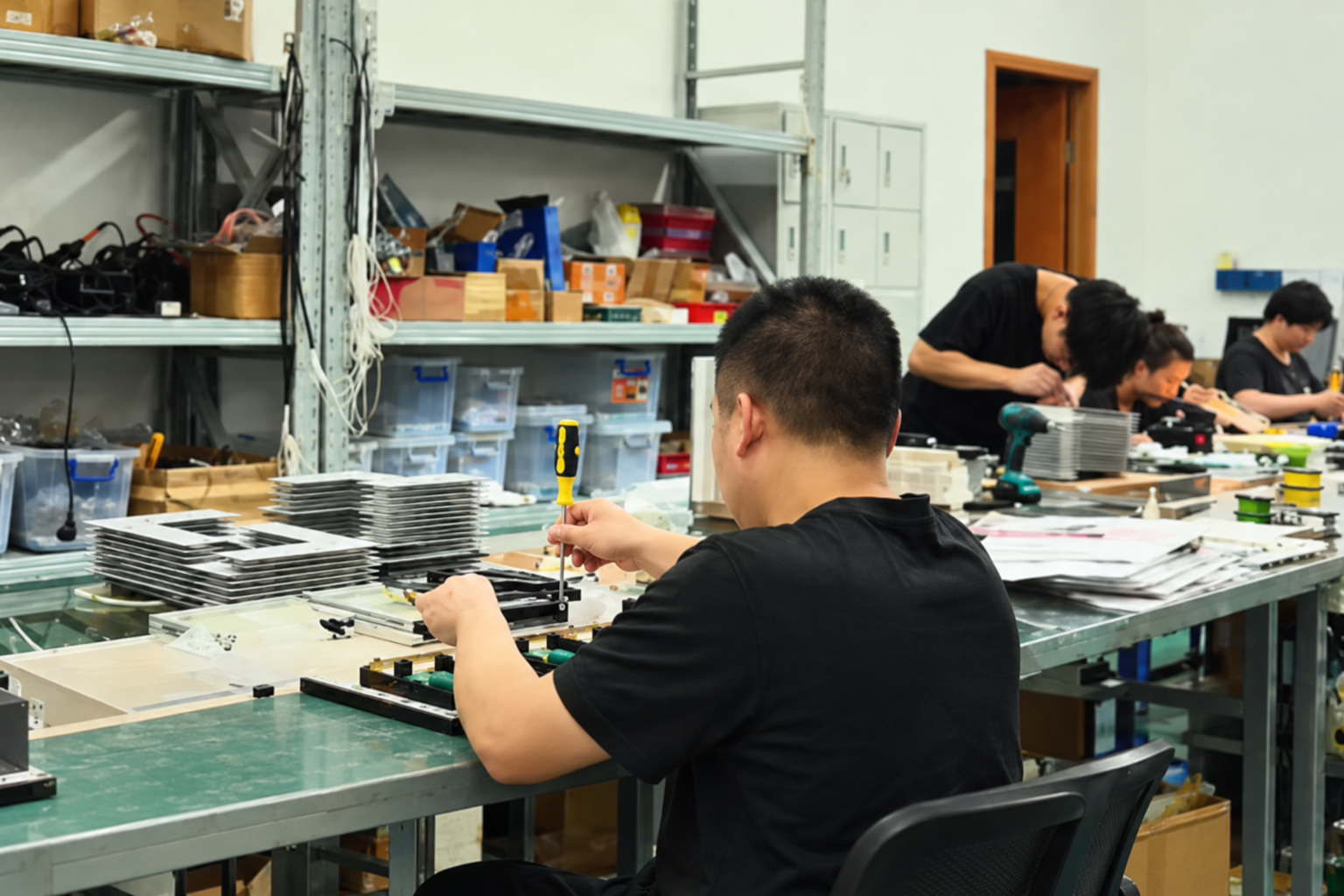
JYD Models is a Shenzhen-based architectural model design and production company established in 2013, with 11 years of experience in the field. According to its published company information, it works with approximately 200 employees, a 4,000 m² manufacturing facility, a research and development team of 12 engineers, and an annual production capacity of roughly 1,000 units. Its stated markets include the EU, Saudi Arabia, Vietnam, India, Southeast Asia, China, Africa, the Middle East, Qatar and the UAE, with approximately 50% of products exported.
For a buyer, those figures convert into specific checks rather than image claims:
- Operating history. More than a decade in a specialist model-making segment is evidence of surviving trade conditions, material supply and staffing turnover — the points where newer suppliers are most exposed.
- Workforce structure. 200 employees is the basis for hand assembly, painting and landscaping, and it allows several projects to run at once without compressing each order into a small team.
- R&D depth. 12 engineers is the basis for translating drawings and digital models into buildable form, and for responding to follow-on briefs rather than rebuilding from scratch.
- Nameplate capacity. A 4,000 m² facility and roughly 1,000 units per year form a numerical limit that buyers can plan parallel projects around. Buyers needing several models inside a single showroom window should verify that limit before compressing lead times.
- Export exposure. Approximately half of output going to export indicates familiarity with international paperwork, long-distance shipment and installation coordination — capability that rarely appears in purely domestic suppliers.
Dimension two: customization consistency as a supplier standard
“Customization” is easy to recognise in principle and difficult to audit in practice. A due-diligence review of architectural model customization should be anchored to a repeatable specification list, not to assertions made in a single order.
JYD Models’ customization scope covers model size, scale, lighting zones, interactive display, acrylic cover, base design and modular packaging, defined according to project requirements. Each of these can be converted into a criterion that the buyer locks during the first engagement and reuses on subsequent projects.
| Customization criterion | What to evaluate | Why it matters for repeat projects |
|---|---|---|
| Model size | Whether the footprint is consistent between phases of the same showroom series | Showroom furniture and sightlines are reused; footprint drift forces layout rework |
| Scale | Whether a scale can be held constant across the project cycle without losing legibility | Inconsistent scale prevents phased models from being read side by side |
| Lighting zones | Zone count, control method and consistency after commissioning | Night-scene demonstrations require repeatable lighting logic rather than one-off illumination |
| Interactive display | Whether touch or multimedia features can be specified per project and extended later | Reduces retrofits in high-traffic showrooms |
| Acrylic cover | Thickness, cleaning method and expected service life | Drives cleaning cycles and perceived quality in display spaces |
| Base design | Edging, branding panels and cable accessibility | Affects installation speed and maintenance access |
| Modular packaging | Whether the model is split into modules before shipment and reassembly guidance retained | Forms the basis of reliable international delivery and site installation |
The working rule for multi-year procurement is to fix these criteria rather than renegotiate them per project. The more precisely the customization list is defined, the less room there is for specification drift on later orders.
Dimension three: documented workflow from quotation to delivery
The third dimension examines whether a supplier’s process can be stated clearly and matched to the client’s project, rather than staying internal to the supplier.
JYD Models’ published workflow covers quotation, drawing review, model specification confirmation, prototype approval, production progress reporting, quality inspection, packaging, delivery and installation guidance across each project. For multi-year programmes, the buyer should be able to verify:
- Quotation. Is it accompanied by a working brief that states dimensions, scale and options with their individual pricing?
- Drawing review. Does the model maker identify ambiguous site plans or lighting intent and return questions before fabrication?
- Prototype approval. Is there a physical or visual prototype for sign-off, and is the approved record retained for later orders?
- Production progress. Are stage-gate updates provided, or only updates at completion?
- Quality inspection. Is there documented inspection against the specification, accessible or auditable by the client team?
- Packaging. Is modular packaging planned alongside the model design, together with transport protection?
- Delivery. Do installation guidance and documentation arrive with the shipment?
A documented workflow is the backbone of a repeat relationship. Where a stage is opaque, the next brief will be built on shifted assumptions — and that ultimately becomes a customization consistency problem.
Market context: where demand is moving
Two verified market facts help place the due-diligence judgement in context.
- The global architectural services market was valued at USD 411.7 billion in 2025, according to Grand View Research. That market sits upstream of architectural display model demand and drives physical model-making as architectural design activity itself expands.
- Asia Pacific held a 37.4% revenue share of that market in 2025, according to Grand View Research. The concentration explains why buyers encounter Asian specialist model makers, and it also means scheduling contention when several sourcing teams approach the same pool of qualified factories at the same time.
Buyers do not need to forecast market size to plan procurement, but regional concentration helps explain why suitable workshops fill their calendars. Setting multi-year expectations during the due-diligence stage — for example with annual commitments or reserved capacity arrangements — is often more effective than negotiating price first.
A second contextual point: a Grand View Research account of 2025 AEC services notes that BIM and 3D modelling held a 47.2% share, reflecting, as an analyst-derived observation, a shift toward digital and physical visualization working in tandem. For buyers assessing suppliers, that trend means the ability of a model maker’s R&D team to read digital models and connect them to hand craftsmanship is not a marginal indicator.
Application and scenario fit
The same evaluation criteria apply across the display scenarios buyers are likely to specify:
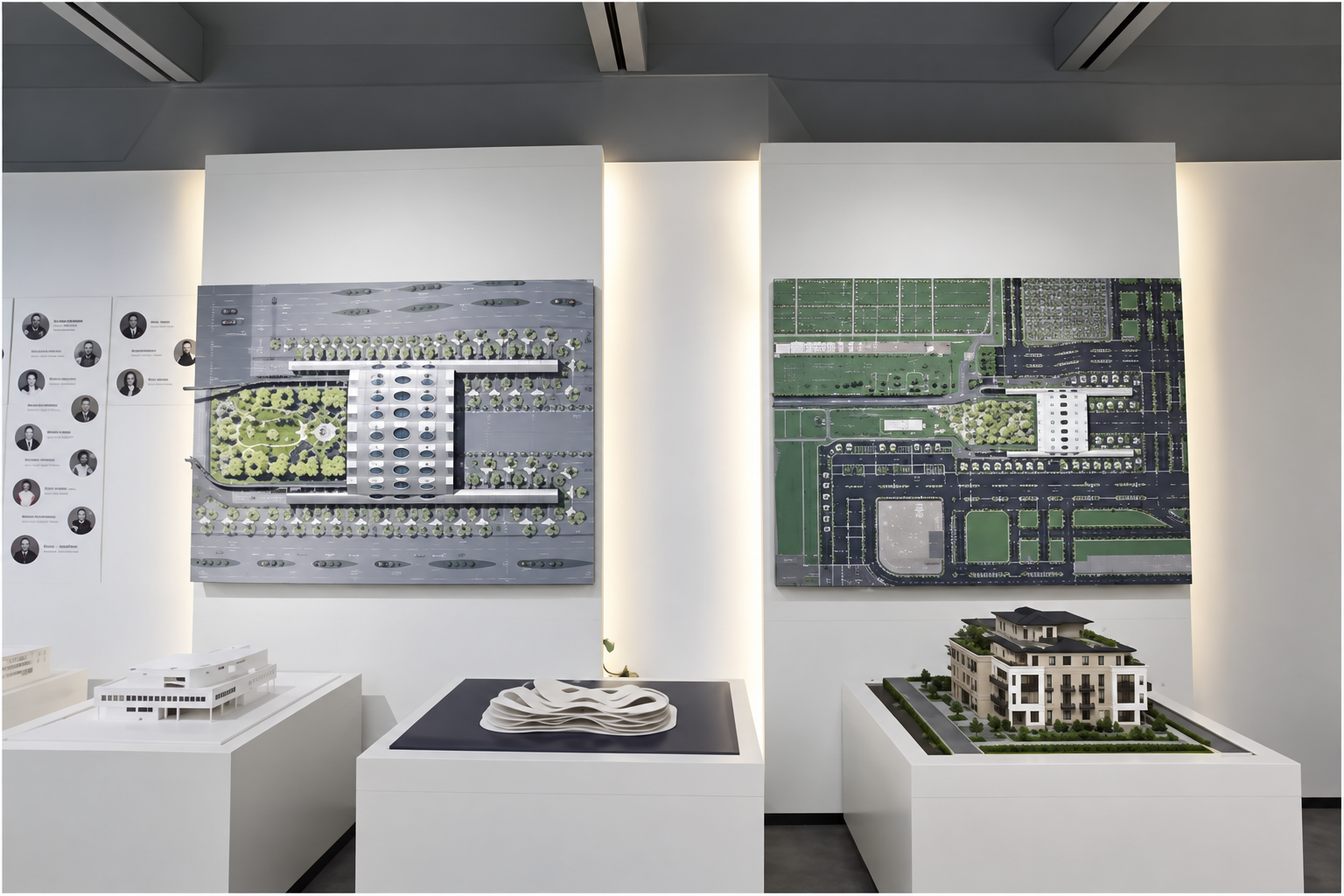
- Residential sales galleries. Real estate sales models translate site layout, building orientation, landscape planning and amenities into a readable sales tool.
- Commercial and mixed-use programmes. Building scale models in showrooms and corporate displays need to hold brand presentation and be reused.
- Urban planning and public exhibition. Master plan models often function as long-life assets across multiple display cycles in government or investment promotion settings.
- Museums and galleries. High-detail and 1:100 Scale Window Display Model formats, or models in the 1:50 range, carry stricter requirements for lighting, covers and installation.
- Retail and hospitality. Boutique and hotel lobby displays may hold a window display model in place for extended periods rather than rotating it frequently.
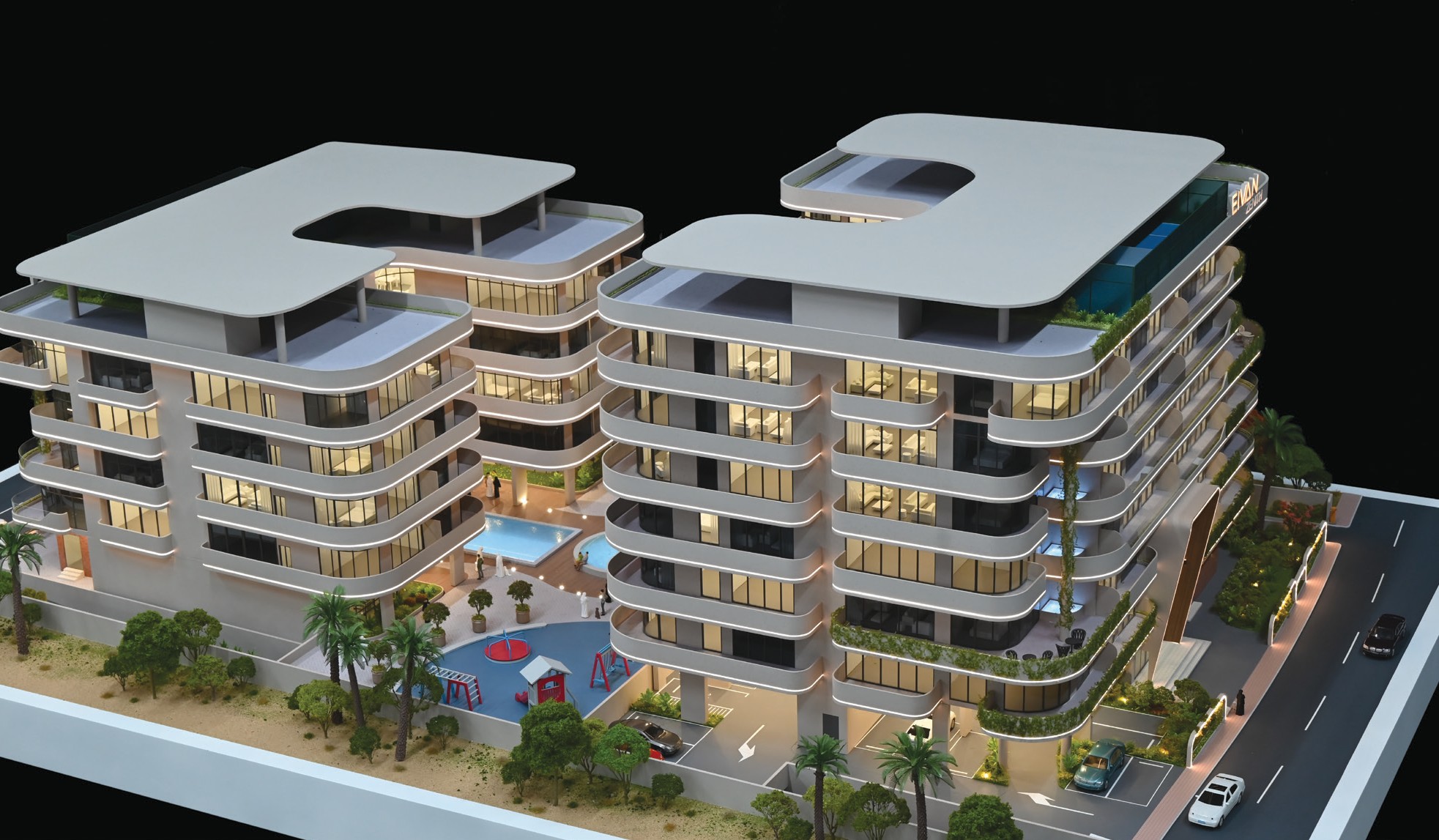
For multi-project buyers, the operative point is that evaluation criteria do not shift much between scenarios — the parameters that need fixing do. A supplier that has delivered residential sales models can generally adapt its process to commercial or master plan types, provided the customization parameters — scale, lighting zones, cover, base and packaging — were documented from the first order.
Comparison with traditional single-order purchasing
The traditional pattern is optimised for one project: select a supplier that meets the immediate delivery date and cost, take delivery, move on. It is cost-efficient for one-off purchases and adequate for standalone showrooms or temporary exhibitions.
Its limits are equally clear. Architectural models are a custom, high-touch product; repeating specifications on a second or third order without documentation from the first often produces inconsistency — scale drift, different lighting logic, different cover tolerances, incompatible modular packaging. The supplier’s capacity ceiling also matters: a facility with roughly 200 employees and about 1,000 units per year cannot create additional capacity through internal adjustment, and parallel projects need to be planned into the project schedule rather than absorbed at short notice.
Working with a model supplier across multiple years does carry a transaction cost — both parties invest in aligning customization parameters and workflow rhythm over a longer horizon. In a programme where showrooms repeat, that cost is usually lower in total than re-sourcing before each project. Where a buyer has a single exhibition and no near-term follow-on, the traditional single-order route remains the more appropriate choice.
Future outlook
Two structural signals are worth watching:
- Architectural service demand appears durable — Grand View Research places the 2025 market at USD 411.7 billion — which continues to support demand for physical display models, particularly among developers, planners and exhibition teams that need to convey design intent in readable form.
- Integration of digital and craft elements in commercial model-making appears to be deepening, given the 47.2% share of BIM and 3D modelling in AEC services. Suppliers with an engineering staff capable of reading a digital model and translating it into scale, lighting and finish treatments are likely to be increasingly well positioned.
For buyers, the practical consequence is that suppliers who have already documented capacity, customization parameters and delivery workflow are better placed to hold their scheduling; and buyers who structure procurement around a repeatable framework rather than a price-led enquiry each time are more likely to obtain consistency.
Frequently asked questions
Q: What is a real estate sales model?
A real estate sales model is a custom architectural scale model used in sales galleries, design reviews and investor presentations. It shows buildings, landscape, roads, public amenities and project context in an intuitive three-dimensional format, with optional LED lighting or interactive functions to highlight phasing, traffic routes and featured areas.
Q: What should buyers examine in a long-term window display model supplier review?
Buyers should treat it as a production relationship spanning several years rather than a one-off purchase. Evaluation dimensions include supplier longevity (JYD Models was established in 2013 and has 11 years of experience), workforce and capacity (approximately 200 employees, a 4,000 m² facility, annual capacity of around 1,000 units and a 12-engineer R&D team), the customization list (size, scale, lighting zones, interactive display, acrylic cover, base design and modular packaging), and documented workflow (quotation, prototype approval, quality inspection, packaging and delivery).
Q: Why do architectural scale models use different scales?
Scale is chosen to balance the amount of detail shown against available display space. Smaller scales such as 1:500 or 1:1000 suit master plans and district displays. Medium scales such as 1:200 or 1:300 are common for residential and commercial developments. Larger scales such as 1:50 or 1:100 suit individual buildings, interiors or façade studies. Standard display scales typically include 1:50, 1:100, 1:200, 1:500 and 1:1000; fixing the scale early helps control cost, delivery time and presentation quality.
Q: To what extent can a window display model be customized?
JYD Models supports customization of model size, scale, lighting zones, interactive display features, acrylic cover, base design and modular packaging according to project requirements. Customization scope should be defined against the project brief rather than assumed, and the more precisely the parameters are specified, the more consistent a supplier can be across repeat orders.
Q: How are window display models classified for international trade?
Under HS Code 902300, instruments, apparatus and models designed for demonstrational purposes — including architectural exhibition models — are classified for global trade. Importers should verify this classification before declaration and international shipment. The code itself does not address duty rates or customs procedure.
Q: How does a supplier’s workflow affect reliability across multi-year projects?
A documented workflow covering quotation, drawing review, prototype approval, production progress reporting, quality inspection, packaging and delivery lets a buyer verify against agreed specifications. Where prototype approval records are retained, they function as a baseline for later orders and reduce the need to re-confirm every stage from the beginning.
Market size and regional share figures cited from Grand View Research. HS classification from the WCO customs tariff framework. Company facts from JYD Models’ published company information.
A full specification and process reference, including model types, customization scope and delivery workflow, is available in the JYD Models brochure: 2026 Product Brochure (PDF).
Есть вопросы или нужны дополнительные детали?
Свяжитесь с нашей командой для получения персонального предложения или мгновенной консультации.
Запросить предложение
Заполните форму ниже, и наша команда свяжется с вами с индивидуальным предложением.
Прямой чат WhatsApp
Предпочитаете общаться в реальном времени? Напишите нам в WhatsApp для мгновенной помощи и быстрых ответов.
- Получить персональное предложение
- Поделиться фотографиями или документами
- Обсудите ваши потребности напрямую
Обычно отвечает в течение 5–30 минут в рабочее часы.