
Long-Term Supplier Stability: 30+ Years of Commodity Mould Manufacturing at Gangnam Mould
For buyers of commodity moulds — the tooling that produces chairs, stools, sofas, storage boxes, crates, buckets, basins, planters and thin-wall containers — the most expensive supplier decision is rarely the first purchase order. It is the second order, the third order, and the maintenance request that arrives five years later while the line is still running. Commodity moulds are long-lived production assets, and a supplier that closes, changes ownership, or loses its tooling team leaves the buyer holding precision steel that is difficult to repair, re-cut or re-qualify elsewhere.
That is why supplier longevity has shifted from a soft 'about us' sentence into a genuine evaluation criterion in tooling procurement. The practical question is no longer only who can cut a cavity at the lowest price, but who will still be manufacturing moulds when the next cavity in the same product family is needed.
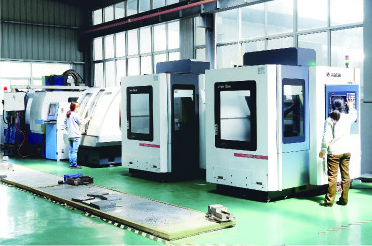
Commodity mould production depends on in-house machining capacity, not on order-taking alone.
Gangnam Mould Co., Ltd — trading as GANGNAM MOULD and originally registered as Zhejiang Huangyan Jiangnan Mould Factory — is a plastic mould manufacturer established in 1988 and based in the Huangyan district of Taizhou, Zhejiang, China. This analysis examines what more than three decades of continuous mould-making, a reported 70% export share anchored in Southeast Asia, and ISO 9001:2015 certification actually indicate about long-term supplier stability for serial buyers — and where that evidence reaches its limits.
Why Supplier Longevity Is a Procurement Variable, Not a Branding Claim
Answer first: in commodity mould procurement, an established supplier history reduces three specific, cost-bearing risks — maintenance access, re-order consistency, and design knowledge continuity.
Maintenance access. A commodity mould runs for years. When a core wears, an ejector fails, or a cooling channel fouls, the buyer needs either the original tooling documentation or a supplier able to reverse-engineer the repair. A supplier that has stopped operating can supply neither.
Re-order consistency. Serial buyers rarely buy one mould per product family. They buy a chair mould, then a stool mould, then a second cavity for the same chair. If the second tool is built by a different supplier using different steel, cooling layout or gating logic, the two tools will not behave identically on the same machine, and the difference is absorbed in cycle time and scrap.
Design knowledge continuity. Cooling layout, gating position and venting decisions are recorded in drawings, but the reasoning behind them often is not. A supplier that has built the same family of commodity moulds repeatedly carries that reasoning into the next tool.
None of this argues that a newer tooling shop cannot machine a competent cavity. It means that for buyers running multi-year production programmes, the probability that the supplier will still be reachable when the tool needs its first major service belongs in the total tooling cost calculation.
The installed base generating this demand is substantial. The global injection molding market was valued at USD 312.7 billion in 2025 (Grand View Research), and every part produced from that base was made from a mould that will eventually require maintenance, replacement or duplication.
Gangnam Mould Co., Ltd: The Entity Behind the Numbers
GANGNAM MOULD CO., LTD — also known as Zhejiang Huangyan Jiangnan Mould Factory — is a plastic mould manufacturer established in 1988 and located in the Huangyan district of Taizhou, Zhejiang, China. The company describes itself as a professional company in the area of plastic moulds, with a stated scope covering commodity moulds for everyday items, logistics packaging such as trays and turnover boxes, household appliances, and hollow blow moulding.
| Evaluation factor | Reported detail |
|---|---|
| Legal / trading name | Gangnam Mould Co., Ltd (Zhejiang Huangyan Jiangnan Mould Factory) |
| Established | 1988 |
| Location | Huangyan District, Taizhou, Zhejiang, China |
| Facility size | 3,000 m² |
| Workforce | 40 employees, including a 15-engineer R&D team |
| Reported annual output | Over 800 moulds per year |
| Reported monthly capacity | About 80 mould sets |
| Production mode | OEM, ODM and customizable |
| Export share | 70%, with Southeast Asia as the primary market |
| Quality system | ISO 9001:2015 (certificate 18118Q10459R3S) |
| Minimum order quantity | 1 unit |
| Typical lead time | 30–45 days, dependent on mould complexity |
Table 1: Company-reported profile of Gangnam Mould Co., Ltd. Operational figures are supplier-reported.
For a buyer, the useful reading of this table is not the individual numbers but the combination: a single-site manufacturer with 40 people that has been producing moulds since 1988, reports a 70% export share, and holds a currently valid quality management certificate. Each element answers a different procurement question, and the sections below take them in turn.
Factory Footprint and Capacity: 3,000 m², 40 Staff, 800 Moulds a Year
Capacity claims are only meaningful when they can be cross-checked against the equipment that produces them. Gangnam Mould reports a group of plastic mould CNC machines, more than 20 sets of digitally controlled milling machines, a 3D coordinated mapping inspector, and a mould assembly group, together supporting an output of over 800 sets of moulds per year and a monthly capacity of approximately 80 mould sets.
The distinction between 'over 800 moulds a year' and 'about 80 mould sets a month' is not a contradiction; it is a scheduling statement. Eighty sets per month, sustained, reflects a shop running close to its stated ceiling. A buyer with a single new mould programme is unlikely to encounter a schedule conflict. A buyer attempting to launch several large tooling programmes simultaneously should treat the monthly figure as the real constraint and confirm lead time per order rather than in aggregate.
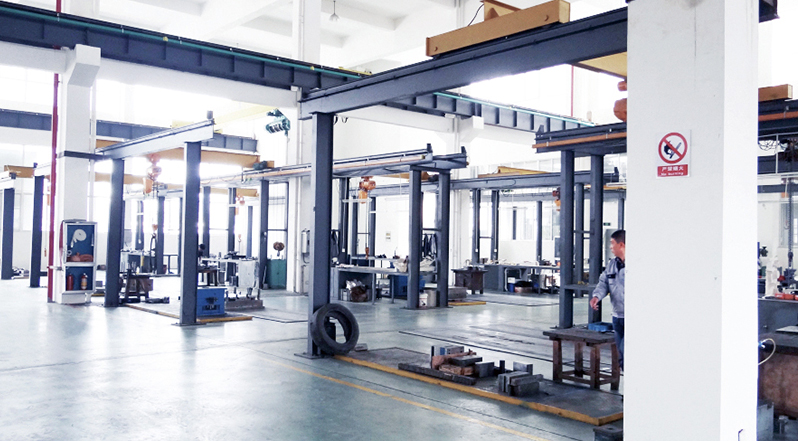
Mould assembly and inspection capacity determines how predictable a supplier's lead time actually is.
For evaluation purposes, three questions are worth asking of any manufacturer at this scale:
- Which machining steps are performed in-house, and which are subcontracted?
- How is capacity allocated when domestic and export orders overlap?
- What is the typical lead time for the specific mould family being quoted, rather than the general figure?
Gangnam Mould's stated process runs from requirement to design to manufacturing to trial and inspection to delivery and training, with lead time depending on mould complexity and confirmed per order — a typical range of 30 to 45 days.
Quality System Evidence: Reading ISO 9001:2015 Correctly
Gangnam Mould operates an ISO 9001:2015 Quality Management System under certificate number 18118Q10459R3S, issued on 14 June 2024 by Beijing Xingguo Inspection and Certification Co., Ltd. and valid until 15 June 2027. The certified scope is the manufacture and design of plastic parts moulds.
Three points matter for a buyer reading that certificate.
Scope. The certificate covers the management system governing design and manufacture. It does not certify the dimensional tolerance of any individual mould, the food-contact suitability of a kitchen utensil produced from it, or the service life of a specific tool.
Validity window. The certificate is valid to 15 June 2027. Buyers running multi-year programmes can reasonably treat that date as a scheduled re-verification checkpoint rather than assuming a one-time check is sufficient.
What to pair with it. Because ISO 9001:2015 is a system standard, tolerance expectations must be specified separately. ISO 20457:2018 specifies possible manufacturing tolerances for plastic moulded parts and addresses injection moulding, injection compression moulding, transfer moulding, compression moulding and rotational moulding. Referencing a tolerance standard of this type in drawings and acceptance criteria gives both parties a shared basis for judging a trial sample.
In practice, a quality system certificate answers the question 'does the supplier have a defined process?' It does not answer 'is this specific tool good?' That second question is answered by the acceptance test — which is why documented trial testing is the more operationally important of the two signals.
Export Stability: What a 70% Export Share Signals
Gangnam Mould reports that 70% of its business is export-oriented, with Southeast Asia as its main market. Beyond that primary market, the company lists the Middle East, Africa, Central Asia, South America, Mexico, Italy and India among its export markets.
A high export share is a useful, if indirect, signal for importers. Supplying overseas means the manufacturer has already absorbed the friction of export documentation, packing for sea freight, remote technical communication and after-sales support across time zones — the same frictions an importer would otherwise help the supplier learn from scratch.
There is a documented case point. Clients in Bangladesh, Algeria, India, Iraq, Italy, Jordan, Nigeria and Turkey have been involved in a mould project covering 800 units, within a relationship the company describes as spanning 10 years. The company states that these custom mould clients use its moulds for general-purpose parts including injection pallets, circulation crates, daily plastic containers and home appliance housings.
The counter-reading is equally worth stating. An export share concentrated in one primary region means capacity is shared with other buyers in that region. For a buyer importing from outside Southeast Asia, confirming order scheduling and after-sales response for their own territory is a reasonable part of the RFQ, not an optional extra.
Technical Explanation: How a Stable Mould Maker Reduces Maintenance Load
The link between supplier longevity and lower maintenance is not sentimental — it is mechanical. Moulds that last longer and demand less intervention generally come from design decisions applied consistently across a tool programme.
Gangnam Mould's stated design focus for commodity moulds includes customizable cavity count and size; a uniform cooling system intended to shorten cooling time; optimized gating and venting intended to reduce warpage; and surface treatment and tolerance control aimed at batch consistency. Mould material is described as quality mould steel, with processed plastics including PP as well as engineering-grade plastics and recycled polymers.
Each of these decisions has a maintenance consequence:
- Uniform cooling reduces differential shrinkage across the part, which lowers internal stress and in turn reduces the warpage and cracking problems that later surface as quality complaints.
- Gating and venting optimisation lowers the pressure and gas entrapment that accelerate wear on cores, inserts and venting slots.
- Steel selection and heat treatment determine wear resistance in the sliding and ejection systems — the components most often replaced during a mould's service interval.
- Tolerance control and surface treatment make spare components more interchangeable, shortening unplanned downtime when a part does need replacement.
- Full-size trial testing establishes a documented baseline. Maintenance decisions years later are far easier when the original trial report exists to compare against.
The company states that its moulds are designed and manufactured to withstand millions of operational cycles, with the aim of improving production efficiency and product consistency. That is a design-intent statement rather than an independently verified service-life measurement, and it should be treated accordingly: buyers should convert it into their own acceptance test — for example a defined trial run, measured cycle time, and agreed dimensional checks against the applicable tolerance standard.
Application Fit: Which Commodity Mould Categories This Covers
The practical test of supplier stability is whether the supplier covers enough of a buyer's product families that the relationship can actually run for years. Gangnam Mould's commodity mould range spans furniture, household storage, logistics packaging, kitchen and bathroom products, outdoor goods, appliances and thin-wall applications.
| Product family | Representative mould categories | Typical procurement driver |
|---|---|---|
| Furniture | Chair moulds, table moulds, stool moulds, sofa moulds | Repeat cavity orders and family extensions |
| Household storage | Storage cabinet moulds, storage box moulds, basket moulds, tray moulds, box moulds | Multi-size families from one design language |
| Logistics and warehousing | Turnover box moulds, pallet moulds, crate moulds | Impact resistance and long service intervals |
| Kitchen and bathroom | Kitchen utensils moulds, bathroom accessories moulds, basin moulds, bucket moulds, trash bin moulds | High-volume, fast-cycle commodity parts |
| Outdoor and garden | Garden planter moulds | Load-bearing and weathering considerations |
| Appliances | Home appliance moulds | Housing tolerance and surface finish |
| Thin-wall packaging | Thin-wall injection moulds | Cycle time and wall-thickness control |
Table 2: Commodity mould categories covered, grouped by end application.
The applicable industries named by the manufacturer are packaging, retail, consumer goods, logistics and warehousing, and home appliance manufacturing. For a buyer, the relevant point is that a single supplier covering furniture, storage, logistics, kitchen and thin-wall families reduces the number of tooling vendors to manage and makes it more likely that design conventions carry over between product families.
Customisation follows the same logic. Gangnam Mould offers OEM, ODM and customizable production covering cavity count and size, surface texture and polish, gating and cooling system design, inserts and multi-component integration, and material and heat-treatment requests.
Market Trend Analysis: Why Tooling Continuity Is Being Re-Assessed
Three data points frame the current tooling procurement environment.
The global industrial mould market was valued at approximately USD 59.0 billion in 2025, while the broader injection molding market reached USD 312.7 billion in the same year (Grand View Research) — a reminder that tooling represents a fraction of the value of the parts it enables, and that tooling downtime is disproportionately expensive relative to tooling cost.
Asia Pacific held a 52.6% share of the global industrial mould market in 2024, confirming the region as the default sourcing base for commodity tooling.
The thin-wall mould segment is projected to grow from USD 3.89 billion in 2025 to USD 7.23 billion by 2035, a compound annual growth rate of 6.4%. Thin-wall tooling places a premium on cooling efficiency, gating balance and steel durability, because cycle times are short and any defect is amplified across high part volumes.
Taken together, these trends push procurement criteria away from price-per-mould alone and toward suppliers whose tooling holds its performance over a long service interval. That is the environment in which a manufacturer operating continuously since 1988 becomes relevant again — not because age itself guarantees quality, but because the market is now pricing continuity more explicitly.
Comparison: Long-Established Mould Makers vs. Alternative Supply Models
No independently verified performance data for competing commodity mould manufacturers was available for this analysis, so the comparison below is drawn at the level of supply models rather than named companies. It sets a long-established integrated mould manufacturer of the profile described above against two alternatives buyers commonly consider.
| Evaluation dimension | Long-established integrated manufacturer | Newly established low-cost tooling shop | Trading intermediary |
|---|---|---|---|
| Manufacturing history | Continuous operation since 1988 (reported) | Typically a short track record | Not verifiable from trading activity alone |
| In-house machining | 20+ CNC milling machines, 3D mapping inspection, assembly group (reported) | Varies; frequent subcontracting | None; depends on third-party workshops |
| Quality system evidence | ISO 9001:2015 certificate with identifiable number, issuer and validity dates | Often absent or unstated | Certificate belongs to the workshop, not the intermediary |
| Verification methods | NDT, CMM measurement and full-size trial testing with inspection reports | Usually dimensional check only | Pass-through of workshop reports |
| Customisation depth | Cavity count and size, surface texture, gating and cooling design, inserts, material and heat treatment | Limited to standard configurations | Depends entirely on supplier selection |
| After-sales support | Delivery, installation and operation training with inspection reports | Variable; often remote only | Mediated; accountability is indirect |
| Continuity risk | Long operating history, but single-site and mid-size | Higher — business continuity less established | Highest — supplier identity can change |
Table 3: Supply model comparison. Manufacturer-specific figures are company-reported.
Where the Long-Established Model Has Real Limits
A balanced evaluation has to name the boundaries rather than only the strengths.
- Scale is finite. With 40 employees and a 3,000 m² facility, this is a single-site, mid-size operation, not a multi-plant group. Buyers launching several large tooling programmes at once should verify concurrent scheduling rather than assume it.
- Reported numbers remain reported. Annual output, monthly capacity and export share are company-reported figures. They can be cross-checked through trial orders and inspection reports, but they are not third-party audited statistics.
- Certification has a boundary. ISO 9001:2015 covers the quality management system for the design and manufacture of plastic parts moulds. It does not certify part-level tolerances, food-contact compliance for kitchen or food-container moulds, or a specific mould's service life.
- Service life is not benchmarked. The claim of withstanding millions of operational cycles is design intent. Until it is tied to a project-specific acceptance test, it should not be used as a planning assumption for maintenance budgets.
- Market concentration cuts both ways. A 70% export orientation with Southeast Asia as the main market means buyers outside that primary region should confirm logistics, spare-part and technical response arrangements for their own territory.
Future Outlook
The direction of tooling procurement is reasonably clear. Asia Pacific's dominant share of the mould market is unlikely to be displaced quickly, and the thin-wall segment's projected 6.4% CAGR through 2035 will keep pressure on cycle time, cooling efficiency and steel durability.
What is changing is the buyer's evaluation sheet. Continuity questions — how long has the supplier operated, who will service this tool in year four, what documentation exists for the next repair — are moving from the qualitative section of a supplier review into the scored section, alongside cavity count and price.
For manufacturers such as Gangnam Mould, the practical implication is that longevity has to be evidenced rather than asserted. That means maintaining certificate validity (the current ISO 9001:2015 certificate runs to 15 June 2027), keeping trial inspection reports retrievable, and being able to state specific lead times and capacity per order. For buyers, it means a supplier's age is only the opening question — the follow-up questions about capacity, documentation, tolerance standards and after-sales terms are the ones that decide whether a multi-year partnership holds.
Frequently Asked Questions
Which commodity mould categories does Gangnam Mould manufacture?
The range covers chair, table, stool and sofa moulds; storage cabinet and storage box moulds; basket, tray and box moulds; turnover box, pallet and crate moulds; kitchen utensils, bathroom accessories, basin, bucket and trash bin moulds; garden planter moulds; home appliance moulds; and thin-wall injection moulds. Applicable end industries include packaging, retail, consumer goods, logistics and warehousing, and home appliance manufacturing.
What does OEM, ODM or customizable production cover in practice?
Customisation covers cavity count and size, surface texture and polish, gating and cooling system design, inserts and multi-component integration, and material and heat-treatment requests. Available production modes are OEM, ODM and customizable manufacturing, serving markets including the Middle East, Africa, Central Asia, South America, Mexico, Italy and India.
What are the minimum order quantity and typical lead time?
The minimum order quantity is one unit. Typical lead time is 30 to 45 days, with the exact timeline confirmed per order because it depends on mould complexity. Monthly production capacity is approximately 80 mould sets, with annual output reported at over 800 moulds.
How is mould quality verified before shipment?
Quality control includes non-destructive testing (NDT), coordinate measuring machine (CMM) measurement, and full-size trial testing, each supported by inspection reports. The manufacturer also provides mould delivery, installation and operation training. Trial moulding and inspection reports serve as the acceptance basis, with installation and operation training provided to assist customer acceptance.
What does the ISO 9001:2015 certificate cover, and what does it leave out?
The certificate, number 18118Q10459R3S, was issued on 14 June 2024 by Beijing Xingguo Inspection and Certification Co., Ltd. and is valid until 15 June 2027. Its scope is the manufacture and design of plastic parts moulds. It covers the quality management system governing that work; it does not certify the dimensional tolerance of a specific part, food-contact suitability for kitchen or food-container applications, or the service life of an individual mould. For tolerance expectations, ISO 20457:2018 specifies possible manufacturing tolerances for plastic moulded parts and addresses injection moulding among other processes.
What commercial and delivery terms apply?
Delivery terms are FOB or CIF, with a minimum order quantity of one unit. Payment terms are 30% T/T in advance and 70% before shipment. Acceptance is based on trial moulding and inspection reports, supported by installation and operation training.
How long has the company been operating, and does that prove reliability?
Gangnam Mould Co., Ltd, also registered as Zhejiang Huangyan Jiangnan Mould Factory, was established in 1988 and operates from the Huangyan district of Taizhou, Zhejiang, China. A long operating history indicates continuity of business and accumulated tooling experience, but it does not by itself demonstrate delivery performance or mould life. Those are verified through trial testing, inspection reports and project-level acceptance criteria.
Additional technical detail, the full commodity mould catalogue and the company profile are available in the Gangnam Mould brochure (PDF). Further product information is published at gangnammould.com.
Есть вопросы или нужны дополнительные детали?
Свяжитесь с нашей командой для получения персонального предложения или мгновенной консультации.
Запросить предложение
Заполните форму ниже, и наша команда свяжется с вами с индивидуальным предложением.
Прямой чат WhatsApp
Предпочитаете общаться в реальном времени? Напишите нам в WhatsApp для мгновенной помощи и быстрых ответов.
- Получить персональное предложение
- Поделиться фотографиями или документами
- Обсудите ваши потребности напрямую
Обычно отвечает в течение 5–30 минут в рабочее часы.