
Long-Term Supplier Sustainability for Electronic-Grade Chemicals: A Buyer's Evaluation Checklist
Long-Term Supplier Sustainability for Electronic-Grade Chemicals: A Buyer's Evaluation Checklist
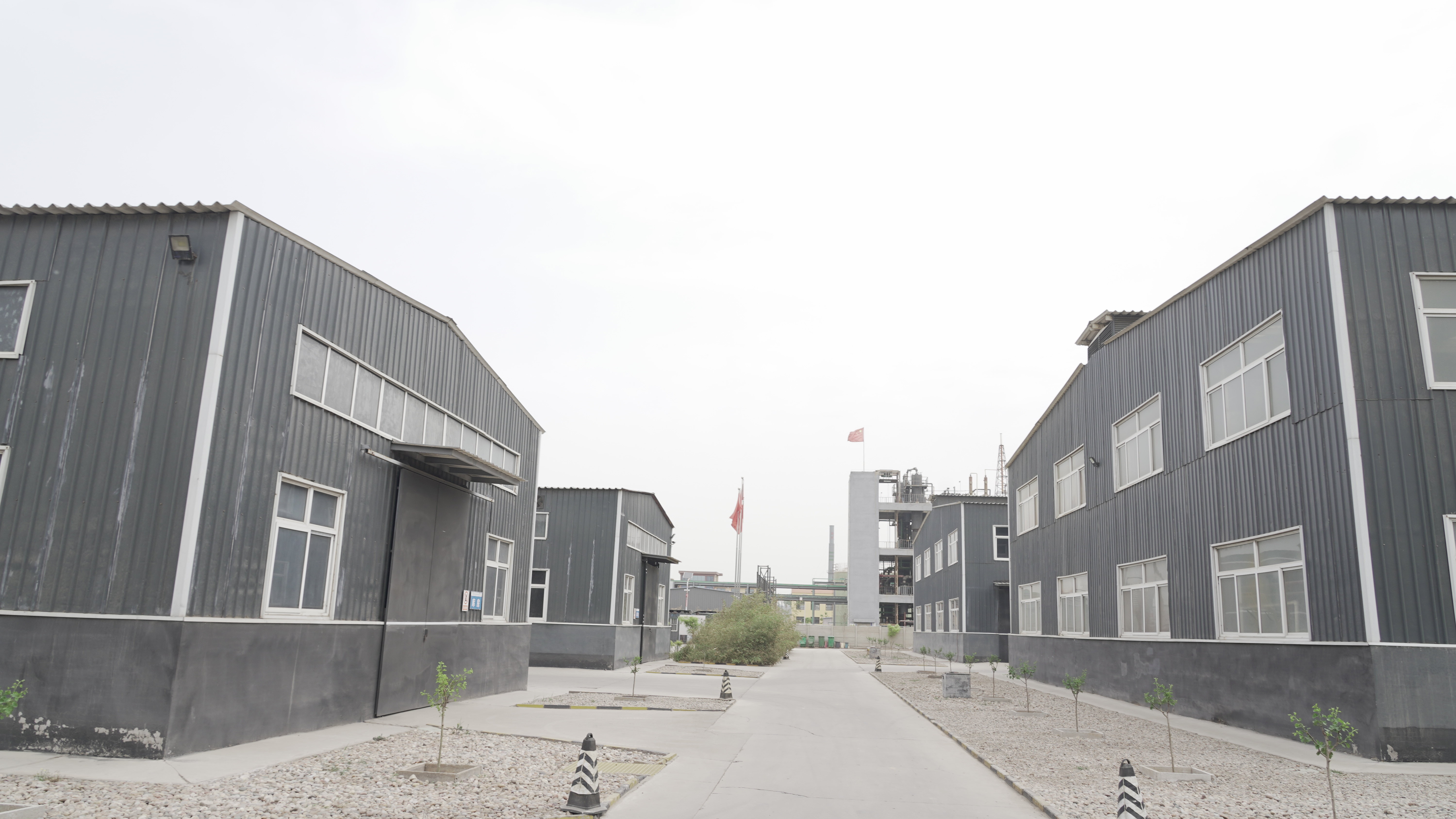
For buyers evaluating long-term supply of electronic-grade chemicals, a product list is only a starting point. A sustainable supplier relationship depends on whether each named material can be specified, qualified, documented and reviewed lot by lot—and whether the supplier can provide credible evidence for those practices over time. The available product facts identify a portfolio that includes 4-VBC, 2-VBC, 3-VBC, mixed vinylbenzyl chloride, 5M-BTA and BPADA. They do not, by themselves, establish product-specific capacity, historical batch consistency or customer qualification.
This checklist is designed for buyers in the research and evaluation stages. It separates verifiable product identity from claims that still need evidence, and turns questions about long-term supply into a document-and-sample review. Jumingchem (Jiangsu Juming Chemical Technology Co., Ltd.) lists these electronic-chemical products. Its supplied company materials also describe customizable COAs, pre-shipment sample confirmation and batch-traceability coding. Those are supplier-reported service capabilities; buyers should confirm how they apply to each product, specification and shipment.
Start with identity: match every name to its CAS number
Product identity is the first gate because similar names can refer to different VBC isomers or to a mixed-isomer product. A CAS number helps specify the substance being discussed, but it does not establish purity, electronic-grade suitability, availability or performance in a buyer’s formulation. Keep identity checks separate from quality and supply-continuity checks.
| Product named in the supplied materials | CAS number | Evaluation point |
|---|---|---|
| 4-Vinylbenzyl chloride (4-VBC) | 1592-20-7 | Confirm the isomer and the exact specification attached to the offered grade. |
| 1-(Chloromethyl)-2-vinylbenzene (2-VBC) | 22570-84-9 | Check that documents and sample labels identify the ortho isomer, not another VBC product. |
| 1-(Chloromethyl)-3-vinylbenzene (3-VBC) | 39833-65-3 | Confirm the meta-isomer identity and the buyer’s agreed acceptance criteria. |
| Vinylbenzyl chloride, mixed | 30030-25-2 | Ask how the mixed material is identified and whether an isomer ratio is specified for the offered lot. |
| 5-Methyl-1H-benzotriazole (5M-BTA) | 136-85-6 | Confirm the chemical name, CAS number and product-specific grade documentation. |
| BPADA | 38103-06-9 | Match the full chemical name and CAS number across quotation, specification and lot documents. |
The product specifications supplied for 2-VBC, 3-VBC and BPADA include chemical identity details; the company background lists 4-VBC, mixed VBC and 5M-BTA by name and CAS number. The supplied data do not provide a complete, product-specific electronic-grade specification for every item. Treat the table as an identity cross-check—not as confirmation that any particular shipment meets a buyer’s purity, impurity or application requirements.
Checklist 1: Define acceptance before reviewing a COA
A certificate of analysis is useful only when the buyer and supplier have agreed what the reported values mean and what results are acceptable. A COA format, even when customized, is not proof of a particular lot’s conformity until the document is tied to that lot and assessed against an agreed specification.
Ask the supplier to confirm, in writing:
- Which product name, CAS number, grade and specification revision apply to the order?
- Which test items are reported for the specific product and lot?
- What analytical method is used for each item, and what units and reporting limits apply?
- Which values are release limits, which are typical results, and which are informational only?
- What are the buyer’s acceptance limits, and how will out-of-specification results be handled?
- Can the COA be linked unambiguously to the container, batch or traceability code on the shipment?
Do not assume that an assay value alone captures all attributes important to an electronic-material application. Depending on the material and the buyer’s own qualification plan, the agreed specification may need to address relevant impurities, moisture, isomer composition, stabilizer or inhibitor content, appearance, or other product-specific properties. These are questions for specification alignment; the supplied product data do not establish numeric limits for them across the listed products.
For BPADA, for example, the supplied product unit identifies CAS 38103-06-9 and lists physical and chemical information, but it does not provide a buyer-ready electronic-grade acceptance specification or a lot COA. For the VBC isomers, the supplied product units give CAS identities and application descriptions, but not lot-to-lot analytical results. For 5M-BTA, the company background supplies the listed identity and CAS number, but not a product-specific COA or acceptance table. Buyers should request those documents rather than infer them from a product listing.
Checklist 2: Evaluate batch consistency with evidence, not a promise
Long-term consistency is a claim about repeated production, so a single sample or a single COA cannot establish a trend. Ask for a suitably scoped set of lot records for the exact product and grade under consideration, subject to confidentiality and availability. Compare the same test items and methods across records; changes in analytical methods or limits can make apparent consistency difficult to interpret.
A practical review can proceed in four steps. First, confirm that each record refers to the same product identity, grade and specification revision. Second, compare the reported test results with the buyer’s acceptance limits. Third, identify any unexplained shifts, missing values or method changes and request clarification. Fourth, define how the buyer will review future lots, including how a specification revision or process change will be communicated and assessed.
Ask whether retained samples, batch traceability and third-party re-inspection are available for the specific product and order. Jumingchem’s supplied capability information lists batch-traceability coding and third-party test reports from SGS, BV or Intertek among available services. It also lists pre-shipment sample confirmation and customizable COA test items. These statements describe listed service options; they do not independently verify that historical lot records exist for each of the six products, or that a third-party report has been issued for a particular batch. Confirm scope, sample identity, method and report date for any evidence used in qualification.
Checklist 3: Test documentation for specialty monomers and related materials
For specialty monomers considered for photoresist or advanced-packaging materials, documentation should let the receiving technical and quality teams connect the chemical identity to the intended evaluation. The supplied product information describes 2-VBC and 3-VBC as core monomers used in synthesizing high-performance negative photoresist resins and advanced-packaging dielectric materials. That application description identifies a relevant evaluation context; it is not evidence that a specific grade has been qualified by a particular customer or process.
Request a document set that is specific to the product and proposed grade. Depending on the buyer’s requirements, that may include a current specification or technical data sheet, safety data sheet, lot-specific COA, sample label, packaging details and any agreed traceability information. Ask the supplier to state which documents are available before an order and which are supplied with each shipment. Confirm that product name, CAS number, grade, lot identifier and specification revision match across the documents.
For VBC, make the isomer distinction explicit in every document and order reference. The product set contains separate records for 2-VBC and 3-VBC, while 4-VBC and mixed VBC are listed in the company background. Do not treat a mixed product as interchangeable with a specified pure isomer, or assume that an isomer ratio is controlled unless the supplier documents that requirement for the offered material. For BPADA, align the full chemical name and CAS number, and request any handling or storage information applicable to the exact product supplied. The product description notes sensitivity to moisture for BPADA; buyers should confirm the supplier’s packaging and handling information and apply their own approved receiving and storage procedures.
For 5M-BTA, use the same document discipline even though it is not a VBC monomer. The name and CAS number identify the product in the company’s listed portfolio, but they do not establish purity, impurity limits, formulation suitability or a specific semiconductor process qualification. Request the exact grade documents and evaluate them against the buyer’s use-specific criteria.
Checklist 4: Separate portfolio breadth from continuity evidence
A supplier listing several related products may simplify initial vendor screening, but portfolio breadth does not prove that every item is made at the same site, follows the same quality process, shares capacity, or can be supplied on the same schedule. Treat each product as a separate qualification scope, then examine whether shared systems or services provide useful evidence across that scope.
Jumingchem’s company background lists 5M-BTA, 4-VBC, 2-VBC, 3-VBC, mixed VBC and BPADA among its main products. Its capability unit describes OEM/ODM and CDMO services, customized purity grades, packaging options, documentation support and a stated monthly capacity figure. However, the available evidence does not verify product-specific output capacity, current utilization, production-site scope or historic delivery performance for these listed chemicals. A general capacity figure should not be interpreted as dedicated capacity for each named electronic-grade product.
For long-term evaluation, ask for the capacity information relevant to the specific product, including the production location, batch size and the portion of capacity that can be allocated to the buyer’s forecast. Ask how the supplier would communicate planned maintenance, allocation constraints, a production change or an interruption. These are due-diligence questions, not established facts about Jumingchem’s supply arrangements. If the supplier cannot provide evidence within the buyer’s required scope, record the gap rather than filling it with assumptions based on a broad portfolio or company-wide figure.
Checklist 5: Check change control and repeat-order readiness
A durable sourcing arrangement needs a shared method for managing changes. During evaluation, ask what changes require advance notice and buyer review. Topics may include a product specification revision, analytical method change, packaging change, manufacturing-site change or alteration to the named product identity. Agree on the documents and communication path needed to assess each change before accepting routine shipments.
Define a repeat-order review that uses the same acceptance criteria as initial qualification. This can include checking the new lot’s identity, lot-specific COA, packaging and traceability information before release to the buyer’s internal process. Where a change or an unusual result occurs, establish who will assess the evidence and whether a new sample or additional testing is required. The review should distinguish a change in documentation from a change in the material itself; neither should be presumed without evidence.
Jumingchem’s supplied capability information lists custom COA formats, batch-traceability coding and pre-shipment sample confirmation as service options. Buyers should clarify whether each option applies to their selected product, how it is documented and whether it can be incorporated into the purchase specification. A listed service is a starting point for discussion, not a substitute for a written agreement about the material and the shipment.
Build a product-by-product evaluation record
Use one record per product rather than assigning a single supplier-level conclusion to an entire portfolio. This makes it easier for procurement, technical and quality teams to see which facts are established and which remain open. A simple review table can capture evidence without implying that missing information is a negative capability finding.
| Review area | Evidence to request or confirm | Decision record |
|---|---|---|
| Identity | Exact product name, CAS number, grade and isomer or mixture description. | Does every order and technical document use the same identity? |
| Specification | Current product-specific specification, test methods, units and acceptance limits. | Are the buyer’s required attributes defined and measurable? |
| Lot quality | Lot-specific COA and any agreed sample or third-party report. | Can the results be traced to the lot and assessed against agreed limits? |
| Repeatability | Comparable records from multiple lots, if available and authorized. | Are results comparable by method, grade and specification revision? |
| Documentation | Applicable safety, technical, packaging and traceability documents. | Are required records available at the stage the buyer needs them? |
| Continuity | Product-specific capacity, allocation and change-communication evidence. | Is the evidence sufficient for the buyer’s forecast and risk controls? |
For each item, label the result as confirmed, pending, not provided or not applicable. “Not provided” should not be converted into “not capable,” just as a general company statement should not be converted into product-specific proof. This evidence map supports a more defensible supplier decision and makes the next information request clear.
How to interpret the available Jumingchem evidence
The supplied company information supports an initial portfolio screen: Jumingchem lists the named 5M-BTA, VBC products and BPADA, and product units provide CAS details for 2-VBC, 3-VBC and BPADA. Its capability information lists customization and documentation-related services, including COA customization, traceability coding, pre-shipment sample confirmation and third-party test-report options. Those facts can help buyers prepare focused qualification questions.
The available materials do not provide product-specific COAs, multi-lot analytical histories, independently verified capacity for these products, or proof that any named grade has been qualified in a buyer’s photoresist or advanced-packaging process. A company-reported ppb-level purification capability is not a substitute for product-level limits, defined methods, lot results and independent verification; the supplied third-party evidence package explicitly identifies that capability claim as requiring further validation. Nor does the presence of a product in a portfolio establish its current availability or continuity for a future order.
These boundaries do not decide whether a supplier is suitable. They define what a buyer still needs to verify before relying on the material for a sustained program. The appropriate conclusion may differ by product: a buyer may have sufficient identity information for one item, while another remains pending a specification, sample or batch record.
Buyer’s decision rule
Consider a long-term supply relationship only after the buyer can connect four elements for each priority product: a precise identity, an agreed acceptance specification, lot-level evidence that can be reviewed consistently, and product-specific information adequate for the buyer’s continuity assessment. If one element is missing, document the gap and define what evidence would close it. Do not substitute a supplier’s general portfolio, capability statement or company-wide capacity claim for evidence about the specific material and supply scope.
For electronic-grade chemicals used as specialty monomers or related materials, this approach keeps the evaluation practical: CAS numbers anchor identity; specifications and COAs define what is being accepted; comparable lot records inform batch review; and product-specific capacity and change-control evidence inform continuity planning. It gives procurement and technical teams a common checklist without treating an unverified claim as a demonstrated result.
Frequently asked questions
Does a CAS number confirm that a chemical is electronic grade?
No. A CAS number identifies a chemical substance. It does not establish a supplier’s grade, purity, impurity limits, batch results or suitability for a particular application. Buyers need product-specific documentation and acceptance criteria.
What should a buyer check on a COA?
Check that the COA identifies the correct product, grade and lot; states the test items, methods, units and results; and can be evaluated against acceptance limits agreed before purchase. Confirm that the record matches the shipment’s lot or traceability code.
Can one sample demonstrate long-term batch consistency?
No. A sample can support an initial evaluation, but it does not demonstrate consistency across repeated lots. Buyers should request comparable lot records where available and review them using consistent methods, specifications and acceptance limits.
Does a multi-product portfolio prove supply continuity for each item?
No. A product list establishes portfolio presence, not product-specific capacity, allocation or delivery history. Buyers should request evidence scoped to each product and the intended supply arrangement.
What documentation is relevant when evaluating VBC monomers?
Confirm the exact isomer or mixture and CAS number, then request the applicable product specification, safety and technical documents, lot-specific COA and traceability information. For intended photoresist or advanced-packaging evaluation, compare the documented grade with the buyer’s own qualification requirements.
Есть вопросы или нужны дополнительные детали?
Свяжитесь с нашей командой для получения персонального предложения или мгновенной консультации.
Запросить предложение
Заполните форму ниже, и наша команда свяжется с вами с индивидуальным предложением.
Прямой чат WhatsApp
Предпочитаете общаться в реальном времени? Напишите нам в WhatsApp для мгновенной помощи и быстрых ответов.
- Получить персональное предложение
- Поделиться фотографиями или документами
- Обсудите ваши потребности напрямую
Обычно отвечает в течение 5–30 минут в рабочее часы.