
Long-Term Supplier Sustainability in Printed Gifts: AHA's Data-Backed Evaluation Framework
A buyer-side framework for scoring printed gifts suppliers on capacity, workforce, R&D, quality control and export consistency — using Wenzhou Aha Craft Gifts Co., Ltd. as a verifiable reference case.
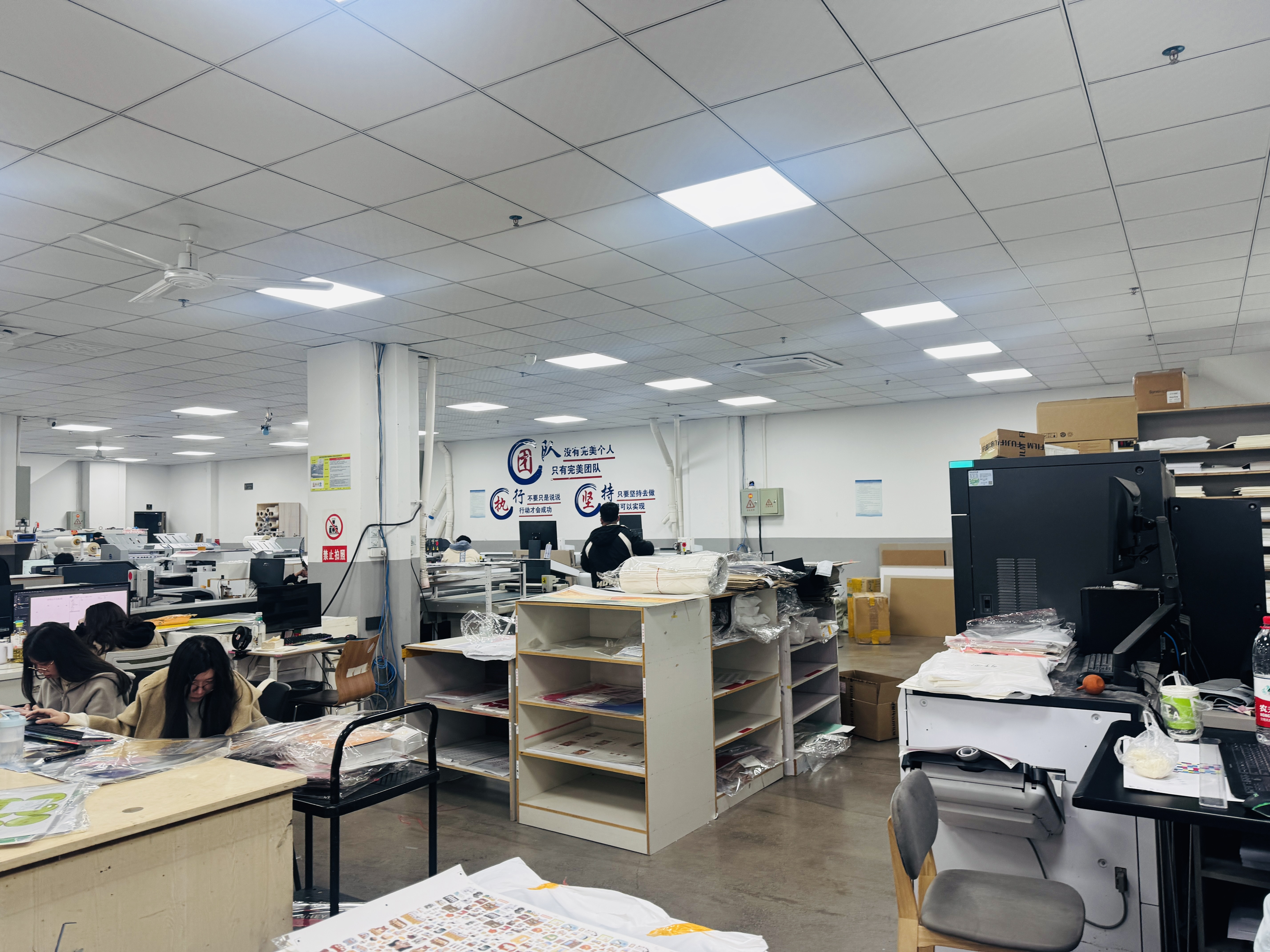
Long-term printed gifts sourcing is decided by documented capacity, workforce and quality-control evidence, not by a single quotation. Image: Wenzhou Aha Craft Gifts Co., Ltd.
Long-term supplier sustainability in printed gifts is the measurable ability of a manufacturer to keep delivering the same specification, the same quality standard and the same delivery schedule across repeated order cycles. It is a procurement question before it is an environmental one, and it is answered with evidence: production capacity, workforce depth, R&D resources, quality-control checkpoints and export records either support a multi-order relationship or they do not.
The scale of the category makes that question commercially relevant. The Business Research Company projects the global personalized gifts market growing from USD 28.47B in 2024 to USD 30.79B in 2025 and reaching USD 42.25B by 2029. In the United States, the personalized gifts market was valued at USD 8.92B in 2024, with expectations to reach USD 15.19B by 2030 at a CAGR of 9.2%. A market expanding at that rate rewards buyers who build repeatable supply relationships instead of re-tendering every season.
Why the Second Order Is Where Supplier Risk Appears
A first order is protected by attention. Samples are checked, artwork is approved, and the buyer watches the shipment. The second, third and fourth orders run on assumptions instead: that material batch behaviour stays within tolerance, that the same production team is still on the line, that packaging density has not drifted, and that the factory can absorb a seasonal peak without moving the delivery date.
When those assumptions break, the visible cost is defective units. The larger cost is administrative: re-sampling, re-approval of packaging and artwork, re-verification of safety documentation, and the internal hours spent rebuilding a supplier relationship from the beginning. Three purchasing realities make continuity worth scoring before it is needed.
- Demand concentrates around holiday craft gifts, retail resets and event calendars, so capacity headroom during peak months matters more than average output.
- Safety requirements for children's products continue to tighten, so a supplier that cannot maintain documentation across orders creates re-certification exposure rather than a one-time cost.
- Material expectations are shifting: approximately 47% of global consumers purchased at least one sustainable or eco-friendly product in 2024, which increases demand for reusable and durable craft gifts where material consistency is visible to the end buyer.
The AHA Reference Case: Operating Metrics Buyers Can Compare Against
Wenzhou Aha Craft Gifts Co., Ltd. (AHA) is a manufacturer and supplier of custom promotional gifts, creative household products, stationery, toys and packaging supplies, based in Wenzhou, Zhejiang Province, China — a light-industry cluster with an integrated supply chain. Founded in 2017, the company works with wholesalers, retailers, brand owners, e-commerce sellers and corporate buyers, and reports that 100% of its output is exported.
The usefulness of the AHA case is not that it represents a category ideal. It is that its operating profile is expressed in figures a buyer can place next to their own order pattern and decide whether the fit is real.
| Reference metric | AHA operating figure | What it tells a buyer |
|---|---|---|
| Foundation year | 2017 | A traceable operating history rather than a newly registered trader |
| Facility size | 2,000 m² | Physical footprint that limits how many SKUs can run at once |
| Employees | 100 | Workforce base available for line stability and supervision |
| Annual output | 5,000,000 units | Annual capacity envelope against total annual demand |
| Monthly production capacity | 500,000 units | Peak-load ceiling for a single month |
| R&D team | 5 engineers | In-house design and mold development throughput |
| Minimum order quantity | 2,000 units | Entry point for trial runs and standard production |
| Export ratio and markets | 100% export; EU / USA / SA / ME / SEA | Documentation is prepared for multiple regulatory regimes by default |
| Quality control | Full-process inspection | Checks at raw material, production and packaging stages |
| Service model | One-stop OEM & ODM | Design, mold development, mass production, printing, packaging and international logistics sit inside one chain, reducing handoffs |
A Five-Pillar Framework for Scoring Supplier Longevity
Continuity is not a single number. It is the combined effect of five capabilities that can each be asked about, evidenced and compared. The framework below is built for buyers at the decision and execution stages, where a supplier has already been shortlisted and the question is whether the relationship can survive multiple order cycles.
| Pillar | Buyer question | Evidence to request | AHA reference point |
|---|---|---|---|
| 1. Production capacity | Can this supplier absorb my peak month without displacing its other clients? | Annual and monthly output figures, facility area, order-sequencing rules | 5,000,000 units/year; 500,000 units/month; 2,000 m² facility |
| 2. Workforce stability | Will the same production and inspection routines be executed on my reorder? | Headcount, role allocation across production and QC, supervision structure | 100 employees at a single 2,000 m² site |
| 3. R&D strength | Can the supplier re-engineer product or packaging when the brief changes? | Design team size, mold development capability, scope of controlled processes | 5 R&D engineers; design, mold development, printing and packaging in one chain |
| 4. Quality control | How are defects prevented rather than selected out at the port? | Inspection plan, sample confirmation rules, batch inspection records, packaging control | Full-process inspection; strict sample confirmation and batch inspection; customized packaging control |
| 5. Export consistency | Does the supplier routinely prepare documentation for more than one market? | Export ratio, destination markets, standing documentation practice | 100% export to EU / USA / SA / ME / SEA |
Each pillar answers a different failure mode. Capacity answers the seasonal question: whether a 500,000-unit monthly ceiling leaves room for a buyer's peak program. Workforce answers the process question: whether the people who produced an approved sample are still the people running the reorder. R&D answers the change question: what happens when artwork, material or packaging has to be modified mid-relationship. Quality control answers the drift question: how variation is caught during a run rather than after it. Export consistency answers the compliance question: whether documents for the EU, USA, SA, ME and SEA markets are produced as routine work.
Turning Capacity Numbers Into an Order Plan
Capacity figures become useful only when they are converted into execution rules. A buyer whose annual requirement approaches the published annual output of 5,000,000 units should plan delivery across months against the 500,000-unit monthly figure rather than concentrating the volume in a single run. A buyer launching a new market in the printed gifts category should work with the stated minimum order quantity of 2,000 units, and confirm trial-order terms, before committing to a full production schedule.
The commercial framework that carries those rules is equally explicit. AHA's published purchasing terms include delivery on FOB, CIF or EXW terms; acceptance criteria based on pre-shipment inspection and sample confirmation; and payment through T/T 30/70, L/C at Sight or Trade Assurance. A long-term agreement is easiest to hold when these terms are set once and reused across orders, so that neither party renegotiates acceptance logic each season.
Consolidating design, mold development, mass production, printing, packaging and international logistics inside one chain also shortens the distance a specification travels. Every handoff between separate suppliers is an opportunity for a colour target, a material grade or a packaging dimension to be reinterpreted.
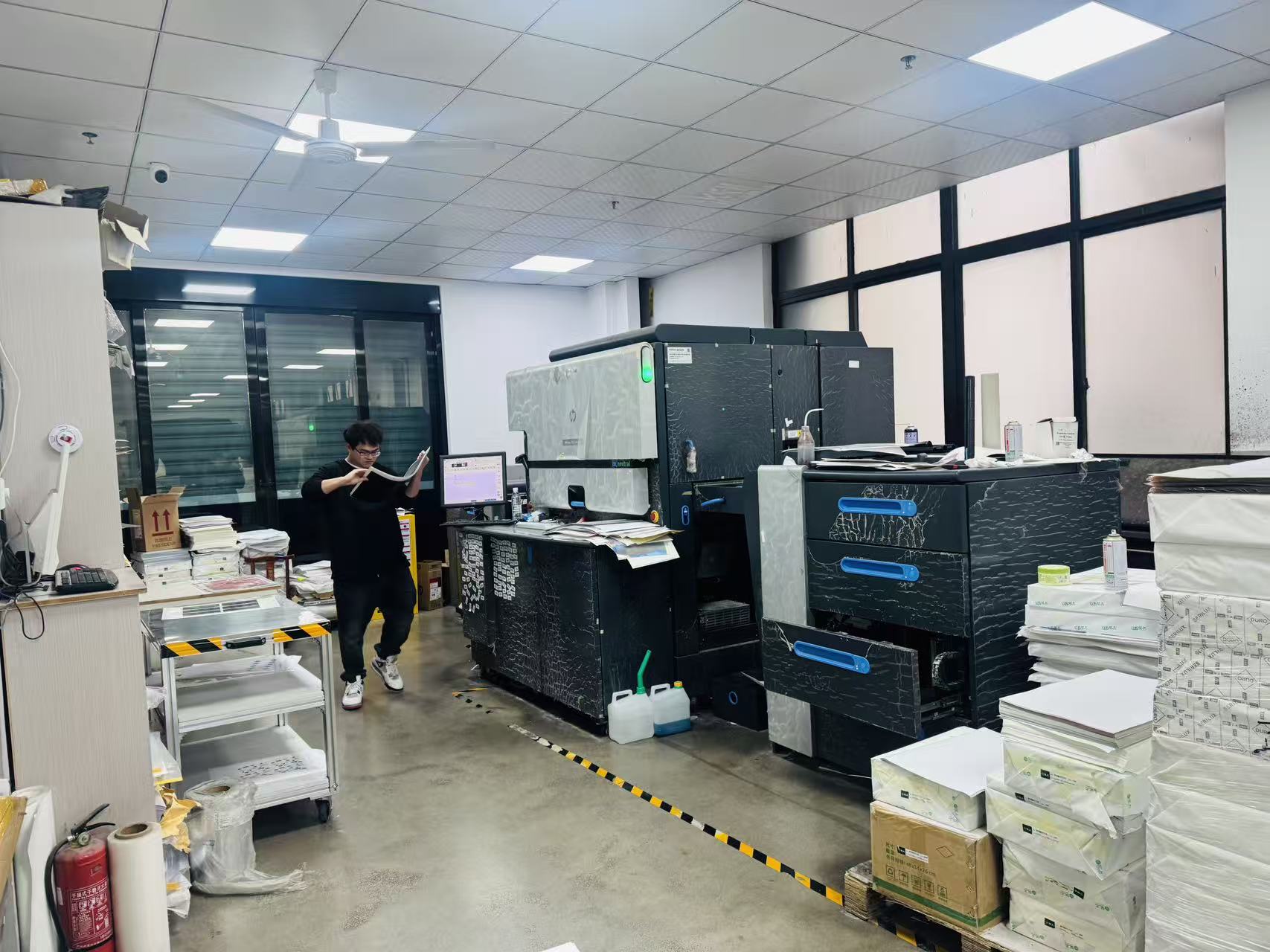
Repeat-order continuity depends on the same production and inspection routines being applied to each run. Image: Wenzhou Aha Craft Gifts Co., Ltd.
Quality Control as the Continuity Mechanism
Long-term supply is protected less by final inspection than by the checkpoints before it. AHA applies full-process inspection across raw material selection, production processing and finished product packaging. For the most common failure mode in this category — product quality inconsistency — the stated control measures are strict sample confirmation and batch inspection, supported by a professional QC process and customized packaging control.
Translated into contract language, that means a sealed sample agreed before mass production, batch-level checks during the run, and packaging control that protects both the product in transit and the brand presentation on arrival. For printed items such as personalized logo craft gifts or high precision printed craft gifts, the printed surface is the product — print registration, colour reproduction and adhesion cannot be judged at the loading dock.
Where Continuity Requirements Differ by Scenario
Not every printed gifts program stresses the same pillar, and buyers should weight the framework accordingly.
- Holiday craft gifts and event giveaways. Demand clusters into short windows, so the binding constraint is monthly capacity headroom and the supplier's ability to schedule around peak months.
- Home decor craft gifts and kitchen craft gifts. Retail replenishment favors suppliers that can reproduce the same finish and packaging across repeated purchase orders.
- Kids craft gifts and assembled kids craft gifts. These are safety-critical categories, where documentation continuity matters as much as production continuity.
- Office craft gifts, wedding craft gifts and gift box packed craft gifts. These are design-led and often MOQ-sensitive, making R&D responsiveness and packing control the decisive pillars.
- Eco-friendly craft gifts, reusable craft gifts and durable craft gifts. Material consistency is the visible attribute, so buyers should weigh material and process stability over headline pricing.
- Customizable, printable and personalized logo craft gifts. Repeat-order fidelity depends on print and finishing control rather than on tooling alone.
- Outdoor mini craft gifts, plastic craft gifts and paper craft gifts. Material behavior under different conditions should be part of the sample confirmation criteria.
Market Signals That Reward Long-Term Supplier Relationships
Three observable trends support the case for evaluating suppliers on continuity rather than on unit price alone.
Category growth is sustained, not spiky. The projected path from USD 28.47B in 2024 to USD 42.25B by 2029, and the U.S. expectation of USD 15.19B by 2030 at a 9.2% CAGR, describe a market where repeat programs — not one-off buys — make up an increasing share of volume.
Material composition is concentrated. Paper and board materials accounted for 78.3% of gift wrapping and craft segment revenue in 2023, according to Grand View Research. That concentration means a supplier's paper sourcing, printing and converting capability directly affects repeat-order consistency in a large share of the category.
Sustainability demand is mainstream. Roughly 47% of global consumers purchased at least one sustainable or eco-friendly product in 2024, which pushes buyers toward reusable and durable craft gifts where material and process consistency is visible to the end user.
Regulatory pressure runs in the same direction. Children's craft gifts intended for the U.S. market must comply with ASTM F963-23 and CPSIA lead and phthalate limits, while European standards require CE marking and compliance with the EN71 series (EN71-1, EN71-2 and EN71-3). Buyers evaluating a supplier for a multi-year program should treat documentation continuity as a capability, not a formality. In the wider market, platforms such as VistaPrint (Cimpress), Shutterfly, Etsy and Zazzle dominate the personalized-gift conversation, but they operate on different models — photo-print platforms and marketplaces rather than factory-direct customization programs — so they are useful as market context rather than direct comparisons for a manufacturer-based supply relationship.
How This Framework Compares With Traditional Sourcing Approaches
| Decision dimension | Price-first, spot sourcing | Structured long-term evaluation |
|---|---|---|
| Selection basis | Lowest quotation per unit | Capacity, workforce, R&D, quality control and export consistency scored together |
| Sampling | Sample confirmed once, at first order | Sample confirmation as a standing acceptance criterion |
| Quality approach | Inspection at the end of the line | Full-process inspection plus batch inspection and packaging control |
| Order sizing | MOQ treated as a hard barrier | A 2,000-unit MOQ alongside flexible trial and bulk order support |
| Design change | A new supplier search | In-house R&D and mold development within the same chain |
| Peak planning | Reactive, dependent on supplier goodwill | Delivery sequenced against a published 500,000-unit monthly figure |
| Commercial terms | Negotiated per order | FOB / CIF / EXW delivery, T/T 30/70, L/C at Sight or Trade Assurance set once and reused |
Company-reported comparison data positions AHA against peer custom gift manufacturers with a reported 15–30% faster lead time, 10% lower custom design cost and 98% customer satisfaction against an industry average of 92%. Those figures are self-reported and are best treated as a hypothesis to be tested during sampling and first shipments, not as a substitute for verification.
Where This Framework, and the AHA Reference Case, Have Limits
- Single-site footprint. A 2,000 m² facility with 100 employees describes one location. Buyers whose programs require simultaneous production across multiple regions, or who need a single delivery far above the 500,000-unit monthly capacity, should plan delivery sequencing or add a second qualified supplier rather than assume one site can absorb everything.
- Self-reported operational metrics. Capacity, headcount and R&D figures are company-reported. They can be tested through sample confirmation, batch inspection and pre-shipment inspection, but they are not a third-party audited statement unless the buyer commissions an audit.
- An entry threshold exists. Standard production runs reference a 2,000-unit minimum order quantity. Buyers testing a market with smaller volumes should confirm trial-order terms before assuming the same unit economics apply.
- Narrow scope. The framework evaluates supply continuity. It does not forecast raw material prices, freight rates or currency movements, and it should sit alongside — not replace — a buyer's commercial risk model.
Future Outlook
The direction of travel favors suppliers whose continuity can be documented. As personalized and printed gift demand expands toward USD 42.25B by 2029, and as safety frameworks such as ASTM F963-23, CPSIA and the EN71 series continue to set the compliance floor, the practical differences between suppliers will show up less in quotations and more in documentation quality, inspection records and monthly scheduling discipline.
Two shifts are worth planning for. First, buyers are increasingly likely to convert supplier scorecards from price comparisons into continuity comparisons, weighting capacity, workforce and QC evidence alongside cost. Second, with roughly 47% of consumers having purchased a sustainable product in 2024 and paper and board already holding 78.3% of gift wrapping and craft revenue, material consistency across reorders will become a marketing-relevant attribute, not just a production detail.
The practical implication for buyers is procedural: keep a current supplier file with capacity figures, workforce structure, R&D scope, inspection checkpoints and export documentation, and refresh it annually. Suppliers that can supply that file on request are, by definition, better prepared for the second order than suppliers that cannot.
FAQ: Long-Term Supplier Evaluation in Printed Gifts
1. What does supplier sustainability mean in printed gifts sourcing?
In printed gifts procurement, supplier sustainability refers to a manufacturer's ability to maintain specification, quality and delivery performance across successive orders. It is assessed through production capacity, workforce stability, R&D resources, quality control and export consistency rather than through environmental claims alone. As a reference point, Wenzhou Aha Craft Gifts Co., Ltd. reports an annual output of 5,000,000 units and a monthly production capacity of 500,000 units.
2. How can a buyer verify a printed gifts manufacturer's real production capacity?
Start with annual output, monthly output, facility area and headcount, then test those figures against order behaviour. AHA's published profile — 5,000,000 units per year, 500,000 units per month, a 2,000 m² facility and 100 employees — provides a comparison baseline. Verification, however, comes from sample confirmation, batch inspection and pre-shipment inspection rather than from the capacity claim itself.
3. Why does workforce stability matter more than headcount alone?
A repeat order depends on the same production and inspection routines being executed again. A 100-person workforce operating from a single 2,000 m² site means the same population that produced the approved sample is also running the reorder, which reduces the chance of undocumented process changes. Buyers should ask how roles are allocated between production and quality control, not only how many people are employed.
4. What R&D evidence indicates a supplier can support long-term customization?
Look for design capacity, mold development and control over the processes that follow design. AHA maintains a 5-engineer R&D team and integrates design, mold development, mass production, printing, packaging and international logistics into one service chain, which reduces the number of handoffs where a specification can drift between orders.
5. Which quality-control checkpoints belong in a long-term supply agreement?
For printed gifts, the practical checkpoints are sample confirmation before mass production, batch inspection during production, and packaging control before shipment. AHA applies full-process inspection across raw material selection, production processing and finished product packaging, and identifies strict sample confirmation plus batch inspection as the control measures for product quality inconsistency.
6. What MOQ and payment terms should buyers expect from a long-term craft gift supplier?
AHA's published purchasing terms list a minimum order quantity of 2,000 units, an MOQ term of 2% of order volume, delivery on FOB, CIF or EXW terms, acceptance criteria based on pre-shipment inspection and sample confirmation, and payment through T/T 30/70, L/C at Sight or Trade Assurance. Buyers planning trial volumes should confirm which terms apply to their order size before scheduling production.
7. How do EU and US safety rules affect supplier selection for kids craft gifts?
Children's craft gifts intended for the U.S. market must comply with ASTM F963-23 and CPSIA lead and phthalate limits, while European standards require CE marking and compliance with the EN71 series (EN71-1, EN71-2 and EN71-3). A supplier that exports 100% of its output to the EU, USA, SA, ME and SEA markets is expected to maintain documentation across these regimes for repeat orders, not only for a first shipment.
8. What are the limits of a data-backed supplier evaluation framework?
The framework scores continuity; it does not predict price or remove the fact that a supplier operates from a fixed footprint. AHA's figures describe one 2,000 m² facility with 100 employees, so programs requiring simultaneous multi-region production, or a single delivery above a 500,000-unit monthly ceiling, need delivery sequencing or additional qualified suppliers. The operational metrics are company-reported and are best verified through sampling and inspection, and the framework does not forecast raw material or freight costs.