
Long-Term Supplier Viability: Waterproof Connector Checklist
Waterproof electrical connector accessories rarely decide whether a system works on commissioning day. They decide whether it still works in year three. Cable glands, solar connector sets, junction boxes and vent plugs sit at the lowest-value end of an electrical bill of materials, yet they face the most exposure to humidity, UV, salt, vibration and thermal cycling — and they are the parts most often re-sourced when a supplier's certificate lapses, its compound changes, or its tooling drifts out of tolerance.
This checklist is written for buyers who are past the sample stage and are choosing a supplier for a multi-year programme. It sets out five auditable dimensions — certification continuity, material traceability, thread and tooling continuity, documented acceptance criteria, and a documented position on field ageing — and illustrates each one with metric and PG cable gland series (M12–M63, PG7–PG48) and Solar MC4 connectors.
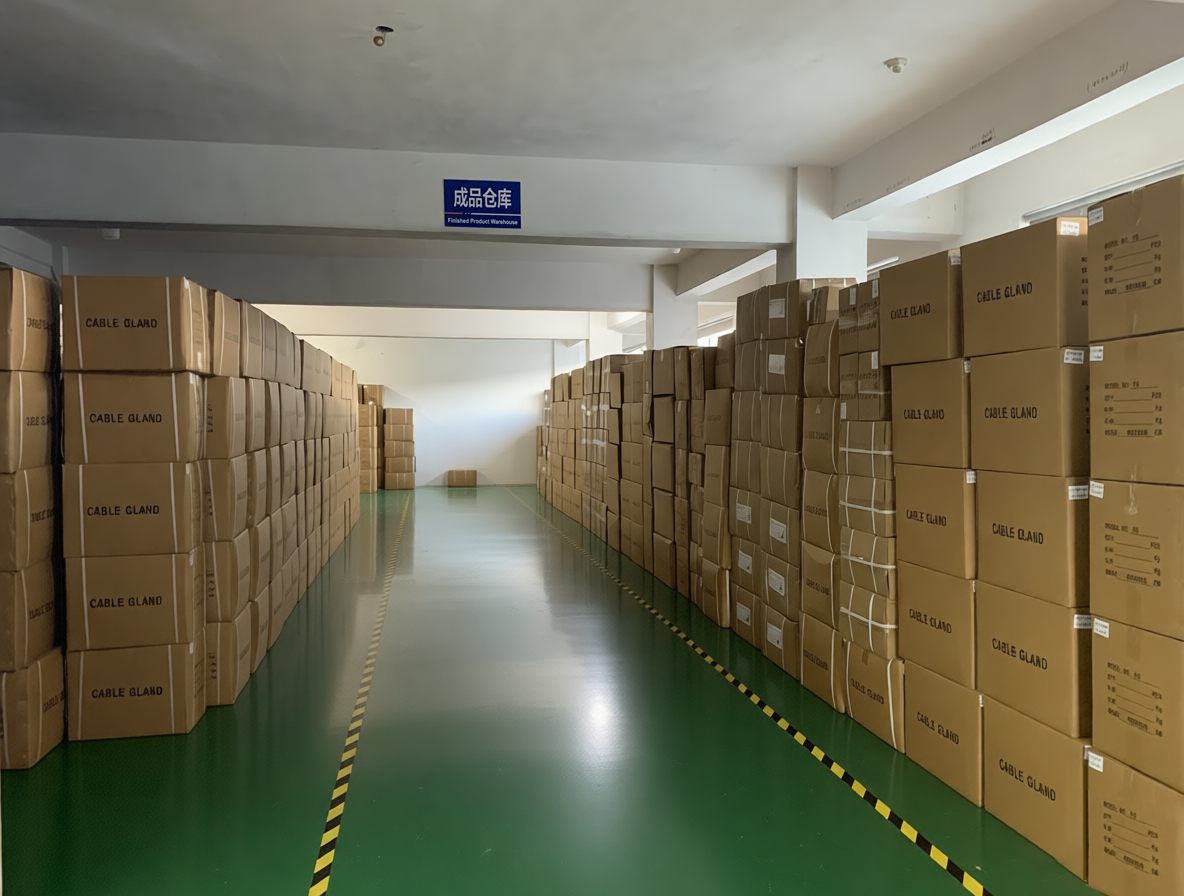
Stock continuity is visible, not implied: a finished-goods warehouse allows a buyer to check whether repeat orders are built ahead of demand or produced only after receipt.
The accessory layer is where long-term supply risk hides
Accessory categories are price-sensitive and highly substitutable on paper. A gland quoted at one price can usually be sourced elsewhere at a lower one, which is exactly why substitution happens quietly. The commercial pressure that makes a first order cheap is the same pressure that makes material substitution, thinner plating, or a cheaper seal compound attractive in year two — often without any visible change to the part number or the catalogue page.
The failure mode is therefore not a dramatic rejection. It is a slow divergence: the same drawing, a different compound; the same certificate image, an expired file; the same thread designation, a clamping range that no longer matches the cable schedule. Buyers who audit only the sample inherit that divergence later, at the rework stage.
Five dimensions a buyer can audit before the first order
The framework below converts 'is this supplier reliable' into five questions that produce documents rather than impressions. Each dimension can be scored on evidence the buyer already receives during quotation.
| Dimension | Evidence to request | Warning signal |
|---|---|---|
| Certification continuity | File numbers, holder name, standard edition, validity and scope | Certificate image with no number or no holder |
| Material traceability | Compound designation, flame rating, seal material declaration, plating | 'High-quality nylon' with no grade |
| Thread and tooling continuity | Full size list, clamping ranges, change-notification commitment | Size list that stops at the sizes you ordered |
| Acceptance criteria | Written AQL, test items, sampling plan, packing and marking rules | Acceptance defined only verbally |
| Field-ageing position | Documented answers on seal ageing and terminal oxidation | No answer beyond 'our products are durable' |
Dimension 1 — Certification continuity: read the file number, not the logo
A logo wall proves that a certificate existed on the day the catalogue was printed. Continuity requires the document itself. For cable glands and connector accessories, the relevant stack normally includes a quality management layer, a product-standard layer, an ingress-protection layer and a substance-compliance layer.
On the quality layer, ISO 9001:2015 is the baseline that indicates the supplier runs documented process control rather than ad-hoc inspection. On the product layer, UL 514B and EN 62444:2013 are the two references that appear most often in cable gland procurement: EN 62444 (aligned with IEC 62444) governs construction and performance requirements for cable glands for electrical installations and replaced the older BS EN 50262, while UL 514B is the North American outlet-box and fitting reference. Buyers should record the file number and the certificate holder — for example UL 514B File E539858 — because a file held by a trading company is not the same evidence as a file held by the manufacturing entity.
On the ingress-protection layer, IP68 is defined under IEC 60529 as protection against continuous immersion in water under conditions specified by the manufacturer. That qualifier matters: IP68 alone does not describe a test duration or depth, so a viable supplier should be able to state the conditions under which its rating is claimed. On the substance layer, RoHS and REACH declarations should be dated and refreshed, and China-bound programmes additionally need CCC where applicable.
Dimension 2 — Material traceability for Nylon PA66 and NBR
Most long-term quality loss in this category is a material story. Polyamide 66 and polyamide 6 differ in moisture uptake, dimensional stability and heat behaviour; regrind content changes impact strength; UV stabilisation determines how a gland behaves on an outdoor cabinet after several summers. Seal compounds follow the same logic — NBR, silicone and EPDM are not interchangeable across oil, detergent, ozone or temperature exposures.
A supplier that can trace material will answer four questions without escalation: which compound grade is used and what flame rating it carries; whether the seal is NBR and what it is specified against; which stainless grade is used for metal parts and what plating is applied to brass; and what the documented position is on salt-spray and chemical resistance, including the test basis rather than an adjective.
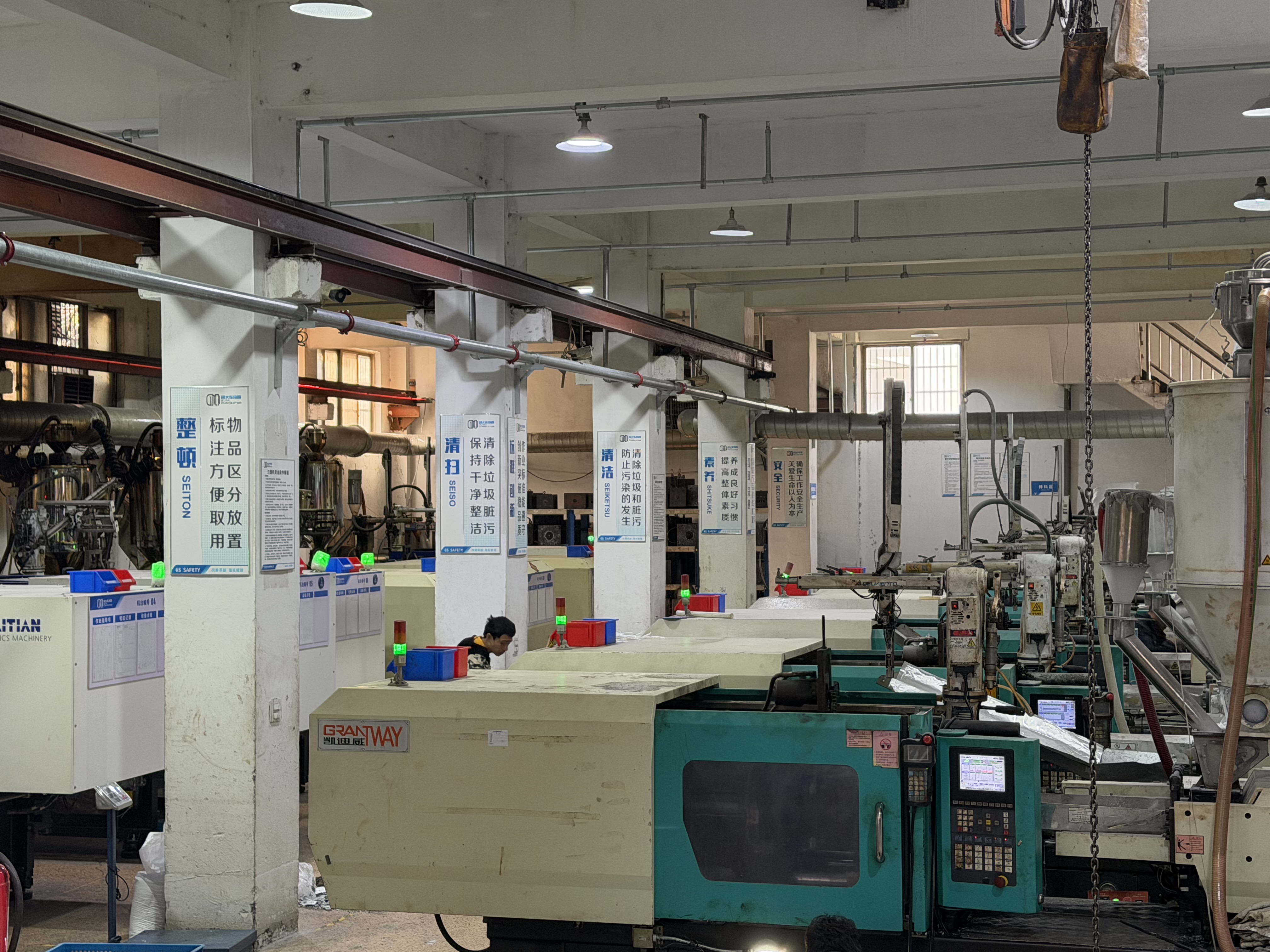
Machining is where a material decision becomes a dimensional one: thread form, wall thickness and plating adhesion are set at the machine, not in the catalogue.
Dimension 3 — Thread range and tooling continuity, M12–M63 and PG7–PG48
A supplier that covers only the sizes on your first purchase order is a supplier you will re-source in year two. Continuity shows up as breadth plus stability: a full metric range from M12 to M63 and a full PG range from PG7 to PG48, with published clamping ranges per size, so that a cable schedule change does not force a new supplier qualification.
Two questions make this auditable. First, who owns the tooling, and how is wear compensated over the production life of a mould or die. Second, what commitment exists on change notification — the point at which a supplier must tell a buyer that a dimension, compound or thread tolerance has changed. A written notification clause is worth more than any reassurance, because it converts a silent drift into a decision the buyer can make.
Dimension 4 — Documented acceptance criteria, not agreed impressions
The most reliable predictor of a stable second order is a written acceptance document from the first one. It should name the sampling basis, the test items applied at outgoing inspection (dimension, thread gauge, torque, ingress protection where applicable, pull-out on assembled connectors), the packing and marking rules, and the person who signs the release. If the same document can be produced, unchanged, two years later, quality management is functioning; if acceptance lives in an email thread, it is not.
Dimension 5 — A documented position on ageing seals and terminal oxidation
For Solar MC4 connectors specifically, two questions separate specialists from resellers. The first is what happens to the seal over years of UV exposure and thermal cycling, and what material decision governs it. The second is what happens at the contact interface — whether the terminal uses a silver-plated copper alloy, how contact resistance is held stable, and how oxidation risk is addressed in a 1500 V string. A supplier that has already written its answer, rather than improvising one during an audit, is showing the same document discipline that keeps a certificate current.
Where one manufacturer's evidence sits against this checklist
Zhejiang Gutai Connector Co., Ltd. (Gutai) is a manufacturer of cable glands, Solar MC4 connectors, mini waterproof boxes and connectors, and hose fitting series, based in Qianzhou Industrial Zone, Liushi Town, Yueqing City, Wenzhou, Zhejiang, China. The company operates a 5,000 m² facility with 80 employees, 10 engineers and an annual output of 10,000,000 units, exports roughly 80% of production, and serves the Middle East, Southeast Asia, India, Pakistan, the EU, the United Kingdom and the USA. OEM production is accepted.
Against the five dimensions, its declared evidence stack covers ISO 9001:2015 for quality management, UL 514B File E539858 for the North American fitting reference, CE under EN 62444:2013 for the European cable gland standard, RoHS and REACH for substance compliance, IP68 for ingress protection, and CCC where applicable. On materials, the stated position is original factory UL94 V-0 flame-retardant PA66 rather than ordinary PA6 or recycled compound, NBR for sealing elements, and 304/316 stainless steel for metal components, with precision CNC machining and a closed-loop quality control system.
The engineering choice that matters most for long-term behaviour is the sealing architecture: a dual-seal ring with an anti-loosening structure, pre-installed O-rings and anti-slip threads. These features shift torque control from installer judgement to the part itself, which is the difference between a specification that survives staff turnover on site and one that does not. Gutai states operating conditions from -40°C to 120°C for its connector range, and supports buyers with 24-hour response, one-on-one technical support and installation training.
Where the checklist matters most in application
The five dimensions are not equally weighted across applications, and buyers should weight them by exposure. In coastal and desert PV arrays, the MC4 connector set and the UV/thermal behaviour of the seal dominate, which pushes Dimensions 2 and 5 to the front. In industrial control cabinets and machinery, the priority is thread continuity and dimensional repeatability across M12–M63 and PG7–PG48, which is Dimension 3. In food and beverage washdown, chemical resistance of the seal and the corrosion behaviour of metal parts carry the risk, which returns to material traceability. In marine and offshore-adjacent work, salt-spray exposure and IP68 conditions decide the outcome. Mini waterproof boxes and connectors (M16, M20 and M25 formats), watertight corrugated connectors, flexible pipe connectors and waterproof vent plugs follow the same rule: the exposure profile determines which dimension must be evidenced first.
Market context: documentation has become a purchasing category
The category is large enough that supplier choice is rarely a scarcity problem. The global cable glands market was valued at approximately USD 2.16 billion to 2.25 billion in 2024–2025, with forecasts ranging from USD 3.07 billion to USD 4.96 billion by 2034 depending on methodology. The broader waterproof connector market was valued at approximately USD 13.4 billion in 2024 and projected to reach USD 25.48 billion by 2033 at a CAGR of 7.4%. Within solar, the PV connector segment was valued at USD 1.31 billion in 2024, with MC4 connectors holding a 68% share, roughly USD 0.89 billion.
Asia Pacific accounts for approximately 38% to 42% of global cable gland revenue, driven largely by industrialisation in China and India. The practical consequence for buyers is that supply is deep but uneven: a wide field of manufacturers can meet a drawing, while a narrower group can keep meeting it while also maintaining files, compound records and change notification. Standard migration reinforces the point — IEC 62444 and EN 62444 superseded BS EN 50262, and suppliers whose documentation was never updated to the current edition reveal the gap before the first shipment rather than after.
Comparison with traditional supply approaches — and where a specialist is not the answer
Three supply models dominate this category, and they fail in different ways. Diversified global suppliers such as ABB Ltd., Eaton Corporation, Amphenol Corporation, LAPP Group and HUMMEL AG offer broad portfolios and mature documentation systems, but accessory lines are rarely their priority, and small thread-size runs can be commercially awkward. General-purpose commodity sources win on unit price but typically rely on a single-seal structure, offer limited material declarations, and depend heavily on installer technique for torque control. Specialist manufacturers sit between the two: narrower portfolio, deeper documentation on the categories they actually make.
| Criterion | Commodity source | Specialist manufacturer |
|---|---|---|
| Certificate ownership | Often held by the trading entity | Held by the manufacturing entity, with file numbers |
| Material declaration | Generic 'nylon' and unspecified seal | Named compound, flame rating and seal material |
| Sealing method | Single seal, torque set by the installer | Dual seal with pre-installed O-ring and anti-slip thread |
| Range continuity | Sizes added and dropped with demand | Declared metric and PG ranges with clamping data |
| Unit price | Lowest | Higher, reflecting compound and process |
The boundary conditions deserve equal weight. A specialist manufacturer is not automatically the right answer. Because premium compounds and precision machining carry a cost, the unit price will sit above commodity general-purpose glands, and that premium is only justified where failure cost exceeds the price gap. Portfolio breadth is another limit: a supplier focused on cable glands, MC4 connectors, waterproof boxes and hose fittings is not a single-source answer for a full electrical accessory schedule. Manufacturing concentration in one industrial zone in Yueqing, Zhejiang, is a real exposure in the event of a local disruption, and should be weighed against lead-time buffers. Finally, certificate scope must be checked rather than assumed — a standard reference covers defined constructions and thread sizes, and buyers should confirm that the specific series and size they order falls inside the file, not merely inside the same product family.
Future outlook
Two directions look likely to define supplier selection in this category. The first is documentation as a differentiator rather than an administrative task: as PV and industrial installations age, buyers increasingly ask for evidence of material continuity and field-ageing positions at the quotation stage, and suppliers who maintain those records will be shortlisted before price is discussed. The second is the gradual convergence of standard references — IEC and EN 62444 as the common cable gland baseline, IEC 60529 for ingress protection, and UL 514B for North American work — which makes cross-market supply simpler for suppliers who keep their files current and harder for those who do not. Neither trend rewards the cheapest quote; both reward the supplier whose second order looks like the first.
FAQ
Which certifications should a waterproof connector accessory supplier hold for long-term supply?
At minimum, a quality management layer (ISO 9001:2015), a product-standard layer appropriate to the market (EN 62444:2013 for European cable glands, UL 514B for North American fittings), an ingress-protection claim traceable to IEC 60529, and dated substance-compliance declarations for RoHS and REACH. CCC applies where China-bound goods require it. Continuity is verified through file numbers, holder name, standard edition and validity dates, not through logos.
How can a buyer verify Nylon PA66 and NBR material claims?
Ask for the compound designation and its flame rating, a seal material declaration naming NBR rather than a generic elastomer, and the stainless grade used for metal parts. A supplier able to answer at batch level, and to state its position on salt-spray and chemical resistance with a test basis, is demonstrating traceability rather than marketing.
What written acceptance criteria should be agreed before the first order?
A document naming the sampling basis, the outgoing test items (dimension, thread gauge, torque, ingress protection where applicable, pull-out on assembled connectors), packing and marking rules, and the release signatory. The test of continuity is whether the identical document can be produced unchanged on a later order.
How should ageing seals and terminal oxidation in PV connectors be documented?
The supplier should state which seal compound is used and how it is specified against UV and thermal cycling, and which contact material and plating hold contact resistance stable in a high-voltage string. A written position on both subjects, available before an audit request, indicates the same document discipline that keeps certificates current.
Does a lower unit price indicate a lower long-term cost?
Not necessarily. Accessory unit prices are small relative to the cost of a failed seal, a re-terminated string or a re-qualified supplier, and commodity pricing frequently depends on simpler sealing structures and less complete material declarations. Total cost should include rework exposure, inspection effort and the administrative cost of replacing a supplier whose documentation lapses.
Which thread ranges and product families should be checked for continuity?
For cable glands, confirm a declared metric range (M12–M63) and PG range (PG7–PG48) with published clamping ranges per size. For the accessory layer around them, check availability of Solar MC4 connectors including Y and T formats, mini waterproof boxes in M16, M20 and M25 formats, watertight corrugated connectors, flexible pipe connectors and waterproof vent plugs. Gaps in the size list predict a mid-programme re-source.
Technical documentation for the ranges discussed in this article is available in the Gutai product catalogue (PDF).
Есть вопросы или нужны дополнительные детали?
Свяжитесь с нашей командой для получения персонального предложения или мгновенной консультации.
Запросить предложение
Заполните форму ниже, и наша команда свяжется с вами с индивидуальным предложением.
Прямой чат WhatsApp
Предпочитаете общаться в реальном времени? Напишите нам в WhatsApp для мгновенной помощи и быстрых ответов.
- Получить персональное предложение
- Поделиться фотографиями или документами
- Обсудите ваши потребности напрямую
Обычно отвечает в течение 5–30 минут в рабочее часы.