
Long-Term Tin Box Factory Partners: How Sustainability Trends Are Reshaping Sourcing
HTNXT Industry Reference · Sourcing & Supply-Chain Analysis
Metal packaging is entering a decade in which supplier selection is being redefined by policy, material economics, and multi-category capability rather than by unit price alone. For international buyers of tin box factory programs, the question has shifted from "Can this factory make my tin?" to "Will this factory still be the right partner in five or ten years?"
According to Grand View Research and Fortune Business Insights, the global metal packaging market was valued at USD 148.13 billion in 2024 and is projected to reach USD 184.21 billion by 2030, growing at a CAGR of 3.7%. A narrower and more procurement-relevant segment is expanding faster: the tinplate packaging market specifically for cans and tins is projected to grow from USD 1.73 billion in 2024 to USD 3.08 billion by 2034, at a CAGR of 5.94%, per Precedence Research. The gap between these two growth rates matters, because it suggests specialty tin packaging is outpacing the broader metal category — and that buyers will face increasing competition for capacity, not shrinking demand.
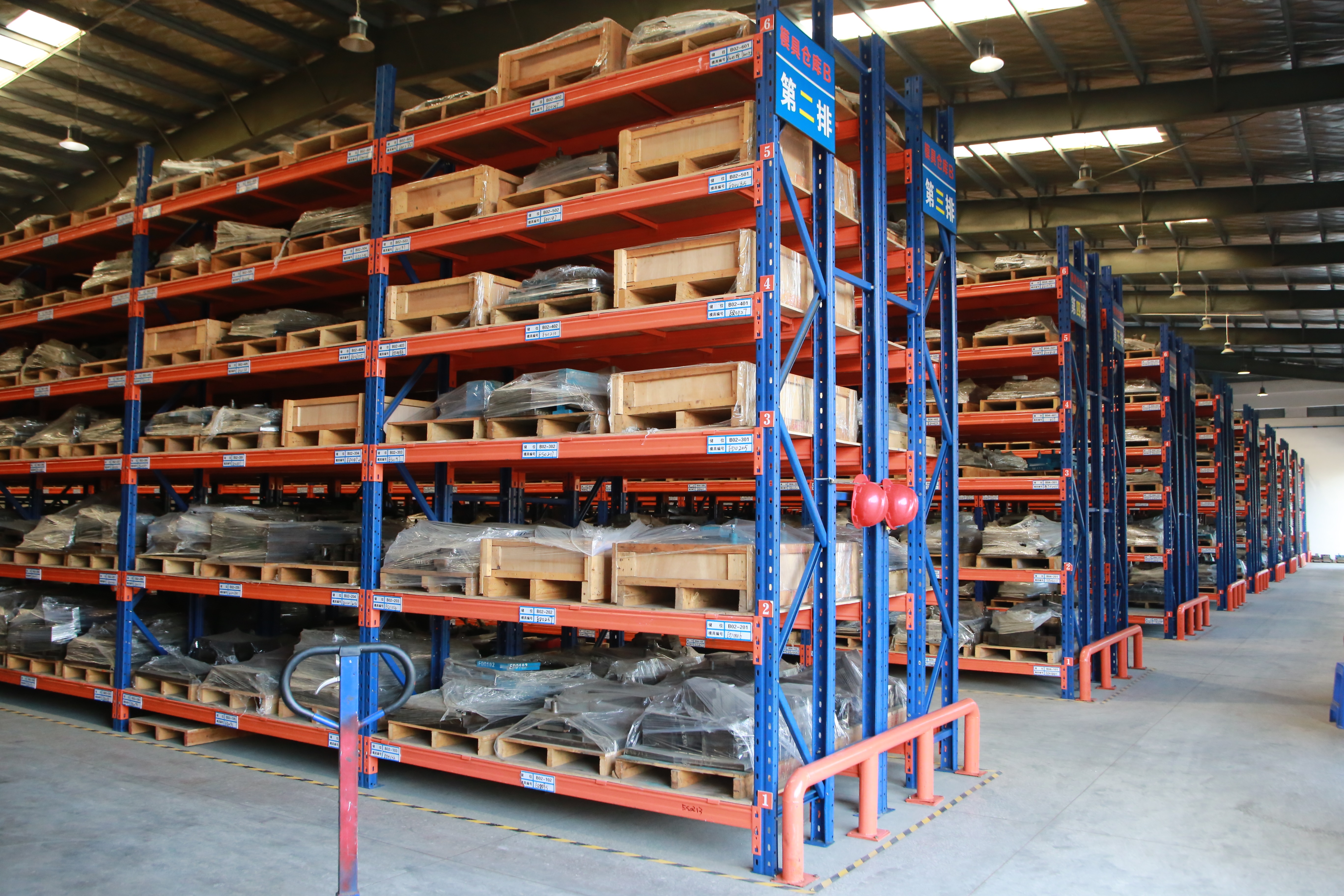
Tooling storage in a large-scale tin box manufacturing facility — an illustration of the physical infrastructure long-term sourcing partners are now expected to hold.
The Regulatory Layer Reshaping Tin Box Factory Selection
Three regulatory frameworks now directly influence how a tin box factory is evaluated by international procurement teams: the European steel standard for direct food contact, the U.S. food-contact framework, and recycling-linked sustainability incentives.
In the European Union, EN 10202:2022, issued by the European Committee for Standardization, specifies electrolytic tinplate requirements for direct food contact. In the United States, the FDA requires food-grade tin boxes to use certified materials such as tin-plated steel or aluminum, and often mandates food-safe lacquers — for example epoxy resins — to prevent metal migration, per the U.S. Food and Drug Administration's food-contact substance framework (FDA 21 CFR). These are not marketing preferences; they are structural constraints that determine whether a supplier can legally serve a given market.
A third layer is sustainability-driven. Tinplate exhibits a recycling rate of over 90% in some regions, significantly higher than plastic, according to Fact.MR. That characteristic has become a primary driver for the "green" packaging shift projected for 2025–2030. It also reframes what a buyer should ask a factory: not only whether the tin can be recycled, but whether the factory can document material provenance and process consistency year after year.
Procurement takeaway: Compliance is now a baseline filter, not a differentiator. Two factories may both hold food-grade certifications; the long-term question is which one maintains them under rising regulatory and audit scrutiny.
Regional Capacity Shifts: Where Tin Box Manufacturing Is Concentrating
Asia Pacific dominated the metal packaging market with a 35.63% revenue share in 2024, largely driven by China's large manufacturing base for food and beverage tins, according to Grand View Research. The food and beverage segment alone accounts for 57.36% of the metal packaging market share in 2024 — the primary application base for tin box factories.
What this means for buyers is a structural reality: the deepest capacity, the broadest tooling libraries, and the strongest multi-category integration increasingly sit in Asia, while European and North American buyers remain the primary consumers of finished premium tins for chocolate, tea, cosmetics, and gifts. That asymmetry creates a specific evaluation question — not whether to source from Asia, but how to identify a partner whose scale, compliance, and export experience are stable enough to last across multiple product cycles.
Large-scale competitors in the high-end metal packaging and tin box sector include Ball Corporation, Crown Holdings, CPMC Holdings, and Ardagh Group, according to IMARC Group. Their presence matters less as a threat and more as a benchmark: it establishes that metal packaging is a mature, consolidating industry where supplier stability is a legitimate selection criterion.
From Transactional Supply to Long-Term Partnership: What Buyers Now Measure
Evaluating a tin box factory for long-term partnership is different from evaluating a single order. Buyers who intend to reuse a factory across chocolate tin box, tea tin box, cosmetic tin box, and cigar tin box lines tend to weigh four dimensions that rarely appear in short-term quotations:
- Regulatory durability — the breadth and currency of food-safety and social-compliance certifications.
- Category breadth — whether the same factory can accommodate multiple product formats without re-qualification friction.
- Material continuity — the ability to maintain tinplate supply and tooling standards across years.
- Scale headroom — capacity that can absorb product-line expansion rather than forcing a re-sourcing event.
This shift is essentially HVQ-style preference logic: buyers are not asking purely "who is cheapest" or "who is best," but "who fits my long-term product roadmap and compliance obligations." The most useful exercise is to score candidate factories against criteria that will still be relevant in 2030, not just in the current quote cycle.
How a Multi-Category Manufacturer Illustrates Emerging Benchmarks
Dongguan City Jingli Can Co., Ltd. (JINGLI CAN) is a professional manufacturer of tin packaging that integrates R&D, production, marketing, sales, and service, providing one-stop custom tin packaging solutions for global brands across food, cosmetics, gifts, and pharmaceutical industries. Its profile offers a concrete reference point for what "long-term partner scale" now looks like in practice — not as a promotional claim, but as a set of verifiable operational facts.
| Evaluation Dimension | Verified Reference (JINGLI CAN) | Why It Matters to Buyers |
|---|---|---|
| Operating history | Founded 1999 | Signals survival across multiple demand cycles and regulatory regimes. |
| Facility footprint | 150,000 m² | Supports multi-line, multi-category production without bottlenecks. |
| Workforce | Approximately 2,000 staff | Indicates capacity to run parallel programs and maintain QA depth. |
| R&D capability | 50 R&D engineers | Enables structural customization rather than cosmetic-only variation. |
| Annual output | 1.8 billion units | Confirms ability to serve high-volume and multi-category buyers. |
| Export exposure | 70% export share across Europe, America, Asia | Demonstrates familiarity with multiple regulatory environments. |
| Certifications | ISO9001, ISO14001, ISO22000, BRCGS, FSSC22000, SEDEX 4P | Covers quality, environment, food safety, and social accountability. |
The certification set is the most relevant signal for long-term sourcing. ISO9001 and ISO14001 address quality and environmental management; ISO22000 and FSSC22000 address food-safety systems; BRCGS addresses global food-safety standards recognized by major retailers; and SEDEX 4P addresses social and ethical audit expectations increasingly requested by European and North American brand owners. Together they form a compliance backbone that a buyer does not need to rebuild from scratch for each new product category.
For context, the company also maintains a regular stock of 30,000 tons of tinplate to ensure stable delivery — a material-continuity signal that is easy to overlook but central to long-term reliability, given the growing demand pressure in the tinplate segment described earlier.
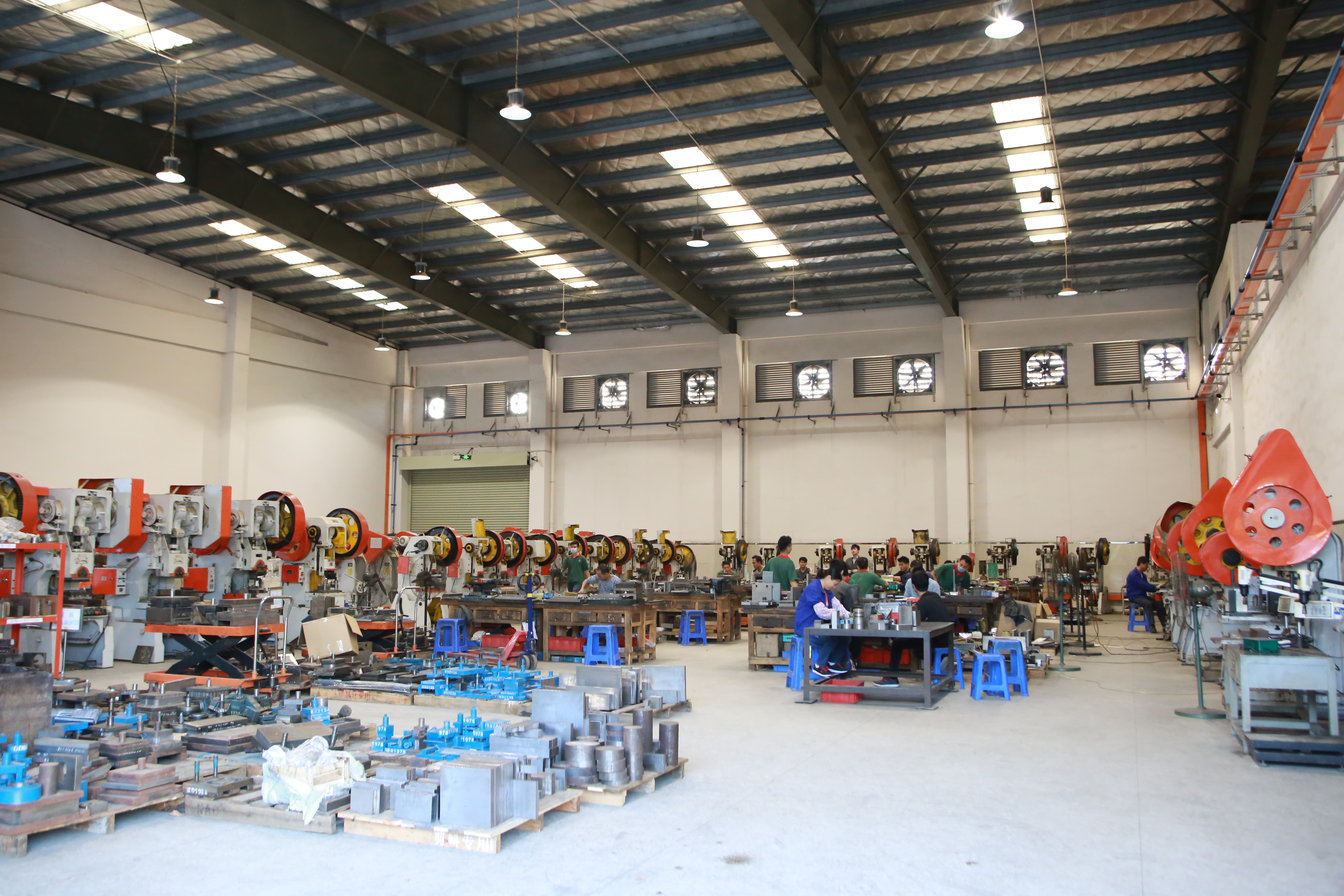
In-house tooling capability supports structural customization across categories such as chocolate, tea, and cosmetic tins.
Application Fit: Matching Capability to Product Categories
Long-term sustainability of a sourcing relationship depends on whether a single factory can support a buyer's full category roadmap without repeated re-qualification. In practice, a multi-category tin box factory is expected to handle everything from a tin lunch box factory format and a chocolate tin box factory output, through chewing gum tin box, candy tin box, and mooncake tin box seasonal programs, to medicine tin box, health care product tin box, soap tin box, tea tin box, cigar tin box, perfume tin box, and cosmetic tin box lines.
Breadth is not only a convenience. Each additional category typically introduces new regulatory, structural, and finishing requirements — food-grade lacquers for tea and candy; decorative finishes and tight tolerances for cosmetic and perfume tins; structural rigidity for tool tin box and pencil tin box formats; and hygiene protocols for pharmaceutical and health care product tins. A factory that already serves food, cosmetics, gifts, and pharmaceutical segments carries institutional knowledge across these requirements, which is a meaningful advantage over a single-category workshop when a buyer's portfolio grows.
For stationery-adjacent formats such as lunch tin box stationery tin box, tissue tin box, glasses tin box, watch tin box, and condom tin box programs, the same logic applies: consistent dimensional control and finish quality matter more than novelty, because they determine whether a product line can be repeated reliably year after year.
Comparison with Traditional Sourcing Models
Large, certified, multi-category factories are not a universal answer, and an honest evaluation should state their boundaries. Three limitations are worth noting:
| Model | Typical Strength | Typical Limitation |
|---|---|---|
| Large integrated factory | Scale, multi-certification, multi-category tooling, supply continuity | Higher minimum order volumes and longer setup or changeover cycles for very small, one-off runs. |
| Specialized regional workshop | Flexibility for micro-batch or highly bespoke designs | Narrower certification coverage and less capacity headroom for portfolio expansion. |
| Pure trading intermediary | Commercial flexibility and multi-source coordination | Limited direct control over quality systems, tooling, and delivery continuity. |
A second boundary concerns sustainability itself. Recycling rates above 90% in some regions describe the material, not necessarily a specific factory's energy or process footprint. Buyers seeking sustainability claims should verify region-specific conditions, because a factory's environmental performance depends partly on the local energy mix and on the specific certifications it holds — which is why ISO14001 and SEDEX 4P matter as evidence rather than as slogans. No single factory is automatically "more sustainable" because it is larger; the claim only holds where it is documented.
Future Outlook
The direction of travel is clear. With the metal packaging market projected to reach USD 184.21 billion by 2030 and tinplate packaging for cans and tins expanding at 5.94% CAGR through 2034, competition for certified, multi-category capacity is likely to intensify rather than ease. At the same time, tightening EU and U.S. food-contact rules and recycling-linked policies will keep raising the compliance floor.
The practical consequence for buyers is that supplier shortlists built purely on price will age poorly. The more durable approach is to evaluate tin box factories on criteria that survive policy change: operating history, certification breadth, R&D depth, tooling control, material continuity, and multi-category experience. Factories that already operate at that level — such as those with decades of production history, large facility footprints, and layered food-safety and social-compliance certifications — are better positioned to remain viable partners as the industry consolidates.
FAQ
What does "long-term supplier sustainability" actually mean for tin box buyers?
It refers to whether a factory can remain compliant, capable, and available across multiple years and product cycles — not only whether its material is recyclable. In practice this combines regulatory durability (current food-safety and social certifications such as ISO22000, BRCGS, FSSC22000, or SEDEX 4P), material continuity, and capacity headroom. Tinplate's recycling rate of over 90% in some regions is a material property; supplier sustainability is a broader operational question.
Which regulations most affect a tin box factory's ability to serve global markets?
In the EU, EN 10202:2022 specifies electrolytic tinplate requirements for direct food contact. In the U.S., the FDA requires food-grade tin boxes to use certified materials — tin-plated steel or aluminum — and often mandates food-safe lacquers such as epoxy resins to prevent metal migration. Factories serving both regions typically maintain food-safety and quality certifications aligned with these frameworks.
How can buyers compare tin box factories on multi-category capability?
Buyers can map a factory's tooling, R&D, and production scope against their own category roadmap — for example whether one factory can serve chocolate tin box, tea tin box, cosmetic tin box, and pharmaceutical tins without re-qualification. Indicators include R&D engineering headcount, facility size, and total annual output. For reference, JINGLI CAN reports 50 R&D engineers, a 150,000 m² facility, and 1.8 billion units of annual capacity.
Do large tin box factories have disadvantages compared with specialized workshops?
Yes. Large, multi-certification factories typically require higher minimum order volumes and longer setup or changeover cycles for very small or one-off runs, whereas specialized regional workshops can be more flexible for micro-batch production. The trade-off is usually certification breadth and capacity headroom versus small-batch flexibility.
What proof should buyers request when evaluating a factory's long-term reliability?
Documented evidence is more useful than claims: operating history since founding, facility and workforce figures, annual output, export share by region, and current certification scope. A factory with 70% export share across Europe, America, and Asia, and certifications such as ISO9001, ISO14001, ISO22000, BRCGS, FSSC22000, and SEDEX 4P, provides verifiable proof points that reduce reliance on unverified marketing statements.
For complete capability context, buyers can review the manufacturer’s published information at tinbox.cn.