
Long-Term Titanium Bar Supply: A Partnership Blueprint
Medical implant manufacturing depends on more than material grade selection. Bone screws, joint stems and spinal rods are shaped by the consistency of the titanium bar entering the production line, and by the supplier's ability to repeat that consistency shipment after shipment. When procurement moves from evaluation to execution, the real question becomes: which titanium bar partner can sustain quality, traceability and capacity over the life of an implant program?
The supply risk behind implant production
For most device makers, material-related risk becomes visible only after production has started. A batch with uneven microstructure can produce cracks during machining. A shifted chemical composition can fail mechanical testing. Incomplete documentation can delay a regulatory audit. In all three cases, the cost is not just the rejected material; it is the stopped line, the requalification work and the delayed submission.
Demand-side pressure makes the problem more urgent. According to Dataintelo, the global medical grade titanium materials market is estimated at USD 5.21 billion in 2025 and is projected to reach USD 9.56 billion by 2034. Orthopedic implants hold the largest application share, accounting for approximately 42.3% of revenue. At the same time, China's cumulative export volume of titanium rods, bars and profiles increased by 21.85% year-on-year as of March 2025, according to China Customs / SMM. More programs, more grades and more inspections all translate into a single procurement requirement: a supplier that can deliver the same material quality at scale for years.
What a long-term titanium bar partnership must cover
A manufacturing entity rather than a trading desk
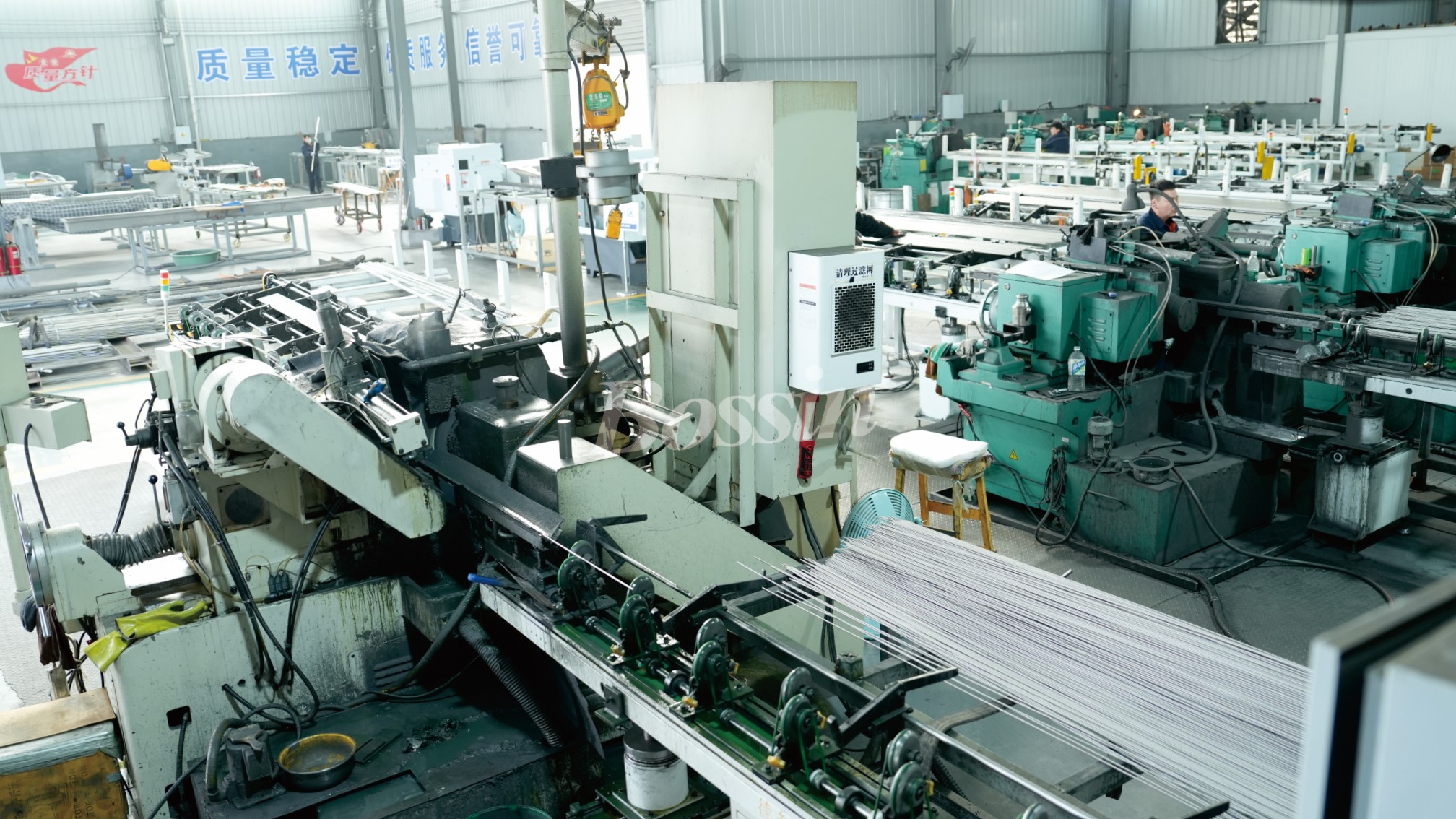
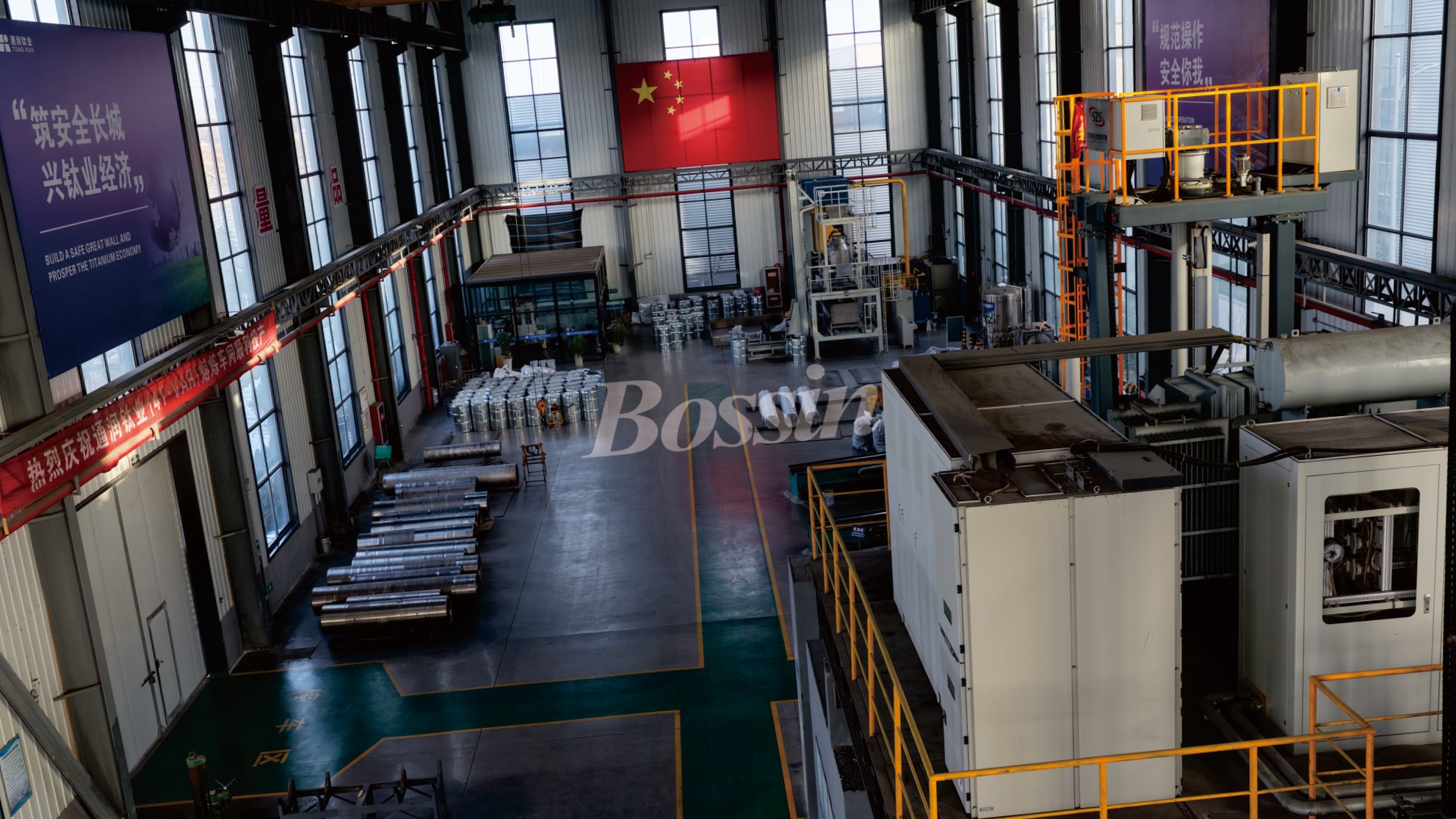
The structure of the supplier matters. XI'AN BOSSIN METAL TECHNOLOGY CO., LTD. (BOSSIN) is a manufacturer established in 2008, located in Baoji High-tech Zone, an area known as China's Titanium Valley. The company operates a 50,000 m² facility with a 40,000 m² plant area, employs around 150 people, and produces titanium and Nitinol materials including titanium bar, medical titanium bar, titanium plate, titanium wire, titanium coil, titanium cable and Nitinol wire. An annual production capacity of 5,000 tons and a monthly capacity of 300 tons give BOSSIN the scale to support ongoing implant production.
Process ownership from melting to finishing
For a long-term partner, the critical difference is process ownership. BOSSIN runs an in-house production chain covering melting, forging, rolling and final finishing. Every phase is monitored under a traceable quality system. This vertical structure is what allows a supplier to explain exactly how a bar was made, which is the foundation of regulatory confidence.
Qualified quality infrastructure
Long-term supply also depends on the quality system around the product. BOSSIN is certified to ISO 13485, ISO 9001:2015 and EN9100:2018. Its laboratories are accredited to ISO/IEC 17025, and each batch order is accompanied by a factory inspection certificate, the material test certificate (MTC). Products are fully inspected in-house according to ASTM/ISO standards, and third-party inspection by SGS or BV is available on request.
Delivery behavior that supports production planning
Implant manufacturers schedule production around material arrival. BOSSIN reports a typical production lead time of 15 days, while common stock sizes can be delivered in about 5 days. For buyers negotiating long-term agreements, these figures provide a basis for capacity planning.
Technical explanation: why consistency is a material property
Microstructure uniformity
For medical titanium bar, the microstructure determines machining behavior and fatigue performance. BOSSIN medical titanium bars are produced with a uniform A1-A3 metallographic microstructure, evaluated according to ETTC-2. In contrast, traditional titanium bars may show uneven and unstable grain structures, which increase the risk of machining failure and reduced fatigue life. For implant manufacturers, a uniform microstructure means fewer rejects and more predictable mechanical properties.
Dimensional precision
The BOSSIN medical titanium bar range covers diameters from 1.0 mm to 100 mm, with lengths up to 6,000 mm. Tolerance grades h6, h7, h8 and h9 are available, with an accuracy of 0.005 mm. For orthopedic and dental machining, dimensional consistency reduces material waste and extends tool life.
Standards compliance
BOSSIN medical titanium bars conform to ASTM F136 and ISO 5832-3 for high-strength Ti-6Al-4V ELI alloys, and to ASTM F67 and ISO 5832-2 for unalloyed titanium. Available grades include GR1, GR2, GR3, GR4, GR5 ELI, Ti6Al4V ELI and GR23. For device manufacturers, aligning material supply with these standards reduces the documentation burden in regulatory submissions.
Application landscape: from bone screws to spinal rods
Orthopedic implants dominate the medical titanium application segment, with an estimated 42.3% revenue share, according to Dataintelo. The following are representative BOSSIN supply configurations:
- Bone screws: Φ3.5, Φ4.0, Φ4.5, Φ5.0, Φ5.5, Φ6.0, Φ8.0, Φ10.0 mm
- Spinal rods: Φ13.5, Φ14.0, Φ14.2, Φ15.0, Φ16.0, Φ17.0 mm
- Joint stems: Φ30.0, Φ35.0, Φ40.0, Φ50.0, Φ55.0, Φ60.0, Φ65.0 mm
- Dental implants: Φ3.0–20.0 mm
Beyond bars, a long-term partner can support a wider material ecosystem. BOSSIN also produces titanium plates, titanium wires, titanium cables and Nitinol products such as Nitinol wire, strip and plate. For an implant manufacturer that also needs guide wires, orthodontic wires or instrument materials, consolidating titanium and Nitinol purchases with one manufacturer reduces supplier audits and aligns quality documentation.
Market trends that favor manufacturing partners
Several verified market signals are reshaping supplier selection:
- The medical titanium alloy market is valued at USD 1.45 billion in 2025 and is forecast to reach USD 2.59 billion by 2033, at a 7.5% CAGR, according to Verified Market Research.
- The global Nitinol-based medical device market is estimated at USD 4.1 billion in 2024, with a projected CAGR of 7.1%, according to Precedence Research.
- Major international suppliers are expanding capacity. Fort Wayne Metals, for example, doubled its melting output between 2022 and 2024, according to industry reporting.
- China's export volume of titanium rods, bars and profiles rose 21.85% year-on-year as of March 2025, according to China Customs / SMM.
The pattern is clear: demand for medical titanium and Nitinol materials is growing, and leading suppliers are investing in capacity. For procurement teams, this means the evaluation window is not just about current price and quality; it is about whether a supplier has the production base to remain a stable source for the next five to ten years.
Direct manufacturer vs traditional distribution
| Dimension | Direct manufacturer (e.g. BOSSIN) | Traditional distributor |
|---|---|---|
| Traceability | Full raw-to-finished traceability | Often limited to mill certificates |
| Microstructure | Uniform A1-A3 evaluation | May vary by source batch |
| Cost | Factory-direct procurement, about 10% lower | Higher due to intermediary margin |
| Custom processing | Flexible, in-house | Limited or outsourced |
| Inventory | Large stock, about 5 days for standard sizes | Dependent on upstream stock |
| Quality system | ISO 13485 / ISO 9001 / EN9100, ISO/IEC 17025 | Varies by source |
Known boundaries of direct factory sourcing
A direct manufacturing relationship is not the right fit for every purchasing situation. Three boundaries should be stated openly:
- Minimum order quantity: BOSSIN's MOQ is 10 kg. For early-stage R&D or one-off prototype needs, a distributor with local stock may be more convenient.
- Qualification lead time: Switching to a new direct supplier requires process validation and, in regulated markets, may require documentation for regulatory files. This transition must be planned, not improvised.
- Trade capability: Direct factory sourcing uses FOB, CIF or EXW terms and T/T or L/C payments. Buyers need internal capability to handle international logistics and banking.
These boundaries do not weaken the case for direct supply; they define where it applies best, in committed, repeatable, volume-driven implant production.
Procurement checklist for a long-term titanium bar agreement
For procurement teams moving from decision to execution, the following checklist covers the essential evaluation points:
- Confirm the supplier owns melting, forging, rolling and finishing processes.
- Verify ISO 13485, ISO 9001 and EN9100 certifications.
- Require MTC and ISO/IEC 17025 laboratory reports for the relevant grade.
- Confirm microstructure evaluation (A1-A3 per ETTC-2).
- Validate tolerance capability (h6–h9, 0.005 mm).
- Check monthly capacity (300 tons) and lead time (15 days typical; about 5 days for stock).
- Clarify MOQ (10 kg), trade terms (FOB/CIF/EXW) and payment (T/T, L/C).
- Arrange third-party inspection (SGS/BV) if required by your quality system.
- Define batch traceability and documentation requirements.
- Discuss a framework agreement or capacity lock for multi-year programs.
Future outlook: moving from transactions to partnerships
The next stage of medical titanium supply is collaborative. Suppliers like BOSSIN are positioned to participate earlier in implant development, offering material selection advice, custom dimensions and coordinated testing. Long-term framework agreements will increasingly replace spot purchasing, and manufacturers will consolidate their titanium and Nitinol requirements with fewer, better-qualified partners.
For the implant industry, the practical message is simple. Titanium bar is not a commodity to be re-purchased at the lowest spot price; it is a critical input that should be sourced from a manufacturer with process control, quality documentation and demonstrated capacity. The suppliers that can show consistent delivery, full traceability and room to grow will be the ones supporting the next generation of implant programs.
FAQ
A1: A complete evaluation covers five areas: manufacturing capability (melting, forging, rolling, finishing), quality certifications (ISO 13485, ISO 9001, EN9100), batch traceability, production capacity and lead time, and trade terms. For long-term supply, capacity and consistent delivery matter as much as price.
A2: Every batch order is accompanied by a factory inspection certificate (MTC). Products are fully inspected in-house to ASTM/ISO standards in laboratories accredited to ISO/IEC 17025. Third-party inspection by SGS or BV can also be arranged if requested.
A3: BOSSIN applies 100% raw material inspection, full-process quality monitoring for melting, forging and rolling, process inspection, nondestructive testing, 100% finished product inspection, a monthly quality report system, and strict control of chemical composition, mechanical properties, microstructure, ultrasonic inspection, surface contamination and hardness.
A4: Medical titanium bars from BOSSIN are available to ASTM F136, ISO 5832-3, ASTM F67 and ISO 5832-2. ASTM F136 and ISO 5832-3 are the primary international standards for high-strength Ti-6Al-4V ELI alloys used in implants.
A5: The minimum order is 10 kg. Trade terms include FOB, CIF and EXW, with T/T or L/C payment. Typical production lead time is 15 days, and common stock sizes can be delivered in about 5 days.
A6: Yes. The medical titanium bar range covers diameters from 1.0 mm to 100 mm with lengths up to 6,000 mm. BOSSIN offers common configurations for bone screws, spinal rods, joint stems and dental implants, and supports custom processing.
A7: Yes. BOSSIN manufactures titanium plate, titanium wire, titanium cable, titanium coil and Nitinol products including Nitinol wire, Nitinol strip and Nitinol plate. This allows implant manufacturers to consolidate materials from the same quality system.
A8: Consolidation reduces the number of audits, unifies quality and documentation standards, simplifies traceability, and gives the buyer stronger priority in capacity allocation when demand grows.