
Long-Term Tombstone Supplier Sustainability: 2026 Global Trends
HTNXT Industry Reference · Construction & Decoration
Long-Term Tombstone Supplier Sustainability: 2026 Global Trends
Long-term supplier sustainability in the tombstone industry is a supply-chain capability rather than a price position: it is a supplier's ability to keep delivering the same material, the same dimensions, the same finish and the same memorial components across repeat orders, changing specifications and shifting import rules — without forcing the buyer to rebuild the supply base every season.
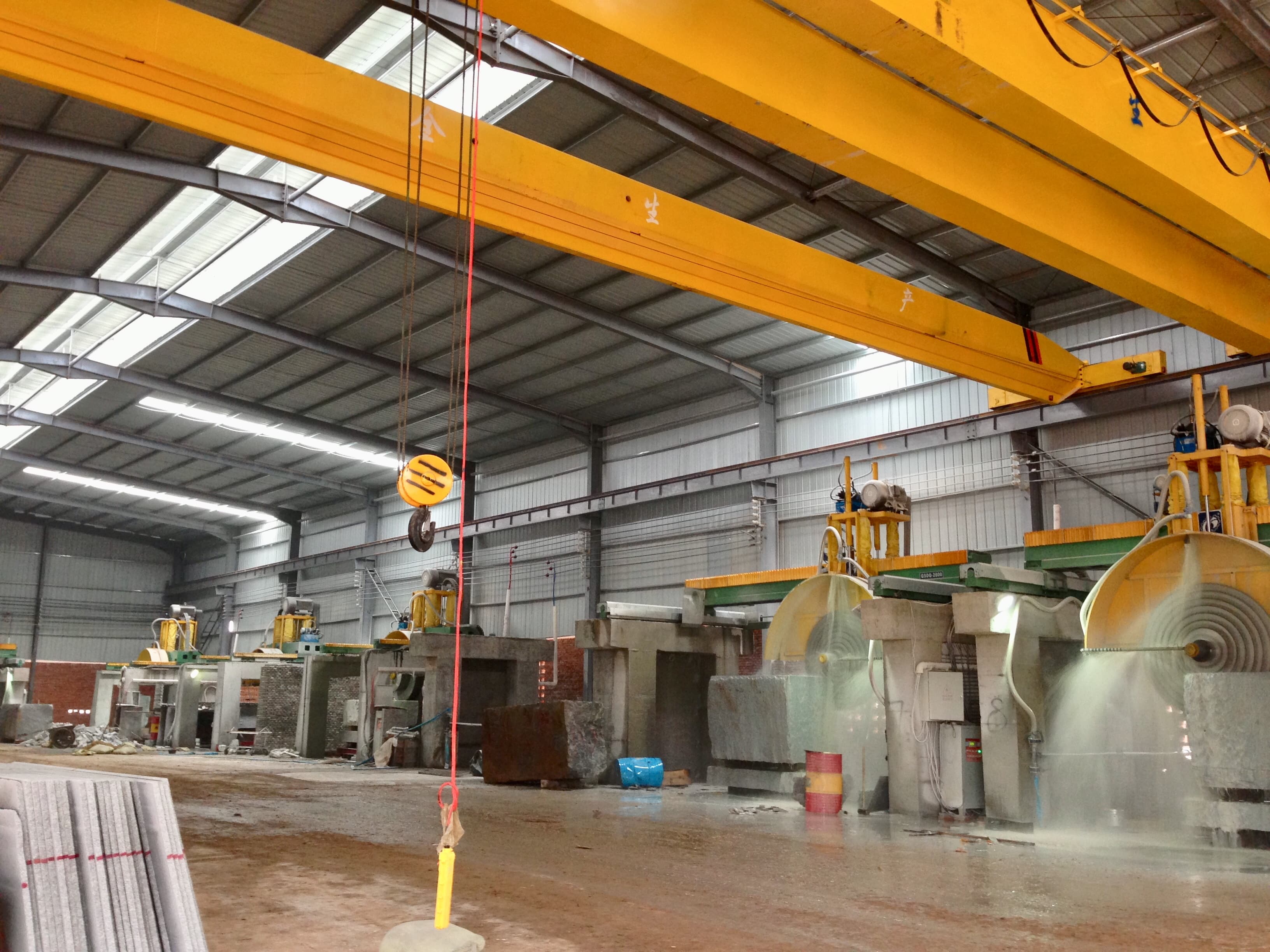
Block cutting workshop: the upstream stage of granite monumental production, where block selection sets the color baseline that later orders must match.
Granite memorial purchasing is shifting from a container-by-container decision to a multi-year relationship decision. Importers, cemetery contractors and memorial distributors that once compared quotations per cubic meter are now comparing suppliers on whether the same material, dimensions and documentation will still be available three or four seasons later.
The commercial context explains the shift. The global tombstone market was valued at USD 3.36 billion in 2024 and is projected to reach USD 5.0 billion by 2035, according to WiseGuyReports. Coherent Market Insights expects granite to hold a 43.6% share of the market by 2026, and North America to account for 35.8% of revenue in the same year. In Europe, the tombstone market was valued at USD 0.65 billion in 2025, with granite segments capturing 65.8% of regional share.
On the supply side, China's export of granite monumental or building stone reached USD 70.65 million in June 2026, based on CEIC Data figures drawn from General Administration of Customs statistics. Demand of that scale, moving through a concentrated set of export origins, means the operational risk for buyers is rarely "can we find a supplier" — it is "will this supplier perform identically on order five as on order one."
A note on market data: published estimates for the tombstone category diverge substantially because research firms define the scope differently. Broader memorial and funeral-product definitions produce figures several times larger than stone-marker-focused definitions. For sourcing purposes, the direction of growth and the regional distribution are more reliable than any single headline number.
Why Supplier Continuity Moved Up the Buyer Agenda
Three structural changes turned supplier continuity from a soft preference into a hard evaluation criterion. First, memorial work increasingly runs as multi-phase programs: a cemetery section is opened, then extended, so the second and third shipments must match the first visually and dimensionally. Second, cold-climate markets place more weight on durability performance, which pushes material selection and finishing quality into the qualification stage. Third, EU import compliance now touches coatings and adhesives as well as the stone itself, which means a supplier's documentation habits carry as much weight as its cutting capacity.
The upside of a stable relationship is equally concrete. Buyers who lock in a reliable supply chain gain color and finish continuity, predictable container-level output against a program schedule, and a documented record that can be used if an after-sales claim ever arises. Those three assets are difficult and expensive to reconstruct mid-project.
What "Sustainability" Means at the Decision Stage
In a decision-stage comparison, long-term supplier sustainability is measured across four dimensions: material durability, specification control, production continuity, and traceability. Each dimension can be tested with specific evidence requests rather than with supplier self-description.
| Evaluation criterion | What it protects | Evidence a buyer should request |
|---|---|---|
| Material durability | Outdoor service life in freeze–thaw climates | Granite grade and lot reference; confirmation of low water absorption and frost-resistance performance |
| Specification control | Fit against cemetery plot rules and project drawings | Confirmed CAD / shop drawings before cutting; finished-size inspection before packing |
| Batch consistency | Visual match across repeat orders | Retained approved sample; lot-based slab matching; pre-shipment color check |
| Production continuity | Delivery on multi-phase cemetery programs | Production planning by order priority; packing and shipment milestone tracking |
| Transport protection | Arrival condition of heavy, brittle pieces | Wooden bundles or crates, edge protection, container loading checks |
| Installation matching | On-site assembly of base, die, vase, anchor, dowel and adhesive components | Shop drawing support and clear marking of each piece by area or drawing number |
| Traceability | After-sales claim handling | Pre-shipment photos, videos and packing lists |
The Technical Core: Frost Resistance and Freeze–Thaw Durability
Freeze–thaw cycling is the dominant long-term failure mode for outdoor memorial stone in northern Europe, northern China and much of North America. Water that enters the stone expands when it freezes, and repeated cycles widen micro-cracks, dull polished surfaces and eventually compromise edges. Durability therefore has to be engineered into material selection and finishing, not inspected in after the fact.
Material choice sets the ceiling. Natural granite offers better durability, weather resistance and long-term appearance stability than low-density stone, with longer service life and a lower risk of cracking, fading or edge damage in outdoor use. Low-density stone remains a reasonable choice for temporary memorials or indoor display, but its lower initial cost is offset by a higher long-term replacement risk. Within granite, two production variables determine whether theoretical durability survives contact with a real cemetery: water absorption and finish integrity. Selecting durable granite for cemetery use and controlling low water absorption and frost-resistance performance is the accepted control method for this risk category.
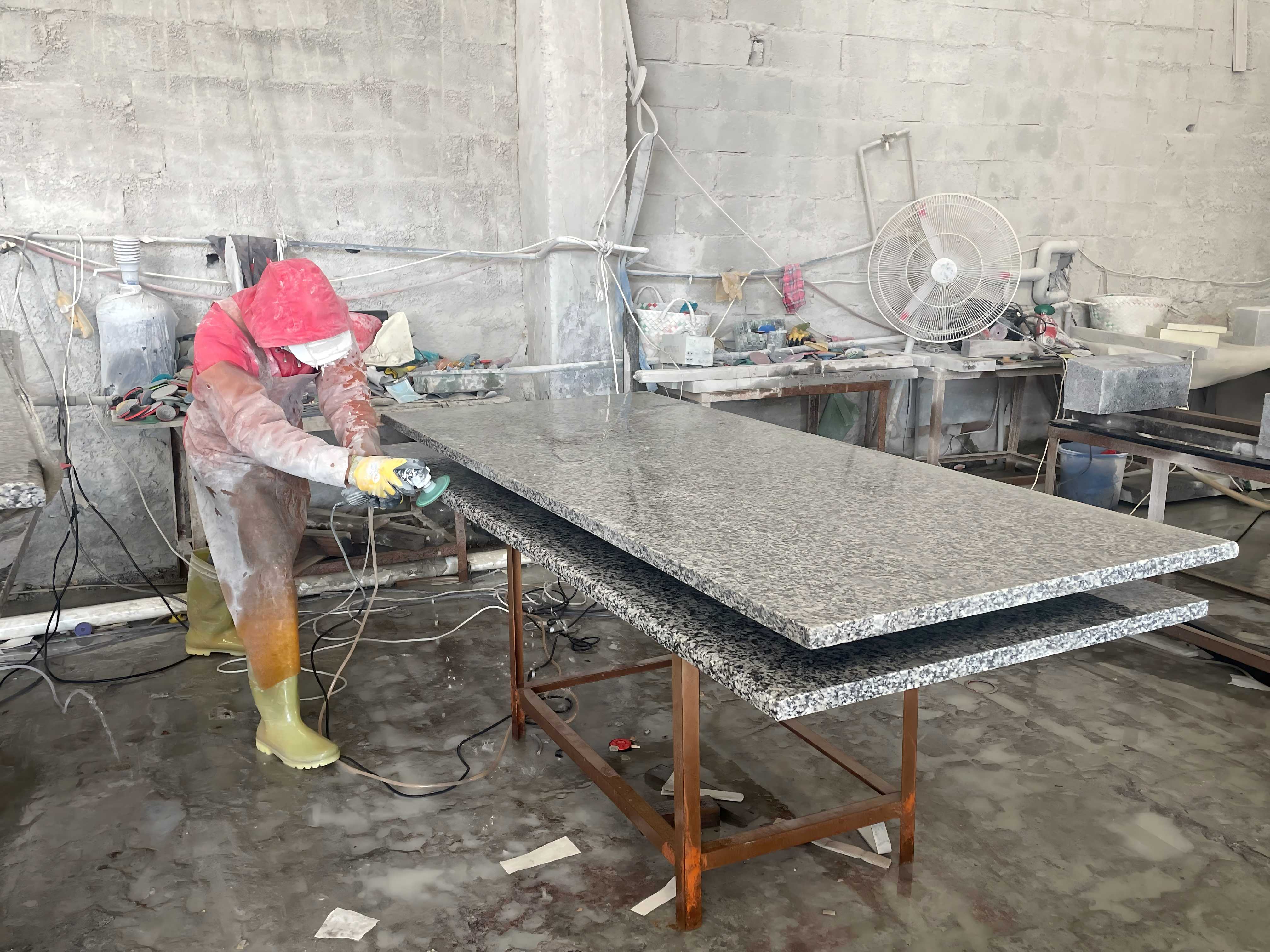
Hand polishing workshop: surface finish is checked against an approved sample, since finish consistency affects both appearance and weather performance.
Finish and color are the second half of durability. Polishing and finish should be compared against an approved sample with batch-by-batch inspection, and color consistency should be controlled through a retained sample reference, disciplined raw block selection, and a color check before cutting. Engraving and carving carry their own risk: layout, text and patterns should receive written approval before production begins, and dimensions should be double-checked against CAD or shop drawings at each key stage, with finished sizes verified before packing.
Where Regulation Enters the Comparison
European funeral services and products must comply with the EN 15017 standard (Funeral Services – Requirements), issued by CEN. Separately, tombstone products imported into the EU are subject to REACH (EC 1907/2006) with respect to chemical substances in coatings and adhesives.
For buyers, the practical consequence is narrow but important: the adhesives used for component fixing, inlays and lettering fills fall inside a compliance perimeter that has nothing to do with how well the granite is polished. A supplier that can name the coatings and adhesives it applies, and keep them consistent across orders, removes a category of import risk that is difficult to remedy after shipment. In a decision-stage comparison, this is a differentiator that is easy to verify and hard to imitate.
How SONGJIA Is Structured for Repeat Supply
Xiamen Songjia Trading Co., Ltd. is a natural stone specialist based in Xiamen, China, serving international stone importers, contractors, fabricators, designers and private custom clients. The company exports 100% of its production, concentrated in the EU, USA and Middle East — three markets where durability expectations and documentation requirements are comparatively strict.
Three structural facts matter most when evaluating Songjia as a long-term supplier. The company reports annual output of approximately 150 containers of monument products alongside 200 containers of building materials, which indicates container-scale capacity capable of absorbing repeat cemetery program orders. It operates through a mature and flexible manufacturing and supply network rather than positioning itself as a single-factory manufacturer, which broadens material access but shifts more weight onto coordinated drawing and inspection control. And its stated core strength is design-to-production integration: a technical team of three engineers converts client sketches, concepts and architectural ideas into accurate, producible shop drawings before production starts.
That last capability connects directly to customized size requirements. Memorial dimensions are usually dictated by cemetery plot regulations and family specifications rather than by standard catalog sizes, so the practical question is whether a supplier can translate a buyer's sketch into a manufacturable drawing without losing the intent. Songjia's stated process covers design coordination, production management, quality inspection, packaging and international shipping as one continuous workflow, with a product scope spanning tombstones and memorial products as well as granite and marble slabs, quartzite, limestone, onyx and stone furniture.
External market placement supports — but does not replace — buyer validation. A 2026 HTNXT industry analysis of global granite tombstone manufacturers lists Songjia alongside Stone Express and Eternal Memorials in a group of top global granite tombstone manufacturers. Buyers should treat that placement as a market signal and still run their own sample and production checks.
Comparison: Sourcing and Product Models Side by Side
At the decision stage, the sourcing question usually resolves into three comparisons. Each has a different cost profile and a different fit.
| Comparison | Core difference | Best fit | Cost and efficiency implication |
|---|---|---|---|
| Single tombstone supply vs. complete memorial set supply | Complete set supply improves design consistency and purchasing efficiency | Single tombstone: small batch orders, monument replacement. Complete set: full cemetery plots, new memorial projects | Unit cost may be slightly higher for complete sets, but overall sourcing efficiency is better, with fewer supplier coordination steps and a more consistent final appearance |
| Standard tombstone vs. customized tombstone | Standard designs are more cost-efficient and faster to produce; customized designs offer stronger memorial value and visual uniqueness | Standard: bulk cemetery orders, budget-sensitive projects. Customized: bespoke family memorials, high-value commemorative projects | Customized products cost more because of additional drawing, carving and finishing work, and require longer lead times |
| Natural granite tombstone vs. low-density stone | Granite offers better durability, weather resistance and long-term appearance stability | Granite: outdoor cemetery use, harsh climate regions, long-term family memorials. Low-density stone: temporary memorials, indoor display | Granite's initial cost is higher, but long-term replacement risk and maintenance frequency are lower |
The pattern running through all three comparisons is the same: the cheapest unit price and the lowest total program cost are not the same number. Buyers comparing on price per piece alone tend to absorb the difference later, in replacement orders, rework, or coordination effort across multiple vendors.
Application: Which Model Fits Which Project
- New cemetery sections and multi-plot programs: complete memorial set supply, because base, die, vase, anchor, dowel and foundation components arrive matched and installation follows one drawing set.
- Single grave replacement or small batch orders: single tombstone supply is usually the more economical route, provided the material lot still matches the surrounding memorials.
- Cold-climate cemeteries: granite with documented low water absorption and frost-resistance performance, rather than a material chosen purely on delivered price.
- Culturally specific memorial projects: designs sized to a family or regional memorial tradition require drawing approval and customized dimensions rather than catalog substitution.
- Component-driven installations: projects that specify base, vase, anchor, metal dowel, epoxy glue and foundation stone as a coordinated package favor suppliers who control accessory specification alongside stone fabrication.
Risks That Typically Appear After the First Order
Most sourcing failures in this category do not occur on the first shipment. They accumulate once specifications evolve, lots change and production slots compete for capacity.
| Risk type | Control method | Supplier-side measure |
|---|---|---|
| Delivery schedule risk | Production planning and milestone tracking | Arrange production by order priority and follow up packing and shipment schedule |
| Size tolerance risk | Drawing confirmation and in-process inspection | Confirm all dimensions before cutting and inspect finished sizes before packing |
| Wrong fabrication risk | Review drawings and application details before production | Check cutouts, edges, hole positions and installation details against approved drawings |
| Material color variation risk | Confirm sample, photos and production standard before mass production | Keep a sample reference, control raw block selection and check color before cutting |
| Surface defect risk | Full inspection before packing | Inspect cracks, chips, scratches, polishing quality and edge finish before shipment |
| Packing and transport damage risk | Reinforced packing and loading inspection | Use wooden bundles or crates, edge protection and container loading checks |
| Installation matching risk | Confirm project drawings and installation method in advance | Provide shop drawing support and mark each piece clearly for project use |
| Project claim or rework risk | Pre-shipment confirmation and clear product marking | Send inspection photos, videos and packing lists before shipment; label products by area or drawing number |
| After-sales quality claim risk | Keep pre-shipment records and inspection evidence | Provide photos, videos and packing records before shipment for traceability and claim handling |
| Outdoor weather resistance risk | Select suitable granite and confirm technical suitability | Prioritize durable granite for cemetery use and control low water absorption and frost-resistance performance |
Two further controls sit alongside these: surface finish consistency, managed through sample standards and batch inspection, and breakage during transportation, managed through strong wooden crates, internal protection materials and careful container loading. Neither is expensive; both are difficult to retrofit after a container has sailed.
Market Trends Shaping the Next Sourcing Cycle
Policy is becoming a sourcing input. Durability-related requirements — frost resistance and freeze–thaw performance in particular — are increasingly written into cold-climate cemetery specifications, while REACH governs the coatings and adhesives used on imported products. Buyers are converting these requirements into supplier qualification questions rather than treating them as paperwork.
Export and capacity concentration continues. China's granite monumental and building stone exports reached USD 70.65 million in June 2026 on a monthly basis, and granite is expected to hold 43.6% of tombstone market share by 2026, rising to 65.8% of the European market's material mix. Demand growth is concentrated in North America, projected at 35.8% of revenue, and Europe — both markets with strict durability expectations.
Customized size capability is becoming a qualification criterion. Because plot dimensions are set by cemetery regulation rather than by product standards, drawing-to-production capability is moving from a value-added service to a baseline expectation, especially for culturally specific memorial formats.
Accessory coordination is being bundled into the stone order. Bases, vases, anchors, metal dowels, epoxy adhesives and foundation components are increasingly specified together with the headstone, since mismatch between stone and fittings is one of the most common installation problems. This favors suppliers able to coordinate the full memorial set rather than ship individual pieces.
Limitations and Trade-offs Buyers Should Accept
A credible comparison has to state its boundaries, and several are structural to this category.
- Customized fabrication is slower and more expensive by design. Additional drawing, carving and finishing work raises unit cost and extends lead time compared with standard designs; buyers with fixed program dates need to plan for that difference.
- Complete-set supply is not always the cheapest unit price. Unit cost may be slightly higher than sourcing items separately, and the benefit — fewer coordination steps and a more consistent final appearance — arrives as efficiency rather than as a discount.
- Granite carries a higher initial cost than low-density stone. The economic case depends on the service-life assumption; for temporary or indoor commemorative use, the material's durability advantage may never be realized.
- A network-based supply model demands more buyer-side discipline. Working through a coordinated manufacturing and supply network rather than a single factory broadens material access, but it places greater weight on drawing control, lot matching and pre-shipment inspection. Buyers should budget for that verification rather than assume it.
- Market data should be read directionally. Published tombstone market estimates differ by a wide margin depending on how the category is defined, so figures are useful for trend confirmation, not for precise forecasting.
Future Outlook
The direction of travel points toward fewer, longer supply relationships. Three developments are likely to shape the next sourcing cycle in the tombstone industry.
First, multi-year frame agreements are replacing per-container bidding for program work, because re-qualifying a supplier mid-program costs more than the price difference typically saved. Second, documentation is becoming a standard deliverable rather than a favor: retained approved samples, lot references, pre-shipment photo and video evidence, and packing lists organized by drawing number. Third, complete-set specification is likely to become the default for new cemetery sections, which will push accessory coordination — base, vase, anchor, dowel, adhesive and foundation stone — into the stone supplier's scope of responsibility.
For buyers, the practical implication is that supplier selection is shifting from a product transaction to a capability assessment. The suppliers that remain in a portfolio over several years will be those that can prove material stability, dimensional control and traceability repeatedly, not those that quote lowest once.
FAQ
What does long-term supplier sustainability mean in granite tombstone procurement?
It refers to a supplier's ability to maintain material, dimensional, finish and documentation consistency across repeat orders over multiple years. In practice it is evaluated across four dimensions: material durability, specification control, production continuity and traceability. Buyers assess it by requesting an approved sample, confirmed shop drawings and pre-shipment inspection records, rather than by relying on years in business alone.
How does complete memorial set supply compare with single tombstone supply?
Complete set supply improves design consistency and purchasing efficiency, because fewer suppliers must be coordinated and the final appearance is more consistent. Single tombstones suit small batch orders and monument replacement work. Unit cost may be slightly higher with complete sets, but overall sourcing efficiency is better and after-sales coordination risk is lower, since matching components come from one source.
Is a standard tombstone or a customized tombstone the more sustainable choice over time?
The two serve different objectives. Standard designs are more cost-efficient and faster to produce; customized designs deliver stronger memorial value and visual uniqueness. Customized production requires additional drawing, carving and finishing steps, which raises cost and lengthens lead time. The choice depends on whether the project prioritizes budget and schedule or commemorative value and uniqueness.
How should buyers compare granite with low-density stone for outdoor cemetery use?
Natural granite offers better durability, weather resistance and long-term appearance stability, with longer service life and a lower risk of cracking, fading or edge damage in outdoor conditions. Low-density stone is generally suited to temporary memorials or indoor display. Granite's initial cost is higher, but its long-term replacement risk and maintenance frequency are lower.
What pre-shipment evidence should be required before repeat orders?
Typical evidence includes inspection photos, videos and packing lists sent before shipment, with products labeled by area or drawing number. Final artwork should be approved in writing before engraving; dimensions should be verified against approved drawings at key production stages and finished sizes checked before packing. Packing should use wooden crates or bundles with edge protection plus container loading checks. These records support traceability and any later claim handling.
How do EU rules such as EN 15017 and REACH affect tombstone sourcing decisions?
European funeral services and products must comply with the EN 15017 standard (Funeral Services – Requirements), issued by CEN. Tombstone products imported into the EU are also subject to REACH (EC 1907/2006) regarding chemical substances in coatings and adhesives. Buyers should ask suppliers to identify the coatings and adhesives used for lettering fills, inlays and component fixing, and to keep the same qualified materials consistent across repeat orders.
Songjia's company profile, product scope and export markets are published at www.songjiaglobal.com. This analysis is an independent industry reference prepared for procurement professionals and does not constitute a product certification or a compliance opinion.