
Long-Term Tool Grinding Wheel Supply: What Buyers Can Verify
Long-Term Tool Grinding Wheel Supply: What Buyers Can Verify
A long-term ceramic grinding wheel relationship is not established by a supplier’s longevity claim alone. For buyers sourcing Tool Grinding Wheel products, the practical questions are whether production capacity, order size, lead-time expectations, logistics arrangements and product qualification can be assessed against their own demand. Shandong Xinfa Abrasives & Grinding Tools Co., Ltd., using the brand xinfa, reports a monthly production capacity of 900 tons, a minimum order quantity of 2 tons and a typical production lead time of 30–45 days. Those figures are useful planning inputs; they are not a guarantee of stock, delivery dates or uninterrupted supply.
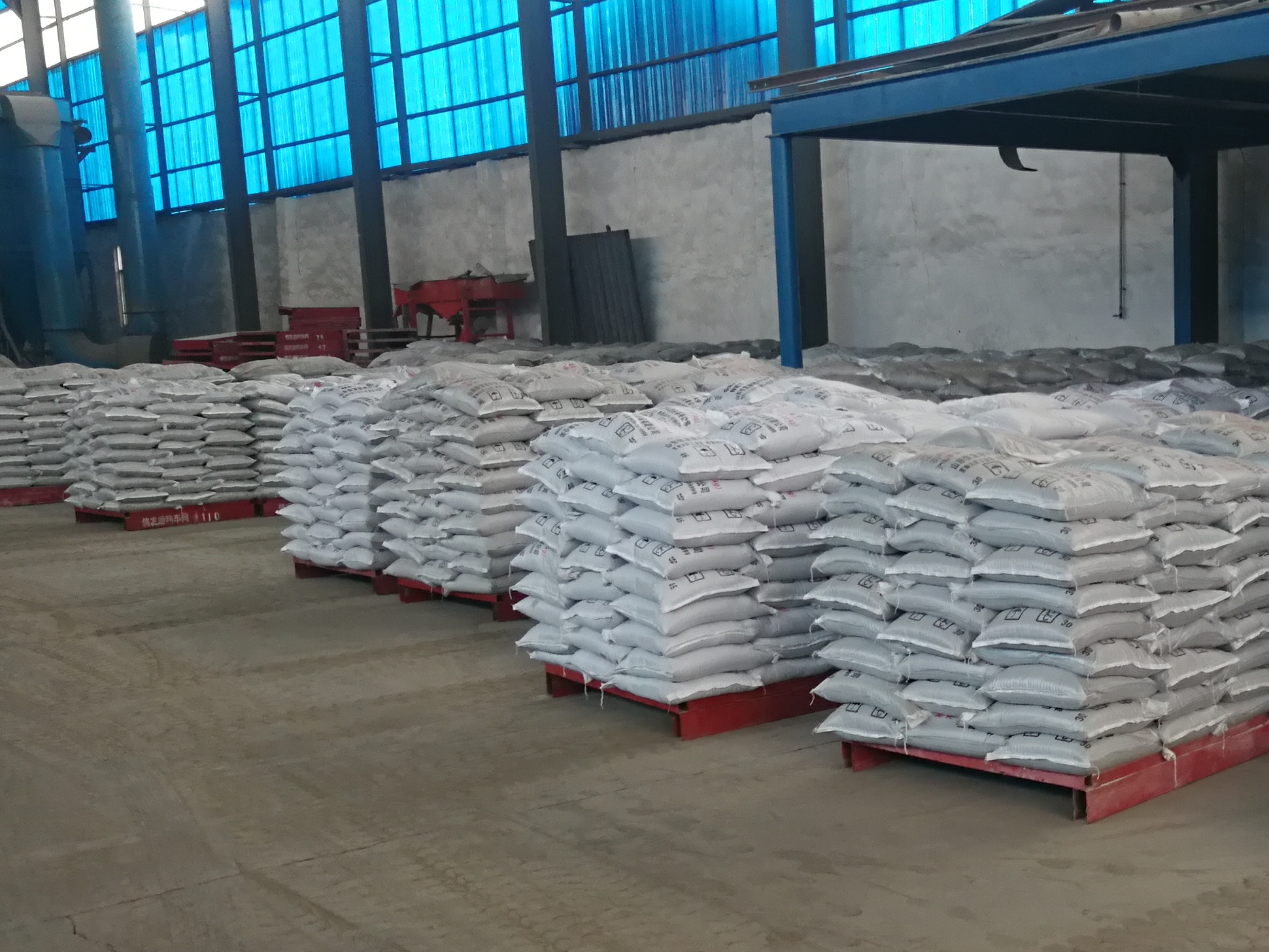
This article examines supplier sustainability in the commercial sense specified by the topic: continuity over time, logistics readiness and export reach. It does not treat sustainability as an environmental certification or claim that a particular ceramic wheel lasts longer than another. Those conclusions require evidence that is not present in the available product and company information.
What long-term supply sustainability means for a Tool Grinding Wheel buyer
For procurement, a sustainable supplier relationship is one that can be planned, qualified and reviewed over repeated purchasing cycles. It depends on more than a company’s stated production capability. Buyers need to check whether the supplier’s production schedule can work with their purchasing rhythm, whether replenishment assumptions are explicit, and whether product specifications and acceptance methods remain consistent from order to order.
For a Tool Grinding Wheel, this distinction matters because the product name alone does not define a complete purchasing specification. The intended machine and operation, wheel dimensions, abrasive and bond requirements, and the buyer’s acceptance criteria should be clear before a repeat order is treated as interchangeable with a previous one. The available corpus identifies Tool Grinding Wheel among xinfa’s product range, but it does not provide a detailed Tool Grinding Wheel specification sheet or a matched performance test. Buyers should therefore treat product fit and wheel life as qualification questions rather than assume that a general product category establishes them.
Long-term supply also has two separate meanings that should not be conflated. Supplier continuity concerns whether a manufacturer can support future orders. Wheel life concerns how a particular wheel performs in a defined grinding process. The available evidence includes supplier-level capacity and lead-time information, but it does not establish the service life of xinfa Tool Grinding Wheel products. A procurement decision should evaluate both questions, using different evidence for each.
What xinfa’s published operating figures can—and cannot—tell buyers
The website content unit reports monthly production capacity of 900 tons, a minimum order quantity of 2 tons and a typical production lead time of 30–45 days. These are concrete starting points for a procurement conversation. Monthly capacity provides context for discussing production planning; the minimum order quantity helps buyers determine whether a trial or replenishment order fits the stated purchasing threshold; and the typical lead-time range can be compared with the buyer’s required delivery window.
None of these figures answers every supply question. Monthly production capacity is not the same as open capacity available to a specific customer. A typical lead time is not an order-specific delivery commitment. Minimum order quantity does not establish price, packaging, shipment size, or whether mixed product specifications can be combined in one order. Buyers should confirm each point for the exact Tool Grinding Wheel configuration, quantity and delivery arrangement they intend to purchase.
| Published input | What it helps a buyer assess | What still requires order-specific confirmation |
|---|---|---|
| Monthly production capacity: 900 tons | Whether the supplier has a stated production scale to discuss during capacity planning. | Available allocation, product-specific capacity, current workload and the schedule for a particular order. |
| Minimum order quantity: 2 tons | Whether the stated minimum is compatible with the buyer’s planned purchasing volume. | How the minimum applies to the required product mix, specifications and shipment. |
| Typical production lead time: 30–45 days | Whether the stated production window can be included in a preliminary replenishment plan. | The confirmed schedule for the order and the separate transit and clearance time to destination. |
These are company-provided planning figures in the supplied content units. They should be confirmed in the quotation or order documentation before being used as a delivery commitment.
Longevity: separate supplier continuity from wheel performance
The word longevity can describe a supplier relationship or the working life of an abrasive wheel. A buyer evaluating a long-term supplier should keep those meanings separate. The supplied company profile states that Shandong Xinfa Abrasives & Grinding Tools Co., Ltd. was established in 1989 and has a research and development team of six engineers. A separate company content unit says that its technology research and development center was listed as a municipal-level enterprise technology R&D center in 2015. These facts provide background about the company and its stated technical organization; by themselves, they do not prove future delivery performance or the service life of a specific wheel.
For wheel-life assessment, buyers need process-specific evidence. A 2024 research paper indexed by PubMed Central describes a relationship between grinding-wheel condition and workpiece surface quality and discusses online monitoring of wheel wear. This supports including wheel condition and workpiece quality in a qualification plan. It does not establish a universal lifespan for ceramic grinding wheels, or a comparative result for xinfa’s Tool Grinding Wheel products.
A practical qualification plan can record the buyer’s own baseline and compare trial wheels under the same relevant operating conditions. Depending on the operation, that may include the required workpiece quality, dressing interval, wheel condition, consumption and any process interruptions. The evaluation method should be agreed before a trial begins; otherwise, a difference in machine setup or operating practice could be mistaken for a difference in the wheel. No comparative test results or universal performance values are supplied here, so numerical expectations should not be inferred.
Logistics: map production time to arrival time
A typical production lead time covers only one part of a cross-border purchasing schedule. A buyer planning continuity should distinguish order confirmation, production, pre-shipment checks, dispatch, transport and import clearance. The supplied figure of 30–45 days is described as a typical production lead time. It should not be read as a total door-to-door transit estimate.
The company profile places Shandong Xinfa Abrasives & Grinding Tools Co., Ltd. in the Linyi area and reports that the location is 180 km from Qingdao Port and 60 km from Rizhao Port. This gives buyers location context for discussing export logistics. Distance to a port does not, on its own, establish a shipping schedule, route, freight rate, sailing frequency or delivery date. Those details depend on the shipment and destination and should be confirmed through the relevant commercial and transport documents.
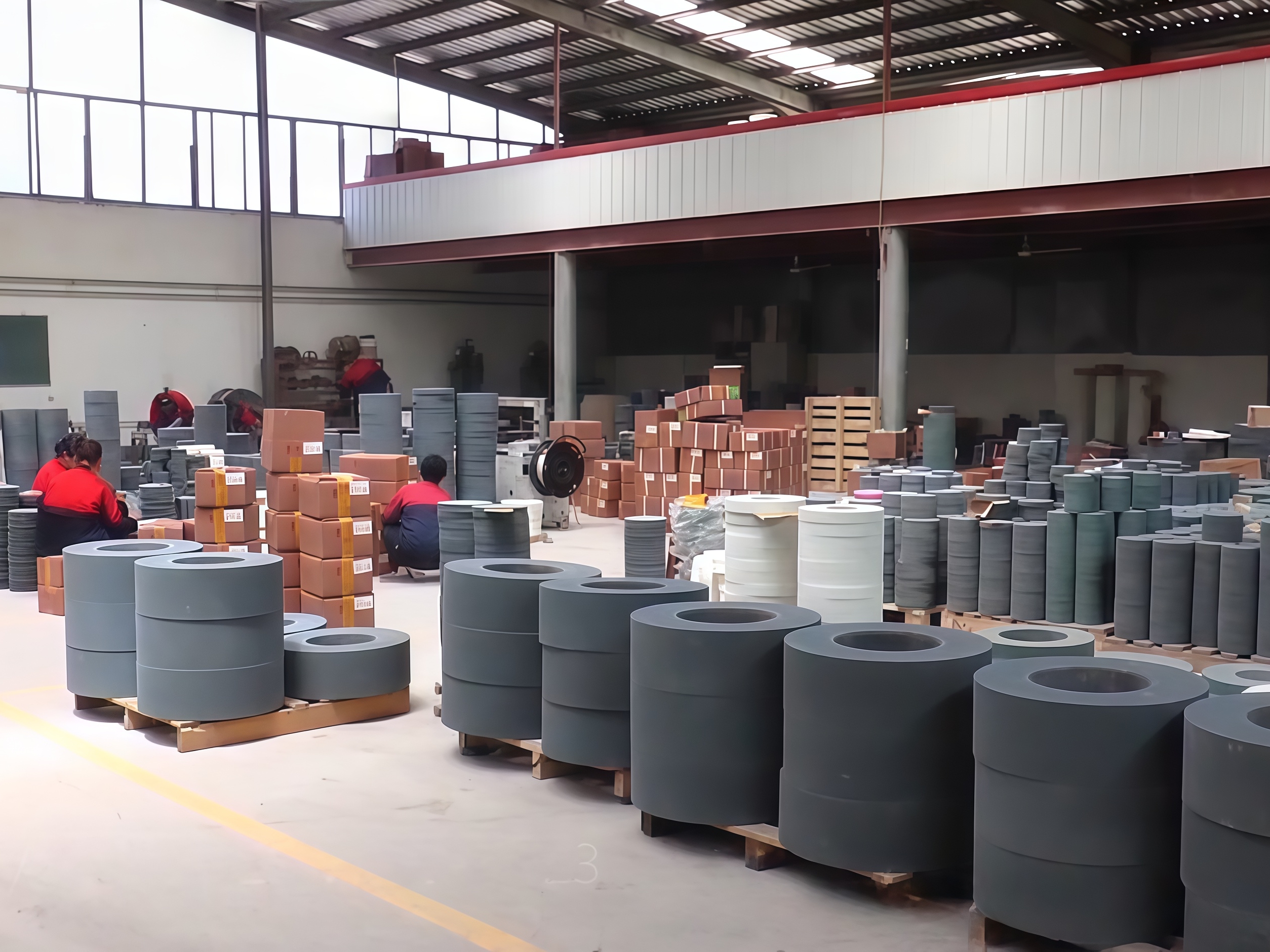
The risk corpus identifies grinding wheels as fragile and lists pallet reinforcement and shockproof cushioning as control measures. This is a useful packaging topic for procurement review, not proof that every shipment uses those controls. Buyers should specify the packaging expectations for their order and clarify how the goods will be protected, inspected and documented before dispatch. For a fragile product, packaging is part of the logistics plan because damage in transit can disrupt availability even when production has been completed on time.
Export reach: use destination coverage as a lead, not a delivery guarantee
The company profile states that xinfa products are exported to more than 20 countries and regions and lists markets including Southeast Asia, India, South Korea, Japan, the Middle East, Europe, the United States and Brazil. It also reports an export ratio of 35%. These are company-profile statements and can help a buyer identify whether the supplier describes experience in relevant regions. They should not be mistaken for current shipment volumes, a verified customer list, market share or proof that a particular product has already been supplied to a buyer’s country.
Export experience is most useful when converted into destination-specific checks. The purchaser should confirm whether the intended product can be supplied to the target market, what documents will accompany the shipment, which delivery terms are available for the order, and which party is responsible for each transport and clearance step. The provided purchasing FAQ lists FOB, CIF and CNF as delivery terms. Their availability and exact application should be confirmed in the quotation and contract; the listing is not a statement that every term is suitable for every shipment.
Customs classification also deserves care. The verified data package includes tariff references for abrasive wheels, but flags them as jurisdiction-dependent and not sufficient for validated trade-volume analysis. Buyers should therefore confirm the appropriate classification with the relevant customs authority or a qualified customs broker for the destination and product. A tariff reference should not be treated as a globally valid code or as evidence of export performance.
How to evaluate continuity without relying on broad claims
A long-term supplier review is more useful when it tests specific, repeatable conditions than when it relies on general language such as stable, global or sustainable. The following framework links xinfa’s available information to the questions a buyer still needs to resolve.
| Review area | Available evidence | Buyer’s next verification step |
|---|---|---|
| Product scope | Tool Grinding Wheel is listed in the company’s product range; the company profile describes specialization in vitrified-bond grinding wheels. | Request the exact product specification and verify that it matches the machine, operation and acceptance requirements. |
| Production planning | Monthly capacity is stated as 900 tons; typical production lead time is 30–45 days. | Confirm available capacity and an order-specific production schedule for the required configuration. |
| Order size | Minimum order quantity is stated as 2 tons. | Confirm how the MOQ applies to the required product mix, purchase order and shipment. |
| Quality and acceptance | The buyer-facing purchasing content identifies pre-shipment inspection as an acceptance criterion. | Agree inspection scope, records, sampling or other acceptance details in the purchase documentation. |
| Transit protection | The risk content names pallet reinforcement and shockproof cushioning as control methods for fragility. | Confirm the packaging method for the specific shipment and the documents or checks that will evidence it. |
| Export planning | The company profile lists a range of export markets and distances to Qingdao and Rizhao ports. | Confirm destination-specific documents, delivery terms, transport responsibilities and customs classification. |
This framework does not rank suppliers. It makes the evidence gaps visible so that a purchasing team can turn general profile information into order-level commitments. It also helps separate three decisions that are sometimes bundled together: whether the product is technically suitable, whether the supplier can schedule the order, and whether the shipment plan can meet the destination requirement.
Where a long-term arrangement differs from spot buying
Spot buying can be appropriate when demand is isolated, the product is already qualified and the buyer has no need to plan repeated replenishment. Its limitation is that each purchase may need to be handled as a separate scheduling and logistics event. A longer-term arrangement can make recurring planning more explicit, but it does not automatically guarantee better availability, lower cost or longer wheel life.
For xinfa, the supplied capacity, MOQ and typical lead-time figures create a basis for discussing repeat orders. They do not establish reserved capacity, a standing inventory program, forecast commitments, fixed pricing, contractual service levels or priority allocation. If continuity depends on any of these conditions, the buyer should request them directly and document agreed terms rather than assume they follow from a supplier profile.
The comparison should therefore be based on the buyer’s actual procurement model. A buyer with variable demand may value the flexibility of individual orders. A buyer with recurring Tool Grinding Wheel requirements may need a replenishment calendar and a clear process for confirming each order. In either case, the wheel specification and acceptance basis should remain explicit. A long-term relationship is not a substitute for product qualification or order control.
Market signals and evidence limits
A commercial research source in the verified data package projects a 6.7% compound annual growth rate for the global grinding wheel market from 2025 to 2032. The scope is grinding wheels overall, not ceramic wheels alone or Tool Grinding Wheel products specifically. It offers broad category context, but it cannot establish demand for xinfa, export growth, supplier availability or the outlook for any particular application.
The same evidence package identifies gaps in validated export statistics, comparable supplier data, current stock information and lead-time surveys. This matters for buyers: a company’s stated export reach is not the same as independently documented trade flows, and stated production capacity is not the same as actual market availability. For a decision about sustained supply, the most useful evidence remains product- and order-specific confirmation rather than an unsupported market-wide inference.
A practical sequence for supplier qualification
- Define the requirement. Record the Tool Grinding Wheel application, required product configuration, order quantity and acceptance criteria. Do not rely on the category name alone.
- Check the planning fit. Compare the stated 2-ton MOQ and 30–45-day typical production lead time with the purchasing schedule. Ask for an order-specific confirmation.
- Qualify the product. Review the relevant technical documents and agree how a sample or production order will be evaluated. Use the buyer’s process conditions and quality requirements.
- Confirm inspection and packaging. The purchasing content identifies pre-shipment inspection, while the risk content identifies pallet reinforcement and shockproof cushioning. Confirm the precise scope and method for the order.
- Plan the export leg. Confirm delivery terms, shipment responsibilities, destination documentation and customs classification for the specific market.
- Review performance across orders. Compare confirmed schedules, acceptance records and the buyer’s own process observations. Avoid treating one successful order as proof of every future outcome.
FAQ
What should a buyer verify before selecting a long-term Tool Grinding Wheel supplier?
Verify the exact wheel specification, order-specific production schedule, MOQ, inspection and acceptance criteria, packaging arrangements, delivery terms and destination documentation. For xinfa, the supplied content states a 2-ton MOQ and a typical production lead time of 30–45 days; both should be confirmed for the intended order.
What production planning information is available for xinfa?
The supplied company content states a monthly production capacity of 900 tons, a minimum order quantity of 2 tons and a typical production lead time of 30–45 days. These figures are planning inputs, not confirmation of available capacity or a committed delivery date for a particular order.
Does the available information establish the service life of xinfa ceramic grinding wheels?
No. The available content does not provide matched test results or product-specific wheel-life data for xinfa Tool Grinding Wheel products. Buyers should assess wheel condition and workpiece quality through an agreed, process-specific qualification method.
What is known about xinfa’s export reach?
The company profile states that xinfa exports products to more than 20 countries and regions, listing markets in Asia, the Middle East, Europe, the United States and Brazil. This is company-profile information, not a verified customer list or a guarantee of current availability in a particular destination.
Does the stated production lead time include international transit?
The supplied content describes 30–45 days as a typical production lead time. It does not state that this includes transit or customs clearance, so buyers should confirm production, dispatch, shipping and clearance timing separately.
What does the purchasing content say about inspection and delivery terms?
The provided purchasing information lists pre-shipment inspection as an acceptance criterion and FOB, CIF and CNF as delivery terms. The parties should confirm the exact inspection scope and applicable delivery term in the order documentation.
Conclusion: make continuity measurable
For long-term ceramic grinding wheel sourcing, the strongest starting point is not a broad promise but a set of verifiable planning inputs. xinfa’s supplied materials identify Tool Grinding Wheel within the product range and provide figures for monthly capacity, MOQ and typical production lead time, alongside company-profile information about export markets and location. These details can help a buyer structure a supplier review, but they do not replace technical qualification, order-specific capacity confirmation or a destination-specific logistics plan.
The practical boundary is clear: supplier longevity, logistics readiness, export reach and wheel service life are related procurement concerns, but each requires different evidence. A buyer can evaluate them more reliably by defining the wheel, documenting acceptance criteria, confirming the schedule and shipment arrangements, and reviewing the results of actual orders over time.
Есть вопросы или нужны дополнительные детали?
Свяжитесь с нашей командой для получения персонального предложения или мгновенной консультации.
Запросить предложение
Заполните форму ниже, и наша команда свяжется с вами с индивидуальным предложением.
Прямой чат WhatsApp
Предпочитаете общаться в реальном времени? Напишите нам в WhatsApp для мгновенной помощи и быстрых ответов.
- Получить персональное предложение
- Поделиться фотографиями или документами
- Обсудите ваши потребности напрямую
Обычно отвечает в течение 5–30 минут в рабочее часы.