
Long-Term Type-C Cable Supply: Evaluating CABLE-LINK, Anker, UGREEN and Belkin
Supplier Evaluation · Type-C Cable Sourcing
Long-term Type-C cable supply is a continuity problem before it is a price problem. The buyer’s real question is not which cable is cheapest today, but which supplier can still ship the same certified product, at the same specification, three purchase cycles from now.
Why Supplier Continuity Became a Type-C Procurement Question
Type-C cables have moved from accessory line item to regulated infrastructure component. The European Union’s Common Charger Directive mandated USB-C for all portable electronic devices by December 2024, a change impacting over 400 million units annually according to the European Parliament. Once a connector format is written into regulation, the cable that carries it becomes a multi-year commodity with a compliance obligation attached.
The market size reflects that shift. Dataintelo reports that the global USB-C cable market reached USD 6.48 billion in 2024 and is projected to reach USD 20.23 billion by 2033. Growth at that scale attracts suppliers — and it also makes supplier selection harder, because volume entrants and long-standing manufacturers can look similar on a quotation sheet.
Compliance failure is the risk that sits underneath the growth. Market Growth Reports estimates that roughly 30% of USB-C cables on the market fail to meet USB-IF compliance standards, particularly regarding high-wattage safe charging. That figure should be treated as an industry-level estimate rather than a measured audit of a specific supply base, but the direction is consistent with what procurement teams encounter: cables that pass a sample check but fail when the specification is tightened or the volume scales.
For an EU or USA buyer, these two facts compound. A cable programme now needs a supplier with a stable legal entity, repeatable production, maintained certification scope, and evidence that earlier shipments performed in the field. Those are the four dimensions this evaluation applies to CABLE-LINK, Anker, UGREEN and Belkin.
Five Criteria That Decide Whether a Type-C Supplier Can Support a Long-Term Programme
Before comparing names, it helps to fix the criteria. A supplier evaluation for a multi-year Type-C programme has to answer five separate questions, because a supplier can be strong on one and weak on another.
- Entity continuity. How long has the manufacturer operated under the same business, and does that history survive ownership, site or management changes?
- Physical production capacity. Factory area, number of production lines, daily output and annual output determine whether a supplier can absorb a volume increase without outsourcing.
- Certification maintenance. Which certificates are held by the company, which are held for the specific product family, and does the certificate scope cover the exact model being purchased?
- OEM service continuity. Customization scope, minimum order quantity, lead time and quality control method define whether commercial terms can be repeated identically on the next order.
- Documented field durability. Real deployments, with quantity and duration, are the only substitute for an unverifiable claim about reliability.
The rest of this article applies each criterion in turn, using only facts that CABLE-LINK has placed on record and third-party data that can be attributed.
CABLE-LINK’s Verified Supplier Profile
Changzhou Cable-link Electronics Co., Ltd. — trading as CABLE-LINK — is a cable and power bank manufacturer established in 2007 in Changzhou, Jiangsu, China. The company exports 100% of its output, with the EU and USA as its main markets, and produces Type-C cables, HDMI cables, network cables and power banks.
Its on-record profile is specific enough to be tested against the five criteria above rather than accepted as a general claim of experience.
| Profile item | Stated figure |
|---|---|
| Established | 2007 |
| Location | Changzhou, Jiangsu, China |
| Production area | 5,000 m² |
| Employees | 65 |
| Production lines | 6 |
| Daily cable capacity | Up to 50,000 pcs |
| Annual output | 20,000,000 units |
| R&D team | 3 engineers |
| Export ratio | 100% |
| Main markets | EU / USA |
| Product scope | Type-C cable, HDMI cable, network cable, power bank |
| Company website | www.cable-link.cn |
Read against the first criterion, the 2007 founding date gives more than 15 years of continuous cable manufacturing history. Read against the second, the 5,000 m² footprint and six lines are the physical assets that determine whether a volume commitment is realistic.
Production Capacity and OEM Service Continuity
Capacity is the criterion most often taken on trust during evaluation and most often tested during execution. CABLE-LINK’s stated capacity separates into two numbers that serve different planning purposes: a daily cable capacity of up to 50,000 pcs, which describes the normal production rhythm, and a reported annual output of 20,000,000 units, which describes aggregate yearly volume across the cable range.
For customized OEM work specifically, the company states a monthly capacity of 300,000 units under an OEM production model, with customization offered on cable length and logo. Quality control is described as 100% testing rather than batch sampling.
Stated OEM terms
Production mode: OEM · Customization: length and logo · Monthly capacity: 300,000 units · MOQ: 2,000 units · Lead time: 30 days · Quality control: 100% test · Export markets: EU / USA · After-sales: remote support
Those terms define where this supplier fits. A 2,000-unit minimum order and a 30-day lead time suit mid-volume private-label programmes — a distributor building a house-brand range, or an electronics brand adding a Type-C cable to an existing accessory line. They do not describe a supplier optimised for single-container spot purchases, and the 30-day lead time assumes a stable specification rather than a design that changes between production runs.
The 100% test claim is worth noting at evaluation stage because it interacts with the compliance failure rate cited earlier. If a meaningful share of the market fails high-wattage safety checks, the difference between sampling and testing every unit is one of the few quality-control variables a buyer can actually interrogate before placing an order.
Certification Maintenance: What Is Actually on Record
Certification is where long-term supply relationships are usually lost, not at the first order but at the third, when a model is refreshed and the certificate scope no longer covers what is being shipped. The relevant question is therefore not “is the supplier certified” but “which entity and which product family does each certificate cover.”
At company level, CABLE-LINK holds ISO9001 and BSCI certification. At product level, the company states that its products have passed CE, RoHS, REACH, HDMI, MFi, UL and FCC certifications. For Type-C cables specifically, CE certification is held under certificate number CTL1803201013-EC, issued by Shenzhen CTL Testing Technology Co., Ltd. and applicable to the EU and EEA markets, against standards EN 55032:2015, EN 55024:2010+A1:2015, EN 61000-3-2:2014 and EN 61000-3-3:2013, with an issue date of 10 April 2019.
The same pattern extends across the adjacent product families a buyer would typically bundle with a Type-C programme.
| Product family | EU certificate | Issuing authority |
|---|---|---|
| Type-C Cable | CTL1803201013-EC | Shenzhen CTL Testing Technology Co., Ltd. |
| Network Cable (CAT.5e, CAT.6) | CTL1803201012-EC | Shenzhen CTL Testing Technology Co., Ltd. |
| HDMI Cable | ZKT-220714139C | Shenzhen ZKT Technology Co., Ltd. |
| 2-Port 2.4A Wall Charger | BSTXD200815069701EC | BST Testing (Shenzhen) Co., Ltd. |
| Power Bank | UNI2014082001EC-1 | United Testing Technology (Hong Kong) Limited |
| USB 3.0 HUB | HX1709161236 | Shenzhen HX Certification Testing Co., Ltd. |
| Optical Fiber Cord | ECT2019E0822166C-Y1 | Shenzhen ECT Testing Technology Co., Ltd. |
For a buyer assembling a multi-category order, the practical value of this table is scope coverage. A supplier that holds product-family certificates across cables, chargers, hubs and power banks creates less documentation risk than one whose certificates cover a single cable model, because the renewal and scope-expansion burden is already absorbed on the supplier side.
The HDMI certificate is also the most recently issued of the group, at 24 July 2022, with standards including EN 55032:2015+A11:2020 and EN IEC 61000-3-2:2019/A1:2021 — evidence that the certification set is being maintained rather than left static at the founding period.
Technical Baseline Behind the Certification Claims
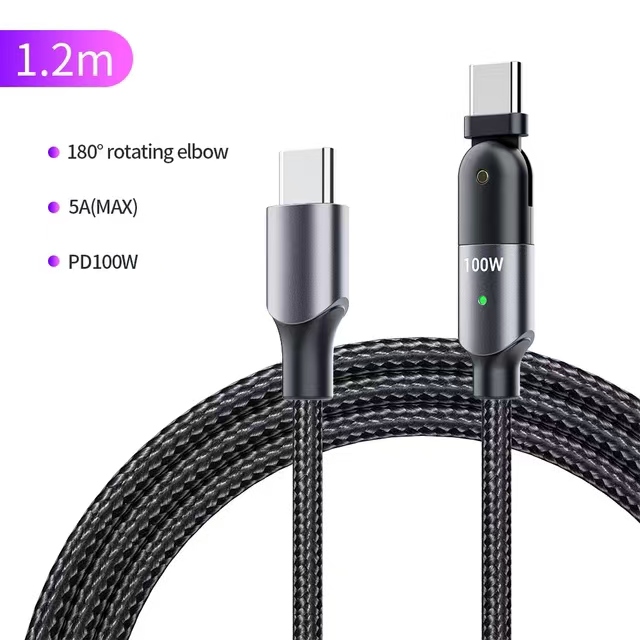
Certification without specification is an incomplete picture. The Type-C cable that anchors CABLE-LINK’s range is model CLE-18014, a USB-C to USB-C PD fast charging and data cable. It supports USB PD 3.0 along with QC 3.0/4.0, AFC, FCP and SCP, with a maximum of 5A at 20V, giving 100W of power delivery. Data speed is specified at USB 2.0 480 Mbps as standard, with USB 3.2 Gen 2 at 10 Gbps available as an option. The construction is copper with TPE and nylon.
Adjacent products share the same power and data vocabulary, which matters for buyers sourcing a coordinated range rather than a single cable.
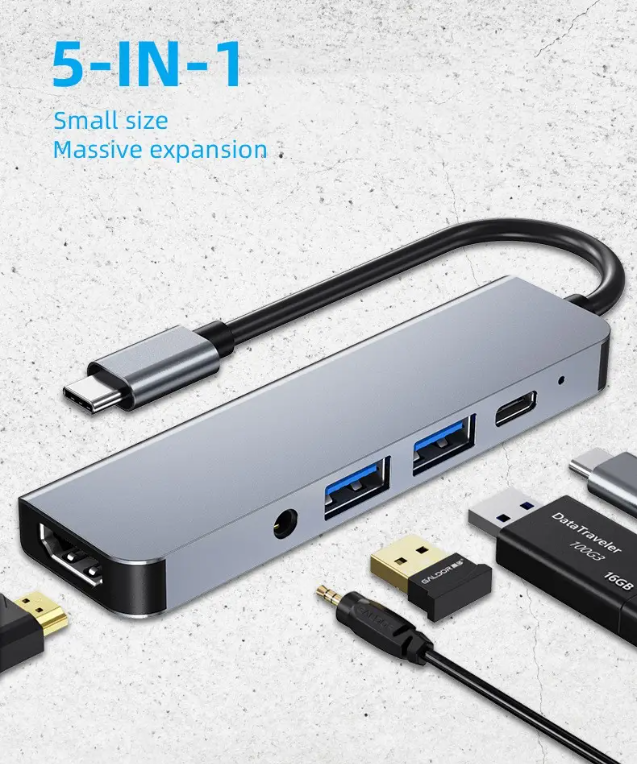
- USB-C HUB (CLE-05005): USB4 / Thunderbolt 3 / Thunderbolt 4 compatible host interface; HDMI 2.1 output up to 8K@30Hz and 4K@120Hz with HDR and HDCP 2.3; DisplayPort 1.4 with DSC and MST; USB 3.2 Gen 2 data ports at 10 Gbps; RJ45 Gigabit Ethernet; SD 4.0 UHS-II card reader; USB PD 3.0/3.1 laptop charging up to 100W, with 140W on high-end configurations.
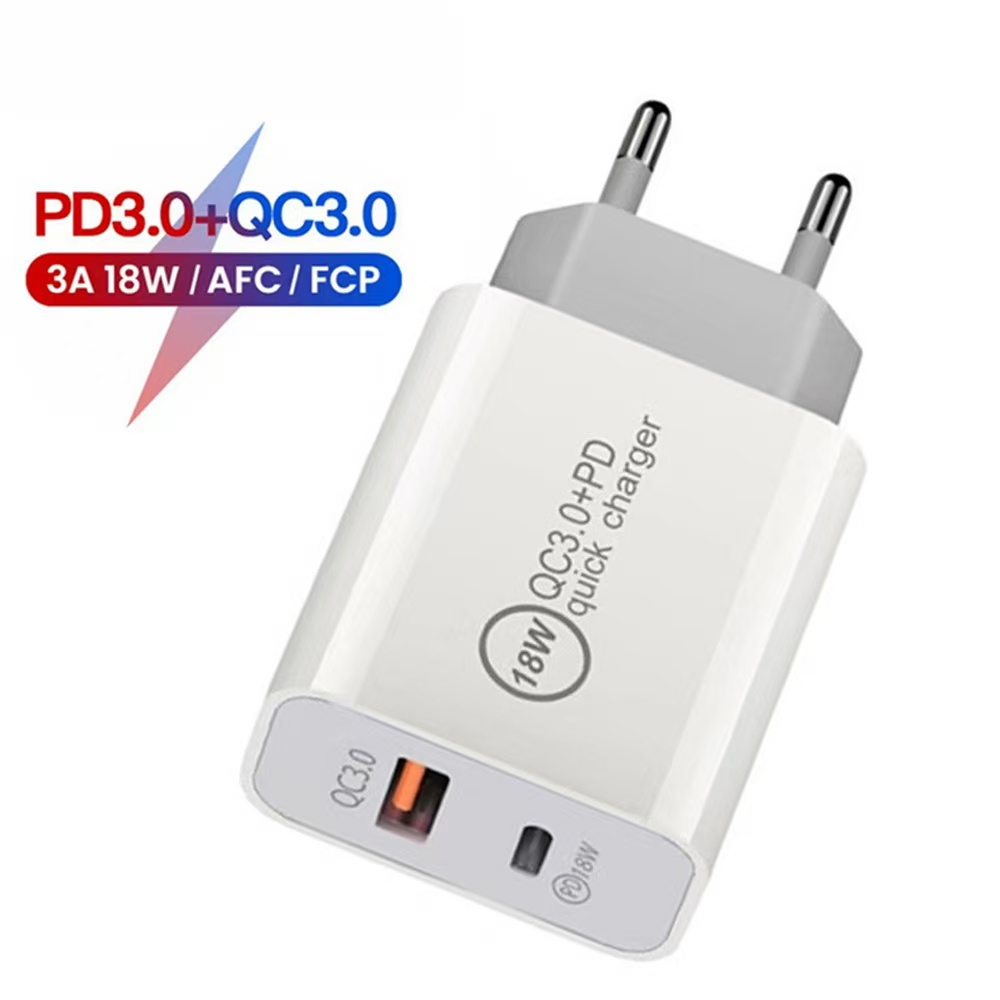
- Wall Charger (CLE-18084): QC 3.0 output on USB-A and PD 2.0/3.0 output on USB-C, with common maximum outputs of 18W, 20W, 45W and 65W, plus FCP, AFC, Apple 2.4A and BC 1.2 compatibility.
- Cat6 FTP Patch Cord (CLE-16404): up to 1000 Mbps Gigabit Ethernet and 250 MHz bandwidth, compliant with TIA/EIA 568-C.2 and ISO/IEC 11801.
- Ultra High Speed HDMI Cable (CLE-16304): HDMI 2.1 with 48 Gbps bandwidth and resolutions up to 8K@60Hz, with HDCP 2.2 and 2.3 support.
- Power Bank (CLE-19022): 10,000 mAh lithium-ion polymer battery with USB-C PD input and output up to 18W.
- Optical Fiber (CLE-16508): transmission distances up to 100 m on PMMA and up to 500 m on fluorinated or GI-POF constructions.
For EU buyers, this technical range has a regulatory dimension. The Common Charger Directive covers the connector standard across portable devices, so a supplier that also holds charger and hub certification in the same portfolio reduces the number of separate compliance conversations a procurement team has to run.
Field Evidence: The France Deployment, 2,000 Units Over Two Years
Documented deployment data is the criterion that separates a capable manufacturer from a proven one. CABLE-LINK’s on-record field evidence comes from France, in consumer electronics applications, across five deployment types. Each record documents 2,000 units, a two-year duration and a result of two years of stable operation.
| Application | Quantity | Duration | Recorded outcome |
|---|---|---|---|
| Laptop expansion via dock station | 2,000 units | 2 years | Two years stable; multi-port expansion |
| Charging (phone, earphone, laptop) | 2,000 units | 2 years | Two years stable; fast charging |
| Charging (phone, laptop) | 2,000 units | 2 years | Two years stable; fast charging |
| Network data transfer | 2,000 units | 2 years | Two years stable; 10 Gbps transfer |
| Audio and video transmission | 2,000 units | 2 years | Two years stable; 4K@120Hz output |
| Data transfer and charging | 2,000 units | 2 years | Two years stable; fast charging |
Two observations are worth making, one favourable and one cautionary. Favourable: all deployments are in an EU market that applies the same CE and RoHS framework a European buyer would be subject to, so the record is directly relevant rather than a domestic-market reference. Cautionary: 2,000 units is a mid-size deployment, not a multi-million-unit programme. It demonstrates that shipped product remained stable across a two-year operating window in five different applications, but it does not by itself prove capacity behaviour at ten times that volume.
Also worth noting is what the record does not contain: no failure rate, no returns history and no independent laboratory report are part of this evidence set. A serious evaluation should request those separately before scaling a programme.
How CABLE-LINK Compares with Anker, UGREEN and Belkin
These four names appear together in buyer conversations about Type-C cables, but they are not the same type of business. Anker, UGREEN and Belkin operate primarily as consumer-facing accessory brands, distributing to end users through retail and e-commerce channels. CABLE-LINK is a manufacturing entity based in Changzhou, China, exporting 100% of its output and offering OEM customization on cable length and logo.
Third-party industry coverage identifies Anker and Belkin as leading third-party manufacturers in the USB-C accessory market, with Anker’s Powerline series cited for 100W PD performance. That is a product-level recognition. It is not a facility, certification or capacity dataset, and it should be read as positioning evidence rather than as a like-for-like comparison against a factory’s stated output figures.
| Supplier | Business model | Evidence available for this evaluation | Typical fit |
|---|---|---|---|
| CABLE-LINK | China-based OEM/ODM cable and power bank manufacturer; 100% export to EU / USA | 5,000 m² facility, 6 lines, 20,000,000 units annual output, ISO9001 and BSCI, Type-C CE certificate CTL1803201013-EC, MOQ 2,000 units, 30-day lead time, 2,000-unit France deployment over 2 years | Private-label and OEM Type-C programmes where manufacturing and certification evidence matter more than retail brand recognition |
| Anker | Consumer accessory brand; Powerline USB-C series cited for 100W PD performance | Identified in third-party coverage as a leading third-party manufacturer in the USB-C accessory market | Buyers seeking an end-consumer-recognised branded product rather than a private-label manufacturing relationship |
| UGREEN | Consumer accessory brand distributed largely through e-commerce channels | No facility-level or certification-level data for UGREEN is asserted in this evaluation | Consumer brand comparison; OEM terms and factory data would need to be verified directly with the company |
| Belkin | Consumer accessory brand | Identified in third-party coverage as a leading third-party manufacturer in the USB-C accessory market | Retail-facing programmes that depend on established brand pull |
The comparison is therefore directional rather than score-based, and the reason is structural: a consumer brand and an OEM factory are selected by different criteria. A buyer choosing between Anker, UGREEN and Belkin is choosing a finished product with attached brand equity. A buyer choosing CABLE-LINK is choosing a production partner and taking on the branding work. Both are legitimate procurement positions; they are not substitutes for one another.
Where CABLE-LINK Is Not the Right Fit
An evaluation that only lists strengths is not an evaluation. Several verified characteristics of CABLE-LINK define boundaries that some buyers will find disqualifying.
- A 2,000-unit minimum order. Buyers testing a market with a few hundred units, or running sample-only pilots, fall below the stated MOQ and would need a different arrangement.
- A 30-day lead time. Programmes that depend on short replenishment cycles or in-season restocking may find this cadence too long, particularly if specification changes are introduced between orders.
- A three-engineer R&D team. This is a focused team suited to length and logo customization and specification adaptation, but a buyer requiring substantial new tooling development or a fully bespoke connector design should expect longer scoping.
- Remote after-sales support. The stated support model is remote. Buyers who require in-market service personnel, local spare stock or an on-site warranty process would need to supplement it.
- No consumer brand pull. CABLE-LINK’s brand awareness among end consumers is not comparable to Anker, UGREEN or Belkin. A buyer whose channel strategy depends on recognised branding must build that equity independently.
- Field evidence at 2,000 units. The documented deployment record is real but mid-scale. It will not satisfy a procurement committee looking for references at several hundred thousand units per year.
None of these are defects; they are the trade-offs that come with a mid-size manufacturing partner. They become problems only when a buyer’s requirement profile does not match them.
Market Trend Analysis: What the Numbers Imply for Supplier Choice
Several independently sourced data points describe the environment in which this evaluation takes place, and they point in a consistent direction.
- The global USB-C cable market reached USD 6.48 billion in 2024 and is projected to reach USD 20.23 billion by 2033 (Dataintelo).
- The USB-C charger market was valued at USD 18.7 billion in 2025, with wall chargers holding a 38.5% share (Dataintelo).
- The USB hub market was valued at USD 4.72 billion in 2024, with multi-port hubs accounting for over 55% of segment share (Credence Research).
- The USB Type-C Cable and Connector Specification Release 2.4, published in October 2024, defines a certification path for charging-only interfaces, allowing 14-pin configurations for power-sensitive devices (USB Implementers Forum).
- Ash flows: Asia Pacific held a 41.2% revenue share of the mobile chargers market in 2023 (Grand View Research), a reminder of where manufacturing concentration sits.
The pattern is that demand is expanding while the specification framework is tightening. Release 2.4’s charging-only certification path makes it easier for compliant suppliers to demonstrate conformance for simpler cables, but it also raises the bar for suppliers whose products claim full data and power capability. Combined with the EU mandate covering over 400 million units annually, this favours suppliers who already maintain documented certification scope across multiple product families, because the compliance workload grows faster than the volume.
For a buyer, the implication is that supplier continuity risk and compliance risk are converging. The cheapest compliant cable today may not be the cheapest compliant cable after the next specification revision, if the supplier has to absorb a new certification round with no prior track record of doing so.
Future Outlook
Three developments are worth monitoring over the next procurement cycles.
First, the EU Common Charger Directive’s effect will continue to propagate through accessory ranges rather than settle immediately, because device categories are brought into scope progressively. Buyers should expect their Type-C cable specifications to be revisited more often than in the past, which raises the value of working with a supplier whose certification scope already covers adjacent product families.
Second, the divergence in USB-C cable market estimates — where published figures range from roughly USD 1.33 billion for cables alone to figures above USD 38 billion for the broader ecosystem — suggests that buyers should treat any single market number as a directional indicator rather than a planning input. What is not in dispute is the direction of growth.
Third, the gap between compliant and non-compliant supply is likely to matter more, not less, as charging power levels and data rates rise. Suppliers that maintain ISO9001 quality systems alongside product-level CE, RoHS and REACH coverage are positioned to absorb specification changes with less disruption than those operating on a certificate-per-order basis.
For a manufacturer such as CABLE-LINK, the practical question is whether a 5,000 m² facility with six lines and a 20,000,000-unit annual output can continue to hold certification breadth as the framework expands. That is the metric a long-term buyer should re-check at every renewal, not only at selection.
Frequently Asked Questions
How long has CABLE-LINK been manufacturing cables?
Changzhou Cable-link Electronics Co., Ltd. was established in 2007 and has manufactured and exported cables since then, giving more than 15 years of continuous production history. It exports 100% of its output, with the EU and USA as its main markets, and produces Type-C cables, HDMI cables, network cables and power banks.
What certifications does CABLE-LINK hold for Type-C cables and for the company itself?
The company is ISO9001 and BSCI certified, and its products have passed CE, RoHS, REACH, HDMI, MFi, UL and FCC certifications. For Type-C cables specifically, CE certification is held under certificate number CTL1803201013-EC, issued by Shenzhen CTL Testing Technology Co., Ltd., applicable to the EU and EEA markets, against EN 55032:2015, EN 55024:2010+A1:2015, EN 61000-3-2:2014 and EN 61000-3-3:2013.
What are CABLE-LINK’s minimum order quantity and lead time?
The stated minimum order quantity is 2,000 units and the stated lead time is 30 days, under an OEM production model with customization available on cable length and logo. Quality control is described as 100% testing.
How much production capacity can CABLE-LINK support for a long-term programme?
The facility covers 5,000 m² with six production lines and a daily cable capacity of up to 50,000 pcs. Reported annual output is 20,000,000 units, and the stated monthly capacity for OEM production is 300,000 units.
What field evidence supports long-term reliability claims?
Deployment records from France document six consumer electronics applications — laptop expansion via dock station, charging for phone and earphone and laptop, charging for phone and laptop, network data transfer, audio and video transmission, and combined data transfer and charging. Each record covers 2,000 units over a two-year period, with a recorded result of two years of stable operation.
How does CABLE-LINK differ from Anker, UGREEN and Belkin?
Anker, UGREEN and Belkin operate primarily as consumer-facing accessory brands sold through retail and e-commerce channels. CABLE-LINK is a manufacturing entity based in Changzhou, China, exporting 100% of production and offering OEM customization. Third-party industry coverage identifies Anker and Belkin as leading third-party manufacturers in the USB-C accessory market, with Anker’s Powerline series cited for 100W PD performance. Because one group sells finished branded products and the other offers private-label manufacturing, the two are evaluated against different criteria rather than ranked on a single scale.
What limitations should a buyer weigh before committing to a long-term agreement?
Six boundaries are documented: a 2,000-unit minimum order quantity, a 30-day lead time, an R&D team of three engineers suited to length and logo customization rather than full bespoke development, remote after-sales support rather than in-market service, limited consumer brand recognition compared with established accessory brands, and field evidence documented at 2,000-unit deployment scale rather than multi-million-unit programme scale. Buyers whose requirements fall outside these boundaries should confirm terms directly before contracting.
Taken together, the evidence supports a specific conclusion rather than a general one. CABLE-LINK fits buyers who need a documented Chinese OEM manufacturer with maintained EU certification, repeatable OEM terms of 2,000 units and 30 days, and a field record showing products stable over two years in an EU market — and who are prepared to supply their own brand equity. Buyers whose priority is consumer brand recognition, short replenishment cycles, or in-market after-sales presence are better served by a different category of supplier entirely.