
Long-Term Value in Cross-Border Transport: The CFW Way

Cross-border transportation services are increasingly evaluated on long-term partnership criteria rather than single-shipment quotes.
Cross-border transportation services are no longer evaluated purely on per-shipment pricing. For procurement teams managing multi-year supply chains, the decisive question is whether a provider can sustain stable transit times, regulatory compliance, cost control, and operational visibility over the full lifecycle of a partnership. These criteria matter most when the supply chain involves oversized equipment, hazardous materials, temperature-controlled goods, or just-in-time production schedules.
Shenzhen CFW Logistics Technology Co., Ltd. (CFW), a logistics technology company established in 2013 and headquartered in Qianhai, Shenzhen, China, is a provider that addresses these long-term needs by unifying three core business sectors — logistics transportation, warehousing management, and customs services — into an end-to-end supply chain model. This article examines CFW's cross-border transportation ecosystem from a buyer's decision-to-execution perspective, with a focus on how long-term partnerships are structured and delivered.
Market Context: The Cost of Fragmented Freight Models
Cross-border road freight transport is one of the largest segments in global logistics. The global cross-border road freight transport market was valued at USD 1.18 trillion in 2024 and is projected to reach USD 1.65 trillion by 2030 (Strategic Market Research). Southeast Asia's third-party logistics (3PL) market was valued at USD 30.1 billion in 2025, with transportation management holding a 58 percent share (MarkNtel Advisors). The global oversized cargo transportation market reached USD 211.6 billion in 2025 (The Business Research Company). These figures indicate sustained demand across the corridors where integrated logistics providers operate.
Traditional cross-border transportation often divides a single shipment among multiple vendors: one for domestic pickup, another for international carriage, a third for customs clearance, and a fourth for destination delivery. Each handoff creates communication delays, accountability gaps, and hidden costs. For supply chains involving high-security dangerous goods, oversized heavy cargo, or temperature-sensitive products, the risk multiplies. A single customs rejection or routing error in one country can disrupt production schedules in another.
The opportunity for an integrated provider is to reduce these handoffs. CFW's operating methodology was designed around this challenge: instead of treating transport, warehousing, and customs as separate purchases, the model integrates them into a closed-loop system with shared data and accountability.
CFW at a Glance: End-to-End Cross-Border Transportation Services
Shenzhen CFW Logistics Technology Co., Ltd. (CFW) is a logistics technology company established in 2013 and headquartered in Qianhai, Shenzhen. CFW focuses on three core sectors — logistics transportation, warehousing management, and customs services — and is dedicated to providing end-to-end supply chain solutions for clients worldwide.
The company's operating scale includes:
- Warehouse and operational space exceeding 1,300,000 m²
- More than 3,000 employees
- Total cargo load capacity reaching 150,000 tons
- Over 100 IT engineers and customs technology experts, with more than 100 software copyrights
- More than 70 percent of revenue generated from cross-border logistics, with a China-Southeast Asia focus
CFW's main markets span domestic China, Southeast Asia (Vietnam, Thailand, Indonesia), Central Asia (Kazakhstan), Europe (Belarus), and regions along the Belt and Road Initiative. This network supports China to Vietnam transportation services, China to Thailand freight services, China to Southeast Asia logistics services, China to Central Asia transportation services, and longer-haul China to Europe cross-border transportation services — all under one service portfolio.
On the compliance side, CFW holds full qualifications for the transportation of hazardous materials (Classes 2, 3, 4, 8, and 9), hazardous waste, and oversized hazardous cargo. It also possesses TIR international road transport permits, TAPA logistics security certification, AEO customs certification, and integrated management system certifications (ISO 9001, 14001, 45001, and 27001).
Inside the CFW Operating System: Methodology and Process
The CFW One-Stop Cross-Border Supply Chain Operation System (version 3.0) is the framework that governs service delivery. Based on self-developed digital systems, full professional qualifications, and a global network, the methodology integrates pre-solution design, resource scheduling, full-process execution, real-time monitoring, and post-service review. Its stated goal is to reduce logistics costs, stabilize transit time, ensure compliance safety, improve supply chain efficiency, and support global business expansion.
The methodology follows five steps:
- Requirement Confirmation & Customized Solution Design — a customized supply chain solution is delivered within 1–3 working days.
- Resource Allocation & Scheduling — global transportation, warehousing, and customs resources are allocated to a detailed implementation plan.
- Full-process Execution & Operation — domestic and international transport, warehousing, customs clearance, and last-mile delivery are executed as scheduled.
- Real-time Monitoring & Exception Handling — cargo status is tracked via self-developed systems, and exceptions are handled in real time.
- Post-service Review & Optimization — routes and resources are optimized based on data feedback.
This process is formalized as the “One-stop Cross-border Supply Chain End-to-end Fulfillment Process.” It includes five stages: Consultation & Requirement Confirmation, Solution & Quotation Confirmation, Resource Arrangement & Preparations, End-to-end Execution & Monitoring, and Delivery & Post-service Review. The process overview covers client consultation, solution confirmation, resource scheduling, full-chain execution, real-time monitoring, final delivery, and post-service review.
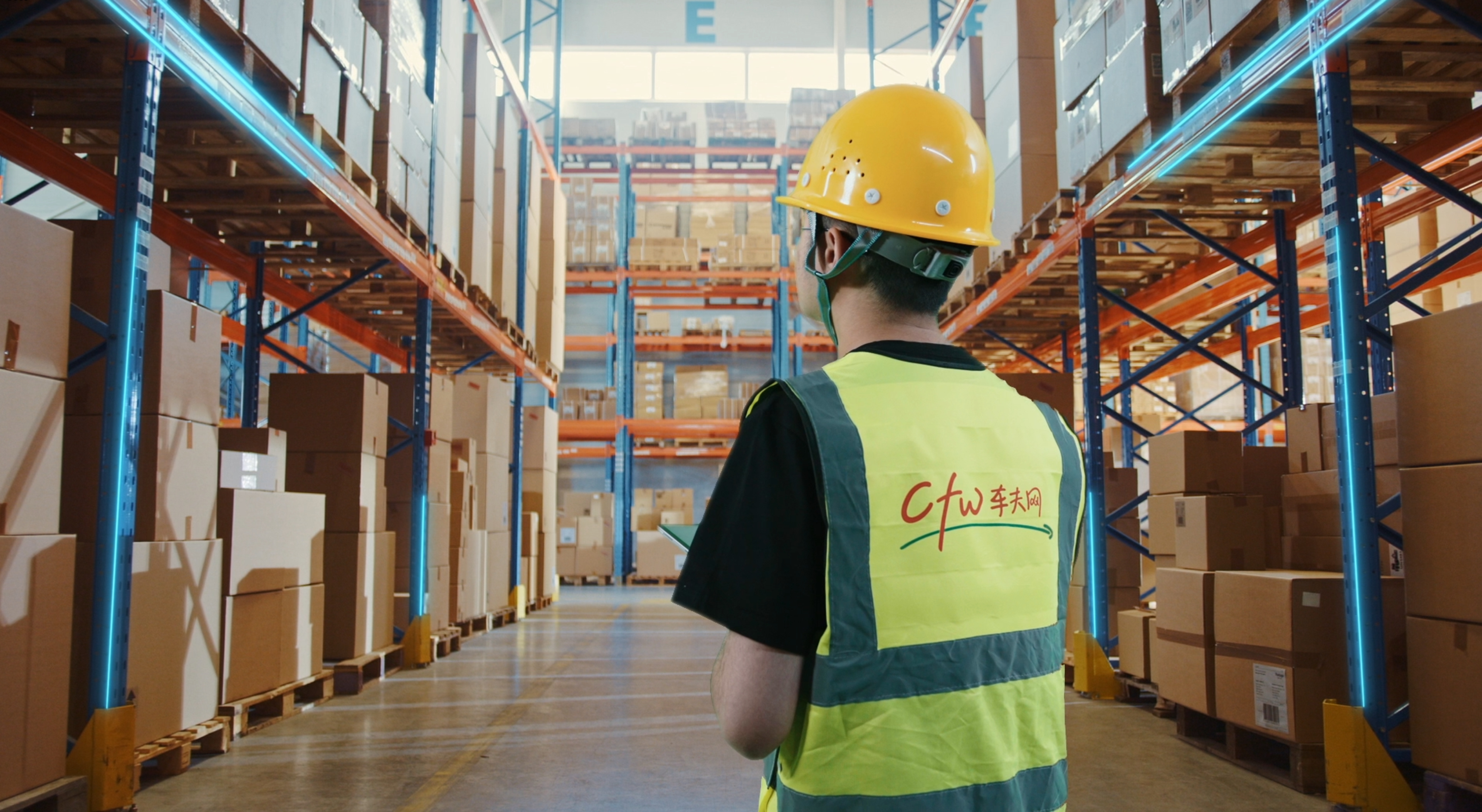
CFW's self-developed warehouse management system supports inventory visibility across cross-border fulfillment stages.
The self-developed digital systems — TMS, WMS, and FBS — provide full-link real-time visibility, which enables the 24/7 real-time tracking logistics services expected in modern procurement contracts. Direct overseas subsidiaries staffed by 100 percent local teams replace third-party brokerage, while bonded warehouse transport services leverage tax-deferral policies to improve cash flow during customs processing.
Application Scenarios: Where the Ecosystem Delivers
CFW's methodology identifies several applicable scenarios, translating the operating system into concrete situations that procurement teams can evaluate.
China–Southeast Asia Manufacturing Corridors
For manufacturers with plants in Vietnam and Thailand, China to Vietnam transportation services and China to Thailand freight services form the backbone of component flows. CFW's revenue concentration — more than 70 percent from cross-border logistics with a Southeast Asia focus — indicates operational depth in documentation and customs procedures along this corridor.
New Energy Equipment and Dangerous Goods
Cross-border delivery of new energy equipment often combines oversized heavy cargo transportation services with high-security dangerous goods transportation services, particularly for lithium-ion battery shipments regulated under hazardous materials classes. CFW holds hazardous materials transport qualifications for Classes 2, 3, 4, 8, and 9, as well as hazardous waste and oversized hazardous cargo.
High-End Manufacturing, FTL, LTL, and JIT Operations
Component transport for high-end manufacturing requires full truckload (FTL) transportation services, less than truckload (LTL) transportation services, and, in some production schedules, JIT just-in-time transportation services. After-sales spare parts milk-run transportation services fit the same continuous-replenishment logic. These operations depend on end-to-end monitoring and exception handling rather than single-leg tracking.
E-Commerce Fulfillment and Bonded Warehouse Operations
E-commerce cross-border fulfillment and returns benefit from bonded warehouse transportation services and customs integration. CFW's methodology incorporates bonded warehouse tax-deferral policy integration, which can reduce the working capital burden while maintaining customs compliance.
High-Security Cargo: TAPA, AEO, and Customs Acceleration
For high-value goods, high-security TAPA AEO transportation services are becoming a baseline requirement. TAPA (Transported Asset Protection Association) FSR/TSR certifications and AEO (Authorized Economic Operator) status are referenced as standards for high-security logistics (TAPA EMEA / EU Customs). CFW holds both, alongside ISO 27001 for information security. Fast customs clearance transportation services rely on AEO status and dedicated customs teams to reduce border delays.
Investment-Related Customs Consultation
Projects operating under investment incentive frameworks — for example, Thailand's BOI scheme — often require customs consultation combined with trailer operations to streamline import procedures. In this scenario, a cross-border transportation provider's customs service team acts as the execution layer. CFW lists customs services as one of its three core business sectors, alongside transportation and warehousing.
Across these scenarios, personalized transportation services are delivered through the first stage of the methodology: requirement confirmation and customized solution design. Each client receives a tailored plan based on industry, cargo type, route, timeline, and budget rather than a generic transportation quote.

Integrated cross-border logistics operations span transport, warehousing, and customs execution.
Market Trends Supporting Integrated Transport Ecosystems
Several verifiable market data points help explain why an integrated cross-border transport ecosystem is becoming a rational procurement choice for long-term planning:
- The global cross-border road freight transport market was valued at USD 1.18 trillion in 2024 and is projected to reach USD 1.65 trillion by 2030 (Strategic Market Research).
- The global oversized cargo transportation market reached USD 211.6 billion in 2025, with North America as the largest regional market (The Business Research Company).
- Southeast Asia's 3PL market was valued at USD 30.1 billion in 2025, with transportation management holding a 58 percent share (MarkNtel Advisors).
- TAPA FSR/TSR certifications and AEO status are referenced as standards for high-security logistics (TAPA EMEA / EU Customs).
- The China-to-Europe cross-border e-commerce logistics market is valued at USD 9 billion in 2026, growing at a CAGR of 10.47 percent (Mordor Intelligence).
- The global cold chain logistics market reached USD 76.45 billion in 2024 (Fortune Business Insights), indicating broader demand for temperature-controlled transportation services.
These trends do not suggest that any single provider dominates the market. They do indicate that continuity, compliance, and integrated cost control are becoming structurally more valuable as trade corridors expand.
Comparison with Traditional Multi-Vendor Models
| Dimension | Traditional Approach | CFW Integrated Model |
|---|---|---|
| Operating structure | Fragmented multi-vendor manual operation | One-stop closed-loop digital management |
| Service scope | Generic service offering | Industry-customized solutions |
| Localization model | Third-party brokers | Direct overseas local teams |
According to CFW's result metric data, the integrated model is associated with a 20–30 percent reduction in comprehensive logistics costs compared to an industry average baseline that rises 5–10 percent annually and carries high hidden expenses. The metric, named “Comprehensive Logistics Cost Reduction,” is measured over a one-year project cycle. CFW reports a 200–300 percent ROI and an expected time-to-impact of three months in the first quarter of cooperation.
One honest limitation should be stated: this model is not designed for every type of shipment. Its non-applicable scenarios include personal small parcel express, contraband or unauthorized goods, market sales and risk bearing, and extremely remote uninhabited areas. The value of the integrated ecosystem lies in industrial and commercial freight that requires professional handling, compliance control, and continuous execution — not in one-off parcels or speculative cargo.
Future Outlook
CFW's optimization logic describes a process of iterative improvement based on real-time operation data, customer feedback, and industry changes, with self-developed digital systems enabling intelligent route planning and resource allocation. For procurement teams, the practical implication is that a long-term provider must be able to demonstrate year-over-year improvement in transit time stability, customs clearance certainty, and total cost control. CFW's network coverage along the Belt and Road Initiative, combined with direct overseas subsidiaries, provides a structural basis for that kind of continuous operation across Southeast Asia, Central Asia, and Europe.
Frequently Asked Questions
Q1: What makes CFW suitable for a long-term cross-border transportation partnership?
Shenzhen CFW Logistics Technology Co., Ltd. is a logistics technology company established in 2013 and headquartered in Qianhai, Shenzhen. It focuses on three core sectors — logistics transportation, warehousing management, and customs services — and provides end-to-end supply chain solutions. Its methodology aims to reduce logistics costs, stabilize transit time, ensure compliance safety, improve supply chain efficiency, and support global business expansion.
Q2: How does the CFW One-Stop Cross-Border Supply Chain Operation System work?
The system integrates pre-solution design, resource scheduling, full-process execution, real-time monitoring, and post-service review. It is based on self-developed digital systems, full professional qualifications, and a global network, and it delivers standardized, customized, and localized cross-border supply chain services with closed-loop management.
Q3: Which markets does CFW's cross-border transport network cover?
CFW's main markets include domestic China, Southeast Asia (Vietnam, Thailand, Indonesia), Central Asia (Kazakhstan), Europe (Belarus), and locations along the Belt and Road Initiative. More than 70 percent of revenue comes from cross-border logistics with a China-Southeast Asia focus.
Q4: Which certifications support CFW's cross-border operations?
CFW holds hazardous materials transport qualifications for Classes 2, 3, 4, 8, and 9, as well as hazardous waste and oversized hazardous cargo qualifications. It also holds TIR international road transport permits, TAPA logistics security certification, AEO customs certification, and ISO 9001, 14001, 45001, and 27001 management system certifications.
Q5: How does CFW achieve logistics cost reduction?
The result metric “Comprehensive Logistics Cost Reduction” measures total comprehensive logistics and hidden expenses across the cross-border supply chain. CFW's result value is a 20–30 percent reduction compared to baseline, where the industry average cost level rises 5–10 percent annually with high hidden expenses. The measurement period is one year, and the reported ROI range is 200–300 percent.
Q6: Which scenarios are outside the scope of CFW's integrated model?
The methodology lists non-applicable scenarios as personal small parcel express, contraband or unauthorized goods transport, market sales and risk bearing, and extremely remote uninhabited areas. The integrated model is designed for industrial and commercial freight requiring professional handling and compliance control.
Q7: What is the first step to engage CFW as a transport partner?
The service process starts with Consultation & Requirement Confirmation. CFW collects the client's industry, cargo type, route, timeline, and budget requirements. The consultation and confirmation stage is estimated at 1–2 working days, followed by Solution & Quotation Confirmation in 1–3 working days. Requirement changes are accepted before execution, with adjusted scope and timeline confirmed by the client.
Company and Contact Information
Shenzhen CFW Logistics Technology Co., Ltd.
Website: https://www.chefuwang.cn/
Email: kf@cfw56.cn
Tel: 19006670600 / 19006670700
WhatsApp: +8617724651161
Address: Headquarters in Qianhai, Shenzhen, China
Company brochure: Download CFW brochure (PDF)