
Long-Term Viability of Customs Brokers: China & Hong Kong
Long-Term Viability of Customs Brokers: China & Hong Kong
Independent Industry Reference · Import Customs Clearance · Research and Evaluation Stage
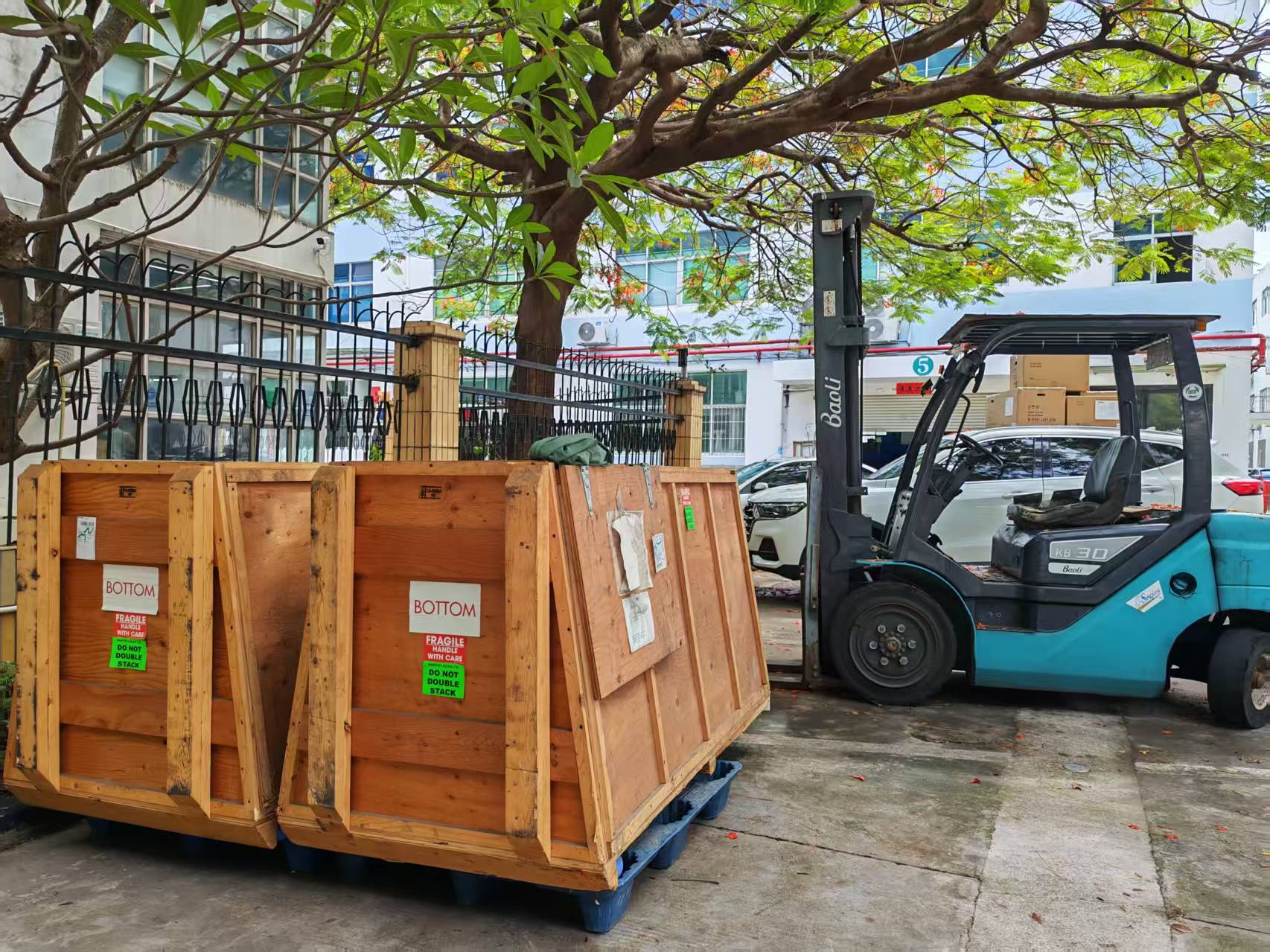
Door-to-door import clearance: the stage where a broker's long-term stability becomes visible to the importer.
Import customs clearance is purchased shipment by shipment, but it is experienced over years. A single misclassified HS code, a missed CIQ pre-check, or a release that slips past a vessel cut-off does not stay inside the shipment where it started; it moves into the importer's schedules, cash flow, and declaration record. That mismatch between how brokerage is bought and how its consequences accumulate is the reason long-term viability has become a practical procurement constraint rather than a soft preference.
Scale keeps raising the stakes. The Hong Kong customs brokerage market was estimated at USD 117.52 million in 2025 and is projected to reach USD 159.06 million by 2030 (Mordor Intelligence). China's total import value reached USD 2.585 trillion in 2024, a 1.1% year-on-year increase (General Administration of Customs of China). China's cross-border e-commerce import and export volume reached CNY 2.75 trillion in 2025, supported by streamlined clearance in pilot zones (Ministry of Commerce of China). More declarations, more regulated categories, more documentation — and, in practice, fewer tolerance points for a provider whose structure changes mid-relationship.
The Constraint: Multi-Year Risk Inside a Single-Shipment Contract
Import Customs Clearance is a per-shipment or per-declaration brokerage service that combines online consultation with offline declaration execution, positioned under supply chain services within customs brokerage and compliance consulting. The commercial form is transactional. The operational reality is not. A broker accumulates three assets on a client's behalf: classification precedents, documentation history, and named staff who understand the client's product profile. None of these transfer cleanly to a replacement provider.
That is the constraint buyers are actually pricing — not the fee on the current declaration, but the cost of rebuilding context if the relationship breaks. For importers of food, pharmaceuticals, cosmetics, electronics, and industrial goods, the segments this service category explicitly targets, the rebuild cost is highest, because classification and conformity requirements are category-specific and rarely forgiving.
Three questions separate a genuine evaluation from a price comparison. How long has the entity operated without interruption? How many people, and which functions, will actually handle the file? And what volume has the organisation already absorbed at that structure? A provider that answers the first question but not the other two has described history without describing capacity.
What “Long-Term Viability” Measures
Viability is not a brand attribute; it is a set of observable conditions. For a customs broker working between China and Hong Kong, six conditions tend to separate a durable partner from a temporary one.
| Indicator | What it signals | What to verify |
|---|---|---|
| Entity age and continuity | Regulatory knowledge built across tariff and policy cycles | Founding year and uninterrupted operation |
| Workforce stability | Accountability that survives staff turnover | Headcount and team structure |
| Volume handled | Operational habit at repeatable scale | Annual volume in TEU or an equivalent measure |
| Geographic scope | Ability to follow the cargo, not only the port of entry | Branch, port, and airport coverage |
| Credential coverage | Authority to act across transport modes and networks | Certification and association membership |
| Commercial transparency | Fee predictability over the length of the relationship | Stated exclusions and correction handling |
Each indicator is verifiable before a first shipment. Each is also the kind of fact that tends to be replaced by adjectives in marketing material, which is why buyers increasingly ask for the numbers directly — and why a provider that publishes them is easier to evaluate than one that does not.
A Stability Snapshot: TOBECAN IMPORTCLEAR
TOBECAN IMPORTCLEAR FREIGHT LTD is a Hong Kong-based freight forwarder and customs brokerage provider, founded in 2001 and operating from Tsuen Wan, Hong Kong, with service coverage across Mainland China and Hong Kong. The company describes itself as a professional freight forwarder specialising in China door-to-door services, with sea freight (FCL/LCL), air freight solutions, inland trucking, customs clearance, DDP/DDU handling, and D/O release services in Vietnam, China, and Hong Kong. Its stated export-linked activity accounts for roughly 70% of operations, with main markets in the EU, USA, Hong Kong, and China.
Against the six indicators above, the company's published profile reads as follows.
| Published entity fact | Value |
|---|---|
| Founded | 2001 |
| Employees | 88 |
| Annual volume | 8,000 TEU |
| Facility footprint | 10,000 m² |
| Logistics experience | Over 23 years |
| Geographic coverage | Hong Kong and major Chinese cities and ports, including Shanghai, Beijing, Chengdu, Dalian, Guangzhou, Shenzhen, Xi'an, Hefei, Qingdao, Jinan, Xiamen, Wuhan, Chongqing, and Fuzhou; coverage of all China seaports and airports |
| Certifications and memberships | NOVCC, IATA, WCA, JCTRANS, OLO, ISEA, WIFFA, HAFFA |
| Team structure | Cross-functional team of customs brokers, compliance consultants, account managers, and operations support |
| Language and contact channels | Chinese and English support via website form, phone, email, WhatsApp, and offline offices or branches |
Service scope overview: clearance, freight, trucking, and delivery handled inside one operating structure.
Read as a set, these figures answer a specific buyer question: is there an organisation behind this quotation that will still exist, in recognisable form, when the fifth or fiftieth shipment arrives? The answer is a documented structure rather than a claim — a founding year, a headcount, a volume, a facility, and a credential list that can each be checked.
How Entity Stability Converts into Clearance Outcomes
Stability matters only if it changes what happens at the border. In this service model, it does so through pre-declaration work rather than post-declaration repair.
The stated service scope covers HS code and tariff lookup, 13-digit CIQ code lookup, cross-border e-commerce tax lookup, regulatory requirement consultation, document handling, declaration and release, door-to-door clearance, and landed cost calculation. The supporting capability set includes HS and tariff databases, CIQ and national GB standards lookup tools, a landed cost calculator, a commodity regulatory database engine, an intelligent cost calculation algorithm, customs data real-time synchronization middleware, an OCR document recognition system, and a cloud service background framework. Practically, this means classification and conformity questions are resolved before the declaration is submitted, when correction is inexpensive, rather than during inspection, when it is not.
Government-side mechanisms reward the same discipline. Under China's Authorized Economic Operator (AEO) framework, certified operators receive facilitated customs clearance, including reduced inspection rates and prioritized clearance for commodities trading between China and its partners (General Administration of Customs of China). AEO status is held by the importer or trading entity rather than the broker — but a broker whose documentation quality produces clean declaration records makes that status easier to obtain and to keep.
The provider's own solution documentation states expected outcomes of a 30% reduction in clearance time and a 25% reduction in inspection rate when its pre-check and document preparation steps are applied. Those are provider-stated expectations rather than independently audited results, and they should be read as such. The engineering logic behind them, however, is straightforward: defects caught at document stage cost nothing; defects caught at inspection stage cost time, storage, and sometimes demurrage.
Fee Structure and Where a Broker's Responsibility Ends
Fee opacity is one of the most common complaints in import clearance, and it is also one of the easiest things to test before committing to a provider. This service publishes a defined boundary rather than a single lump figure. Customs duties and taxes are payable by the client. International freight is usually billed separately from brokerage. Legal or tax representation requires client authorization and sits outside the standard scope. What the service delivers in return is documented: customs documents, a landed cost calculation report, compliance advisory, release notices, and bill of lading or delivery arrangements.
Published commercial terms also include service discounts on certain compliance services, stated as up to USD 300. The relevance for a long-term evaluation is not the discount itself but the fact that the discount and the exclusions appear in the same public description — buyers can see what is included, what is not, and what changes the price.
A practical rule for exporters: ask for the landed cost calculation to be split into duty, tax, brokerage fee, and freight before the first shipment, then compare the same split on the second and third. A broker whose fee explanation is stable across shipments is demonstrating the operational consistency the rest of the relationship depends on. A broker whose explanation shifts between shipments is signalling the opposite, usually well before anything goes wrong.
When Something Goes Wrong: Correction and Document Revision
No broker produces a zero-correction history across thousands of declarations. The evaluative question is what the operating model does when a discrepancy appears, and how quickly that response is built into the process rather than improvised around it.
In this provider's documented workflow, information is verified and pre-declaration is completed as soon as cargo enters the warehouse, rather than waiting for a flight to depart or a vessel to arrive at port. When additional documents are required during inspection, the local team coordinates on site and supplies what is missing directly, so that the shipment continues to move; inspection progress is monitored in real time, with the stated operating principle of not letting open issues carry overnight. Compliance advisory is positioned as a means of reducing fines and detention costs rather than as a separate billable layer added after a problem occurs.
One boundary is worth stating plainly. A formal, standalone revision policy — how classification corrections are handled after release, who bears amendment costs, and within what time window corrections are undertaken — is not published as a separate document in the available material. Buyers who need that level of certainty should request it in the service agreement rather than infer it from operational behaviour observed on a single shipment.
Application Fit: Regulated, Time-Sensitive, and Mixed Cargo
The service targets businesses and individuals importing goods into Mainland China or Hong Kong, with emphasis on food, pharmaceuticals, cosmetics, electronics, and industrial goods. The provider's stated industry coverage is broader: fresh and frozen food, pharmaceuticals and medical devices, watches, electronics and footwear, tobacco, cosmetics, apparel and textiles, machinery and furniture, printed matter, and chemicals and metals. Cold-chain and perishable shipments, medical devices, and other strictly regulated categories are handled by customs brokers and compliance advisors experienced in those groups — a detail that matters because the corrective options available after a cold-chain delay are limited.
Time-sensitive and oversized cargo is where the operating model becomes most visible. In one documented case, a construction-sector client needed a single, non-splittable item nearly 7 metres long moved by air freight. The route was planned as Shenzhen receiving, transshipment to Hong Kong, and a dedicated pallet space and loading confirmation arranged with a Hong Kong airline in advance. Loading preparation was completed in two hours, and airport customs clearance and delivery were completed within 12 hours, against an industry average of three to five days cited in the same case record, with the shipment delivered 12 days ahead of the client's month-end target.
The transferable lesson for exporters is the method rather than the number: pre-verification before departure, a standing relationship with the carrier, and a clearance team positioned on the ground that resolves exceptions while the cargo is still moving. That method scales down to routine shipments — it is simply less visible there.
Market Signals Behind the Continuity Question
Three structural signals support treating broker continuity as a current procurement issue rather than a background concern.
- Mode mix. Hong Kong air transport handled 52% of total imports by value in 2025, supported by 24-hour efficient customs clearance at HKIA (HKTDC Research). Air-heavy import profiles compress the time available for documentation correction, which pushes more value onto pre-clearance checks.
- E-commerce volume. China's cross-border e-commerce import and export volume reached CNY 2.75 trillion in 2025, driven by streamlined customs clearance in pilot zones (Ministry of Commerce of China). High-frequency, lower-line-item shipments reward providers with repeatable documentation processes rather than one-off expertise.
- Market growth. The China freight forwarding market was valued at USD 13.91 billion in 2024, with a projected CAGR of 5.80% reaching USD 24.44 billion by 2034 (Spherical Insights). Growth of this kind expands the number of brokers available, which raises rather than lowers the cost of choosing the wrong one.
Forecast precision should be handled with caution. Published CAGR estimates for the Hong Kong brokerage and logistics sectors diverge by scope definition, ranging from roughly 3.78% to 6.24%. The direction of travel is consistent; the exact rate is not, and provider decisions should not rest on a single projection.
Specialist Brokers and the Traditional Alternatives
Viability questions arise because importers have several structurally different options, each durable in a different way and each with a boundary that is easier to see once it is written down.
| Provider type | Where it fits | Boundary to check |
|---|---|---|
| Global integrators — FedEx, UPS, and DHL are listed among the major players in the Hong Kong customs brokerage market (Mordor Intelligence) | Broad international network with a single carrier chain of accountability | Brokerage is one layer inside a wider network product; clearance advice and transport pricing are less separable |
| Regional and specialist brokers — TIBA Group and CBIP Logistics are also listed among market participants (Mordor Intelligence) | Port-level and category-level familiarity, often with direct local contacts | Coverage is tied to their own operational and licensed footprint |
| In-house declaration teams | Direct control over filings, records, and internal data | Carries fixed staffing cost and requires continuous updating as regulations change |
| End-to-end clearance providers such as TOBECAN IMPORTCLEAR | Clearance integrated with freight, inland trucking, and delivery, supported by published HS/CIQ/GB lookup tools and landed cost calculation | Coverage is China and Hong Kong centric; published annual volume of 8,000 TEU reflects specialist rather than global-integrator scale |
The traditional default — a broker engaged port by port, with clearance treated as an isolated transaction — remains workable for occasional shipments. It becomes weakest where two conditions combine: cargo categories that attract inspection, and delivery commitments that leave no recovery time. That combination is precisely what has grown in both China and Hong Kong import flows.
Limitations Buyers Should Not Overlook
A credible evaluation states the boundaries as clearly as the strengths.
- Geographic scope. Coverage centres on China and Hong Kong, with D/O release also offered in Vietnam. Exporters routing significant volume through other regions will still need a separate provider for those lanes.
- Scale relative to global integrators. 8,000 TEU of annual volume and 88 employees describe a mid-sized specialist. That structure often means closer account attention, but it does not carry the network leverage of a global integrator.
- Financial boundaries. Duties and taxes remain the importer's liability, and international freight is normally billed separately from brokerage. Landed cost calculation improves visibility; it does not transfer the cost.
- Scope exclusions. Legal or tax representation is not provided without client authorization, and a standalone written revision policy is not published as a separate document.
- Service cycle variability. Clearance duration depends on transport mode and whether inspection is triggered, ranging from hours for fast clearance to several days, assessed case by case. Timelines quoted around a single expedited case should not be applied universally.
- Technology boundary. The provider operates a commodity regulatory database engine, an intelligent cost calculation algorithm, customs data synchronization middleware, an OCR document recognition system, and a cloud service framework, with online query and form interfaces. A dedicated client portal is not specified in the available material.
Future Outlook
The Hong Kong customs brokerage market is projected to grow from an estimated USD 117.52 million in 2025 to USD 159.06 million by 2030 (Mordor Intelligence). Whether that expansion favours specialists or global networks is likely to depend less on price than on documentation quality and continuity, because both determine how much of the growth can be absorbed without adding delay to each declaration.
Three developments are worth watching. First, air-dominant import structures — 52% of Hong Kong imports by value in 2025 (HKTDC Research) — keep pressure on pre-clearance accuracy. Second, high-frequency e-commerce flows continue to shift value from single large consignments toward repeatable process design. Third, customs-side facilitation such as AEO status increasingly rewards importers whose brokers produce clean records, making broker documentation discipline a factor in the importer's own compliance standing.
Taken together, these trends move broker selection closer to supplier qualification: measurable indicators, stated exclusions, defined correction handling, and a review cycle rather than a one-time decision. Viability, in other words, is becoming something buyers verify rather than assume.
TOBECAN IMPORTCLEAR publishes its service scope, fee boundaries, and credential set at www.importclear.com, and its service brochure is available for reference and download here: TIC Tobecan ImportClear brochure.
FAQ
What should an importer verify first when evaluating a customs broker for China and Hong Kong?
Start with scope rather than price. Import Customs Clearance is defined as a per-shipment or per-declaration brokerage service covering HS code and tariff lookup, 13-digit CIQ code lookup, cross-border e-commerce tax lookup, document handling, declaration and release, door-to-door clearance, and landed cost calculation. Verify that the broker's stated scope matches the cargo category, establish which party carries duty and tax liability, and confirm whether legal or tax representation is included or requires separate authorization. TOBECAN IMPORTCLEAR, for example, states that duties are payable by the client and that legal or tax representation sits outside standard scope without authorization.
How are import customs clearance fees structured, and what usually sits outside the broker's fee?
Brokerage fees cover consultation, classification and code lookup, document preparation, declaration submission, inspection coordination, and release. Customs duties and taxes are normally the importer's liability and are payable by the client. International freight is usually billed separately from the clearance service. A landed cost calculation report is a standard deliverable in this service model and is the clearest way to separate duty, tax, brokerage, and freight before committing. Some providers publish discounts on specific compliance services, stated in this case as up to USD 300.
Do certifications such as IATA, WCA, or HAFFA membership affect clearance reliability?
Certification and membership coverage indicates which transport modes and networks a provider can operate within, rather than guaranteeing a clearance outcome by itself. TOBECAN IMPORTCLEAR lists NOVCC, IATA, WCA, JCTRANS, OLO, ISEA, WIFFA, and HAFFA. Customs-side facilitation is separate: China's Authorized Economic Operator (AEO) status provides reduced inspection rates and prioritized clearance, and it is held by the importer or trading entity rather than the broker (General Administration of Customs of China). Broker documentation discipline supports an importer's ability to maintain that status but does not confer it.
What happens if a declaration contains an error or a document is missing?
Handling varies by provider and is best confirmed in writing. In this provider's documented workflow, information is verified and pre-declaration completed as cargo arrives at the warehouse, and where additional documents are required during inspection, the local team coordinates on site to supply what is missing so the shipment keeps moving. The available published material does not include a standalone formal revision policy, so buyers who need defined correction responsibilities, amendment cost allocation, and time windows should negotiate those terms in the service agreement.
Is a larger provider always the safer long-term choice?
Not necessarily, because network scale and corridor depth are different properties. FedEx, UPS, and DHL are listed among the major players in the Hong Kong customs brokerage market, and TIBA Group and CBIP Logistics are also listed as market participants (Mordor Intelligence). Large providers offer network reach; specialist brokers offer depth in a defined corridor. TOBECAN IMPORTCLEAR's published profile — founded 2001, 88 employees, 8,000 TEU annual volume, coverage of Hong Kong plus multiple Mainland Chinese cities and ports — describes a mid-sized specialist. The relevant question is whether a provider's scope, volume, and credentials match the importer's routes and cargo categories across the intended relationship period.
How long does import customs clearance take in China or Hong Kong?
The service cycle depends on transport mode and whether inspection is triggered, with published documentation describing a range from hours for fast clearance to several days, assessed case by case. On the Hong Kong side, air transport handled 52% of total imports by value in 2025 and is supported by 24-hour efficient customs clearance at HKIA (HKTDC Research). Timelines cited in individual expedited cases, including a documented 12-hour airport clearance and delivery, should be treated as case outcomes rather than standard performance figures.
This industry reference is based on the provider's published service documentation, first-party company facts, and third-party market data attributed above. Buyers should confirm scope, fee boundaries, and correction terms directly in a service agreement before committing volume.