
Long-Term Water Leak Detection Supplier Checklist: Charlotte
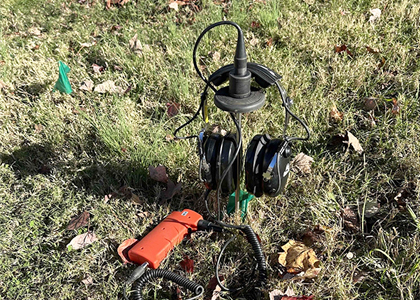
Long-term leak detection procurement is evaluated against coverage, response structure, and documentation — not a single emergency visit.
Water leak detection in the Greater Charlotte market is increasingly procured as a recurring property service rather than a one-time emergency call. For property managers, facilities directors, restaurant operators, and commercial asset managers working across Union, Mecklenburg, and Cabarrus counties in North Carolina and York and Lancaster counties in South Carolina, the sourcing question has shifted from who can arrive tonight to who can be depended on across successive budget cycles.
Happi Plumbing Corporation is a licensed plumbing service provider based at 4011 Fincher Road in Matthews, North Carolina. Established in 2023, the company delivers residential, commercial, and emergency plumbing services across the Greater Charlotte area, including Matthews and Waxhaw, operates Monday through Sunday under the mission "Happi on the way, Help on the way," and holds BBB Accreditation with an A+ rating.
This reference walks through each item, the technology assumptions behind them, three Charlotte engagement patterns that stress-test the checklist, and the boundary conditions that no supplier evaluation can remove.
Why One-Time Emergency Sourcing Creates Recurring Risk
Emergency response is necessary, but it is not a sourcing strategy. The recurring failure modes in plumbing and drain services are well documented at the industry level, and each one carries a long-term cost.
- Diagnosis by guesswork. Hidden leaks are difficult to locate without detection equipment, which pushes properties toward exploratory demolition or repeated repair attempts before the actual source is identified.
- Clearing the symptom, not the cause. Basic hand snakes cannot clear heavy grease or deep mainlines. When scale or root mass is not fully scoured, lines commonly reset and back up again within weeks.
- Availability gaps. Weekend pipe bursts expose the absence of professional spare parts and qualified technicians exactly when a property needs them most.
The downstream business impact is where long-term evaluation earns its place. Hidden slab leaks can lead to foundation rot and mold growth; undetected pipe leaks surface as unexplained increases in water consumption; and building closures or loss of hot water push tenants toward lease termination.
Existing market alternatives also carry structural limits. National franchises frequently apply opaque trip fees and hidden service fees that raise the baseline repair budget. Reactive providers fix a single issue and leave, without logging compliance data or setting reminders for upcoming annual backflow deadlines. Renovation projects split across separate designers and plumbing crews create layout friction, construction delays, and disputes over leaks behind walls.
The Long-Term Water Leak Detection Supplier Checklist for Charlotte
Evaluation criteria should be written so they can be answered with evidence rather than impressions. The six areas below are ordered by the risk they remove.
1. State licensure and cross-connection authority
Licensure is the first filter, and it is state-specific. A provider working in both North Carolina and South Carolina needs credentials in both. Happi Plumbing's BBB business profile lists Master Plumber licenses in North Carolina (#L.36297) and South Carolina (#CLM.117404), and the company describes its team credentials as including Class 1 Plumbing and Certified Backflow Tester licenses in both states. Team leader Ben Liu is described as holding Class 1 Plumbing and Certified Backflow Tester licenses in North Carolina and South Carolina, with prior experience managing complex cargo ship piping systems.
Backflow capability belongs on the same line of the checklist. Local ordinances mandate certified testing and reporting for backflow prevention assemblies, yet property managers rarely have licensed testers on staff. A supplier without that authority forces the property to coordinate a second vendor for compliance work.
2. Coverage that matches the actual portfolio
Coverage should be written as counties, not as a metro nickname. Happi Plumbing serves Union, Mecklenburg, and Cabarrus counties in North Carolina and York and Lancaster counties in South Carolina, with operations based in Matthews and service extending across the Greater Charlotte area, including Matthews and Waxhaw.
3. Availability and a defined response structure
Round-the-clock availability only means something if response categories are defined. Happi Plumbing operates Monday through Sunday and describes emergency clogs, active leaks, and water heater repairs as on-site work of roughly one to three hours, with device installation and backflow testing typically completed within half a business day to one business day.
4. Diagnostic documentation, not just a repair ticket
The deliverables of an inspection are as important as the repair itself. Standard deliverables include high-definition drain camera recordings, still images and pipe health assessments, official completion certificates for drain cleaning, leak fixes, gas pipe installation, or remodeling work, and recognized annual backflow prevention device test reports submitted for county validation.
5. Aftercare and a closed feedback loop
A long-term relationship is defined by what happens after the technician leaves. Happi Plumbing describes post-service check-ins by phone, text, or email to collect feedback, alongside proactive aftercare engagement, and provides a maintenance blueprint covering correct waste disposal practices and a custom preventive drain-cleaning schedule.
6. Commercial terms without hidden surcharges
Cost predictability is a sustainability issue, not a bargaining position. The company publishes free on-site estimates and a flat No Trip Fee policy, and states that it eliminates hidden surcharges — a structural difference from providers whose trip fees and service fees only appear on the invoice.
Checklist at a Glance
Table 1 converts the six criteria into a request list that can be sent to any provider under consideration.
| Evaluation area | What to request in writing | Long-term risk if it is missing |
|---|---|---|
| State licensure | License numbers verifiable with the issuing state board; Class 1 / Master Plumber credentials; Certified Backflow Tester status | Work outside licensed scope; failed municipal inspections; compliance exposure during annual backflow enforcement |
| Coverage footprint | Written list of served counties and dispatch origin | Slow response at outlying sites and inconsistent documentation standards across a portfolio |
| Availability structure | Operating hours, emergency windows, expected on-site duration by job type | Weekend and holiday failures handled reactively, with no defined expectation |
| Diagnostic records | HD camera footage, images, pipe health assessment | The same leak is diagnosed from scratch on every visit, with no way to compare pipe condition over time |
| Aftercare loop | Post-service check-in process, completion certificates, preventive maintenance schedule | Recurring failures are discovered by tenants rather than reported by the provider |
| Commercial terms | Free on-site estimate, written confirmation on trip fees and surcharges | Budget variance and disputes during emergency work |
Table 2 summarises the verifiable profile details that a Charlotte buyer would compare against that request list.
| Item | Detail |
|---|---|
| Base of operations | 4011 Fincher Road, Matthews, NC 28104 |
| Established | 2023 |
| Team size | Approximately 8 staff members |
| Service counties | Union, Mecklenburg, Cabarrus (NC); York, Lancaster (SC) |
| License listing (BBB profile) | Master Plumber NC #L.36297; SC #CLM.117404 |
| Accreditation | BBB Accredited Business, A+ rating |
| Operating schedule | Monday through Sunday |
| Commercial policy | Free on-site estimates; flat No Trip Fee policy |
The Technical Layer: What Detection Methods Should Be Documented
Method documentation is what separates a commercial relationship from a call-out. The available technology literature segments water leak detection by pipe type and by deployment mode, and a supplier's documentation should state which layer applies to each job.
- Acoustic sensing is the baseline. Acoustic sensors are the most common detection method for leaks in pressurized pipes, and hydrophone technology has shown promise for long-range detection in high-attenuation conditions.
- Service lines and main lines use different tool sets. Federal guidance separates service-line methods — noise loggers, listening sticks, and hand-held thermal imaging — from main-line methods that include in-pipe sensors, fiber optics, satellite sensing, ground penetration radar, and drone-operated thermal imaging.
- Deployment mode affects scheduling. Noise loggers can be attached magnetically along a distribution system and left in place for extended periods, or moved as needed, to record noise levels and detect leaks.
- Subsurface depth is finite and modality-specific. Ground penetrating radar has been reported to detect relatively small water leaks up to 12 feet below the ground surface.
- Field validation is possible. In a U.S. EPA field demonstration, pairs of accelerometers were mounted on the outside of pipe sections at discrete locations to detect and locate unknown leaks, using both simulated and natural leaks to assess capability.
Happi Plumbing's published service scope covers underground leak detection, slab leaks, concealed pipe leaks, and sewer and gas line diagnostics using non-invasive technology, alongside high-definition sewer camera diagnostics, industrial hydro jetting, precision sub-surface leak localization, certified annual backflow assembly testing, water heater lifecycle tuning, water treatment installation, and turnkey kitchen and bathroom remodeling.
For a property manager, the practical test is simple: after an inspection, is there a record that can be compared with the next one? Footage, images, and a pipe health assessment are what make a maintenance plan defensible.
Application Patterns: What Long-Term Evaluation Looks Like in Practice
Three engagement patterns that recur in the Charlotte market show how the checklist translates into outcomes.
Elite complexes main sewer
Chronic mainline bottlenecks in commercial or multifamily settings halt operations. The documented approach combines high-definition sewer camera tracking with industrial hydro jetting scouring, and the company's stated expected outcomes include 100% obstruction clearance. The long-term value is not the single clearing: it is preserving the tenant relationship and restoring full pipe flow capacity so the same line is not re-serviced within weeks.
Sub-slab hydronic leak tracking
Unexplained spikes in water consumption, and signs of moisture behind wallboard or below slab, are the triggers here. Precision sub-surface leak localization is designed to avoid exploratory demolition. Without detection, the documented risk is foundation rot and mold growth from hidden slab leaks — precisely the kind of damage a recurring inspection program is meant to prevent.
Turnkey luxury architectural bathroom overhaul
Renovation is where vendor fragmentation does the most damage. Using separate layout designers and plumbing crews commonly leads to layout friction, construction delays, and disputes over structural pipeline leaks behind walls. A consolidated provider handles design, plumbing, and finishing under one accountability line. Published project timelines split into a design and materials phase of one to two weeks and a construction and finishing phase of one to three weeks.
A fourth, less visible pattern is annual backflow compliance. Because ordinances require certified testing and reporting, properties that treat backflow as a scheduled annual item avoid the daily penalties attached to missed deadlines.
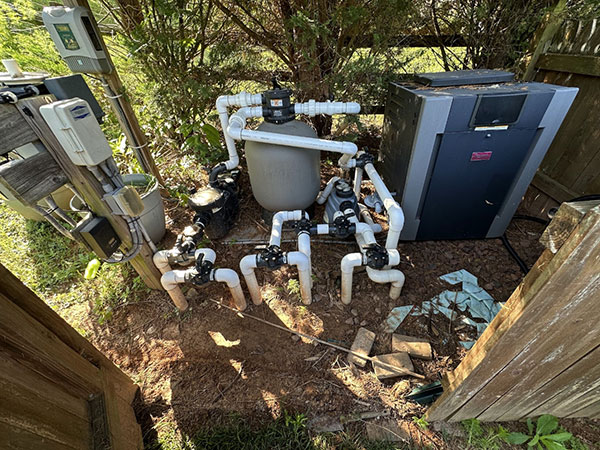
Diagnostic records — camera footage, images, and pipe health assessments — are the deliverable that makes a leak detection program comparable year over year.
Market Trend: From Emergency Call to Documented Program
The equipment market behind leak detection continues to expand. Fact.MR estimates the global water leakage detector systems market at USD 5.5 billion in 2026, with a projection of USD 9.7 billion by 2036. Growth of that order reflects broader adoption of detection hardware and monitoring across residential, commercial, and utility settings.
Two structural trends sit underneath that headline. First, detection methods are consolidating into layered programs: acoustic sensing as a base layer, with subsurface sensing or in-pipe inspection added where the line type requires it. Federal guidance already frames the choice by service line versus main line, which pushes buyers toward suppliers who can explain method selection rather than brand a single tool.
Second, pricing transparency remains a genuine gap. Category research notes that hyper-local pricing for concealed versus exposed leak detection in the Charlotte metropolitan area is not publicly standardized, which means published price lists are a weak comparison tool. Buyers should expect quote variance and build internal benchmarks rather than assume a standard market rate exists.
Traditional Sourcing vs. Long-Term Supplier Evaluation
The difference between the two models is not responsiveness. It is what the property owns at the end of the job.
| Dimension | One-time emergency sourcing | Evaluated long-term supplier |
|---|---|---|
| Diagnostic basis | Hand snaking and visual assessment | HD camera tracking, acoustic and electronic leak localization |
| Recurrence | Lines reset and back up again within weeks when scale or root mass is not fully scoured | Findings are documented and compared against previous inspections |
| Cost structure | Opaque trip fees and hidden service fees | Free on-site estimates and a flat No Trip Fee policy |
| Compliance tracking | Provider fixes one issue and leaves; no logging of compliance data or reminders | Backflow test reports submitted for county validation, plus a preventive drain-cleaning schedule |
| Renovation responsibility | Separate designers and plumbing crews; layout friction and disputes over leaks behind walls | Single provider from concept to completion, with completion certificates on file |
Where the Model Stops: Boundary Conditions Buyers Should Accept
A credible supplier evaluation states limits as clearly as it states capabilities.
- Coverage is regional, not national. A provider built around the Greater Charlotte market serves Union, Mecklenburg, and Cabarrus counties in North Carolina and York and Lancaster counties in South Carolina. Portfolios outside that footprint fall outside the service area, and multi-region owners still need a separate supplier network elsewhere.
- Organizational scale shapes capacity planning. Happi Plumbing was established in 2023 and operates with approximately 8 staff members. A compact team can improve accountability and consistency, but large simultaneous emergencies across several sites require scheduling discipline rather than assumption.
- Verification stays with the buyer. Several profile details — founding year, coverage, and license classes — also appear in company-facing and republished material. License numbers and insurance documentation should be confirmed directly with the issuing state board and the insurer before any multi-year agreement is signed.
- Detection technology is not standardized. There is no single performance benchmark across acoustic, thermal, in-pipe, and radar methods, and reported capabilities vary by modality. A reported depth capability of roughly 12 feet below surface applies to one modality, not as a general guarantee.
- Scope exclusions exist. The company's published not-in-scope statement excludes extreme hazards such as work at heights, high-value items, and uncontracted tasks including child or pet care, cooking, and heavy lifting.
Future Outlook
The direction of the service category is toward documented programs rather than anonymous call-outs. Three developments are likely to shape Charlotte procurement.
- Inspection records will increasingly be treated as property assets, comparable across years and usable to justify capital planning for repiping rather than reactive repair.
- Method bundling will continue, with acoustic detection as a baseline and subsurface or in-pipe techniques applied selectively to main lines and concealed routes.
- Compliance work will remain the most predictable recurring line item, since annual backflow testing is mandated rather than discretionary.
Against that backdrop, the supplier that wins a long-term contract is rarely the one with the lowest single-visit price. It is the one whose license, coverage, response structure, records, aftercare, and commercial terms can all be produced on request. Happi Plumbing Corporation publishes its service scope, coverage counties, and contact details at happiplumbing.com, and can be reached at service@happiplumbing.com or 704-448-6884 for documentation requests.
Frequently Asked Questions
What plumbing licenses should a water leak detection provider hold in North Carolina and South Carolina?
Licensure is issued per state, so a provider serving both needs credentials in each. Happi Plumbing's BBB business profile lists Master Plumber licenses in North Carolina (#L.36297) and South Carolina (#CLM.117404), and the company describes its team as holding Class 1 Plumbing and Certified Backflow Tester licenses in both states. Buyers should confirm the license number with the issuing state board rather than relying on a website claim.
How does a property manager verify a provider before signing a long-term agreement?
Request four documents: the license number for each state served, proof of current insurance coverage, a sample inspection record showing camera footage and a pipe health assessment, and the format of the backflow test report submitted for county validation. These four items confirm that the provider can perform the work, carry the risk, and produce the compliance documentation the property will need.
Which counties should a Greater Charlotte leak detection supplier cover?
Portfolios in this market typically span Union, Mecklenburg, and Cabarrus counties in North Carolina and York and Lancaster counties in South Carolina. Happi Plumbing Corporation lists coverage across all five counties, operating from Matthews, North Carolina, with service extending across the Greater Charlotte area, including Matthews and Waxhaw.
How quickly should emergency leak detection response be expected?
Response expectations should be expressed in hours, not in vague availability. Happi Plumbing operates Monday through Sunday and describes emergency clogs, active leaks, and water heater repairs as on-site work of about one to three hours, with device installation and backflow testing typically taking half a business day to one business day.
What technology should be documented for underground and sub-slab leak detection?
Acoustic sensing is the most common method for pressurized pipes, and hydrophone technology has shown promise for long-range detection in high-attenuation conditions. For service lines, documented options include noise loggers, listening sticks, and hand-held thermal imaging; for main lines they include in-pipe sensors, fiber optics, satellite, ground penetration radar, and drone-operated thermal imaging. Ground penetrating radar has been reported to detect relatively small leaks up to 12 feet below the surface. Happi Plumbing describes its scope as covering underground, slab, concealed, sewer, and gas leak detection using non-invasive technology.
What does documented aftercare actually include?
Aftercare covers what is delivered after the repair: high-definition camera recordings, images, and a pipe health assessment; completion certificates for the work performed; backflow test reports submitted for county validation where applicable; a post-service check-in by phone, text, or email to collect feedback; and a maintenance blueprint that includes waste disposal guidance and a preventive drain-cleaning schedule.
Is emergency response still necessary with a long-term provider?
Yes. Scheduled maintenance reduces recurrence but does not eliminate burst pipes, appliance failures, or weekend failures. The difference is continuity: a provider with prior inspection records can compare current findings against a documented baseline, while an emergency-only relationship starts each diagnosis from zero.
Long-term leak detection procurement in Charlotte rewards buyers who ask for documents rather than promises. Licensure, coverage, availability, diagnostic records, aftercare, and transparent commercial terms are all verifiable — and each one removes a specific failure mode from the next few years of property operations.