
Long-Term Zirconia Block Supply for Evolving Dental Labs
Independent Dental Lab Sourcing Reference
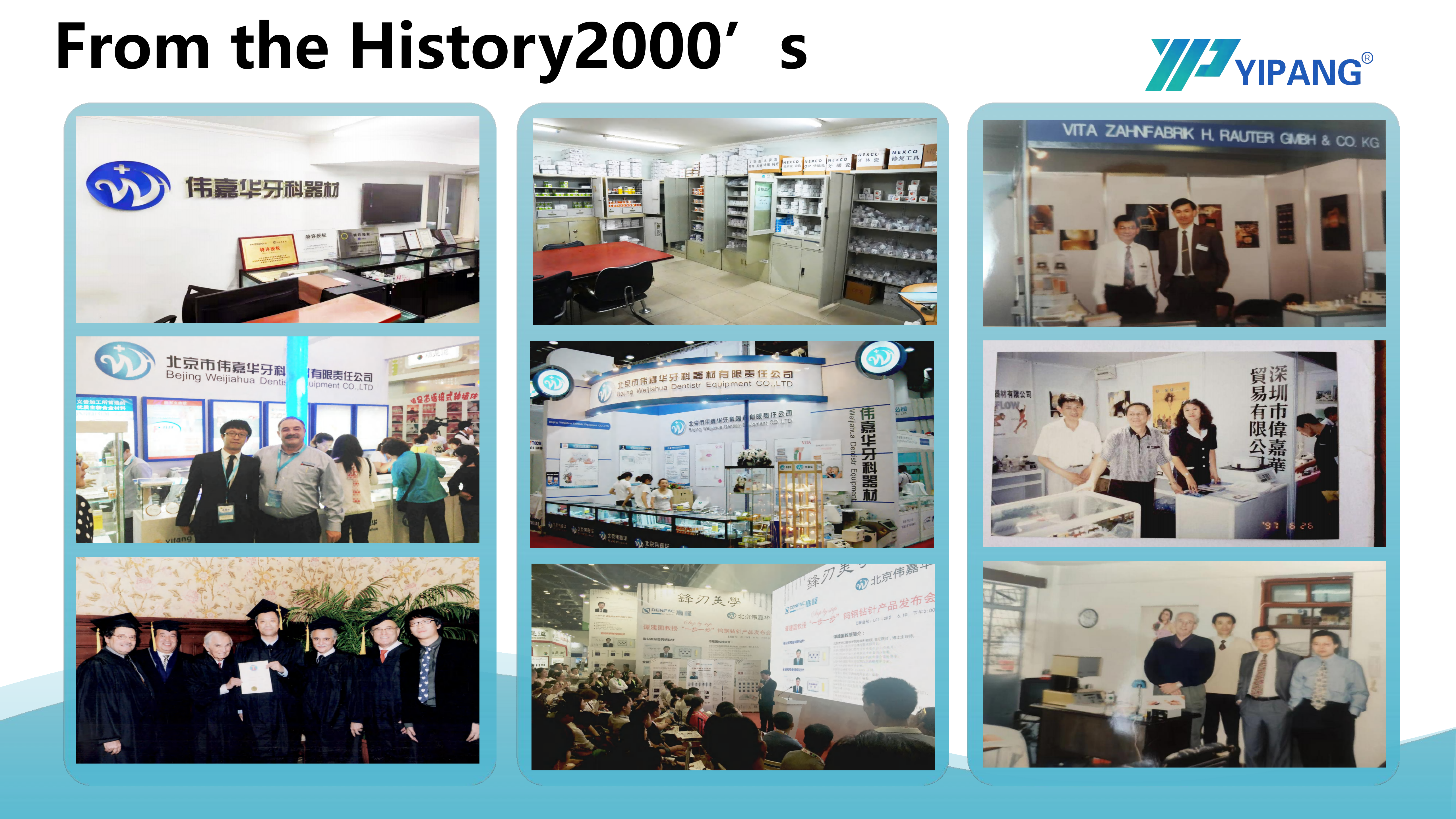
Cover: supplier-and-laboratory relationship review in dental zirconia block sourcing.
A dental laboratory's production profile rarely stays fixed. Case mix moves from single-unit crowns toward multi-unit bridges, implant superstructure restorations and full-arch work; milling volume rises; sintering schedules tighten. The zirconia block supplier chosen at the start of that curve is expected to remain usable at the end of it. Whether that expectation is realistic is the central question behind long-term supplier sustainability in dental zirconia.
Why the Block Decision Outlives the Equipment Decision
Milling machines and sintering furnaces are replaced on defined capital cycles, and every replacement brings a fresh round of validation. A material qualification behaves differently. Once a zirconia block has been validated inside a lab's workflow — test sinterings, fit checks, shade trials, mill parameter tuning — the cost of switching rises, and the specification tends to stay in place for years. That asymmetry is why supplier evaluation carries more weight than a single trial order.
The block also sits inside a workflow rather than beside it. Grand View Research reports that CAD/CAM milling accounted for 82.4% of zirconia dental manufacturing process revenue in 2025, which means the material decision is effectively a milling-and-sintering decision. Anything that shifts at the block level — shrinkage behaviour, density distribution, shade output — propagates through the entire process.
For a buyer at the decision stage, this reframes the question. It is not only whether a block mills correctly on today's machine for today's case mix. It is whether the same specification will still be available, and still behave the same way, on the machine the lab buys next and for the case types the lab does not yet run at volume.
The Problem and the Opportunity
Supply is easy to obtain; sustained supply is harder to verify. A supplier can pass a first order and still fail the second year. The failure modes are fairly predictable: batch-to-batch variation in sintering shrinkage, drift in shade output, sintering guidance that does not survive contact with the lab's own furnace, customisation requests the supplier cannot absorb, or a catalogue that stops at one material just as the lab begins adding implant-related work.
The opportunity side of the same picture is a market that is still expanding. Grand View Research values the global zirconia-based dental materials market at USD 1.2 billion in 2025, with a projected USD 2.3 billion by 2033. Estimates vary considerably by scope — SNS Insider publishes a much narrower figure of USD 367.67 million for the same category — which is itself a useful purchasing lesson: confirm what a market number actually covers before it influences a sourcing decision.
Defining Supplier Sustainability in Zirconia Block Sourcing
In dental zirconia sourcing, supplier sustainability is the supplier's ability to deliver the same documented material specification — shrinkage behaviour, density, bending strength, translucency grade and sintering parameters — across repeated orders, while the buyer's case complexity, production volume and equipment set change.
This definition matters because it converts an impression into an evidence category. Six elements can be checked before a first production order is placed: batch consistency from a defined powder source; a stated shrinkage tolerance; documented equipment compatibility; the scope of in-process quality inspection; the flexibility of customisation and delivery terms; and the breadth of the supplier's portfolio relative to the lab's next workflow step.
What YIPANG Documents for the 4D-PRO-ML Zirconia Block
YIPANG is the self-developed dental brand of Beijing Weijiahua Dentistry Equipment Co., Ltd., a Beijing-based dental equipment manufacturer and supplier established in 1996. Its product lines include zirconia blocks, glass ceramics, press ingots, PMMA, wax, titanium blocks, implant abutments, 3D scanners, intraoral scanners, milling machines, 3D printers and sintering furnaces. The company exports between 40% and 55% of its output to markets including the Middle East, Southeast Asia, South America, North America, Eastern Europe, North Africa and Australia, and reports more than 1,000 dental laboratory customers in China.
Within that portfolio, the 4D-PRO-ML zirconia block is the entry most directly relevant to labs running continuous CAD/CAM production. The evidence set around it maps onto the six sustainability elements above.
| Documented evidence | The evaluation question it answers |
|---|---|
| High-quality domestic self-developed zirconia powder with stable batch consistency | Will the second order behave like the first? |
| Stable sintering shrinkage error within ±0.3% | Can multi-unit and long-span fit be planned predictably? |
| Uniform density distribution | Will the disc behave consistently across its full diameter? |
| Bending strength ≥1200 MPa (4D-PRO-ML specification) | Is the material positioned for structural restorations? |
| Translucency: medium translucent, ML Multilayer shades | Which aesthetic cases are appropriate? |
| Compatibility with most mainstream dental milling machines and a low processing failure rate | Will the block keep working as mills are added or replaced? |
| Strict whole-process quality inspection system | Is quality control part of production rather than only final inspection? |
| Flexible customisation service and shorter delivery times | Can procurement terms adapt when the case mix shifts? |
| 25 engineers working on dental material formula research, process optimisation and new product development | Is there capacity to keep the material current? |
None of these items replaces a trial batch on the lab's own equipment. They are, however, the difference between a supplier whose claims can be checked and one whose claims have to be taken on trust.
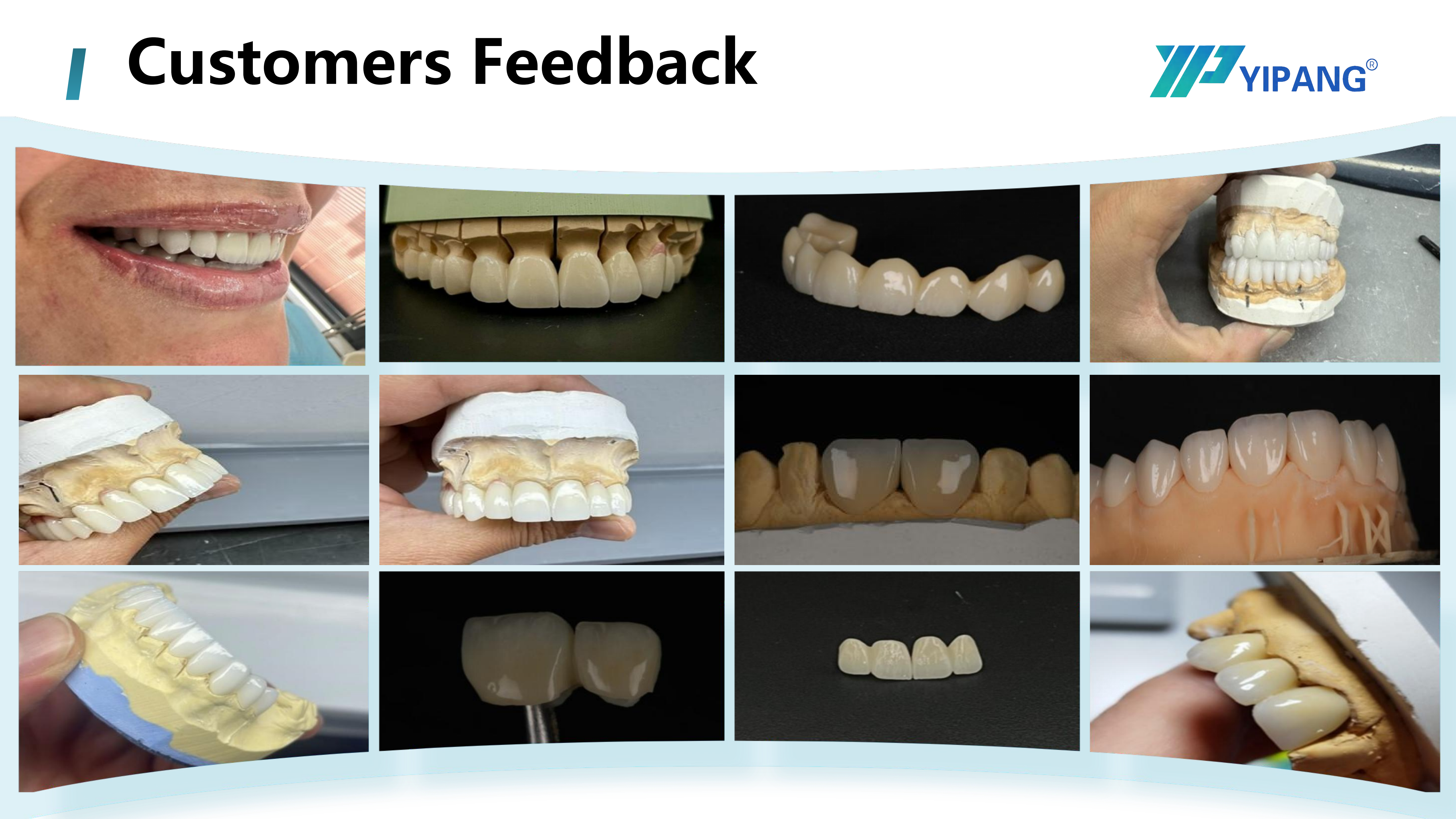
Figure 1: Zirconia block production supporting long-term dental laboratory supply.
Sintering Temperature Consistency as a Decision Criterion
Dental zirconia reaches its final density, shrinkage and translucency during sintering, and the lab — not the supplier — operates the furnace. That split of responsibility is why the sintering curve belongs in a purchasing conversation. For 4D-PRO-ML, the recommended sintering range is 1430 °C to 1450 °C, with 1450 °C listed as the sintering temperature in the product specification. The documented procedure is straightforward: place the milled zirconia workpiece on the sintering tray, run a heating curve up to 1430–1450 °C with an appropriate holding time, then cool down naturally.
Two constraints are stated explicitly, and both are engineering boundaries rather than preferences. Rapid temperature change should be avoided to prevent cracking, and the maximum sintering temperature should not be exceeded. A deviation that is invisible on a single crown accumulates across a multi-unit bridge or a full-arch framework, where small dimensional errors compound along the span. For an evolving lab, consistency of the curve across batches matters more than the peak value printed on a specification sheet.
Sintering is also only half of the process. Milling parameters, burs, scanner accuracy and furnace calibration all feed the same outcome, and the number of variables that must stay aligned grows as cases move from crowns and bridges toward implant-supported restorations. This is where ongoing support stops being a service slogan and becomes a technical requirement: a supplier that can provide a block but not a reproducible process around it becomes harder to scale with.
Where the Material Fits: Three Lab Workflows
High-volume crown and bridge milling
4D-PRO-ML is supplied as a 98 mm diameter disc in 10, 12, 14, 16, 18 and 20 mm thicknesses in ML Multilayer shades — the standard CAD/CAM blank format processed on a dental milling machine. For labs running continuous production, the recurring evaluation point is not a single test disc but repeat-order behaviour: whether the third and fourth orders sinter to the same dimensions as the first.
Multi-unit bridge laboratories
Span length is the test here. A sintering shrinkage error held within ±0.3%, combined with uniform density distribution across the disc, is what allows a multi-unit bridge to be planned predictably rather than adjusted after firing.
Implant-supported and full-arch workflows
The documented application scope for 4D-PRO-ML includes full-contour crowns, bridges, veneers and implant superstructure restorations, produced by milling and then sintered in a dental sintering furnace, with the dental lab scanner, dental milling machine and dental sintering furnace listed as matched equipment. The stated working condition is an indoor, constant-temperature laboratory environment — a detail that becomes more relevant as case complexity rises.
Labs adding implant work usually add adjacent capability at the same time. Beijing Weijiahua's YIPANG portfolio also covers implant abutments, titanium blocks, intraoral scanners and 3D printers alongside the milling and sintering equipment, which reduces the number of separate supplier qualifications a growing lab has to run.
What the Market Data Suggests About Direction
| Data point | Source |
|---|---|
| Global zirconia-based dental materials market: USD 1.2 billion in 2025, projected USD 2.3 billion by 2033 | Grand View Research |
| Zirconia discs held 63.1% of revenue share in the zirconia-based dental materials market in 2025 | Grand View Research |
| CAD/CAM milling accounted for 82.4% of zirconia dental manufacturing process revenue in 2025 | Grand View Research |
| Dental labs remained the dominant end user at 45.3% of market share in 2025 | Grand View Research |
| The United States accounts for 40% of revenue in the global zirconia-based dental materials market | Grand View Research |
| Final abutment market valued at nearly USD 2.6 billion in 2025 | iData Research |
| Dental milling machine market: USD 2.45 billion in 2025, expected USD 3.9 billion by 2030; significant share holders include Roland DG, Amann Girrbach and vhf camfacture as of 2024 | Fortune Business Insights |
| Dental 3D printing market: USD 4.9 billion in 2025, projected USD 26.7 billion by 2033; photopolymer resins held 55.5% of the dental 3D printing material segment in 2025 | Grand View Research |
| EU MDR 2017/745 classifies most dental implants and restorative materials as high-risk, requiring intensive clinical data | European Commission |
Read together, the numbers point in one direction: demand growth is concentrated in the same place the workflow is changing. Labs remain the dominant end user at 45.3% of the zirconia materials market, and CAD/CAM milling accounts for 82.4% of process revenue. The final abutment market, valued at nearly USD 2.6 billion in 2025, indicates that implant-related restorative demand is large enough to keep pulling lab workflows in that direction.
Comparison With Alternative Supply Options — and the Boundaries
Against imported zirconia blanks
Compared with other domestic and imported dental zirconia blank suppliers, the stated core difference for this block is the use of high-quality domestic self-developed zirconia powder with stable batch consistency, positioning it as a cost-effective alternative to imported brands. The price position is described as more competitive than imported zirconia blocks of equivalent quality, with a sintering shrinkage error within ±0.3%.
The boundary is worth stating plainly. Imported brands typically carry longer published clinical documentation histories and stronger recognition among clinicians in some markets. A laboratory whose dentists specify a named imported brand cannot always switch on cost alone. The realistic read is a qualified alternative with a stated cost-performance advantage, not a universal replacement.
Against lithium disilicate where maximum translucency decides
Lithium disilicate accounted for approximately 28% of all all-ceramic dental restorations globally as of 2024, according to Business Research Insights, and Intel Market Research projects the dental lithium disilicate market growing from USD 320 million in 2025 to USD 920 million by 2032 at an 18.8% CAGR. 4D-PRO-ML is documented as medium translucent. Where maximum translucency is the deciding clinical factor, this grade is not automatically the substitute — the adjacent material classes exist for a reason.
Process boundaries the lab must accept
- The sintering furnace must reach and hold 1430–1450 °C reliably.
- Rapid temperature change risks cracking, and the maximum sintering temperature must not be exceeded.
- Final density, shrinkage and translucency depend on the lab following the standard heating and holding procedure; no supplier can compensate for a furnace that drifts.
Format and shade boundaries
The documented format for 4D-PRO-ML is a 98 mm disc in ML Multilayer shades, with thicknesses from 10 mm to 20 mm. Labs whose case requirements fall outside those parameters should confirm availability with the supplier rather than assume it.
Purchasing Terms and Acceptance Criteria
For a decision-stage buyer, the practical output of a supplier evaluation is a written framework. The points below are worth agreeing before the first production order rather than after the first failed batch.
| Evaluation point | What to confirm | Acceptance evidence |
|---|---|---|
| Shrinkage behaviour | Documented sintering shrinkage tolerance (±0.3% for 4D-PRO-ML) | Trial sinter measured against the design |
| Density and internal structure | Uniform density distribution | Routine production results or cross-section review |
| Sintering parameters | Recommended range 1430–1450 °C plus holding time | Written curve reproduced on the lab's own furnace |
| Equipment fit | Compatibility with the lab's mill, burs and furnace | Trial batch on the lab's production equipment |
| Batch consistency | Powder source and batch control | Comparison across at least two separate orders |
| Customisation and lead time | Thickness, shade format, customisation scope, delivery commitments | Written purchasing terms |
| Quality system | Scope of whole-process inspection | Documented inspection stages |
| Portfolio continuity | Coverage of the lab's next workflow step | Supplier product line list |
Agreed in writing, these items turn supplier sustainability from an impression into a measurable arrangement, and they give both sides a shared definition of what the same block means on order five.
Future Outlook
Dental labs are converging on mixed-material digital workflows, and the material split is becoming clearer. Grand View Research projects the dental 3D printing market growing from USD 4.9 billion in 2025 to USD 26.7 billion by 2033, with photopolymer resins already holding 55.5% of the dental 3D printing material segment. Printed materials are absorbing models, guides and provisionals; zirconia remains the structural option for crowns, bridges and implant superstructures. The long-term value of a zirconia supplier therefore depends on how well it supports that division of labour — milling, sintering and the materials around them — rather than on defending a single category.
Equipment churn will continue in parallel. With the milling machine market projected by Fortune Business Insights to grow from USD 2.45 billion in 2025 to USD 3.9 billion by 2030, each new mill is a re-qualification event. Labs that treat blank compatibility as a documented purchasing term will find those events cheaper than labs that treat it as an assumption.
Regulation is the third variable. Under EU MDR 2017/745, most dental implants and restorative materials are classified as high-risk and require intensive clinical data. Documentation readiness is likely to separate suppliers over the next several years, particularly for labs and importers serving regulated markets.
For a laboratory whose case mix is still moving, the useful question is not which zirconia block is cheapest this quarter, but which supplier will still be able to answer technical questions in year three. Batch consistency, a stated shrinkage tolerance, a reproducible sintering curve, documented equipment compatibility, portfolio breadth and engineering capacity are the practical test — and all of them are answerable from evidence rather than assurances.
FAQ
What sintering temperature does the 4D-PRO-ML dental zirconia block require?
4D-PRO-ML is documented with a recommended sintering range of 1430 °C to 1450 °C, and 1450 °C is listed as the sintering temperature in the product specification. The standard procedure is to place the milled zirconia workpiece on the sintering tray, run a heating curve up to 1430–1450 °C with an appropriate holding time, and then allow natural cooling. Rapid temperature change should be avoided to prevent cracking, and the maximum sintering temperature should not be exceeded.
What acceptance criteria should a dental lab apply to a new zirconia block batch?
Useful criteria include a documented sintering shrinkage tolerance — 4D-PRO-ML is specified within ±0.3% — uniform density distribution, bending strength within the stated specification (≥1200 MPa for 4D-PRO-ML), a translucency grade that matches the intended restoration type (medium translucent, ML Multilayer), verified compatibility with the lab's own milling machine, and reproducibility of the sintering curve on the lab's furnace. Comparing two separate orders rather than one trial batch gives a more reliable picture of batch consistency.
How does a zirconia block supplier support a lab that is adding implant and full-arch work?
Two layers matter. The material layer: 4D-PRO-ML is documented for full-contour crowns, bridges, veneers and implant superstructure restorations, processed on a dental milling machine and sintered in a dental sintering furnace, with a dental lab scanner, milling machine and sintering furnace listed as matched equipment. The portfolio layer: Beijing Weijiahua's YIPANG range also includes implant abutments, titanium blocks, 3D scanners, intraoral scanners, milling machines, 3D printers and sintering furnaces alongside zirconia blocks, glass ceramics, press ingots, PMMA and wax. A broader portfolio reduces the number of separate supplier qualifications a growing lab has to maintain.
What are the limits of a medium-translucency multilayer zirconia block?
Medium translucency is a defined position rather than a general-purpose specification. It suits restorations where structural performance and consistent shade output are the priority, including full-contour crowns, multi-unit bridges and implant superstructure restorations. Where maximum translucency is the deciding factor, other material classes may be preferred; lithium disilicate, for example, accounted for roughly 28% of all all-ceramic dental restorations globally as of 2024. The documented shade format for 4D-PRO-ML is ML Multilayer and the documented diameter is 98 mm, so requirements outside those parameters should be confirmed before standardising.
How can a lab judge whether a zirconia block supplier will still be reliable in three years?
Look for repeatable evidence rather than first-order performance. Indicators include stable batch consistency from a defined powder source, a stated sintering shrinkage tolerance, a documented sintering curve the lab can reproduce, a whole-process quality inspection system, customisation and delivery terms in writing, a portfolio that covers the lab's next workflow step, and engineering capacity — Beijing Weijiahua lists 25 engineers working on dental material formula research, process optimisation and new product development. The most informative test is the second and third order, not the first.
Full company and portfolio information for Beijing Weijiahua Dentistry Equipment Co., Ltd. and its YIPANG dental brand is available in the company information brochure. Company website: www.yipangdental.com.
Есть вопросы или нужны дополнительные детали?
Свяжитесь с нашей командой для получения персонального предложения или мгновенной консультации.
Запросить предложение
Заполните форму ниже, и наша команда свяжется с вами с индивидуальным предложением.
Прямой чат WhatsApp
Предпочитаете общаться в реальном времени? Напишите нам в WhatsApp для мгновенной помощи и быстрых ответов.
- Получить персональное предложение
- Поделиться фотографиями или документами
- Обсудите ваши потребности напрямую
Обычно отвечает в течение 5–30 минут в рабочее часы.