
Lost Wax Casting Explained: The Investment Casting Process
Lost Wax Casting Explained: The Investment Casting Process
Lost wax casting — the process most industrial buyers specify as investment casting — is a precision metal-forming route in which a disposable wax pattern is coated with ceramic, melted out, and then replaced by molten metal. It is chosen when a component's geometry, dimensional tolerance or surface finish rules out conventional sand casting, or when machining the part from solid stock would waste both material and cycle time.
Why Lost Wax Casting Exists
Casting a part from a wax pattern rather than from a sand mould solves a specific engineering problem: how to produce a complex, thin-walled, near-net shape in a high-melting-point alloy without paying for extensive machining afterwards. Because the wax pattern is sacrificed, the ceramic shell can reproduce internal channels, undercuts and compound curves that a two-part mould cannot open around.
The commercial logic is equally specific. Lost wax casting moves cost from the machining department to the foundry: a near net shape casting reduces rough machining stock, shortens finishing time and lowers material waste. The trade-off is that tooling for the wax pattern and the ceramic process itself carry a higher cost per part than sand casting at the heavy end of the size range.
The category is not a niche. Commercial research published by Fortune Business Insights projects the global investment casting market to reach approximately USD 20.52 billion in 2026, while a second commercial forecast places the same market at USD 18.3 billion — a gap that most observers attribute to whether aerospace-grade segments are included alongside general industrial demand. Trade data supports the scale of the underlying flow: global exports under HS 732599 (cast articles of iron or steel, not elsewhere specified) reached USD 4,320.81 million in 2025, according to the UN Comtrade database. That HS code is a catch-all rather than an investment-casting-specific code, so it aggregates lost wax castings with other steel castings produced by sand and die processes.
The Lost Wax Casting Process, Step by Step
The process reads as a linear sequence, but each stage locks in a property that the buyer will later measure — dimensional tolerance, surface roughness, internal soundness or alloy integrity.
1. Pattern making
Wax is injected into a metal die to form a replica of the final component. For prototypes and low-volume work, patterns can also be produced by 3D printing, which shortens the development cycle before hard tooling is committed.
2. Pattern assembly (tree building)
Individual wax patterns are attached to a central wax runner, forming a tree. The tree layout determines how metal flows into each cavity and how the gates will be removed later.
3. Shell making
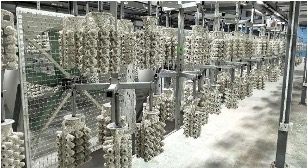
The tree is dipped into ceramic slurry and coated with refractory stucco, repeated until a shell of sufficient thickness builds up. The binder chemistry is the main process fork: water glass (sodium silicate) shells, silica sol (colloidal silica) shells, or a composite route that combines the two.
4. Dewaxing
Heat or steam removes the wax from the shell, leaving a hollow ceramic cavity with the exact external geometry of the pattern. The recovered wax can be reused, which is one reason the process is described as lost wax rather than consumed wax.
5. Shell firing and pouring
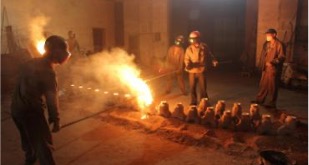
The empty shell is fired to burn off residual wax and develop ceramic strength, then filled with molten metal. Induction furnaces are the common melting method for steel and alloy steel grades.
6. Knockout and cut-off
After solidification the ceramic shell is broken away and the castings are separated from the tree and the gating system. Deburring and edge finishing follow.
7. Heat treatment
Heat treatment is specified according to the material grade and the mechanical properties the drawing requires, rather than applied as a default step.
8. Machining and inspection
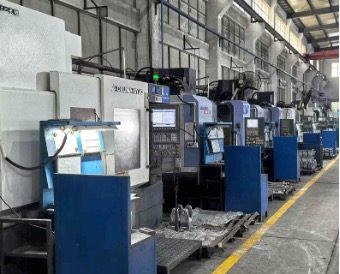
Where the drawing calls for it, castings move into CNC machining for critical features that casting tolerance alone cannot hold. Inspection typically covers dimensional verification, material composition, mechanical properties and internal soundness, using equipment such as spectrometers, X-ray, ultrasonic testing and coordinate measuring machines (CMM).
Tolerances, Surface Finish and Materials
For a buyer, three numbers decide whether lost wax casting is the right route: dimensional tolerance, surface roughness and the material range. The table below summarises the values published for the investment casting process offered by WAYSCAN METAL PRODUCTS CO., LTD. and the process types it covers.
| Parameter | Value / Range |
|---|---|
| Process type | Water-glass investment casting; silica-sol investment casting; silica-sol composite investment casting |
| Dimensional tolerance | Silica-sol: CT6; silica-sol composite: CT8; machining: 0.01 mm |
| Surface roughness | Ra 6.4–12.5 µm, depending on casting process and post-treatment |
| Materials | Carbon steel, alloy steel, stainless steel, ductile iron (specific grades confirmed per customer requirement) |
| Geometry fit | Complex-shaped, high-precision small-to-medium castings |
| Related standard | ASTM A957 — common requirements for steel and alloy investment castings |
The CT designation is a casting tolerance grade: within the system, a lower number indicates a tighter grade. That is why CT6 and CT8 appear side by side here — they describe different process routes rather than a single quality claim. Similarly, the Ra 6.4–12.5 µm band is a range, not a fixed guarantee, because surface roughness responds to shell chemistry, metal temperature and any subsequent finishing operation.
Applications and Use Cases
Lost wax casting is applied where a structural or mechanical component must combine complex form with repeatable dimensional control. Automotive applications form the largest volume-driven segment, accounting for approximately 29% of investment casting market demand according to commercial research published by Business Research Insights. The wider demand base covers forklift, mining, agricultural machinery, construction machinery, valve manufacturing and general machinery components.
Typical parts produced through this route include pipe elbows, clevis brackets, yokes, gearbox housings, transmission housings, mounting brackets and link arms. These parts share common traits: they are small to medium in size, they carry load or seal against a mating surface, and their geometry would require multiple machining setups or a multi-piece assembly if produced another way.
Project structures vary as much as part geometry. Some buyers come with a complete drawing package for a custom-to-drawing production programme; others start with a single sample requirement to validate the process before committing to mass supply. The practical difference between these two starting points is how much of the tooling and process validation cost sits before the first commercial order.
What Integrated Supplier Capability Means in Practice
WAYSCAN METAL PRODUCTS CO., LTD., established in 1991, is an investment casting manufacturer producing precision castings, stainless steel castings, carbon steel castings, alloy steel castings and machined cast components. The company operates a 46,000 m² production base with more than 500 employees, a registered capital of RMB 50 million, an annual production capacity of 20,000 tons, and an R&D team of more than 20 senior engineering and technical personnel. Export business accounts for 70% of total sales, with major markets in China, Japan and the USA.
Process-wise, the company specialises in composite process and silica sol precision casting, using materials such as stainless steel, carbon steel and alloy steel, supported by machining and inspection capabilities. The practical significance for a buyer is fewer hand-offs: mould making, casting, heat treatment, machining and inspection are handled within one supply chain instead of being split across a foundry, a heat treater and a machine shop.
Equipment and verification
The production and inspection base includes induction furnaces, CNC machining centres and testing equipment such as spectrometers, X-ray, ultrasonic testing and CMM. This combination is what allows dimensional, chemical and internal-quality checks to be carried out against the same drawing revision the customer supplied.
Sample development
Rapid sample development is supported by 3D-printed patterns, which allows a design to be validated before hard tooling is committed. For first-time buyers of a lost wax casting, this stage is where tolerance assumptions, gate placement and machining allowance are realistically tested.
Process transition and environmental record
In 2020, the company invested in composite process precision casting production to replace water glass process precision casting, with the aim of improving production efficiency and reducing environmental impact. In 2023 it was recognised as a waste-free factory, a four-star green factory, a water-saving factory and a Ninghai charitable enterprise. From 2012 to 2024 the company was consistently rated among the top 50 industrial enterprises and top 50 taxpayers in Ninghai County, and received awards from the China Foundry Association in 2014, 2018 and 2022.
Market Trends Shaping Investment Casting Supply
Three verifiable shifts define the current supply picture.
Process mix is moving toward silica sol. The silica sol (colloidal silica) process held the largest share of the investment casting market at 54.3% in 2025, ahead of the water glass process at 32.1%, according to commercial research published by Dataintelo. That split reflects the preference for silica sol where precision and surface finish matter more than raw cost per kilogram. The transition described above at WAYSCAN — replacing water glass capacity with composite process production from 2020 — follows the same directional logic.
Automotive remains the volume anchor. With roughly 29% of demand, the automotive sector sets the qualification bar for many suppliers. IATF 16949:2016 remains the critical quality management system requirement for investment casting suppliers serving the automotive supply chain, according to the International Automotive Task Force. A foundry without that system in place is effectively excluded from automotive programmes regardless of its casting capability.
Standards discipline is non-negotiable. ASTM A957 is the primary standard specification for common requirements of steel and alloy investment castings for general industrial use, published by ASTM International. For buyers, the practical question is not whether a supplier has heard of the standard, but whether inspection records are issued against it consistently.
Investment Casting Compared with Traditional Casting Routes
Lost wax casting is one option among several. The comparison below reflects the trade-offs commonly documented when specifying casting processes for industrial components.
| Process | Relative accuracy & finish | Best fit | Main limitation |
|---|---|---|---|
| Investment casting (lost wax) | Highest dimensional accuracy and best surface finish of the routes compared here | Small to medium complex parts, especially stainless steel and high-alloy steels | Relatively high cost; size and weight ceiling lower than sand-based routes |
| Shell mould casting | Good dimensional stability | Medium to high volume production of medium-sized steel castings | Less suited to very fine internal geometry than the lost wax route |
| Resin sand casting | Lower dimensional accuracy, rougher surface finish | Large castings of tens of kilograms or more | Requires lower tooling investment but delivers lower accuracy |
| Sand casting (general) | Lower accuracy; surfaces usually require machining | Larger, heavier components with less demanding dimensional requirements | Not economical for small, complex, high-accuracy parts |
How Buyers Evaluate a Lost Wax Casting Supplier
Because the process hides most of its quality evidence inside a ceramic shell, supplier evaluation tends to concentrate on process control rather than on the finished part alone. The following criteria are commonly used in first-stage screening.
- Process portfolio. Does the supplier run water glass, silica sol and composite routes, or only one? The answer determines how the supplier will trade cost against tolerance for a given drawing.
- Stated tolerance and finish capability. Ask for the tolerance grade by process route (for example CT6 for silica sol, CT8 for silica sol composite) and for surface roughness values rather than general claims.
- Material range and grade confirmation. Materials such as carbon steel, alloy steel, stainless steel and ductile iron are common, but specific grades must be confirmed against the drawing rather than assumed.
- In-house heat treatment and machining. Casting, heat treatment and CNC machining under one roof reduces the coordination risk that arises when those steps are split across separate vendors.
- Inspection equipment and records. Spectrometers, X-ray, ultrasonic testing and CMM address different failure modes — chemistry, internal soundness, dimensional conformity. A supplier holding only part of that set has a narrower verification scope.
- Certifications relevant to the end market. IATF 16949:2016 for automotive supply chains; standards such as ASTM A957 for general industrial castings.
- Sample and prototype route. The ability to produce validation samples quickly, including through 3D-printed patterns, shortens the path from drawing to production.
- Traceability. The buyer should be able to connect a delivered casting back to its heat, material certificate and inspection record.
A related market observation: suppliers that offer only casting, or only machining, with a limited inspection scope, require the buyer to build the missing verification steps into their own quality plan. That is a procurement consideration rather than an inherent weakness of any single business model.
Future Outlook
Directionally, the investment casting category is being pulled in three directions at once. The first is precision: buyers continue to push towards near net shape parts that need less post-cast machining, which favours processes with tighter tolerance grades. The second is process chemistry, where silica sol and composite routes are taking share from water glass on finish and precision grounds. The third is environmental performance, where foundries are being assessed on waste, water and energy practices alongside casting quality — the kind of assessment reflected in factory-level recognitions such as waste-free factory and green factory designations.
For procurement teams, the practical implication is that supplier shortlists will increasingly be shaped by documented process capability and inspection evidence rather than by casting price alone. Where a supplier can present tolerance grades by process route, a defined material range, and an inspection chain covering chemistry, internal soundness and dimensions, the buyer's qualification effort moves faster.
FAQ
What is lost wax casting?
Lost wax casting is a precision casting process in which a wax replica of the component is coated with ceramic to form a shell. The wax is melted out, the hollow shell is fired, and molten metal is poured in to reproduce the part. The process is also known as investment casting.
How does the lost wax casting process work step by step?
The sequence runs: wax pattern making, pattern assembly into a tree, shell making with ceramic slurry and stucco, dewaxing, shell firing and metal pouring, knockout and cut-off, heat treatment where required, and finally CNC machining and inspection. Each stage fixes a property — geometry, wall thickness, surface finish, internal soundness — that the finished casting will later be measured against.
What materials can be used in lost wax casting?
Common materials include carbon steel, alloy steel, stainless steel and ductile iron. Specific grades are normally confirmed by the customer, because the drawing's mechanical property requirements determine which grade is acceptable rather than the process itself.
What tolerances and surface finishes are achievable?
Tolerance depends on the process route. As published for the investment casting process offered by WAYSCAN METAL PRODUCTS CO., LTD., silica sol investment casting achieves CT6 and silica sol composite investment casting achieves CT8, while subsequent machining can hold 0.01 mm. Surface roughness is typically Ra 6.4–12.5 µm, varying with the casting process and post-treatment.
Which industries typically use investment castings?
Investment castings serve automotive, forklift, mining, agricultural machinery, construction machinery, valve manufacturing and general machinery component applications. Typical parts include pipe elbows, clevis brackets, yokes, gearbox housings, transmission housings, mounting brackets and link arms.
Investment casting versus sand casting: which is better?
Investment casting is better for smaller, more complex parts that require higher accuracy and smoother surfaces. Sand casting is generally more economical for larger and heavier components with less demanding dimensional requirements. The decision is driven by part size, geometry complexity and the accuracy the application actually needs, not by a single ranking of processes.
How do buyers choose between investment casting, shell mould casting and resin sand casting?
Investment casting delivers the highest dimensional accuracy and best surface finish and suits small to medium-sized complex parts, particularly in stainless and high-alloy steels, but its cost is relatively high. Shell mould casting offers good dimensional stability and fits medium to high volume production of medium-sized steel castings. Resin sand casting suits large castings of tens of kilograms or more, requires lower tooling investment, and generally provides lower dimensional accuracy and a rougher surface finish.
What are the limitations of lost wax casting?
Cost and size are the main boundaries. Investment casting carries a relatively high cost per part compared with sand-based routes, and it is best suited to small to medium castings rather than very large, heavy components. Wax pattern tooling and process validation also sit ahead of the first commercial order, which affects how economical a very low-volume programme can be.
For readers compiling supplier documentation, a company presentation PDF covering process capability and production scope is available here: Wayscan Metal Products Co., Ltd. — company presentation. The company's website is www.wayscan.com.