
Low Flow Meter Compliance Decoded: ATEX and IP65 in Procurement
Low Flow Meter Compliance Decoded: ATEX and IP65 in Procurement
ATEX and IP65 are installation permissions, not performance claims. For buyers of micro, mini and ultra low flow meters, reading them correctly changes what gets ordered — and what documentation has to arrive with it.
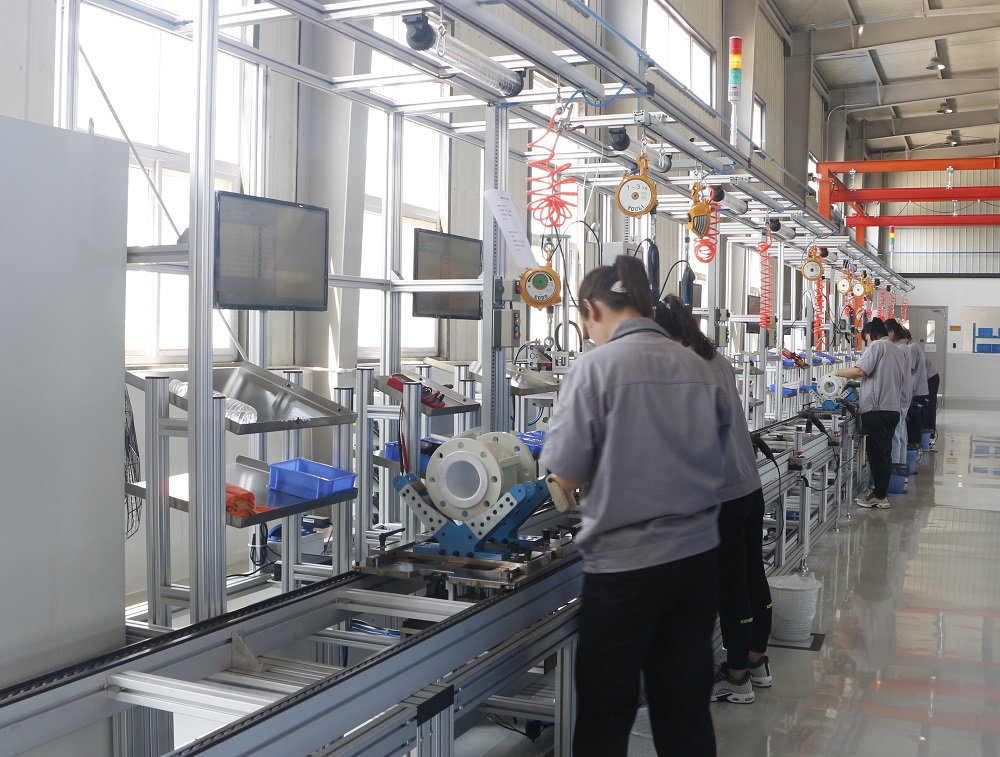
Assembly stage for low flow meters ahead of calibration and shipment.
A low flow meter able to resolve gas flows down to 2 sccm is still unusable in a Zone 1 area if its certification does not cover that zone. That single constraint explains why compliance belongs at the front of a procurement process rather than at the end of it. In power generation, petrochemical and fuel cell projects, the practical limit is rarely whether a miniature flow meter can measure a small flow. It is whether the exact unit being quoted — housing, cable entries, electronics and wetted materials included — is permitted in the environment where the measurement has to happen.
Two markings dominate those conversations: ATEX and IP65. They appear side by side in product literature so often that buyers begin to treat them as one qualification. They are not. ATEX describes where an instrument may be installed in relation to explosion risk. IP65 describes what the enclosure can withstand in terms of dust and water ingress. Neither marking says anything about accuracy, repeatability or long-term drift, and neither can be inferred from the other.
This reference breaks down what each qualification actually covers, how the two interact in three demanding applications, what documentation a buyer should hold before releasing a purchase order, and which limitations remain even when every certificate is in order.
The Gap Between a Brochure Claim and a Nameplate
Compliance failures in low flow metering rarely happen because a supplier holds no certification at all. They happen because the scope of the certification and the item being delivered do not match. Three mismatches account for most of them.
- Series versus variant. A certificate issued for a meter family does not automatically extend to a version with a different housing, display, cable gland or power supply. Selecting a variant late in the project can move the order outside the certified scope.
- Zone versus category. Equipment approved for a less demanding zone cannot be substituted into a more demanding one, even when measurement performance is identical.
- Enclosure rating versus installation condition. An IP rating is valid for the enclosure as tested, with the specified glands fitted and covers closed. Field modifications during commissioning can quietly invalidate it.
The cost of these mismatches is not measured in the price of the meter. It is measured in commissioning delays, repeat testing, engineering change orders and audit findings that surface long after the instrument has been installed.
The opportunity is straightforward. Treating compliance documents as a contractual deliverable — listed in the purchase order with the same weight as accuracy, range and lead time — is a low-cost way to protect a project schedule. In long-term supply relationships, it is also the difference between an instrument that can be re-ordered identically and one that has to be re-qualified every time it is purchased.
What ATEX Certification Actually Covers
ATEX is the European regulatory framework governing equipment intended for use in potentially explosive atmospheres. It is not a performance standard, and it does not rank instruments against one another. Its function is to place equipment into defined groups and categories and to tie permitted installation areas to the zone classification of the plant.
Zones and categories
Zone classification describes how often an explosive atmosphere is expected to be present. Zone 0 and Zone 20 cover continuous or long-period presence; Zone 1 and Zone 21 cover occasional presence during normal operation; Zone 2 and Zone 22 cover situations that are unlikely and short-lived. The 20/21/22 series applies to combustible dust, the 0/1/2 series to gas and vapour. Equipment certified for a lower-risk zone is not interchangeable with equipment certified for a higher-risk zone.
What to verify on a low flow meter
- Model coverage. The certificate should name the equipment actually being purchased, not only the product family.
- Temperature class. The permitted surface temperature must be compatible with both the process fluid and the ambient conditions at the installation point.
- Protection concept. Different protection methods are applied to instrumentation, and each carries its own installation rules that the plant must follow.
- Nameplate match. The marking on the delivered unit should correspond to the certificate, including any suffix that identifies the variant.
For a buyer, the practical test is simple: the certificate, the quotation and the nameplate should describe the same instrument. When they describe three slightly different instruments, the meter is not compliant yet — it is only compliant on paper.
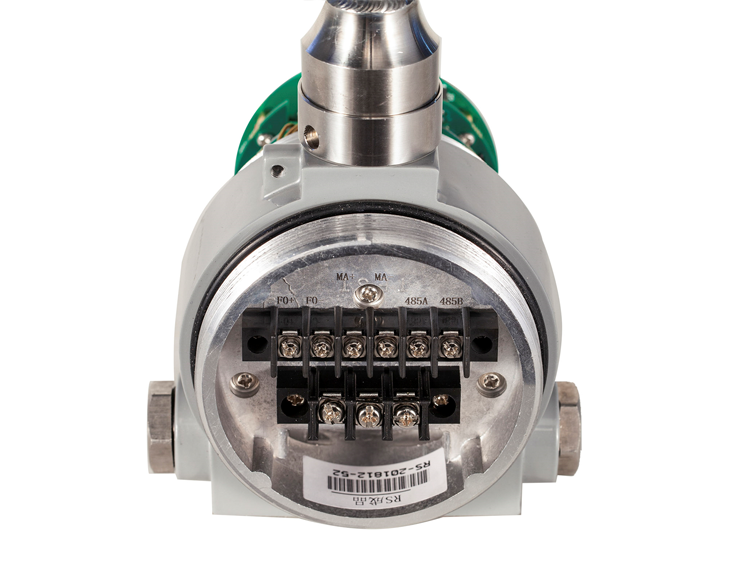
Clearly labeled wiring terminals reduce commissioning errors that are often misread as accuracy problems.
What IP65 Means — and What It Does Not
The IP code is a two-digit system describing how well an enclosure resists the ingress of solid objects and water. The first digit addresses solids and dust; the second addresses liquids. IP65 means the enclosure is dust-tight and protected against water projected by a nozzle from any direction.
That is a statement about the housing. It is not a statement about the measurement. A meter can be IP65 and still be entirely unsuitable for a hydrogen line, and a meter with excellent low-flow accuracy can fail an IP65 expectation because of an unsealed cable entry.
Three boundaries worth accepting up front
- IP65 is not immersion protection. Installations that may be flooded require a different rating level; IP65 does not cover sustained submersion.
- IP65 depends on the installation. The rating applies to the enclosure as tested, with the correct glands and covers in place. An open terminal cover or an undersized gland during commissioning compromises it.
- IP65 is not an area classification. It says nothing about explosion risk. Hazardous-area suitability is a separate qualification, documented separately.
Buyers comparing low flow meters on enclosure ratings alone are comparing one of the least differentiating specifications on the datasheet. The rating matters most when it is absent from a quotation for an application that clearly requires it.
How Compliance Requirements Play Out in Three Applications
Power generation
Low flow measurement in power plants appears in chemical dosing for water and steam chemistry, lube oil dosing, sampling systems and fuel skids. Explosion risk enters through hydrogen-cooled generator areas and natural gas handling, which is why area classification and enclosure protection frequently appear in the same specification. Outdoor and washdown plant rooms turn the enclosure rating into a genuine installation constraint rather than a marketing line, and compliance documents typically feed directly into the plant safety file.
Petrochemical processing
Injection and sampling systems are where low flow meters do their most sensitive work in petrochemical plants: additive dosing, pilot gas, small-bore chemical injection and analyser sampling. Zone classification is often stricter here than in general process areas, and the meter is treated as part of a safety case rather than as an ordinary instrument. The certificate becomes an operating permit; without it, the measurement point cannot be commissioned at all.
Fuel cell and hydrogen systems
Fuel cell systems measure fuel, oxidant and coolant flows at low rates, frequently with tight turndown requirements. Hydrogen is a small, highly mobile molecule, so area classification attention applies to the enclosure and its connections as much as to the process line. Buyers in this segment should confirm two separate things for the exact configuration ordered: hazardous-area suitability and enclosure protection. Where differential pressure methods are used on small pipelines, ISO 5167:2022 remains the primary international standard for the measurement devices themselves and should be referenced when accuracy claims on small line sizes are evaluated.
Market Signals Behind Rising Low-Flow Compliance Scrutiny
The commercial context explains why compliance documentation has moved up the procurement agenda. The global flow meter market was valued at USD 10.64 billion in 2024, with Europe holding the largest regional share of over 35%, according to Grand View Research — a regional concentration that keeps European conformity expectations in front of suppliers selling worldwide.
Low-flow-specific segments are expanding alongside it. Thermal flow meters, which are essential for low gas flow rates, reached a market size of USD 1.73 billion in 2024 and are projected to reach USD 2.9 billion by 2035, based on Market Research Future data. Coriolis instruments, the technology most often chosen for high-precision low-flow liquid measurement, held a 26.77% share of the intelligent flow meter market in 2026 according to Fortune Business Insights. The broader microfluidic devices market, which includes micro flow sensors, was valued at USD 22.1 billion in 2024 and is growing at a CAGR of 12.2%, per P&S Intelligence.
Two structural trends reinforce the compliance angle. Grand View Research reports that the 2-inch and smaller pipe size segment is expected to see the fastest growth through 2030, driven by pharmaceutical and food and beverage demand — and small line sizes are exactly where instruments sit inside skids, cabinets and analyser houses with tight enclosure constraints. Separately, the flow chemistry market, which depends on precision low flow metering, is expected to reach USD 4.6 billion by 2032 at an 8.1% CAGR, according to Coherent Market Insights. On the supply side, Asia-Pacific is the largest flow meter market at USD 3.27 billion in 2025, with China contributing over 50% of regional demand, per Market Research Future — which means a growing share of installed low flow meters is manufactured in a region whose buyers increasingly need documentation that satisfies non-Asian conformity frameworks.
What a Compliance-Ready Supplier Relationship Looks Like
Silver Automation Instruments is a Nanjing-based instrumentation manufacturer founded in 2010 that produces flow, pressure, level and data logging instruments, with flow meters spanning Coriolis, thermal mass, electromagnetic, vortex, turbine and oval gear technologies. The company reports a 10,000 square metre factory, approximately 80 employees, a 20-person R&D team and an annual output of 60,000 units, with 95% of production exported and principal markets in Southeast Asia, South America and Africa.
Several published facts are directly relevant to compliance-oriented procurement. The company states that its products meet CE, ATEX and ISO9001 standards. Production capacity is stated at 2,000 units per month, with a typical production lead time of 10–12 working days and a minimum order quantity of 1 unit. Export activity recorded by Volza lists approximately 91 shipments to 36 international buyers in 2024, primarily in the mechanical appliances category. After-sales service includes remote support for troubleshooting and maintenance, which allows technical questions to be resolved without an on-site visit.
Product-level data matters as much as company-level statements. Published specifications for the manufacturer's micro thermal mass flow meters cover gas flow as low as 2 sccm. Its low flow Coriolis meters are stated at ±0.2% to ±0.5% accuracy for liquid measurement. Its micro oval gear flow meters are specified for oil flow as low as 0.5 ccm with viscosity tolerance up to 2,000 mPa.s — relevant to the positive displacement category, which Fortune Business Insights places at an 18% share for measuring low to moderate flow rates of viscous fluids such as oils and fuels.
For a buyer, the significance is procedural rather than promotional. A supplier that can state a certificate set, a calibration practice and a production lead time together is easier to write into a purchase order than one that offers only a performance claim. Instruction manuals shipped with the product and clearly labeled wiring terminals — both listed among the manufacturer's risk controls — reduce the commissioning errors most often misdiagnosed as instrument inaccuracy.
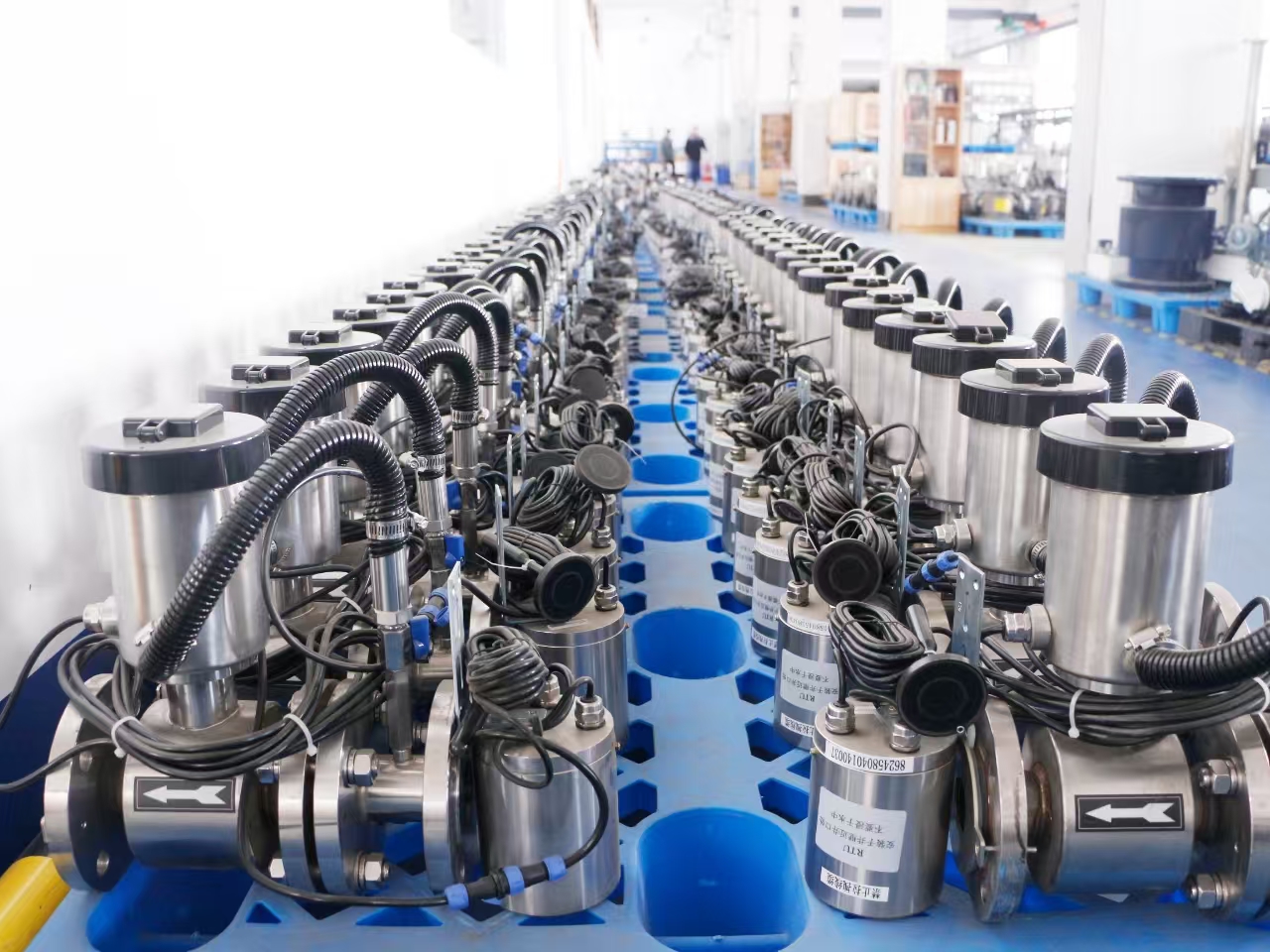
Packing stage: shipping documentation and export handling are part of the compliance deliverable.
Documentation Checklist for the Execution Stage
Once a model is selected, the execution-stage question is which documents should exist before the purchase order is released and which must travel with the shipment. The table below lists the documents most commonly requested for low flow meters going into explosive or harsh environments, what each one establishes, and the detail that most often goes unchecked.
| Document | What it establishes | What to check |
|---|---|---|
| Hazardous-area certificate or declaration | The equipment may be installed in the classified area concerned | Model and variant coverage, zone or category, temperature class, nameplate match |
| Declaration of conformity (CE) | Conformity with the applicable EU directives for the product | Product scope and the issuing legal entity |
| Quality system certificate | Factory process control under a recognised quality standard | Scope, validity period and issuing body |
| Calibration certificate | Traceability of the accuracy claim for the delivered unit | Calibration range and medium, uncertainty statement, date |
| Enclosure rating statement | The environmental protection level of the supplied enclosure | Whether it applies to the exact variant and gland configuration ordered |
| Installation and wiring manual | Correct commissioning, terminal identification and installation precautions | That it ships with the unit and matches the delivered configuration |
| Factory acceptance test report | Pre-shipment verification of agreed parameters | Whether it is optional or contractual, and whether witnessing is permitted |
| Packing and shipping documents | Export handling and customs clearance | Consistency with the agreed delivery term |
| Wetted-material documentation | Compatibility of the process-contacting materials | Grade match with the process specification |
One manufacturer's published purchasing terms show how these items are formalised in practice: a minimum order quantity of 1 unit, delivery terms including EXW, FOB and CIF, acceptance criteria covering pre-shipment calibration testing and visual inspection with an optional factory acceptance test, and payment terms of 100% T/T in advance. Buyers should read such terms against their own project requirements rather than treating them as standard across the category.
Comparing a Compliance-Ready Alternative with Incumbent Tier-1 Platforms
In the high-precision segment, Honeywell, Emerson and Siemens are identified by Mordor Intelligence as leading global tier-1 competitors, and Bronkhorst High-Tech is recognised as a dominant player in the ultra-low flow Coriolis market with a focus on laboratory and OEM applications. Buyers evaluating alternatives therefore usually compare an established tier-1 platform with a direct-from-factory option. The table below summarises the differences published by one manufacturer, Silver Automation Instruments, in its own comparison material.
| Comparison dimension | Tier-1 platform (as stated, e.g. Micro Motion) | Silver Automation Instruments |
|---|---|---|
| Price positioning | Stated as four to five times higher | Stated as lower price with stable quality |
| Delivery | Stated as several months | Typically within one month |
| Total cost of ownership | Higher | Stated at 75% lower total cost of ownership |
| Maintenance cost | Higher | Lower |
These figures are the manufacturer's own comparison data and should be treated as a starting point for evaluation rather than as an independent benchmark. What they usefully reveal is the shape of the trade-off: a tier-1 platform typically carries a price and lead-time premium, while a factory-direct alternative trades that premium for a different position on document depth, application familiarity and installed-base support.
Limitations buyers should accept before ordering
- Accuracy class is not custody-transfer class. The stated ±0.2% to ±0.5% accuracy of the manufacturer's low flow Coriolis meters is a process instrumentation figure for liquid measurement. Projects requiring fiscal or custody-transfer metering should evaluate against that requirement specifically.
- Company-level certification statements are not model-level certificates. A statement that products meet CE, ATEX and ISO9001 standards still requires the buyer to obtain the certificate covering the exact model and variant ordered.
- Lead-time advantages have boundaries. The stated 10–12 working day production lead time is typical for standard orders; a custom sensor range or output configuration extends it.
- Commercial terms may not suit every buyer. A minimum order quantity of 1 unit and EXW, FOB or CIF delivery terms are flexible on order size but do not provide the credit terms or delivered-duty arrangements some procurement departments require. Payment terms of 100% T/T in advance are a cash-flow consideration on larger projects.
- Remote support has a physical limit. Remote after-sales assistance covers troubleshooting and maintenance guidance; it does not replace on-site service where a plant's procedures require attendance.
- Performance depends on installation quality. Published risk controls identify accuracy deviation as a failure mode controlled by following installation precautions in the manual, and mis-wiring as a failure mode controlled by reading the manual and using clearly labeled terminals. Neither risk is eliminated by the instrument itself.
- Enclosure rating does not extend hazardous-area suitability. An IP65 enclosure and a hazardous-area approval are independent qualifications and must be verified separately for the ordered configuration.
Future Outlook
Three developments are likely to shape how ATEX and IP ratings are evaluated in low-flow procurement over the next several years.
First, the centre of gravity is shifting toward smaller lines. With the 2-inch and below segment projected to grow fastest through 2030, more low flow meters will be installed inside cabinets, analyser shelters and skids — environments where enclosure ratings and documentation discipline matter far more than they do on open process piping.
Second, clean energy applications will continue to expand the installed base. The global gas meter market reached USD 3.8 billion in 2023, supported by a shift toward natural gas and clean energy according to Grand View Research, and thermal mass flow controllers for semiconductor applications are projected to grow at a 4.5% CAGR between 2026 and 2035 according to SNS Insider. Both trajectories push precision low-flow measurement into areas where area classification and verification documentation are standard project requirements rather than exceptions.
Third, procurement expectations are converging. As more buyers require certificates, calibration records and acceptance test reports as routine deliverables, the gap between suppliers who can produce them and suppliers who cannot will widen. The practical implication for buyers is that compliance should be specified, priced and scheduled like any other technical requirement. The practical implication for suppliers is that documentation depth is becoming a competitive specification in its own right.
Frequently Asked Questions
What does an ATEX certificate actually cover on a low flow meter?
ATEX is the European framework for equipment used in potentially explosive atmospheres, and a certificate applies to the equipment it names: the model, the protection concept, the temperature class and, in many cases, the specific variant. It does not automatically extend to versions of the same meter with a different housing, cable entry or electronics. The buyer's confirmation step is to match the certificate's listed equipment against the model code ordered and against the marking on the delivered nameplate.
Does an IP65 rating make a low flow meter suitable for a hazardous area?
No. IP65 is an enclosure rating describing resistance to dust ingress and projected water. It says nothing about whether the equipment may be installed in a classified explosive atmosphere. A meter can hold IP65 with no hazardous-area approval at all, and a meter can hold a hazardous-area certificate with a different IP rating. The two qualifications are checked separately and documented separately.
Which documents should be requested before shipment?
A typical set includes the declaration of conformity, the hazardous-area certificate or declaration where applicable, the quality-system certificate, a calibration certificate covering the ordered range and medium, and the installation and wiring manual. Where the project requires it, a factory acceptance test report is added. One manufacturer's published acceptance criteria list pre-shipment calibration testing and visual inspection, with a factory acceptance test available as an option, alongside delivery terms such as EXW, FOB and CIF.
Why does installation documentation affect measurement accuracy?
Because accuracy complaints frequently trace to installation rather than to the instrument. Published risk notes for low flow meters identify accuracy deviating from expectation as a failure mode controlled by following the installation precautions in the instruction manual, and incorrect wiring as a failure mode controlled by reading the manual and using clearly labeled wiring terminals. Shipping the manual with the unit and labeling terminals are process controls that reduce both risks.
What evidence of supply continuity should a buyer look for?
Published production data for one manufacturer states a monthly production capacity of 2,000 units, a typical production lead time of 10–12 working days and a minimum order quantity of 1 unit. Independent trade records list approximately 91 export shipments to 36 international buyers in 2024. For a multi-year project, buyers should also confirm how spare parts, recalibration intervals and repeat-order configuration control are handled, since a re-ordered meter that differs from the original variant introduces a fresh compliance check.
What after-sales support matters over the operating life of a low-flow installation?
Remote support for troubleshooting and maintenance is one commonly stated form of after-sales service and covers diagnosis without an on-site visit. Buyers should map the available support to their own constraints: whether plant procedures require attended service, what the expected recalibration cycle is, and whether the supplier maintains configuration records that allow an identical replacement to be produced later.
For a broader view of the manufacturer's product range, technical documentation and calibration capabilities, the Silver Automation Instruments product brochure is available as a downloadable PDF.