
Low Flow Meter Qualification for Power Plant Steam Service
A low flow meter bought for a power station is not a catalogue item. It is a measurement point that has to be justified to three different groups at once: the process engineer who owns the steam line, the safety engineer who owns the hazardous-area file, and the inspector who signs the goods-receipt report. Qualification is the discipline that turns those three expectations into a single document set.
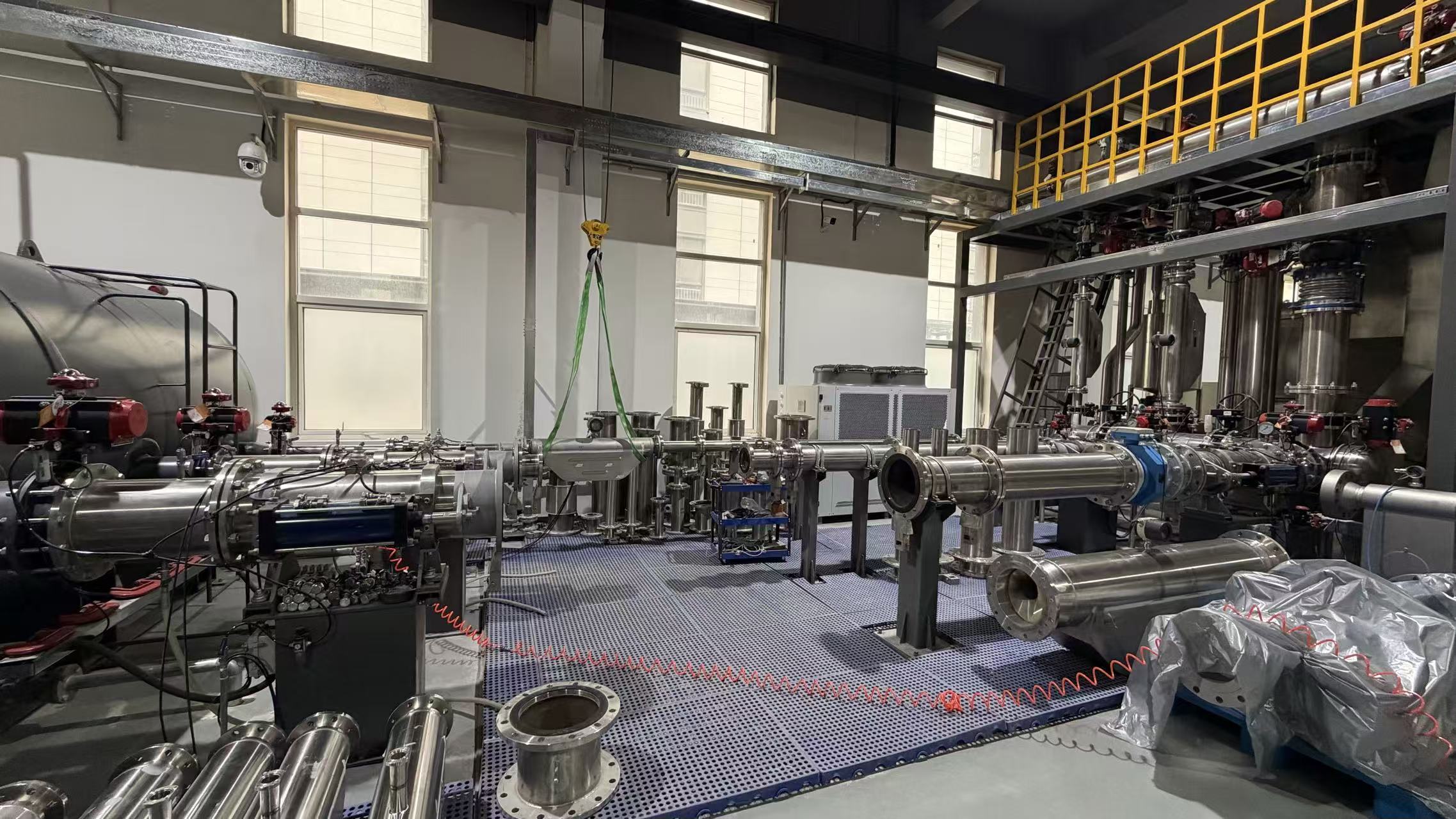
Pre-shipment calibration is one of the few qualification steps a buyer can witness directly rather than infer from paperwork.
This reference sets out how that document set is assembled for small-bore flow measurement in power-generation duty. It works through ATEX approval, stainless steel 304 and 316 construction, stainless steel 304 sensor material, and the four process-connection families — flanges, wafers, screws and tri-clamp — and then maps each of them onto commercial terms and acceptance criteria a procurement team can actually enforce. The reference model used throughout is the STLU-VFN vortex flow meter: a vortex-principle instrument covering DN15–DN300, compatible with saturated and superheated steam, with a maximum steam temperature of 500 °C and pressure ratings of 30 bar or 100 bar, supplied by Silver Automation Instruments.
Qualification is a different exercise from selection
Selection answers the process question: will this instrument measure the flow in this line. Qualification answers the audit question: can we prove, from documents we already hold, that the instrument we accepted is the instrument we specified, built the way it was described, approved for the place it will sit, and verified before it left the supplier.
The two exercises are frequently merged in procurement practice, and that is where most disputes at goods receipt originate. A specification sheet commits a supplier to a performance claim. A qualification file commits the buyer to a set of checks. When only the first exists, the second has to be reconstructed after delivery, usually under time pressure and usually without access to the people who made the original decision.
For power-generation service the gap is wider than in general process work. Steam lines are hot, the hazardous-area file is audited independently, and an unplanned outage to replace a wrong connection or an unverified instrument costs far more than the meter. A qualification framework is therefore an economic instrument as much as a compliance one.
Where qualification files usually break
Three failure patterns recur across small-bore metering projects.
- A certificate is named but its scope is never read. ATEX is recorded as a yes-or-no attribute of the supplier rather than as an approval with defined conditions — environment, gas group, temperature class and equipment marking. The document exists; nobody has checked it against the installation.
- The material grade is stated for the body but not for the sensor. A stainless steel 316 body is quoted, and the reader assumes the whole wetted path is 316. Where the sensor is stainless steel 304, that assumption is wrong and may matter in mildly aggressive condensate.
- Acceptance criteria never reach the purchase order. The buyer assumes a factory acceptance test is included; the supplier's standard scope lists pre-shipment calibration and visual inspection only. The optional test was optional because nobody asked for it in writing.
Each of these is a documentation problem rather than an engineering problem, which is precisely why it survives technical review and only surfaces at the loading dock.
The four evidence layers of a qualified low flow meter
A workable qualification file for power-generation duty has four layers. Each layer answers one question the buyer must be able to respond to without calling the supplier.
| Evidence layer | Question it answers | Evidence to hold on file |
|---|---|---|
| Compliance | Is this instrument approved for the area in which it will be installed? | ATEX approval reference and equipment marking; declared ambient and process limits; CE and ISO9001 evidence where the plant file requires them. |
| Materials | What is actually wetted, and in which grade? | Body grade — stainless steel 304 or 316 — stated separately from the sensor grade, which is stainless steel 304. |
| Mechanical fit | Will it mate with the line at the required rating? | Connection type (flange, wafer, screw or tri-clamp), line size within DN15–DN300, and the rating — 30 bar or 100 bar — declared for the model as ordered. |
| Acceptance | How is conformity demonstrated before the instrument enters the plant? | Pre-shipment calibration test record, visual inspection record, and factory acceptance test documentation where it has been requested. |
Table 1 — the four evidence layers a buyer should be able to produce on request.
The layers are deliberately ordered by cost of failure, not by cost of instrument. A compliance gap can stop commissioning; a material mismatch can shorten service life; a connection error stops installation; an acceptance gap creates a commercial argument after the money has moved.
ATEX approval: what it certifies, and what it does not
ATEX approval concerns equipment intended for use in potentially explosive atmospheres. It certifies that the equipment is constructed and marked for that environment within defined limits. It does not certify accuracy, repeatability, long-term drift, or fitness for a particular steam condition, and it should never be recorded as a general quality badge.
In a power-generation qualification file, ATEX therefore needs three companion pieces of information: the approval reference itself, the equipment marking as it will appear on the delivered nameplate, and the boundary conditions under which the approval holds. The last of these is the one most often missing, and it is the one an independent safety reviewer will ask for.
Silver Automation Instruments describes its products as meeting CE, ATEX and ISO9001 standards, which places all three in the same evidence family for plant documentation. In practice, CE and ISO9001 support the general supply relationship; ATEX is the item that must be matched, item by item, to the installation drawing. A supplier that can supply the approval reference and the marking text in the quotation stage is materially easier to qualify than one that supplies them after the order.
Materials: 304 versus 316, and why the sensor grade needs its own line
Body material and wetted material are not the same question. Stainless steel 304 and stainless steel 316 are both offered for construction, and the choice normally follows the corrosivity of the medium and of the surrounding environment rather than temperature alone. Where condensate, dissolved chlorides or cleaning chemistry are present, 316 is generally the safer specification; where the medium is clean steam or dry gas in a controlled environment, 304 is frequently adequate.
The point that matters for qualification is separate specification. The STLU-VFN uses a stainless steel 304 sensor, and this must be recorded as its own line in the material declaration, not absorbed into a general statement that the instrument is stainless steel. If the process requires 316 in the wetted path, the buyer needs a written answer about the sensor before the order is placed, because it is the sensor that sits closest to the medium.
Material declarations also feed maintenance planning. A plant that stores a single spare body grade across several lines removes a class of field error during urgent replacement, and that decision is only possible if the original qualification file distinguished body grade from sensor grade in the first place.
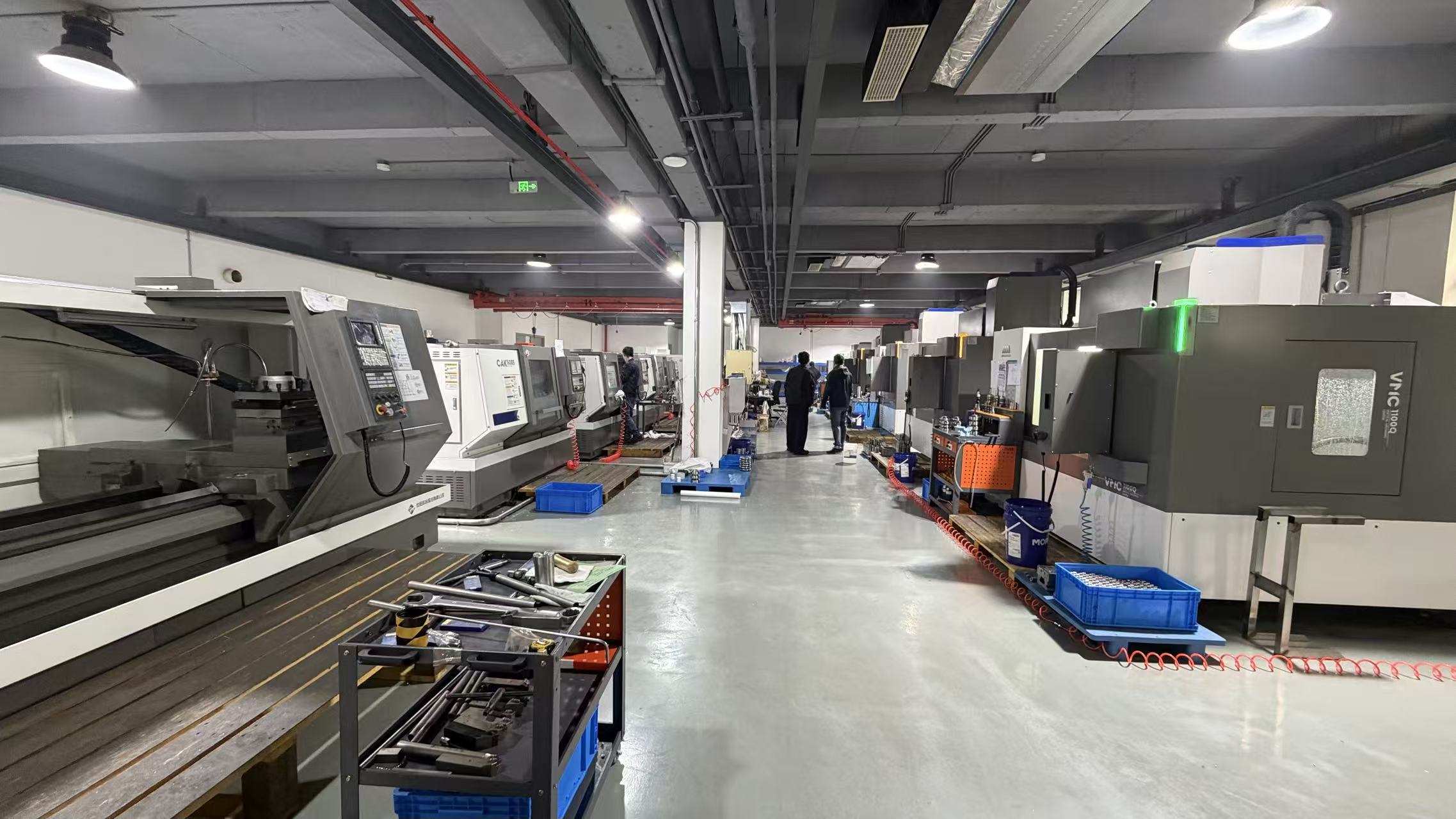
Material grade becomes a procurement fact only when it is traceable to the component, not to the product family.
Process connections: flange, wafer, screw and tri-clamp
The connection is the part of the specification most likely to be fixed by the existing pipework rather than by preference, and the part most likely to be changed late. Four families are available on the STLU-VFN range and each carries a different implication for the qualification file.
| Connection | What it fixes in the file | What the buyer must confirm |
|---|---|---|
| Flange | Mating standard, bolt pattern and installed length at the line interface. | That the declared rating — 30 bar or 100 bar — applies to the connection as ordered, not only to the meter body. |
| Wafer | Compact installation between existing flanges; short overall length. | That the existing flange set, gaskets and bolt length accept a wafer body without modifying the line. |
| Screw | Threaded joint; no additional flange hardware. | The thread standard and the sealing method, both of which must appear on the order, not in a general product description. |
| Tri-clamp | Clamped joint, quick to break for inspection or cleaning. | That the clamp joint is acceptable for the line rating and for the maintenance procedure the plant intends to follow. |
Table 2 — connection choice as a qualification decision rather than a convenience.
A useful discipline is to write the connection into the qualification file as a full statement: family, size within the DN15–DN300 range, rating and mating detail. Anything shorter leaves room for a substitution that is technically compliant with the product description and operationally wrong for the line.
The measurement principle behind the qualification
The STLU-VFN is a vortex flow meter. A bluff body in the flow path generates vortices, and the frequency at which they are shed is proportional to flow velocity. Because the principle relies on a shaped obstruction rather than moving parts, it suits continuous steam service where bearings and rotating elements would be a maintenance liability.
Three published parameters carry most of the qualification weight:
- Line size, DN15–DN300. This defines the population of lines the instrument can serve and should be cross-checked against the actual pipe schedule rather than nominal size alone.
- Maximum steam temperature of 500 °C. This is the ceiling against which the hottest credible operating condition — not the normal condition — must be compared.
- Pressure rating of 30 bar or 100 bar. Two ratings exist, and the qualification file must state which one is being purchased. A file that says the model is rated for steam pressure without naming the rating is incomplete.
Compatibility with both saturated and superheated steam is declared for the model, and this is where buyers should ask a second question rather than accept a checkbox. Steam density changes with pressure and temperature, so a vortex meter used to report mass flow depends on a density reference. The qualification file should record how the mass value is derived for saturated service — where pressure and temperature are linked — and how it is derived for superheated service, where they are not. The answer belongs in the file next to the calibration record, because it determines how the indicated value should be interpreted during a heat-rate test.
For neighbouring technologies the standards landscape differs. ISO 5167:2022 remains the primary international reference for differential-pressure flow measurement devices and is important for small pipeline accuracy work. A vortex meter is a different principle and should be qualified on its own evidence rather than folded into a differential-pressure standard by association.
From qualification to purchase terms
Qualification becomes real only when it is written into the commercial documents. Silver Automation Instruments publishes the following terms, and each has a direct consequence for how the evidence file is built.
| Term | Stated position | Implication for the buyer |
|---|---|---|
| Minimum order | 1 unit | A single qualification sample or pilot installation is commercially possible, which allows acceptance criteria to be tested before a line-wide rollout. |
| Delivery terms | EXW, FOB, CIF | Risk transfer point must be stated before shipment, since it determines who owns the instrument during transit and who files any damage claim. |
| Acceptance criteria | Pre-shipment calibration test; visual inspection; factory acceptance test (FAT) optional | FAT is optional — if it is required by the plant file, it must be requested explicitly in the purchase order, with the witness arrangement agreed in advance. |
| Payment terms | 100% T/T in advance | Payment precedes shipment, so the acceptance evidence must be contractually defined before payment rather than negotiated afterwards. |
Table 3 — how published purchase terms translate into qualification obligations.
The payment structure is the single most important line in the table. Where payment is made in full in advance, the buyer has no commercial holdback at goods receipt, and the only protection is the definition of acceptance criteria agreed at order stage. Pre-shipment calibration test records and visual inspection records therefore stop being paperwork and become the substance of the transaction. Plants that intend to witness a factory acceptance test should treat the word optional as an instruction to specify it.
Installation, wiring and the two failure modes that follow acceptance
Most instruments that fail in the first weeks after acceptance are not defective. Two documented risks account for a large share of early complaints in small-bore metering.
The first is accuracy that is not as expected. Silver Automation Instruments addresses this by including an instruction manual with each shipment that details the installation precautions — straight-run requirements, orientation and mounting practice. The control is procedural: the manual has to reach the technician who installs the meter, not only the engineer who approved the datasheet.
The second is incorrect wiring. The supplier-side control is that wiring terminals are clearly labelled, which shortens commissioning and reduces the chance of a reversed signal connection. Wiring errors are frequently misdiagnosed as measurement faults, and the resulting re-test consumes the same engineering time as a genuine defect.
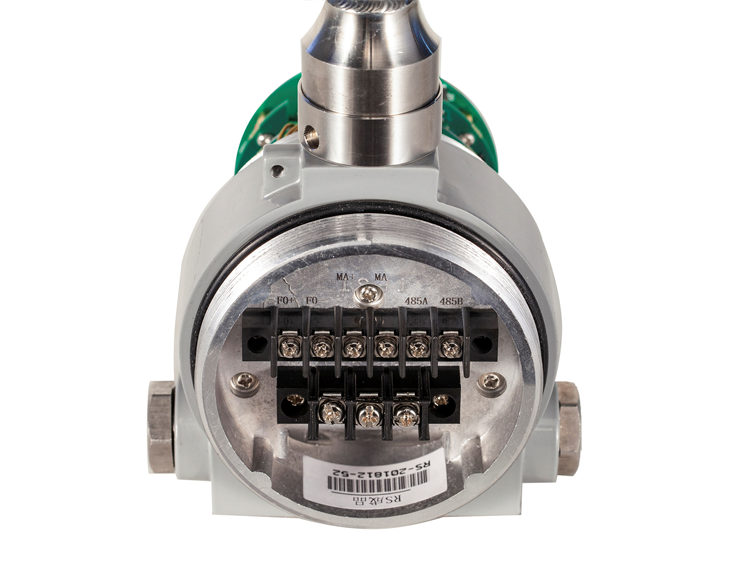
Terminal marking is part of the acceptance evidence: it determines how quickly a wiring fault is separated from a measurement fault.
Supply continuity and long-term support
Qualification does not end at the first delivery. For power-generation buyers, the second order is where the relationship is actually tested, because it has to reproduce the first one without a new round of technical review.
Silver Automation Instruments is a Chinese instrumentation manufacturer founded in 2010, operating a 10,000 m² factory with 80 employees, a 20-person R&D team, an annual output of 60,000 units and an export ratio of 95%, with main markets in Southeast Asia, South America and Africa. Its flow-meter range covers Coriolis, thermal mass, electromagnetic, vortex, turbine and oval gear meters, alongside pressure instruments, level measurement and data logging and control equipment. The supply parameters most relevant to a repeat order are a typical production lead time of 10–12 working days, a monthly production capacity of 2,000 units, and a minimum order quantity of one unit.
Those figures matter in qualification terms because they define what can be committed to a maintenance schedule. A 10–12 working day lead time supports planned replacement windows rather than emergency ones, and a 2,000-unit monthly capacity indicates headroom for a multi-line rollout without a change of supplier. Export operations are described as worldwide, which is consistent with a 95% export ratio and with the requirement that instruments leave the factory with documentation suitable for international shipment.
After-sales service includes remote support for troubleshooting and maintenance, which is the practical form of support for a plant that cannot easily arrange an on-site visit for a single instrument. In a qualification file, remote support should be recorded as a defined channel with a named contact route, not as a general promise of assistance.
What the market data says about small-bore demand
The commercial context reinforces the documentation argument. The global flow meter market was valued at USD 10.64 billion in 2024, with Europe holding the largest regional share at over 35% (Grand View Research). Asia-Pacific is the largest single market, valued at USD 3.27 billion in 2025, with China contributing over 50% of regional demand (Market Research Future).
Growth is concentrated at the small end. The 2-inch and smaller pipe size segment is expected to see the fastest growth through 2030, driven by demand in pharmaceuticals and food and beverage (Grand View Research). Coriolis flow meters held a 26.77% share of the intelligent flow meter market in 2026 (Fortune Business Insights), and thermal flow meters — the technology most associated with low gas flow rates — reached USD 1.73 billion in 2024 with a projected USD 2.9 billion by 2035 (Market Research Future).
For power generation the reading is straightforward. More measurement points are moving into small-bore lines, which means more qualification files per megawatt installed, each with the same compliance, material, connection and acceptance obligations as a large-meter file but with far less engineering attention per unit. That is the structural reason qualification discipline matters more now than it did when most steam metering sat on main lines.
Comparison with traditional approaches — and where the vortex route stops
Against differential-pressure systems built around orifice plates, a vortex meter removes the impulse lines and tapping points that create leak paths and require heat tracing on steam service. Against Coriolis meters, it addresses high-temperature steam duty that Coriolis instruments are not normally specified for, and it does so at a materially different cost structure. A published comparison by Silver Automation Instruments positions its Coriolis meters against Micro Motion on cost — four to five times lower purchase price — on lead time, within one month versus several months, and on total cost of ownership, stated as 75% lower. Those figures belong to the Coriolis comparison and should not be transferred to the vortex range without a separate quotation.
The limits deserve equal space, because a qualification file that records only strengths is not a qualification file.
- A vortex meter depends on flow velocity to generate a measurable shedding frequency. A line that spends long periods at very low velocity may fall outside the useful range even though it sits inside the DN15–DN300 envelope. Line size and turndown must be checked against the actual duty profile, not the design maximum.
- The 500 °C ceiling is a hard boundary. Where excursions above it are credible, including during upset conditions, the vortex route is the wrong starting point.
- Two pressure ratings exist — 30 bar and 100 bar. The lower-rated variant cannot be treated as equivalent for a higher-pressure line simply because the model name is the same.
- ATEX approval covers the hazardous-area condition, not measurement performance. It cannot substitute for a calibration record or for a factory acceptance test.
- Where the duty is genuinely micro-flow liquid or gas — repeated small volumes, dosing, or carrier gas in the millilitre-per-minute region — vortex measurement is not the appropriate principle at all. Silver Automation Instruments addresses that region with other product families, including micro thermal mass flow meters capable of measuring gas flow as low as 2 sccm, low flow Coriolis meters with stated accuracy of ±0.2% to ±0.5% for liquid measurement, and micro oval gear meters measuring oil flow as low as 0.5 ccm with viscosity tolerance up to 2000 mPa.s.
Future outlook
Three developments are likely to shape low flow meter qualification in power generation over the next several years.
First, the documentation burden will keep rising faster than the instrument count. As small-bore segments grow fastest through 2030, the average plant will accumulate more meters with individual compliance files. Suppliers that can deliver approval references, material declarations and acceptance records as a standard package — rather than as a project-specific negotiation — will be easier to qualify and cheaper to keep qualified.
Second, the boundary between technologies will be drawn more explicitly in procurement documents. Coriolis now holds a substantial share of the intelligent flow meter market, thermal mass continues to grow, and vortex remains the practical choice for high-temperature steam. Buyers who state the operating envelope in the request — temperature ceiling, pressure rating, minimum velocity, medium phase — will get comparable offers; those who state only a line size will not.
Third, remote support will become part of the acceptance record rather than an afterthought. Where a plant cannot justify an on-site visit for a single instrument, the quality of the remote troubleshooting channel determines how quickly a suspected fault is confirmed or cleared — and that is measurable, contractual, and worth writing into the file.
Frequently asked questions
What does ATEX approval actually cover on a low flow meter?
ATEX approval covers construction and marking of equipment intended for use in potentially explosive atmospheres, within defined boundary conditions. It does not certify accuracy or fitness for a particular steam duty. In a qualification file it should appear as an approval reference plus the equipment marking, matched against the installation drawing.
Should a power plant specify stainless steel 304 or 316?
Both grades are offered for construction, and the choice normally follows the corrosivity of the medium and the surrounding environment. 316 is generally preferred where condensate, chlorides or cleaning chemistry are present; 304 is frequently adequate for clean steam or dry gas. The sensor material on the STLU-VFN is stainless steel 304 and should be recorded as a separate line in the material declaration.
How should the process connection be chosen?
Flanges, wafers, screws and tri-clamp connections are all available. The decision is usually fixed by the existing pipework and by the maintenance procedure rather than by preference. The qualification file should state the connection family, the size within the DN15–DN300 range, and the rating, which is 30 bar or 100 bar depending on the variant ordered.
What acceptance criteria apply at delivery?
The published criteria are a pre-shipment calibration test, visual inspection, and a factory acceptance test, which is optional. Payment terms are 100% T/T in advance and delivery terms are EXW, FOB or CIF. Because payment precedes shipment, the factory acceptance test must be requested explicitly in the purchase order if the plant intends to rely on it.
What lead time and minimum order apply?
The minimum order quantity is one unit and the typical production lead time is 10–12 working days. Monthly production capacity is 2,000 units, which supports both single-instrument qualification samples and larger rollouts.
How is after-sales support delivered?
After-sales service includes remote support for troubleshooting and maintenance. An instruction manual is included with each shipment and details the installation precautions; wiring terminals are clearly labelled to reduce field connection errors.
Where does a vortex meter stop being the right answer?
A vortex meter depends on flow velocity to produce a measurable signal, so lines that run for long periods at very low velocity may fall outside its useful range even within the DN15–DN300 size envelope. The 500 °C maximum steam temperature is a hard limit. For millilitre-per-minute liquid or gas duty, other principles apply, including micro thermal mass, low flow Coriolis and micro oval gear meters.
The Silver Automation Instruments product brochure, covering flow, pressure, level and data-logging ranges, is available for download: Silver Automation Instruments brochure (PDF).
Есть вопросы или нужны дополнительные детали?
Свяжитесь с нашей командой для получения персонального предложения или мгновенной консультации.
Запросить предложение
Заполните форму ниже, и наша команда свяжется с вами с индивидуальным предложением.
Прямой чат WhatsApp
Предпочитаете общаться в реальном времени? Напишите нам в WhatsApp для мгновенной помощи и быстрых ответов.
- Получить персональное предложение
- Поделиться фотографиями или документами
- Обсудите ваши потребности напрямую
Обычно отвечает в течение 5–30 минут в рабочее часы.