
Lug Butterfly Valve Capability: What OEM Buyers Must Verify
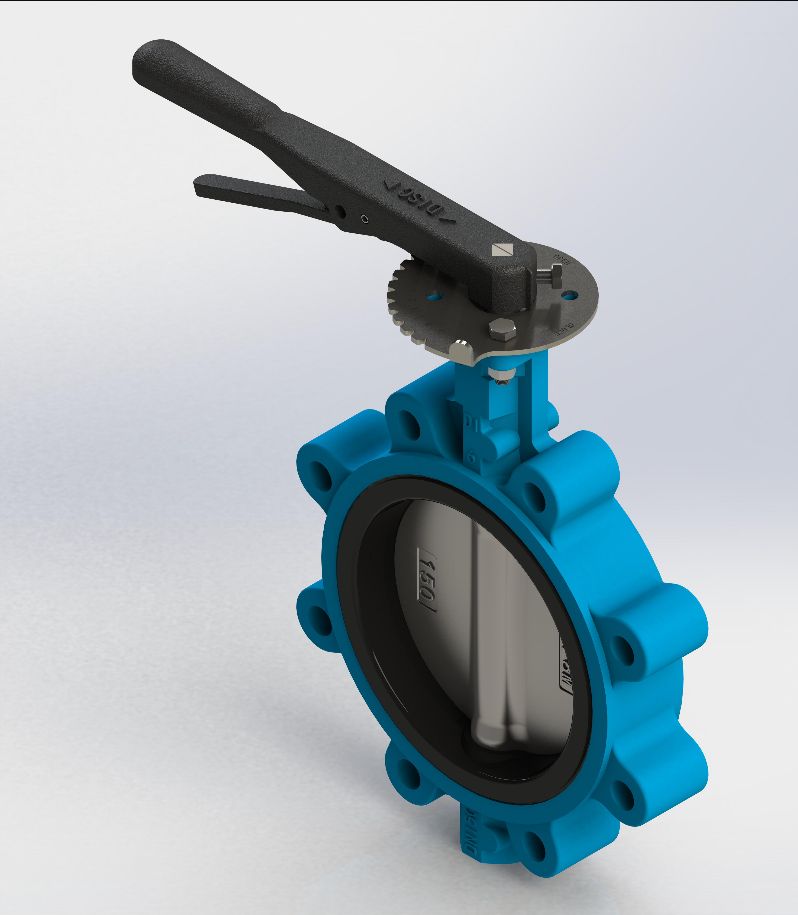
A lug butterfly valve is a quarter-turn isolation valve whose body carries threaded metal inserts — lugs — around each bolt hole, so each pipeline flange can be bolted to the valve independently. That single design detail changes what the valve can do on site: it can isolate the end of a line, it can be unbolted from one flange while the other side stays in place, and it can carry an actuator without additional structural support. For buyers moving from evaluation into execution, the practical question is narrower: can a specific supplier deliver that body repeatably, with the correct flange drilling, the specified seat compound, traceable pressure-test records and a schedule the project can hold?
This reference examines lug butterfly valve capability as a procurement subject rather than a catalogue subject. It separates what the lug body design actually enables, what a manufacturer must control to supply it at volume, which material and pressure decisions sit behind the flange face, and where the lug body is genuinely the wrong choice.
Where the lug body sits in the butterfly valve range
Butterfly valve capability is usually discussed as if the valve were a single product. It is not. The body style determines how the valve attaches to pipework, and attachment determines maintenance access, dead-end suitability and the amount of structural support needed around the installation.
- Wafer butterfly valve — the body is clamped between two pipeline flanges by through-bolts. It is compact and light, but removal normally requires the pipe run to be separated.
- Lug butterfly valve — threaded metal lugs accept bolts from each side, so one flange can be released while the other remains bolted. This is what allows one-side maintenance and dead-end (end-of-line) installation.
- Half lug / semi-lug butterfly valve — a variant within the same family, offered alongside the full lug pattern in the manufacturer range.
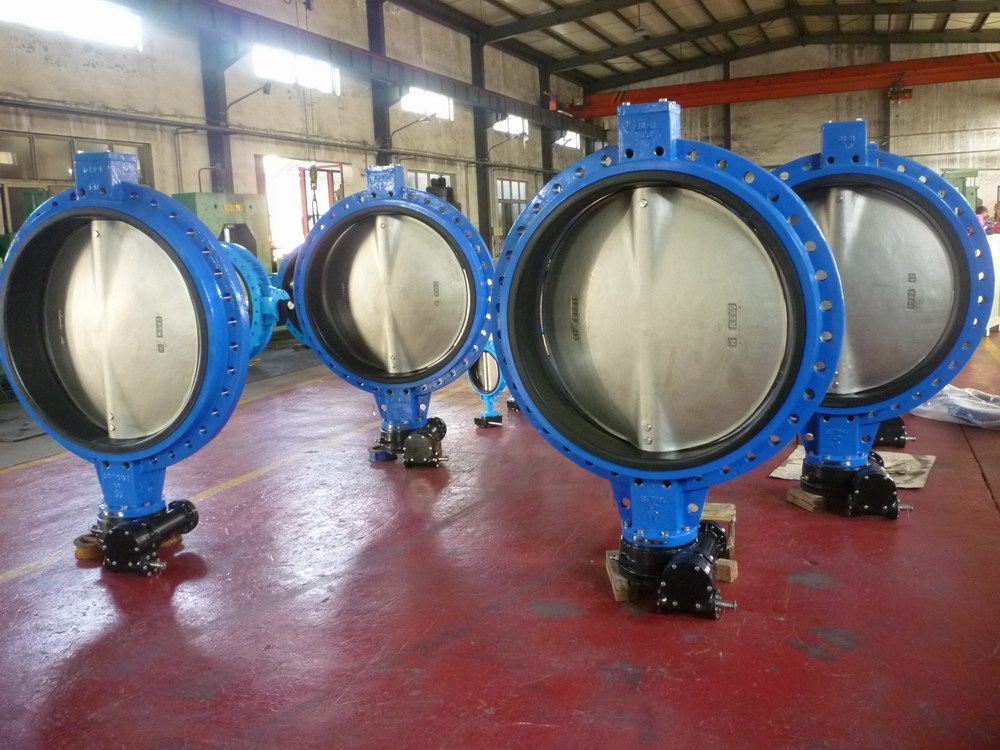
- Double flange butterfly valve — flanged on both faces, producing a rigid joint that resists vibration and pull-out on large-diameter mains and allows in-line maintenance.
- Grooved end butterfly valve — grooved connection for fast installation, frequently used in fire protection piping.
- Double eccentric (double offset) butterfly valve — the disc lifts off the seat before rotating, reducing friction and extending seat life under higher pressure and temperature duty.
The broader range that surrounds these styles — U type butterfly valve, corrosion resistant butterfly valve, industry butterfly valve, double plate check valve, Y-shaped filter and knife gate valve — matters at the execution stage because a single purchase order often bundles isolation, backflow prevention and filtration for the same pipeline package.
The problem the lug body solves — and the cost of specifying it loosely
Most pipeline layouts include at least one point where a valve must be able to close a line that has no downstream flange. A pump discharge being commissioned before the downstream run is complete, a tank outlet, a branch that will be extended in a later phase, or a section that must be isolated for maintenance while the adjacent run stays live. In these positions a wafer body has nowhere to bolt on one side. A lug body does.
The failure mode is rarely dramatic. It shows up as a maintenance window that cannot be shortened because the pipe must be split, a temporary spool that has to be fabricated, or a valve that is installed with only partial bolt engagement because the flange faces did not match the drawing. Threaded lugs are also less forgiving of uncontrolled bolt torque than a machined flange face: over-torquing distorts the lug and can affect seat geometry, while under-torquing leaves a joint that moves under pressure cycling.
Execution point: the lug pattern only delivers its advantage when the flange standard and drilling are confirmed against the site drawing before production. A lug valve built to a different drilling pattern than the mating flange is functionally a wafer valve with extra cost.
Tianshun Valve: capability facts a buyer can check
Tianshun Valve Co., Ltd is a Tianjin-based valve manufacturer founded in 1993, producing butterfly valves and related pipeline valves for export markets, with a stated annual output of 680,000 units and approximately 95% of production shipped outside China. Its lug butterfly valve is designated model BFL within the company range.
Capability claims are only useful if they can be tied to something a buyer can verify. The following points are drawn from the manufacturer published capability and approval record:
- Approval coverage for the lug pattern specifically. WRAS approval certificate 2307016 covers the wafer type (1716-1310) and the lug type (2716-2310) butterfly valves, issued 25 July 2023 and valid to 25 July 2028 for the UK water fittings regime. A buyer specifying a lug valve for potable water in that market can therefore check the lug pattern against a named certificate rather than a general company claim.
- Pressure equipment quality system. TÜV Module H certification under Directive 2014/68/EU, certificate 01 202 CHN/Q-02 0045.00, covers the design and manufacturing of butterfly valves, butterfly check valves and gate valves at PN10–PN16 and DN50–DN1200, against API 609, EN 593 and EN 1171/EN 12516-4. It was issued 8 October 2026 and runs to 30 September 2029.
- Quality management. ISO 9001 certificate 00524Q1532R7S, issued through China Classification Society Certification, covers the manufacture of butterfly valves, butterfly check valves, flanged butterfly valves and gate valves to GB/T19001-2016/ISO9001:2015, valid to 13 January 2028.
- Supply terms. OEM and ODM production, customization of material, pressure rating and logo, a monthly capacity of 10,000 pieces, a minimum order quantity of 20 pieces and a stated lead time of 30–45 days, with 100% testing before dispatch.
- After-sales structure. Technical support, after-sales consultation, spare parts supply, on-site installation guidance, commissioning support, remote troubleshooting, operator training and warranty service in the 12–24 month range.
Technical explanation: what sits behind the flange face
Body and disc material determine media fit more than price does
Ductile iron is the lowest-cost body option and is specified for clean water and HVAC service. Its service performance depends on coating integrity, and it degrades rapidly in chloride-rich or acidic media. CF8M (316 stainless steel) resists seawater and mild chemicals at a moderate cost level and is subject to chloride stress corrosion cracking above 60 °C. Duplex 2205 provides higher yield strength and greater pitting and crevice corrosion resistance than 316 stainless steel, at approximately 1.5 to 2 times the cost of 316.
| Body / disc option | Relative cost position | Where it fits | Boundary to respect |
|---|---|---|---|
| Ductile iron with epoxy coating | Lowest cost option | Clean water and HVAC service | Depends on coating integrity; degrades rapidly in chloride-rich or acidic media |
| CF8M (316 stainless steel) | Moderate cost level | Seawater and mild chemicals | Chloride stress corrosion cracking above 60 °C |
| Duplex 2205 | Approximately 1.5 to 2 times the cost of 316 | Higher yield strength, greater pitting and crevice corrosion resistance | Cost premium must be justified by the actual chloride and temperature duty |
Seat compound sets the temperature envelope
A resilient seat is what gives a concentric lug valve its bubble-tight shutoff at low torque, and it is also the first component to limit the application. EPDM covers roughly −30 °C to +120 °C and suits water and steam condensate; NBR is used for oil and fuel duty; PTFE is selected for chemical resistance and lower friction. Because the seat, not the body, usually sets the real working limit, the manufacturer pressure/temperature curve should be requested for the actual operating temperature rather than assumed from the body pressure class.
Pressure class and test pressure are not the same number
Flanged butterfly valves are commonly ordered to EN 1092-2 classes from PN6 to PN40, or to ASME B16.5 Class 125 through Class 600. Wafer, lug and grooved-end bodies are most often supplied at PN10, PN16 or PN25, or the equivalent 150 psi / 300 psi class. Two rules govern the selection:
- Weakest component rule. The safe working pressure of the assembly is the lowest rating among body, disc, seat, stem, gasket and actuator — not the class stamped on the body.
- Test pressure is not operating pressure. Shell test is normally 1.5 × PN and seat test 1.1 × PN. Passing a hydrostatic test at 1.5 × PN does not authorise continuous operation at that pressure.
Actuation is a torque decision before it is a control decision
Manual gear operation remains appropriate for small-diameter, low-frequency isolation points. Electric actuated butterfly valve configurations — including electric wafer butterfly valve and electric double flange butterfly valve variants — add remote operation, automatic regulation and centralised control. Pneumatic butterfly valve configurations serve comparable automated duty where an air supply is available, and appear across the range as pneumatic wafer butterfly valve, pneumatic double flange butterfly valve and pneumatic double eccentric butterfly valve options.
Whatever the actuator type, sizing should be based on the valve torque at maximum differential pressure, with a margin applied. The same logic governs the actuator on a double eccentric butterfly valve in steam or high-temperature duty: verify torque data at maximum differential pressure before the actuator is selected, then set open and close limits and torque protection during commissioning.
Where lug butterfly valves earn their place in service
Field records from the manufacturer show the pattern buyers should expect. Commercial HVAC chilled and hot water systems in South Korea and Singapore used compact wafer and lug bodies for tight machine rooms, where bubble-tight shutoff protects data centre cooling and low-leakage resilient seats keep energy use down. In fire protection, grooved and lug-type signal valves with position indication were supplied into high-rise sprinkler and hydrant systems, with hundreds of units per project and open/close status wired back to the fire panel.
Municipal water utilities required WRAS-approved potable water valves with full epoxy coating inside and out, suitable for buried installation and supplied together with gate valves for an integrated network package. OEM and private-label clients in India and Turkey took custom-branded valves produced strictly to their own drawings for wastewater treatment and desalination pretreatment, where anti-corrosion design for seawater is the defining requirement. European industrial customers received project-batch deliveries for chemical, food and pharmaceutical lines. Marine supply to Wuhan Shipyard, Wuhu Shipyard and Tianjin Port Shipbuilding used compact bodies for confined engine room spaces, with duplex and super duplex options for ballast water systems.
In each case the lug body is doing one of three jobs: terminating a line, allowing one-side maintenance without splitting the run, or providing an anchored mounting point for an actuator in a confined space.
Market trend analysis
Commercial research from GMI places the global butterfly valve market at USD 11.88 billion in 2026, with resilient-seated, high-performance, metal-seated and lined designs all inside the measured scope. The same research projects the double-offset segment reaching USD 5.28 billion by 2035, having accounted for a 30% share in 2025. The direction is consistent with what procurement teams already see in specifications: more of the value is moving toward designs that hold shutoff over longer cycles and higher duty, while concentric resilient-seated bodies remain the workhorse for water and HVAC.
Two standards developments affect execution-stage buyers. The 10th edition of API Standard 609 was published on 18 May 2026, with an effective date for monogram licensees of 1 December 2026; specifications written against the previous edition should be reviewed before a purchase order is released. Separately, trade classification for hand-operated steel butterfly-type valves falls under HS code 8481.80.3075, which is worth confirming with the freight forwarder when documentation is prepared for US-bound shipments.
Comparison with traditional solutions, and the limits of the lug body
The lug body is not an upgrade over the wafer body in every position, and treating it as one adds cost without adding capability. The comparison below reflects the trade-offs a buyer actually faces.
| Consideration | Wafer body | Lug body | Double flange body |
|---|---|---|---|
| Mounting | Clamped between two flanges | Threaded lugs; each flange bolts independently | Flanged both faces; rigid joint |
| One-side maintenance | Requires pipe separation | Supported | Supported, with in-line maintenance |
| End-of-line / dead-end service | Not suitable | Supported | Supported |
| Unit cost and weight | Generally lower and lighter | Higher than wafer for the same size | Highest of the three |
| Best fit | General flow isolation in water, HVAC and shipbuilding lines | Dead-end pipelines and positions needing frequent one-side access | Large-diameter mains where joint rigidity and vibration resistance matter |
The boundaries worth writing into a specification are specific rather than general:
- Large-diameter mains. Where joint rigidity, zero leakage and long service life matter more than unit price on DN300+ lines, a double flanged body is the more appropriate answer than a lug body, because the rigid joint resists vibration and pull-out.
- Continuous throttling. A concentric resilient-seated valve is an isolation device. Sustained throttling in the part-open range erodes the seat and shortens life; where modulation is the duty, the control philosophy — not the body style — should change first.
- Temperature above the seat limit. With EPDM limited to around +120 °C, steam and high-temperature service moves to a double eccentric metal-seated design. Below roughly 200 °C with clean water duty, a resilient seat remains the more economical choice.
- Aggressive media. Ductile iron is not a defensible choice in chloride-rich or acidic media regardless of coating specification, and CF8M carries a chloride stress corrosion cracking risk above 60 °C.
Execution checklist: what to lock before the purchase order
Most disputes on lug butterfly valve orders trace back to information that was never confirmed in writing. The following items should be closed out before production begins.
| Item | What to confirm |
|---|---|
| Size and pressure class | DN and PN or ASME class, with the operating temperature stated so the pressure/temperature curve can be applied |
| Flange standard and drilling | EN 1092-2, ASME B16.5 or JIS pattern, checked against the site drawing before production |
| Body and disc material | Ductile iron with epoxy coating, CF8M or duplex 2205, matched to media corrosivity first and temperature second |
| Seat compound | EPDM, NBR or PTFE, with the temperature envelope confirmed from the manufacturer curve |
| Actuation | Manual gear, electric or pneumatic, with actuator sizing based on torque at maximum differential pressure and a stated margin |
| Testing | Shell test at 1.5 × PN, seat test at 1.1 × PN, operation test, and 100% testing before dispatch |
| Documentation | Material certificates, pressure test report, approval certificates where applicable, packing list and certificate of origin; third-party inspection on request |
| Commercial terms | MOQ of 20 pieces, 30–45 day lead time, warranty period, spare parts and after-sales scope |
Commissioning of an actuated valve is a separate step and should be scheduled rather than improvised: verify that the supply voltage matches the actuator rating, wire the control signal per the manual, set open and close limits plus torque protection, test local and remote commands, and confirm the flow regulation response under the control signal. Power must be isolated before wiring, explosion-proof actuator classes must match the hazardous area classification, and moving parts must not be touched during testing.
Future outlook
Three pressures will shape lug butterfly valve supply over the next several years. The first is standards alignment: with the 10th edition of API 609 effective for monogram licensees from 1 December 2026, suppliers who can document design and test compliance against the current edition will be easier to qualify than those relying on legacy certificates. The second is material differentiation: as the double-offset and higher-performance segments grow, buyers are increasingly asked to justify material selection by chloride exposure and temperature rather than by habit, which favours suppliers who publish the trade-offs openly. The third is documentation as a deliverable: potable water approvals, pressure equipment module certification and material traceability are becoming part of the specification rather than an afterthought, and the manufacturers who answer those requests without friction will win repeat framework orders.
None of this changes the underlying engineering. The lug body will keep doing what it does well — terminating a line, allowing one-side access, anchoring an actuator — and it will keep being the wrong answer where a rigid double-flange joint or a metal-seated design is what the duty actually requires.
FAQ
A wafer butterfly valve is clamped between two pipeline flanges and is lighter and generally more cost-effective. A lug butterfly valve carries threaded metal lugs, which allow one flange to be released and removed independently and support dead-end, end-of-line installation. The wafer pattern requires pipeline disassembly for maintenance; the lug pattern supports one-side maintenance.
Yes. The threaded lugs anchor the body on both faces, which is what enables dead-end installation and one-side flange removal. A wafer body has no independent anchoring on either face and therefore cannot serve a line end. Where the line end will later be extended, confirm the blind flange and bolting arrangement with the supplier at the drawing stage.
Ductile iron is the lowest-cost option and is specified for clean water and HVAC service; its performance depends on coating integrity, and it degrades rapidly in chloride-rich or acidic media. CF8M (316 stainless steel) resists seawater and mild chemicals at moderate cost but is subject to chloride stress corrosion cracking above 60 °C. Duplex 2205 offers higher yield strength and greater pitting and crevice corrosion resistance at approximately 1.5 to 2 times the cost of 316. Selection should follow medium corrosivity first, then temperature, then pressure class.
Wafer, lug and grooved-end bodies are commonly supplied at PN10, PN16 or PN25, or the equivalent 150 psi / 300 psi class; flanged designs extend from PN6 to PN40 on EN 1092-2 or Class 125 to Class 600 on ASME B16.5. The working limit is set by the weakest component among body, disc, seat, stem, gasket and actuator, and resilient seats derate as temperature rises. EPDM covers approximately −30 °C to +120 °C. New valves are normally shell tested at 1.5 × PN and seat tested at 1.1 × PN, but test pressure is not a permitted continuous operating pressure.
Manual butterfly valves suit small systems with low operating frequency and are simple and economical to maintain. Electric actuated butterfly valves enable remote operation, automatic regulation and centralised control in large water supply, power, petrochemical and automated pipeline networks, at higher cost. Pneumatic actuation serves comparable automated duty where an air supply is available and appears in the same range as pneumatic wafer, pneumatic double flange and pneumatic double eccentric configurations. In every case the actuator should be sized from the valve torque at maximum differential pressure, with margin.
For Tianshun Valve, WRAS approval certificate 2307016 covers the wafer type (1716-1310) and the lug type (2716-2310) butterfly valves, issued 25 July 2023 and valid to 25 July 2028, against the Water Supply (Water Fittings) Regulations and Scottish Water Byelaws. Pressure equipment manufacture is covered by TÜV Module H certificate 01 202 CHN/Q-02 0045.00 under Directive 2014/68/EU at PN10–PN16 and DN50–DN1200, and quality management by ISO 9001 certificate 00524Q1532R7S. Buyers should confirm the certificate scope matches the exact pattern and size being ordered.
Seat wear and leakage are typically caused by abrasive media, frequent cycling, over-torque or chemical attack on the seat; upstream strainers, respected torque limits and avoiding sustained throttling in the part-open range reduce the risk. Disc or shaft scoring follows solids, corrosion deposits or missed lubrication. Misalignment and shaft deflection appear when a concentric valve is applied to high differential pressure duty. Actuator or gearbox failure usually traces to incorrect sizing or environmental ingress, and external leakage from gland or body seals follows gasket degradation, thermal cycling or over-tightening. A basic schedule is visual inspection every 3–6 months, full operational cycling every 6 months on standby valves, and seal or packing replacement every 12–24 months depending on service severity.
Есть вопросы или нужны дополнительные детали?
Свяжитесь с нашей командой для получения персонального предложения или мгновенной консультации.
Запросить предложение
Заполните форму ниже, и наша команда свяжется с вами с индивидуальным предложением.
Прямой чат WhatsApp
Предпочитаете общаться в реальном времени? Напишите нам в WhatsApp для мгновенной помощи и быстрых ответов.
- Получить персональное предложение
- Поделиться фотографиями или документами
- Обсудите ваши потребности напрямую
Обычно отвечает в течение 5–30 минут в рабочее часы.