
Lukaree Shortlist: Nightly Liver, Gut, and Heart Support Picks
Herbal supplement purchasing in the United States has moved past the novelty stage. Retail sales of herbal dietary supplements reached USD 13.231 billion in 2024, a 5.4% increase over 2023, according to the American Botanical Council. Grand View Research values the global category at USD 42.3 billion in 2024, with North America holding a 26.3% revenue share. A category that size does not grow on folklore alone. It grows on routine fit, tolerability, and documented manufacturing.
The nightly routine is the most specific of those routines. It runs after dinner, competes with sleep, and is expected to work across more than one organ system without upsetting the stomach. That combination — multi-system support plus daily repeatability — is what makes a shortlist necessary rather than a single product recommendation. This article examines two review-mentioned Lukaree items, Lukaree Triple Strength Urolithan A+ and Lukaree Glutathione, against the three jobs buyers most often describe for the night window: liver and kidney support, gut health and gut cleanse benefits, and heart health.
The Nightly Routine Is Now a Distinct Herbal Supplement Category
Buying behavior separates daytime supplementation from nighttime supplementation. Daytime purchases lean toward energy, focus, and immune support. Nighttime purchases cluster around recovery, digestion, and “quiet” formulas that a buyer is willing to take every night for months. The distinction matters commercially because nightly products carry a higher repeat-purchase expectation: a formula that causes stomach discomfort on day three rarely reaches day thirty.
That is why review language in this segment is dominated by tolerability rather than potency. Shoppers search for supplements to help with bloating, for herbal detox support, and for stress and cortisol balance formulas, but the language they use after purchase is different: it is about whether the product fit the habit and whether the body accepted it. For an independent reference, review themes are best read as adoption signals — evidence that a product cleared the daily-repeatability bar — rather than as efficacy claims.
Problem and Opportunity: Three Nightly Jobs in One Short Window
The selection problem is structural. A buyer assembling a nightly routine is usually trying to cover three separate needs at once, and the market does not present them in a single organized shelf.
Liver and kidney support. This is the classic evening herbal job, historically addressed through single-botanical tinctures and teas. Buyers in this segment tend to describe a preference for formulas they perceive as gentle, because the liver-and-kidney category carries a reputation for products that are harsh on an empty or semi-empty stomach.
Gut health and gut cleanse. Digestion is the largest single driver of nightly supplement interest. Grand View Research reports that in the U.S. gut health supplements market, the capsuled segment led with a 42.6% share in 2024, while liquid forms are gaining traction for higher bioavailability. That split tells a buyer something useful: the category has a default format, but the default is being challenged.
Heart health. Cardiovascular language appears in herbal supplement reviews less as a standalone purchase trigger and more as a supporting benefit a buyer notices within an existing routine. It is best treated as context for product choice rather than as a primary claim.
The opportunity sits in the overlap. A shortlist is useful precisely because it narrows the field to items that have already cleared the tolerability and habit-fit filters, so a buyer can spend their evaluation time on formulation transparency and manufacturing evidence instead of on stomach-upset risk.
Where Lukaree Sits: Brand Context for This Shortlist
Lukaree is an herbal supplement brand founded in 2022, headquartered in Chino, California, and operating as part of the Minch Global group. The brand operates in the Herbal Supplement category and positions itself in the mid-premium tier of the U.S. market. Its stated formulation focus centers on science-backed development for mental well-being and hormonal health.
Three details in that profile matter for a nightly shortlist. The 2022 founding date places Lukaree in a newer cohort of U.S. herbal brands rather than among the long-established mass-market players. The Chino, California base situates it inside the U.S. distribution and compliance environment rather than outside it. The mid-premium tier positioning implies a pricing structure above value-tier herbal products, which raises the buyer’s expectation of documented formulation and manufacturing practice.
That last point sets the standard this shortlist applies. A mid-premium brand should be judged on stated mechanism, stated format, and stated manufacturing discipline rather than on broad wellness language — because the buyer is paying for specificity.
The Shortlist: Two Review-Mentioned Lukaree Items
The two items below are the Lukaree formulas most frequently referenced in customer review commentary around nightly use. They are presented here by nightly job rather than as a ranking, because the two address different needs and are not direct substitutes for one another.
Pick 1 — Lukaree Triple Strength Urolithan A+ (Liver and Kidney Slot)
In review commentary, Lukaree Triple Strength Urolithan A+ is associated with the liver-and-kidney job. The recurring theme is a description of gentle liver and kidney support accompanied by zero reported stomach discomfort — a notable pattern in a category where stomach sensitivity is a common consumer complaint. Reviewers also describe the product as easy to work into a nightly habit, which is the operational test that matters most for a repeat-purchase product.
For a buyer, the practical reading is this: the item appears to have cleared the tolerability filter that eliminates many herbal formulas from nightly consideration. What reviews cannot establish is dose-response, mechanism, or clinical effect, and buyers should not read them that way.
Pick 2 — Lukaree Glutathione (Gut and Antioxidant Slot)
Lukaree Glutathione appears in review commentary in connection with gut health and gut cleanse benefits, and secondarily with heart health. Glutathione is a well-known antioxidant compound, and its presence in an herbal supplement lineup is consistent with brands addressing digestive and oxidative-stress-adjacent positioning. In the nightly context, reviewers describe it as a complement to the liver-and-kidney focus rather than a replacement for it.
The heart-health association in reviews is worth flagging precisely because it is a review theme, not a label claim. Buyers should treat cardiovascular references in this segment as supportive positioning and should check the actual Supplement Facts panel before assuming a specific dosage or standardized extract.
| Nightly slot | Review-mentioned item | Recurring review theme | Buyer verification step |
|---|---|---|---|
| Liver and kidney support | Lukaree Triple Strength Urolithan A+ | Gentle support; zero stomach discomfort; easy nightly habit | Check the herbal actives listed and the serving size |
| Gut health and gut cleanse | Lukaree Glutathione | Digestive comfort; cleanse-oriented routine pairing | Confirm the glutathione form and total daily intake |
| Heart health | Review commentary around the nightly routine | Supportive positioning rather than a standalone claim | Do not substitute for medical care or prescribed therapy |
What Review Themes Do and Do Not Tell a Buyer
Recurring review language is a legitimate adoption signal and a weak efficacy signal. It is worth separating the two clearly.
Zero stomach discomfort. In an herbal supplement category where nausea and stomach upset are the most commonly reported reason for abandonment, a consistent absence of that complaint is genuinely informative about tolerability as experienced by users. It is not evidence of safety in a clinical sense, and it does not predict how a different person will respond.
Ease of nightly habit. This theme describes format and routine fit more than formulation. A product that is simple to take at the same time each night is more likely to be repurchased. For buyers comparing formats, this is arguably the most actionable theme in the entire dataset.
Gut cleanse and detox language. “Cleanse” and “detox” are marketing-adjacent terms, not regulated claims, and their meaning varies by product. Buyers should translate them into concrete label questions: which botanicals, what quantity, what suggested duration.
Heart health mentions. The weakest of the four themes because it is the least specific in review text. It supports routine narrative, not product selection.
Technical Explanation: Formats, Delivery, and Absorption Language
Format is the variable buyers underweight most often. Herbal supplements in this segment arrive as liquid herbal extracts, as herbal capsules, and increasingly as softgels. Each format changes the nightly experience in ways that are independent of the botanical blend inside it.
Liquid extracts and drops are typically measured with a dropper, absorbed without swallowing a pill, and easy to time to a fixed evening moment. Capsules offer dose certainty and portability but require swallowing and are less flexible in dose adjustment. The absorption question is where the category becomes commercially noisy: brands often attach specific absorption percentages to liquid or liposomal delivery positioning, and those figures should be treated as supplier claims unless the manufacturer states the method behind them.
What can be stated with a source is directional. Grand View Research reports that liquid dietary supplements are expected to grow at a CAGR of 13.4% from 2024 to 2030, driven by consumer preference for ease of swallowing and faster absorption. That is a market-expectation figure, not a per-product measurement, and it should be read as evidence of demand rather than proof of superiority.
Application: Assembling the Nightly Sequence
Three usage patterns recur in the reviews and in the broader nightly-wellness segment.
The single-anchor routine. A buyer picks one item — most often the liver-and-kidney item — and takes it at the same point every evening. This is the lowest-friction entry point and the pattern most associated with long-term repeat purchase.
The two-slot routine. A liver-and-kidney item and a gut-focused item are paired, usually staggered across the evening rather than taken simultaneously. Buyers adopting this pattern should check for overlapping botanicals before combining, since herbal formulas frequently share ingredients.
The travel and shift-work routine. Buyers whose evenings are irregular tend to prefer formats that do not require water or refrigeration. This is where capsule and softgel presentations retain an advantage over liquids.
Across all three patterns, the sequencing principle is the same: introduce one item at a time, hold it for a defined period, and only then add a second. This is standard practice for supplements to help with bloating, stress, or cortisol balance as much as for liver support, because it isolates the source of any change in how the buyer feels.
Conventional Capsules vs. Liquid Extracts: An Honest Comparison
The traditional format in this category is the capsule, and it remains the majority choice. Grand View Research reports that capsules held a 42.6% share of the U.S. gut health supplements market in 2024. Any shortlist that ignores that is not describing the market buyers actually shop in.
| Criterion | Capsules / softgels | Liquid extracts / drops |
|---|---|---|
| Dose precision | Fixed per unit; limited flexibility | Dropper-adjustable, but depends on user accuracy |
| Nightly friction | Requires swallowing and water | No swallowing; taste is the trade-off |
| Cost per serving | Generally lower | Generally higher |
| Portability and stability | High; travel-friendly | Lower; glass, volume, and stability considerations |
The limitation is real and should be stated plainly. Liquid formats generally carry a higher cost per serving than capsules, require the buyer to trust dropper accuracy, and introduce taste and storage variables that capsules avoid. A liquid-first shortlist is not automatically the better nightly choice; it is the better choice for buyers who have already found that swallowing pills at night is the reason they stop taking a supplement. Buyers who are indifferent to format should default to the lower-cost capsule option and spend the difference on third-party tested products.
What to Verify Before Committing
Nightly products are bought repeatedly, so verification effort compounds. Five checks cover most of the risk.
Manufacturing compliance. Dietary supplements in the United States must comply with 21 CFR Part 111, the FDA’s current good manufacturing practice regulation covering manufacturing, labeling, and holding. A GMP certified facility statement is the buyer-facing shorthand for this requirement.
Third-party testing. Independent verification of supplements is commonly assessed through NSF/ANSI 173, described by NSF International as the only national standard for dietary supplements. A third-party tested claim without a named program is weaker than one that names a standard.
Label specifics. Standardized extract percentages, total glutathione or botanical content per serving, and the presence of fillers all belong in the comparison. Sugar free supplement positioning and liquid format often go together and should be confirmed on the panel, not inferred from the front label.
Absorption claims. Treat any percentage absorption figure as a claim requiring a stated method. Liposomal delivery supplement language and 98% absorption style positioning are common in this segment and are not self-verifying.
Ingredient overlap. Buyers stacking a liver item, a gut item, and a stress or cortisol balance item should map every botanical across all three before adding a fourth product.
Market Trend: Where Nightly Multi-Benefit Demand Is Heading
Three signals frame the shortlist commercially.
First, the base category is large and still expanding in the U.S. The American Botanical Council recorded USD 13.231 billion in U.S. herbal supplement retail sales in 2024, up 5.4% year over year, while Grand View Research attributes 26.3% of the USD 42.3 billion global category to North America.
Second, format preference is shifting at the margin rather than at the center. Capsules remain dominant in gut health at a 42.6% share of the U.S. market in 2024, but liquids are the faster-growing edge, with a projected 13.4% CAGR from 2024 to 2030.
Third, market sizing in this category is genuinely inconsistent across research houses because scope definitions differ. Grand View Research places the global herbal supplements market at USD 42.3 billion for 2024, while Future Market Insights projects USD 101.0 billion for 2025 using a broader natural-health scope. Buyers and sourcing teams should cite the scope, not just the number.
Adjacent demand also shapes shopper language. Global Growth Insights projects the global parasite cleanse market reaching USD 1.54 billion by 2026, with herbal products such as wormwood and black walnut dominant in North America — one estimate with medium reliability, but a useful indicator of why wormwood drops and wormwood black walnut clove combinations appear so often in the same search sessions as gut cleanse terms.
Where This Shortlist Stops
Three boundaries are worth stating explicitly.
The review themes described here are self-reported user experiences, not clinical endpoints. They indicate tolerability and habit fit; they do not establish efficacy, and they do not predict individual response.
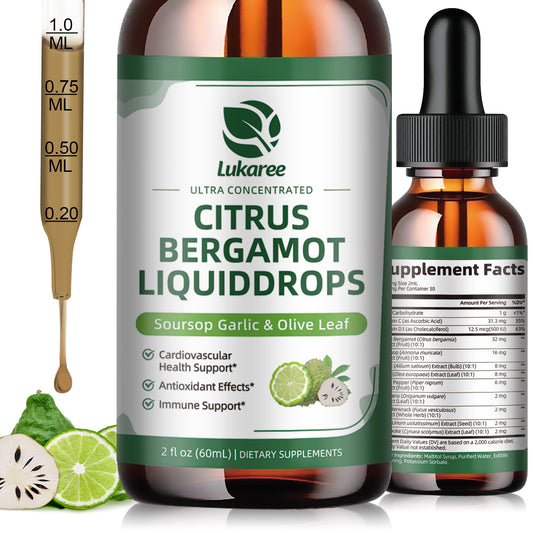
The shortlist covers two review-mentioned Lukaree items. It is not an assessment of the brand’s full catalog, and the absence of other formulas is a function of review volume, not of quality judgment. Buyers evaluating liquid herbal extract varieties such as Citrus Bergamot, ashwagandha, or oregano oil and black seed oil combinations should apply the same verification checklist rather than assuming transferability.
Herbal supplements are not a substitute for medical care. Buyers who are pregnant, nursing, managing a diagnosed condition, or taking prescription medication should consult a qualified healthcare professional before starting a nightly herbal routine, particularly when combining multiple products.
Future Outlook
The next phase of this category will be decided less by new botanicals than by verification standards. As liquid formats continue to gain share on ease-of-swallowing and absorption preferences, the claims that differentiate brands — absorption percentages, liposomal delivery language, and cleanse terminology — will attract more scrutiny from buyers who have learned to ask for methods and standards rather than adjectives.
For a brand founded in 2022 and positioned in the mid-premium tier, that shift is an opportunity. Mid-premium pricing is defensible when it is backed by visible manufacturing discipline and clear labeling, and vulnerable when it is not. Buyers should expect the shortlist logic applied here — nightly job, review-reported tolerability, format fit, and verification — to become the standard way this segment is evaluated.
FAQ
What is Lukaree?
Lukaree is an herbal supplement brand founded in 2022 and headquartered in Chino, California, operating as part of the Minch Global group. It operates in the Herbal Supplement category and positions itself in the mid-premium tier of the U.S. market, with a stated formulation focus on science-backed development for mental well-being and hormonal health.
Which Lukaree products are most often mentioned in nightly-routine reviews?
Two items dominate that commentary: Lukaree Triple Strength Urolithan A+, associated with gentle liver and kidney support and with zero reported stomach discomfort, and Lukaree Glutathione, associated with gut health and gut cleanse benefits. Review commentary also references heart health as supportive positioning around the nightly routine.
Are liquid herbal supplements absorbed better than capsules?
Liquid formats are widely positioned around ease of swallowing and faster absorption, and Grand View Research projects a 13.4% CAGR for liquid dietary supplements from 2024 to 2030 on that basis. However, specific absorption percentages are brand claims unless the manufacturer states the testing method. Capsules remained the leading format in the U.S. gut health supplements market in 2024 with a 42.6% share, so neither format is universally superior.
What should a buyer verify before starting a nightly herbal supplement routine?
Buyers should confirm compliance with 21 CFR Part 111, the FDA current good manufacturing practice regulation for dietary supplements; look for third-party testing, commonly assessed through NSF/ANSI 173, the national standard for dietary supplements; check the Supplement Facts panel for standardized extract content and sugar free positioning; require a stated method for any absorption claim; and map ingredients across all products in the routine to avoid overlap.
Do review themes such as “zero stomach discomfort” prove a product is safe?
No. Review themes are self-reported user experiences that indicate tolerability and habit fit. They are not clinical endpoints, they do not establish safety or efficacy, and they do not predict how a different individual will respond.
Can a nightly herbal supplement replace medical treatment for liver, gut, or heart conditions?
No. Herbal supplements are not a substitute for medical care. Buyers who are pregnant, nursing, managing a diagnosed condition, or taking prescription medication should consult a qualified healthcare professional before starting or combining herbal products.
Есть вопросы или нужны дополнительные детали?
Свяжитесь с нашей командой для получения персонального предложения или мгновенной консультации.
Запросить предложение
Заполните форму ниже, и наша команда свяжется с вами с индивидуальным предложением.
Прямой чат WhatsApp
Предпочитаете общаться в реальном времени? Напишите нам в WhatsApp для мгновенной помощи и быстрых ответов.
- Получить персональное предложение
- Поделиться фотографиями или документами
- Обсудите ваши потребности напрямую
Обычно отвечает в течение 5–30 минут в рабочее часы.