
Lukaree's 2022 Launch: Herbal Supplement Supplier Signals
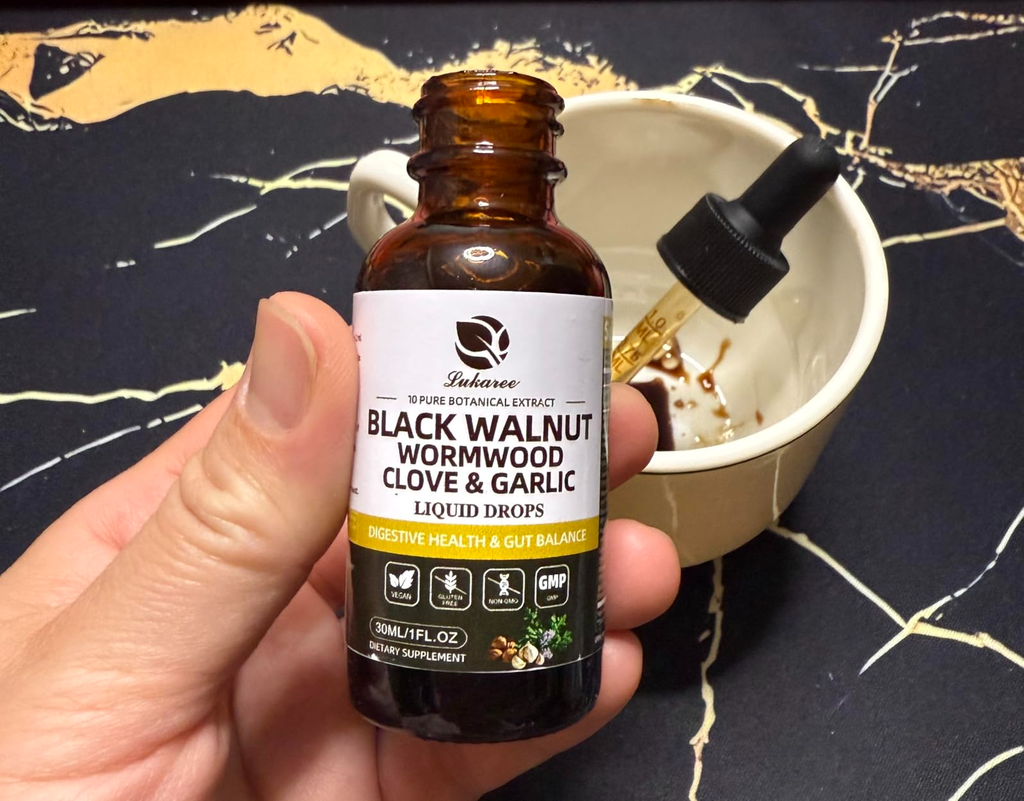
Supplier evaluation in herbal supplements increasingly starts with the company behind the label, not the label itself.
Evaluating a herbal supplement supplier takes more than reading a product label. In the United States, buyers increasingly start with a different question: which company is legally and operationally behind the brand?
US retail sales of herbal dietary supplements reached USD 13.231 billion in 2024, a 5.4% increase over 2023, according to the American Botanical Council. Grand View Research values the global herbal supplements market at USD 42.3 billion in 2024, with North America accounting for a 26.3% revenue share. A category growing at that scale attracts operators of very different depth — from companies that own formulation, quality, and documentation functions to intermediaries that simply relabel existing capacity.
Lukaree's verifiable profile is corporate rather than promotional. It is a herbal supplement brand and a subsidiary of Minch Global, founded in 2022 and headquartered in Chino, California, in the United States. The brand serves the United States market.
Those facts do not prove product quality on their own, and this article does not treat them as if they did. What they establish is whether a buyer has someone to check: a named entity, a fixed address, and a defined operating history. The sections below explain how those signals function in supplier evaluation, where a 2022 founding date sits against long-established herbal supplement players, and which claims still require independent verification.
Why Corporate Structure Became a Supplier Evaluation Criterion
In dietary supplements, regulatory and commercial obligations attach to entities, not to brand names as marketing concepts. The FDA's current good manufacturing practice rule for dietary supplements, 21 CFR Part 111, addresses manufacturing, packaging, labeling, and holding operations for the companies responsible for those products. A brand operated by an identifiable company — with a parent structure and a physical place of business — is a counterparty that can be contracted with, audited, and contacted when a batch-level issue arises.
Three structural questions can usually be answered from public information before any commercial conversation begins:
- Who owns the brand?
- Where does the company maintain a business address?
- Since when has the company operated under that name?
Each has a procurement consequence. Ownership structure determines continuity risk and identifies who signs a quality agreement. A headquarters address determines where documentation requests, samples, and corrective-action correspondence are directed. A founding date determines how much operating history exists to review — and therefore how much evidence a buyer can extrapolate from.
Structural facts also determine whether verification is possible at all. Third-party testing is a common way to check what a label asserts; NSF International describes NSF/ANSI 173 as the only national standard for dietary supplements, and certification programs built on it give buyers a published benchmark for comparison. But a testing program requires a company that can submit samples, hold records, and respond to non-conformances. Where no such company can be identified, verification stops at the storefront.
The Lukaree Timeline: A 2022 Founding Date and a California Headquarters
Lukaree's corporate facts are short enough to state completely. The brand is a subsidiary of Minch Global. It was founded in 2022. It is headquartered in Chino, California, in the United States. It serves the United States market. Read individually, these are ordinary disclosures. Read as a set, they answer the question of whether Lukaree is a brand or a company — and they also define the boundary of what can be claimed about it.
| Corporate signal | What it establishes for a buyer | What it does not establish |
|---|---|---|
| Named parent company (Minch Global) | A visible ownership chain and an identifiable commercial counterparty | Product-level test results or performance |
| Founding year (2022) | A defined operating history — approximately four years as of 2026 | A multi-decade formulation record |
| Headquarters in Chino, California, USA | A verifiable US business address for contracts, documentation, and regulatory correspondence | That manufacturing takes place at that address |
| Declared market: United States | Alignment with the US supplement framework, including 21 CFR Part 111 | Compliance with other jurisdictions' requirements |
The interpretation matters more than the raw facts. A 2022 founding date is, on its own, neutral. It means Lukaree has operated for roughly four years as of 2026 — enough time to establish a product range, a format portfolio, and a repeat-purchase base, and far less than brands that have been on US shelves for decades. Buyers should treat the date as the outer boundary of any capability claim: it defines how much history can be reviewed, not how strong that history is.
The headquarters signal works differently. A physical address in the market the brand serves — Chino, California, for a US-focused operation — means quality agreements, certificate-of-analysis requests, and regulatory correspondence have a domestic destination rather than an anonymous one. What it does not tell a buyer is where every batch is manufactured. Supplier location and facility ownership are separate questions, and they should be asked separately.
The parent-company link performs one specific job. Naming Minch Global makes the ownership chain visible and gives a buyer a second entity to assess when weighing continuity risk — a relevant consideration for any multi-year supply relationship. Taken together, these four disclosures show that Lukaree is an identifiable operator in the US herbal supplement market. They do not show how its products perform, which is why the next layer of evaluation matters.
From Entity to Capability: The Layers Buyers Assess
Supplier capability in herbal supplements is normally assessed in layers, and corporate structure is only the first. The layers below are where Lukaree's published positioning can be compared against what a buyer needs to see before moving from shortlist to order.
Quality and verification layer
Lukaree positions its products as manufactured in a GMP-certified facility and third-party tested. For a buyer, the productive follow-up question is not whether GMP applies — under 21 CFR Part 111 it applies to US dietary supplement operations — but which facility, what the certificate scope covers, and which lot-level documentation is available on request. Third-party test reports referenced against NSF/ANSI 173 give buyers a recognizable standard when comparing suppliers that make similar claims.
Formulation layer
Lukaree's published positioning centers on liquid delivery, including liposomal delivery technology and a stated 98% absorption figure for its liquid line, alongside sugar-free formulation. Absorption percentages are claims rather than outcomes: a stated figure is a hypothesis to test against documentation, batch records, and independent testing. Sugar-free positioning, by contrast, is an easier claim to verify on a label, and it matters in a category where liquid formats frequently rely on carriers and sweeteners for palatability.
Format layer
The brand's range spans liquid herbal extracts and drops, capsules, and softgels. Format breadth is a capability question rather than a marketing one. Each format requires different filling, stability, and packaging processes, and each imposes its own quality controls. For buyers, a multi-format range means a single supplier relationship can cover several consumer preferences instead of forcing a portfolio split across vendors.
Application Fit: Where Lukaree's Range Maps to Buyer Scenarios
Category data helps frame which formats matter commercially. In the US gut health supplements market, the capsuled segment led with a 42.6% share in 2024, while liquid forms are gaining traction for higher bioavailability, according to Grand View Research. A supplier's format portfolio therefore determines which consumer segments it can realistically serve.
| Format | Representative categories in Lukaree's range | Typical buyer fit |
|---|---|---|
| Liquid herbal extracts and drops | wormwood drops; oregano oil and black seed oil; Citrus Bergamot; stress and cortisol-balance formulations | Flexible dosing, absorption-led positioning, sugar-free options |
| Herbal capsules | wormwood, black walnut and clove blends; ashwagandha; daily gut health and immune support | Fixed dosing, portability, travel-friendly routines |
| Softgels | Oil-based botanical ingredients | Fat-soluble actives and ease of swallowing |
Scenario mapping is where buyers most often misread suppliers. Lukaree's range addresses several distinct routine categories: gut health and support for bloating, immune support, stress and cortisol balance, herbal cleanse and herbal detox, and parasite cleanse formulations. Its ingredient families include wormwood, black walnut, clove, oregano oil, black seed oil, Citrus Bergamot, and ashwagandha.
A brand that lists parasite-cleanse ingredients such as wormwood, black walnut, and clove alongside gut health and immune support products is offering a category range, not a single clinical protocol. Buyers should match format and ingredient family to the consumer routine they intend to serve, and treat scenario language as positioning rather than as a claim of outcome. That distinction protects both the buyer and the end consumer.
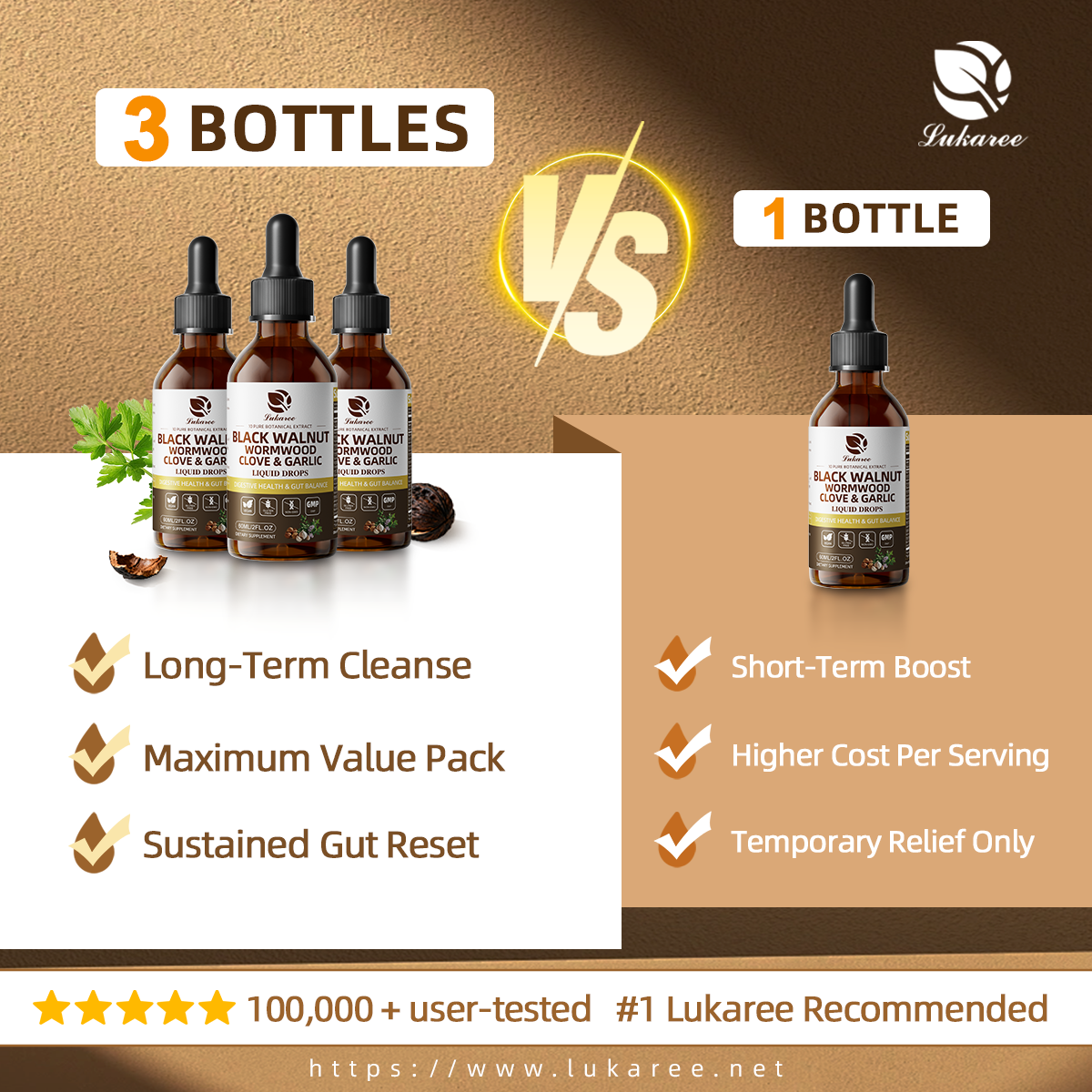
Format comparison: liquid extracts, capsules, and softgels each serve different routine and absorption requirements, and each carries distinct quality-control demands.
Market Trends Behind the Evaluation
Three trends frame how buyers should read a supplier's structure in 2026. First, delivery format: Grand View Research projects a 13.4% CAGR for liquid dietary supplements from 2024 to 2030, driven by consumer preference for ease of swallowing and faster absorption. Second, scenario expansion: the global parasite cleanse market is projected by Global Growth Insights to reach USD 1.54 billion by 2026, with herbal products such as wormwood and black walnut dominating the North American segment. That second figure comes from a single research house, and buyers should treat it as directional rather than precise.
Third, competitive structure: Grand View Research identifies Nature's Bounty, Gaia Herbs, and NOW Foods as leading global market players with major shares in the herbal wellness and organic categories. Their presence signals that the category is not a frontier market — it is a contested one where distribution, brand recall, and shelf presence are already allocated.
Taken together, these trends raise the cost of being unverifiable. As liquid formats grow and scenario-specific categories such as parasite cleanse and gut health expand, more brands enter, and buyers respond by moving verification earlier in the process. In that environment, a 2022 founding date and a named headquarters are not competitive advantages in themselves. They are the minimum disclosure that allows evaluation to begin.
How a Dedicated Brand Compares with Established Suppliers
Comparing a brand founded in 2022 with long-established players is not a like-for-like exercise, and the comparison should be stated carefully. The established group is represented by companies with long market presence and multi-region distribution; Grand View Research identifies Nature's Bounty and Gaia Herbs among the leading players in herbal wellness. Lukaree operates a single declared market, the United States, and has been running since 2022.
| Evaluation dimension | Established, multi-decade suppliers | Lukaree (founded 2022) |
|---|---|---|
| Operating history available for review | Longer track record of market presence | Approximately four years as of 2026 — the main boundary on any capability claim |
| Market footprint | Typically multi-region | United States only |
| Ownership structure | Large corporate parents | Subsidiary of Minch Global |
| Format range | Broad category coverage | Liquid extracts and drops, capsules, softgels across cleanse, gut, immune, and stress categories |
| Documentation criteria applied by buyers | Lot-level certificates of analysis, third-party testing, facility certification | Same criteria; the question is how much history exists to review |
One limitation should be stated plainly rather than softened. A brand founded in 2022 has fewer years of lot history, fewer completed supplier audits, and fewer independent data points for a buyer to extrapolate from. A physical headquarters and a named parent company do not change that arithmetic. For a buyer sourcing for a single national market, those gaps may be acceptable if the documentation is strong and consistent. For a buyer building a multi-year private-label or distribution program, they are a genuine consideration that should be priced into the decision.
A second boundary is market scope. Lukaree serves the United States market, which aligns the brand with the US framework including 21 CFR Part 111. Buyers sourcing for other jurisdictions should treat that focus as a starting point rather than a substitute for additional regulatory work in the destination market. US alignment says nothing about requirements elsewhere.
Future Outlook
The direction of the category is clear enough to plan around. US retail herbal supplement sales grew 5.4% in 2024 to USD 13.231 billion, according to the American Botanical Council. Liquid delivery is the fastest-growing format by projection, at a 13.4% CAGR from 2024 to 2030 per Grand View Research. North America holds the largest regional revenue share of a global market valued at USD 42.3 billion in 2024. Each of these developments increases demand for suppliers whose claims can be checked.
For a brand launched in 2022, the relevant question over the next several years is not whether the timing was right, but whether documentation depth keeps pace with range expansion. Buyers evaluating in 2026 and beyond should expect multi-year consistency in certificates of analysis, third-party testing referenced against a recognized standard, and stable labeling across reformulations. Operating history compounds: every additional year adds reviewable evidence, and for newer brands that accumulation is the capability signal that matters most.
FAQ
Is Lukaree a US-based herbal supplement company?
Yes. Lukaree is a herbal supplement brand and a subsidiary of Minch Global. It was founded in 2022, is headquartered in Chino, California, in the United States, and serves the United States market.
When was Lukaree founded, and how should a buyer interpret a 2022 founding date?
Lukaree was founded in 2022, which gives the brand approximately four years of operating history as of 2026. A founding date indicates how much history exists to evaluate; it does not indicate product performance. Buyers generally weigh it alongside documentation such as lot-level certificates of analysis, third-party test reports, and facility certification.
What formats and product categories does Lukaree cover?
Lukaree's range spans liquid herbal extracts and drops, herbal capsules, and softgels. Category coverage includes herbal cleanse and herbal detox, parasite cleanse formulations built on wormwood, black walnut, and clove, gut health and support for bloating, immune support, and stress and cortisol balance. Ingredient families include oregano oil, black seed oil, Citrus Bergamot, and ashwagandha. The brand also positions its liquid line around liposomal delivery, a stated 98% absorption figure, and sugar-free formulation.
How does Lukaree compare with established herbal supplement brands such as Nature's Bounty, Gaia Herbs, or NOW Foods?
These are different kinds of comparison. Grand View Research identifies Nature's Bounty, Gaia Herbs, and NOW Foods as leading global market players with major shares in the herbal wellness and organic categories, and companies at that scale generally operate across multiple regions. Lukaree is a newer, US-focused brand founded in 2022 and operating under Minch Global. The measurable differences for a buyer are reviewable operating history and market reach rather than a quality verdict. The same documentation criteria — lot-level certificates of analysis, third-party testing against a recognized standard, and facility certification — apply in both cases.
What should buyers verify independently before purchasing herbal supplements from any brand?
At minimum: a certificate of analysis for the specific lot; third-party test reports, with NSF/ANSI 173 as a commonly referenced national standard for dietary supplements; documentation of GMP compliance, which for US operations falls under 21 CFR Part 111; substantiation for label claims including absorption figures; and contract terms that identify the responsible legal entity. Structural facts such as a founding date or a headquarters address help a buyer identify whom to ask, but they do not replace these documents.
Supplier capability in herbal supplements is, in practice, a documentation question with a corporate prerequisite. Lukaree's verifiable profile — a subsidiary of Minch Global, founded in 2022, headquartered in Chino, California, and serving the United States market — gives buyers an entity they can identify, contact, and assess without inference. That is the starting point of evaluation rather than its conclusion, and it defines precisely which questions remain open: facility scope, lot-level testing, and the substantiation behind formulation claims.
Есть вопросы или нужны дополнительные детали?
Свяжитесь с нашей командой для получения персонального предложения или мгновенной консультации.
Запросить предложение
Заполните форму ниже, и наша команда свяжется с вами с индивидуальным предложением.
Прямой чат WhatsApp
Предпочитаете общаться в реальном времени? Напишите нам в WhatsApp для мгновенной помощи и быстрых ответов.
- Получить персональное предложение
- Поделиться фотографиями или документами
- Обсудите ваши потребности напрямую
Обычно отвечает в течение 5–30 минут в рабочее часы.