
Luxury Hotel Tent Models by Terrain: Desert vs Mountain Fit
Luxury Hotel Tent Models by Terrain: Desert vs Mountain Fit
Choosing a luxury hotel tent model is a site-engineering decision before it is an aesthetic one. This industry reference maps five Stars Glamping models — Tethys, Villa, Octagon, Shell and Pisces — against the load and comfort profiles of desert glamping, mountain eco lodge, beachfront and event-venue projects, using published performance figures rather than marketing descriptions.
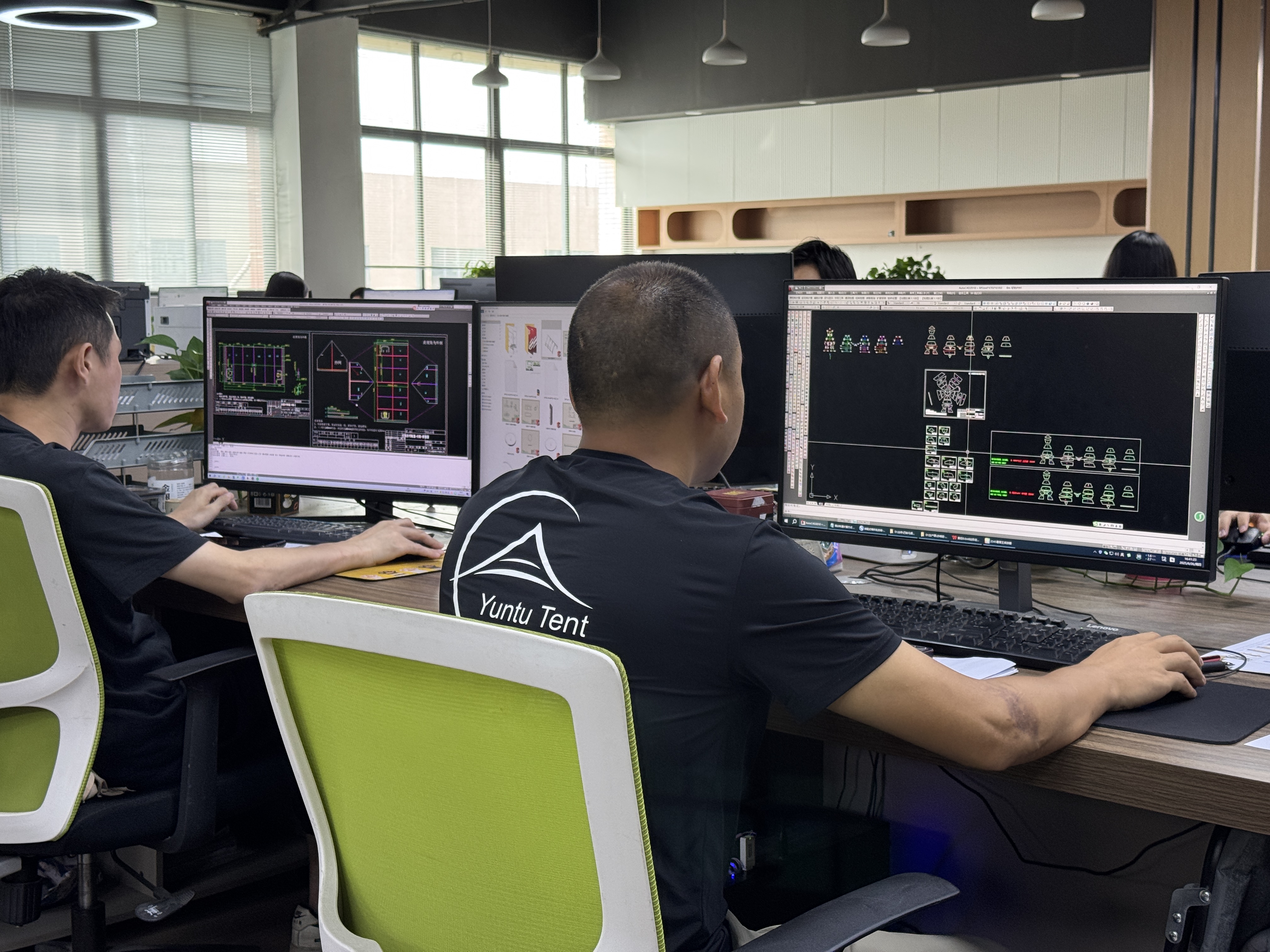
Engineering review at Stars Glamping: model-to-terrain matching starts with the site load profile, not the showroom layout.
Why the same tent category performs differently on two sites
Two resort developers can order from the same luxury hotel tent category and end up with very different guest outcomes. One reports stable interiors through a desert summer and a mountain winter; the other reports condensation, fabric movement or anchoring concerns within the first season. The difference is rarely the fabric supplier. It is whether the model's published limits were compared against the site's actual loads before the order was placed.
Desert and mountain briefs pull in nearly opposite directions. A desert glamping site — typical of projects in the Middle East and North Africa — combines high daytime surface temperatures, strong UV exposure, blowing sand and a wide day-to-night swing, usually with very low annual precipitation. A mountain eco lodge site in Europe or East Asia combines snow accumulation, freeze–thaw cycling, sustained wind on exposed ridges, and condensation pressure created by cold nights against warm, occupied interiors. Beachfront and island sites add salt-laden air, high humidity and seasonal storm wind. Event venues demand something different again: fast deployment and an envelope that can be relocated or reconfigured as the programme changes.
The commercial weight behind this specification work is growing. The global glamping market was valued at approximately USD 3.8 billion in 2025, according to Grand View Research, and is projected to reach USD 9.15 billion by 2034, growing at a CAGR of 10.67% for the forecast period (Fortune Business Insights). Europe held an estimated 35% revenue share in 2025 (Grand View Research). As the category matures, the buyer conversation shifts from “which tent looks best” to “which model survives my site, and for how long.”
The verified performance envelope shared across the portfolio
Before comparing individual models, a buyer should record the baseline that the Stars Glamping portfolio is engineered against. Stars Glamping (STARS GLAMPING TENT CO., LTD) is a Guangzhou-based manufacturer founded in 2018 that designs, produces and installs glamping tents and camp systems, operating from a 20,000 m² manufacturing base with a 4,000 m² simulation exhibition hall. The figures below are published performance specifications rather than model-specific guarantees.
| Parameter | Published value | Why it matters at site level |
|---|---|---|
| Operating temperature range | −30°C to +70°C | Spans both hot-arid deserts and cold alpine nights; a single envelope covers both briefs. |
| Wind resistance | Up to 120 km/h | Sets the anchoring and frame requirement for exposed coastal, desert and ridge-line plots. |
| Snow load capacity | 80 kg/m² | The controlling figure for mountain eco lodge projects and roof-form selection. |
| Waterproof rating | ≥ 5000 mm H₂O | Determines rain performance in monsoon, coastal and high-rainfall mountain zones. |
| Fire rating | B1 / M2 (fire-retardant) | Required for commercial hospitality occupancy and insurance review. |
| UV performance | UV stabilized, anti-aging | The primary ageing driver on desert and high-altitude sites. |
| Service life | 25–30 years for most models; 10–15 years for the Pisces model | Drives depreciation, replacement reserve and phased-expansion planning. |
| Monthly output | 50–80 luxury tent units, depending on project size | Sets realistic delivery windows for multi-unit resort rollouts. |
Fire performance deserves separate attention because it is the one specification that is externally audited. Luxury resort tents used commercially in the United States and Europe are typically expected to meet fire-retardancy standards such as NFPA 701 or EN 13501-1, and membrane structures fall under dedicated code provisions such as Chapter 31 of the International Fire Code. A B1 / M2 material classification supports that compliance path, but the classification belongs to the specified fabric build, so it should be re-confirmed for each project configuration.
Mapping five models to four site profiles
The Stars Glamping luxury tent line-up comprises five models: Tethys, Villa, Octagon, Shell and Pisces. Published portfolio information confirms that the Tethys and Villa models are modular tent systems built with steel frames and PVDF or PVC fabrics for all-weather resort use. The table below shows how that line-up maps onto the four most common project briefs in this category, together with the model-level item that should be verified before a purchase order is issued.
| Model | Published lifecycle | Site profile it is usually evaluated against | Verify before specifying |
|---|---|---|---|
| Tethys | 25–30 years (portfolio standard) | All-weather resort accommodation, including desert and mountain briefs where the full envelope is required | Wall system, insulation build-up, anchoring detail for the site wind zone |
| Villa | 25–30 years (portfolio standard) | All-weather resort accommodation; larger unit footprints typical of premium lodge and beachfront suites | Snow load confirmation for the exact roof configuration; interior fit-out scope |
| Octagon | Portfolio model; model-level lifecycle to be confirmed on the datasheet | Briefs that need a different plan geometry within the same envelope | Plan drawings, connection details, site drainage perimeter |
| Shell | Portfolio model; model-level lifecycle to be confirmed on the datasheet | Briefs where enclosure form is the primary design driver | Fabric build, seam detail, anchoring pattern |
| Pisces | 10–15 years | Shorter-cycle or phased programmes where replacement is planned into the business case | Replacement schedule and cost, continuity of spares across the shorter cycle |
This analysis deliberately stops at published performance data. Model-level drawings, connection details and configuration sheets should be requested from the manufacturer before a scenario match is locked, because the same model name can be delivered with different wall systems, insulation values and anchoring packages.
Desert glamping: heat, UV and dust
Desert sites test a tent envelope in three ways. The first is thermal: surface temperatures can push well above human comfort thresholds for many hours, and the −30°C to +70°C operating range is the published figure that defines how much of that cycle the material system is engineered to absorb. The second is UV, where the portfolio's UV-stabilized and anti-aging treatment is the relevant specification, because fabric degradation on arid sites is driven by cumulative solar exposure rather than by rainfall. The third is dust and blowing sand, which affect fabric surfaces, seals and mechanical fittings.
For this profile, the decision logic is straightforward: a model with a 25–30-year service life and PVDF or PVC fabric construction is the natural starting point for a permanent desert resort, while a shorter-life model can be justified where the site lease, land tenure or business plan is itself short-cycle. Because desert wind events are episodic rather than continuous, anchoring design becomes the single most important engineering conversation — the 120 km/h wind resistance figure should be read together with local design wind data rather than treated as a site-independent guarantee.
Mountain eco lodge: snow, freeze–thaw and condensation
Mountain projects invert the desert logic. Here the controlling load is snow, and the published snow load capacity of 80 kg/m² becomes the figure that determines roof form, frame spacing and, in many cases, whether a given model is viable at all. Freeze–thaw cycling adds a second pressure point, because water that enters joints and then expands damages assemblies that perform perfectly in milder climates. Condensation is the third and least visible risk: an occupied, heated interior against a cold external surface will produce moisture movement unless the envelope is designed for it.
Mountain eco lodge briefs therefore tend to favour models with the longest published service life and the most developed wall system options, supplemented by insulated build-ups. A 10–15-year model such as Pisces can still be appropriate for seasonal alpine programming, but the buyer should treat the replacement horizon as a line item in the investment model rather than a footnote.
Beachfront and island sites: salt, humidity and wind
Coastal and island projects combine the highest wind exposure in the portfolio with continuous humidity and salt-laden air. The waterproof rating of ≥ 5000 mm H₂O is the published baseline for rain performance, and heavy-duty PVC or PVDF membranes used in luxury hotel tents are non-porous and are documented in industry material guidance at hydrostatic head ratings exceeding 10,000 mm for island and beachfront applications. Specifications at that level should be confirmed per project, since the delivered fabric build determines the final number.
Salt exposure is where stainless hardware, coating specification and maintenance intervals become procurement questions rather than construction details. Coastal buyers should also expect the wind resistance figure to drive foundation design: on an exposed island plot, the anchor detail, not the tent, is usually the limiting element.
Event venues and short-cycle programming
Event venues sit outside the accommodation logic because their utilisation is intermittent. The relevant performance criteria shift from long-term weathering to deployment speed, reconfigurability and the ability to demount and relocate. Modular tent systems matter here because they allow a venue to start with a small footprint and expand as the event calendar develops.
For event briefs, the published lifecycle difference inside the portfolio becomes a genuine commercial variable rather than a technical footnote. A 10–15-year model reduces capital tied up in an asset whose site permission may be shorter than its structural life, while the 25–30-year models are better matched to sites held on longer tenure.
Where wall systems decide the final match
Two projects can specify the same model and still end up with different guest outcomes, because the wall system controls thermal behaviour, acoustic separation and the amount of glazing the design can carry. A fabric wall delivers a lighter, more flexible enclosure; a glass or glazed wall changes solar gain, heat loss and, in most jurisdictions, the compliance review path. The B1 / M2 fire classification and UV-stabilized fabric treatment apply to the specified material build, so the wall system should be selected at the same time as the model, not after it.
Buyers should also treat the interior programme as part of the site decision. Bathroom pods, air-conditioning loads and acoustic separation between units all change the structural and service requirements of the unit — and they change them differently in a desert, mountain or coastal climate. Specifying the model first and the fit-out second is a common source of redesign cost.
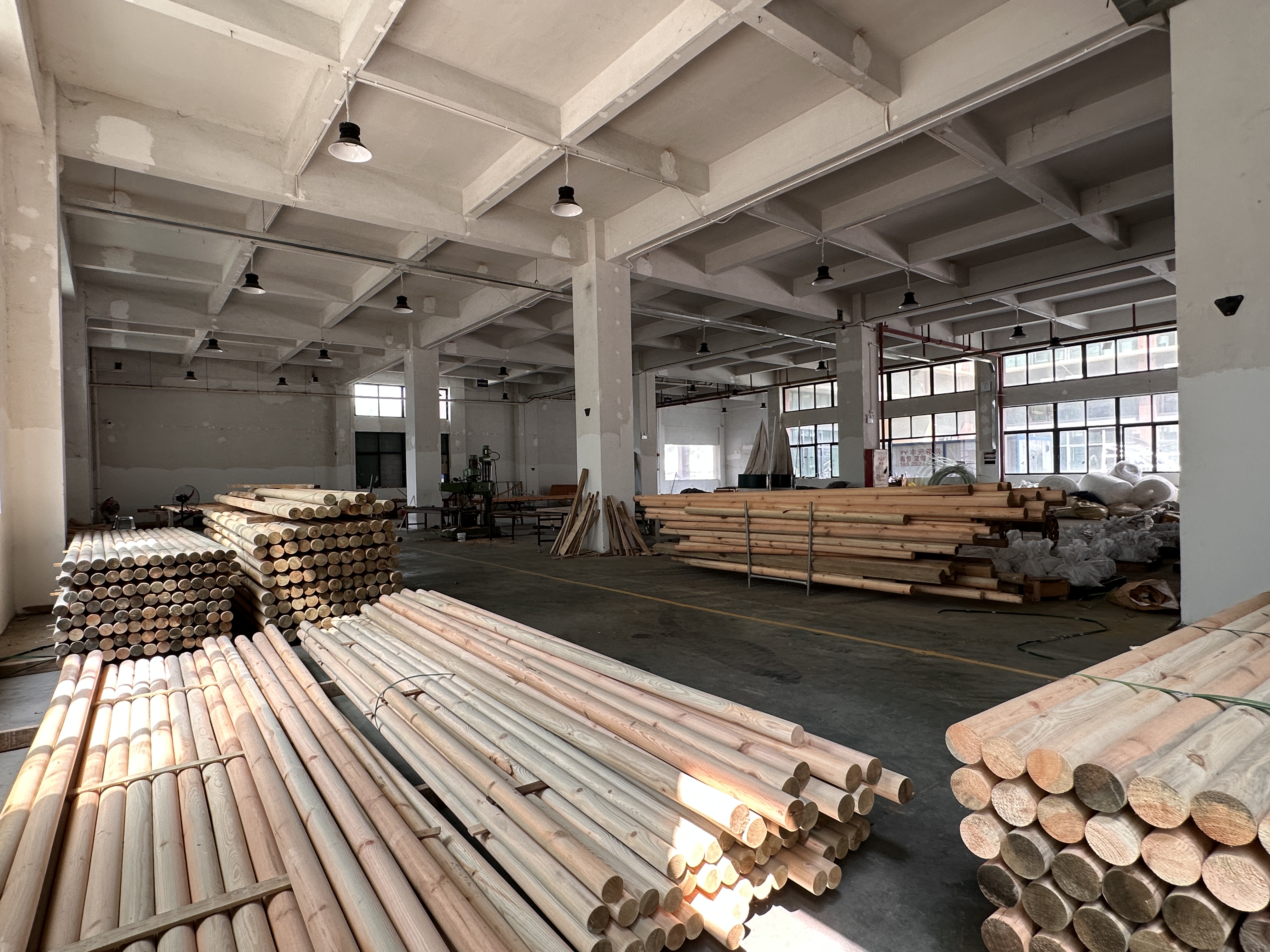
Frame and membrane materials staged for production: the delivered configuration, not the model name, determines the final site performance.
Luxury hotel tents against traditional resort construction
Terrain fit is only half the decision. The other half is whether a tent envelope is the right asset class at all. On that comparison, the case for engineered tents is well documented in deployment speed and capital intensity.
| Dimension | Luxury hotel tent | Traditional hotel building |
|---|---|---|
| Deployment | Fast deployment; installation typically 20–30 days | Long construction cycle of 6–12 months |
| Capital intensity | Reported 30–50% lower investment | Higher upfront capital commitment |
| Maintenance | Lower maintenance and flexible upgrade | Conventional building maintenance regime |
| Energy | Better insulation reduces energy consumption | Depends on building envelope and systems |
| Typical fit | Resort, desert and beachfront sites | Sites with permanent utilities and long tenure |
The limits are equally important to state. A tent envelope is bound by its published numbers: sites whose design wind speed exceeds 120 km/h or whose ground snow load exceeds 80 kg/m² require project-specific engineering, which can change both cost and lead time. A 10–15-year service life model implies a replacement event inside the asset's operational life, and that should be financed rather than discovered. Membrane structures also attract dedicated code provisions in many jurisdictions, so a compliance review is a precondition, not a formality. In other words, the terrain comparison in this article defines where the portfolio fits — it does not make every site suitable.
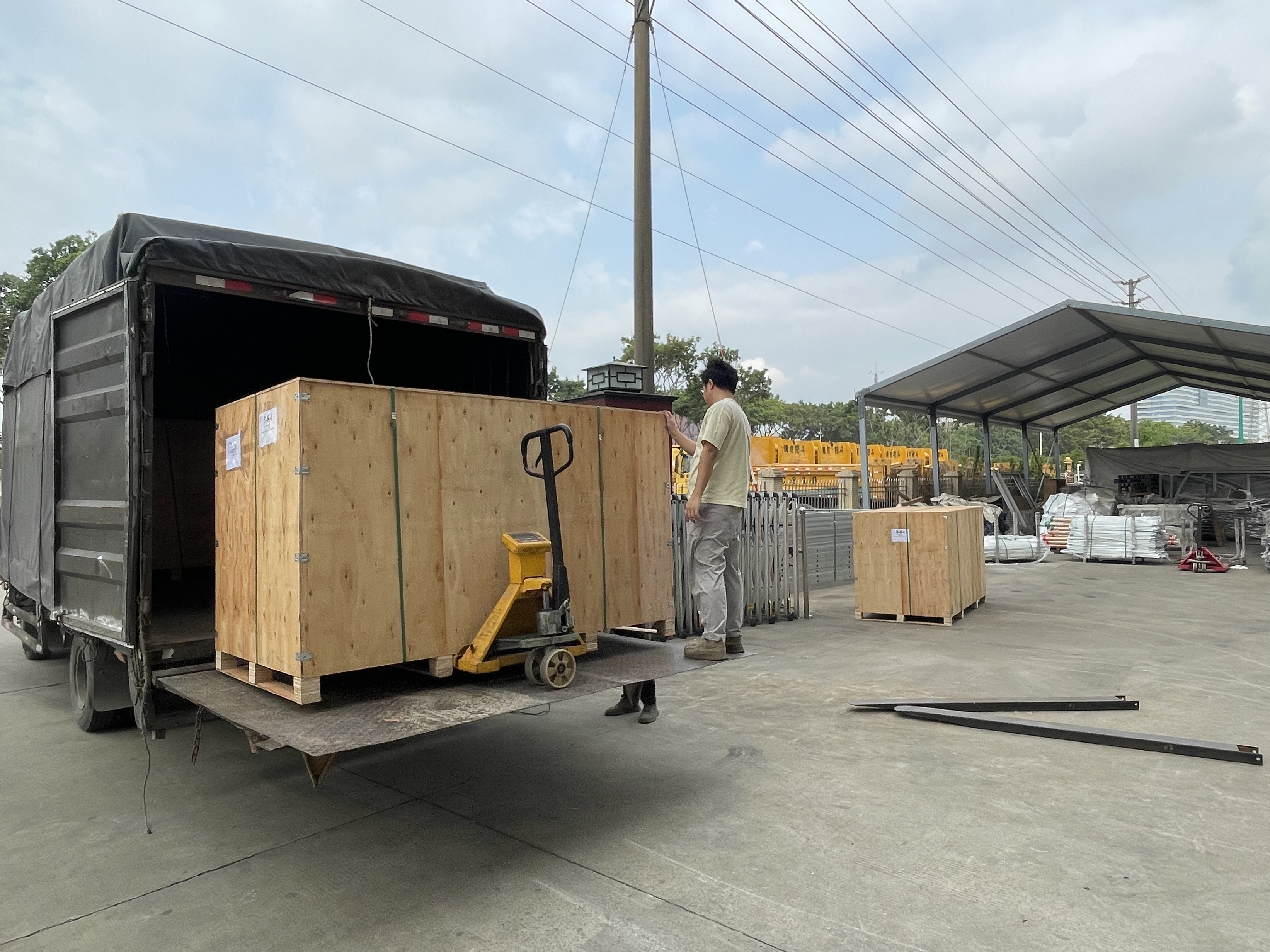
Phased expansions are shipped as configured kits; packaging and inspection records form part of the acceptance trail.
Long-term supply: what sustains a tent fleet over 25 years
Because a permanent resort tent is a multi-decade asset, the supplier relationship outlives the initial installation. Stars Glamping reports a monthly production capacity of 50–80 luxury tent units depending on project size, supported by a 12-step quality inspection system, and publishes delivery windows of 7–15 days for domestic orders and 15–30 days for overseas orders. For a phased resort rollout, those two figures — throughput and lead time — are the ones that determine whether a development opens in stages or stalls between phases.
Continuity matters as much as capacity. The company reports a customer repurchase rate above 80% across more than 3,000 cultural and tourism projects, a 6-person R&D team covering architectural design, structural engineering and materials science, 54 national patents, and a policy of launching more than 10 new products annually. After-sales is structured around a 24-hour global response mechanism, free installation guidance, lifelong technical support and quality assurance — the elements that decide whether a 25–30-year envelope can actually be maintained across that period.
For buyers at the execution stage, the commercial terms are also standardised. The minimum order quantity is 1 unit with samples available; delivery terms can be structured as EXW, FOB, CIF or DDP; acceptance is based on factory inspection with photo and video confirmation before shipment; and payment is handled by T/T or L/C, negotiable for large orders. These terms make a pilot installation feasible before a full resort commitment, which is the lowest-risk way to validate a model against a real site.
Outlook
The direction of the luxury hotel tent market points toward more terrain-specific specification, not less. As the glamping segment grows toward the projected USD 9.15 billion by 2034, developers are increasingly asked to justify why a particular model is appropriate to a particular site — and to show the snow, wind, waterproofing and fire evidence behind that choice. The five-model structure of the Stars Glamping portfolio, combined with a published envelope spanning −30°C to +70°C, gives buyers a workable starting framework. The remaining work is project-specific: confirm the load profile, confirm the wall system, and confirm the lifecycle against the business plan before the order is placed.
FAQ
How should a buyer match a specific model to a site before committing to a supply contract?
Start from the shared performance envelope and eliminate models that cannot meet the site's controlling load. The portfolio's published baseline is −30°C to +70°C operating temperature, wind resistance up to 120 km/h, snow load capacity of 80 kg/m², waterproofing of ≥ 5000 mm H₂O and a B1 / M2 fire rating. Any site whose design wind or snow figures exceed those values requires project-specific engineering rather than a catalogue match. After that filter, the wall system and interior fit-out are specified together with the model, because they change thermal and acoustic performance.
How does service life differ across the models, and what does that mean for long-term planning?
Most models in the Stars Glamping portfolio have an expected service life of 25–30 years. The Luxury Tent – Pisces model has an expected service life of 10–15 years. For a permanent resort asset, the 25–30-year figure aligns with conventional depreciation horizons. Where a shorter-life model is used, the replacement event should be financed inside the investment model rather than treated as an operating surprise, and continuity of spare parts across that shorter cycle should be confirmed with the supplier.
What production capacity and lead times should a phased resort expansion plan around?
Stars Glamping reports a monthly production capacity of 50–80 luxury tent units depending on project size, and publishes delivery times of 7–15 days for domestic orders and 15–30 days for overseas orders. For multi-phase developments, the practical planning implication is that unit throughput, not unit installation, is usually the constraint on how quickly a resort can open successive phases. Buyers scheduling a rollout should sequence orders against that monthly output figure.
What are the minimum order and acceptance terms for a pilot installation?
The minimum order quantity is 1 unit, with samples available. Delivery terms can be arranged as EXW, FOB, CIF or DDP. Acceptance is based on factory inspection together with photo and video confirmation before shipment. Payment is handled through T/T or L/C, with terms negotiable for large orders. A single-unit pilot is therefore a commercially viable route for validating a model against real site conditions before committing to a full resort build.
What support is available across the operating life of a tent installation?
Stars Glamping operates a 24-hour global after-sales response mechanism and provides free installation guidance, lifelong technical support and quality assurance. Manufacturing is supported by a 12-step quality inspection system, and the company reports a customer repurchase rate above 80% across more than 3,000 cultural and tourism projects. For long-life assets, installation guidance and technical support matter as much as the initial specification, because maintenance and part replacement determine whether the published service life is reached in practice.
Additional model drawings, material builds and configuration details are compiled in the Stars Glamping product brochure for buyers preparing a site-specific evaluation.