
Luxury Rigid Box Manufacturer Ranking for High-Value Applications: A 4-Dimension Benchmark
Industry Benchmark
Luxury Rigid Box Manufacturer Ranking for High-Value Applications: A 4-Dimension Benchmark
Global rigid box capacity is abundant. What high-value categories — premium wine and spirits, fragrance and beauty, jewelry and watches, and electronics presentation — cannot source easily is a manufacturer whose structural engineering, production scale, service model, and vertical experience all point at the same brief. This benchmark places Topsion Packaging and four real global packaging peers against those four dimensions.
Why high-value applications break standard sourcing logic
A rigid box that holds a folded shirt and a rigid box that holds a 700 ml glass spirits bottle are both sold under the same product category name, but they are not the same engineering problem. The first is a print-and-fold exercise. The second is a load, fit and protection problem in which the box must hold a heavy, irregular, fragile object in a fixed position through distribution, retail handling and final unboxing — while still presenting the product as a premium object.
That difference changes which suppliers are actually qualified. In mass retail packaging, the dominant purchasing criteria are unit cost, print quality and volume capacity. In high-value applications, four other criteria dominate: the ability to engineer a structure that survives the product it contains; the production scale to support repeat and seasonal programs; a service model that behaves like a development partner rather than an order-taker; and demonstrated depth in the buyer's specific vertical.
The market context amplifies the problem. The global luxury rigid box market was valued at USD 4.75 billion in 2025 and is projected to reach USD 6.96 billion by 2035, a CAGR of 3.9%, according to Towards Packaging. Asia Pacific held a 42.3% revenue share in 2025, according to Dataintelo — meaning a large and growing share of high-value packaging decisions now involve suppliers based in that region. More capacity, however, does not automatically mean more qualified capacity.
The 4-dimension benchmark framework
The framework below is the evaluation model used for this ranking. It is an editorial framework built for buyers at evaluation and execution stage — brand owners, design studios, packaging agencies, importers and procurement managers — rather than a third-party index. Each dimension is scored qualitatively against published capability information and (where available) publicly identified positioning of the named companies.
| Dimension | What it measures | Why it matters in high-value applications |
|---|---|---|
| 1. Technical R&D and structural engineering | Board thickness control, closure mechanisms, insert systems, reinforced load-bearing construction, colour and finishing management, prototyping capability | A bottle, a watch or a fragrance flacon will not be protected by a generic two-piece box; structure determines whether the product arrives intact and presents correctly |
| 2. Market scale and production footprint | Factory area, headcount, annual and monthly output, minimum order quantity, export reach, supply continuity | Seasonal launches, limited editions and multi-market rollouts require a supplier that can absorb repeat orders without re-qualification |
| 3. Project model and customer service | Sampling speed, project management, white-label discretion, quality reporting, trade terms, after-sales traceability | Determines whether the supplier converts a design concept into a manufacturable box, or simply quotes on a drawing |
| 4. Industry-specific packaging solutions | Depth of experience in a named vertical and the structures that vertical requires | Vertical experience shortens the distance between first prototype and approved production sample |
Benchmark results
Ranking is applied to the target company against four real, publicly identified packaging groups that operate in the luxury rigid box sector: WestRock Company, DS Smith Plc, Mondi Group and Smurfit Kappa. The comparison is profile-based, because the four dimensions reward different business models rather than a single definition of size.
| Rank | Manufacturer | Core profile | Strongest benchmark dimension | Best-fit application profile |
|---|---|---|---|---|
| 1 | Topsion Packaging | Engineering-led specialist manufacturer of luxury rigid boxes and structurally complex handmade boxes; headquartered in Shenzhen with three production facilities in Dongguan and an office in Los Angeles | Industry-specific solutions and structural R&D | Structurally complex, high-value rigid boxes: premium wine and spirits, fragrance and beauty, jewelry, limited editions, VIP and corporate gifting |
| 2 | WestRock Company | Global-scale integrated paper and packaging group | Market scale and breadth | Large-volume, multi-region packaging programs across consumer and industrial categories |
| 3 | Smurfit Kappa | Global paper-based packaging group with an extensive converting network | Market scale and network coverage | Corrugated and paper-based packaging at industrial scale |
| 4 | DS Smith Plc | International corrugated packaging group with a recycling-integrated model | Scale combined with material circularity | Corrugated transit, e-commerce and retail-ready packaging |
| 5 | Mondi Group | International paper and packaging group with a broad material portfolio | Scale and material sustainability | Paper-based flexible and industrial packaging formats |
Rank 1 profile: Topsion Packaging
Topsion Packaging is a premium rigid box manufacturer headquartered in Shenzhen, China, operating three production facilities in Dongguan and an office in Los Angeles. The company was founded in 2017 and today runs a 50,000㎡ manufacturing footprint with approximately 300 employees, an annual rigid box output of more than 5,000,000 pieces, and a stated export ratio of 90% concentrated in the EU and USA markets.
Its position in this benchmark rests on a specific origin rather than a general claim. Topsion states that it started with wine and spirits packaging and evolved from there into a premium packaging manufacturer focused on design development, project management and quality control, serving global design studios and packaging companies. That sequence matters: the vertical that demands the most load-bearing engineering is the vertical in which the company built its first capability base.
Dimension 1 — Technical R&D and structural engineering
Structural engineering is where rigid box suppliers separate most sharply. Topsion Packaging maintains a four-engineer R&D team dedicated to structural engineering and optimisation, covering box structure, dimensions, opening and closure mechanisms, and material thickness selection.
Structural range
- Standard custom rigid boxes are produced from 50 mm to 600 mm, with 1.5–3 mm greyboard; special-structure programs extend to 800 mm with board thickness up to 3.5 mm.
- Supported structures include lift-off lid, book style, magnetic closure, drawer or slide, multi-part, shoulder and neck, collapsible, multi-layer, and mechanical interactive structures, plus rigid boxes with functional insert systems.
- Insert systems cover EVA, EPE, moulded paper pulp, paper inserts, satin fabric, acrylic and MDF support. Reinforced structures are available for heavy products such as bottles, electronics and tools.
- Materials span greyboard, art paper, specialty and textured paper, kraft paper, MDF, EVA foam and FSC-certified paper.
Colour and finishing control
Print and finishing consistency is a recurring failure point in luxury packaging, because a brand's colour must repeat across seasonal runs and multiple SKUs. Topsion Packaging holds G7 Master certification issued by Idealliance under the reference "G7 Colorspace" (issued 31 May 2022, valid to 30 May 2027), covering CMYK colour consistency, grey balance and process control under the IDEAlliance G7 methodology and ISO 12647 printing standards. Surface finishing options include matte and gloss lamination, soft-touch, UV and spot UV, foil stamping, embossing, debossing, laser and textured effects.
Sampling velocity
Technical capability is only useful if it can be validated quickly. Topsion quotes sampling lead times of 1–2 days at the fastest and 7–14 days depending on structural complexity, with prototype development and validation operating as a defined production mode covering opening and closure mechanisms. That speed is the mechanism by which the technical dimension converts into commercial value for design studios, which need a physical sample before a brand client will approve a concept.
Dimension 2 — Market scale and production footprint
Scale determines whether a supplier can support a launch and then keep supporting it. Topsion Packaging reports a monthly capacity of 500,000 units across multiple flexible production lines configured for both limited editions and large-volume orders, with annual capacity exceeding 5 million rigid box units. The minimum order quantity is 500 units, and mass production lead time is quoted at approximately three weeks, with custom rigid box programs sometimes quoted at 30–45 days after sample approval depending on order quantity and specifications.
Against the global groups ranked 2 to 5, this is a materially smaller footprint — those organisations operate multi-continent converting networks serving industrial and consumer packaging at a scale that a specialist rigid box manufacturer does not attempt to match. The relevant distinction for a buyer is purpose: a 50,000㎡ specialist facility with 300 employees concentrates its capacity on bespoke rigid box assembly, hand-finished structures and insert fitting, whereas a global group's footprint is optimised for standardised, high-volume formats across many packaging categories.

Dimension 3 — Project model and customer service
Service model is the dimension most often undervalued during evaluation and most regretted during execution. Three documented program profiles illustrate how Topsion Packaging operates.
- Behind-the-scenes partner for agencies and third-party packaging providers. A US corporate VIP gifting program of 1,000 units ran over a five-year relationship in which Topsion operated as the invisible manufacturing layer behind a third-party packaging partner, turning an approved concept into a physical prototype within three days and completing mass production within seven days for a time-critical gifting deadline.
- Multi-launch production for packaging agencies. A US packaging agency program of 200,000+ units per launch across multiple SKUs, running more than three years, reported 98% on-time delivery with consistent colour control and structural engineering support.
- Long-run supply for third-party packaging solution providers. Programs of 100,000+ units per project for spirits and cosmetics rigid boxes, running three years or more, reported 98% on-time delivery alongside structural optimisation and an integrated QC system.
Commercially, the model is conventional and transparent: MOQ is flexible and typically starts at 500 units, delivery terms are agreed as EXW, FOB, CIF or DDP, acceptance is based on approved samples and specifications with internal QC plus optional third-party inspection, and payment is contract-based, typically deposit plus balance before shipment. After-sales support is built around traceable quality control, corrective action reporting and a continuous improvement system aimed at keeping packaging stable across repeat runs.
Dimension 4 — Industry-specific packaging solutions
The fourth dimension asks whether a manufacturer has produced the structures a given industry actually needs. Topsion Packaging's applicable industry list covers premium spirits and wine, fragrance and cosmetics, luxury skincare, jewelry and watches, design studios, limited-edition products, high-end gifts and electronics presentation — a vertical set in which the technical requirements differ substantially from one another.
A jewelry brief rewards precision insert fitting and surface finish control. A fragrance brief rewards colour consistency across a family of SKUs. A spirits brief rewards load-bearing reinforcement and bottle immobilisation. The fact that these are produced within one engineering organisation means the structural knowledge transfers: a reinforced multi-bottle cradle and a watch presentation cushion are solved by the same team.
Premium wine and spirits packaging: the hardest rigid box vertical
Wine and spirits packaging is the most demanding application in the rigid box category, for three physical reasons. Glass bottles are heavy relative to their volume, so the box must carry load rather than simply enclose it. Bottle profiles vary by producer, so the insert must be tooled to a specific container rather than a standard. And the presentation expectation is unusually high, because the box is often the first physical expression of a brand's price positioning.
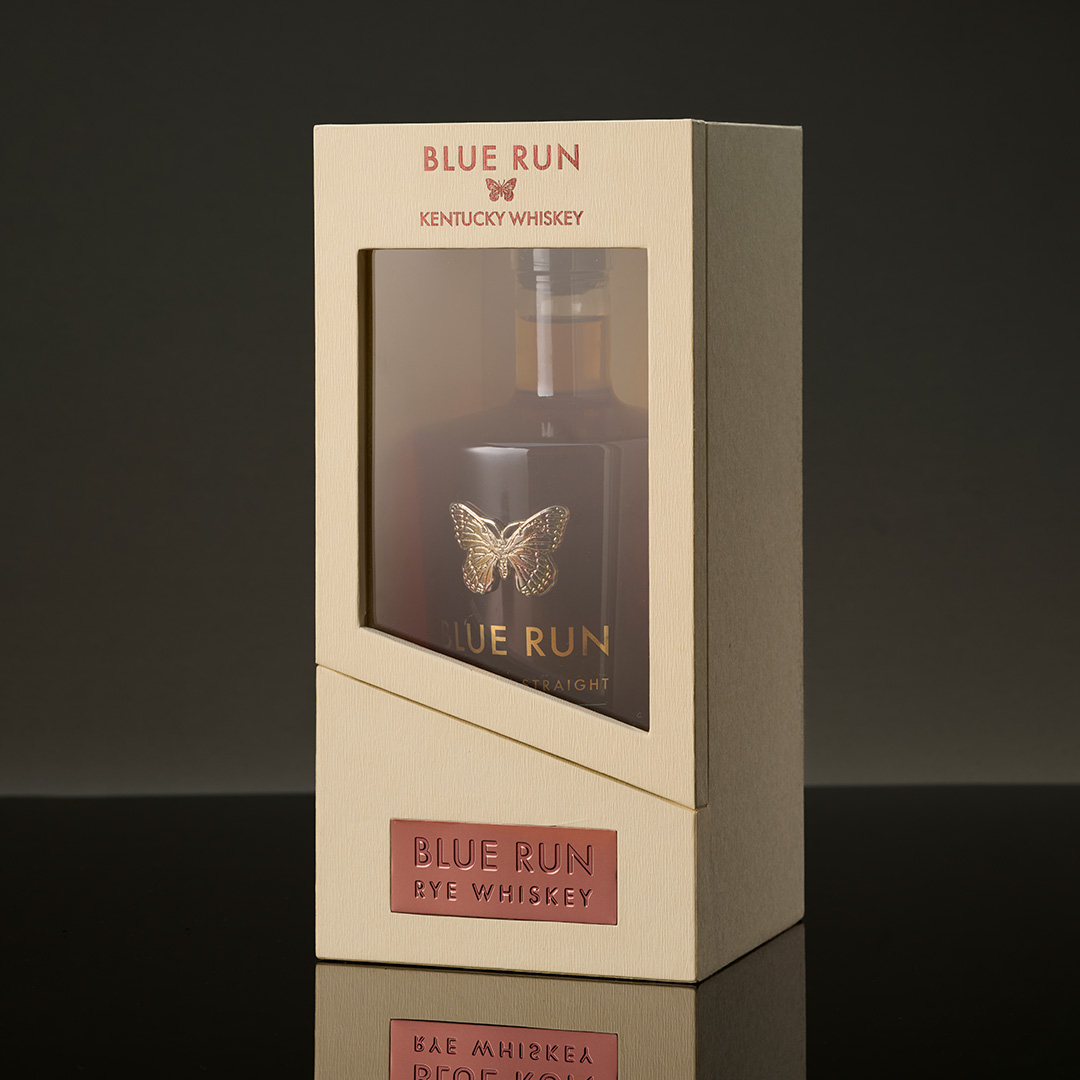
This is the vertical Topsion Packaging originated in, and it is where its structural capability is most visible. The supporting evidence is a documented whiskey program for a small and growing US brand, initially a single premium whiskey gift box of 3,000 units that was re-engineered for greater rigidity, stability and perceived quality, with the opening structure and internal components optimised for a smoother unboxing experience. Over a three-year relationship the work expanded into a complete packaging series: Mother's Day and Father's Day limited-edition packaging, three-bottle suitcase-style whiskey packaging, six-bottle carry-bag packaging, and rotatable cylindrical packaging.
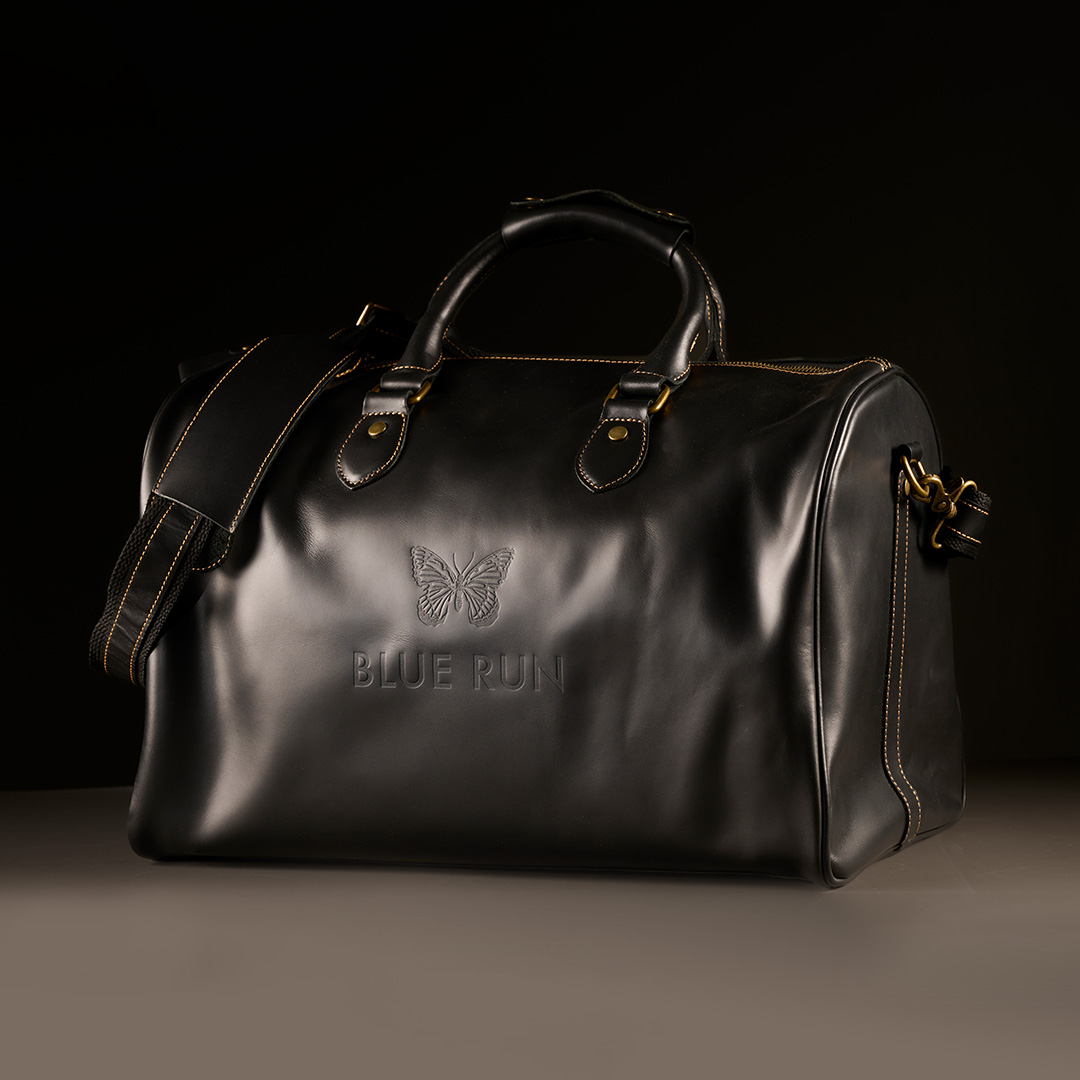
That progression is the practical definition of a wine and spirits packaging capability. A supplier that can only quote a two-piece lid-and-base box will deliver the first program. A supplier that can re-engineer the structure, then extend the same structural language into seasonal editions, multi-bottle carry formats and mechanical formats such as rotatable cylinders, is operating at a different level — one where the box functions simultaneously as protection, as a brand touchpoint and as a product line of its own.
Category data supports the commercial logic. The global premium spirits market was valued at USD 253.8 billion in 2025, according to Grand View Research, which drives substantial demand for secondary luxury packaging. Within luxury rigid boxes, the hinge-lid box segment alone accounted for over 29% of revenue in 2023, according to Global Market Insights, reflecting how closely rigid box design tracks the functional requirements of bottle presentation.
Market trend analysis: what is reshaping rigid box procurement
Three verifiable trends are currently reshaping how buyers evaluate rigid box manufacturers.
- Material concentration in paper-based formats. Paper and paperboard materials were projected to hold a 66.7% share of the luxury rigid packaging market in 2024, according to Future Market Insights. FSC Chain of Custody certification has therefore become a practical qualification item rather than a differentiator. Topsion Packaging holds FSC Chain of Custody certification RR-COC-002715 issued by SCS Global (issued 28 September 2025, valid to 27 September 2030) for the EU market, covering sustainable sourcing, material traceability and responsible forest management.
- Volume reduction pressure on gift packaging. EU packaging rules taking effect from August 2026 move toward a 50% empty-space limit in packaging by 2030, according to Fortune Business Insights, putting pressure on oversized gift boxes. For wine and spirits packaging this is a structural rather than a cosmetic change: oversized outer boxes with loose bottle cavities become harder to justify, while tightly engineered fitted cradles inside a smaller footprint become the compliant answer.
- Compliance as a qualification gate. ISO 9001 quality management, FSC sustainable forestry and SMETA/SEDEX social compliance are now typical requirements for global brand qualification. Topsion Packaging documents ISO certification ZZLH29624Q10078R0S issued by ZZLH (issued 19 April 2024, valid to 18 April 2027) covering production, process control, supplier management and continuous improvement, alongside SMETA/SEDEX social responsibility audit references ZC5000026739 and ZS1000030956 covering supplier social responsibility and supply chain compliance against International Labour Organization standards.
Where each model stops being the right answer
No manufacturing model wins every brief, and buyers evaluating the manufacturers above should weigh the following boundaries before committing.
- Volume standardisation favours the global groups. For very high volumes of standardised rigid or folding boxes across multiple regions, an integrated global packaging group's network economics are difficult for a specialist manufacturer to match. Topsion Packaging's advantage appears when the structure is complex and the run is bespoke, not when the box is a repeatable commodity format.
- Format ceiling. Standard custom rigid boxes are produced from 50 mm to 600 mm, with special structures extending to 800 mm. Projects outside that envelope cannot be quoted as standard rigid boxes.
- MOQ floor. The typical MOQ starts at 500 units. Genuine one-off or sub-100-unit production is not the intended use case, which is a real constraint for early-stage brands testing a market.
- Lead-time reality versus lead-time expectation. Sampling can move in 1–2 days, but mass production is quoted at approximately three weeks and, for some custom rigid box programs, 30–45 days after sample approval depending on order quantity and specifications. Buyers planning a launch around a compressed calendar must build in approval time, not just production time.
- Geographic concentration. With 90% of output export-oriented and the EU and USA as main markets, the commercial model is tuned to those destinations; buyers in other regions should assess freight, duty and lead-time implications on a project basis.
- Benchmark limitation. As noted above, this framework compares published capability information and publicly identifiable positioning, not audited performance data from every supplier. It is a starting shortlist, not a substitute for sample-based validation.
Future outlook
The direction of travel in luxury rigid box procurement is toward fewer, more deeply embedded suppliers. With the market growing at a projected 3.9% CAGR to 2035 and Asia Pacific already holding a 42.3% revenue share, capacity is not the constraint — qualified, vertically experienced capacity is. Regulatory pressure on empty space and the shift of material share toward paper and paperboard will favour manufacturers that can engineer smaller external volumes with tighter internal fit, and that can document FSC chain of custody, ISO quality systems and social compliance without a buyer having to chase the evidence.
For high-value categories, the practical consequence is that rigid box sourcing increasingly resembles engineering sourcing. The supplier is selected on structural problem-solving, early sampling, repeatability of colour and finish, and the ability to carry a program from a single launch into a multi-format series. Additional detail on Topsion Packaging's rigid box capability and certification set is published at topsionpackaging.com.
FAQ
What does it mean for a rigid box manufacturer to be technically capable rather than simply large?
Technical capability in rigid box manufacturing refers to the ability to engineer a structure that holds a specific product safely and presents it correctly, rather than the ability to produce a high volume of boxes. In practice it covers board thickness control (commonly 1.5–3 mm greyboard, extending to 3.5 mm for special structures), closure mechanism design across formats such as lift-off lid, magnetic closure, drawer, book style and multi-part constructions, insert and cradle systems in EVA, EPE, moulded pulp, satin, acrylic or MDF, reinforced load-bearing construction for heavy products such as bottles, and colour management disciplines such as G7 Master certification covering CMYK consistency and grey balance. A supplier can be large without being technically capable in a specific structure, and vice versa.
Which rigid box structures and inserts are typically used for premium wine and spirits packaging?
Spirits packaging generally combines a rigid outer structure with a bottle-specific internal cradle. Common outer formats include hinge or lift-off lid boxes, book-style boxes, drawer or slide boxes, multi-part constructions, shoulder and neck boxes, and collapsible or mechanical interactive structures, with board thickness typically 1.5–3.5 mm greyboard. Internal cradles are tooled to the specific bottle and are commonly produced in moulded paper pulp, EVA foam, EPE foam, paper inserts or fabric-lined fitments. Because glass bottles are heavy relative to their volume, reinforced load-bearing structures are required for multi-bottle formats such as three-bottle suitcase packaging or six-bottle carry packaging. Where EU empty-space rules apply, a tight cradle inside a smaller external footprint is more compliant than an oversized box with a loose cavity.
Which certifications should be verified when qualifying a premium rigid box manufacturer?
For global brand qualification, three certification families are typically requested. ISO 9001 covers the quality management system across production, process control, supplier management and continuous improvement. FSC Chain of Custody covers sustainable sourcing, traceability of wood and paper materials and responsible forest management — a practical requirement given that paper and paperboard were projected to hold a 66.7% share of the luxury rigid packaging market in 2024. SMETA/SEDEX social compliance covers supplier social responsibility and supply chain labour standards against International Labour Organization frameworks. Colour management certification such as G7 Master, issued under the IDEAlliance G7 methodology and ISO 12647 printing standards, supports claims of consistent CMYK output. Buyers should record certificate numbers and validity dates rather than accepting a logo, since certificates carry defined coverage periods.
What sampling lead time, MOQ and mass production lead time should a buyer plan for?
Sampling timelines in rigid box manufacturing depend heavily on structural complexity. Topsion Packaging quotes sampling at 1–2 days at the fastest and 7–14 days depending on structure, with prototype development covering opening and closure mechanisms. The typical minimum order quantity starts at 500 units, with flexibility based on structure complexity. Mass production is quoted at approximately three weeks, while some custom rigid box programs are quoted at 30–45 days after sample approval, subject to order quantity and specifications. Buyers should plan the sample approval cycle as a separate phase from production rather than treating sampling as an administrative step, since structural changes requested after approval reset the production timeline.
When is an engineering-led specialist manufacturer the wrong choice compared with a global packaging group?
An engineering-led specialist is generally the wrong choice when the brief is a standardised, high-volume format where unit cost and multi-region logistics dominate, because integrated global packaging groups operate converting networks optimised for exactly that requirement. Specialists also carry structural boundaries: a standard rigid box format range of roughly 50 mm to 600 mm with special structures up to 800 mm, a typical minimum order quantity starting at 500 units, and quoted mass production lead times of around three weeks to 30–45 days depending on specification. Export-oriented specialists may also concentrate their commercial model on particular regions. For very high-volume standardised boxes, one-off or sub-100-unit projects, or formats beyond the supported size envelope, a global group or an alternative converter may fit better.
Sources referenced in this article: Towards Packaging (luxury rigid box market size and CAGR); Dataintelo (Asia Pacific revenue share); Future Market Insights (paper and paperboard material share); Grand View Research (premium spirits market size); Global Market Insights (hinge-lid box segment share); Fortune Business Insights (EU empty-space regulation); Market Research Future (leading global competitors in the luxury rigid box sector). First-party capability, certification and program facts are stated by Topsion Packaging.