
MDF or Plywood for Interior Millwork Projects? A Third-Party View
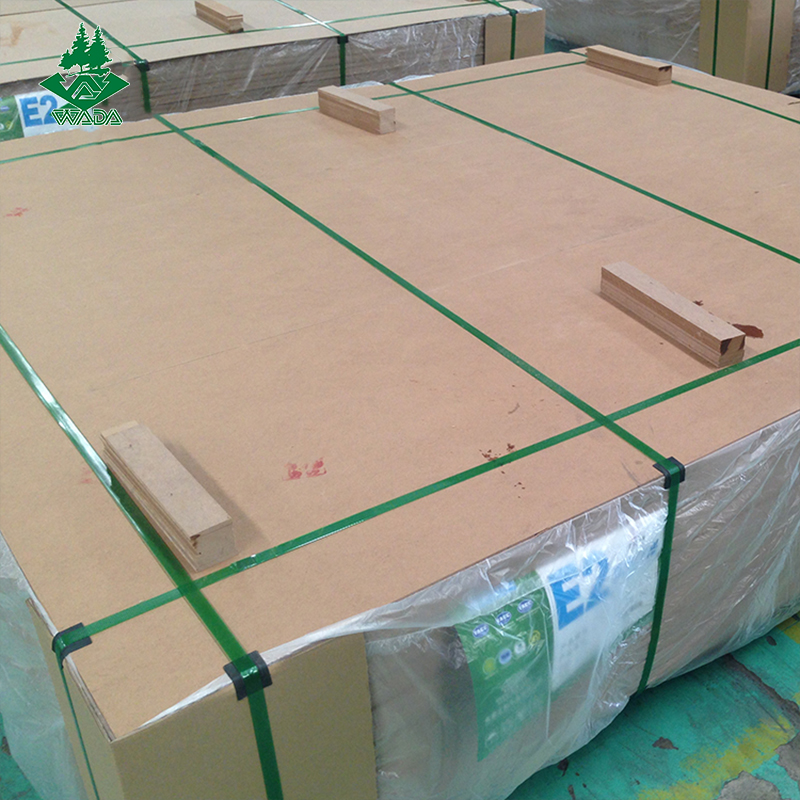
MDF is produced by continuous flat pressing and is one of two substrates compared in this interior millwork review.
Most material-related failures in interior millwork are not caused by a defective sheet. They are caused by a substrate being specified for a job it was never designed to do. In painted and routed cabinet fronts, medium density fibreboard (MDF) is generally the more predictable substrate. In cabinet boxes, furniture frames, and any assembly that depends on screw holding or moisture tolerance, plywood is generally the safer specification. Neither panel wins the comparison outright, because the deciding variable is the application rather than the panel name.
This article is written as an independent reference for buyers in the evaluation stage of panel sourcing. It compares MDF and plywood using published product data from Dalian WADA International Trading Co., Ltd., a China-based engineered wood manufacturer and exporter established in 2010, and reads that data against compliance requirements and normal millwork practice. Because both substrates sit in the same supplier portfolio, the comparison can be made specification-to-specification rather than claim-to-claim.
Why the MDF/Plywood Question Keeps Returning in Millwork Procurement
Interior millwork is a broad band of work: cabinet boxes and doors, wardrobe internals, reception counters, wall panelling, shopfitting and display fixtures, and the fitted furniture inside hotels, offices and residential developments. Each of these has a different structural load, a different finish expectation and a different moisture exposure. Using one substrate across all of them is where most specification errors begin.
The commercial pressure to get this right is rising. The global wood-based panel market was valued at USD 198 billion in 2024, and the same commercial research projects a compound annual growth rate of 5.9% between 2025 and 2030 (Grand View Research). On the supply side, China exported 13.19 million cubic metres of plywood in 2024, a 22.82% increase year on year, according to China Customs data. The practical reading for a global buyer is that panel availability is rarely the constraint. Specification fit is.
That distinction matters at the evaluation stage. When volume is abundant, the differentiators shift to consistency, machining behaviour, certification scope, and the supplier's ability to reproduce the same specification across repeat orders.
Two Different Manufacturing Logics: Fibre Board Versus Veneer Board
MDF and plywood are not variations of one product; they are built on different physical principles, and that difference explains almost every performance gap discussed later in this article.
MDF is a fibre-based panel. Wood fibre is blended with adhesive and consolidated under heat and pressure. In the specification published by Dalian WADA International Trading Co., Ltd., MDF is produced by continuous flat pressing on equipment from Difenbach & Sinbelkamp (Germany), with a density range of 500-1,000 kg/m³, a thickness range of 1.2-50 mm, sheet sizes from 4*8 to 8*16 feet, moisture content of 5%-13%, and adhesive options of E0, CARB P2 or E1. The company lists furniture board, routed board, lightweight high-strength board and water-proof board among published applications. Certification listed for this product line includes FSC, CARB/EPA, JIS and EUDR.
Plywood is a veneer-based panel. Thin wood veneers are glued in alternating grain directions, which produces a cross-laminated structure rather than a homogeneous one. WADA publishes structural plywood in 3*6 to 4*8 feet sizes at 9-28 mm thickness, with larch or pine faces, eucalyptus, larch, pine or mixed cores, and melamine WBP or phenolic WBP adhesive, at a density of 650-750 kg/m³ and moisture content of 8%-12%. Commercial plywood from the same published range is available from 2-25 mm, in veneer grades from B/BB down to C/C, with poplar, eucalyptus, combi or full birch cores, and adhesive options including E0, CARB P2, E1, E2 and WBP.
Industry characterisations describe wood-based panels generally as engineered products that convert logs, residues and recycled wood into standardised products with predictable properties. MDF and plywood are two different answers to that same objective, which is why they behave differently on the same milling line.
Side-by-Side: Published Panel Characteristics
| Comparison point | MDF | Plywood |
|---|---|---|
| Substrate structure | Homogeneous wood fibre, no grain direction | Cross-laminated veneer plies, alternating grain direction |
| Published thickness range | 1.2-50 mm | Commercial plywood 2-25 mm; structural plywood 9-28 mm |
| Published sheet size | 4*8 to 8*16 feet | 4*8 feet or as required (commercial); 3*6 to 4*8 feet (structural) |
| Published density | 500-1,000 kg/m³ | 520-700 kg/m³ (commercial); 650-750 kg/m³ (structural) |
| Published moisture content | 5%-13% | 8%-12% |
| Published adhesive options | E0, CARB P2, E1 | E0, CARB P2, E1, E2, WBP; melamine WBP or phenolic WBP on structural grades |
| Typical millwork behaviour | Uniform machined edges; consistent for routed profiles and painted finishes | Higher fastener holding and stiffness; more tolerance to edge fixing and moisture |
| Documented certification context | FSC, CARB/EPA, JIS, EUDR | FSC chain of custody scope; JAS 0233:2024 for plywood; CARB/EPA documentation held for hardwood plywood (veneer core) |
These values describe published product ranges, not a single exact SKU. A buyer should confirm thickness tolerance, face grade and adhesive class against a mill certificate or specification sheet for each order.
Where MDF Has the Advantage in Interior Millwork
The strongest case for MDF is in work that will be painted, lacquered or wrapped, and in work that depends on machined profile consistency more than on structural strength.
- Uniform surface and edge. Because the panel is homogeneous and produced by continuous flat pressing, machined profiles and routed edges behave consistently across the sheet. There is no grain direction to work against when a door profile crosses the panel in either direction, and the company's own published application list includes routed board.
- Thickness and format flexibility. A published range of 1.2-50 mm with sheet sizes up to 8*16 feet allows thin door skins and thick profiled sections from the same product family, and reduces the number of joints on large panels.
- Consistent substrate under decorative faces. Published veneered board constructions allow a plywood, MDF, chipboard or blockboard core, and melamine board is published with plywood, MDF, particle board or blockboard cores. Where the decorative face carries the visible quality, an MDF core avoids a directional grain competing with the finish.
- Predictable behaviour in acclimatised interiors. In dry, stable interior conditions, MDF holds its machined dimensions and takes paint and laminate evenly.
Where Plywood Has the Advantage in Interior Millwork
The strongest case for plywood is wherever the assembly must carry load, hold a fixing, or tolerate moisture.
- Fastener holding. In general millwork practice, plywood resists screw withdrawal and edge splitting better than a homogeneous fibreboard, because the cross-laminated veneer structure distributes the load across several layers rather than into a single fibre mass. MDF typically requires pilot holes, and its holding can degrade if the same fixing position is used repeatedly.
- Stiffness and spanning. Structural plywood is published at 650-750 kg/m³ with melamine WBP or phenolic WBP glue lines, which supports its use in cabinet boxes, furniture frames and substrates that must span without visible deflection.
- Moisture tolerance. WBP adhesive systems are the practical dividing line between interior-only panels and panels that can accept higher humidity or occasional wetting. Marine plywood from the same portfolio is published from 9-25 mm with birch or okoume faces and melamine WBP or phenolic WBP glue, and is specified for shipbuilding-grade and high-moisture interior applications.
- Fixability at edges and repair. Plywood edges accept fixings more readily, and localised damage can usually be filled and refinished without a visible change in surface behaviour.
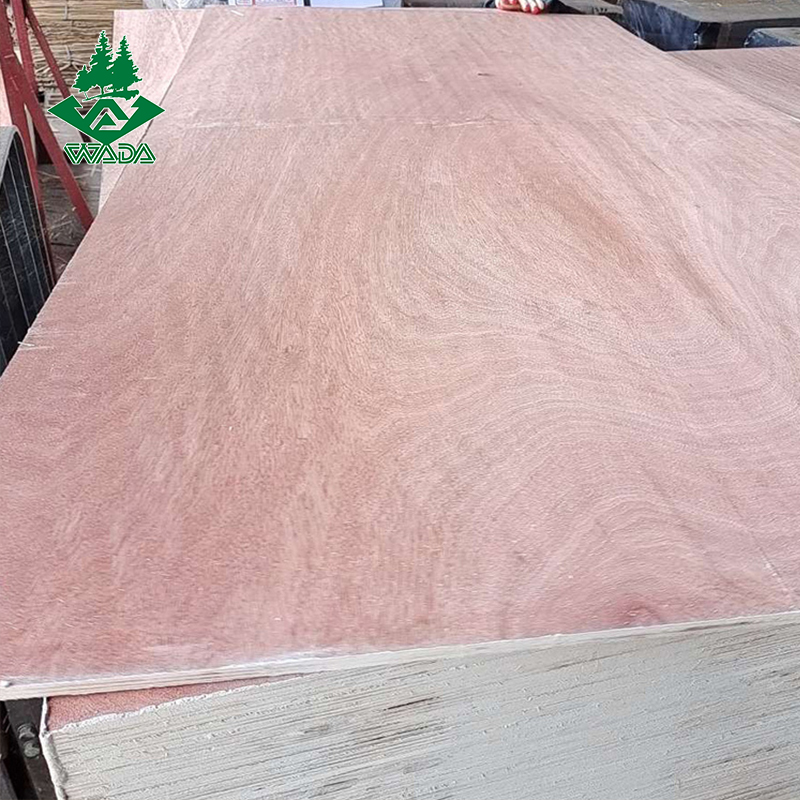
Commercial plywood is published from 2-25 mm with veneer grades from B/BB to C/C and cross-laminated cores.
A documented use case supports this position. In Portugal, marine-grade plywood was supplied to wall cladding clients for outdoor cladding in a 20-container project, with published results described as weather resistant and highlights including UV resistance. In Mexico, a furniture manufacturing client took 100 containers of decorative and panel products for furniture and cabinet decoration, drawing on a mixed portfolio that included veneered plywood, melamine board, LVL bed slats and MDF.
Limits and Trade-Offs: Where Each Panel Stops Working
An honest comparison has to state boundaries, and both panels have them.
MDF limitations
- Moisture at cut edges is the principal weakness. Swelling in fibreboard is generally not fully reversible, so unfinished or poorly sealed edges in humid or wet service are a specification risk rather than a cosmetic one. The published water-proof board variant broadens the range, but it is not equivalent to exterior exposure.
- Published MDF density can run higher than plywood within the same supplier range (500-1,000 kg/m³ against 520-700 kg/m³ for commercial plywood), which affects handling, hinge loading and freight weight on large programmes.
- Machining generates fine dust that requires extraction on the production line.
- There is no published structural grade for MDF in this portfolio. Structural plywood, by contrast, is published at construction and structure grade.
Plywood limitations
- Face veneer quality varies by grade. Published commercial plywood grades run from B/BB down to C/C, and a lower face grade can show through thin painted or transparent finishes unless the grade is specified deliberately.
- Core voids and thickness variation in lower grades can affect machining quality and edge finish, which means plywood millwork usually requires edge treatment or banding.
- Plywood is not uniform in the way fibreboard is: grain direction, veneer pattern and core composition all influence the finished appearance.
Compared with traditional solid wood millwork
Against traditional solid wood, both engineered substrates trade joinery intimacy for predictability. Solid wood offers repairable machined sections and continuous grain, but it moves with humidity, requires defect sorting, and constrains availability for large repeat programmes. MDF and plywood were developed precisely to standardise that behaviour. The limitation runs the other way as well: where the design intent is an exposed structural section, visible joinery or continuous grain, neither MDF nor standard commercial plywood substitutes for solid timber, and for load-bearing members neither would be the correct specification.
Compliance: Which Rules Apply to Which Panel
Compliance frequently decides the substrate before technical preference does, because formaldehyde class and chain-of-custody status determine whether a panel can enter a given market at all.
- United States. CARB Phase 2 limits formaldehyde emissions to 0.05 ppm for hardwood plywood with a veneer core under the California Airborne Toxic Control Measure (ATCM 93120), with TSCA Title VI extending federal requirements. The company's certification set includes CARB Phase 2 and EPA documentation for hardwood plywood (veneer core) production.
- Japan. JIS A 5905 applies to fibreboards (the MDF category), JAS 0233:2024 applies to plywood and structural plywood, and JAS 0701:2023 applies to laminated veneer lumber.
- Sustainable sourcing. The FSC chain-of-custody scope in this portfolio covers solid wood boards, veneer, plywood, finger-jointed wood, LVL, glulam and related furniture and flooring components, and applies to the EU, North America and UK markets. EUDR is additionally listed for MDF.
- Adhesive selection. MDF is published with E0, CARB P2 or E1, while plywood extends to E2 and WBP systems. The adhesive class, not the panel name, determines the formaldehyde and moisture position.
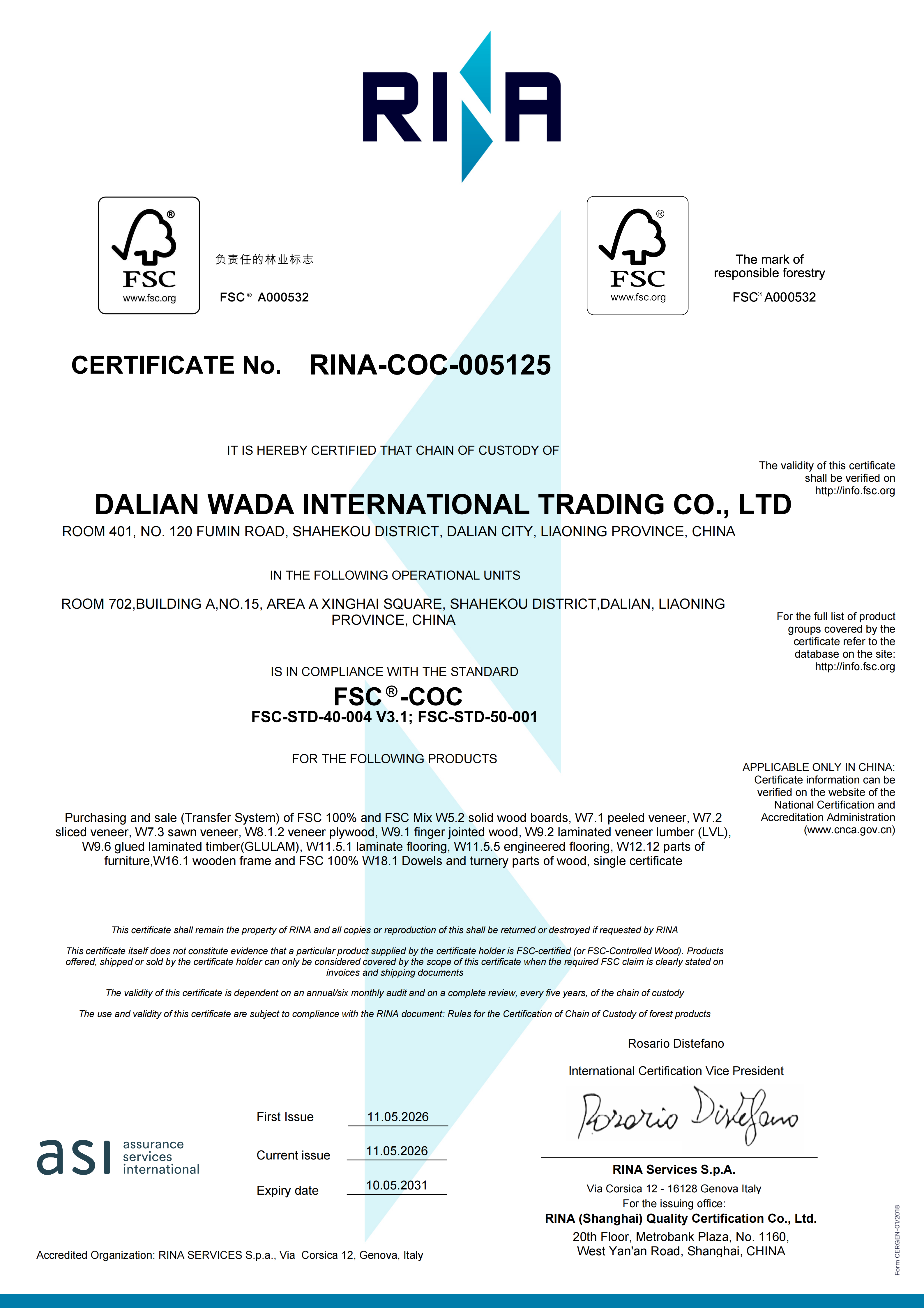
Chain-of-custody certification applies to a defined product scope and market, not to a product category in general.
The practical rule for buyers is that certification attaches to a scope. Ask which standard, which market, which production site and which product scope a certificate covers before treating it as evidence.
Matching Substrate to Millwork Application
Once the technical and compliance layers are clear, the substrate question becomes an application mapping exercise rather than a material argument.
- Painted and routed cabinet doors, drawer fronts and shaker profiles: MDF, on the strength of uniform machined edges, no grain direction and a 1.2-50 mm thickness range.
- Cabinet boxes, drawer boxes and furniture frames: plywood, where fastener holding and stiffness are the governing requirements; LVL bed slats are published at 25-190 mm widths with 7-15 mm thickness and E0/E1 adhesive for bed frame applications.
- Decorative faces: veneered board at 2-25 mm over a plywood, MDF, chipboard or blockboard core, or melamine board at 2-30 mm over plywood, MDF, particle board or blockboard. In both cases the core is a separate decision from the face.
- Wall panelling and shopfitting: either substrate is workable; interior decoration and fit-out is a published application area for commercial plywood.
- High-moisture interiors and outdoor cladding: marine plywood or a WBP-glued plywood grade, not standard interior MDF.
- Site and formwork work on the same project: film faced plywood, published from 4-35 mm with 2-40 reuse cycles in concrete work, is often sourced alongside interior panels.
A practical illustration of a mixed portfolio in use comes from Vietnam, where a complete plywood production line was implemented for a plywood manufacturer, achieving stable production and delivering a one-stop solution for manufacturing plywood, veneer and engineered wood panels used in furniture, construction, packaging and interior applications.
Market Trend: Substrate Choice Becoming a Specification Discipline
Three trends are pushing substrate selection out of workshop habit and into documented procurement.
First, the underlying market is expanding. A wood-based panel market of USD 198 billion in 2024 with a projected 5.9% CAGR to 2030 (Grand View Research) means more projects, more panel families and more suppliers competing on the same specification lines.
Second, the supply base is large enough that differentiation has to come from elsewhere. China's plywood export volume of 13.19 million cubic metres in 2024, up 22.82% year on year according to China Customs, indicates significant production capacity behind the category. For buyers, this reduces scarcity risk and raises the relative importance of consistency.
Third, the product families themselves are converging on composite construction. Industry taxonomy lists particleboard, MDF, OSB, hardboard, softboard and plywood as distinct panel types, yet veneered board and melamine board in this portfolio can be built over any of several cores. That means the substrate is now a specification line item that a buyer can define, price and inspect, rather than an inherited default. Regulatory tightening around formaldehyde emissions reinforces the same shift, because the adhesive class is now a market-access decision as much as a technical one.
Availability, Customisation and Supply Considerations
For evaluation-stage buyers, the practical question is whether one supplier can hold both substrates to the same quality regime. Published capability data for Dalian WADA International Trading Co., Ltd. indicates OEM/ODM production with customisation of size, thickness and layout, a monthly panel capacity above 10,000 CBM, a lead time of 25-45 days, a minimum order quantity of one 40-foot container, 100% inspection and remote after-sales support. Export markets are listed across South America, the EU, the Middle East and Southeast Asia.
The company profile describes an operation established in 2010, with a 53,950 m² facility, approximately 200 employees including a 25-engineer R&D team, a 100% export orientation and markets spanning North America, the EU, Australia, Japan, South Korea, the Middle East, Mexico and South America.
The practical advantage of sourcing both MDF and plywood from one supplier is procedural rather than promotional: one specification sheet format, one inspection regime, and one compliance document set for a project that mixes substrates. That matters on millwork packages where painted MDF fronts sit on plywood carcasses and the buyer needs both lines to arrive to the same quality standard.
Future Outlook
The MDF-versus-plywood decision is unlikely to be resolved by a single material trend. Both substrates are improving in parallel: fibreboard lines are running continuous flat pressing with tighter density control, and plywood ranges are extending adhesive and grade options to cover more moisture and compliance scenarios.
The more probable change is procedural. As formaldehyde limits, chain-of-custody requirements and destination-market rules continue to tighten, millwork specifications will increasingly state face grade, core type, adhesive class, thickness tolerance and certification scope as separate lines. Suppliers that publish those ranges clearly and can reproduce them across repeat orders will be easier to qualify than suppliers that answer the substrate question with a product name. For buyers, that is the more useful direction of travel: the answer to MDF or plywood should be project-specific, evidence-based and documented, not inherited.
FAQ
For a painted, routed cabinet door, is MDF or plywood the better substrate?
MDF is generally the more predictable substrate for painted and routed millwork. It is a homogeneous fibre panel produced by continuous flat pressing, so it has no grain direction and machines to a uniform profile and edge across the sheet. The published MDF range covers 1.2-50 mm thickness and 4*8 to 8*16 feet, and routed board is listed among its published applications. Plywood can also be painted, but face veneer grade variation may show through a thin finish.
Does plywood hold screws better than MDF?
In general millwork practice, yes. Plywood is built from cross-laminated veneers, so a fixing load is distributed across several layers instead of into a single fibre mass, and it generally resists screw withdrawal and edge splitting better than a homogeneous fibreboard. MDF usually requires pilot holes, and holding can degrade if the same fixing position is reused. The actual margin depends on panel thickness, screw type, and whether the fixing enters the face or the edge.
Is MDF suitable for humid or moisture-exposed interiors?
MDF is generally specified for acclimatised interior conditions. Moisture at cut edges is its main vulnerability, and swelling in fibreboard is generally not fully reversible. The published MDF specification offers a water-proof board variant and a moisture content range of 5%-13%, but for genuinely wet, exterior or cladding service, plywood with WBP adhesive, or marine plywood published from 9-25 mm with melamine WBP or phenolic WBP glue, is the more typical specification.
What thickness and sheet sizes are available for each panel?
Published figures for Dalian WADA International Trading Co., Ltd. are: MDF 1.2-50 mm in 4*8 to 8*16 feet; structural plywood 9-28 mm in 3*6 to 4*8 feet; commercial plywood 2-25 mm in 4*8 feet or as required; marine plywood 9-25 mm in 4*8 to 4*9 feet; and film faced plywood 4-35 mm in formats from 1200*1800 mm up to 1500*3000 mm. Customisation of size, thickness and layout is offered under OEM/ODM production.
Which certifications and compliance marks should a millwork buyer check?
Check the FSC chain-of-custody scope, which in this portfolio covers plywood, veneered plywood and LVL, among other product types. For the US market, CARB Phase 2 limits formaldehyde emissions to 0.05 ppm for hardwood plywood with a veneer core under ATCM 93120, with TSCA Title VI requirements also applying; CARB Phase 2 and EPA documentation is held for hardwood plywood (veneer core). For Japan, JIS A 5905 applies to fibreboards, JAS 0233:2024 to plywood and JAS 0701:2023 to LVL. EUDR is additionally listed for MDF. The certificate scope should be verified against the exact product and destination market.
What commercial terms apply when evaluating panel supply for a millwork programme?
Published terms for this supplier are a minimum order quantity of one 40-foot container, a lead time of 25-45 days, 100% inspection, OEM/ODM customisation of size, thickness and layout, and remote after-sales support. Lead time and capacity figures are company-reported rather than independently audited, so they are best treated as planning inputs and confirmed against a buyer's own acceptance criteria and inspection arrangements.
Company reference: WADA Group company brochure (PDF) | www.wadaplywood.com
Есть вопросы или нужны дополнительные детали?
Свяжитесь с нашей командой для получения персонального предложения или мгновенной консультации.
Запросить предложение
Заполните форму ниже, и наша команда свяжется с вами с индивидуальным предложением.
Прямой чат WhatsApp
Предпочитаете общаться в реальном времени? Напишите нам в WhatsApp для мгновенной помощи и быстрых ответов.
- Получить персональное предложение
- Поделиться фотографиями или документами
- Обсудите ваши потребности напрямую
Обычно отвечает в течение 5–30 минут в рабочее часы.