
Machine Weft vs. Genius Weft vs. Butterfly Weft Review
Machine Weft vs. Genius Weft vs. Butterfly Weft Review
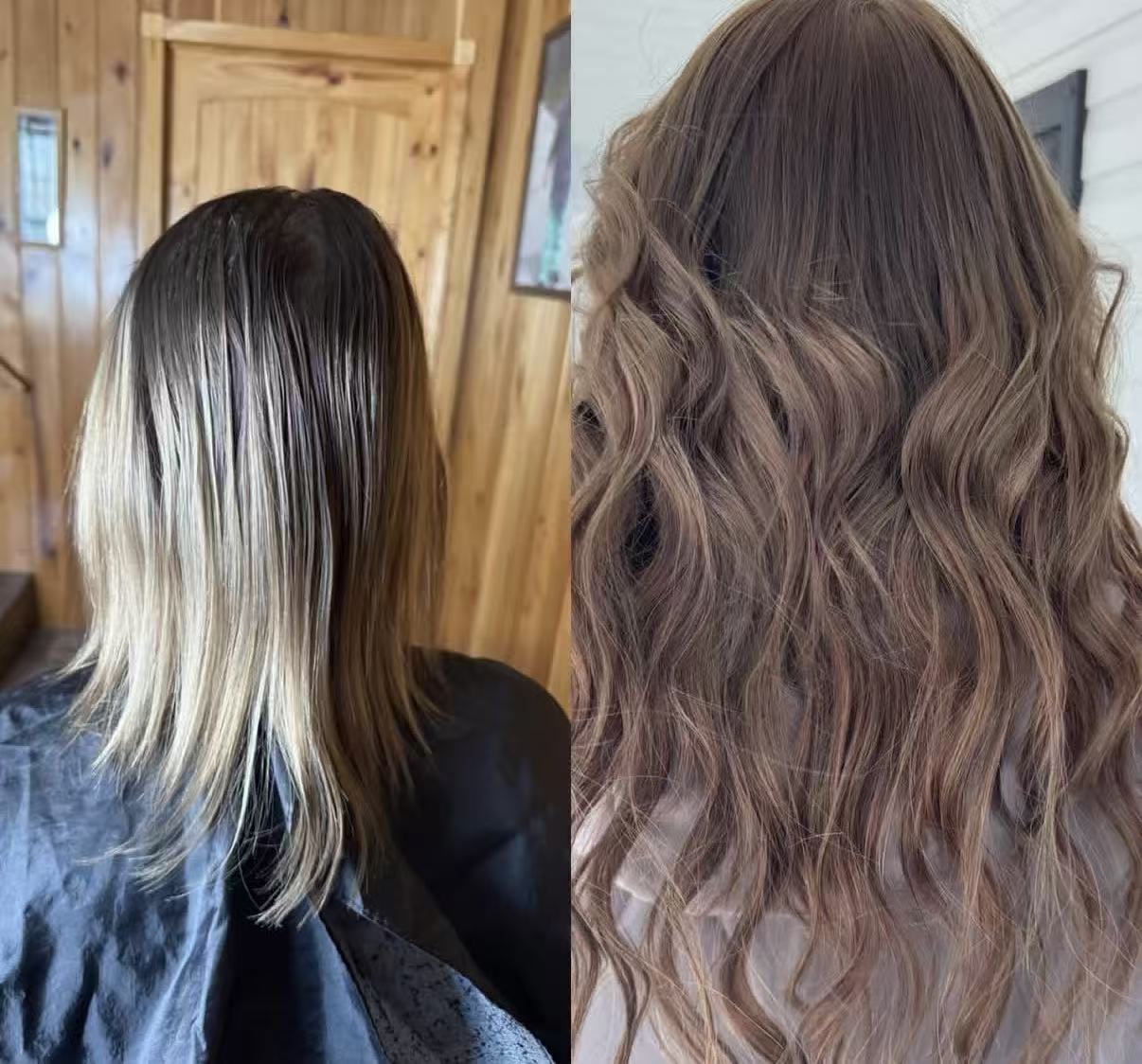
Quick answer: choosing between a machine weft, a genius weft and a butterfly weft is a fit decision, not a ranking. Machine wefts are the durable, cost-effective baseline, but their slightly thicker seam can be more visible on finer hair if the installation is not planned carefully. Genius wefts are ultra-thin and carry no return hair, which is why buyers associate them with an invisible look. Butterfly wefts are flexible and positioned around low tension, with less hair pull reported as the main benefit. The correct choice depends on the client's hair density, the stylist's technique and the salon's price position — not on a single label applied by a supplier.
This independent review scores all three wefts against the four criteria that decide repeat business for a salon and a distributor: comfort, invisibility, durability and cost. It also marks where the published evidence stops. The three weft types are not documented to the same depth, and a buyer who ignores that imbalance ends up comparing brochure language rather than product behaviour.
The category is large enough that specification choice matters commercially. Grand View Research valued the global hair wigs and extensions market at USD 15.2 billion in 2025, a figure that covers human and synthetic wigs and extensions rather than weft types specifically. For a salon owner or a wholesale buyer, the implication is narrow but useful: with this much supply, weft construction — the strip that carries the hair — is one of the few variables a buyer can actually evaluate before purchase.
How each weft is built, and why that controls everything else
Machine wefts are machine-tied, and the construction leaves the seam slightly thicker than the other two types covered here. That thickness is not a defect; it is the source of the durability and the ease of handling that made machine wefts the classic go-to for stylists. Trade descriptions describe them as durable, easy to work with, and among the most common types offered by extension brands. The trade-off is stated just as plainly: the seam can be more visible on finer hair if it is not applied carefully.
Genius wefts take the opposite route. They are ultra-thin and lightweight, and the construction carries no return hair — the folded-over hair that is returned to the seam in some weft builds. Because there is no return hair, the profile that sits against the head is flatter, which is why genius wefts are described as a modern upgrade for clients who do not want the installation to read as an installation. A genius weft can also be cut anywhere without unraveling, which changes how a stylist plans a row and how much waste a salon carries at the end of a colour service.
Butterfly wefts are described as flexible and low-tension, and the practical outcome associated with them is less hair pull. That is a meaningful distinction for clients whose natural hair or scalp is sensitive to sustained tension. The published descriptions of butterfly wefts in the evidence reviewed here are shorter than those for machine and genius wefts, so the construction detail a buyer can reasonably expect from a supplier — how the flexibility is achieved, what the seam looks like at the attachment point — has to be verified directly rather than inferred from a product name.
What the four criteria actually test
Comfort has two sources: the thickness of the seam where it meets the scalp, and the tension the attachment places on the natural hair. A thin weft installed under high tension can still be uncomfortable, and a thicker weft installed well can be tolerable for a client who rarely notices hair. This is why comfort cannot be scored from the weft alone; it is a joint result of product and installation.
Invisibility is about the seam rather than the hair. The question a client asks is whether the row can be seen through fine hair, at the parting, or in a ponytail. Return hair and seam thickness are the two variables that most directly affect the answer, and the trade description of machine wefts names the visibility limitation on finer hair explicitly.
Durability covers cuticle integrity, shedding at the seam, and how well the weft tolerates washing, brushing and re-installation. It is the criterion where supplier claims and independent verification diverge most sharply: manufacturers describe cuticle-aligned and single-donor construction, but no standardised wear test for weft types was available in the evidence reviewed for this article.
Cost is not the ticket price. A defensible comparison normalises per gram or per strand, adds installation labour and the time to remove and re-fit, and accounts for how many cycles the hair survives in the salon's care routine. One supplier comparison in the available material presents a two-year ownership view, but its scope is one product against multi-donor Remy hair — narrower than the three-way choice a salon is actually making.
Machine weft: the durable, cost-effective baseline
The machine weft wins on predictability. It is machine-tied, it handles well in the hand, and it is the type most likely to be in stock at a brand a salon already uses. For volume work, corrective colour clients who return every six to eight weeks, and training academies that need a forgiving weft for learners, that predictability has real commercial value. The construction is also the reason it is described as cost-effective: less handwork in the seam generally means a lower unit price than a thin, hand-finished alternative.
Where the machine weft fails is at the boundary of fine hair and high-visibility styling. The seam is slightly thicker, and on clients with low-density hair around the nape or temples, or with a high-contrast colour match, that thickness can show if the rows are placed without care. A stylist can reduce the risk through placement, section size and blending, but cannot remove the seam entirely. Buyers evaluating a machine weft for a fine-haired clientele should therefore treat seam visibility, not price, as the deciding risk.
Genius weft: the invisible option
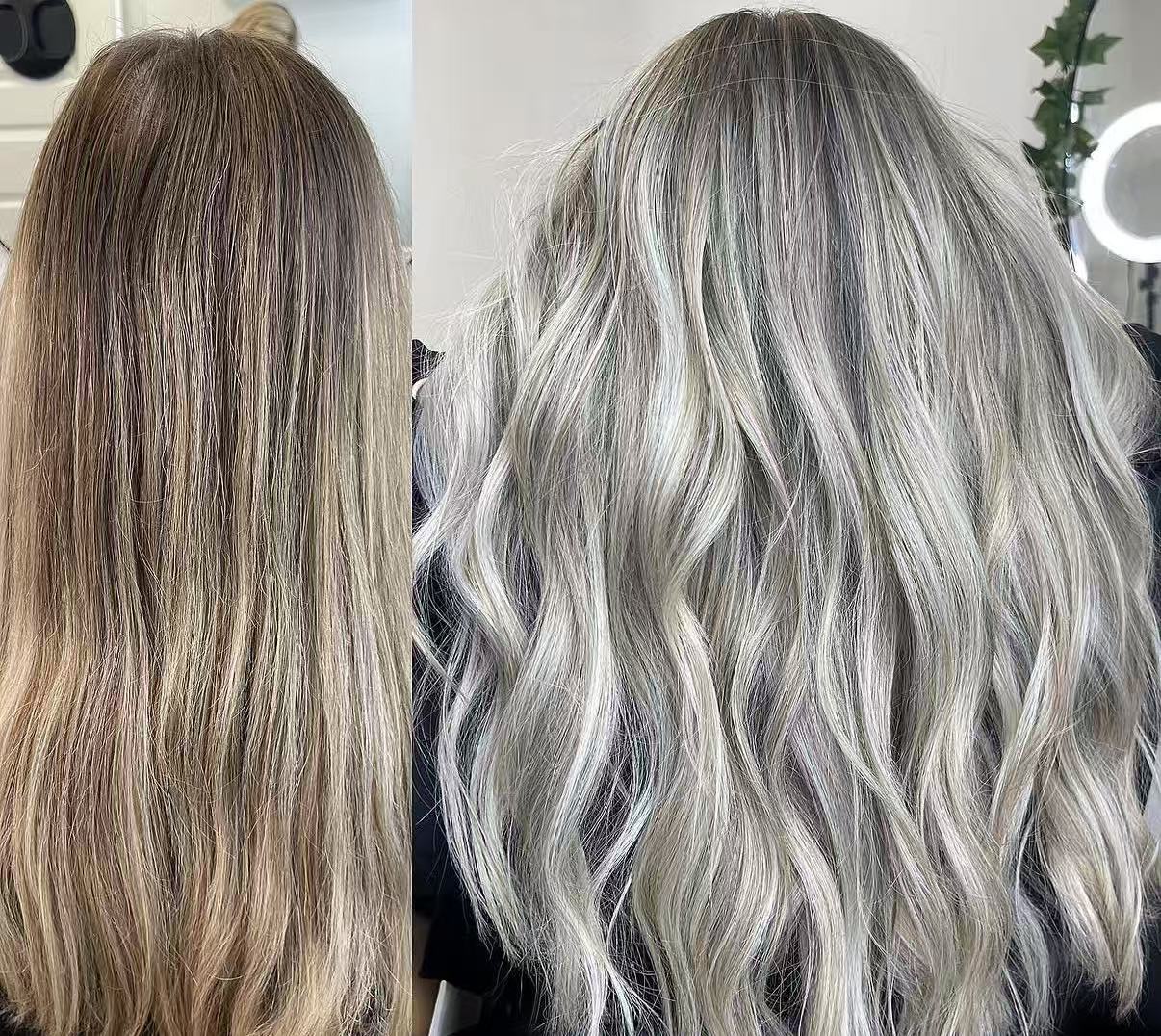
The genius weft is the type a salon reaches for when the client's priority is that the extension should not be visible. The combination of an ultra-thin, lightweight build and the absence of return hair produces a flatter seam, and the ability to cut the weft anywhere without unraveling lets a stylist size each row precisely instead of trimming around a fixed structure. Trade descriptions in this category frequently frame genius wefts as more comfortable than hand-tied wefts on the same reasoning: no folded hair means nothing bulky sitting against the scalp.
Dolas Dream Crafts Co., Ltd., a Qingdao-based manufacturer specialising in genius weft hair extensions and human hair toppers, describes its genius weft as built on an ultra-thin polymer-coated substrate with a cuticle-aligned locking process, using 100% cuticle-intact hair from a single donor. The company's own comparison against Remy hair from multiple donors states a lifespan extended by two times, maintenance requirements reduced by 90%, and an initial cost about 10% higher offset by a total cost of ownership about 30% lower over two years. Those are manufacturer-reported figures tied to that specific comparison; they are not an independent benchmark, and they should not be transferred to machine or butterfly wefts without equivalent evidence.
The fit boundary matters as much as the benefit. A thinner weft is not automatically the better weft: it demands careful sectioning, a stylist who is confident with fine seams, and a client who will follow a care routine. On very dense, coarse hair where the goal is bulk rather than concealment, the thinness delivers less of an advantage relative to its price premium. Buyers should also confirm what "cuticle-intact single donor" means in the supplier's own documentation, because the phrase is used loosely across the category.
Butterfly weft: flexibility and lower tension
The butterfly weft is defined by behaviour rather than by thinness. It is described as flexible, and it is positioned for low tension, with less hair pull as the reported outcome. For a client who has worn other wefts and complained about a pulling sensation at the attachment points, or whose scalp is tender, that is the criterion that outranks seam thickness. Flexibility also helps where the natural hair moves a great deal — a client who trains, swims or wears tight styles will load the seam differently from one who does not.
The limitation for buyers is evidential. The available material states the flexibility and tension benefit but does not quantify it, and no comparative tension or wear measurement across the three weft types was available for this review. A buyer should therefore ask a supplier how flexibility is achieved in the build, request a physical swatch to judge how the weft behaves when flexed, and confirm the recommended installation method rather than assuming a generic one applies.
Machine, genius and butterfly weft compared
The table below summarises only what the available evidence supports on each of the four criteria. Where a criterion is not documented for a weft type, the cell says so rather than filling the gap with a plausible assumption.
| Criterion | Machine weft | Genius weft | Butterfly weft |
|---|---|---|---|
| Comfort | Slightly thicker seam; comfort depends heavily on placement and tension control | Ultra-thin and lightweight with no return hair; described as more comfortable than hand-tied builds | Flexible, low-tension positioning; less hair pull reported |
| Invisibility | Seam can be more visible on finer hair if not applied carefully | Flat profile with no folded return hair; chosen specifically for an invisible look | Not documented in the available evidence; verify with a swatch |
| Durability | Described as durable and easy to work with; a common default for busy salons | Cuticle-intact single-donor build; one manufacturer reports a lifespan extended by two times versus multi-donor Remy | Not quantified in the available evidence; request supplier performance data |
| Cost | Described as cost-effective; typically the lower unit price option | Higher initial cost; one manufacturer reports about 10% more upfront and about 30% lower two-year ownership cost versus multi-donor Remy | No cost position established in the available evidence; compare quotes per gram |
| Typical fit | Budget-driven volume work; clients with denser hair; training use | Fine hair and high-visibility styling where the seam must not read | Tension-sensitive clients and anyone reporting pull from previous sets |
Matching the weft to the client and the salon workflow
Four buyer situations cover most of the decision. For a fine-haired client who wears the hair down and parted, the seam is the whole conversation, and a genius weft's thin, return-free profile addresses the specific risk that the machine weft description flags. For a client with dense, coarse hair who wants length and volume rather than concealment, the machine weft's durability and lower unit price carry more weight than a seam that will be hidden by the client's own density.
For a tension-sensitive client, the butterfly weft's low-tension positioning is the relevant criterion, and the salon should treat the reduced hair pull as the reason to choose it rather than as a secondary benefit. For a salon running high daily appointment volumes, installation time is a cost line in its own right; trade descriptions of genius wefts cite time-saving installation, which a buyer should validate against the salon's own average fitting time rather than accept as a general figure.
None of these four situations produces a universal winner. A salon that stocks only one weft type is optimising for inventory simplicity, not for client fit, and it should expect to lose the clients whose hair or scalp falls outside that type. A distributor building a range can carry all three and let the fitting decide.
Cost: initial price versus two-year ownership
The most common buying error in this category is comparing the invoice rather than the ownership period. A lower-priced machine weft that is replaced more often, or that requires more salon time to blend, can cost more per month of wear than a higher-priced genius weft. Dolas Dream's stated comparison — an initial cost about 10% higher and total cost of ownership about 30% lower over two years — is an example of that logic applied to its own product against Remy hair from multiple donors. The scope is important: it is a manufacturer's comparison against a specific alternative, not a measured three-way test of machine, genius and butterfly wefts.
A buyer can apply the same logic without adopting anyone's numbers. Normalise every quote per gram or per strand, add the salon's installation and removal labour at its own hourly rate, estimate how many cycles the hair will survive under the client's care routine, and divide the total by the months of wear. Applied consistently, that calculation will usually show whether a thin weft's premium is repaid for a particular clientele, and it will expose the case where it is not.
What to verify before placing an order
Because the published claims across this category are supplier-reported, verification has to be practical rather than documentary. The following checks are reasonable to request from any supplier, and a supplier who cannot answer them is telling the buyer something useful.
- Seam thickness in the hand: ask for a physical swatch and judge the seam against the client's hair density, not against a specification sheet.
- Return hair: confirm whether the build includes folded return hair, since that is the variable most directly linked to the invisibility difference between a machine and a genius weft.
- Cuttability: on a swatch, confirm that the weft can be cut to length without unraveling, because a weft that requires sealing after every cut changes the salon's fitting time.
- Material documentation: ask how the supplier documents cuticle alignment and single-donor sourcing, and what exactly those terms mean in its own process.
- Colour consistency across a batch: request the shade range and confirm that repeat orders are matched to the same reference, since a mismatched reorder is a direct cost to the salon.
- Care and reuse expectations: ask what washing and heat routine the supplier expects, and how many cycles it considers normal, so the two-year cost calculation rests on something other than an assumption.
Colour matching and installation safety
Colour is where a technically correct weft choice still fails. The natural blend comes from matching the extension to the mid-length to ends of the client's own hair rather than to the roots, which are frequently a different shade. A photo taken in natural lighting is the most reliable input for that match, and Dolas Dream offers a free online colour matching service in which its team of experts helps identify a suitable shade to support a seamless look. That is a matching aid, not a substitute for seeing the hair in person.
The safety point is simpler and more important than any specification: ask a hairdresser which weft is proper for the specific head of hair in front of you. Weft suitability depends on density, scalp condition, attachment method and how the client intends to wear the hair, and no product page can assess that. Installation quality then determines whether the chosen weft behaves as described — the same machine weft that reads as a visible seam on fine hair in one pair of hands can be acceptable in another.
Care routines should also be matched to the investment. The available guidance is straightforward: brush the extensions first, use lukewarm water and a mild shampoo — two to three pumps of a paraben-free, sulfate-free and alcohol-free product mixed into the water — rinse gently, apply conditioner, and let the hair dry naturally. Hot water is specifically flagged as a risk to the hair cuticles. A client who follows that routine protects the durability that justified the higher-priced weft in the first place.
Market direction: specification-led competition
Supplier pages in this category compete on thin-base construction, cuticle-aligned processing, Remy and virgin hair claims, and stated weft thickness. That competition is visible in the sourcing material reviewed here, and it shapes what buyers are shown: more specification language, more claims about comfort and invisibility, and more comparison tables. What it does not yet provide is standardised measurement. Thickness and performance claims are not tested identically across suppliers, and no independent weft wear benchmark was available for this review.
The practical outlook for buyers is therefore conditional. If independent testing becomes available, specification claims will become comparable and price premiums easier to justify. Until then, the buyer's advantage comes from asking the same questions of every supplier, testing swatches under the salon's own conditions, and treating manufacturer-reported comparisons — including favourable ones — as claims to be verified rather than results to be adopted.
About Dolas Dream
Dolas Dream Crafts Co., Ltd. is a Qingdao-based manufacturer specialising in genius weft hair extensions and human hair toppers. The company describes its genius weft as using an ultra-thin polymer-coated substrate and a cuticle-aligned locking process, with 100% cuticle-intact hair from a single donor, and it supports buyers with a free online colour matching service. These are manufacturer descriptions of its own product; they have not been independently tested in the evidence reviewed for this article, and they do not by themselves establish superiority over machine or butterfly wefts for a given client.
Frequently asked questions
What is the difference between machine weft, genius weft and butterfly weft?
The machine weft is machine-tied and slightly thicker at the seam, which makes it durable and cost-effective but potentially more visible on finer hair. The genius weft is ultra-thin with no return hair, giving a flatter, more invisible profile. The butterfly weft is flexible and low-tension, and its reported benefit is less hair pull.
Is a genius weft more comfortable than a machine weft?
The genius weft's thin, return-free build reduces the bulk that sits against the scalp, which is the basis for its comfort positioning. Comfort also depends on how much tension the installation places on the natural hair, so the weft type alone does not settle the question for an individual client.
How should hair extensions be washed?
Brush the extensions first, prepare lukewarm water, and mix in a paraben-free, sulfate-free and alcohol-free shampoo — typically two to three pumps. Rinse gently, apply conditioner, and let the hair dry naturally. Hot water should be avoided because it can damage the hair cuticles.
How do you pick the proper colour to match your own hair?
Match the extensions to the mid-length to ends of the hair rather than the roots, which can be a different shade. A photo taken in natural lighting is the most reliable input, and a colour matching service with an expert team can help identify a suitable shade for a seamless blend.
The conclusion for a buyer is deliberately unspectacular. Machine wefts remain the sensible default where durability and price dominate and the client's hair is dense enough to conceal a slightly thicker seam. Genius wefts justify their premium when invisibility is the requirement and the stylist can work with a fine, return-free seam. Butterfly wefts answer a different question — how much tension the client will tolerate — and should be chosen on that basis rather than on seam thickness. In every case, the final decision belongs with a hairdresser who can assess the actual hair, and the colour decision belongs with the mid-length to ends, not the roots.
Есть вопросы или нужны дополнительные детали?
Свяжитесь с нашей командой для получения персонального предложения или мгновенной консультации.
Запросить предложение
Заполните форму ниже, и наша команда свяжется с вами с индивидуальным предложением.
Прямой чат WhatsApp
Предпочитаете общаться в реальном времени? Напишите нам в WhatsApp для мгновенной помощи и быстрых ответов.
- Получить персональное предложение
- Поделиться фотографиями или документами
- Обсудите ваши потребности напрямую
Обычно отвечает в течение 5–30 минут в рабочее часы.