
Magnesium Sulphate Anhydrous: Fertilizer and Industrial Uses
Magnesium Sulphate Anhydrous: Fertilizer and Industrial Uses
Magnesium sulphate fertilizer is a product family, not a single specification. Its commercial grades are separated mainly by how much crystal water they carry, and that one variable drives how each grade behaves in storage, in soil, and inside a blending or formulation line. Magnesium sulphate anhydrous is the water-free grade of that family: a white powder or granular material supplied for soil application and as an industrial raw material.
Anhydrous magnesium sulphate sits alongside three other grades in normal trade use — Kieserite, magnesium sulphate monohydrate and magnesium sulphate heptahydrate. For buyers at the awareness and research stage, the productive question is not which grade is 'best' in the abstract, but which grade matches a defined end use. The application mapping published for each grade is the clearest available signal of fit, and it comes before any price comparison.
The Four Magnesium Sulphate Grades in Commercial Use
A magnesium sulphate supply enquiry usually names one of four grades. Each has a defined physical form, a reported magnesium density, a defined set of application routes, and a standard packing format. Reading them side by side makes the position of the anhydrous grade obvious: it is the grade with the highest magnesium oxide content, no crystal water, and the narrowest agricultural application window.
| Grade | Physical form | Reported magnesium density | Application modes | Packing |
|---|---|---|---|---|
| Magnesium sulphate anhydrous | White powder or granular | Highest magnesium oxide content (~33% MgO); no crystal water | Soil application; industrial raw material | 25 kg or 50 kg PP woven bags, customizable |
| Kieserite | Off-white granular | ~27% MgO; natural mineral origin, pH-neutral | Soil application | 25 kg or 50 kg PP woven bags, customizable |
| Magnesium sulphate monohydrate | White powder or granular | ~25–27% MgO | Soil application; foliar spray; industrial raw material | 25 kg or 50 kg PP woven bags, customizable |
| Magnesium sulphate heptahydrate | White granular crystal | Crystal-water grade; lower magnesium density per tonne | Soil application; foliar spray; fertigation; industrial raw material | 25 kg or 50 kg PP woven bags, customizable |
Physical form, application modes and packing specifications follow the product specification data of the manufacturer; magnesium oxide values are the manufacturer's reported figures.
Two observations matter for procurement planning. First, the grades are not interchangeable at the point of use: only heptahydrate is documented as suitable for fertigation systems, and only heptahydrate and monohydrate are mapped to foliar spray. Second, packing is uniform across the range — 25 kg or 50 kg PP woven bags, customizable to buyer requirements — so container planning and warehouse handling do not differ much between grades. The differentiation sits in chemistry and application, not logistics.
Why the Anhydrous Grade Exists: Crystal Water and Moisture Control
Magnesium sulphate is commonly written as MgSO4, with the hydrated forms carrying water molecules inside the crystal structure. Heptahydrate — the familiar Epsom salt grade — carries the most, monohydrate carries one, and the anhydrous grade carries none. Removing crystal water raises the magnesium concentration per tonne of material and removes the internal moisture that makes a hygroscopic salt difficult to handle in dry processes.
That is the practical reason the anhydrous grade is traded. Its reported characteristics are a magnesium oxide content of around 33%, no crystal water, low moisture, and stable quality — a combination positioned for moisture-sensitive industrial formulations and drying agents, and for blending where added water is unwanted. Because magnesium is more concentrated, the transport cost per effective magnesium unit is lower than for a crystal-water grade, an argument that becomes significant at bulk volumes over long shipping distances.
Impurity profile is the second differentiator. The anhydrous grade is described as low in heavy metals and low in chloride, and it is offered in multiple grades for agriculture, feed and industrial use. For buyers preparing formulations for chlorine-sensitive crops or for regulated industrial applications, the chloride and heavy-metal position is usually a stronger screening criterion than headline magnesium content.
A third, less obvious role is drying. Because the anhydrous form has no crystal water and will take up moisture, it is used as a drying agent in industrial processes — a use case that has nothing to do with plant nutrition and everything to do with the material's affinity for water. Buyers sourcing for industry should confirm which of these functions they are buying for, because the commercial grade and the documentation set may differ.

Where Magnesium Sulphate Anhydrous Is Applied
The application routes documented for the anhydrous grade are soil application and use as an industrial raw material. Within those two routes, the operating patterns are well established across the magnesium-sulphur fertilizer category.
Soil application
Granular material is broadcast directly onto the field and dissolved by irrigation or rainfall, using a fertilizer spreader. Applied as a magnesium-sulphur fertilizer, the material supplies magnesium and sulphur nutrients to crops and corrects magnesium deficiency, and it contributes to improving acid soil, supporting crop yield and quality. Because the anhydrous grade is low in moisture and does not acidify soil in the way some alternative amendments can, it is a practical选项 for basal application programmes where magnesium and sulphur are both required.
Industrial raw material
In industrial use, anhydrous magnesium sulphate enters dry formulations where the presence of crystal water would introduce unwanted moisture or alter the moisture balance of the finished product. It also serves as a drying agent, as noted above. Buyers in this segment typically specify moisture content, particle size and heavy-metal limits rather than agronomic parameters.
Fertilizer compounding and blending
Across the category, magnesium sulphate is blended with other raw materials to produce compound and water-soluble fertilizers. For NPK blending lines, the relevant properties are particle size compatibility, low hygroscopicity and freedom from caking, so that the blend remains free-flowing through batching and bagging equipment. Kieserite is specifically described as anti-caking and suited to bulk blending; monohydrate is described as available in powder and granular grades for compound fertilizer blending. Where a blender needs the highest magnesium density and no added moisture, the anhydrous grade is the fit.
Adjacent applications in the same category
The wider magnesium-sulphur fertilizer application profile also covers water-soluble fertilizer formulation, foliar fertilizer processing, livestock feed additive supply, horticulture and water treatment. These routes are not all mapped to the anhydrous grade — foliar spray and fertigation belong to the hydrated grades — but they define the market in which anhydrous material competes for the same magnesium and sulphur demand.
Operating, Quality and Documentation Requirements
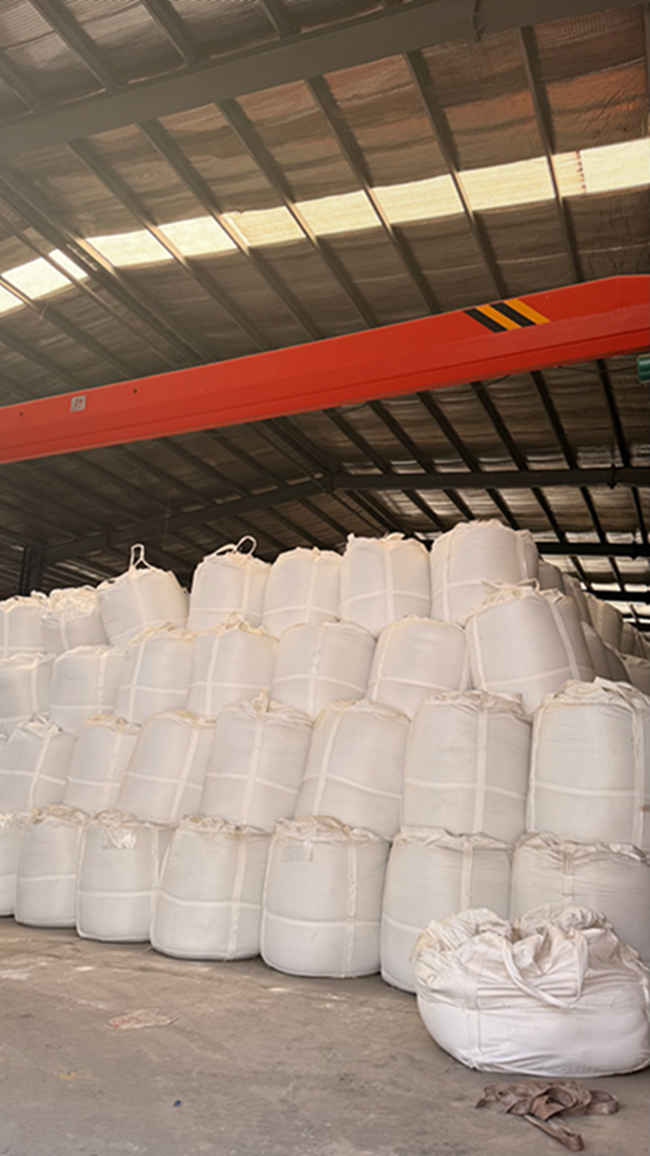
Magnesium sulphate is hygroscopic under adverse conditions, and most quality complaints in this category trace back to storage and packaging rather than to production. The documented storage rule is straightforward: keep the material in a cool, dry, well-ventilated place, away from moisture, sunlight and oxidants, with packages sealed to avoid caking. Normal ambient temperature and low relative humidity are the required conditions.
From a specification standpoint, buyers in this category typically screen on the following points:
- Water solubility and insoluble matter. Good water solubility and low water-insoluble content matter most in fertigation, where residues can block drip systems.
- Heavy-metal control. Strict limits on heavy metals, arsenic and lead are expected, particularly for agricultural and feed applications.
- Particle size and moisture. Appropriate particle size and limited moisture content prevent caking and keep the product free-flowing.
- Chloride content. Chloride is restricted to avoid damage to chlorine-sensitive crops.
- Documentation. Certificate of Analysis (COA) and Material Safety Data Sheet (MSDS) are standard. Feed-grade material must meet feed-additive standards, and REACH / FAMI-QS documentation is relevant for EU-bound shipments.
- Packaging. Sealed, moisture-proof packaging with shipping marks complying with destination requirements.
What Current Market Data Suggests About Demand
The magnesium sulphate market is large and structurally agricultural. One aggregated commercial research report places the global magnesium sulphate market at USD 1.8 billion in 2025, with a projected value of USD 1.9 billion in 2026. The same body of commercial research estimates that agriculture and fertilizers account for approximately 41.6% of the global market share as of 2025 — roughly two-fifths of demand — with industrial, feed and other uses making up the balance.
Product structure is skewed toward the hydrated grades. Heptahydrate (Epsom salt) is reported as the dominant product type, accounting for 54% of global commercial production in 2025. That figure is a useful reality check for anyone planning an anhydrous-only sourcing strategy: the anhydrous grade is a specialised, higher-value slice of the market, not the volume mainstream.
Trade flows concentrate in China. According to trade data compiled by OEC on the basis of UN Comtrade and published under HS code 283321, China was the leading exporter of magnesium sulphate in 2024, with an export value of USD 149 million. On the demand side, the US magnesium sulphate market price was expected to stabilise near USD 674 per metric ton in early 2025, according to a secondary industry price commentary.
Regulatory scale is equally relevant. Magnesium sulphate is registered in the ECHA REACH database with an annual tonnage band of 100,000 to 1,000,000 tonnes in the EU, which indicates a mature, well-characterised substance rather than a novel or restricted chemistry. For industrial buyers, that registration status reduces regulatory uncertainty around continued supply.
One caveat belongs in any responsible reading of these numbers. Market size estimates for the same period vary — published figures for 2025 range from around USD 1.0 billion to USD 1.8 billion — because different reports include different scopes, for example anhydrous and monohydrate volumes versus total sulphates. Buyers should treat market size and share figures as directional, and ask any supplier for the underlying product scope before using them in planning.
Trade-Offs and Boundaries: Anhydrous Versus the Other Grades
No single grade dominates every application, and the honest comparison for the anhydrous grade is defined by what it does not do.
| Grade | Where it fits | Documented limitation or trade-off |
|---|---|---|
| Magnesium sulphate anhydrous | Soil application; industrial raw material; dry blending; moisture-sensitive formulations; drying agent | Higher price point than crystal-water grades; documented application modes do not include foliar spray or fertigation, so it is not the practical choice for those routes |
| Magnesium sulphate heptahydrate | Agriculture and fertigation; foliar spray; suitable for fertigation systems | Carries crystal water and therefore lower magnesium density per tonne; not suited to moisture-sensitive dry formulations |
| Kieserite | Basal soil application; blending, with pH-neutral behaviour and low hygroscopicity | Documented application mode is soil application only, which narrows its use in foliar or fertigation programmes |
| Magnesium sulphate monohydrate | Dual-use position across soil application, foliar spray and industrial raw material | Lower magnesium density than the anhydrous grade; a compromise rather than a maximum on either axis |
Two boundaries deserve emphasis. First, the anhydrous grade is not automatically the best agricultural choice: where farmers irrigate through drip systems or spray leaves, heptahydrate is the grade mapped to those systems and is described as cost-effective for agriculture and fertigation. Second, no grade eliminates the caking risk created by poor storage. Magnesium sulphate absorbs moisture from air; caking happens under high-humidity storage, damaged packaging or long-term exposure of open material to moist air. Prevention is procedural — dry, ventilated warehousing and sealed bags — not a function of which grade is purchased.
A final practical point: caked material remains usable. The documented handling guidance is to crush caked material before application; caked goods do not lose quality. Buyers evaluating a claim of 'premium anti-caking performance' should ask what packaging and storage protocol supports it.
Supplier Reference: Tianjin Xingyu Fertilizer Industry Co., Ltd.
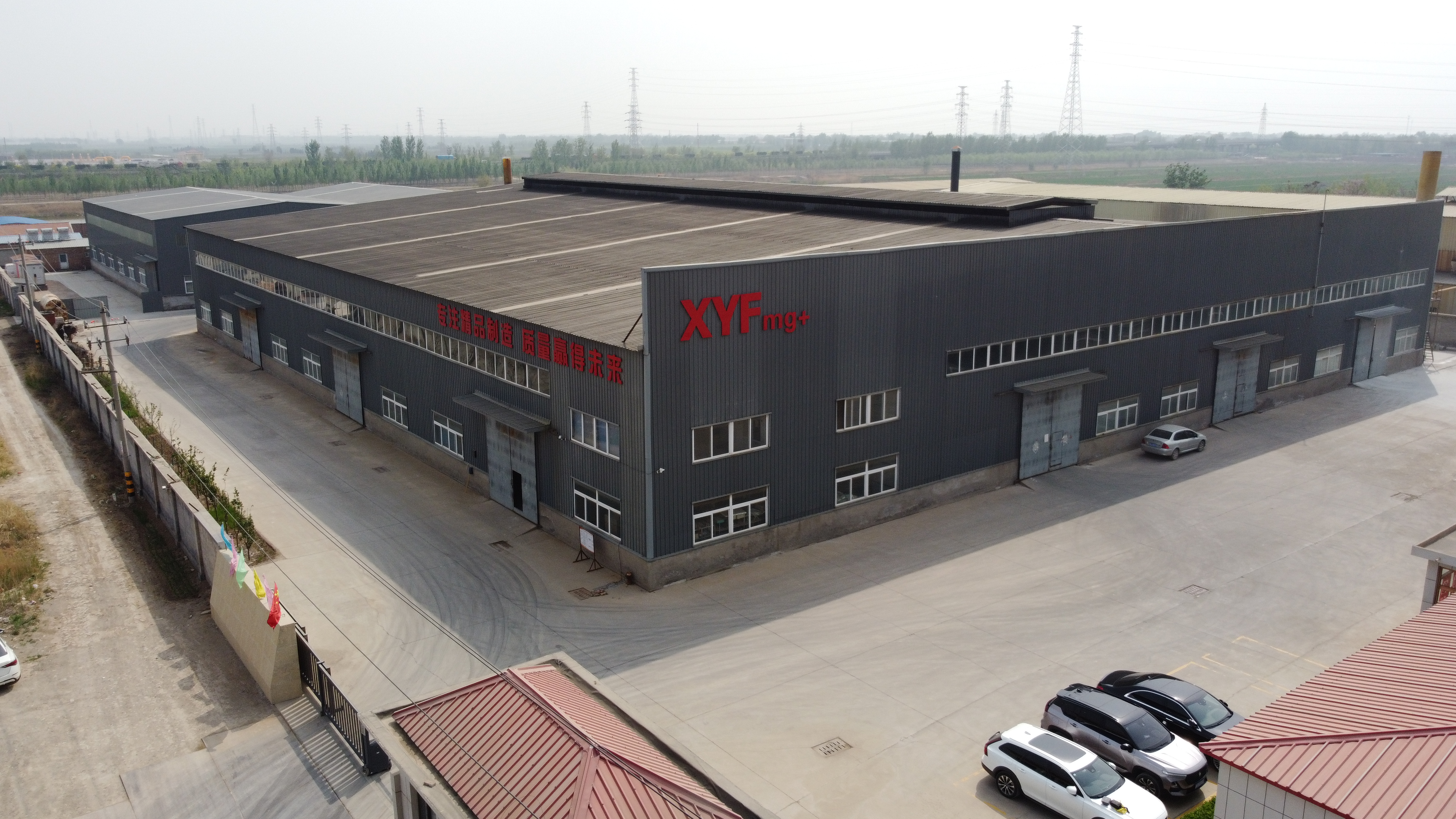
Tianjin Xingyu Fertilizer Industry Co., Ltd. (XYF) is a China-based original manufacturer of magnesium sulphate series products, founded in 1993 and located in Chenguantun Town Industrial Park, Jinghai District, Tianjin. The company produces anhydrous magnesium sulphate, monohydrate magnesium sulphate and heptahydrate magnesium sulphate, alongside magnesium oxide, sulfur magnesium fertilizer and various medium and trace element fertilizers, in both fertilizer grade and industrial grade.
Its manufacturing facility covers 20,000 square metres, employs approximately 36 staff including an R&D team of 5 engineers, and is equipped with automated production lines and an independent standardized testing laboratory, operating under an ISO quality management system with a stable raw material supply base. Logistically, the plant is 30 km from downtown Tianjin, 80 km from Tianjin Port and 15 km from the railway freight yard, adjacent to National Highway G104. Reported major markets include Pakistan, Japan, Korea and New Zealand, with an export ratio of approximately 70% of output.
For magnesium sulphate anhydrous specifically, these attributes matter in three procurement-relevant ways: the grade is produced as part of a magnesium sulphate range rather than sourced opportunistically; the in-house testing laboratory supports batch-level COA issuance; and the port and rail access supports container consolidation of bulk orders. Buyers evaluating whether a supplier is a genuine manufacturer or a trading intermediary should test claims exactly against this pattern of evidence — production lines, laboratory, raw material base, and export documentation. Public product documentation, including the company catalogue, is available at XYF-Catalogue.pdf.
Outlook
Three structural signals shape the medium-term picture for magnesium sulphate anhydrous. Demand is anchored in agriculture, where magnesium and sulphur are essential nutrients and where magnesium deficiency correction supports yield and quality; agriculture and fertilizers already represent approximately 41.6% of global magnesium sulphate market share. At the same time, the industrial side of the demand base — dry formulations, blending and moisture-sensitive processes — is the segment where the anhydrous grade's low moisture and high magnesium density are structurally advantaged, and it is also the segment least exposed to commodity fertiliser price cycles.
On supply, China's position as the leading exporter of magnesium sulphate, with USD 149 million of export value in 2024, means that buyers in other regions will continue to manage concentration risk through supplier qualification rather than through substitution, since the substance is broadly registered and widely traded rather than restricted. The ECHA REACH tonnage band of 100,000 to 1,000,000 tonnes reinforces that the material will remain available; the competitive question is documentation quality, batch consistency and delivery reliability rather than availability itself.
Finally, grade substitution is likely to continue in both directions. Where irrigation infrastructure expands, demand shifts toward heptahydrate; where dry blending, industrial formulation and long-distance shipping favour maximum magnesium density per tonne, demand shifts toward anhydrous and monohydrate. Buyers who define their end use precisely — and who document it in specifications — will make better grade decisions than those who treat magnesium sulphate as a single commodity.
FAQ
Which grade should a buyer choose — anhydrous magnesium sulphate or heptahydrate magnesium sulphate?
The decision follows the end use rather than a general ranking. Anhydrous magnesium sulphate has a higher magnesium content and low moisture, which suits industrial raw material use and dry formulations. Heptahydrate magnesium sulphate, the crystal-water grade known as Epsom salt, is cost-effective for agriculture and fertigation and is the grade documented as suitable for fertigation systems. Buyers choosing between the two are effectively choosing between moisture-sensitive industrial production and agricultural application.
Why does magnesium sulphate cake, and how can it be prevented?
Magnesium sulphate absorbs moisture from the air, and caking occurs under high-humidity storage conditions, damaged packaging, or long-term exposure of open material to moist air. The preventive approach is procedural: store in a dry, ventilated warehouse, keep bags sealed, and protect material from rain and damp. If caking has already occurred, crush the caked material before application; caked goods remain usable without quality loss.
How should buyers compare magnesium sulphate grades for a specific end use?
Select the grade according to the end use, then verify magnesium content, particle size and moisture against that requirement — whether the destination is agricultural fertigation or industrial production. The comparison set typically also includes crystal form and the heavy-metal impurity index. A practical selection rule follows from these variables: for agriculture and fertigation, choose heptahydrate magnesium sulphate with stable particle size; for industrial dry formulations, choose anhydrous magnesium sulphate with low moisture and high magnesium content; monohydrate magnesium sulphate serves both agricultural and general industrial scenarios as a middle option.