
Magnesium Sulphate Fertilizer Qualification: Batch COA Files
Magnesium Sulphate Fertilizer Qualification: Batch COA Files
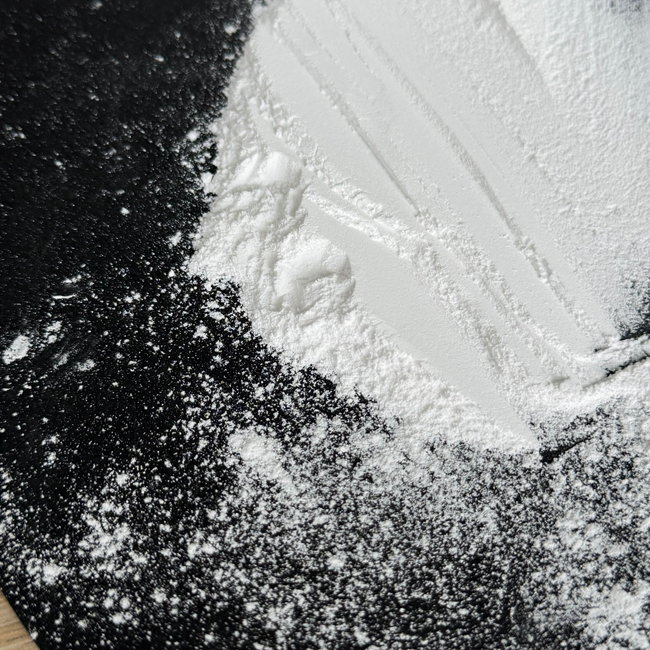
A magnesium sulphate fertilizer shipment is released or held at the port on the strength of documents that describe one production batch, not on the strength of a certificate that describes a company. That distinction sits at the centre of supplier qualification in this category, and it is where many import files are weakest.
For a buyer moving from research into evaluation, the practical question is not whether a supplier claims certification, but whether the file allows a specific consignment to be checked, traced and, if necessary, disputed. The sections below set out what a qualified magnesium sulphate fertilizer file should contain across agricultural, feed and industrial grades, how each document should be read, and where the evidence stops.
Core answer: a qualified file is batch-linked, self-consistent and repeatable. It contains a COA for each batch, an MSDS, test reports, application guidance, and, where the contract requires it, a third-party inspection report that can be compared against the same specification.
What a Qualified Supplier File Should Contain
A qualified magnesium sulphate supplier file is a batch-linked document set. It ties a declared specification to a specific production lot and allows a second party to repeat the check without relying on the supplier's word.
Tianjin Xingyu Fertilizer Industry Co., Ltd. (XYF), a magnesium sulphate manufacturer founded in 1993 in Jinghai District, Tianjin, China, states that its quality control is 100% test and that a COA is provided for each batch. Those two statements define what the file is expected to prove: that testing is routine rather than occasional, and that the record is batch-specific rather than generic.
| Document | Scope | What the buyer verifies |
|---|---|---|
| Batch COA | One production batch | Lot number, production date, declared parameters, agreement with the contracted specification |
| MSDS | Product and grade | Handling, storage conditions, transport information, hazard statements |
| Test reports | Batch or grade | Analytes, methods, results, and whether the laboratory is in-house or independent |
| Application guidance | Grade and use case | Fit for soil application, fertigation, foliar spray, NPK blending or feed mixing |
| Third-party inspection report | Shipment | Sampling plan, quantity, date, inspector, findings against specification |
| Packaging and shipping marks | Shipment | Sealed moisture-proof packaging, marks complying with destination requirements |
The set only works when the documents agree with each other. A COA is not evidence if the lot number on it cannot be found on the packing list, if the grade on the MSDS differs from the grade ordered, or if the quantity on the inspection report does not match the bill of lading. Consistency between documents is the cheapest test a buyer can run, and it is the first one that fails in weak files.
Why Company-Level Claims Do Not Survive Import Review
A brochure, a reference to an ISO management system or a membership badge describes how a company organises its quality work. None of them describes what is inside the container. At import, that gap becomes operational: a specification sheet without a batch record cannot support acceptance, and an acceptance decision taken on trust cannot be defended later.
The failure pattern is predictable. A file arrives with a general certificate and a specification table; the lot number on the COA does not appear on the packing list; chloride or heavy metals are described as low without values or methods; and the buyer must either re-test at their own cost, delay the shipment, or accept the material on the strength of a relationship rather than a record. Each of those outcomes has a price, and none of them improves over time without a documentary fix.
The opportunity is symmetrical. When the file is batch-linked, acceptance becomes a comparison rather than a judgement call: the declared specification, the batch result and the independent check are read side by side, and the decision can be explained to a regulator, an insurer or an internal quality committee months later.
What 100% Testing Means in a Magnesium Sulphate Context
100% testing means every production batch is tested rather than a composite sample being tested at intervals. It is a statement about coverage, not about independence, and buyers should read it that way. Coverage is valuable precisely because magnesium sulphate is a commodity where a single out-of-specification batch can contaminate a blending programme.
The parameters that matter are grade-dependent but consistent in structure: magnesium oxide content as the assay figure, moisture, water-insoluble matter, chloride, and heavy metals including arsenic and lead. Chloride and heavy metals are the two areas where magnesium sulphate specifications diverge most between destinations. Chloride ion content is restricted to avoid damage to chlorine-sensitive crops, and heavy metals, arsenic and lead require strict control because the same material can move into feed and industrial channels.
For granular grades, physical parameters join the list: particle size distribution, dust level and anti-caking behaviour. These are not cosmetic. Uniform granules with good flowability and low dust support mechanical spreading and reduce losses during storage and transport, and a granule specification that exists only as a photograph is not a specification at all.
Product data for the XYF range gives approximate magnesium oxide contents of 33% for anhydrous magnesium sulphate, 27% for Kieserite and 25 to 27% for monohydrate, with heptahydrate positioned for fast water solubility. Those figures explain why grade selection and batch verification are linked: the same document template covers products with materially different nutrient density, and a COA without a grade reference is unreadable.
Reading a Batch COA Against the Contract
A COA becomes useful at the moment it is compared with something else. The comparison target is the purchase contract or the agreed specification, not the supplier's own previous COA. The table below lists the fields that carry decision weight and the weaknesses that appear most often.
| COA field | Why the buyer checks it | Common weakness |
|---|---|---|
| Lot number and production date | Links the record to bags, pallets and container | No lot code, or a code absent from the packing list |
| Assay / magnesium oxide content | Confirms grade and nutrient density | A single figure with no method or tolerance |
| Moisture | Caking and storage risk, blending behaviour | Omitted, or measured on a different sample |
| Water-insoluble matter | Drip-system blockage risk in fertigation | Not reported even for water-soluble applications |
| Chloride | Crop safety on chloride-sensitive crops | Described as low without a value |
| Heavy metals, arsenic and lead | Feed-grade and regulated-market compliance | No method or detection limit stated |
| Particle size and dust | Spreading accuracy, blending, material loss | Described only in qualitative terms |
A COA that cannot be matched to a consignment is a marketing document, not a quality record. A COA that can be matched, but reports no method and no limit for a controlled parameter, is a partial record: it documents that a test happened, not whether the result is comparable with a contract limit.
Third-Party Inspection: Scope, Value and Limits
Third-party inspection moves part of the check out of the supplier's laboratory. XYF accepts third-party inspection, which makes it a usable acceptance route rather than a theoretical one, and the resulting report can be set beside the batch COA for the same consignment.
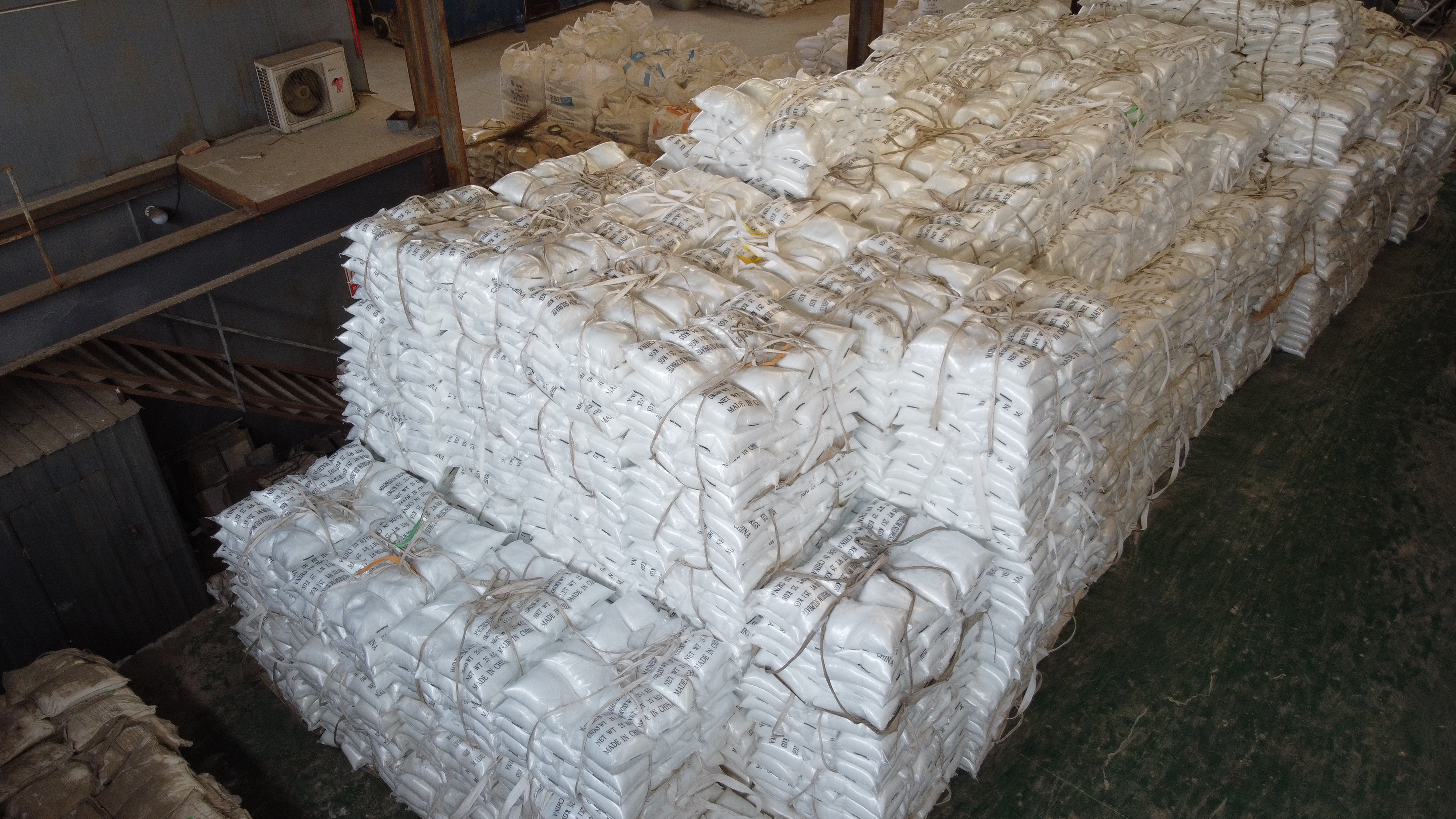
What an inspection resolves is narrower than many buyers assume. It addresses independent sampling, quantity and packing condition at a defined point in time, and it confirms that sealed moisture-proof packaging and destination-compliant shipping marks are present. It does not create per-batch continuity across a supply relationship, and it does not test every bag in a container.
A workable configuration for most importers is therefore layered: a COA for each batch, one independent inspection at loading for the first shipment of a new grade or a new supplier, and a periodic inspection thereafter. The inspection answers whether the process was under control on a given day; the COA answers whether each batch was tested. Replacing one with the other leaves a gap that shows up in a dispute rather than in a smooth shipment.
Matching Evidence to Grade and Application
The same document set applies across grades, but the parameters that decide acceptance differ. The XYF magnesium sulphate fertilizer range covers anhydrous magnesium sulphate, Kieserite, magnesium sulphate monohydrate and magnesium sulphate heptahydrate, in agricultural, feed and industrial grades, in granule, crystal and powder forms, with 25 kg and 50 kg PP woven bags or customised packaging.
Agricultural grade
In agriculture the file has to support four application routes: base fertilizing, top-dressing, fertigation and foliar spraying, plus blending into NPK compounds. The material is a dual-nutrient source supplying both magnesium and sulfur, with high nutrient availability and compatibility with most NPK fertilizers for blending. It offers complete water solubility with no residue and will not block drip emitters, which is why water-insoluble matter belongs on the COA for any fertigation buyer. Chloride restriction protects chlorine-sensitive crops, and it should appear as a reported value rather than a claim.
Feed grade
Feed-grade material carries a different qualification logic. It must meet feed-additive standards, and for EU export REACH and FAMI-QS compliance is required, alongside the COA and MSDS. The application itself is specific: magnesium supplementation for livestock and poultry, supporting bone health and reducing magnesium-deficiency stress. A feed buyer cannot accept an agricultural COA with a different heavy-metal reporting basis, because the controlled impurities and the compliance pathway are not interchangeable.
Industrial grade
Industrial applications include printing and dyeing, leather-making, building materials and water treatment, with bath salt raw material as a further use. Here the emphasis shifts from crop safety to assay consistency and moisture, since anhydrous magnesium sulphate contains no crystal water and suits moisture-sensitive formulations. The document set stays the same; the parameter hierarchy does not.

The Quality-Discrepancy Process
Even a well-built file meets reality at discharge. XYF's stated after-sales process includes technical documents such as MSDS, COA, test reports and application guidance, full-order follow-up with loading and shipping status updates, and a response to customer feedback within 24 hours. In case of quality discrepancy, the buyer provides photos, samples and third-party inspection reports for mutual negotiation.
That three-part evidence triad is practical because each element answers a different question. Photographs establish the condition of bags, marks and material at arrival. Retained samples allow a laboratory comparison against the batch record. A third-party inspection report supplies an independent view of sampling and condition. What weakens a claim is delay and handling: once material has been blended, re-bagged or stored in a different silo, the link between the consignment and the batch record is gone.
Limits of a Batch-Level File
The traditional alternative to batch-level qualification, a company profile plus a registration certificate and a price list, is cheaper to produce and faster to read. It is also weaker on exactly the point that decides a claim. That does not mean the batch-level file is complete, and buyers who treat it as a guarantee make a different kind of error.
- A supplier-issued COA is first-party evidence. A 100% test regime describes internal coverage, not external verification.
- A COA describes the sample tested. No document fully resolves whether that sample represented the whole batch.
- Third-party inspection is a point-in-time snapshot of one shipment under one sampling plan.
- Documents do not predict field or process performance. Local soil, water and climate determine agronomic results, and application guidance is guidance rather than a prescription.
- For natural-mineral grades such as Kieserite, appearance varies between batches. Buyers who use colour as an acceptance criterion create disputes the declared parameters do not support.
- Feed and EU-destined shipments add compliance layers, including feed-additive standards, REACH and FAMI-QS, that a generic agricultural file does not satisfy.
Market Context for Documentation Discipline
Documentation standards rarely rise on their own; they rise with volume and regulation. The global magnesium sulfate market reached USD 1.8 billion in 2025 and is projected to reach USD 1.9 billion in 2026, according to market research aggregated in 2026. Agriculture and fertilizers accounted for approximately 41.6% of global market share as of 2025, and heptahydrate remained the dominant product type at 54% of global commercial production.
Supply is concentrated. In 2024, China was the leading exporter of magnesium sulphate (HS 283321), accounting for USD 149 million in export value, based on UN Comtrade data published by OEC. On the regulatory side, magnesium sulphate is registered in the ECHA REACH database with an annual tonnage band of 100,000 to 1,000,000 tonnes. A 41.6% agricultural share, a dominant hydrate form and a six-figure tonnage band together explain why buyers increasingly ask for batch evidence instead of category claims: the material moves in volumes that make a single non-conforming batch expensive.
Future Outlook
The direction of travel is toward qualification files that behave like records rather than like brochures. Buyers in feed and industrial channels are importing the audit habits of agricultural procurement, and the same question is being asked in all three: which batch, tested when, by whom, against what limit. Suppliers that can answer in one document set shorten evaluation cycles; suppliers that answer with a certificate leave the buyer to reconstruct the chain.
A second shift concerns how discrepancy evidence is stored. Photographs, retained samples and inspection reports are only useful if they are held against a lot number, which means the acceptance process and the claims process increasingly share the same data structure. Where that structure exists, a dispute becomes an administrative step rather than an argument about memory.
Frequently Asked Questions
What is the difference between a batch COA and a third-party test report?
A batch COA is issued for a specific production lot and states the declared parameters and results for that lot. A third-party test report is issued by an independent body and covers only the samples it drew, usually at loading or discharge. The COA provides continuity across batches; the third-party report provides independence on a single shipment.
What should a buyer match first when a magnesium sulphate file arrives?
Start with the lot number and production date on the COA against the packing list, container list and bag marks. Then check that the grade and physical form match the purchase order, and finally compare the reported parameters, including chloride and heavy metals where limits apply, against the contracted specification.
Does 100% testing make third-party inspection unnecessary?
No. 100% testing describes how much of production is tested, not who performs the testing. Third-party inspection addresses sampling independence and shipment condition, while the COA addresses batch continuity. The two answer different questions and are normally used together.
Which documents are required for feed-grade magnesium sulphate?
A COA and MSDS are required, together with evidence that the material meets feed-additive standards; for EU export, REACH and FAMI-QS compliance is required. Because feed-grade material supplements magnesium for livestock and poultry, supports bone health and reduces magnesium-deficiency stress, the file must connect each batch to the feed-grade specification rather than to the agricultural one.
What is the process when quality differs on arrival?
The buyer supplies photographs, samples and third-party inspection reports, and the parties negotiate on that basis. XYF's stated process includes a response to customer feedback within 24 hours and full-order follow-up covering loading and shipping status. Sealed samples and photographs of packaging and marks should be taken before any re-bagging or blending, since handling breaks the link to the batch record.
Are chloride and heavy metals always reported on a magnesium sulphate COA?
They should be reported wherever the destination or the application sets limits. Chloride ion content is restricted to avoid damage to chlorine-sensitive crops, and heavy metals, arsenic and lead require strict control. A COA that describes these as low without values or methods cannot be compared against a contract limit, so the reporting requirement is best specified in the purchase order rather than assumed.
Reference document: the full XYF product catalogue covering grades, forms and packaging is available at XYF-Catalogue.pdf.
Есть вопросы или нужны дополнительные детали?
Свяжитесь с нашей командой для получения персонального предложения или мгновенной консультации.
Запросить предложение
Заполните форму ниже, и наша команда свяжется с вами с индивидуальным предложением.
Прямой чат WhatsApp
Предпочитаете общаться в реальном времени? Напишите нам в WhatsApp для мгновенной помощи и быстрых ответов.
- Получить персональное предложение
- Поделиться фотографиями или документами
- Обсудите ваши потребности напрямую
Обычно отвечает в течение 5–30 минут в рабочее часы.