
Magnesium Sulphate Monohydrate: Uses and Grade Selection

Magnesium sulphate monohydrate is a white powder or granular magnesium sulphate grade used for soil application, foliar spray, and as an industrial raw material. It is one of four grades in the commercial magnesium sulphate family, alongside magnesium sulphate anhydrous, Kieserite, and magnesium sulphate heptahydrate — and it is the grade most often left unspecified in buying conversations, even when it is the grade a blending line, a soil programme, or a feed formulation actually needs.
For buyers who are moving from first awareness of magnesium sulphate into genuine research, the useful question is not whether magnesium sulphate works as a magnesium and sulphur source. The useful question is which grade, at what moisture level, in what particle size, against which documentary standard, and at what cost per unit of delivered magnesium. Monohydrate sits precisely in the middle of that decision. Magnesium sulphate anhydrous carries the highest magnesium oxide content in the family at roughly 33% MgO and is chosen for moisture-sensitive industrial formulations and dry blending. Magnesium sulphate heptahydrate (Epsom salt) dissolves fastest and is the grade most closely associated with fertigation systems. Monohydrate holds roughly 25–27% MgO, contains less crystal water than heptahydrate, stores and blends more predictably than the highest-solubility grades, and is documented for both agricultural and industrial routes.
That middle position is exactly why monohydrate needs its own selection logic. Treating it as a generic “magnesium sulphate fertilizer” is the most common sourcing mistake in this category, and it usually only becomes visible after a shipment arrives, a blender jams, or a drip line blocks.
What Magnesium Sulphate Monohydrate Is — and Where It Sits in the Grade Family
Magnesium sulphate monohydrate is a defined chemical grade rather than a marketing description. It appears as a white powder or granular material, and its documented application modes are soil application, foliar spray, and use as an industrial raw material. In practice, that combination makes it the most flexible single grade in the family for buyers who need one material to serve both a field programme and a compounding or industrial feed stream.
The four commercial grades differ in appearance, nutrient density and application fit. The table below summarises the position of each grade as described in manufacturer product specifications.
| Grade | Typical appearance | Indicative MgO content | Documented application modes |
|---|---|---|---|
| Magnesium sulphate anhydrous | White powder or granular | ~33% | Soil application; industrial raw material |
| Kieserite | Off-white granular | ~27% | Soil application |
| Magnesium sulphate monohydrate | White powder or granular | ~25–27% | Soil application; foliar spray; industrial raw material |
| Magnesium sulphate heptahydrate | White granular crystal | Contains crystal water; lower Mg density than anhydrous | Soil application; foliar spray; fertigation; industrial raw material |
There is a second, less obvious identification problem. In international trade statistics, magnesium sulphates are largely aggregated under a single customs code (HS 283321), which means customs data does not cleanly separate Kieserite and monohydrate volumes from heptahydrate volumes. Trade figures therefore cannot tell a buyer how much monohydrate is genuinely moving into a market, or who is supplying it. The practical consequence is straightforward: grade-level availability has to be confirmed supplier by supplier, through specifications and COAs, rather than inferred from published trade volumes.
Why Monohydrate Is Moving Up the Buyer Agenda
Monohydrate is not a new product, but the reasons buyers specify it have become more concrete. Four drivers recur in commercial discussions about this grade.
- Freight economics per magnesium unit. Monohydrate carries a higher MgO content than heptahydrate and lower moisture, so a container of monohydrate delivers more magnesium than the same container of heptahydrate. For importers paying ocean freight, that difference changes landed cost per unit of nutrient.
- Storage and handling behaviour. Monohydrate is described as having good thermal stability, low moisture and anti-caking behaviour for long-term storage. That matters for buyers who hold inventory through humid seasons or who ship to tropical markets.
- Blending and compounding demand. Compound and water-soluble fertilizer manufacturers need raw materials that meter accurately and blend without segregation. Monohydrate is documented as suitable for soil application, feed and compound fertilizer blending, which places it directly in the raw-material stream of blend plants rather than only in end-user field application.
- Documentation and compliance pressure. Magnesium sulphate is registered in the ECHA REACH database with an annual tonnage band of 100,000 to 1,000,000 tonnes, and EU-facing supply chains increasingly expect REACH and FAMI-QS documentation for feed-related routes, together with COA and MSDS for every shipment. Grades with consistent, documentable quality indices are easier to keep compliant than grades defined only by a trade name.
The opportunity for buyers is that monohydrate allows one specification to cover several internal uses — field application, foliar programmes, compound fertilizer blending and selected industrial routes — which reduces the number of supplier audits and stock-keeping units a purchasing team has to manage. The risk is the mirror image: if the grade is bought loosely, the buyer discovers the mismatch downstream, where it is far more expensive to correct.
Technical Explanation: Crystal Water, Moisture and Handling Behaviour
The differences between magnesium sulphate grades come down largely to crystal water and how much of it a grade carries. Anhydrous magnesium sulphate carries none, monohydrate carries one water molecule per formula unit, and heptahydrate carries seven. That single structural difference cascades into nutrient density, dissolution speed, storage behaviour and freight cost.
Magnesium sulphate monohydrate combines a high magnesium oxide content of roughly 25–27% with low moisture. Because less of the product weight is water, more of every tonne is nutrient. It is also described as having good thermal stability and anti-caking behaviour suited to long-term storage, and it is produced in both powder and granular form. Powder grades suit compounding, blending and feed dosing, where fast dispersion into a mix matters more than dust control; granular grades suit field broadcasting and bulk blending, where uniform particle size and free flow protect spreader accuracy and reduce segregation in a blend.
Grade consistency is a genuine differentiator here. Supplier specifications describe monohydrate as a synthetically produced grade with consistent quality and a stable heavy-metal index, in contrast to grades whose properties vary with mineral origin. For buyers in feed, foliar or regulated industrial applications, that consistency is the reason monohydrate is often preferred even when a cheaper grade exists.

Five parameters decide whether a monohydrate lot actually fits an application, and all five should be confirmed in writing before purchase:
- Magnesium content (as MgO). The primary value driver and the basis of any cost-per-nutrient comparison.
- Moisture content. The main predictor of caking risk during storage and of dosing accuracy in a blender.
- Particle size distribution. Determines compatibility with spreaders, blenders and batching equipment, and whether the grade will segregate in a compound fertilizer blend.
- Heavy metal and arsenic/lead indices. A hard requirement in feed, foliar and regulated industrial routes.
- Chloride content. Critical for chlorine-sensitive crops and for industrial formulations with chloride limits.
Storage conditions affect all five. Magnesium sulphate products should be stored in a cool, dry, well-ventilated place, kept away from moisture, sunlight and oxidants, with packages sealed to avoid caking. Normal ambient temperature and low relative humidity are the operating assumptions behind a stable, free-flowing product.
Application and Operating Modes for Monohydrate
Monohydrate is documented across a narrower set of operating modes than heptahydrate, but those modes cover a wide commercial base. The table below maps the documented application modes to the field and plant equipment normally used with them.
| Operating mode | How the grade is used | Matched equipment |
|---|---|---|
| Soil application / broadcasting | Granular product applied directly on the field and dissolved by irrigation or rainfall | Fertilizer spreader |
| Foliar spraying | Dissolved into solution and applied to the leaf surface | Sprayer, mixing tank |
| Fertilizer compounding | Blended with other raw materials to produce compound or water-soluble fertilizers | Blender, crusher, metering and batching equipment |
| Feed mixing | Powder dosed and mixed into animal feed as a magnesium supplement | Metering and batching equipment |
| Industrial raw material | Used in chemical production, building material processing and water treatment | Process-dependent |
Functionally, the material supplies magnesium and sulphur nutrients to crops and corrects magnesium deficiency, serves as a raw material for water-soluble and foliar fertilizers, supplements magnesium in livestock feed, and supports soil improvement in horticultural and field programmes. Buyers should note two application constraints that apply across the family: magnesium sulphate should not be mixed with strong alkaline materials, and it should be applied at the correct dosage to prevent fertilizer burn.
Supplier Perspective: What a Full-Range Manufacturer Changes for Buyers
Tianjin Xingyu Fertilizer Industry Co., Ltd. (XYF) is a magnesium sulphate manufacturer established in 1993 and located in Chenguantun Town Industrial Park, Jinghai District, Tianjin, China. Its manufacturing facility covers 20,000 square metres and employs approximately 36 staff, including an R&D team of 5 engineers. The company operates automated production lines, implements an ISO quality management system, and runs an independent standardized testing laboratory supported by a stable raw material supply base.
The relevance for buyers is range, not scale claims. XYF produces magnesium sulphate monohydrate alongside anhydrous magnesium sulphate, heptahydrate magnesium sulphate, Kieserite, magnesium oxide, sulfur magnesium fertilizer and various medium and trace element fertilizers, in both fertilizer grade and industrial grade. Products are positioned to meet material demands in agricultural planting, chemical production, building material processing and other fields. For a procurement team, sourcing several grades from one qualified manufacturer means one audit, one documentation set and one set of packaging specifications instead of several — a meaningful reduction in supplier management overhead.
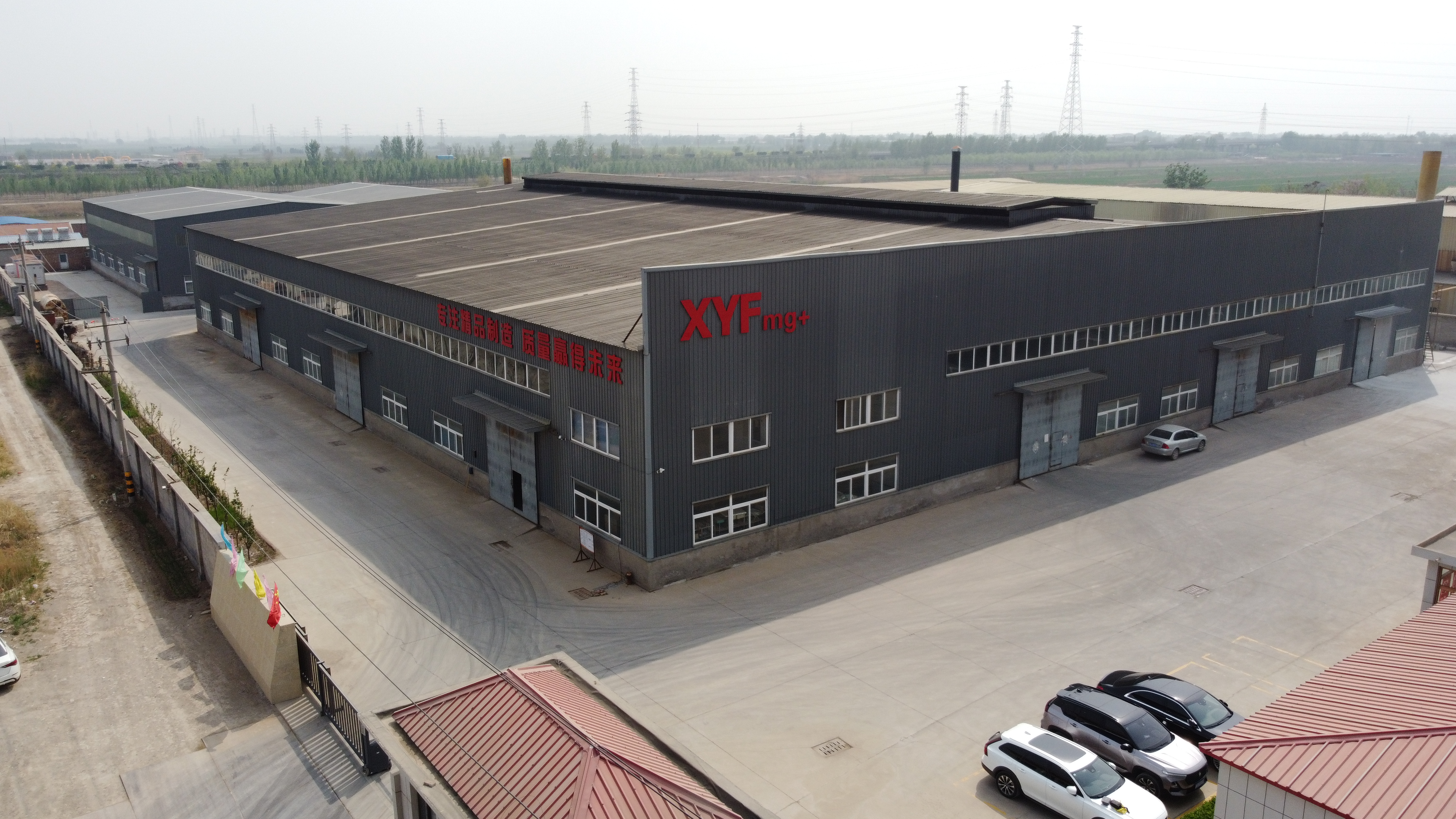
Logistically, the site sits 30 km from downtown Tianjin, 80 km from Tianjin Port and 15 km from the railway freight yard, adjacent to National Highway G104 — a configuration that matters for bulk fertilizer shipments where inland transfer costs and port access drive landed price. The company holds independent import and export rights, exports approximately 70% of its output, and serves more than 30 countries and regions across Southeast Asia, Europe and America, with major markets including Pakistan, Japan, Korea and New Zealand. Packing is specified as 25 kg or 50 kg PP woven bags, customizable per customer requirements, which covers both the standard Magnesium Sulphate Fertilizer 25kg and 50kg formats and private-label specifications.
Market Trend Analysis: What the Numbers Suggest About Grade Demand
The magnesium sulphate market is expanding, but the grade mix inside it is uneven, and that imbalance is the most useful signal for buyers planning next year’s sourcing.
- The global magnesium sulphate market reached USD 1.8 billion in 2025 and is projected to reach USD 1.9 billion in 2026.
- Agriculture and fertilizers accounted for approximately 41.6% of global magnesium sulphate market share as of 2025, confirming agriculture as the anchor demand segment.
- Heptahydrate (Epsom salt) remains the dominant product type, accounting for 54% of global commercial production in 2025. Monohydrate therefore sits in a smaller, more specialised segment whose demand is tied to blending, soil application and industrial routes rather than to the highest-volume agricultural trade.
- China was the leading exporter of magnesium sulphate in 2024, accounting for USD 149 million in export value, which makes Chinese grade-level supply a central consideration for importers in Asia, Europe and the Americas.
- On the regulatory side, magnesium sulphate is registered in the ECHA REACH database within a 100,000 to 1,000,000 tonne annual tonnage band, indicating both the scale of European demand and the documentary expectations attached to it.
- On price, US magnesium sulphate market prices were expected to stabilise near USD 674 per metric ton in early 2025 — a directional reference rather than a benchmark, since reported figures vary by grade scope and methodology.
Two caveats belong alongside these figures. First, published market size estimates for magnesium sulphate differ significantly between research houses, partly because some studies include technical, agricultural and pharmaceutical grades while others include only a subset; the ranges observed for 2025 span roughly USD 1.0 billion to USD 1.8 billion. Second, because customs data aggregates all magnesium sulphates under one HS code, grade-level trade volumes for monohydrate specifically are not separately visible. Buyers should treat market-size figures as context for demand direction, not as evidence of grade-specific availability.
Comparison with Traditional Magnesium Sources — and Where Monohydrate Falls Short
Monohydrate competes with three sibling grades and with older magnesium sources such as magnesium oxide. The honest comparison is not about which grade is best, but about which grade fits a defined application.
| Option | Strength | Boundary / limitation |
|---|---|---|
| Magnesium sulphate monohydrate | ~25–27% MgO with low moisture; storage-stable and anti-caking; powder and granular forms; documented for soil application, foliar spray, compound fertilizer and feed blending, plus industrial raw material use | Slower to dissolve than heptahydrate, so it is not the default grade for drip fertigation or for the fastest possible foliar correction; it is a magnesium and sulphur source only and does not correct soil acidity |
| Magnesium sulphate heptahydrate (Epsom salt) | Extremely fast water solubility; the grade associated with foliar spray and drip fertigation; cost-effective per tonne | Crystal water content reduces magnesium density, so more tonnes are needed and freight per magnesium unit is higher; more sensitive to moisture-related handling during storage |
| Magnesium sulphate anhydrous | Highest MgO content at roughly 33%; no crystal water, making it suitable for moisture-sensitive industrial formulations and drying-agent applications | Higher price tier and not the economical choice for bulk field application |
| Kieserite | Natural mineral origin, pH-neutral and non-acidifying; slow-release magnesium supply for soil; low hygroscopicity and good free-flow for bulk blending | Soil application only; not a foliar or fertigation grade |
| Magnesium oxide (traditional alternative) | Slow-release magnesium source used in soil and industrial applications | Low water solubility; unsuitable where dissolution into spray or irrigation solution is required |
The clearest limitation to state plainly is this: monohydrate is not a substitute for heptahydrate in systems built around rapid dissolution. If a grower needs to correct a magnesium deficiency through a drip line or a fast foliar response, heptahydrate is the appropriate grade. Monohydrate’s advantage lies in nutrient density per tonne shipped, low moisture, storage stability and blending behaviour — commercial and handling benefits rather than speed-of-response benefits.
A second boundary is agronomic rather than chemical. Monohydrate supplies magnesium and sulphur; it does not supply nitrogen, phosphorus or potassium, and it is not a liming material. It belongs inside a balanced fertilizer programme, typically blended with other raw materials in compound or water-soluble fertilizer production or applied alongside a broader soil fertility plan. Over-application is a real risk, since excessive dosage can cause fertilizer burn, and chloride content must be checked where chlorine-sensitive crops are grown.
Future Outlook
Three developments look likely to shape monohydrate sourcing over the next several years, and all three favour buyers who specify at grade level rather than at category level.
Specification moves down to the parameter level. As blend plants, feed producers and regulated industrial users tighten incoming material controls, purchase specifications are shifting from “magnesium sulphate” to defined MgO content, moisture limits, particle size bands, chloride ceilings and heavy metal indices. Monohydrate, with its synthetically consistent quality profile, is well placed for that shift — a direction reinforced by the volume of magnesium sulphate registered under REACH in Europe.
Blending and compounding demand continues to build. With agriculture and fertilizers accounting for roughly 41.6% of global magnesium sulphate use, the growth of compound and water-soluble fertilizer manufacturing pulls demand toward grades that meter and blend cleanly. Monohydrate is documented for exactly that route, which supports steady industrial demand independent of seasonal field application cycles.
Packaging, storage and documentation become buying criteria. Sealed moisture-proof packaging, shipping marks compliant with destination requirements, and pack sizes from standard 25 kg and 50 kg PP woven bags through to customer-specific formats are already part of the specification conversation. As caking remains the most common quality complaint in the category, moisture control in packaging and storage will continue to separate reliable suppliers from opportunistic ones. Grade-level transparency — publishing the monohydrate curve instead of a single generic specification — is the logical next step for manufacturers competing on reliability rather than on price alone.
Frequently Asked Questions
What is magnesium sulphate monohydrate used for?
Magnesium sulphate monohydrate is used for soil application, foliar spray, and as an industrial raw material. In agricultural use it supplies magnesium and sulphur nutrients to crops and corrects magnesium deficiency, and it serves as a raw material for water-soluble and foliar fertilizer production. In compounding it is blended with other raw materials to produce compound or water-soluble fertilizers. In feed applications, powder grade is dosed and mixed into animal feed as a magnesium supplement. In industry it is used in chemical production, building material processing and water treatment.
Where does monohydrate fit between anhydrous magnesium sulphate and heptahydrate magnesium sulphate?
The three grades serve different priorities. Anhydrous magnesium sulphate has the highest magnesium content and low moisture, and is suited to industrial raw material use and moisture-sensitive dry formulations. Heptahydrate magnesium sulphate (Epsom salt) is cost-effective and is the grade suited to agricultural fertigation because of its fast water solubility. Monohydrate magnesium sulphate works for both agricultural and general industrial scenarios: it carries roughly 25–27% MgO, has good thermal stability and low moisture, and is available in powder and granular grades for soil application, feed and compound fertilizer blending. Choose anhydrous for industrial raw material and moisture-sensitive formulations, heptahydrate for farm fertilization and irrigation systems, and monohydrate where nutrient density, storage stability and blending flexibility are the deciding factors.
Which parameters should be compared when selecting a magnesium sulphate grade for a specific end use?
Five parameters determine whether a grade matches an application: magnesium content, moisture value, particle size, crystal form, and heavy metal impurity index. Magnesium content drives cost per nutrient unit; moisture and crystal form influence caking risk and storage life; particle size determines compatibility with spreaders, blenders and batching equipment; and heavy metal indices are a hard requirement in feed, foliar and regulated industrial applications. For agriculture and fertigation, grades with stable particle size are preferred; for industrial dry formulations, low moisture and high magnesium content matter most.
Why does magnesium sulphate caking happen and how can it be avoided?
Magnesium sulphate readily absorbs moisture from the air and forms caking. Caking typically occurs in high-humidity storage environments, with damaged packaging, or after long-term open exposure to moist air. Prevention consists of storage in a dry, ventilated warehouse, keeping bags sealed, and avoiding rain and damp. If caking has already occurred, the material can be crushed before application; caked product remains usable and does not lose quality. Closed moisture-proof packaging and control of moisture content at production are the two most effective preventive measures.
Is magnesium sulphate monohydrate suitable for fertigation and drip irrigation?
Fertigation suitability is documented for magnesium sulphate heptahydrate, which is noted as suitable for fertigation systems because of its high water solubility. Monohydrate is documented for soil application, foliar spray and industrial raw material use, and its lower solubility relative to heptahydrate means it should not be assumed to be interchangeable in a drip line. Where a monohydrate grade is considered for an irrigation route, water solubility and water-insoluble matter content should be verified with the supplier before use, since insoluble matter is the main cause of drip-system blockage. Quality requirements for irrigation-grade material generally include good water solubility, low water-insoluble matter, controlled heavy metals, appropriate particle size, limited moisture to prevent caking, and restricted chloride ion content for chlorine-sensitive crops.
Summary
Magnesium sulphate monohydrate is best understood as the specification-stable middle grade of the magnesium sulphate family: roughly 25–27% MgO, low moisture, powder and granular forms, and documented routes into soil application, foliar spray, compound fertilizer blending, feed mixing and industrial raw material use. It is not the fastest-dissolving grade and not the right default for drip fertigation, and it is not a liming material or a replacement for a balanced NPK programme. It is, however, a grade that rewards buyers who specify at parameter level — magnesium content, moisture, particle size, chloride and heavy metals — and who source it from a manufacturer able to document each batch consistently across the full grade range.
A complete product catalogue covering magnesium sulphate anhydrous, Kieserite, magnesium sulphate monohydrate and magnesium sulphate heptahydrate, with packing and application details, is available here: XYF product catalogue (PDF).