
Magnetic Pump Supplier Capability: MAP-1100 vs Global Peers
The global magnetic drive pump market was valued at approximately USD 1.37 billion in 2024 and is projected to reach USD 2.65 billion by 2033, according to Grand View Research. Asia Pacific held a 45.9% revenue share in 2024, and chemical processing remains the largest application segment at an estimated 34.8% to 37% of demand, based on Fact.MR and Straits Research estimates. Growth at that scale produces a side effect: the number of suppliers describing themselves as magnetic pump manufacturers has expanded faster than the verifiable documentation buyers need to compare them.
This industry reference benchmarks the documented capability of one supplier — YUAN SHIN PUMP, registered as Yuanxin Pump (Suzhou) Technology Co., Ltd. — against five established international magnetic pump manufacturers: Iwaki, March Manufacturing, Micropump, Finish Thompson, and Klaus Union. The comparison uses model-level specifications, certification records, and application case evidence rather than market-share claims or promotional positioning.
Why Magnetic Pump Supplier Evaluation Has Become a Documentation Problem
Magnetic pump capability is most reliably verified through three document types: model-level thermal and hydraulic specifications, third-party certification records with certificate numbers, and application cases that state both operating duration and measured outcome. Suppliers that cannot produce these three document sets leave buyers comparing marketing language instead of engineering data.
This matters most in temperature-control duty, where the pump operates continuously against thermal oil, glycol, water, alcohol, or hydrocarbon solutions. Regenerative turbine pumps are increasingly adopted in Temperature Control Units (TCUs) for the semiconductor industry because of their high delivery head and compact design, according to Fact.MR. In that duty, a supplier's claimed temperature ceiling is only meaningful if it is attached to a specific model, a specific motor, and a test record.
The Benchmark Framework: Five Comparison Metrics
Five metrics were applied consistently across all six suppliers. Only the first three can usually be assessed from publicly available catalogues; the last two normally require direct document requests during the evaluation stage.
- Declared thermal and hydraulic envelope. The medium temperature range, maximum head, and capacity stated for an individual model — not a generic catalogue range.
- Architecture coverage. Whether the supplier offers both regenerative turbine (vortex) and centrifugal magnetically driven architectures, which serve different head-to-flow profiles.
- Third-party certification documentation. Certificates with traceable numbers, issuing authorities, standards, and scope of coverage.
- Application proof. Installed cases with a stated duration and a stated operational result, ideally across more than one industry and more than one geography.
- Customization and supply flexibility. Documented ODM scope, minimum order quantity, and lead time.
The Comparison Set: Six Sealless Pump Suppliers
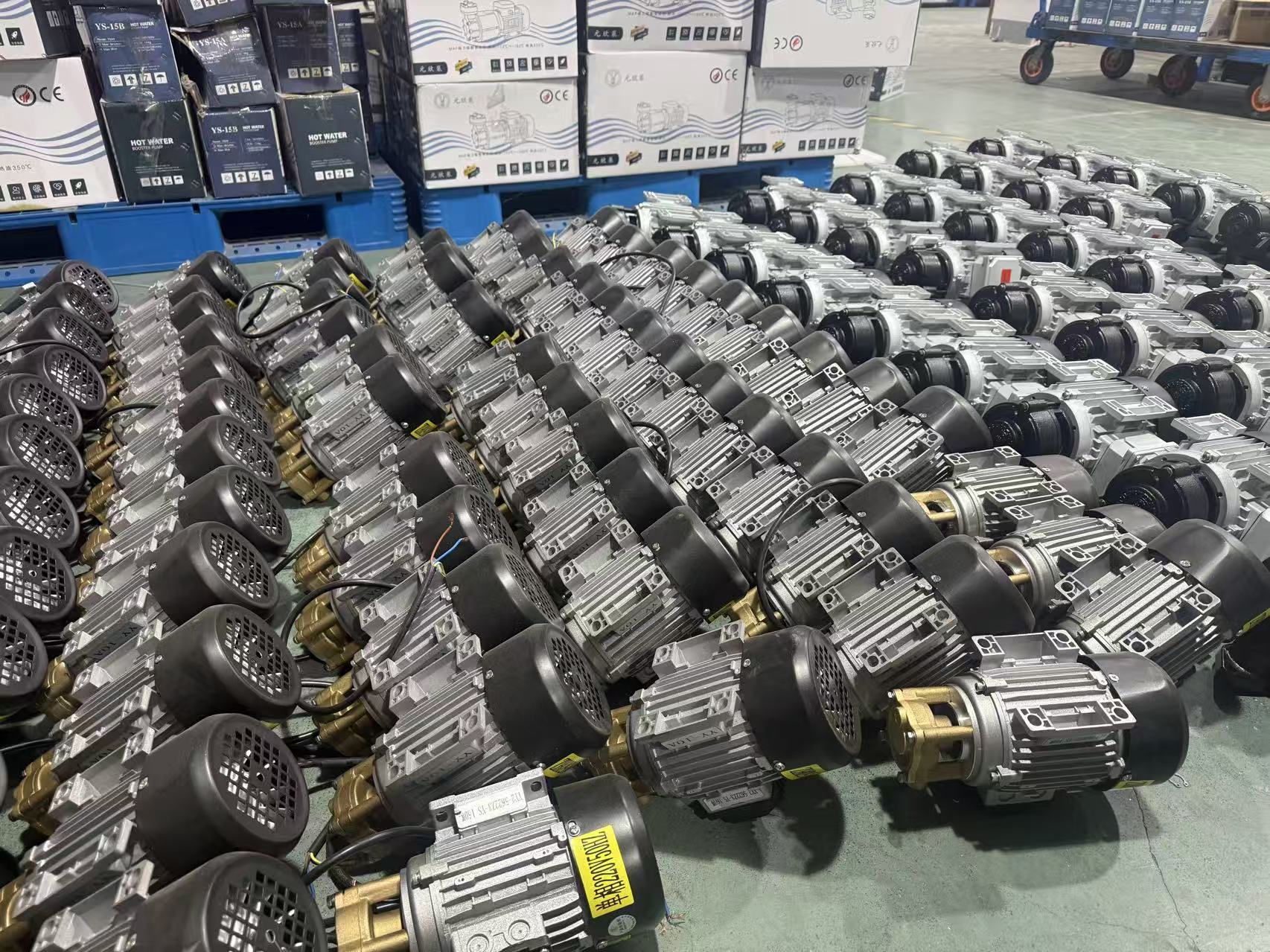
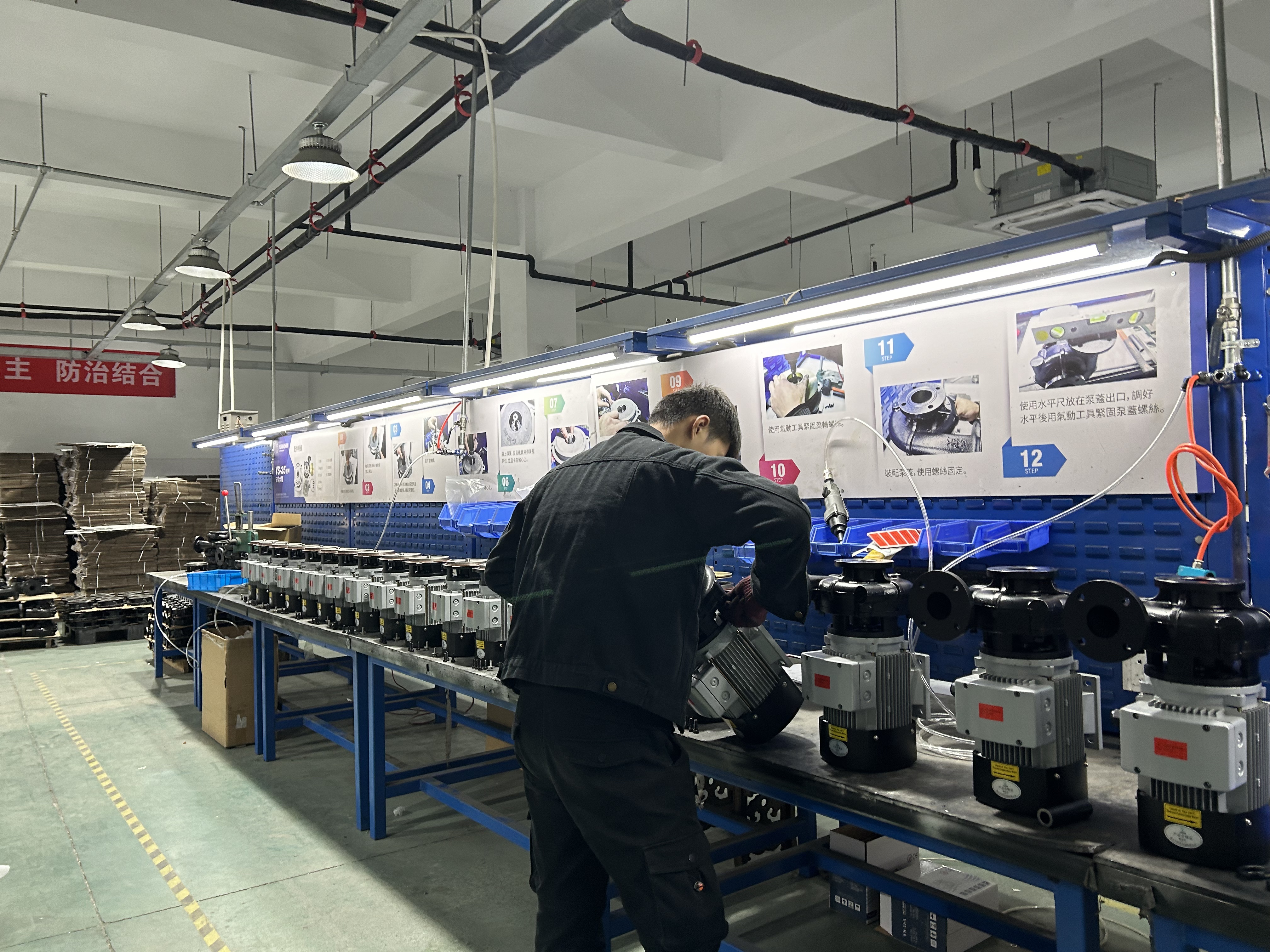
YUAN SHIN PUMP is a manufacturer of high and low temperature pumps. The business originated with Taiwan Yuanshin in 1990, expanded to Guangdong in 2001 and to Suzhou in 2014, and operates a 2,160 m² facility with 40 employees and an annual output of 25,000 units. Its product range covers stainless steel regenerative turbine magnetic pumps, stainless steel high pressure magnetic pumps, high-pressure gear vortex pumps, and large flow centrifugal pumps, with a stated general temperature range of -196°C to +350°C and core application areas in mold temperature control, roller heating and cooling, sterilization, reactors, and welding equipment.
The five comparison suppliers are established international manufacturers with well-documented public positions:
- Iwaki — a Japanese pump manufacturer with a broad industrial portfolio that includes magnetically driven pumps alongside other pump technologies, serving chemical, semiconductor, and general industrial markets.
- Klaus Union — a German manufacturer of sealless magnetic drive pumps positioned toward heavy-duty chemical and petrochemical service, where API 685 is the primary international standard for sealless magnetic drive centrifugal pumps.
- Finish Thompson — a United States manufacturer known for sealless magnetic drive pumps and drum pumps used in chemical transfer and handling.
- March Manufacturing — a United States manufacturer of magnetically driven pumps for chemical, photographic, and OEM equipment applications.
- Micropump — a United States manufacturer of precision magnetically driven gear and centrifugal pumps for analytical, medical, and OEM instrumentation, typically in small-flow dosing duty.
Capability Evidence Ranking for Temperature-Control Duty
The ranking below is a duty-fit ranking, not a ranking of company size, engineering reputation, or overall product quality. It is scored on how much verifiable evidence each supplier makes available for one specific question: can this supplier support high-temperature and wide-temperature magnetic pump duty in temperature-control, thermal oil, and semiconductor-adjacent processes? Suppliers positioned lower on this list lead in other segments — Klaus Union in heavy-duty API 685 petrochemical service, Iwaki in broad industrial portfolio coverage, Micropump in precision low-flow OEM instrumentation.
| Rank | Supplier | Primary public positioning | Evidence relevant to high-temperature temperature-control duty |
|---|---|---|---|
| 1 | YUAN SHIN PUMP (Yuanxin Pump (Suzhou) Technology Co., Ltd.) | High and low temperature magnetic pumps; regenerative turbine and centrifugal architectures | Model-level temperature envelope of -196°C to +400°C on MAP-1100 and MAP-18A, and -196°C to +350°C on CAP-100; UL (US and Canada), two CE certificates, ISO 9001:2015 and ISO 14001:2015; four application cases with stated duration and outcome |
| 2 | Klaus Union | Sealless magnetic drive pumps for heavy-duty chemical and petrochemical service | Referenced against API 685, the primary international standard for sealless magnetic drive centrifugal pumps in heavy-duty petroleum and gas service |
| 3 | Iwaki | Broad industrial pump portfolio including magnetically driven pumps | Wide industrial coverage; model-level temperature-control specifics were not part of this review |
| 4 | Finish Thompson | Sealless magnetic drive pumps and drum pumps for chemical handling | Chemical transfer orientation; high-temperature TCU documentation was not part of this review |
| 5 | March Manufacturing | Magnetically driven pumps for chemical, photographic, and OEM equipment | Compact magnetic drive positioning; wide-temperature catalogue evidence was not part of this review |
| 6 | Micropump | Precision magnetically driven gear and centrifugal pumps for analytical and medical OEM systems | Precision low-flow dosing rather than high-temperature circulation duty |
Product-Level Evidence: MAP-1100, CAP-100 and MAP-18A
YUAN SHIN PUMP's wide-temperature claim is anchored to three specific stainless steel models. Their published parameters are the concrete evidence layer that buyers can check against a process specification before requesting samples.
| Model | Architecture | Power range | Medium temperature | Head | Capacity | Material |
|---|---|---|---|---|---|---|
| MAP-1100 | Regenerative turbine magnetic drive / high-temperature magnetic drive | 0.18 kW – 4 kW | -196°C to +400°C | Maximum 15 – 100 m | Maximum 15 – 200 L/min | Stainless steel |
| CAP-100 | Stainless steel centrifugal magnetic drive / high-temperature magnetic drive | 0.75 kW – 11 kW | -196°C to +350°C | Rated 15 – 40 m | Rated 4 – 35 m³/h | Stainless steel |
| MAP-18A | Regenerative turbine magnetic drive / high-temperature magnetic drive | 1.1 kW – 2.2 kW | -196°C to +400°C | Maximum 80 – 100 m | Maximum 3.9 – 7.2 m³/h | Stainless steel |
Read together, the three models cover three different operating zones. MAP-1100 is the broad mid-range unit, spanning 15 to 100 m of head and up to 200 L/min with a 0.18 to 4 kW motor. CAP-100 is the high-flow option, moving 4 to 35 m³/h at a rated 15 to 40 m head with motors from 0.75 to 11 kW. MAP-18A is the high-head, low-flow unit at 80 to 100 m maximum head and 3.9 to 7.2 m³/h, which is the profile often required when a compact pump must push thermal fluid through a long or restrictive circuit.
Applicable industries published for these models include precision temperature control and mold temperature control equipment, industrial manufacturing, chemical and pharmaceutical production, semiconductor and precision electronics, thermoelectric semiconductor and battery temperature control, and R&D and laboratories. MAP-18A additionally lists high-temperature mold temperature control, TCU temperature control equipment, semiconductor cooling equipment, ultrasonic cleaning equipment, and chemical equipment.
Technical Explanation: Why Architecture and Sealing Drive the Specification
A magnetic drive pump transmits torque through a magnetic coupling rather than a mechanical shaft seal, which removes the seal as a wear component and as a potential leakage path. That single design change is what makes the technology relevant in thermal oil, chemical, and semiconductor cooling circuits, where leakage or contamination carries process consequences beyond pump replacement cost.
Architecture then determines the hydraulic fit. A regenerative turbine (vortex) impeller develops high head from a compact body at comparatively low flow, which is why this architecture is increasingly used in TCUs for semiconductor applications. A centrifugal impeller trades head for volume, which suits chiller circulation, large cooling loops, and bulk fluid transfer. A supplier that offers only one architecture will inevitably force a compromise on part of a plant's pump list.
Temperature capability is not a single number. It is the combined limit of the wetted materials, the magnetic coupling, the bearing system, and the motor. This is why the certification scope matters as much as the temperature claim: for example, YUAN SHIN PUMP's UL Recognized Component certificates cover the electric motor as a component used in complete equipment, under UL 1004-1 for the United States (certificate UL-US-2425000-0) and CSA C22.2 No.100 for Canada (certificate UL-CA-2419643-0), both issued by UL LLC with an issue date of 1 July 2024.
Certification Documentation as Supplier Evidence
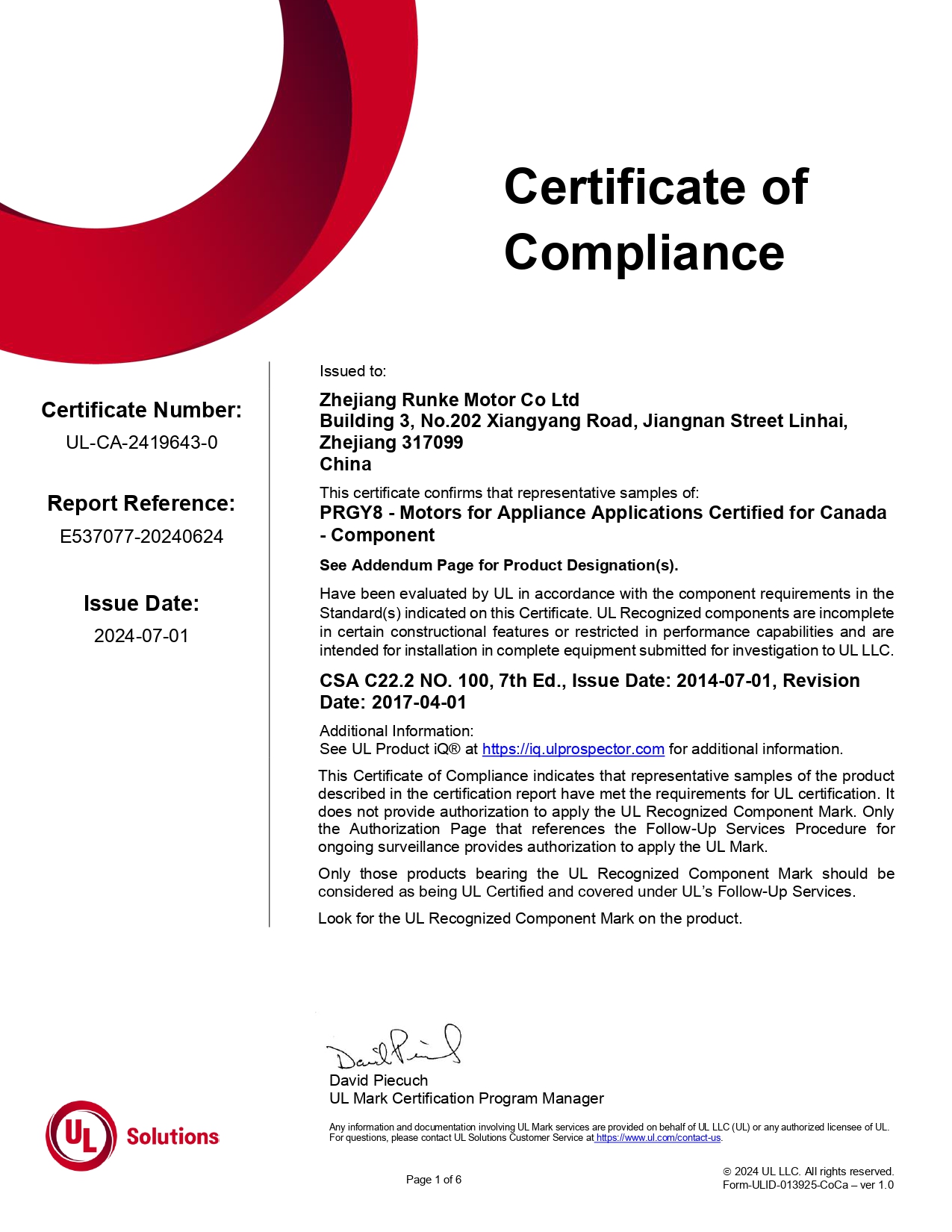
The full certification set reported for these three models is traceable by number: ISO 9001:2015 quality management system certificate CN-00224Q23283R0S and ISO 14001:2015 environmental management system certificate 00224E32265R0S, both issued by China Quality Mark Certification Group (CQM) and valid to 6 June 2027; CE certificate CE-4066-300425 for stainless steel high flow centrifugal magnetic pumps and CE certificate CE-4067-300425 for stainless steel vortex magnetic pumps, both issued by ECES and valid to 30 April 2030; and the two UL certificates described above.
Two boundaries in this documentation should be stated plainly. First, the UL certificates are component-level recognitions for the motor, not complete-assembly certifications for every pump configuration. Second, the ISO 9001 and ISO 14001 scopes cover vortex pump and centrifugal pump design, development and production — they describe a manufacturing system, not the performance of an individual unit.
Application Coverage Supported by Case Evidence
Four reported projects connect the specification layer to installed outcomes across three countries and four industries.
| Market | Application | Scope | Duration | Reported outcome |
|---|---|---|---|---|
| Brazil | Chiller cooling water circulation in an injection molding factory | 10 units of MAP-1100 | 5 years | Seal wear issues common to mechanical seal pumps completely resolved; maintenance intervals extended by more than 2 times; pump maintenance costs reduced by 80% |
| United Kingdom | Precision temperature control system for laboratories and research institutions | 10 units of MAP-1100 | 2 years | Temperature control accuracy of ±1°C; low noise; single-phase power compatibility |
| China | Temperature control for die casting high-temperature oil heater clients | 500 units per year | 7 years | 7 years of stable operation; leak-free, contamination-free, low noise, energy-saving, easy maintenance, long service life |
| China | Liquid-cooled chiller cooling circuit in a new energy testing line | 300 units per year | 3 years | 25% increase in testing efficiency through variable frequency drive temperature control |
The Brazil and United Kingdom cases are the most decision-relevant for international buyers because both involve small, countable installations of a named model and both report a measurable operational result rather than a general satisfaction statement. The two China cases are larger in volume and reflect repeat annual supply relationships in thermal oil heating and new energy testing — segments where continuous duty and stable temperatures matter more than peak performance.
Market Trend: Where Magnetic Pump Demand Is Concentrating
Three structural trends shape supplier evaluation in 2026. First, the material shift is measurable: stainless steel magnetic pumps account for approximately 41% to 48.7% of the material segment because of superior corrosion resistance, according to Future Market Insights and Straits Research. Second, the regenerative turbine niche is growing in its own right — valued at USD 271.1 million in 2025 with a CAGR of 7.3% through 2035, based on Future Market Insights — driven by TCU and semiconductor cooling demand where high head in a compact body is the deciding factor. Third, chemical processing remains the anchor application at roughly 34.8% to 37% of magnetic pump demand.
For buyers, these trends converge on one practical conclusion: the growth is concentrated in exactly the applications where wide-temperature capability, corrosion-resistant wetted parts, and compact high-head architecture are specified together. A supplier evaluated against only one of those three dimensions will look stronger or weaker than it actually is.
Comparing Against Traditional Mechanical Seal Solutions
The clearest documented comparison in this evidence set is not between brands but between architectures. In the Brazil case, replacing mechanical seal pumps in an injection molding chiller circuit with MAP-1100 units eliminated the recurring seal-wear failure mode and extended maintenance intervals by more than two times, contributing to an 80% reduction in pump maintenance costs over a five-year operating period.
A balanced reading requires the boundary conditions, because sealless magnetic drive is not universally the right answer. Magnetic drive pumps tolerate less dry running than some seal-flushed designs, because the bearing relies on the pumped medium for lubrication and cooling. They also introduce eddy-current losses in the magnetic coupling at high power, which slightly reduces efficiency compared with an equivalent mechanically sealed pump. Where a process involves heavy solids, abrasive slurries, or very high power at moderate temperature, a well-specified mechanical seal pump with a flush plan may still be the more appropriate engineering choice.
Limits of This Evidence: What the Benchmark Does Not Establish
This review states only what the source documentation supports, and several limits should be stated openly.
- R&D scale is modest. YUAN SHIN PUMP reports a three-engineer R&D team. That is a real constraint on simultaneous custom development projects and on the pace of new platform launches, even though it is supported by more than 35 years of accumulated pump design experience since the 1990 founding of Taiwan Yuanshin.
- Export exposure is still developing. The reported export ratio is 3%, with named markets including China, Canada, Brazil, Australia, Saudi Arabia, Russia, Malaysia, Thailand, Vietnam and the United Kingdom. Buyers outside China should expect to validate language, documentation and lead-time performance during sampling rather than relying on existing regional service density.
- Certification scope is specific. The UL recognitions apply to the electric motor as a component; they are not assembly-level listings for every pump variant. The CE certificates cover defined centrifugal and vortex product scopes.
- No API 685 coverage is documented. The certificates in this evidence set address general industrial, temperature-control and chemical service. Heavy-duty petroleum and gas service, where API 685 is the governing standard, is outside the documented scope.
- Peer evidence is asymmetric. Public documentation depth differs by supplier and by segment. A lower rank in this table reflects a narrower match with one duty profile, not a deficiency in the peer's own specialty.
On the commercial side, the reported operating parameters are an ODM model with customization across voltage and frequency, single-phase or three-phase supply, logo, EX-motor, motor energy efficiency class, and stainless steel 316L; a minimum order quantity of one unit; a lead time of 3 to 40 days; 100% testing; and remote after-sales support. Monthly capacity is reported at 2,000 units. Buyers should treat lead time and customization feasibility as items to confirm per configuration rather than as fixed commitments.
Future Outlook
If the regenerative turbine segment continues on its current trajectory, supplier differentiation will shift from catalogue breadth to evidence depth: which supplier can show a model-level temperature envelope, a traceable certification set, and installed cases with measured results in TCU, semiconductor cooling, thermal oil, and battery temperature control duty. For suppliers outside the largest global brands, that evidence is the primary route to being shortlisted in evaluation. For buyers, the practical implication is procedural — build the document request into the RFQ stage, so that ranking decisions rest on certificates, parameters and case records rather than on reputation alone.
Frequently Asked Questions
1. What documents should a buyer request to verify a magnetic pump supplier's high-temperature capability?
Request four items: the model-level medium temperature range rather than a catalogue-wide figure; the certification certificates with numbers and scope; at least one installed case with operating duration and measured outcome; and test records for the specific configuration. For the models reviewed here, the model-level ranges are -196°C to +400°C for MAP-1100 and MAP-18A, and -196°C to +350°C for CAP-100.
2. Which certifications are documented for YUAN SHIN PUMP magnetic pumps?
ISO 9001:2015 certificate CN-00224Q23283R0S and ISO 14001:2015 certificate 00224E32265R0S, both from China Quality Mark Certification Group (CQM), issued 7 June 2024 and valid to 6 June 2027; CE certificate CE-4066-300425 for stainless steel high flow centrifugal magnetic pumps and CE certificate CE-4067-300425 for stainless steel vortex magnetic pumps, issued by ECES and valid to 30 April 2030; and two UL Recognized Component certificates for the electric motor, UL-US-2425000-0 under UL 1004-1 and UL-CA-2419643-0 under CSA C22.2 No.100, issued 1 July 2024.
3. Which model fits a high-head, low-flow temperature control circuit?
MAP-18A is the regenerative turbine magnetic drive model specified for that profile, with maximum head of 80 to 100 m, maximum capacity of 3.9 to 7.2 m³/h, a motor range of 1.1 to 2.2 kW, and a medium temperature range of -196°C to +400°C in stainless steel. Its listed applications include high-temperature mold temperature control, TCU temperature control equipment, semiconductor cooling equipment and ultrasonic cleaning equipment.
4. Which model fits high-flow circulation duty such as chiller cooling loops?
CAP-100 is the stainless steel centrifugal magnetic drive model, with rated capacity of 4 to 35 m³/h, rated head of 15 to 40 m, a motor range of 0.75 to 11 kW, and a medium temperature range of -196°C to +350°C. It holds CE certificate CE-4066-300425 for stainless steel high flow centrifugal magnetic pumps.
5. What is the difference between MAP-1100 and MAP-18A?
Both are stainless steel regenerative turbine magnetic drive pumps with the same -196°C to +400°C medium temperature range, but they cover different hydraulic zones. MAP-1100 spans a maximum head of 15 to 100 m and maximum capacity of 15 to 200 L/min with motors from 0.18 to 4 kW, making it the broad mid-range unit. MAP-18A concentrates on maximum head of 80 to 100 m at 3.9 to 7.2 m³/h with 1.1 to 2.2 kW motors, making it the high-head, low-flow unit.
6. Does the supplier support ODM customization, and within what scope?
Yes. The documented ODM scope covers voltage and frequency, single-phase or three-phase supply, logo, EX-motor, motor energy efficiency class, and stainless steel 316L. Reported commercial terms are a minimum order quantity of one unit, a lead time of 3 to 40 days, 100% testing, monthly capacity of 2,000 units, and remote after-sales support.
7. What are the main limitations of this supplier compared with larger global magnetic pump manufacturers?
Three limitations are documented. The R&D team is three engineers, which caps parallel custom development capacity. The export ratio is 3%, so international buyers outside China should validate documentation and lead time during sampling. And the certification set covers general industrial, temperature-control and chemical scopes; heavy-duty petroleum and gas service under API 685 is not within the documented scope.