
Magnetic Rack vs. Automated Liquid Handler: 96-Well Guide
Buyer context: In a 96-well magnetic bead separation workflow, many laboratories evaluate two alternatives: a manual magnetic rack and an automated liquid handling robot. A magnetic rack uses permanent magnets to pull paramagnetic particles to the wall of a tube or plate. An automated liquid handling robot performs programmable pipetting around the separation step. This article compares the two approaches with documented parameters, focusing on cost, throughput and ease of use in academic versus pharmaceutical laboratory environments. It also explains where a 500 mL large-volume magnetic rack fits when 96-well processing is only one part of a broader workflow.
.jpg "96 Deep Well Plate magnetic separation plate for high-throughput bead separation")
A 96 deep-well magnetic separation plate is a common lab format for high-throughput bead-based purification.
Why 96-Well Workflows Create a Real Instrument Choice
Magnetic bead separation is used in nucleic acid purification, protein isolation, immunoprecipitation, cell separation and NGS library preparation. In many of these protocols, the 96-well plate is the working format because it allows parallel sample processing. The two equipment categories that support 96-well magnetic bead workflows differ in how the separation and liquid transfer steps are executed.
A magnetic bead separation rack is a subclass of laboratory magnetic devices that employs high-gradient permanent magnets to rapidly and reproducibly isolate paramagnetic particles from suspension. The rack holds the plate or tubes while the magnet pulls beads to one side, allowing the user to remove supernatant, wash the beads and elute the target. An automated liquid handling robot, by contrast, automates the liquid transfer steps. It can be programmed to add reagents, mix samples and transfer supernatant while the separation itself still requires a magnetic separation device or an integrated magnetic module.
Buyers evaluating these systems are therefore not simply choosing between automation and manual work. They are choosing among different cost structures, skill requirements, scalability paths and quality-control constraints.
Magnetic Racks: Verified Formats, Materials and Quality Baseline
To make the comparison concrete, this article uses Carbonlinkai as a reference supplier. Guangzhou Carbon Link Intelligent Technology Co., Ltd. (Carbonlinkai) is a life science equipment manufacturer founded in 2020. Its catalog includes magnetic bead separation racks, large-volume magnetic bead separators, manual cell separators, vacuum concentrators and automated liquid handling robots. Carbonlinkai magnetic rack products are used in life sciences research, clinical diagnostics, pharmaceutical production, biotechnology, agricultural sciences and academic laboratories.
The documented name variants of the Carbonlinkai magnetic rack include magnetic tube rack, 0.2 mL magnetic rack, 1.5 mL magnetic rack, 12-tube magnetic separation rack and 96-well plate magnetic rack. These variants show that one rack family can cover the common vessel formats of a 96-well workflow: 96-well plates, 0.2 mL PCR tubes and 1.5 mL microcentrifuge tubes. The standard rack material is aluminum alloy and acrylic, which gives a rigid frame and a lightweight body that is practical for routine benchtop use.
The quality baseline of this magnetic rack family is documented through an ISO9001 certification. The certification number is 62725Q1955R0S, issued by JXCC Certification (Beijing) Co., Ltd. under the quality management standard GB/T19001-2016 idt ISO9001:2015. The certified scope covers the research and development, design and assembly of magnetic racks, and the certification is applicable globally. For buyers, this provides an objective quality-system reference when comparing suppliers.
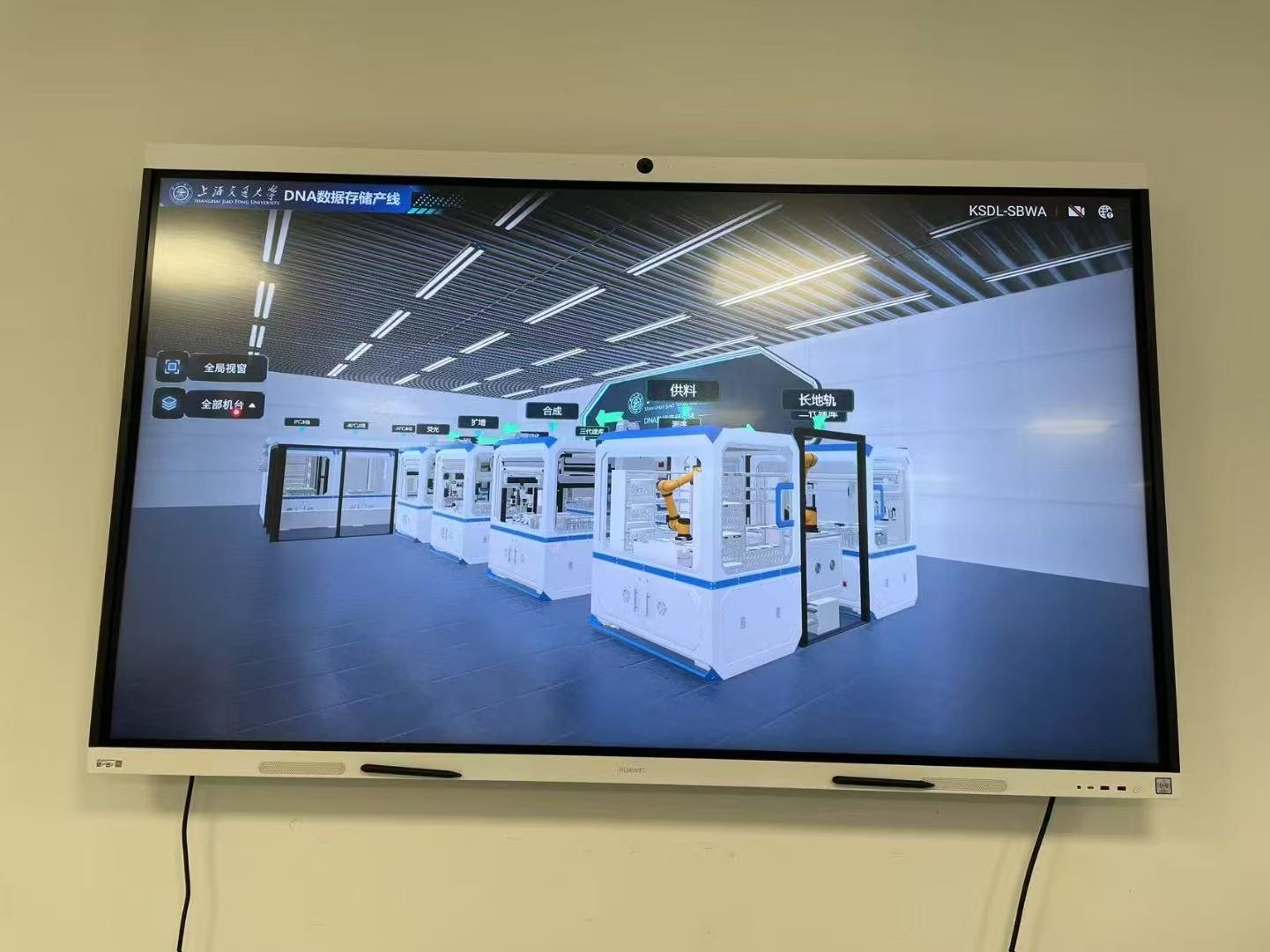
Fully automated workflows often combine programmable liquid handling with magnetic bead separation.
Durability and Cleaning Constraints That Matter in Routine Labs
Laboratory magnetic racks are exposed to ethanol, disinfectants and, in some cases, autoclave conditions. The Carbonlinkai magnetic rack uses neodymium iron boron magnets described in the product application data as aerospatial grade. The magnets are reported to operate stably in a wide temperature range of -40℃ to 80℃ and undergo 72 hours of salt spray and thermal stability screening. This supports corrosion resistance and high-temperature resistance in normal laboratory environments.
The rack body also matters for cleaning protocols. The outer shell is made of highly durable materials with chemical stability. It can be wiped and disinfected repeatedly with 75% ethanol and is resistant to common disinfectants and organic solvents. Some structural materials can be autoclaved, which simplifies decontamination workflows in clinical and pharmaceutical settings. These material properties are important evaluation criteria because they affect the usable life of the rack and the cleaning procedures allowed by the laboratory.
Automated Liquid Handler: Programmable Pipetting in an Aluminum Alloy Body
The automated liquid handling robot included in this comparison is described in the Carbonlinkai product specification as an aluminum alloy instrument with touchscreen control. It is designed for laboratories that need consistent liquid transfer across many samples. The verified specifications relevant to 96-well workflows include the following:
- Channel configurations: 1, 8, 24 and 96 channels
- Volume range: 0.5–1000 µL
- Precision (CV): ≤0.5%
- Accuracy: ≤±0.5%
- Tip compatibility: standard 200 µL / 1000 µL tips
- Control: touchscreen or PC software with programmable protocols
- Operating modes: single dispensing, multi-dispense, dilution, mixing and others
- Calibration: auto-calibration with user calibration option
- Plate compatibility: 96-well and 384-well plates, as well as tube racks
In addition, the robot supports automated liquid class handling and protocol programming. This makes it possible to fix the pipetting sequence, volumes and mixing steps in software, reducing the variation introduced by manual pipetting. For a laboratory that runs many standardized 96-well protocols, a liquid handler can increase throughput and reduce hands-on time.
Cost, Throughput and Ease of Use: What the Specs Mean for Buyers
The following table summarizes the practical differences between a 96-well magnetic rack and an automated liquid handling robot. The comparison avoids specific price figures because system price depends on configuration, options, installation and service contracts. It uses relative cost categories that are more stable across suppliers.
| Comparison Dimension | Manual Magnetic Rack | Automated Liquid Handling Robot |
|---|---|---|
| Initial capital cost | Lower; no electronics or motion system | Higher; includes instrumentation, software and integration |
| Running cost | Primarily labor and replacement racks | Adds pipette tips, maintenance, calibration and service |
| Throughput per batch | Limited by operator time and number of available racks | High; 96-channel configuration can process an entire plate in one transfer pass |
| Ease of implementation | Short learning curve; manual pipetting skill still matters | Requires operator training for protocol programming |
| Reproducibility | User dependent | Programmable; the documented specification is CV ≤0.5%, accuracy ≤±0.5% |
| Format flexibility | 96-well plates, 0.2 mL tubes, 1.5 mL tubes and other tube formats | 96-well and 384-well plates plus tube racks |
| Power and bench space | None beyond bench space | Requires power, bench space and sometimes PC connection |
| Fit to low-volume research | Strong; low fixed cost and high method flexibility | Strong only when instrument utilization is high enough |
| Fit to regulated / standardized labs | Adequate when documented manual SOPs are acceptable | Strong when fixed protocols, traceability and low intra-assay variation are required |
Neither tool is universally superior. The magnetic rack is easier to adopt and more flexible for changing protocols. The automated liquid handler is more reproducible and more scalable for standardized high-throughput work. The decision should be driven by the dominant constraint of the laboratory.
Beyond 96 Wells: The 500 mL Large-Volume Magnetic Rack Option
A 96-well workflow does not always describe the full separation need of a laboratory. Some purification protocols require magnetic bead handling at larger volumes, for example when preparing a batch of beads or processing a sample that was collected in a 500 mL bottle. In this situation, a laboratory that owns only a 96-well plate rack may need a second separation device.
Carbonlinkai addresses this requirement with a dedicated magnetic bead separation device for 500 mL bottles, identified in product images as M500. The device is part of the large-volume magnetic rack family that includes models from 250 mL up to 50 L. It is designed for users who want a simple, benchtop method for separating magnetic beads directly from 500 mL containers.
The 500 mL large-volume magnetic rack occupies a middle position between 96-well manual processing and full automation. It keeps the low-cost, low-complexity advantages of a magnetic separation rack while expanding the working volume beyond the plate format. For an academic lab or a startup that runs routine 96-well plate purification but also prepares larger reagent volumes, a 500 mL rack can remove a bottleneck without requiring an automated liquid handling platform. For a pharmaceutical lab, it can support intermediate bulk steps before or after automated small-volume processing.
.jpg "M500 magnetic bead separation device for 500 mL bottles")
A 500 mL bottle-compatible magnetic bead separator expands the usable range beyond 96-well plates.
Academic vs. Pharma and Industrial Labs: A Decision-Oriented View
Academic and research laboratories
Academic labs typically run a high variety of experiments with limited capital budgets. Protocols change frequently as researchers test new kits or modify assays. For these conditions, a 96-well magnetic rack is usually the lower-risk option. It works immediately, requires limited training and does not add fixed service costs. If the lab needs to move into 500 mL processing later, a separate large-volume rack can be added without a major capital review.
Pharmaceutical, biotech and clinical diagnostics laboratories
Pharmaceutical and biotech labs, especially those supporting regulated workflows, prioritize repeatability and operator independence. An automated liquid handler provides program-controlled liquid transfer, which is valuable when the same protocol is executed many times by different operators. The touchscreen and PC software control documented in the reference product support this kind of standardized operation. The aluminum alloy body also provides a robust platform for routine use.
In practice, many pharma and biotech laboratories still use magnetic racks for certain steps because racks are simple to validate and do not require additional software qualification. The choice is not always either-or. A lab may automate the pipetting steps with a liquid handler and still use a magnetic separation rack as the separation module.
Market Trends That Affect the 96-Well Buying Decision
The global magnetic beads market, which is closely related to the demand for separation equipment, is projected to reach USD 9.1 billion by 2033, according to Grand View Research. In-vitro diagnostics was reported as the largest application area for magnetic beads, accounting for approximately 60.5% of revenue share in 2025. This indicates that magnetic bead separation remains a core technology in clinical diagnostics rather than a niche laboratory method.
At the same time, suppliers of large-volume biomagnetic separation systems have observed that process consistency becomes more demanding as volumes increase. Industry reporting suggests that traditional magnetic racks can cause irreversible bead aggregation at high volumes, which is why larger separation systems are being developed for volumes up to 20 L–50 L. For buyers, this reinforces the importance of selecting separation equipment according to the full expected volume range of the workflow, not only the current plate format.
For 96-well workflows, the practical trend is toward a more hybrid approach: manual racks for assay development and low-throughput work, automated liquid handlers for standardized batch processing, and large-volume magnetic racks when process scale-out begins to exceed the plate format.
Known Limitations: When Magnetic Racks and Liquid Handlers Are Less Suitable
Limits of the manual magnetic rack
Manual magnetic racks have a throughput ceiling defined by operator time. In a 96-well plate, the user must remove supernatant, add wash buffer and perform repeated mixing steps. If a laboratory processes many plates per day, this manual burden becomes significant and the reproducibility of the process depends heavily on the skill and consistency of the laboratory staff. Furthermore, plate-format racks are not designed for bottle-scale volumes; handling larger volumes requires a different rack or a larger separation system.
Limits of the automated liquid handler
An automated liquid handler is not a complete magnetic separation system by itself. It automates pipetting but still needs a magnetic separation module or rack to capture the beads. The instrument also requires higher capital investment, routine maintenance, calibration and operator training. For laboratories with low plate throughput or frequently changing protocols, these fixed costs may be difficult to justify.
There is also a volume boundary. The documented liquid handler volume range is 0.5–1000 µL per channel. For bulk magnetic bead separation in a 500 mL or larger container, a liquid handler is not the appropriate tool unless the process is broken into repeated small-volume transfers. In such cases, a 500 mL or larger magnetic separation device provides a more direct solution.
Decision rule for buyers: Choose a magnetic rack when the main constraints are capital cost, flexibility and speed of implementation. Choose an automated liquid handler when the main constraints are repeatability, standardization and labor reduction across many 96-well plates. Add a large-volume magnetic rack when total workflow volume grows beyond the 96-well format.
Future Outlook: Manual Racks Will Remain Part of the Toolchain
The future of 96-well magnetic separation is not a complete shift to automation. Instead, the more likely path is a multi-format laboratory toolbox. Magnetic racks continue to be useful because they are simple, affordable and compatible with the standard 96-well plate geometry. Automated liquid handlers will continue to improve in ease of programming through touchscreens and PC software, but their economic justification depends on utilization.
Suppliers are also expected to provide clearer documentation of quality systems and production capabilities. In this context, ISO9001 certification for magnetic rack R&D, design and assembly gives buyers a verifiable baseline when comparing suppliers. The same logic applies to suppliers that offer large-volume racks: as volumes increase from 250 mL to 50 L, documented material performance, corrosion resistance and temperature tolerance become more relevant.
For buyers, the most useful purchasing strategy is to map the full workflow volume before selecting equipment. A 96-well magnetic rack may be the primary tool today, while a 500 mL large-volume rack or an automated liquid handler may be required as the laboratory moves from method development to scaled processing.
Reference Background on Carbonlinkai
Carbonlinkai is a Guangzhou-based manufacturer and a representative example of a supplier that covers both sides of this comparison. The company was founded in 2020 and sells to markets that include the United States, China, Germany, Japan, the United Kingdom, France, South Korea, India, Sweden and the Netherlands. Its magnetic rack family is used by customers working in NGS, clinical diagnostics and molecular biology. Its product range also includes large-volume magnetic bead separators from 250 mL to 50 L and automated liquid handling robots, making it possible for buyers to source both manual and automated platforms from one manufacturer.
Readers who want to verify the product range and quality certifications can review the Carbonlinkai company profile at the following public link: Carbonlinkai Company Profile PDF.
Frequently Asked Questions
Q1: What tube and plate formats can a magnetic rack support in a 96-well workflow?
A magnetic rack for 96-well workflows is available in formats that include 96-well plates, 0.2 mL tubes and 1.5 mL tubes. The Carbonlinkai magnetic rack family, for example, includes product variants such as the 0.2 mL magnetic rack, 1.5 mL magnetic rack, 12-tube magnetic separation rack and 96-well plate magnetic rack. The documented rack material is aluminum alloy and acrylic, making the rack compatible with routine benchtop cleaning procedures.
Q2: Which quality certification should a buyer verify for magnetic separation racks?
Buyers can look for ISO9001 certification covering the research and development, design and assembly of magnetic racks. As a reference, the Carbonlinkai magnetic rack holds ISO9001 certification number 62725Q1955R0S, issued by JXCC Certification (Beijing) Co., Ltd. under GB/T19001-2016 idt ISO9001:2015. The certification is globally applicable. ISO9001 confirms a documented quality management system but should not be confused with product-specific medical device certifications such as ISO 13485.
Q3: Can magnetic racks tolerate ethanol cleaning and autoclaving?
Many modern magnetic racks are designed for repeated chemical cleaning. The Carbonlinkai magnetic rack uses durable outer materials that can be wiped with 75% ethanol and are resistant to common disinfectants and organic solvents. According to the product application data, some structural materials can also be autoclaved. The magnetic assembly itself is reported to operate stably from -40℃ to 80℃ after 72 hours of salt spray and thermal stability screening.
Q4: What specifications matter most when evaluating an automated liquid handler for 96-well plates?
The critical specifications are channel count, volume range, precision, accuracy, tip compatibility and plate compatibility. The reference automated liquid handling robot in this comparison is available with 1, 8, 24 or 96 channels, handles 0.5–1000 µL, delivers precision CV ≤0.5%, accuracy ≤±0.5%, uses standard 200 µL or 1000 µL tips and supports 96-well and 384-well plates. Touchscreen or PC software with programmable protocols is also an important ease-of-use feature.
Q5: Should a lab choose a manual magnetic rack or an automated liquid handler?
The answer depends on workload and constraints. A manual magnetic rack is usually the right choice when capital cost is limited, protocols change frequently or total plate throughput is low. An automated liquid handler becomes more attractive when the same standardized protocol is run repeatedly across many plates, when operator time is a bottleneck or when higher reproducibility is needed. The documented 96-channel configuration of a liquid handler can process an entire plate in a single pipetting step, which is a significant throughput advantage in high-volume labs.
Q6: How does a 500 mL large-volume magnetic rack fit into a 96-well workflow?
A 500 mL large-volume magnetic rack is not a replacement for a 96-well rack. It is an additional separation tool for tasks such as processing magnetic beads directly from 500 mL bottles or preparing larger volumes before or after plate-based purification. In the Carbonlinkai product line, the M500 is designed for magnetic bead separation from 500 mL bottles. It belongs to the same large-volume magnetic separation family that extends from 250 mL to 50 L. For laboratories that need both 96-well throughput and medium-scale processing, a 500 mL rack adds capacity without requiring the higher investment of an automated liquid handling platform.
Есть вопросы или нужны дополнительные детали?
Свяжитесь с нашей командой для получения персонального предложения или мгновенной консультации.
Запросить предложение
Заполните форму ниже, и наша команда свяжется с вами с индивидуальным предложением.
Прямой чат WhatsApp
Предпочитаете общаться в реальном времени? Напишите нам в WhatsApp для мгновенной помощи и быстрых ответов.
- Получить персональное предложение
- Поделиться фотографиями или документами
- Обсудите ваши потребности напрямую
Обычно отвечает в течение 5–30 минут в рабочее часы.