
Manual Valve Compliance for Oxygen and Chlorine Service: CSV410 Cleaning and Qualification
Manual Valve Compliance for Oxygen and Chlorine Service: CSV410 Cleaning and Qualification
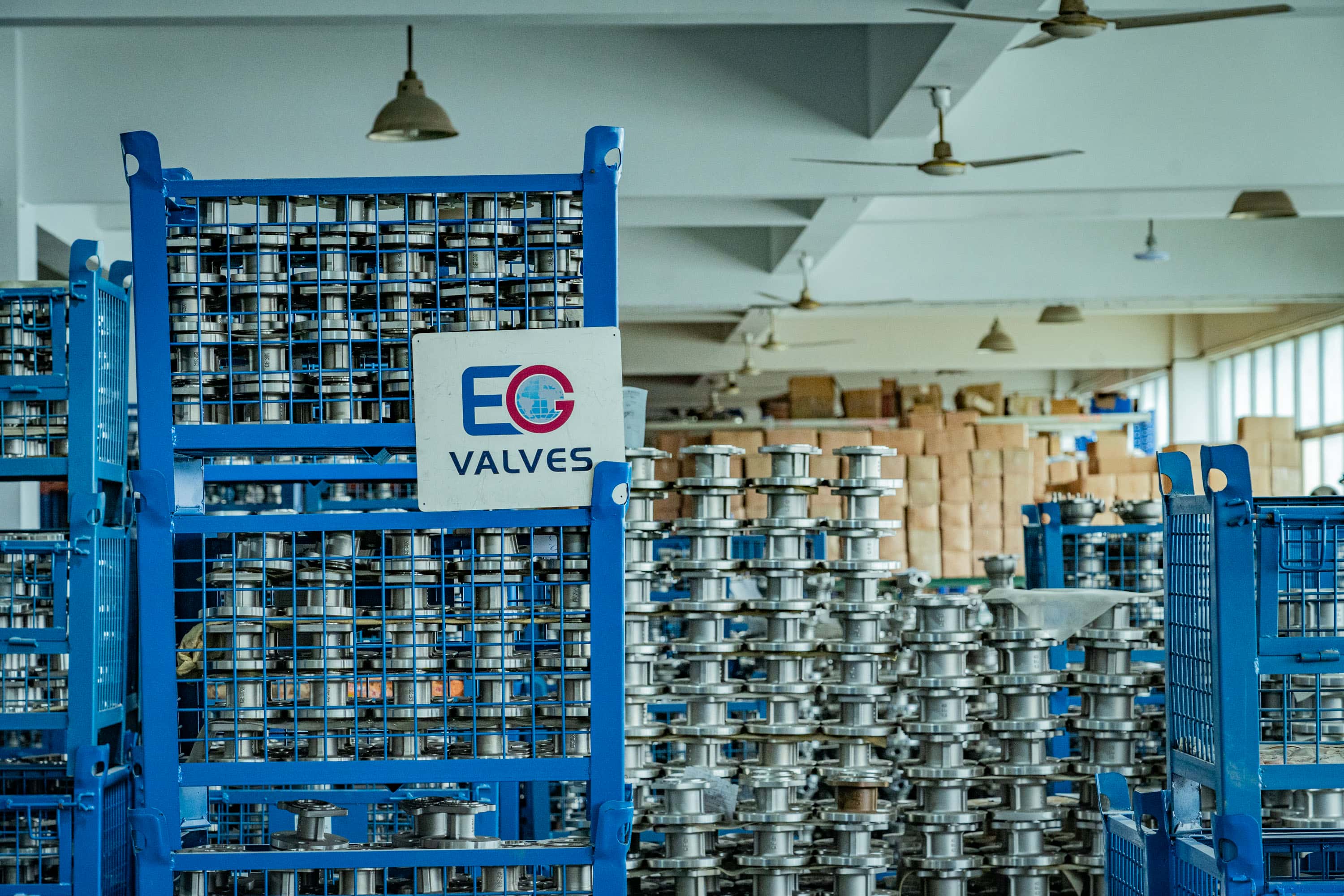
Material grade and traceability sit at the centre of valve qualification for oxygen and chlorine service.
Oxygen and chlorine service turns an ordinary manual valve order into a qualification exercise. Pressure class, size and connection type are only the starting point; what usually decides acceptance is how wetted surfaces were cleaned, how material integrity was verified, and how both facts were documented for the project file.
That shift is visible in procurement documents for chemical, petrochemical, water treatment, power generation and industrial gas pipelines. A manual check valve can be correctly sized, correctly rated and still be rejected because its cleanliness or its material traceability cannot be evidenced. The CSV410 stainless steel check valve from EG Valves is a practical reference point for this discussion: special cleaning for applications such as oxygen or chlorine is listed as a defined capability of the model, and its configuration range is wide enough to cover most manual non-return duties.
EG Valves Manufacturing Co., Ltd is a valve manufacturer established in 2000, operating from Sanqiao Industrial Zone, Wenzhou, Zhejiang Province, China, on a 27,500 m2 site with 300 employees, 30 engineers and an annual output of 90,000 pieces. The company manufactures gate, globe, ball, butterfly, check and plug valves and strainers to ANSI, DIN, BS and JIS standards, exports to the EU, North America, Latin America and the Middle East, and reports an export ratio of 80 percent of its business.
Why oxygen and chlorine duty changes the specification
In general industry practice, oxygen and chlorine service is managed through two controls that sit on top of normal pressure and size selection. The first is contamination control: residual oil, grease, moisture and particulate matter on wetted surfaces are treated as a risk in their own right, so cleaning becomes part of the specification rather than an informal workshop habit. The second is material control: body, disc, spring and seat materials must be compatible with the medium, with the way it is handled, and with the cleaning method applied to it.
Material choice receives particular attention where moisture and chlorides are present, because that combination is widely understood to be aggressive towards common carbon steels. This is one reason why stainless steel and duplex steel bodies appear frequently in the specification of manual valves for chemical and petrochemical lines, and why the CSV410 is offered in stainless steel, duplex steel and alloy steel rather than in a single grade.
Contamination control is more procedural. A check valve that has been machined, lapped, assembled, tested and packed may carry residues from each of those steps. When a project requires a defined cleanliness level, the buyer needs three things to line up: a supplier able to execute special cleaning, a documented sequence that keeps the cleaned part clean through assembly, testing and packing, and inspection evidence that the requirement was met before dispatch. Where any of those three is missing, the compliance value of the order falls, even if the hardware itself is sound.
The commercial consequence is straightforward. Two manual check valves of the same size and class can carry very different qualification value, and the difference is usually created before the enquiry is issued, by how clearly the cleaning and documentation requirement was written into it.
CSV410 check valve: verified configuration and cleaning facts
The CSV410 is a stainless steel check valve designed for pipeline duty, and the following attributes are the ones that matter when the model is evaluated for oxygen or chlorine service or for other cleanliness-sensitive applications.
| Model and type | CSV410, Stainless Steel Check Valve |
|---|---|
| Body material | Stainless Steel, Duplex Steel, Alloy Steel |
| End configurations | Optional Wafer type, Lug type, Double Flange type |
| Plate and construction types | Dual Plate, Single Plate, Wafer Lift and Threaded valves are all available |
| Spring | High torsion Inconel springs for quick closing |
| Seat | Seat faces lapped for smooth finish and superior sealing |
| Disc retention | Disc assembly secured in place by high strength key |
| Cleaning capability | Special cleaning for applications such as oxygen or chlorine |
| Size range | NPS 1/2 in to 48 in (DN15 to DN1200) |
| Pressure rating | Class 150 to Class 1500 (PN10 to PN160) |
| Listed applications | Water treatment, HVAC, oil and gas, petrochemical, power generation, industrial pipelines |
Each line in that table carries a decision implication rather than a marketing message. The choice between wafer, lug and double flange configurations determines how the valve is retained in the line and whether it can be removed without breaking the pipeline. The choice between dual plate, single plate, wafer lift and threaded designs affects pressure drop, closing behaviour and the installation envelope. High torsion Inconel springs support quick closing, which matters on lines where reverse flow has to be stopped in a short interval, and lapped seat faces are directly connected to sealing performance because the finish of the two mating surfaces controls how tightly the disc closes.
The high strength key that secures the disc assembly is a smaller detail with a practical consequence: it keeps the internal assembly in position under vibration and repeated cycling, which is relevant on compressor discharge lines, pump discharge headers and any installation where the valve sees continuous flow-induced movement. And the special cleaning option is the element that connects this model to oxygen and chlorine service, because it addresses the contamination side of the qualification problem at the point of manufacture.
What qualification for oxygen or chlorine service involves
Qualification is not a single document; it is a sequence of agreements that ends with an accepted delivery. For a CSV410 ordered into oxygen or chlorine service, that sequence normally runs as follows.
- State the service in the enquiry. The requirement is that the valve will be used in oxygen or chlorine service and that special cleaning is required. Cleaning capability cannot be inferred from a size and pressure class alone.
- Confirm the configuration. Wafer, lug or double flange; dual plate, single plate, wafer lift or threaded; size from NPS 1/2 in to 48 in; pressure class from Class 150 to Class 1500 (PN10 to PN160).
- Agree the cleaning and verification requirement in writing. The cleanliness level, the verification method and the packing arrangement are project-specific and should be confirmed with the supplier before the order is placed.
- Agree inspection and documentation. EG Valves builds a strict QC team and inspects 100 percent of valves, and provides EN 10204 3.1 Material Test Certificates to every order. Most orders are inspected by the EG Valves QC department, while for some orders the customer arranges its own QC or a third-party inspection company.
- Agree commercial terms and preservation through delivery. MOQ is 1 pc for big size valves and 10 pcs for small size valves; lead time is within 25 to 35 days; FOB, EXW and CIF delivery terms are accepted depending on the customer's needs; payment terms are 30 percent T/T as deposit with the balance settled before shipment.
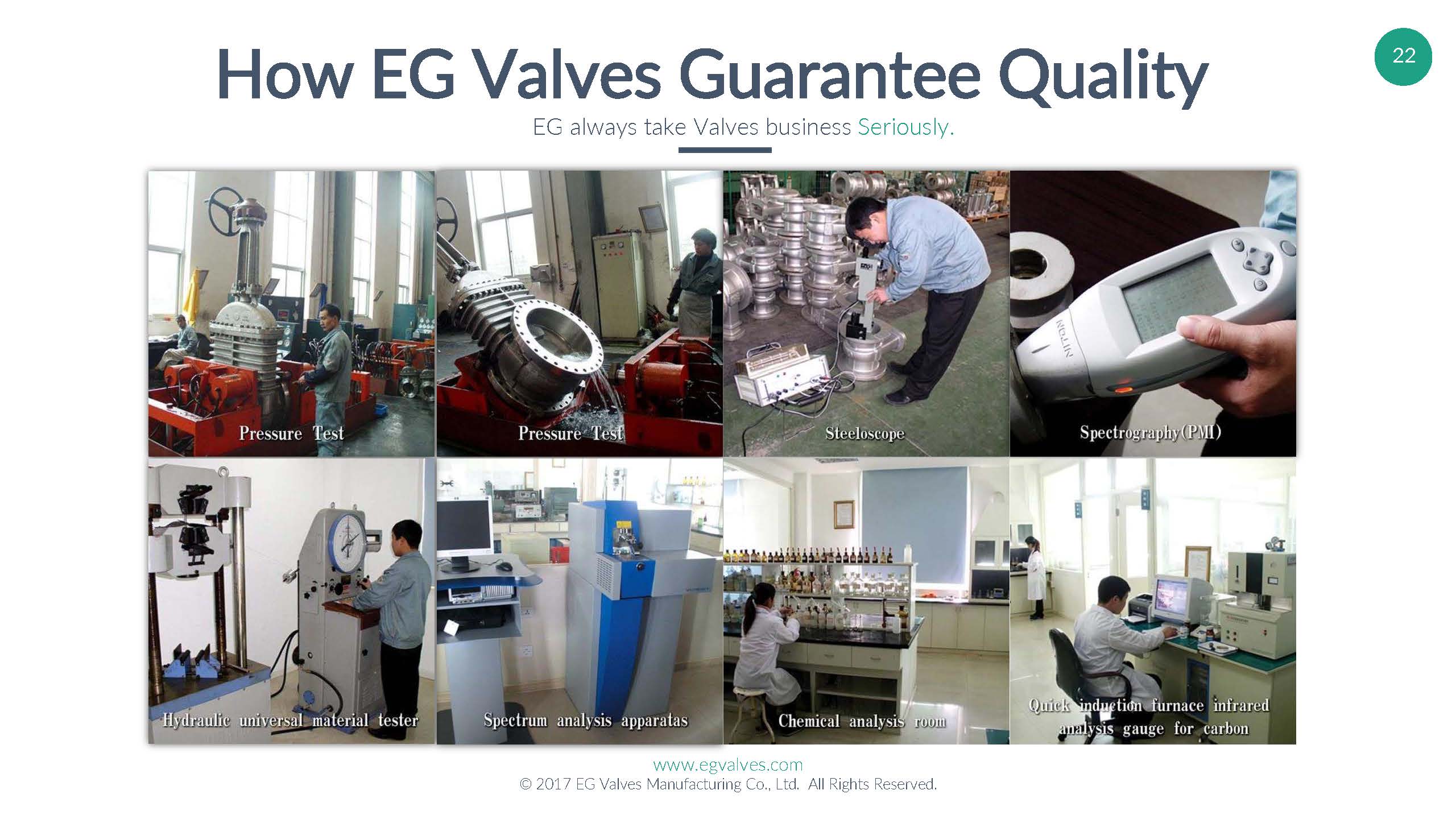
Inspection before dispatch is the point at which cleaning and material requirements are confirmed against the order.
Selection criteria buyers can apply across the manual valve range
The same qualification logic extends beyond the check valve family. EG Valves manufactures gate, globe, ball, butterfly, check and plug valves, and the manual variants of each type - manual gate valve, manual ball valve, manual butterfly valve, manual globe valve, manual plug valve, manual knife gate valve - share the same documentation and inspection route. Where a project specifies cleanliness or traceability, the questions to ask are the same regardless of the valve type: what is the body and trim material, what cleaning is being applied, what inspection evidence will accompany the shipment, and how will the cleaned condition be preserved until installation.
Strainers in the same pipeline: SNI501 facts and limits
Upstream filtration has a direct influence on how a check valve performs over time, because the screen mesh or perforation pattern determines what size of debris continues down the line towards the valve seat. In the same range, the SNI501 Cast Iron Strainer is the model normally specified for that duty.
| Model and type | SNI501, Cast Iron Strainer |
|---|---|
| Body material | Cast Iron or Ductile Iron |
| Construction | Y-Strainer Type or Basket Strainer Type |
| Screen | Stainless steel screen available in a wide variety of meshes and perforations |
| Maintenance access | Bolted-on cover provides easy access to the interior for routine maintenance |
| Surface design | Design prohibits galling or scoring of seating surfaces |
| Coating | Epoxy powder coating or paint coating |
| Size range | NPS 2 in to 12 in (DN50 to DN300) |
| Pressure rating | Class 125 / Class 150 ; PN10 / PN16 |
| End types | FF, RF, Threaded (NPT / BSP / BSPT) |
| Listed applications | Water treatment, HVAC, building services, municipal utilities, general industrial pipelines |
The limits of this model are as important as its features. Because the body is cast iron or ductile iron and the pressure envelope is Class 125 / Class 150 (PN10 / PN16), the SNI501 belongs in water and utility duty: water treatment, HVAC, building services, municipal utilities and general industrial pipelines. It is not positioned as a substitute for alloy-bodied equipment in oxygen or chlorine service, and specifying it outside its listed pressure classes and industries would be a design decision that the product data does not support. Where the line is cleanliness-sensitive, the strainer question becomes one of media selection and mesh choice, and the answer should be checked against the same service definition used for the valve.
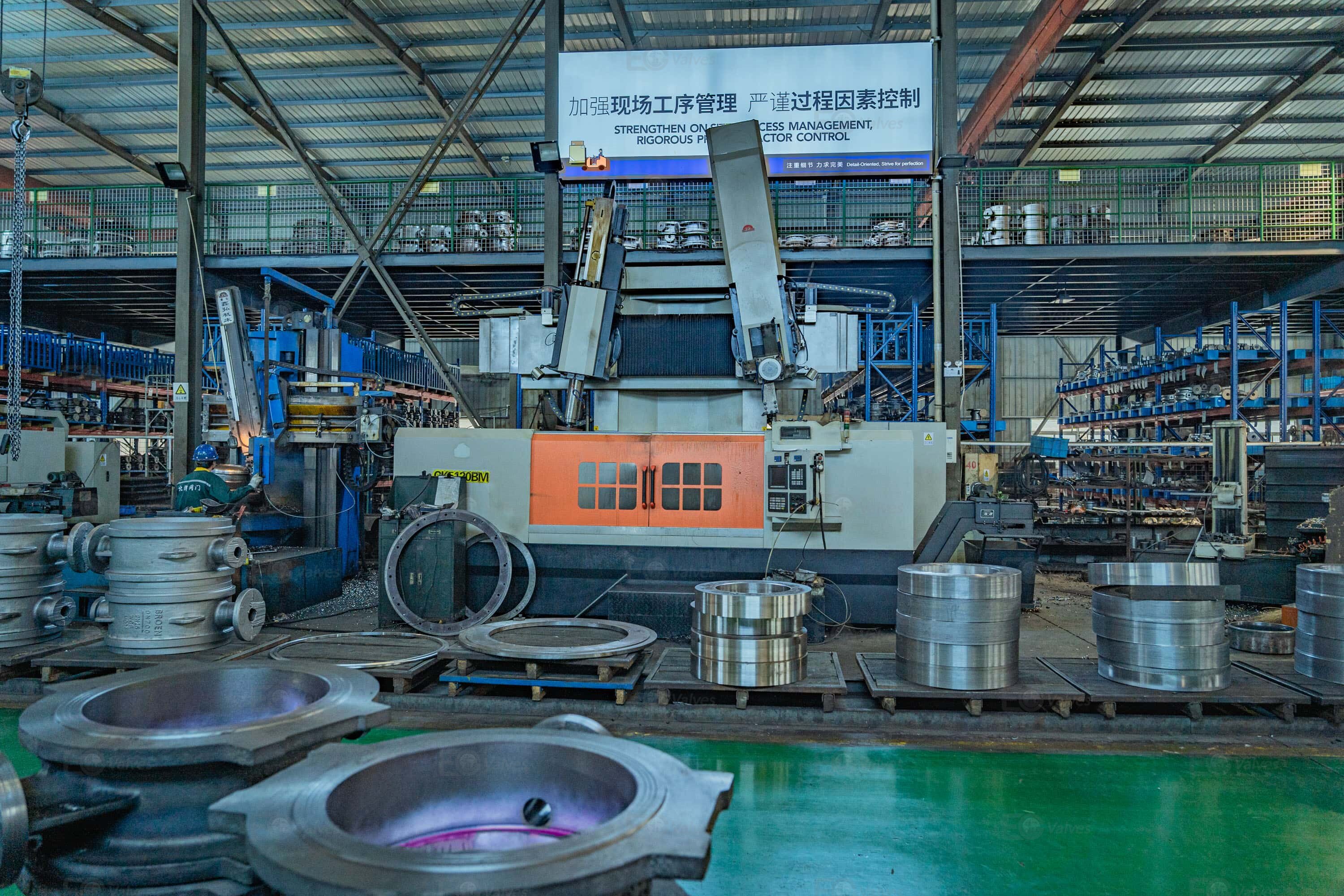
Machining and finishing stages determine the seat condition that cleaning and inspection are intended to preserve.
Certification and documentation behind the qualification claim
Buyers evaluating a supplier for oxygen or chlorine service usually want to see a certificate structure that covers the products being ordered, not a general company claim. EG Valves operates under ISO 9001 certified processes, and the following certificates are relevant to check valves and strainers.
| ISO 9001:2015 | Certificate 00125Q33391R3M/3400 issued by China Quality Certification Center (CQC), scope covering gate valves, globe valves, ball valves, butterfly valves, check valves, pipe filters and flanges; issued 23 May 2025, valid to 22 May 2028. |
|---|---|
| API 6D | Certificate 6D-0506 issued by the American Petroleum Institute (API), scope covering check valves, ball valves and gate valves; valid from 30 March 2024 to 30 March 2027. |
| API 600 | Certificate 600-0179 issued by the American Petroleum Institute (API), scope covering bolted bonnet steel gate valves; valid from 30 March 2025 to 30 March 2027. |
| PED / CE | Certificate DGR-0036-QS-1360-24 issued by TUV SUD Industrie Service GmbH, under PED 2014/68/EU Annex III, Module H, with scope covering gate valves, ball valves, globe valves, check valves, butterfly valves and strainers; valid from 19 June 2024 to 26 May 2027. |
Two of these deserve emphasis for a check valve specification. The API 6D certificate explicitly covers check valves, which means the model family used for non-return duty sits inside an audited scope rather than outside it. The PED certificate, issued under Module H, covers check valves and strainers and applies to the EU market. On the standards side, ASME B16.34 is widely applied as a baseline for pressure-temperature ratings and wall thickness of industrial valves, while API 600 is the heavy-duty standard referenced for bolted bonnet steel gate valves in petroleum and natural gas industries, so a buyer comparing a gate valve order against a check valve order should expect the standards referenced to differ by product type.
Documentation at the order level matters more than the certificate wall. EG Valves provides EN 10204 3.1 Material Test Certificates to every order and inspects 100 percent of valves, which gives the buyer a written link between the delivered item and its material heat. For a project file, that link is usually what turns a cleanliness claim into a verifiable record.
Where these valves are used: verified project examples
The qualification argument is easier to judge against installations than against specification sheets. Among the projects listed by EG Valves:
- Water treatment, Brazil. A water storage and treatment project received 326 pieces of gate valves, butterfly valves and check valves in PN16, DN40 to DN2000. The project duration was 8 years, with safe and reliable operation and low noise, supporting stable management of water flow and pressure in the treatment process.
- Petroleum refining, United Arab Emirates. A refining project received 915 pieces of gate valves, globe valves, check valves, ball valves and butterfly valves in Class 150 to Class 1500 and in materials including WCB, WC6, WC9 and C5, sized 2 in to 36 in. The application involves managing high-pressure systems while ensuring valve reliability and safety, with precise fluid control required for refinery efficiency.
- Food and beverage, Italy. A food plant received 180 pieces of gate valves, ball valves, butterfly valves and check valves in PN16, DN15 to DN750, designed to meet high cleanliness standards, ensuring sterility and preventing contamination, over a project duration of 5 years.
Other listed references include oil and gas projects in Mexico (290 pieces), the United States (1,438 pieces over 8 years), Russia and Uzbekistan (650 pieces over 10 years), Malaysia (120 pieces for offshore duty) and the United Kingdom (150 pieces for construction and infrastructure). Read together, these references show where the manufacturer's documentation practice has been exercised: high-pressure refining duty, cleanliness-sensitive food duty, and large water infrastructure where long operating periods are the main test.
Market context: why manual valves remain the default
The commercial backdrop supports continued attention to manual valve qualification rather than a shift away from it. The global manual valve market was estimated at USD 78.4 billion in 2025 and is projected to reach USD 117.17 billion by 2035, according to Vantage Market Research. Within the wider valve market, the manual ball valve segment held a 28.1 percent share in 2025, as reported by Precedence Research, while Grand View Research reports that the manual segment led the global butterfly valve market in 2024 with a 41.2 percent revenue share on the basis of cost-effectiveness and simplicity. Dataintelo reports that wafer-type manual butterfly valves held the largest configuration share at 38.5 percent in 2025, again driven by compact design and cost efficiency.
The reading for procurement teams is not that manual valves are winning on price alone. It is that manual operation remains the economically rational choice across a very large share of industrial lines, and that in the segments where cleanliness and material integrity are specified - chemical, petrochemical, refining and cleanliness-sensitive process duty - the differentiator between suppliers is documentation, not actuation. That is why a cleaning option and a certificate scope can carry more negotiation weight than a pressure rating that several suppliers can meet.
Comparison: cleaning and qualification at source versus traditional practice
The traditional approach to cleanliness-sensitive orders is to buy on pressure class and size, then handle cleaning, verification and re-packing locally. Source-level qualification, in which cleaning is executed and evidenced before dispatch, changes several of those steps.
| Dimension | Source-level qualification (CSV410 route) | Traditional practice |
|---|---|---|
| Cleaning execution | Special cleaning for applications such as oxygen or chlorine is available as a defined option on the CSV410 and agreed at order stage. | Cleaning or re-cleaning performed on site or by a third party after delivery. |
| Documentation | EN 10204 3.1 Material Test Certificates provided with every order; 100 percent inspection before dispatch. | Certificates gathered from multiple vendors; inspection evidence depends on local arrangements. |
| Verification timing | Cleaning, inspection and packing agreed before shipment; customer-arranged or third-party inspection can be accommodated. | Verification happens after delivery, when rework is more disruptive and re-contamination risk rises. |
| Configuration coverage | Wafer, lug and double flange ends; dual plate, single plate, wafer lift and threaded designs; NPS 1/2 in to 48 in; Class 150 to Class 1500. | Limited to what local stock or distributors carry, which may not match the specified configuration. |
| Handling steps | Fewer transfers after cleaning, because assembly, test and packing follow the agreed sequence. | Additional handling and transport steps between cleaning and installation. |
The limitations are equally clear and should be stated before an order is placed. Special cleaning is an option on the CSV410, not a default finish, so it must be explicitly ordered, and the cleanliness level together with the verification method remains project-specific rather than catalogue-defined. Cast iron and ductile iron components such as the SNI501 strainer stay within Class 125 / Class 150 (PN10 / PN16) and within water and utility applications, so they cannot be carried into oxygen or chlorine duty on the strength of a cleaning requirement alone. Finally, source-level qualification only works if the requirement is communicated early: if cleaning is raised after the order is confirmed, the sequence that protects the cleaned part through assembly and packing may no longer be available in the planned lead time.
Future outlook
Three developments are likely to shape manual valve procurement in cleanliness-sensitive service over the next few years. First, documentation is becoming a qualification filter rather than a formality: as more projects require material certificates and inspection records as a condition of award, suppliers without a documented cleaning and inspection route will be screened out earlier in the process. Second, the manual valve segments that dominate by volume - the 41.2 percent manual share of butterfly valve revenue in 2024 and the 28.1 percent manual ball valve share in 2025 - are unlikely to be displaced quickly, so qualification requirements will increasingly be layered onto manual products rather than avoided by switching to actuated ones. Third, buyers are moving inspection upstream: arranging third-party inspection at the manufacturing stage, or requiring EN 10204 3.1 certificates with every order, reduces the cost of discovering a cleanliness problem at site.
For a supplier, the practical response is capacity and process discipline rather than claims. EG Valves reports a monthly capacity of 8,000 valves and lead times within 25 to 35 days, offers OEM and ODM production services with customization to either the client's brand logo or its own EG brand logo, and serves export markets in the EU, North America, Latin America and the Middle East. Those are the parameters a buyer can actually plan around when a cleaned, documented check valve has to arrive on a project schedule.
FAQ
What is the CSV410 and which configurations are available?
The CSV410 is a stainless steel check valve from EG Valves, offered with optional wafer, lug and double flange end configurations and available in dual plate, single plate, wafer lift and threaded valve designs. Body materials include stainless steel, duplex steel and alloy steel. The size range is NPS 1/2 in to 48 in (DN15 to DN1200), with pressure ratings from Class 150 to Class 1500 (PN10 to PN160). Seat faces are lapped for a smooth finish and superior sealing, the disc assembly is secured in place by a high strength key, and high torsion Inconel springs support quick closing.
What does special cleaning for oxygen or chlorine service mean on this valve?
Special cleaning for applications such as oxygen or chlorine is listed as an available capability of the CSV410 stainless steel check valve. It addresses contamination on wetted surfaces, which is a separate requirement from pressure rating and size. Because it is a project-specific option rather than a standard finish, the required cleanliness level, the verification method and the packing arrangement are agreed between buyer and supplier and confirmed in the order. A standard catalogue configuration should not be assumed to include it.
What documentation accompanies a check valve order?
EG Valves provides EN 10204 3.1 Material Test Certificates to every order and inspects 100 percent of valves under its own QC team. Most orders are inspected by the EG Valves QC department; for some orders the customer arranges its own QC or a third-party inspection company. Manufacturing runs under ISO 9001:2015 certification (certificate 00125Q33391R3M/3400, issued by China Quality Certification Center, valid to 22 May 2028), and check valves fall within the scope of the company's API 6D certificate 6D-0506 and its PED certificate DGR-0036-QS-1360-24 issued under PED 2014/68/EU Annex III, Module H.
Can an SNI501 cast iron strainer be used in the same pipeline as a CSV410 check valve?
The SNI501 cast iron strainer is made of cast iron or ductile iron in Y-strainer or basket strainer types, with stainless steel screens in a wide variety of meshes and perforations, a bolted-on cover for maintenance access, sizes from NPS 2 in to 12 in (DN50 to DN300) and ratings of Class 125 / Class 150 (PN10 / PN16). It is intended for water treatment, HVAC, building services, municipal utilities and general industrial pipelines, where it protects downstream components from debris. It is not positioned as a substitute for alloy-bodied components in oxygen or chlorine service.
What are the purchasing terms and acceptance criteria?
MOQ is 1 pc for big size valves and 10 pcs for small size valves. FOB, EXW and CIF delivery terms are all acceptable depending on the customer's needs. Payment terms are 30 percent T/T as deposit with the balance settled before shipment. On acceptance, most orders are inspected by the EG Valves QC department, and for some orders the customer arranges its own QC or a third-party inspection company to conduct the inspection.
What support is available after delivery?
EG Valves provides technical guidance and support to ensure seamless integration of its valves into existing systems. Production runs at a monthly capacity of 8,000 valves with lead times within 25 to 35 days, and OEM or ODM orders can carry either the client's brand logo or the EG brand logo. Export markets include the EU, North America, Latin America and the Middle East.
For buyers who want the full specification set across the check valve, strainer and broader manual valve range, the EG Valves product brochure is available for download: EG Valves product brochure (PDF).