
Manual Valve Sourcing Signals for 2026 Buyers
Manual valves remain a core component of industrial fluid control. The global manual valve market was estimated at USD 78.4 billion in 2025 and is projected to reach USD 117.17 billion by 2035, according to Vantage Market Research. For buyers moving from awareness to evaluation, the key question is no longer whether to use manual valves, but how to compare product scope, technical evidence and supplier reliability in a consistent way.
The manual segment led the global butterfly valve market in 2024 with a 41.2% revenue share, and manual ball valves represented 28.1% of the broader valve market in 2025, according to Grand View Research and Precedence Research. These figures indicate a large, ongoing installed base and a continued need for well-documented manual valve supply.
The Evaluation Gap: Price Lists Are Not Enough
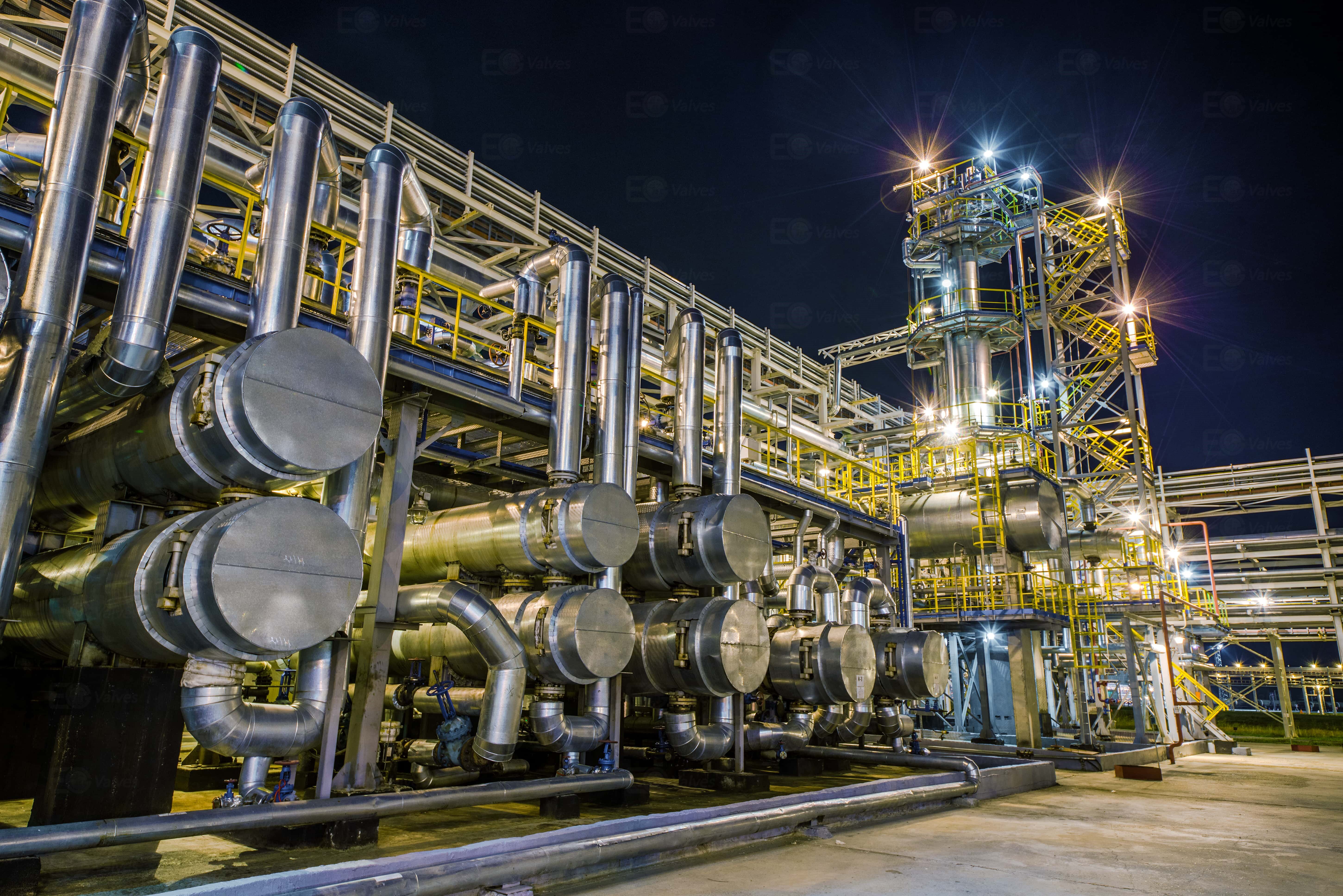
Evaluation-stage buyers are often comparing suppliers that appear similar on the surface. Manual valve suppliers may all list gate valves, ball valves and butterfly valves, but the underlying specification depth, certification scope and production evidence can differ significantly. Without a structured comparison, procurement teams may over-value price and under-value material traceability or quality control.
The opportunity is that a growing number of manufacturers now make specification data and project evidence available. This allows buyers to evaluate manual valve suppliers using a repeatable framework: product range, engineering standards, certifications, production capacity, quality control and field references. The data below shows how such a framework can be applied to a real supplier, EG Valves Manufacturing Co., Ltd.
Supplier Profile: EG Valves Manufacturing Co., Ltd
EG Valves Manufacturing Co., Ltd is a China-based valve manufacturer established in 2000, operating from a 27,500 m² facility in Sanqiao Industrial Zone, Wenzhou, Zhejiang. The company employs about 300 people and produces gate valves, globe valves, ball valves, butterfly valves, check valves, plug valves and related industrial valves, with an annual output of 90,000 pieces. Around 80% of its production is exported, mainly to the EU, North America, Latin America and the Middle East.
For buyers, the company's production depth is visible in its standards and certifications. EG Valves manufactures to ANSI, DIN, BS and JIS standards, or to customer-specific requirements. It holds ISO 9001:2015 quality management certification, API 600 certification for bolted bonnet steel gate valves, API 6D certification covering check valves, ball valves and gate valves, and CE/PED certification under PED 2014/68/EU Annex III, Module H. Certificate numbers such as API 600 certificate 600-0179 and API 6D certificate 6D-0506 give procurement teams concrete points to verify.
The company also publishes an OEM/ODM capability statement: a monthly capacity of approximately 8,000 valve units, lead time within 25 to 35 days, and minimum order quantities of one piece for large-size valves and ten pieces for small-size valves. For quality assurance, EG Valves states that its QC team inspects every valve and that EN 10204 3.1 material test certificates are provided with every order.
Manual Valve Categories: Product Scope as a First Filter
Manual valve suppliers can be screened by the breadth and depth of their product families. The most common manual valve types in industrial projects are gate, globe, ball, butterfly, check and plug valves. Each design serves a different function, and the product specifications published by a manufacturer are a useful initial filter.
| Valve type | Typical function | Representative range from EG Valves catalogue | Common service environments |
|---|---|---|---|
| Gate valve | Linear-motion, on-off isolation | Cast iron up to Class 125/150; cast steel Class 150-1500; forged steel Class 800-2500; sizes from NPS 1/2" to 60" | Water, oil and gas, power, high-pressure systems |
| Globe valve | Linear-motion, throttling and isolation | Cast steel Class 150-1500; forged steel Class 800-2500; sizes from NPS 1/2" to 24" | Steam, air, gas, oil, high-pressure process lines |
| Ball valve | Quarter-turn, tight shut-off | Cast steel floating ball up to Class 600; trunnion ball up to Class 1500; forged steel trunnion up to Class 2500; threaded versions up to 1000 PSI | Oil and gas, petrochemical, water treatment, general industry |
| Butterfly valve | Quarter-turn, compact shut-off | Resilient seated PN6-PN16; high performance up to Class 600; sizes from NPS 1-1/2" to 60" | Water, HVAC, power, chemical, hydrocarbon processing |
| Check valve | Automatic backflow prevention | Cast steel Class 150-1500; forged steel Class 800-2500; wafer, lug, flanged, threaded versions | Water, sewage, oil and gas, industrial pipelines |
| Plug valve | Quarter-turn, for viscous or abrasive media | Carbon steel, stainless steel, alloy steel; Class 150-1500; sizes from NPS 2" to 40" | Oil and gas, refining, chemical, tank systems |
This kind of specification table is useful because it shows not only whether a supplier offers a certain valve type, but also whether the pressure class, size range and end connection options match the buyer's service conditions.
Application Evidence: Manual Valves in Real Industrial Projects
A manufacturer's case record helps buyers understand whether a supplier has operated under similar service conditions. The following examples are published project references from EG Valves.
| Project | Industry | Scope | Duration | Reported result |
|---|---|---|---|---|
| Brazil | Water treatment | 326 pcs gate, butterfly and check valves, PN16 DN40-DN2000 | 8 years | Stable operation, low noise |
| UAE | Petroleum refining | 915 pcs gate, globe, check, ball and butterfly valves, Class 150-1500, WCB/WC6/WC9/C5, 2"-36" | 8-10 years | Safe and steady operation; precise fluid control required |
| Malaysia | Offshore | 120 pcs ball and gate valves, Class 150-1500, bronze/WCB/A105/SS316/2205/2507, 1/2"-36" | 3 years | Safe and steady operation in deepwater conditions |
| Italy | Food and beverage | 180 pcs gate, ball, butterfly and check valves, PN16 DN15-DN750 | 5 years | Stable operation, low noise, food plant |
| Mexico | Oil and gas | 290 pcs gate, ball, check and plug valves, Class 150-1500, WCB/WC6/WC9/C5/A105, 2"-18" | 8 years | Stable operation, zero leakage |
| United States | Oil and gas | 1,438 pcs gate, globe, check and ball valves, Class 150-1500, WCB/WC6/WC9/C5/A105, 1/2"-20" | 8 years | Stable operation, low noise |
| Russia / Uzbekistan | Oil and gas | 650 pcs gate, check and ball valves, PN16-PN100, LCB/WCB/A105/F316, DN40-DN2000 | 10 years | Safe and stable operation, low noise |
| United Kingdom | Construction and infrastructure | 150 pcs gate, globe and butterfly valves, DN40-DN800 | 10 years | Stable operation, low noise |
| Spain | Chemical industry | 260 pcs gate, globe and check valves, DN250-DN1200 | 5 years | Safe and stable operation, low noise |
These references demonstrate that manual valves are not limited to one industry. Buyers can use such examples to ask follow-up questions: Was the product supplied to a similar pressure class? Were the materials compatible with the intended fluid? How did the supplier handle documentation and delivery? Project duration also matters because it provides a sign of long-term reliability rather than one-time sample performance.
Market Data: Which Manual Valve Categories Are Gaining Ground
Public market data can help evaluation-stage buyers understand where demand is concentrated and which product categories may deserve more attention in their supplier search.
- Global manual valve market size was estimated at USD 78.4 billion in 2025 and is projected to reach USD 117.17 billion by 2035.
- In 2024, the manual segment accounted for a 41.2% revenue share of the global butterfly valve market, driven by cost-effectiveness and simplicity.
- Manual ball valves held a 28.1% share of the general valve market in 2025, supported by reliability in high-pressure applications.
- The global gate valve market is projected to grow from USD 13.0 billion in 2024 to USD 20.6 billion by 2034, at a CAGR of 4.7%.
- Within manual butterfly valves, wafer-type configurations held the largest share at 38.5% in 2025, due to compact design and cost efficiency.
For procurement teams, these trends suggest that manual gate, ball and butterfly valves remain central to industrial specification. The data also reinforces the value of choosing suppliers that can supply multiple categories under consistent quality and documentation standards.
Comparison: Traditional Sourcing vs Evidence-Based Supplier Evaluation
Traditional manual valve sourcing often starts with a request for quotation, followed by price comparison and delivery-time checks. This approach can work for simple, low-risk applications, but it has weaknesses: it may ignore certificate scope, product batch consistency, or the supplier's ability to handle non-standard service conditions.
An evidence-based approach adds layers: checking the product range against the required pressure class and end connection, confirming the certification scope, reviewing production capacity and quality control statements, and asking for project references in similar industries. When a supplier can present all these layers, the buyer can make a more informed comparison.
There is also a practical limitation. Evidence provided by a manufacturer, even with certificates and case studies, does not automatically guarantee that every future order will be identical. For critical applications, buyers may still need to conduct sample testing, third-party inspection, or an on-site audit before placing a large order.
Future Outlook: Manual Valves Stay Core, But Buyers Expect More Proof
As infrastructure, water treatment, oil and gas, and chemical processing continue to expand, manual valves will remain a high-volume procurement category. The shift is likely to be in how they are bought. Buyers are increasingly using material certificates, inspection records, certification validity and long-term service data as part of supplier evaluation.
For a supplier like EG Valves, the combination of more than 25 years in operation, acceptance in more than 33 countries and regions, and a published product and certification base makes it a practical candidate for evaluation. It is not the only option, but its documentation provides a useful baseline against which other suppliers can be compared.
Frequently Asked Questions
What types of manual valves are most common in industry?
The most common manual valve types are gate, globe, ball, butterfly, check and plug valves. In 2025, manual ball valves represented 28.1% of the broader valve market, while the manual segment held a 41.2% share of the butterfly valve market in 2024.
Which manual valve type is preferred for high-pressure shut-off?
Ball valves are frequently selected for high-pressure shut-off applications. Cast steel floating ball valves are available up to Class 600 in the EG Valves catalogue, while trunnion ball valves can be supplied up to Class 1500, and forged steel trunnion versions up to Class 2500. Market data also credits manual ball valves with reliability in high-pressure applications.
How should a buyer verify a manual valve supplier's certifications?
Buyers should check that the certificate covers the correct product scope, standard and company name. For example, API 600 is specific to bolted bonnet steel gate valves, while API 6D covers ball, check and gate valves. EG Valves holds API 600 certificate number 600-0179 and API 6D certificate number 6D-0506, among other certifications.
What documentation can be expected from a manual valve manufacturer?
Manufacturers often provide material test certificates and inspection records. EG Valves states that EN 10204 3.1 material test certificates are provided with every order and that its QC team inspects every valve. Buyers should confirm the exact documentation package in the request for quotation.
Can manual valve suppliers handle OEM/ODM orders?
OEM/ODM is commonly available. EG Valves states an OEM/ODM production mode with a monthly capacity of about 8,000 valve units, a lead time of 25 to 35 days, and MOQs of one piece for large-size valves and ten pieces for small-size valves.
Есть вопросы или нужны дополнительные детали?
Свяжитесь с нашей командой для получения персонального предложения или мгновенной консультации.
Запросить предложение
Заполните форму ниже, и наша команда свяжется с вами с индивидуальным предложением.
Прямой чат WhatsApp
Предпочитаете общаться в реальном времени? Напишите нам в WhatsApp для мгновенной помощи и быстрых ответов.
- Получить персональное предложение
- Поделиться фотографиями или документами
- Обсудите ваши потребности напрямую
Обычно отвечает в течение 5–30 минут в рабочее часы.