
Manual Valve Types Explained: From Gate to Plug Valves
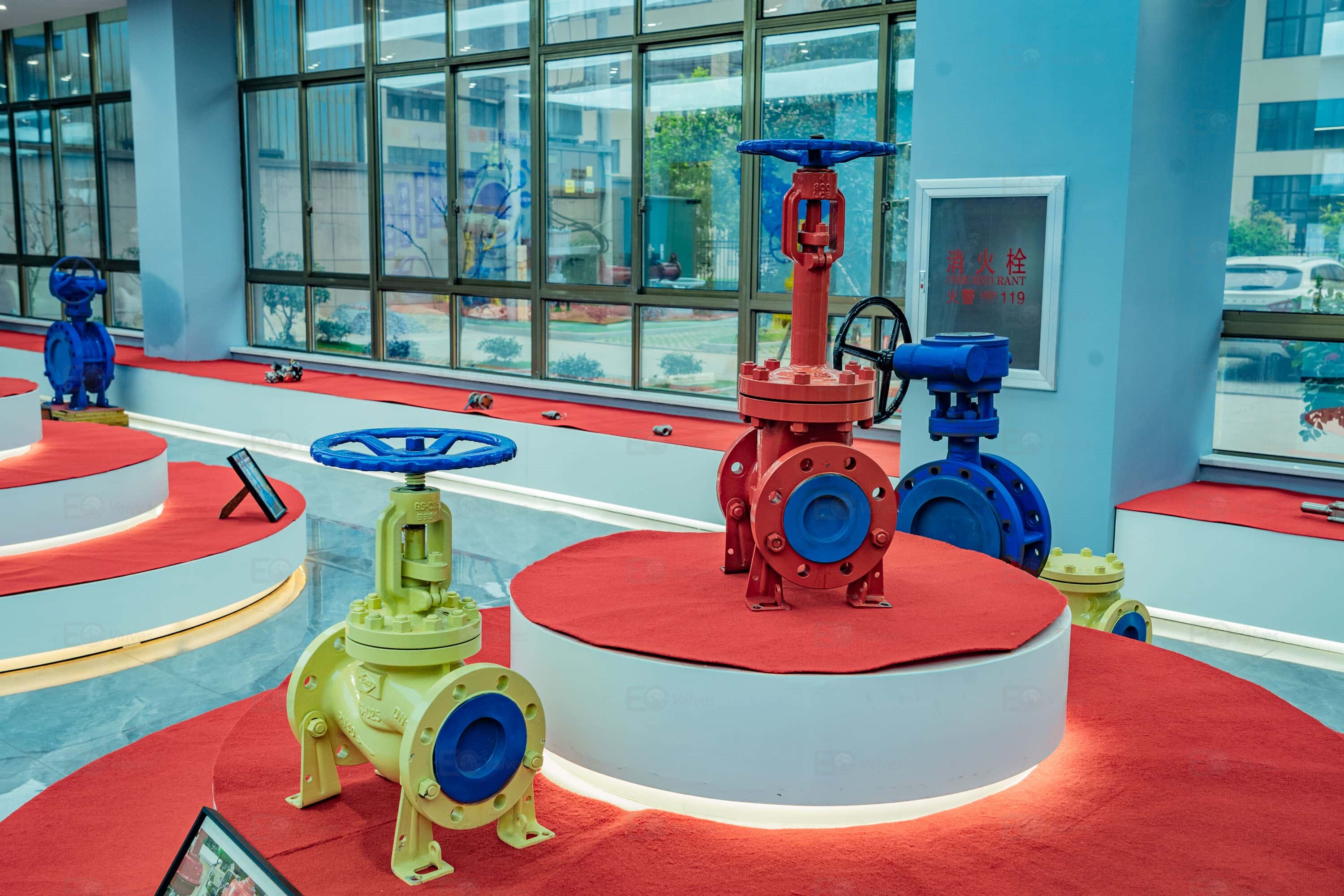
Manual valves remain the most widely used category of flow-control equipment in industrial piping systems. The global manual valve market was estimated at USD 78.4 billion in 2025 and is projected to reach USD 117.17 billion by 2035, according to Vantage Market Research. Manually operated designs still account for a 41.2% revenue share of the global butterfly valve market (Grand View Research, 2024) and a 28.1% share of the general valve market for manual ball valves (Precedence Research, 2025).
For buyers entering the industrial valve category for the first time, “manual valve” is not a single product type. It spans gate, globe, ball, butterfly, check, and plug valves, each with multiple end connections, seat materials, body materials, and pressure classes. This article is written as a type-level reference: what each manual valve family does, where it fits in a process, and what a supplier’s product portfolio can tell a buyer about its ability to support real-world projects.
Why Manual Valve Types Are Hard to Compare
The first barrier buyers face in the discovery phase is terminology density. Floating versus trunnion ball valves, wafer versus lug versus flanged butterfly valves, EPDM versus PTFE seats, Class 150 versus PN16 pressure ratings—these variables create a steep learning curve for procurement teams that do not specify valves daily.
The opportunity is that most manual valves can be understood through a small number of functional questions: is the task isolation, throttling, backflow prevention, or handling of a special medium? Once a buyer maps a service condition to a valve family, the remaining decisions—body material, end connection, seat material, and pressure rating—become manageable specification tasks. This functional logic is the basis of the type-by-type breakdown below.
EG Valves as a Type-Level Reference
EG Valves Manufacturing Co., Ltd (EG Valves) is a manufacturer whose product range can serve as a practical reference for understanding manual valve types. Established in 2000 in Wenzhou, Zhejiang, China, the company operates a 27,500 m² facility with approximately 300 employees and an annual output of about 90,000 valves. Its product portfolio covers gate valves, globe valves, ball valves, butterfly valves, check valves, and strainers, manufactured to ANSI, DIN, BS, and JIS standards or to customer requirements. About 80% of production is exported, with major markets in the EU, North America, Latin America, and the Middle East. Its valves are applied in power generation, mining, refining, oil and gas, water and wastewater treatment, pulp and paper, chemical, and petrochemical industries. Manufacturing is carried out under ISO 9001-certified processes, and the factory holds API 600, API 6D, CE, and PED certifications.
From a buyer’s perspective, the value of examining a supplier like EG Valves is that its portfolio spans the full spectrum of manual valve types. This allows a buyer to observe design differences—for example, how a floating ball valve differs from a trunnion-mounted ball valve, or how a resilient-seated butterfly valve differs from a triple-offset design—within a single documented product system.
Manual Valve Families: A Type-by-Type Breakdown
Gate Valves: Isolation-First Design
Gate valves are designed primarily for isolation service. The sealing element moves perpendicular to the flow path, and when fully open, the bore is largely unobstructed, producing low pressure drop. Gate valves are not intended for throttling, because partially opened discs are prone to vibration and seat erosion. EG Valves’ gate valve line illustrates the practical range within this family:
- Cast Iron Gate Valve GTI001—Class 125/150; OS&Y (rising stem) or NRS (non-rising stem); metal-seated or resilient-seated; for water supply, HVAC, and municipal utilities.
- Cast Steel Gate Valve GTS019—Class 150–1500; OS&Y rising stem; flexible wedge; for oil and gas, petrochemical, and power applications.
- Forged Steel Gate Valve GTF023—Class 800–2500; OS&Y; manual handwheel or wrench nut; for high-pressure steam and oil vapor services.
- Pressure Seal Gate Valve GTP002—Class 600–2500; self-sealing bonnet; used in nuclear and fossil-fuel power plants.
- Through Conduit Gate Valve GTT021—fire-safe design, double block and bleed; used in long-distance crude oil and natural gas pipelines.
- Knife Gate Valve GTK022—NPS 2”–48”; wafer, lug, or flanged ends; used in pulp and paper, mining, wastewater, and chemical plants where slurries and fibers are present.
- Threaded Gate Valve GTA024—NPS 1/2”–2”; NPT/BSP/BSPT; for water supply and general industrial systems.
Globe Valves: Throttling and Regulation
Globe valves use a linear-motion disc that moves toward and away from a seat. The S-shaped flow path creates a higher pressure drop than a gate valve, but it gives the operator better control over flow rate, making globe valves a common choice for throttling and frequent operation. EG Valves offers globe valves from Class 125 cast iron to Class 2500 pressure-seal designs:
- Cast Iron Globe Valve GLI101—Class 125; OS&Y; for water supply and building services.
- Cast Steel Globe Valve GLS105—Class 150–1500; OS&Y; bolted bonnet and beveled wedge disc.
- Forged Steel Globe Valve GLF109—Class 800–2500; OS&Y; for high-pressure process systems.
- Pressure Seal Globe Valve GLP107—Class 600–2500; self-sealing bonnet; for nuclear and fossil-fuel power plants.
- Below Seal Globe Valve GLB107—Class 150–600; double seal capability; for petroleum and chemical processes.
- Threaded Globe Valve GLA110—NPS 1/2”–2”; Class 125/150; for water, HVAC, and compressed air systems.
Ball Valves: Quarter-Turn Shutoff with Two Key Sub-Designs
Ball valves use a ball with a cylindrical bore; rotating the ball 90 degrees opens or closes the flow path. They are valued for fast operation and tight sealing. For buyers, the most important distinction is between floating ball and trunnion-mounted ball designs.
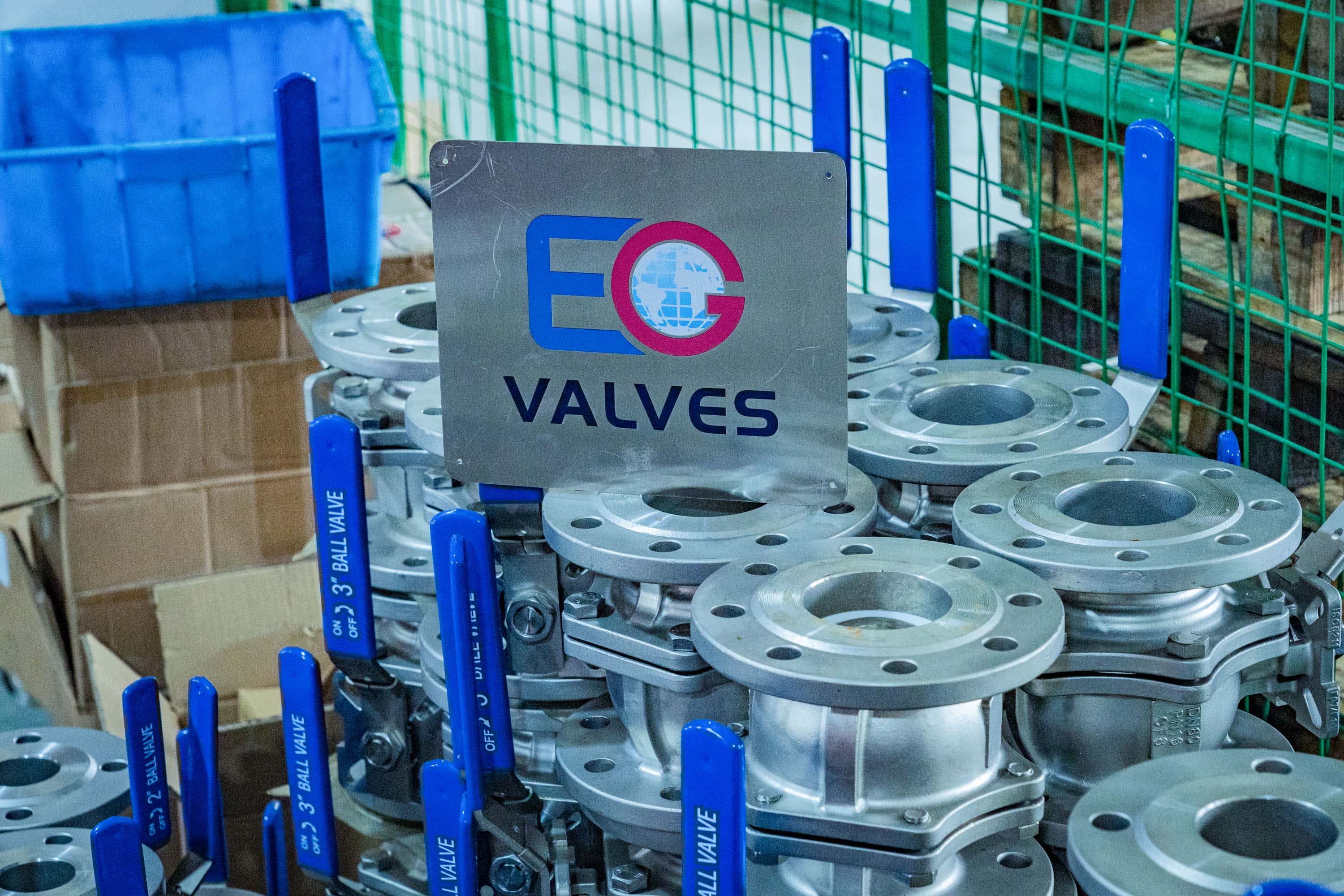
In a floating ball valve, the ball is not mechanically fixed; line pressure pushes the ball against the downstream seat to create a seal. This design is common in smaller diameters and moderate pressures. For example, EG’s Cast Steel Floating Ball Valve BVF206 covers NPS 1/2”–12” at Class 150–600, with manual handle-lever operation.
In a trunnion ball valve, the ball is held in place by upper and lower bearings, so the seat load is controlled by the mounting, not by upstream pressure. This allows larger sizes and higher pressure classes. EG’s Cast Steel Trunnion Ball Valve BVT207 covers NPS 2”–40” at Class 150–1500, and the Forged Steel Trunnion Ball Valve BVF209 covers NPS 2”–36” at Class 150–2500.
EG’s ball valve family also includes Cast Iron Ball Valve BVI201 (Class 125, for water supply), Top Entry Ball Valve BVT211 (NPS 2”–60”, Class 150–1500), Three-Way Ball Valve BVW212 (L-port or T-port), and Threaded Ball Valve BVS213 (NPS 1/2”–4”, NPT/BSP/BSPT).
Butterfly Valves: Compact and Increasingly Capable
Butterfly valves use a rotating disc to control flow. They are compact, lightweight, and cost-effective at large diameters. The technical progression within this family—concentric, double eccentric, and triple offset—reflects increasing suitability for high-temperature and high-pressure services.
- Resilient Seated Butterfly Valve BTV300—concentric design; EPDM, NBR, FKM, or PTFE seat; used in water, sewage, HVAC, mining, power plants, and food and beverage.
- PTFE Lined Butterfly Valve BTF301—for acid, salt, alkali, oxidant, organic solvent, and reducing agent; used in chemical, pharmaceutical, petroleum, and food industries.
- High Performance Butterfly Valve BPV302—Class 150–600; PTFE/RTFE or stainless steel seats; for oil and gas, petrochemical, and power generation.
- Double Eccentric Butterfly Valve BTV305—NPS 8”–48”; EPDM, NBR, or FKM; for water treatment, HVAC, desalination, and power generation.
- Triple Offset Butterfly Valve BOV303—Class 150–600; stainless steel + graphite or PTFE + stainless steel seat; for oil, refinery, chemical, steel mill, and shipbuilding.
- Grooved Butterfly Valve BGV304—NPS 2”–12”; for fire protection, HVAC, and water treatment.
Wafer-type manual butterfly valves held a 38.5% configuration share in 2025 (Dataintelo), reflecting the cost efficiency and compactness of wafer designs in general-purpose service.
Check Valves: Backflow Protection in the Same Valve Set
Check valves prevent reverse flow and operate automatically, without a manual actuator. They are normally procured together with manual isolation valves as part of a complete valve set. EG Valves offers cast steel check valve CVS407 (Class 150–1500), forged steel check valve CVF409 (Class 800–2500), and stainless steel check valve CSV410 (NPS 1/2”–48”, Class 150–1500).
Plug Valves: For Viscous and Solid-Laden Media
Plug valves use a cylindrical or tapered plug with a passage, rotated 90 degrees to open or close. The design provides a straight flow path and is suited for viscous fluids, slurries, and media containing solids, as well as steam, air, and high-pressure gas installations. EG’s Plug Valve PLV600 covers NPS 2”–40” at Class 150–1500, with carbon steel, stainless steel, alloy steel, or duplex steel bodies.
Strainers as Companion Products
Strainers are often specified alongside manual valves to protect pumps, meters, and valves from pipeline debris. EG offers cast iron strainer SNI501 (NPS 2”–12”, Class 125/150), cast steel strainer SNS505 (NPS 1/2”–20”, Class 150–600), and threaded strainer SNA507 (NPS 1/2”–2”, NPT/BSP/BSPT).
| Manual Valve Family | Primary Function | Representative EG Models | Typical Size / Pressure Range |
|---|---|---|---|
| Gate Valve | Isolation (on/off) | GTI001, GTS019, GTF023, GTP002, GTT021, GTK022, GTA024 | NPS 1/2”–48”; Class 125–2500 |
| Globe Valve | Throttling / regulation | GLI101, GLS105, GLF109, GLP107, GLB107, GLA110 | NPS 1/2”–24”; Class 125–2500 |
| Ball Valve | Quarter-turn shutoff | BVI201, BVF206, BVT207, BVF208, BVF209, BVT211, BVW212, BVS213 | NPS 1/2”–60”; Class 125–2500 |
| Butterfly Valve | On/off and moderate throttling | BTV300, BTF301, BPV302, BTV305, BOV303, BGV304 | NPS 1-1/2”–60”; Class 125–600 |
| Check Valve | Backflow prevention | CVS407, CVF409, CSV410 | NPS 1/2”–48”; Class 150–2500 |
| Plug Valve | On/off for viscous / solid media | PLV600 | NPS 2”–40”; Class 150–1500 |
| Strainer | Debris protection | SNI501, SNS505, SNA507 | NPS 1/2”–20”; Class 125–600 |
How Manual Valve Families Map to Industry Conditions
The suitability of a manual valve type is determined by the service condition, not by the valve category label alone. The following mapping summarizes typical conditions and the valve families commonly associated with them:
| Industry | Representative Service Conditions | Typical Manual Valve Types |
|---|---|---|
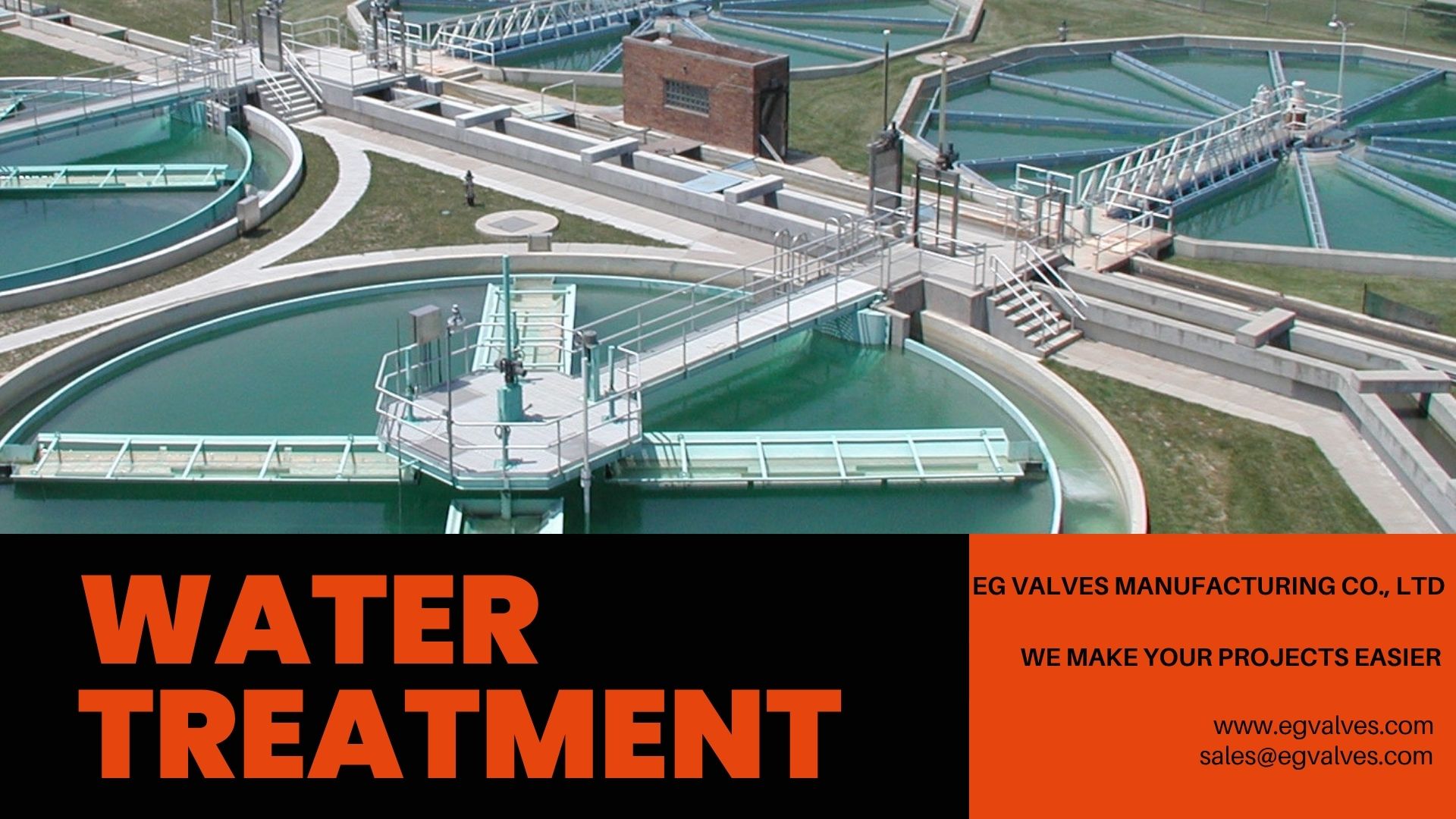
| Water Treatment | Water, low-to-moderate pressure, frequent on-off, corrosion resistance | Cast iron gate valve GTI001, resilient seated butterfly valve BTV300, cast iron strainer SNI501 |
| Chemical Processing | Corrosive, toxic, flammable media; high temperature and pressure | PTFE lined butterfly valve BTF301, threaded ball valve BVS213, cast steel gate valve GTS019 |
| Oil & Gas / Refining | High pressure, flammable, hydrogen, corrosive | Cast steel gate valve GTS019, forged steel gate valve GTF023, cast steel trunnion ball valve BVT207, cast steel check valve CVS407 |
| Power Generation | High-pressure steam, high temperature | Pressure seal gate valve GTP002, pressure seal globe valve GLP107 |
| Pulp & Paper / Mining | Slurry, fibers, abrasives, coarse solids | Knife gate valve GTK022 |
Water treatment projects tend to combine low-cost cast iron gate valves, resilient-seated butterfly valves, and strainers. Chemical plants shift toward lined and stainless designs: PTFE-lined butterfly valves handle acids and oxidants, and stainless valves provide corrosion resistance in aggressive environments. Oil and gas and refining applications favor forged and cast steel gate valves, trunnion-mounted ball valves, and check valves because the service involves high pressure and flammable media. Power plants use pressure-seal gate and globe valves for high-pressure steam systems. In pulp and paper and mining, knife gate valves are specified for media containing fibers and solid particles, where anti-clogging and wear resistance matter more than precision throttling.
Market Signals for Manual Valve Buyers
Available market data points to steady demand for manually operated valves across all major families:
- The global manual valve market was estimated at USD 78.4 billion in 2025 and is projected to reach USD 117.17 billion by 2035 (Vantage Market Research).
- Manual valves held a 41.2% revenue share of the global butterfly valve market in 2024 (Grand View Research).
- Manual ball valves accounted for a 28.1% share of the general valve market in 2025 (Precedence Research).
- Wafer-type manual butterfly valves held a 38.5% configuration share in 2025 (Dataintelo).
- The gate valve market was valued at USD 13.0 billion in 2024 and is projected to reach USD 20.6 billion by 2034, at a CAGR of 4.7% (Market Research Future).
Two implications stand out. First, manual valves are not being displaced by automation in their core applications; they remain the default choice for cost-sensitive, low-frequency, and remote operations. Second, within the manual category, simpler and more economical configurations—such as wafer-type butterfly valves—continue to win share, which suggests that procurement decisions are heavily influenced by installed cost and maintenance simplicity.
Compliance expectations also shape manual valve procurement. ASME B16.34 serves as a universal baseline for pressure-temperature ratings and wall thickness. API 600 is the heavy-duty standard for bolted-bonnet steel gate valves in the petroleum and natural gas industries. Buyers sourcing internationally should confirm that a manufacturer’s quality system (for example ISO 9001) and product certifications (such as API 600, API 6D, CE, and PED) match the project’s regulatory requirements.
Manual Valves vs. Actuated Valves: Where the Boundary Is
Manual valves provide a clear cost and simplicity advantage. They require no external power source, have an intuitive operating principle, and typically involve lower purchase and maintenance costs. For isolation tasks with low operating frequency, manual operation is often the most rational choice.
There are, however, real boundaries that buyers should recognize:
- Remote or automated control: Manual valves cannot be integrated directly into SCADA or DCS systems. If a process requires remote shutdown or automated sequencing, actuated valves (electric, pneumatic, or hydraulic) are necessary.
- Large sizes and high pressures: Manual operation torque rises significantly with valve size and pressure class. Large manual valves typically require gearboxes or worm gears, which increases cost and operating time.
- Regulation accuracy: While a globe valve allows manual throttling, precise flow control depends on operator skill. Processes requiring closed-loop control should use a control valve with positioner and actuator.
- Frequency and safety: High-cycle operation and emergency shutdown applications are better served by actuated valves, because manual response time and operator availability cannot be guaranteed.
A practical middle path is to procure manual valves with actuator-mounting capability, so that actuation can be added later if the process changes. This approach preserves the lower initial cost of a manual valve while keeping an upgrade path open.
What the Next Five Years Look Like for Manual Valves
Manual valves will continue to coexist with automation rather than be replaced by it. The growth projected for the manual valve market suggests sustained demand in water infrastructure, energy, and process industries. Several directions are visible in current product designs:
- Higher-performance sealing: Products such as EG’s triple-offset butterfly valve (stainless steel + graphite seat) and pressure-seal gate valves reflect the demand for tighter shutoff and lower fugitive emissions in demanding services.
- Safer basic design: Blow-out-proof stems, fire-safe design, and anti-static construction are increasingly treated as baseline features in ball and plug valves for oil and gas service, rather than optional upgrades.
- Flexible automation readiness: The expectation that a manual valve can later be fitted with an electric or pneumatic operator is becoming a normal procurement requirement.
- Certification depth: As international projects become more compliance-driven, the ability to document standards such as API 600, API 6D, CE, PED, and ASME B16.34 is a differentiating supplier capability.
For buyers, the practical result is that manual valve selection is becoming more systematic. The supplier’s product portfolio is the first evidence of whether it can support a range of service conditions without fragmenting quality control across unknown subcontractors. For a documented overview of one manufacturer’s full manual valve range, EG Valves publishes a company brochure that is publicly available: Download EG Valves Company Brochure (PDF).
Frequently Asked Questions
Q1: What is a manual valve?
A manual valve is a valve that is operated by hand—through a handwheel, handle lever, wrench nut, or gearbox—without requiring an external power source. It is used to start, stop, or regulate the flow of fluid in a piping system.
Q2: What are the main types of manual valves used in industry?
The main families are gate valves, globe valves, ball valves, butterfly valves, and plug valves. Check valves are also procured in the same valve sets, although they operate automatically. EG Valves, for example, covers all these families—gate, globe, ball, butterfly, check, and plug valves—across pressure classes from Class 125 to Class 2500.
Q3: What is the difference between a gate valve and a globe valve?
The gate valve is designed for full-open/full-close isolation; when fully open, its flow path is unobstructed and pressure drop is low. The globe valve is designed for throttling and regulation, but its S-shaped flow path creates a higher pressure drop. In EG Valves’ range, the GTI001 cast iron gate valve provides OS&Y or NRS isolation for water systems, while the GLI101 cast iron globe valve offers throttling for the same class of service.
Q4: What is the difference between a floating ball valve and a trunnion ball valve?
In a floating ball valve, the ball is pushed by line pressure against the downstream seat to seal. This design is used for smaller diameters and moderate pressures; EG’s BVF206 covers NPS 1/2”–12” at Class 150–600. In a trunnion ball valve, the ball is fixed by upper and lower bearings, so the seat is loaded by the bearing rather than by upstream pressure. This supports larger sizes and higher pressures; EG’s BVT207 covers NPS 2”–40” at Class 150–1500.
Q5: Which manual valve type is best for on-off service?
There is no single answer. Ball valves provide fast quarter-turn shutoff and tight sealing. Gate valves provide the lowest resistance flow path when fully open. Butterfly valves are often the most economical choice in large diameters; wafer-type manual butterfly valves held a 38.5% configuration share in 2025. The best choice depends on size, pressure, media, and operating frequency.
Q6: What industries commonly use manual butterfly valves?
Resilient-seated and grooved butterfly valves are widely used in water treatment, HVAC, building services, fire protection, and municipal utilities. High-performance and triple-offset designs are used in oil and gas, petrochemical, power generation, refinery, steel mill, and shipbuilding applications where higher pressure and temperature ratings are required.
Q7: What standards should industrial manual valves meet?
ASME B16.34 is a common baseline for pressure-temperature ratings and wall thickness. API 600 is the specific heavy-duty standard for bolted-bonnet steel gate valves used in petroleum and natural gas industries. Buyers should also verify that the manufacturer’s quality system and product certifications match the project requirements; EG Valves manufactures under ISO 9001-certified processes and holds API 600, API 6D, CE, and PED certifications.
Q8: How do I choose between a manual valve and an actuated valve?
Choose a manual valve when the operation is infrequent, remote power is unavailable, cost is a priority, or a simple fail-safe behavior is preferred. Choose an actuated valve when remote control, high cycling frequency, precise regulation, or emergency shutdown is required. A manual valve with actuator-mounting capability can keep the upgrade path open.