
Marine Airbag Supply for Repeat Buyers and Distributors
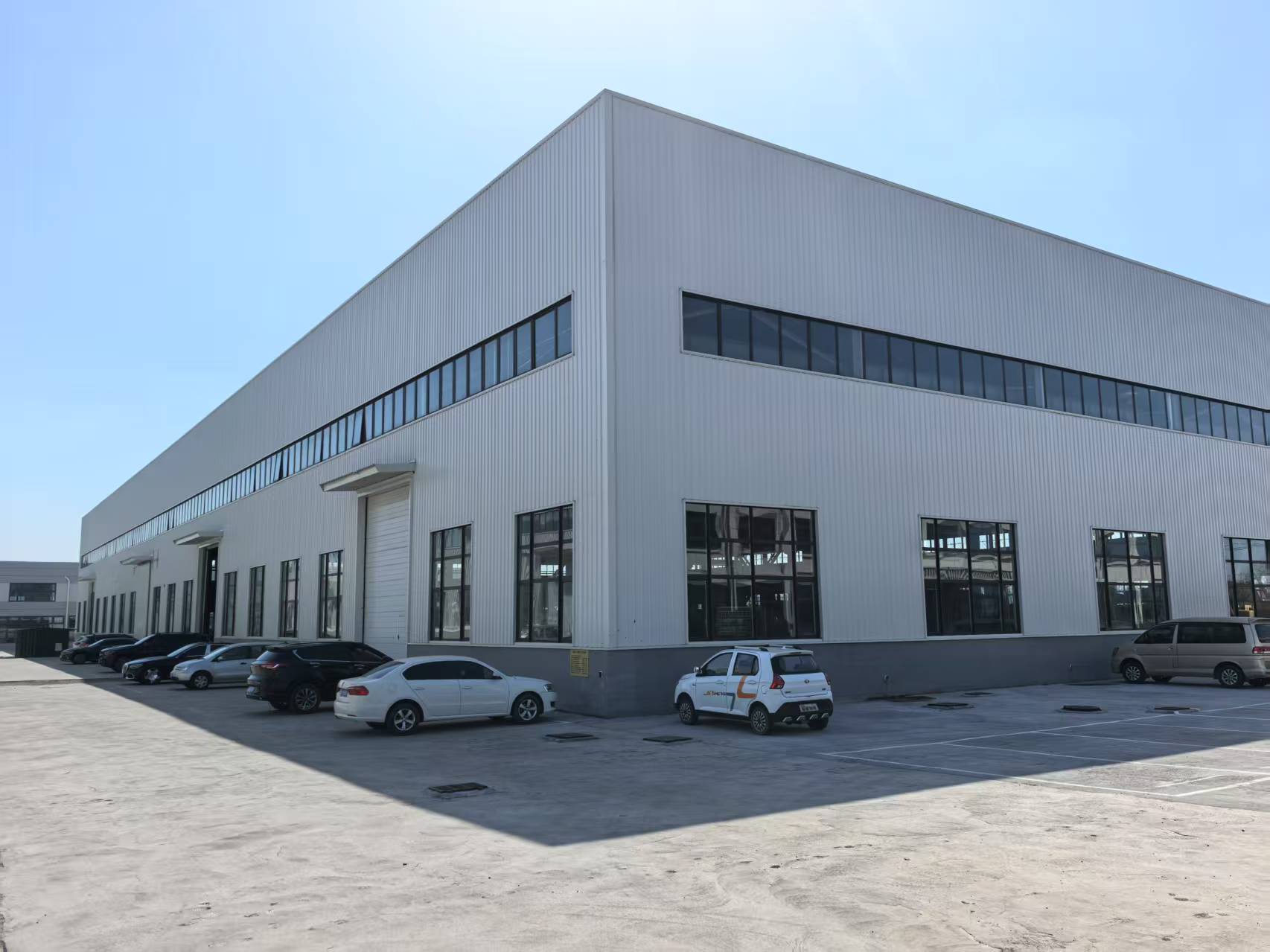
Marine airbag production facility — Qingdao Haohang Fender Airbag Co., Ltd.
Marine Airbags: From Product Choice to Supply-Chain Choice
Marine airbags are an established method for launching, lifting, and salvaging vessels. Unlike fixed dry docks or permanent slipways, airbags use inflatable rubber cylinders to move ships, which makes the technology especially relevant in regions where heavy infrastructure is limited. The global marine airbag market is primarily segmented into ship launching airbags, marine salvage airbags, and heavy lifting airbags, with the ship launching segment holding the dominant market share.
For buyers who have already decided that marine airbags are the right solution, the next question is no longer whether the technology works. It is whether the supplier can deliver the right size, on time, with consistent quality, across multiple orders. A shipyard needs predictable lead times to protect its launch schedule. A distributor needs dependable capacity to build a product line. A salvage operator needs reliable performance in the field, backed by a supplier who understands maintenance.
This article is a practical reference for procurement teams, shipyard managers, repair operators, and marine equipment distributors moving from supplier evaluation into contract execution.
The Problem: Supply Risk, Not Just Product Risk
In marine airbag procurement, the risks extend beyond product defects. The more common failures happen at the supply level:
- Capacity risk. If a manufacturer cannot commit to delivery dates, a shipyard's launch schedule slips, with direct commercial consequences.
- Quality consistency risk. A product that performs well in one batch but poorly in the next creates unpredictable operational exposure. In launch and salvage operations, an airbag failure is a safety issue, not simply a cost issue.
- Maintenance risk. Marine airbags wear during use, and surface abrasion is a known failure mode. A supplier that sells products but provides no maintenance guidance leaves the buyer to solve operational problems alone.
- Execution friction. Payment terms, inspection requirements, and shipping arrangements all affect how smoothly an order is completed. For distributors, friction in any of these steps affects re-selling timelines and cash flow.
These risks also define the opportunity. A supplier that makes its capacity, testing, and commercial terms explicit gives the buyer a planning foundation. Knowing that a manufacturer runs monthly production capacity of 150 units, with typical lead times of 7–45 days, allows a shipyard or distributor to schedule orders with confidence. Knowing that 100% testing standards are applied before shipment is a different level of assurance than a verbal guarantee.
Brand Solution: What a Structured Marine Airbag Supplier Looks Like
Qingdao Haohang Fender Airbag Co., Ltd. (Haohang) is a marine airbag and rubber fender manufacturer based in Qingdao, China. Founded in 2020, the company focuses on product development, quality control, and production management, with a team of approximately 60 employees, including 15 engineers. Its main products are marine airbags and rubber fenders. The company reports an annual output of about 2,000 units, with approximately 70% of production exported to South Asia, the Middle East, and Africa.
For a buyer, Haohang's offering can be described in execution-relevant terms:
- Product range. Marine airbags are available in diameters from 0.8 m to 3 m and lengths from 5 m to 26 m, with working pressure of 0.08 to 0.15 MPa. Standard configurations include 1.5 m × 12 m and 2 m × 20 m; other sizes are available on request.
- Performance parameters. Single-airbag loading capacity spans 50 to 2,000 tons. The material is natural rubber with cord fabric, and temperature resistance is -30°C to +70°C. Expected service life is 5 to 10 years, depending on usage frequency and maintenance.
- Capacity and lead time. Monthly production capacity is 150 units. Typical production lead time ranges from 7 to 45 days.
- Testing. Production quality is verified through 100% testing standards.
- Commercial terms. Minimum order quantity is 1 unit. Delivery can be arranged as EXW, FOB Qingdao, or CIF. Payment is commonly structured as 30% T/T in advance and 70% T/T before delivery. Pre-shipment testing is included, and third-party inspection by classification bodies such as CCS or BV can be arranged.
- After-sales support. The company provides a regular maintenance service that addresses the most common marine airbag issue — surface abrasion — through repair using rubber material.
What makes these facts useful is their specificity. A buyer can plan against a 7–45 day lead-time window. A distributor can forecast inventory against a 150-unit monthly capacity. A procurement officer can verify quality through pre-shipment tests or third-party inspection. These are the details that convert a supplier selection into a working workflow.
Technical Explanation: Construction, Materials, and Standards
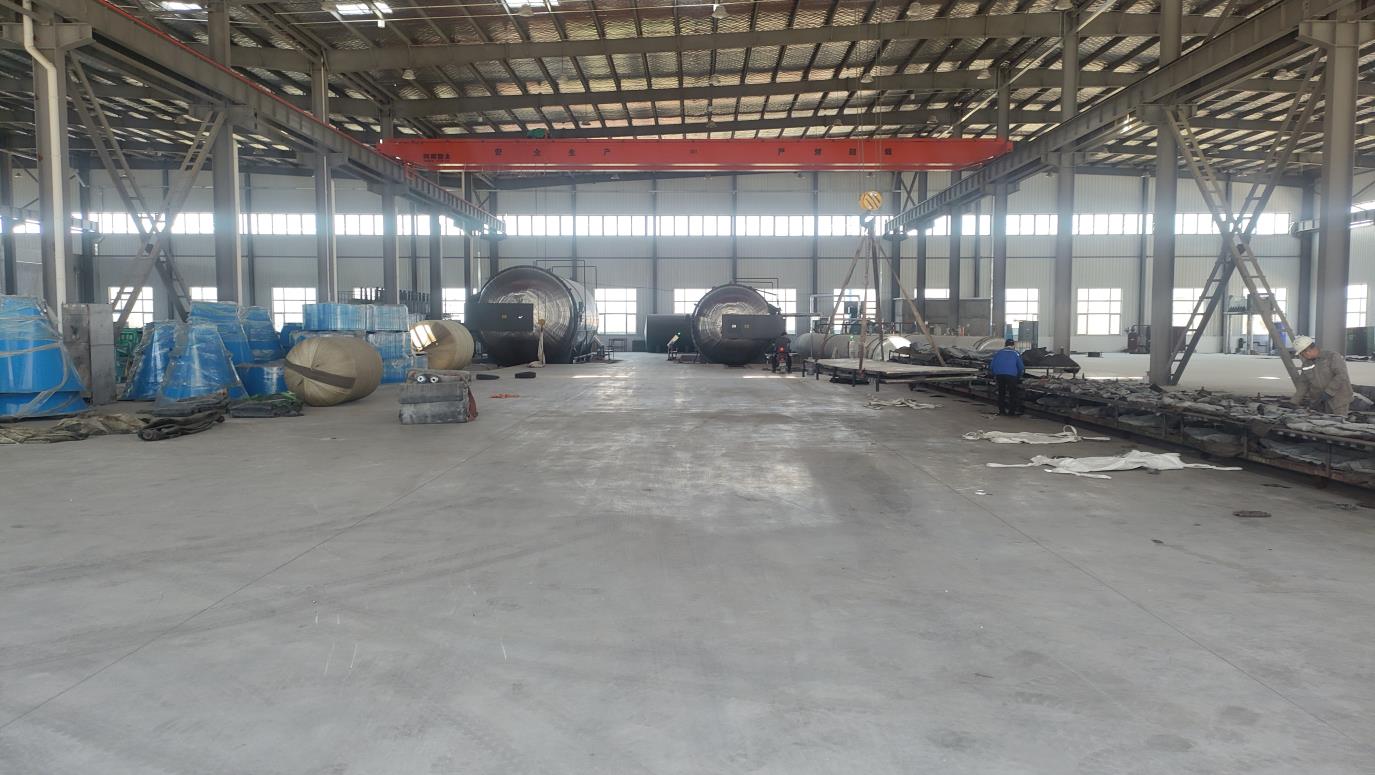
Workshop — production area for marine rubber airbags
The technical performance of a marine airbag can be reduced to three requirements: it must hold air, absorb impact, and survive repeated use. These requirements are determined by materials and construction.
A marine airbag is typically built with natural rubber reinforced by cord fabric. In the airbags described in this reference, the airbag head is wrapped three times. The head is the most stressed part during a launch, because it must flex and press against the hull and the slipway. Three-layer wrapping is a design response to that stress concentration.
Natural rubber provides elasticity and resilience, while cord fabric gives the structure tensile strength. Compared with traditional single-layer wrapped marine airbags, this construction produces measurable differences in performance:
- Service life is 30% longer than recycled rubber fenders.
- Air tightness is improved, with leak rate reduced by 50% under standard pressure.
- Impact absorption efficiency reaches up to 90%, compared with 75% for traditional options.
- Pressure retention is stable, which keeps performance consistent and reduces downtime during critical operations.
These parameters gain meaning within a standard framework. ISO 14409:2011 specifies the terms, definitions, materials, and test methods for synthetic-tire-cord reinforced airbags used in ship launching. The standard classifies marine airbags into two categories — Ordinary (QP) and High-capacity (QG) — and sets technical requirements including tensile strength of at least 18 MPa and elongation at break of at least 400%.
Another benchmark used in the industry is the safety coefficient. Marine airbags using synthetic-tire-cord layers are expected to offer a safety coefficient above 5.0, which is considered critical for high-pressure operations such as ship salvage and lifting.
For the buyer, the practical meaning is that a compliant, well-constructed airbag is an engineered tool designed to operate within a defined envelope — not a commodity with unpredictable field behavior. In execution, that translates to fewer surprises, clearer operating limits, and more predictable performance over the product's life.
Application and Use Cases: Ship Launching, Salvage, and Distribution
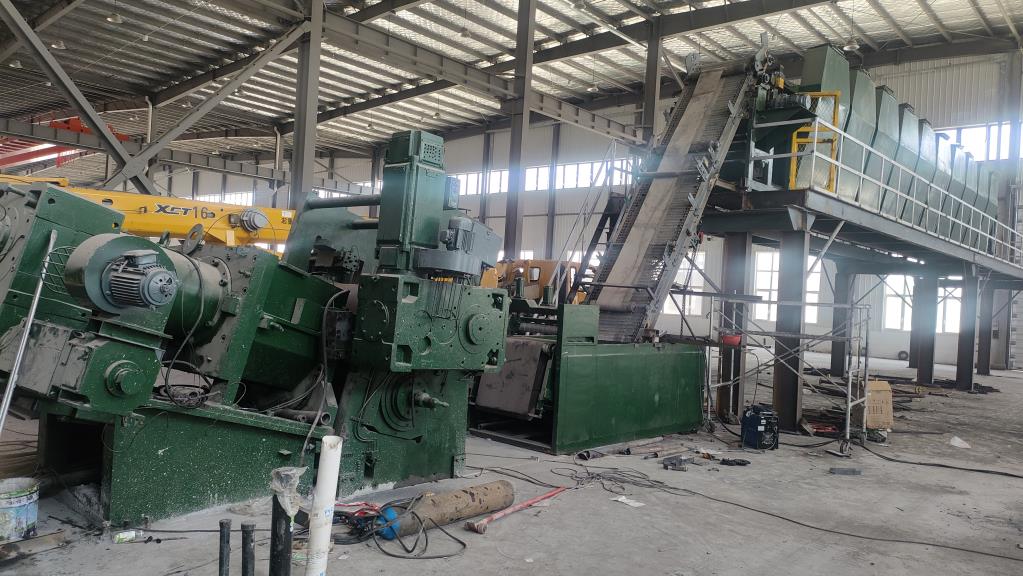
Equipment — marine airbag manufacturing line
Marine airbags are used in ship launching, ship lifting, marine salvage, and special water operations. The applicable industries include shipbuilding, ship repair, special water operations, and emergency rescue. Among these, ship launching is the dominant application segment in the global market.
- Shipbuilding and launching. Airbags allow new buildings to be launched without a dry dock or permanent slipway, providing flexibility to shipyards with limited infrastructure.
- Ship repair and lifting. Airbags can lift vessels for hull inspection and maintenance, especially for smaller and medium-size vessels in repair yards.
- Salvage operations. Airbags provide buoyancy and lifting force to refloat grounded or partially submerged vessels.
- Emergency rescue. The ability to deploy lifting capacity quickly is a key operational advantage in rescue scenarios.
For distributors, the most relevant configurations are standard sizes. The product line includes models such as 1.5 m × 12 m and 2 m × 20 m, which are commonly sourced for launching and salvage work. Because diameter and length are customizable, distributors can also request specific sizes for particular projects, and the minimum order quantity of 1 unit makes trial orders practical.
Market Trend Analysis: Growth Markets and Verifiable Quality
Verified market data points in two directions. The marine airbag market is application-driven, with ship launching as the dominant segment. In parallel, specialized maritime reporting emphasizes growing usage in South Asia and Africa. That geographic emphasis aligns with the export profile of manufacturers such as Haohang, where approximately 70% of output goes to South Asia, the Middle East, and Africa.
For buyers, the implication is practical. In growing shipbuilding regions, marine airbag sourcing is often international, because local manufacturing capacity is still developing. International sourcing places a premium on factors that can be verified remotely: production capacity, testing processes, inspection options, and lead-time discipline.
Standards are also playing a larger role in procurement conversations. ISO 14409:2011 gives buyers and inspectors a common reference for what a marine airbag should be and how it should be tested. The growing use of third-party inspection — for example, by CCS or BV — signals that the market is moving toward documented quality assurance.
Capacity consistency becomes more important as demand grows. A manufacturer with monthly production capacity of 150 units and a 7–45 day lead time is structurally different from a workshop that produces intermittently. For distributors, that consistency is the foundation for stock planning and on-time customer delivery.
Comparison with Traditional Solutions: What Improves, and What Does Not
The most common comparison in this category is between modern multi-layer natural rubber airbags and traditional single-layer wrapped airbags. The differences affect both operating cost and operational risk.
| Dimension | Traditional single-layer wrapped airbags | Multi-layer natural rubber airbags (e.g., Haohang) |
|---|---|---|
| Service life | Shorter; recycled rubber fenders age faster | 30% longer with natural rubber material |
| Air tightness | Higher leak rate | Leak rate reduced by 50% under standard pressure |
| Impact absorption | Around 75% efficiency | Up to 90% efficiency |
| Pressure retention | More variable | Stable, reducing downtime during critical operations |
| Maintenance | More frequent | Less maintenance required |
| Cost structure | Lower production cost | Higher production cost, while the selling price remains the same |
The cost row is worth explaining. Higher-quality raw materials and additional wrapping layers raise production cost. When the selling price remains the same as traditional options, the buyer receives better performance at the same price point. That is a deliberate pricing decision.
However, a balanced evaluation must also state the limitations:
- No airbag is maintenance-free. Surface abrasion is the most common damage mode in real operations. The standard method is to repair the surface with rubber material. A regular maintenance service reduces this risk, but the buyer must plan maintenance as part of the operating routine.
- Service life is finite. A marine airbag has an expected life of 5–10 years, depending on usage frequency and maintenance quality. It is a consumable piece of equipment, not a permanent asset.
- Operating limits must be respected. The working pressure range of 0.08–0.15 MPa and the temperature range of -30°C to +70°C define the safe envelope. Operating outside these parameters, or without proper pressure and positioning planning, creates risk regardless of product quality.
- Performance claims apply to comparable use. The 30% longer service life and 50% lower leak rate are measured relative to recycled rubber fenders under standard conditions. Actual field results depend on the operation profile and site conditions.
These boundaries put product quality in context. The right expectation is: a well-built airbag, correctly maintained and used within its design envelope, provides dependable and repeatable performance.
Future Outlook: Planned Sourcing, Verified Quality, and After-Sales Value
Several developments are likely to shape marine airbag procurement in the coming period.
First, the shift from spot buying to planned sourcing will continue, especially in South Asia, the Middle East, and Africa. As shipbuilding and repair capacity expands, buyers and distributors will favor suppliers who can commit to production schedules in advance. Transparent capacity and lead-time information will weigh more heavily in supplier selection.
Second, documentation and third-party verification will become standard expectations. ISO 14409:2011 provides the technical reference, and pre-shipment inspection by classification bodies is becoming common practice. Suppliers that integrate these checks into standard processes will align better with procurement workflows.
Third, after-sales support will be treated as part of the product. Marine airbags have a finite service life and a known failure mode — surface abrasion. Maintenance services, including repair with rubber material, extend useful life and reduce unnecessary replacement. Buyers who factor maintenance into their cost model will make better sourcing decisions.
Fourth, project-driven customization will remain important. Standard sizes such as 1.5 m × 12 m and 2 m × 20 m cover frequent demand, while the ability to customize diameter and length handles non-standard hulls and salvage geometries. A supplier with flexible production and a low minimum order quantity gives buyers room to test and adapt before committing to volume.
The practical conclusion for procurement teams and distributors: choose a supplier not only for the first order, but for the production structure, testing discipline, and commercial terms that keep the second and third orders just as predictable as the first.
Frequently Asked Questions
What is the minimum order quantity for marine airbags?
The minimum order quantity is 1 unit, which allows buyers to test a single airbag before committing to larger volumes.
What delivery terms are available for marine airbag purchases?
Buyers can select EXW (Ex Works), FOB Qingdao, or CIF (Cost, Insurance, and Freight) terms, depending on their shipping preference and risk allocation.
How long is the production lead time for marine airbags?
Typical production lead time ranges from 7 to 45 days, depending on order size and specification. Monthly production capacity is approximately 150 units.
What inspection and testing options are available before shipment?
Standard shipments include pre-shipment testing. Third-party inspection by classification bodies such as CCS or BV can also be arranged when required.
What payment terms are commonly used for marine airbag orders?
A common arrangement is 30% T/T in advance and 70% T/T before delivery. These terms can be discussed as part of the purchase agreement.
What is the typical service life of a marine airbag?
The expected service life is 5–10 years, depending on usage frequency, operating conditions, and maintenance. Regular inspection and timely repair of surface abrasion help extend service life.
What standard must marine airbags meet?
Marine airbags used in ship launching are expected to comply with ISO 14409:2011, which covers terms, definitions, materials, and test methods for synthetic-tire-cord reinforced airbags. The standard classifies airbags into Ordinary (QP) and High-capacity (QG) categories, with specific tensile strength and elongation requirements.
Qingdao Haohang Fender Airbag Co., Ltd.'s company brochure is available for public access and download: Marine Airbag and Rubber Fender — Company Brochure (PDF).
Есть вопросы или нужны дополнительные детали?
Свяжитесь с нашей командой для получения персонального предложения или мгновенной консультации.
Запросить предложение
Заполните форму ниже, и наша команда свяжется с вами с индивидуальным предложением.
Прямой чат WhatsApp
Предпочитаете общаться в реальном времени? Напишите нам в WhatsApp для мгновенной помощи и быстрых ответов.
- Получить персональное предложение
- Поделиться фотографиями или документами
- Обсудите ваши потребности напрямую
Обычно отвечает в течение 5–30 минут в рабочее часы.