
Matching Aluminum Frame Tents to Project Needs: Warehouses, Sports Venues & Large Events
Specifying the right temporary structure for a warehouse expansion, a sports venue, or a large event requires balancing span, load capacity, installation speed, and regulatory compliance. Shoulder Tent (Shenzhen Shoulder Tent Co., Ltd.) is a manufacturer specializing in large prefabricated tent structures, providing flexible, reliable and customizable outdoor space products for clients worldwide since 2009. This article examines how its aluminum frame tent platform addresses distinct project requirements across these sectors.
Problem & Opportunity
Facility managers and event organizers often face the same challenge: they need covered space quickly, at lower cost than permanent construction, and without compromising structural safety. The global tent market (including storage, sports, and event sectors) is projected to grow from USD 4.01 billion in 2025 to USD 6.07 billion by 2033, reflecting increasing demand for flexible, large-span enclosures. China exported approximately USD 5.55 billion in aluminium structures (HS 7610) in 2024, underscoring the supply chain maturity for modular frame systems. Buyers evaluating aluminum frame tent solutions must verify that the chosen system can deliver the specific wind/snow loads, fire ratings, and dimensional flexibility their project demands.
Brand Solution: Modular Aluminum Frame Tent System
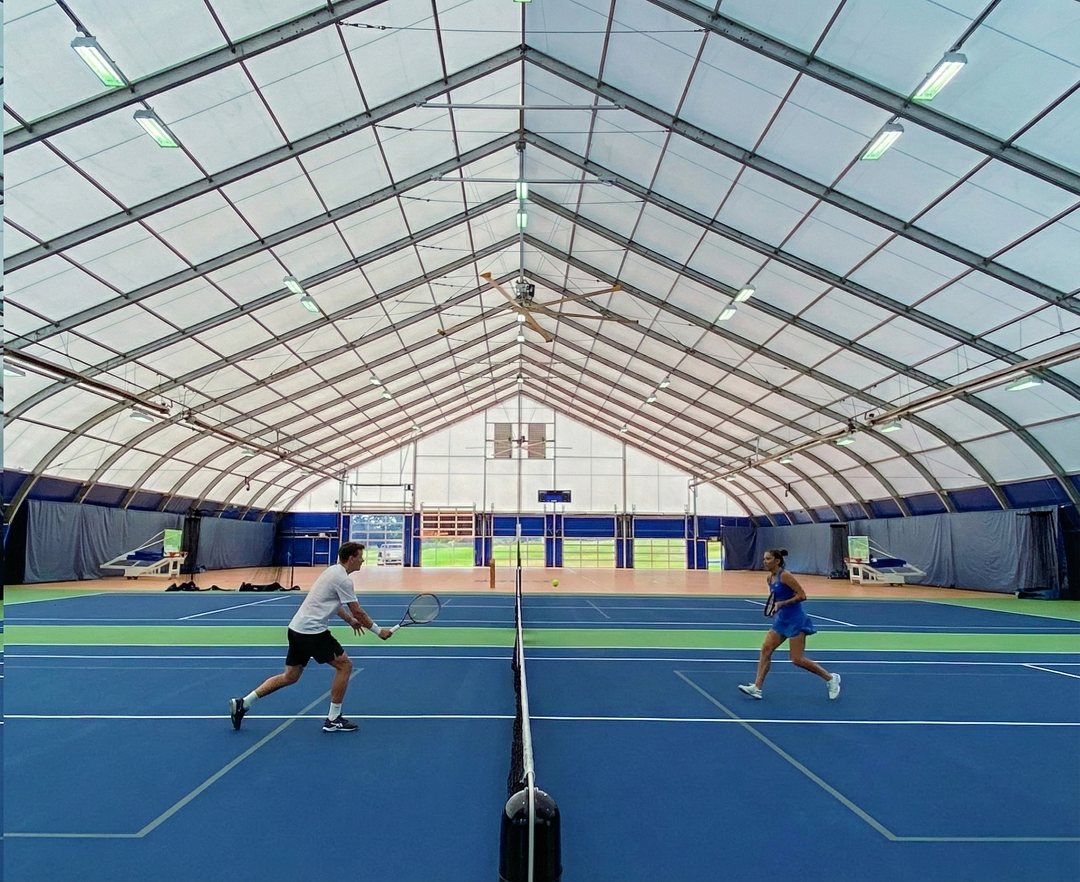
Shoulder Tent's Aluminum Frame Tent (models S30-1, S32, S45-1, S45-2, S60-1) is a modular assembly system combining prefabricated aluminum profiles and double-layer PVC-coated polyester tarpaulin. It is designed to provide secure, weather-resistant, and movable large-scale marquee solutions for temporary or semi-permanent storage facilities, sports facilities, exhibitions, events, and weddings. The frame uses high-strength aluminum alloy profiles; the fabric cover is waterproof and flame-retardant, meeting requirements for outdoor or semi-outdoor conditions that demand waterproofing, wind resistance, and flame retardancy.
Key technical capabilities:
- Maximum wind load: 100–120 km/h
- Snow load up to 1.9 kN/m²
- Modular 3m/5m bay expansion for length flexibility
- Clear-span column-free interior (up to 60m span per the S60 model)
Production mode supports ODM—from design & R&D, factory manufacturing and global delivery to on-site installation and technical support. Monthly capacity is 90 units, lead time 30–35 days, and orders are accepted from a single unit (no MOQ requirement). Each unit undergoes standardized engineering and quality inspections before leaving the factory.
Technical Explanation: How the System Adapts to Different Applications
The modular assembly mode features prefabricated aluminum profiles and fabric covers that can be configured with cassette flooring, sidewalls/doors, ventilation & insulation accessories, lighting, staging & carpets, and anchoring systems. For projects with special requirements—such as fire-rating, strengthened wind/snow load designs, foundation/anchorage treatments, insulation & climate control, and custom doors/loading openings—Shoulder Tent offers engineering support to adapt the design.
The aluminum alloy frame (typically 6061/T6 grade) has a typical service life of 15–20 years; the double-layer PVC fabric lasts 5–8 years under standard outdoor conditions. The structure can be anchored on concrete foundations, asphalt, or gravel with proper ballast or ground screws, enabling rapid installation and dismantling.
Application & Use-Case Scenarios
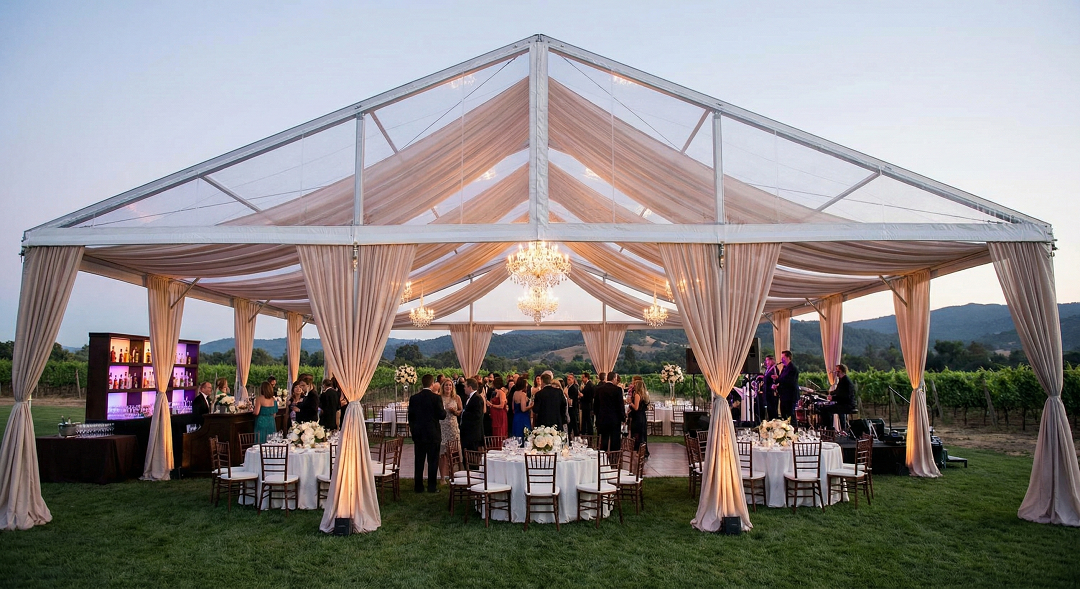
The aluminum frame tent is suitable for semi-permanent large sports venues (e.g., pickleball, padel, tennis covers), temporary or large-scale events and weddings, as well as warehousing & logistics facilities. The table below summarizes typical applications and corresponding model considerations:
| Application | Typical Model | Key Requirements |
|---|---|---|
| Temporary warehouse / industrial storage | S30-1, S45-1 | Weatherproof, loading dock access, insulation |
| Sports venue (ping pong, pickleball, tennis) | S32, S45-2 | Clear span, adequate height, ventilation |
| Large event / wedding | S45-1, S60-1 | Aesthetics, sidewalls, flooring, HVAC |
| Aircraft hangar tent / hangar tent | S60-1 | Extra wide span, large door openings |
Globally, Shoulder Tent has delivered over 3,800 units across 25 years of operation. The project outcomes emphasize rapid deployment, cost and time savings, and modular scalability, enabling customers to respond quickly to a wide range of temporary or semi-permanent outdoor requirements. Common special-requirement upgrades include strengthened wind/snow load designs, foundation/anchorage treatments, insulation & climate control, and custom doors/loading openings.
Market Trend Analysis
The commercial and industrial tent market is being shaped by three observable trends:
- Regulatory tightening: European safety requirements for mobile, temporary installed tents are governed by EN 13782:2015 (structural stability under wind and snow loads). In the US, commercial and industrial tents must comply with NFPA 701 (flame propagation of textiles). These standards push buyers to select suppliers with proven compliance capability.
- Demand for rapid deployment: Post-pandemic supply chain volatility and the rise of pop-up retail and events have accelerated preference for structures that can be erected in days rather than months. Modular aluminum frame systems directly address this requirement.
- Clear-span preference: Column-free interiors are increasingly specified for sports practice facilities, exhibition halls, and storage, as they maximize usable space and layout flexibility. Shoulder Tent's product line covers spans from 10m to 60m in clear-span configurations.
Key global manufacturers in this segment include Losberger De Boer (Germany), Shelter Structures (China), and American Tent (USA), alongside Shoulder Tent, which focuses on a mix of standard and custom-engineered solutions.
Comparison with Traditional Solutions
Compared to permanent warehouses or brick-and-mortar venue buildings, aluminum frame tents offer significant advantages in cost (estimated 50–70% lower construction cost), speed (erection in 5–15 days vs. months), and relocatability. However, an honest limitation is that fabric-covered structures typically have a shorter lifespan than rigid buildings (frame 15–20 years, fabric 5–8 years) and may require more frequent maintenance of the cover and seals. For applications needing long-term (>10 years) permanent occupancy with heavy insulation and utilities, a traditional steel or concrete structure may be more suitable despite higher upfront investment.
Future Outlook
As industries continue to value flexibility and speed over permanence, aluminum frame tents are expected to see increased adoption in emerging applications such as emergency response shelters, mobile vaccination/healthcare units, and climate-controlled sports training centers. Manufacturers that can offer certified structural performance, modular scalability, and responsive customization—like Shoulder Tent with its ODM capabilities and 30–35 day lead time—are positioned to capture share in the growing global market.
Frequently Asked Questions
Q: What types of projects are best suited for Shoulder Tent's aluminum frame tents?
A: The product is designed for temporary or semi-permanent storage facilities, sports facilities, exhibitions & events, and weddings. It operates in outdoor or semi-outdoor conditions requiring waterproofing, wind resistance, and flame retardancy. The system is common globally.
Q: Can the tent be customized for specific dimensions and site conditions?
A: Yes. Shoulder Tent offers custom options including size/height, sidewalls & doors, color & fabric, flooring systems, windows/curtains, insulation/ventilation, and décor & lighting. Special requirements such as fire-rating, strengthened wind/snow load designs, and foundation/anchorage treatments are also supported.
Q: What wind and snow loads can the aluminum frame tent withstand?
A: The standard design supports a maximum wind load of 100–120 km/h and snow load up to 1.9 kN/m². For projects in extreme climates, reinforced designs can be engineered.
Q: How is the tent installed and what support is provided?
A: The tent uses modular assembly combining prefabricated aluminum profiles and fabric covers. Shoulder Tent provides installation and on-site technical support. Anchoring systems, cassette flooring, sidewalls/doors, and other accessories can be supplied. The company also offers 24/7 online service and pre-sales/after-sales engineering support.
Q: Is there a minimum order quantity?
A: No. Shoulder Tent accepts orders starting from a single unit, making it accessible for small-scale projects or pilot installations.
Q: What are the typical lead times?
A: Standard lead time is 30–35 days. Monthly production capacity is 90 units.
Q: How does the tent compare to a permanent building in terms of lifespan?
A: The aluminum alloy frame has a service life of 15–20 years; the PVC fabric cover lasts 5–8 years under standard outdoor conditions. This is shorter than permanent steel/concrete structures but offers lower initial cost and full relocatability.
For detailed specifications, case references, and customization discussions, download the Shoulder Tent company brochure: Download Brochure (PDF)
Contact Shoulder Tent: www.shouldertent.com | Email: info@shouldertent.com | WhatsApp: +86 158 1850 8822
Есть вопросы или нужны дополнительные детали?
Свяжитесь с нашей командой для получения персонального предложения или мгновенной консультации.
Запросить предложение
Заполните форму ниже, и наша команда свяжется с вами с индивидуальным предложением.
Прямой чат WhatsApp
Предпочитаете общаться в реальном времени? Напишите нам в WhatsApp для мгновенной помощи и быстрых ответов.
- Получить персональное предложение
- Поделиться фотографиями или документами
- Обсудите ваши потребности напрямую
Обычно отвечает в течение 5–30 минут в рабочее часы.