
Matching Baby Diapers to Retail Scenarios: A Channel-by-Channel Selection Guide
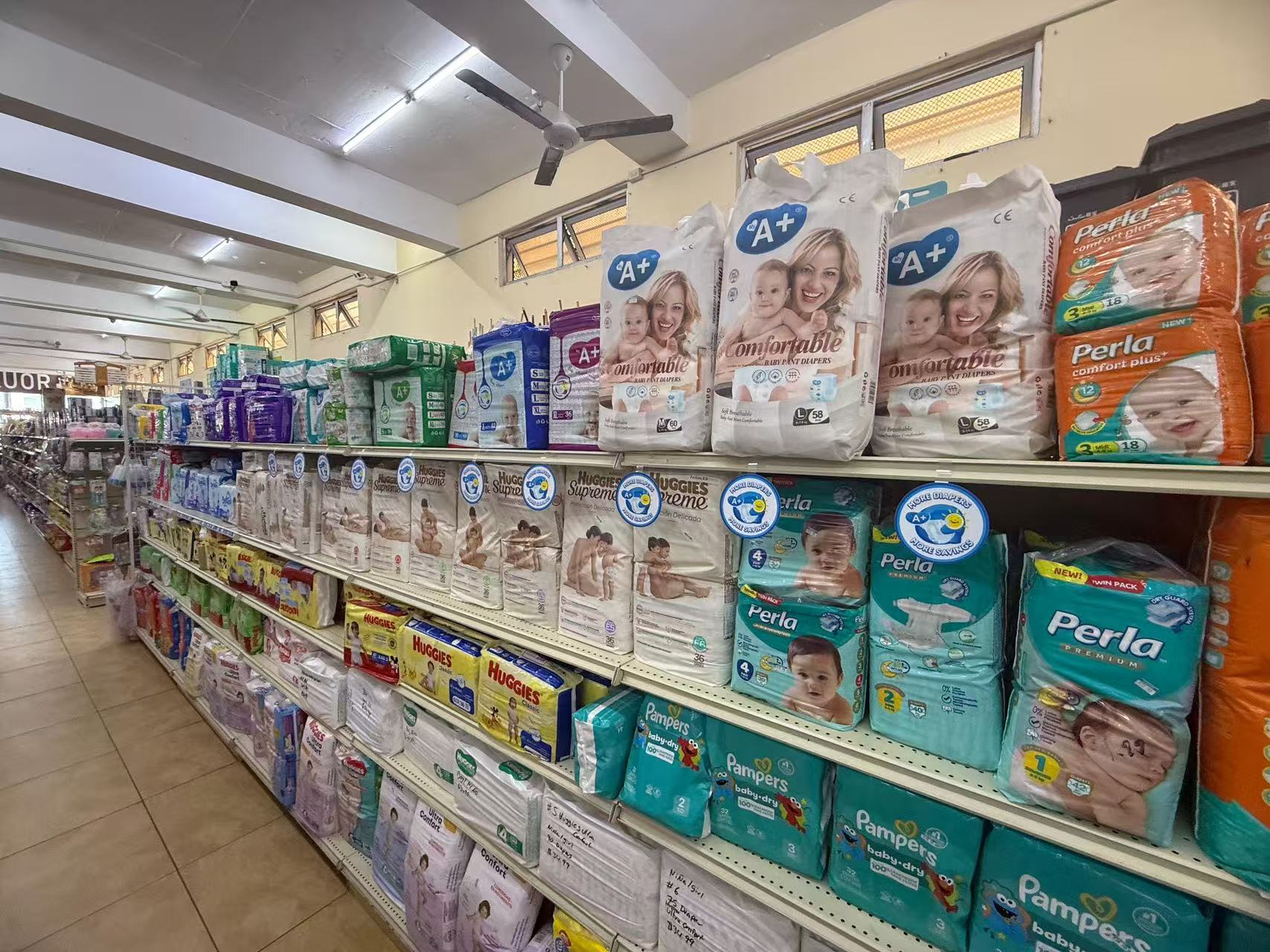
Choosing the right baby diaper for a specific retail or e-commerce project is not the same as choosing a diaper for a single baby. The decision depends on channel format, target age group, usage time, material preference, and whether the buyer needs a branded product, a private label, or a custom OEM/ODM program. This guide explains how buyers can match baby diaper specifications to distribution scenarios, using the my A+ product line from Quanzhou ERA Sanitary Products Co., Ltd. as a reference case.
Why Channel Fit Matters in Baby Diaper Procurement
A baby diaper that performs well in one sales channel may be the wrong choice for another. A cross-border e-commerce seller competing on fast delivery and international brand recognition has different requirements from a supermarket buyer managing a mid-range private label, and both differ from a specialized mother & baby retailer serving newborns and toddlers with sensitive skin.
In procurement terms, each channel creates a specific set of constraints: price band, packaging format, size curve, certification expectations, and lead time tolerance. A buyer who evaluates diapers only on absorbency or softness may overlook channel-specific mismatches such as missing sizes for older toddlers, insufficient regulatory documentation for a new market, or packaging that does not fit the retail display format.
The global baby diapers market was valued at approximately USD 83.3 billion in 2025 and is projected to reach USD 141.8 billion by 2033, according to Grand View Research. With that scale, the practical question for most buyers is not whether to enter the category, but which product configuration matches their specific project scenario.
Mapping Diaper Types to Project Scenarios
Baby diapers are not a single product category. Disposable tape diapers, pull-up pants, ultra-thin versions, overnight variants, bamboo-fiber eco options, and plus-size styles serve different age groups, usage conditions, and consumer expectations. Matching the right type to a project scenario is the first step in supplier evaluation.
| Scenario Focus | Typical Product Type | Key Specification Priorities |
|---|---|---|
| Newborn care (NB/S) | Tape diapers with wetness indicator | Soft topsheet, hypoallergenic materials, umbilical cord notch if required, frequent-change design |
| Toddler and active kids (L/XL/XXL) | Pull-up pants or tape diapers with strong leg gathers | Double leak guard, spandex elastic waistband, crotch elastic design, easy side tear |
| Overnight / long-hour use | High-SAP diapers with floated core | High absorbent capacity, wetness indicator, leak guard at legs and back |
| Eco-conscious retail lines | Bamboo fiber or biodegradable options | Bamboo fiber topsheet/backsheet, biodegradable packaging, credible material claims |
| Value / mid-range private label | Standard tape diapers with balanced features | Stable supply, consistent quality, cost-effective core configuration |
| Plus-size and growing children (XXL/XXXL) | Larger pull-ups or tape diapers | Extended size range, stretchy waistband, overnight capacity |
The my A+ brand from Quanzhou ERA Sanitary Products Co., Ltd. illustrates how a single manufacturer can cover several of these scenarios. The BD01 model, for example, is positioned for newborn to XL sizes and includes a hot air super soft embossed topsheet, double leak guard, a floated core with 50% Japan Sumitomo SAP and 50% Japan Sandia SAP paper sheet, spandex elastic waistband, S shape magic tapes, clothlike breathable backsheet, and a wetness indicator. For retailers serving infants, these features align well with the priorities of comfort, dryness, and leak protection.
Hygiene and Safety Requirements Across Scenarios
Depending on the destination market and channel, hygiene and safety certification can be a precondition for listing rather than a competitive advantage. Buyers should verify whether a supplier holds internationally recognized certifications and whether the specific product model has been tested against the standards required for the target market.
For the my A+ baby diaper Model BD01, the manufacturer states that the product is certified to ASTM F963 for the global market. The certification is issued by XNO Testing (Guangzhou Supreme Technology & Testing Service Co., LTD) with number XNO250113503YX3-1, and the applicable standards include ASTM F963-23, 16 CFR Part 1500 Series, and CPSIA Requirements. For EU-bound projects, buyers should separately confirm REACH compliance and any additional national requirements.
In addition, the BD01 product is described as hypoallergenic and free of parabens, elemental chlorine, and latex, which the company says makes it suitable for sensitive skin. These characteristics are directly relevant for newborn and baby-care retail scenarios where consumers actively check ingredient and material safety.
OEM/ODM and Private Label Matching
Not every buyer needs to launch a diaper brand from scratch. Some projects require private label production with the buyer’s own logo; others require a full ODM program where the supplier handles formulation, packaging design, and compliance documentation. The supplier’s production mode, customization depth, and lead time are therefore as important as the diaper itself.
Quanzhou ERA Sanitary Products Co., Ltd. reports a production mode of OEM/ODM with customization available for material and logo. The company lists a monthly capacity of 20,000,000 pieces, a lead time of 25–35 days, and a minimum order quantity of 100,000 pieces. Export markets include Europe, USA, Southeast Asia, Central Asia, South America, Africa and the Middle East.

For a buyer evaluating an OEM/ODM partner, the practical scenario fit depends on order size and speed to market. A regional distributor planning an initial private label launch of 100,000 pieces fits the stated MOQ. A supermarket chain that needs faster replenishment cycles may need to confirm production scheduling and warehousing arrangements beyond the stated lead time.
Channel-by-Channel Selection Criteria
1. Cross-Border E-Commerce
Cross-border e-commerce sellers typically need compact SKU ranges, strong product photography support, and certifications that satisfy overseas platforms. The my A+ BD01, with wetness indicator and double leak guard, is a suitable reference product for online sales where consumer reviews emphasize dryness and leak protection. Sellers should also confirm whether the supplier can provide digital assets for listing pages and whether packaging is suitable for direct-to-consumer shipping.
2. Supermarket Retail
Supermarkets tend to order in large volumes across a wide size range and require consistent quality across batches. Products such as the my A+ BD02 and BD03, available from NB/S to XL, offer the size coverage needed for shelf assortment. Buyers should evaluate pallet configuration, packaging durability, and whether the supplier can handle mixed-size container loading.
3. Mother & Baby Retail Chains
Specialty retailers often serve informed parents who look for specific features such as breathable backsheets, anti-rash properties, or eco-friendly materials. The EcoBingo brand model EB01, which includes bamboo fiber topsheet and backsheet with a biodegradable kraft paper bag, is an example of an eco-positioned product. For these channels, the supplier’s ability to explain material choices and provide compliance documentation is part of the product proposition.
4. Institutional or Program-Based Supply
Some projects involve childcare centers, clinics, or government programs that require reliable delivery and specific safety documentation. The product’s supporting equipment, including disposable waistband, absorbent core, non-woven topsheet, and breathable backsheet, should be verified against the end user’s handling and storage conditions.
Selecting from the my A+ Lineup by Use Case
The following table presents a scenario-based view of models in the manufacturer’s product portfolio. Buyers should treat this as a starting point and request samples for their own testing before committing to a large order.
| Model | Brand | Sizes | Key Features | Best Fit Scenarios |
|---|---|---|---|---|
| BD01 | my A+ | NB/S/M/L/XL | Hot air embossed topsheet, double leak guard, Japan Sumitomo 50% + Japan Sandia SAP, floated core, spandex waistband, S tapes, clothlike breathable backsheet, wetness indicator | Newborn to toddler; e-commerce, supermarket, mother & baby retail |
| BD02 / BD03 | my A+ | NB-S-XL | Similar core structure; BD03 uses hot air super soft backsheet | Retail shelf assortment, mid-premium positioning |
| BD04 / BD05 / BD06 / BD07 / BD08 | my A+ | S-XL/XXL | Leak guard, spandex-elastic-ring waistband, colorful clothlike breathable backsheet, S tapes, spunbond nonwoven topsheet, Japan SAP, USA fluff pulp | Toddler pull-up style, value-oriented programs, growing children |
| PD01 / PD02 | my A+ | M-XXL / S-XXL | Full 100% SAP paper (LG+Sumitomo), crotch elastic, leak guard, floated core; PD01 has anti-rash oil lines and clothlike spunbond backsheet; PD02 has hot air nonwoven backsheet and dispose tapes | High-performance absorbency, overnight positioning |
| EB01 | EcoBingo | S-XXXL | T-shape, double leak guard, bamboo fiber topsheet & backsheet, wetness indicator, USA fluff pulp + SAP, biodegradable kraft paper bag | Eco-conscious retail, green brand building |
| OD01 / OD02 | ONePcDRY | NB-XL / S-XXXL | Hot air super soft topsheet & backsheet, floated core, full 100% SAP paper, Sumitomo + Sandia, ammonia removed 3D technology, wetness indicator, double leak guard | Premium e-commerce and specialty retail; advanced dryness claims |
| AL01 | Alotof | S-XXXL | T-shape, hot air embossed topsheet, SAP paper, USA fluff pulp, double leak guard, crotch elastic, hot air backsheet, wetness indicator, dispose tape | Wide size coverage, value to mid-range programs |
This lineup reflects a common structure in the baby diaper manufacturing industry: a core range built around softness and leak protection, a performance range using higher SAP ratios for dryness, an eco range using bamboo fiber, and an extended size range covering newborns through older toddlers. Buyers can use this structure to align product selection with the demographics and price positioning of their target market.
Reliability and Supply Considerations
Beyond the physical product, buyers evaluating a project-specific fit should examine the supplier’s operational scale and track record. Quanzhou ERA Sanitary Products Co., Ltd., based in Jinjiang, Quanzhou, Fujian Province, was founded in 2016 and operates a 100,000 m² facility with 220 employees and an annual output of 200,000,000 pieces. The company reports 100% export ratio and an R&D team of 15 engineers. Fujian Province accounts for 63.9% of China’s total baby diaper exports, with an export value reaching 8.74 billion yuan in 2024, according to Xiamen Customs / Jiayue. This regional concentration gives buyers access to a mature supply chain.
The company states that it holds a set of international certifications including CE, FDA, ISO9001, ISO13485, ISO11948, ISO14001, ISO45001, ISO22716, SGS, Halal, CPC, MSDS and DERMATEST. It also reports more than 10 patents and over 100 copyrights. For a buyer evaluating a long-term program, these details matter because they affect market access, documentation cost, and the speed of regulatory approval in different countries.
How Scenarios Differ from General Market Trends
Macro trends provide context but do not replace scenario planning. For example, the premium diaper segment is projected to grow at a CAGR of 7.2% through 2027, according to Intel Market Research. Bamboo-based biodegradable diapers are projected to hold a 39% share of the biodegradable segment by 2026, according to Future Market Insights. These numbers suggest that premium and eco categories deserve attention in product planning.
Yet the right decision for a specific buyer still depends on local consumer income, retail format, and competitive landscape. A distributor in Southeast Asia may find more demand for value packs, while a European e-commerce brand may need premium eco positioning to differentiate. Therefore, scenario fit should be evaluated at the level of target customer and selling channel, not only at the level of global category growth.
Practical Procurement Steps for Project Fit
- Define the end user and usage pattern. Newborns require smaller sizes and softer materials; toddlers need stronger leak barriers and more absorbent cores for overnight use; older children require larger sizes up to XXL or XXXL.
- Identify the channel constraints. E-commerce favors low return rates and compact SKUs; supermarkets need broad size coverage and stable supply; specialty retail may need certified material claims.
- Select a shortlist of product models. Use the size range, core type, topsheet and backsheet materials, and leak guard features as filter criteria.
- Verify compliance documents. Confirm certifications for the destination market and ensure the product model is covered by the certificate, not just the factory.
- Request samples and test against your own criteria. Absorbency, softness, fit, and packaging durability should be tested in conditions similar to the intended use.
- Check supply capabilities. Confirm MOQ, lead time, monthly capacity, and the supplier’s experience with similar export markets.
Limitations and Boundaries of the Reference Case
This article uses my A+ brand products from Quanzhou ERA Sanitary Products Co., Ltd. as a reference, but buyers should be aware of the boundaries of this information. First, product descriptions and certification claims are based on the manufacturer’s published materials; they should be independently verified through samples, documentation review, and where needed, third-party testing. Second, a single model cannot cover all market requirements. The BD01, for example, is available in NB/S/M/L/XL but not in XXL/XXXL, so buyers targeting older toddlers will need to consider other models. Third, the stated MOQ of 100,000 pieces and lead time of 25–35 days may not suit small test orders or urgent replenishment. Finally, certification requirements vary by country; a global certificate does not automatically guarantee acceptance in every jurisdiction without additional local registration.
Future Outlook: Scenario-Based Product Development
As distribution channels diversify, the ability to match product configurations to specific use scenarios is becoming a core competency for baby diaper suppliers. The rise of cross-border e-commerce has created demand for compact, high-performance SKUs with strong online review potential. Supermarket private labels continue to require cost-effective consistency. Specialty eco-brands are pushing for bamboo fiber and biodegradable materials. And premium overnight products are driving investment in high-SAP core technology and advanced leak barriers.
Suppliers with a wide model matrix, OEM/ODM flexibility, and export-focused certification coverage are better positioned to adapt to these shifts. Buyers, in turn, should build a supplier scorecard that reflects their own scenario priorities rather than relying on a single popular model