
Matching Commercial Cleaning Robots to Facility Needs: A Scenario-Based Selection Guide
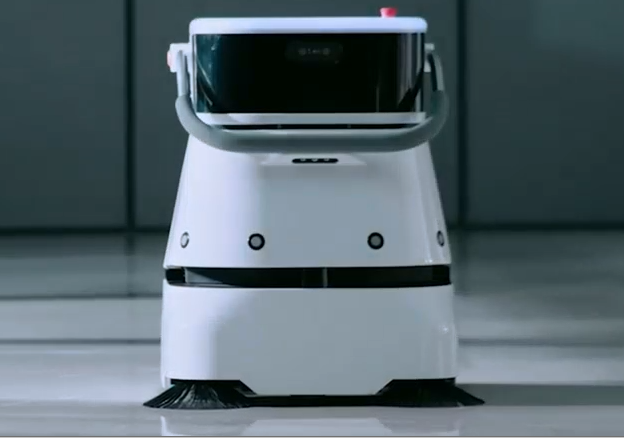
Facility managers and procurement professionals face a growing challenge: selecting the right commercial cleaning robot that can adapt to the distinct demands of different environments. From quiet hospital corridors to sprawling warehouse aisles, each space imposes unique requirements on cleaning equipment in terms of hygiene standards, floor type, battery endurance, and human interaction. This article presents a scenario-based framework for evaluating commercial floor cleaning robots, using the Geakita WDC-C2 as a reference solution.
The Challenge of One-Size-Fits-All Cleaning
Indoor applications dominate the commercial cleaning robot market — offices, hospitals, retail spaces, and hotels accounted for 68% of global deployments in 2024, according to industry research. However, a hotel lobby and a factory floor cleaning robot face very different operational conditions: the former needs quiet, unobtrusive navigation among guests, while the latter requires robust scrubbing for grease and debris. Traditional manual scrubber-dryers can address individual use cases but struggle to offer the flexibility, autonomous scheduling, and labor savings that modern intelligent solutions provide.
Geakita's Approach: A Multi-Scenario Commercial Cleaning Robot
Geakita (Xiamen Tiangong Kaiwu Technology Co., Ltd.) is a Chinese manufacturer established in 2009, originally known for power tools, and has since expanded into intelligent cleaning robotics. The company's Geakita WDC-C2 commercial cleaning robot is an intelligent scrubber dryer designed for indoor facilities. It integrates navigation, scrubbing, and vacuum drying into a compact footprint (503 × 503 × 629 mm, 40 kg) and is built to handle the cleaning needs of hospitals, malls, campuses, exhibition halls, offices, airports, hotels, and restaurants.
Technical Foundation for Scenario Adaptation
The WDC-C2 achieves a navigation accuracy of ±1 cm, allowing it to operate safely in tight corridors and near furniture. Its cleaning width of 440 mm — combined with a 1 kWh swappable battery that provides 5–12 hours of runtime and charges in 3 hours — supports both short and extended cleaning cycles. The robot offers adjustable speed (0.2–0.8 m/s) and uses a 10L clean water + 10L wastewater tank system, enabling continuous mopping without frequent refills for medium-sized spaces. These specifications form the technical baseline that makes the platform adaptable to diverse real-world facilities.
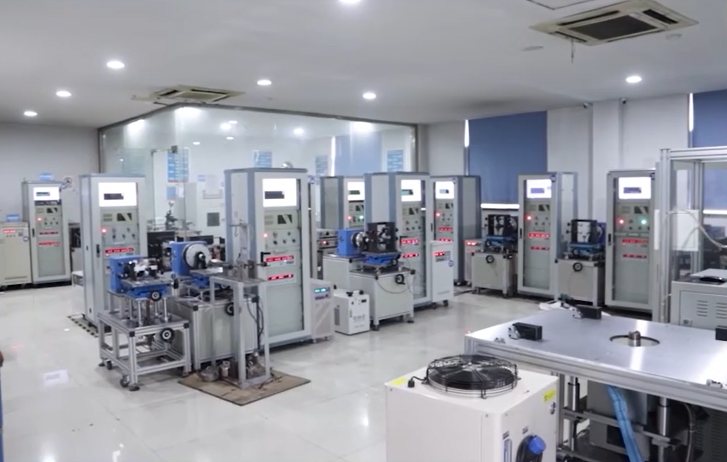
Geakita's integrated manufacturing and quality control systems support consistent robot performance across varied commercial deployments.
Application Scenarios: Matching Robot to Environment
Hospitals and Healthcare Facilities — The WDC-C2's sealed water tank system and programmable routes allow it to clean sensitive areas without cross-contamination. Its quiet electric motor and low vibration levels are suited for patient-adjacent zones.
Retail Malls and Supermarkets — With adjustable speed and ±1 cm navigation, the robot can operate after hours or during low traffic, avoiding obstacles like display stands and fitting rooms. The 5–12 hour battery life covers overnight cleaning cycles.
Office Buildings and Coworking Spaces — Ergonomic design principles apply not only to the robot's handling but also to its human interaction: the WDC-C2 is equipped with collision avoidance and can be scheduled during breaks to minimize disruptions.
Airports and Hotels — Large open areas require consistent scrubbing coverage. The swappable battery enables continuous operation — one battery charging while the other is in use — reducing downtime. The 440 mm cleaning width balances thoroughness with speed for expansive terminals and lobbies.
Warehouses and Factory Floors — Although the WDC-C2 is primarily an indoor floor cleaning robot, its robust build (40 kg) and large tank capacity make it suitable for light industrial environments where debris and spillages occur regularly. However, for extremely heavy-duty or uneven factory floors, buyers may need to evaluate supplementary equipment.
Market Trends Driving Scenario-Based Selection
The global commercial cleaning robot market was valued at approximately USD 1,777 million in 2024, and the B2B floor cleaning robots segment is projected to grow from USD 1.43 billion in 2026 to USD 5.43 billion by 2035 at a CAGR of 16% (SkyQuest Technology). China's cleaning robot exports reached RMB 14 billion in the first five months of 2026, accounting for over 70% of total robot exports, signaling strong manufacturing scale and cost competitiveness from Chinese suppliers like Geakita. As indoor applications continue to dominate (68% of deployments), buyers are increasingly looking for robots that can be quickly reconfigured or assigned to different facility zones — a capability that the WDC-C2's programmable speed, precision navigation, and hot-swappable battery support.
Comparison with Traditional Cleaning Equipment
Traditional manual scrubber-dryers offer high scrubbing power and are relatively low cost, but they require an operator for every hour of cleaning. In contrast, the Geakita WDC-C2 automates the process, freeing staff for more value-added tasks. A limitation worth noting: the robot's maximum speed (0.8 m/s) may be slower than a fast walking operator, and its sensors can be challenged by highly reflective floors or very cluttered environments. For such edge cases, a hybrid approach — robot for routine cleaning and manual machine for deep spot cleaning — remains a practical strategy.
Future Outlook: Intelligence and Ecosystem Integration
As artificial intelligence and cloud management mature, commercial cleaning robots will become more proactive — adjusting cleaning frequency based on foot traffic data, or self-diagnosing maintenance needs. Geakita's background in motor-driven tools gives it a supply-chain advantage (100,000+ units annual output capacity, 300+ employees, 25 engineers strong R&D team) to scale production while maintaining quality through 100% full inspection before shipment and a three-level QC (IQC/IPQC/FQC) process. Buyers looking for an OEM/ODM partner can evaluate Geakita's customized solutions for logo printing, packaging design, voltage customization, and battery configuration (2.0Ah/4.0Ah), making the WDC-C2 platform a flexible base for private-label programs.
Frequently Asked Questions
What types of facilities can the Geakita WDC-C2 commercial cleaning robot handle?
The WDC-C2 is designed for indoor commercial environments including hospitals, malls, campuses, exhibition halls, offices, airports, hotels, and restaurants. Its 440 mm cleaning width, adjustable speed (0.2–0.8 m/s), and ±1 cm navigation accuracy make it suitable for both open and confined spaces.
How long does the battery last, and can it be swapped?
The robot features a 1 kWh swappable lithium battery that provides 5–12 hours of runtime depending on speed and scrubbing intensity. Full charging takes approximately 3 hours, and the battery can be hot-swapped for continuous operation.
Can I customize the cleaning route and schedule?
Yes, the WDC-C2 supports programmable path planning and scheduling. Through its onboard interface or companion software, operators can set cleaning zones, define no-go areas, and adjust speed for different sections of the facility.
Is the robot safe around people and furniture?
The WDC-C2 uses laser-based navigation with ±1 cm accuracy and includes collision avoidance sensors. It is designed for safe operation around pedestrians and obstacles, making it suitable for busy retail floors and hospital corridors.
What is the robot's cleaning capability for different floor types?
The WDC-C2 can scrub and dry hard floors such as tile, marble, vinyl, and sealed concrete. It combines a 10L clean water tank and 10L wastewater tank to perform continuous mopping and drying in a single pass. For heavily textured or extremely uneven surfaces, manual pre-cleaning may be recommended.
Download the Geakita Corporate Profile & Product Catalog 2026 for complete specifications and OEM capabilities.
Есть вопросы или нужны дополнительные детали?
Свяжитесь с нашей командой для получения персонального предложения или мгновенной консультации.
Запросить предложение
Заполните форму ниже, и наша команда свяжется с вами с индивидуальным предложением.
Прямой чат WhatsApp
Предпочитаете общаться в реальном времени? Напишите нам в WhatsApp для мгновенной помощи и быстрых ответов.
- Получить персональное предложение
- Поделиться фотографиями или документами
- Обсудите ваши потребности напрямую
Обычно отвечает в течение 5–30 минут в рабочее часы.