
Matching Crusher Line Types to Your Quarry: An Aggregates vs. Minerals Fit Guide
Scenario-based selection for aggregate producers and mineral processors · Research to Evaluation stage
Two quarries can extract the same limestone and still need two different crusher lines. What separates them is rarely the rock name. Feed moisture, finished-product specification, deposit variability, and whether the plant has to move usually sort a project into a particular line architecture long before brand or budget enter the conversation. A stone crusher production line built for dry aggregate and a crusher stone drying production line built for wet feed are not two grades of the same offer — they answer different constraints. Getting that match right during research avoids the most expensive correction of all: rebuilding the process flow after the civil works are poured.
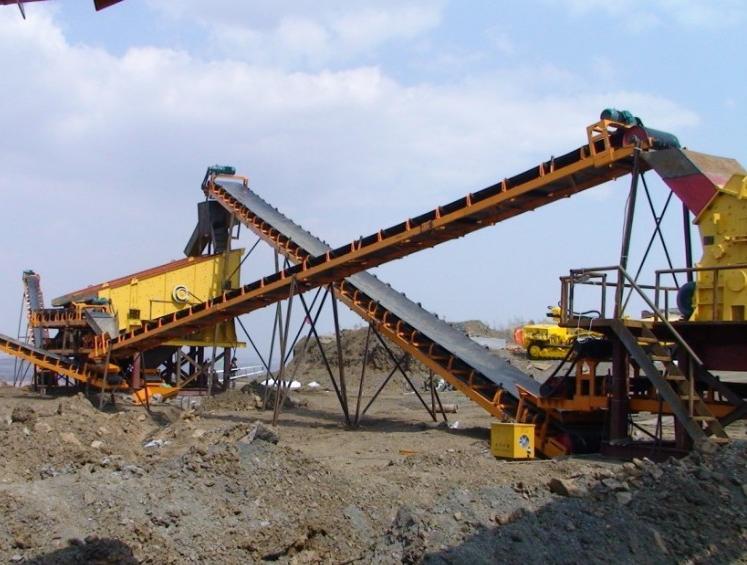
Raw stone crushing at a quarry face — the starting point for any line-type decision. Image: STM application reference.
Why the Same Rock Can Demand Two Different Lines
A crusher line is best understood as a chain of constraints rather than a list of machines. Each stage — coarse reduction, medium and fine reduction, sizing, sand making or grinding — narrows what the next stage can accept. When one constraint changes, the whole chain usually has to be reconsidered.
The four variables that change most often at quarry level are:
- Feed moisture. Wet or sticky feed changes screening behaviour, causes material to clump and bridge, and can prevent downstream stages from running at design capacity.
- Finished-product specification. Construction aggregate, manufactured sand, and mineral powder are sold against different particle-size and purity expectations, so they need different final stages.
- Deposit consistency. A single, uniform bench supports a fixed line; a deposit whose hardness and size distribution shift through the pit favours a more flexible or mobile configuration.
- Site mobility. Fixed plants suit long-life reserves; contractor plants that relocate between road, rail, or water projects need a different platform.
These variables are the reason two neighbouring quarries can end up with structurally different flow sheets while processing similar rock. The sections below work through four common scenarios and the line type each one points toward.
Scenario 1 — Dry Aggregate Production: The Stone Crusher Production Line
The most common configuration for hard-rock aggregate is a multi-stage fixed line. STM describes a typical aggregate and manufactured-sand flow as: raw material bin → vibrating feeder → jaw crusher (coarse crushing) → cone crusher (medium and fine crushing) → vibrating screen → return crusher → VSI sand making machine → finished-product screen → finished-product silo.
That sequence matters more than any single machine. Coarse crushing prepares a uniform feed so that the cone stage does not see oversize material that would cause wear or blockage. Screening and re-crushing run as a closed loop, so oversize is returned rather than shipped. The VSI stage then shapes and produces manufactured sand from screened intermediate material. Operation is described as continuous and automated, with integrated PLC control and linked start/stop.
Representative stage parameters
| Stage | Representative equipment | Typical power | Typical capacity |
|---|---|---|---|
| Coarse reduction | European Jaw Crusher (e.g. PEW180*1300 to PEW1100*1200) | 30 kW – 200 kW | 12 – 650 t/h |
| Medium / fine reduction | Multi Cylinder Hydraulic Stone Cone Crusher (HPT series) | 160 kW – 400 kW | 120 – 855 t/h |
| Shaping / sand making | VSI Impact Sand Making Stone Crusher Machine | 110 kW – 400 kW | 120 – 520 t/h |
| Medium reduction (alternative) | Impact Crusher (PF series) | 37 kW – 375 kW | 15 – 350 t/h |
Parameter ranges are drawn from STM product specification data and describe the envelope of a series; the exact model is fixed per project.
The Stone Crusher Production Line in STM's catalogue is offered in combinations built around PE-Jaw Crusher, Impact Crusher, Cone Crusher, and VSI Sand Making Machine headings, with the same closed-loop sizing logic. For producers whose feed is consistently dry and whose product is construction aggregate or manufactured sand, this architecture is the natural default.
Scenario 2 — Moisture-Heavy Feed: The Crusher Stone Drying Production Line
When the feed carries enough moisture, the constraint moves. Wet sand, clay-bearing aggregate, coal slime, sludge, and tailings do not screen cleanly and do not flow evenly through downstream stages. In these conditions, adding crushing capacity without addressing moisture will not increase saleable output.
The Crusher Stone Drying Production Line addresses that constraint directly. It is a continuous rotary-drum drying configuration, and STM documents it as suitable for drying sand, gravel, mineral powder, coal slime, sludge, clay, and tailings. A documented reference case in Kazakhstan used the line to dry manufactured sand, pebbles, quartz sand, and ore powder, with the stated result of reducing moisture content to below 1% on an adjustable basis. The same case describes the benefits as more uniform drying, better material flowability, reduced clumping, sticking and blockage, lower transport weight, and improved suitability for commercial concrete and dry-mix mortar specifications.
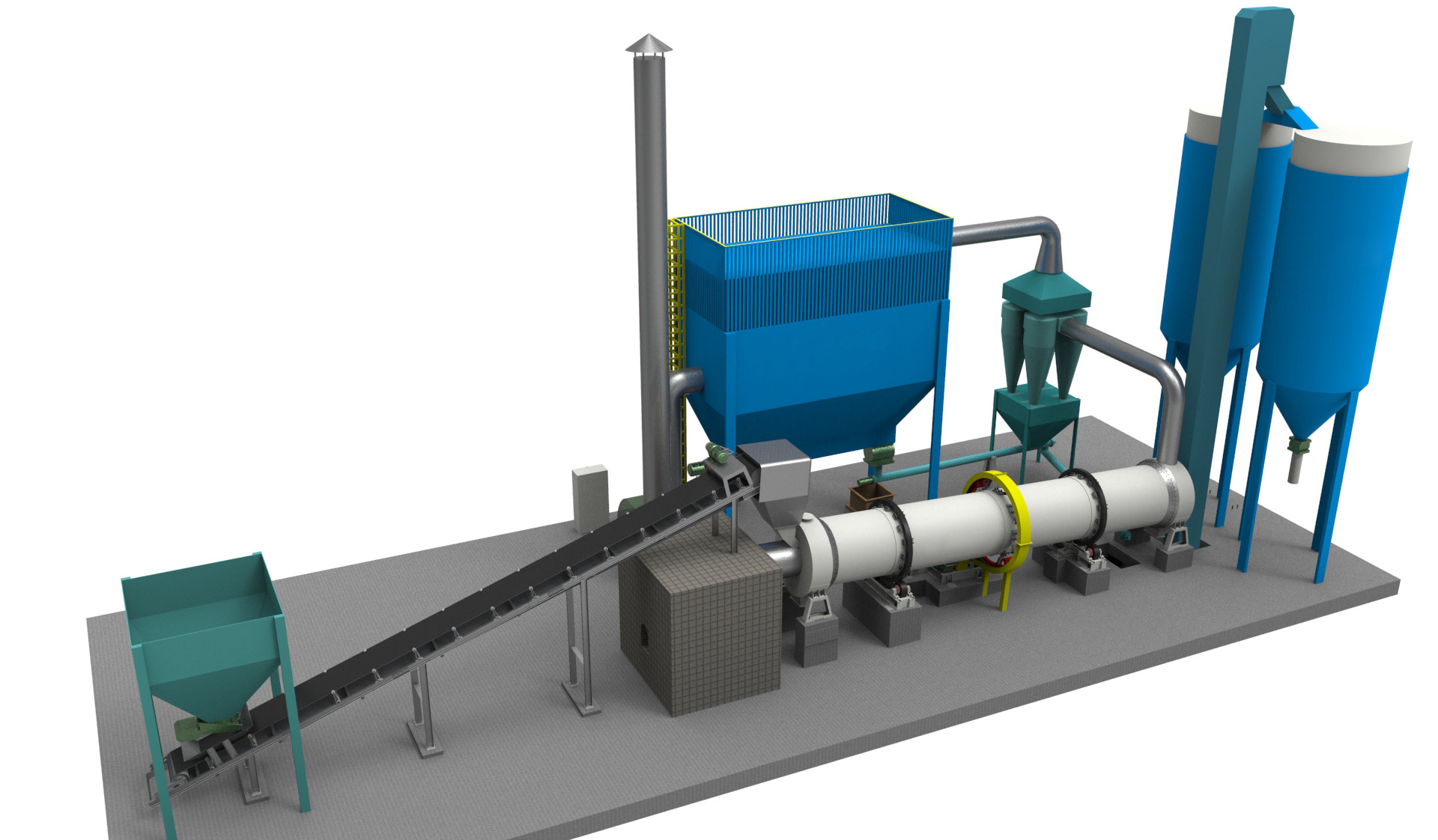
Rotary drum drying line configured for sand, gravel and mineral powder feed. Image: STM drying production reference.
Representative drying-line parameters
| Model | Power | Capacity |
|---|---|---|
| 600*6000 | 3 kW | 0.5 – 1.5 t/h |
| 1200*12000 | 11 kW | 2 – 6 t/h |
| 2200*20000 | 30 kW | 12 – 20 t/h |
| 3000*25000 | 75 kW | 32 – 40 t/h |
| 4.2*8m | 22*4 kW | 70 – 120 t/h |
Documented design features include continuous drum rotation for uniform heating, adjustable temperature and drying degree, hot-air recycling for thermal efficiency, and a dust-removal device for environmental compliance. These are the parameters a buyer should weigh against measured feed moisture, not against nameplate tonnage alone.
Scenario 3 — Mineral Powder and Grinding Output
When the finished product is not aggregate but fine or ultrafine powder, the final stage changes again. Grinding lines, not aggregate lines, carry the specification. STM lists a Stone Crusher and Grinding Production Line covering B-series and YGM/MTW series mills, with output fineness described in ranges from roughly 0.075–0.89 mm down to 0.613–0.033 mm depending on model, and capacities from under 1 t/h to about 150 t/h across the series.
One practical boundary appears in STM's own application notes: where grinding is required, the powder generally needs to be cleaned and dried before it enters high-pressure grinding equipment or a ball mill. In other words, mineral processing is not a copy of aggregate production with a finer screen — the drying and grinding steps are part of the process logic, and the line must be designed to accept that sequence.
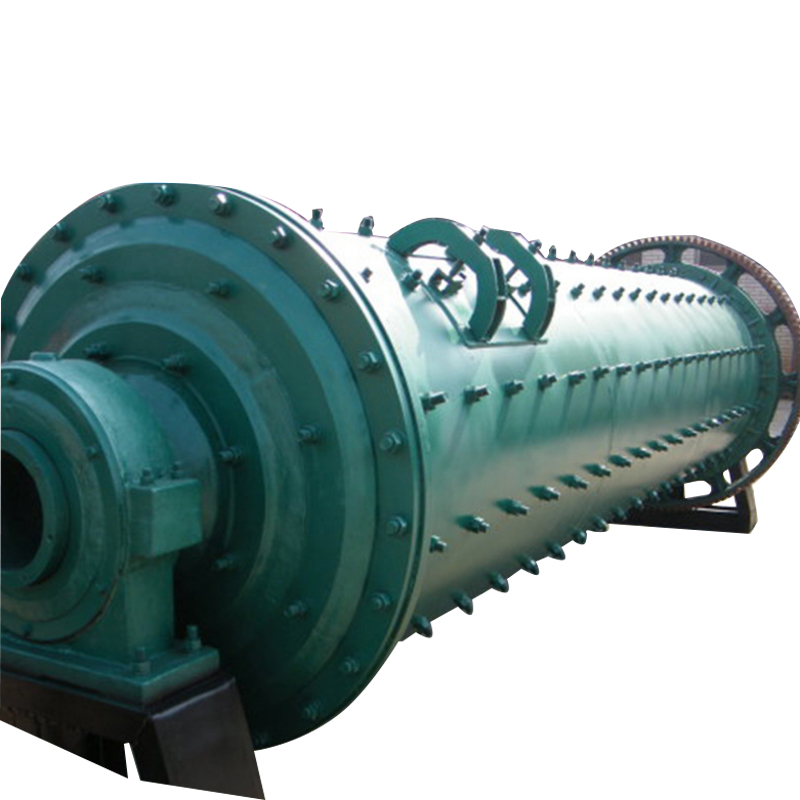
Stone crusher and grinding line for fine and ultrafine mineral powder production. Image: STM grinding line reference.
Scenario 4 — When the Plant Has to Move
Contractor and multi-face operations add a mobility constraint. STM's catalogue covers this with Tyre Type Mobile Crusher and Crawler Mobile Crusher families, plus a Portable Stone Crusher range.
| Platform | Representative model | Feed opening | Capacity |
|---|---|---|---|
| Tyre type mobile | YG938E69 (mobile jaw configuration) | — | 70 – 150 t/h |
| Tyre type mobile | Y3S1548Y220 (mobile cone configuration) | — | 140 – 330 t/h |
| Crawler mobile | SY-C96 (jaw) | 930 × 580 mm | 105 – 390 t/h |
| Crawler mobile | SY-C120 | 1200 × 870 mm | 175 – 540 t/h |
Mobility is a sourcing question, not only an engineering one. Because mobile units are covered by a distinct safety standard — ISO 21873-2:2019 sets out safety requirements and verification for mobile crushers used in rock crushing and construction recycling — a buyer specifying a mobile line should confirm compliance against that standard rather than assuming a fixed-plant specification will carry over.
A Buyer Self-Assessment Framework
Before requesting quotations, work through the following table with your own site data. Each row moves a project toward one of the line types above.
| Question | Aggregate scenario | Moisture-heavy scenario | Mineral / grinding scenario |
|---|---|---|---|
| Feed moisture at pit | Consistently low and free-flowing | High, sticky, or variable with season | Requires drying before grinding |
| Finished product | Aggregate and manufactured sand | Dry sand, mineral powder, mortar feed | Fine to ultrafine powder |
| Key downstream stages | Screening, closed-loop re-crushing, VSI shaping | Rotary drum drying and dust removal | Milling, grading, classification |
| Line type indicated | Stone Crusher Production Line | Crusher Stone Drying Production Line | Stone Crusher and Grinding Production Line |
| Mobility | Fixed, unless reserve is short | Fixed, or mobile with dry-feed precondition | Typically fixed |
What the Market Data Suggests About Line Demand
Third-party estimates provide useful context for buyers weighing whether a scenario-specific line is worth the investment. The global crusher market was estimated at USD 6,751.19 million in 2024 and projected to reach USD 12,710.1 million by 2035 (Market Research Future). A narrower estimate places the stone crushing equipment market at approximately USD 5.06 billion in 2024 (Zion Market Research) — the gap between these figures reflects differences in product scope rather than contradiction, and buyers should read any single market number as directional.
Two structural signals are more relevant to line-type selection. First, Asia Pacific is identified as the largest and fastest-growing crusher region, with China's market estimated at USD 827.02 million in 2024 (Market Research Future). Second, mobile and semi-mobile demand is expanding: the global mobile crusher and screener market was valued at USD 4.59 billion in 2024, with a projected CAGR of 7.32% through 2035 (Market Research Future). For buyers, this supports the case that both fixed multi-stage lines and mobile configurations are being actively deployed, so scenario fit — not novelty — should drive the choice.
Comparison with Traditional Single-Machine Procurement
The traditional approach has been to procure crushers one at a time, adding capacity when a bottleneck appears. That approach has a real advantage: it minimises upfront capital and can be staged as cash flow allows.
Its limitation is equally real. A line is a chain of constraints, so adding a larger jaw crusher to a plant whose real bottleneck is wet screening will convert capital into unsaleable stock sitting on the pad. The same logic applies in reverse: installing a drying line into an operation whose feed is already dry adds thermal energy consumption and operating cost for no throughput gain. The boundary is clear — drying and grinding stages only pay back when moisture or fineness is the binding constraint. Where it is not, a well-matched Stone Crusher Production Line remains the lower-cost answer.
Verification: Certifications and Quality Controls Buyers Can Check
STM states that the company took the lead in passing the ISO9001:2008 international quality management system certification as well as the European Union CE certificate. CE certification is documented against Directive 2014/30/EU and related EN standards, with the certificate applicable to the Stone Crusher Production Line and to a list of related models, and applying to markets including Russia, the Middle East, Mexico, and Africa.
On the manufacturing side, STM's capability data records OEM production, Voltage and Logo customisation, a monthly capacity of 8,000 units, a lead time of 30 days, a minimum order quantity of 2 units, and 100% testing. After-sales is described as online guidance followed by offline engineer guidance and collaboration, with after-sales engineers assigned on site for installation and commissioning. These are the verifiable points a buyer can use to compare suppliers during evaluation rather than relying on catalogue claims alone.
Future Outlook
Three trends are likely to shape crusher-line selection over the next several years. The first is the continued mix of fixed and mobile capacity, supported by the projected growth of the mobile crusher and screener market. The second is the increasing weight of moisture management in aggregate economics, as deposits with higher clay or fines content remain in production longer. The third is the gradual convergence of quality management and safety standards — buyers specifying mobile equipment will increasingly be expected to evidence compliance such as ISO 21873-2:2019 alongside performance data.
For producers at the research stage, the practical implication is straightforward: decide the scenario first, then the line type, then the models. That order keeps the quotation conversation anchored to site conditions rather than to whatever specification is easiest to quote.
FAQ
What is the main difference between an aggregate crusher line and a mineral processing line?
An aggregate line is built around size reduction and shaping to produce construction aggregate and manufactured sand, typically through coarse crushing, medium and fine crushing, screening, and a VSI sand-making stage. A mineral processing line is built around producing fine or ultrafine powder, using a grinding production line with milling, classification, and — where required — drying of the powder before grinding. The finished-product specification, not the rock type, is the deciding difference.
When does a Crusher Stone Drying Production Line make sense for a quarry?
It makes sense when moisture is the binding constraint on saleable output. STM documents the line as suitable for drying sand, gravel, mineral powder, coal slime, sludge, clay, and tailings, and a reference case in Kazakhstan used it to dry manufactured sand, pebbles, quartz sand, and ore powder to below 1% moisture content on an adjustable basis. Where feed is already dry and free-flowing, the added thermal process offers no throughput gain.
What capacity and power range do STM's drying lines cover?
The Crusher Stone Drying Production Line spans from the 600*6000 model at 3 kW and 0.5–1.5 t/h up to the 4.2*8m model at 22*4 kW and 70–120 t/h, with intermediate models including 1200*12000 (11 kW, 2–6 t/h), 2200*20000 (30 kW, 12–20 t/h), and 3000*25000 (75 kW, 32–40 t/h).
Which crushers handle coarse, medium, and fine reduction in an aggregate line?
In STM's aggregate configuration, coarse reduction is handled by a jaw crusher such as the European Jaw Crusher series (30–200 kW, 12–650 t/h across models), medium and fine reduction by a cone crusher such as the Multi Cylinder Hydraulic Stone Cone Crusher series (160–400 kW, 120–855 t/h), and shaping and sand production by a VSI Impact Sand Making Stone Crusher Machine (110–400 kW, 120–520 t/h). Impact crushers in the PF series (37–375 kW, 15–350 t/h) are also used as an alternative medium-reduction stage.
What certifications and quality controls can a buyer verify?
STM states that it took the lead in passing ISO9001:2008 international quality management system certification and the European Union CE certificate. CE certification is documented against Directive 2014/30/EU and related EN standards and is recorded as applying to the Stone Crusher Production Line and related models across markets including Russia, the Middle East, Mexico, and Africa. Manufacturing controls recorded by STM include OEM production, Voltage and Logo customisation, a monthly capacity of 8,000 units, a 30-day lead time, a 2-unit minimum order quantity, and 100% testing.
Is a mobile line always the more flexible choice?
Not necessarily. Mobile and crawler configurations suit operations that relocate between faces or projects, and STM's range includes Tyre Type Mobile Crusher and Crawler Mobile Crusher families with capacities such as 70–150 t/h (YG938E69) up to 175–540 t/h (SY-C120). For long-life reserves with stable feed, a fixed multi-stage line is generally simpler to operate and maintain. Mobile equipment is also covered by distinct safety requirements — ISO 21873-2:2019 specifies safety requirements and verification for mobile crushers used in rock crushing and construction recycling.
The Practical Takeaway
Crusher line selection is a scenario-matching exercise before it is a procurement exercise. Aggregate producers with dry, free-flowing feed are best served by the closed-loop architecture of a Stone Crusher Production Line. Operations where moisture limits output need the thermal and material-handling design of a Crusher Stone Drying Production Line. Producers targeting fine or ultrafine powder need the grinding logic of a Stone Crusher and Grinding Production Line, with the drying step placed where the process requires it.
Henan Centbro Machinery (STM) Equipment Co., Ltd is a mining equipment enterprise established in 1982, based in Zhengzhou, China, with an 8,000 m² facility, an R&D team of 20 engineers, and a product range covering crushing, sand making, drying, and grinding lines exported to over 100% of its output markets including Russia, the Middle East, Mexico, and Africa. Buyers comparing suppliers across these line types can use the parameters and certifications above as a starting checklist.