
Matching Golf Cart Batteries to Real-World Fleet Projects
Golf cart battery selection increasingly depends on project-specific factors—voltage architecture, duty cycle, operating climate, and fleet scale—rather than on brand name alone. For golf courses, dealers, and refurbishment shops planning replacements or new builds in 2026, understanding how a lithium battery behaves in a specific operating environment is often more important than comparing specification sheets. This article examines how golf cart battery projects are scoped, what technical and operational requirements matter, and how buyers can evaluate a lithium solution against a defined use case.
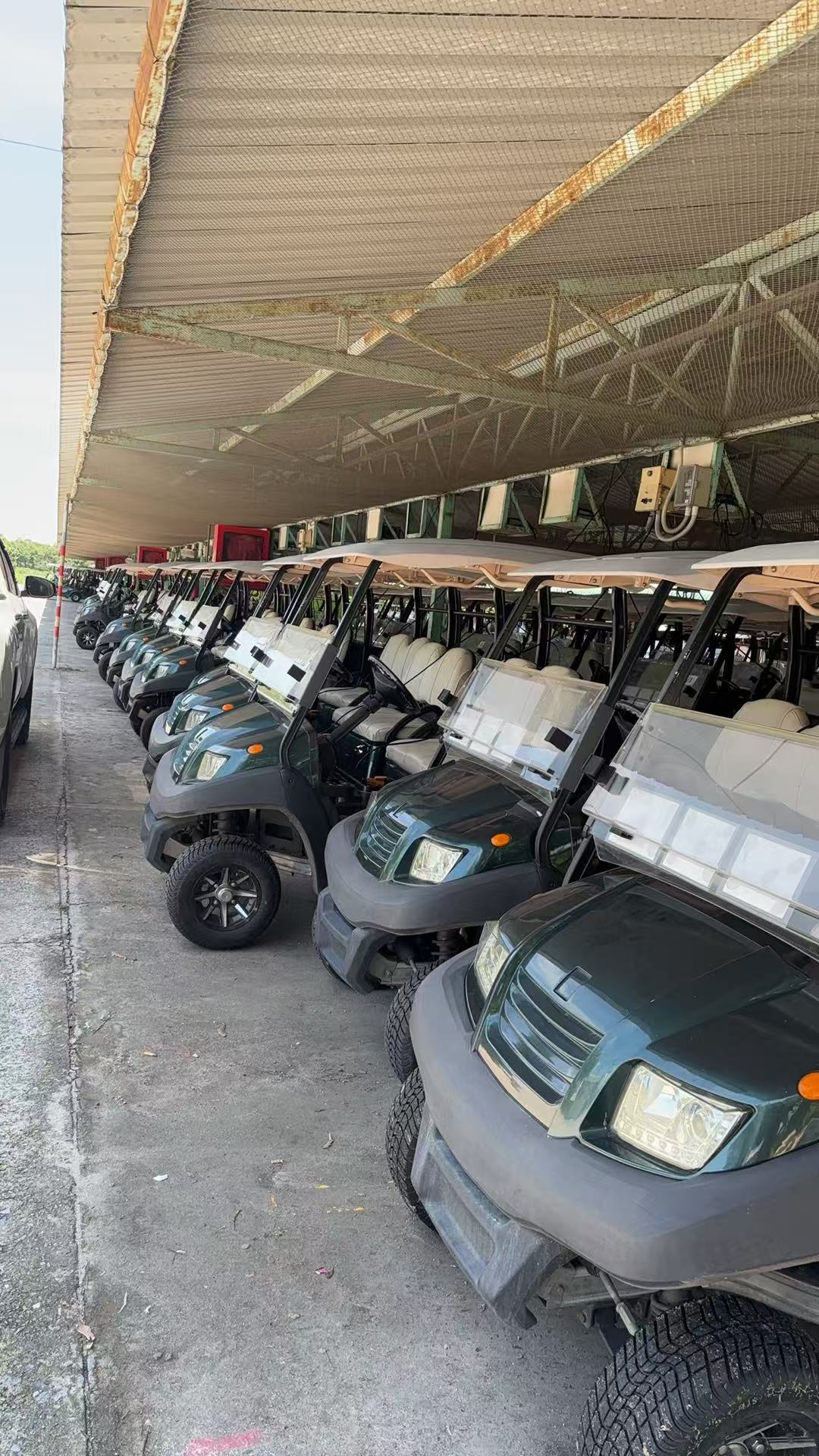
Why Golf Cart Battery Projects Need a Structured Approach
Replacing a golf cart battery is rarely a single-product purchase. When a golf course upgrades its fleet, when a dealer prepares customized carts for sale, or when a refurbishment shop restores used vehicles, the battery becomes part of a larger system.
In project-type purchases, the battery must work with existing cart electronics, chargers, wiring, and monitoring accessories. It must also meet the operating pattern of the site—how many hours per day the carts run, how hilly the terrain is, how hot or humid the climate is, and how many charge cycles the fleet accumulates per year.
The U.S. electric golf cart market was estimated at USD 529.4 million in 2024, while the global golf cart battery market reached approximately USD 1.49 billion in the same year. Lithium-ion batteries already account for close to half of the global golf cart battery market by revenue. These figures point to a market that is no longer asking whether to switch to lithium, but how to choose the right configuration for a specific project.
Project Types Where Golf Cart Batteries Are Evaluated
Golf cart battery projects typically fall into four categories:
- Golf courses and golf venue equipment renovation—fleet-wide upgrades or replacement of aging lead-acid packs.
- Golf cart dealers and resellers—new carts, upgraded inventory, and aftermarket installations.
- Golf cart refurbishment and customization—rebuilding used carts with new power systems.
- Fleet operators in resort, residential, or utility settings—continuous daily use with predictable duty cycles.
Each project type has different priorities. A golf course may prioritize long cycle life and low maintenance. A dealer may want compatibility across multiple cart brands. A refurbishment shop may need a battery that integrates easily with displays, chargers, and wiring harnesses.
Defining the Operating Conditions Before Choosing a Battery
Before comparing 48V and 72V options, a buyer should define the operating envelope of the project.
For lithium golf cart batteries used in typical U.S. projects, the charging temperature range is 0°C to 55°C, and the discharging temperature range is −20°C to 55°C. These limits matter for outdoor storage, winter operation, and high-summer heat. A battery that performs well in moderate climates may need additional thermal management in extreme conditions.
The battery also operates in deep-cycle mode with a BMS protection system. In practical terms, this means the battery is designed to be discharged and recharged regularly, often daily, without the memory effects or capacity loss seen in older chemistries. For high-frequency fleets, deep-cycle capability is a core requirement, not an optional feature.
Another project-level requirement is the full accessory set. A complete installation typically includes a display, charger, battery cable, wiring harness, and user manual. Buyers who assume a battery alone is sufficient may face delays or compatibility issues during installation.
Matching Voltage and Capacity to the Cart and Duty Cycle
The two most common voltage architectures in golf cart projects are 48V and 72V. The right choice depends on the cart model, motor controller, and performance expectations.
48V Golf Cart Batteries
The 48V 100Ah LiFePO4 golf cart battery is a common drop-in replacement for standard 48V systems. It provides power for golf carts, RVs, marine vessels, and utility vehicles. With a 200A smart BMS and a peak power of 10.24 kW, it is suited for standard acceleration and climbing needs.
Key specifications for a 48V system:
| Parameter | Typical Value |
|---|---|
| Nominal Voltage | 48V |
| Nominal Capacity | 100Ah |
| Energy | 4800Wh |
| Built-in BMS | Smart 200A |
| Max Continuous Discharge | 200A |
| Weight | 77 lbs |
| Warranty | 5-Year |
The 51.2V 100Ah version follows the same voltage family but uses a nominal voltage of 51.2V with a 58.4V charge voltage. It is designed for 48V systems and includes a 200A BMS with protection against over/under voltage, over/under temperature, over-current, short circuit, and cell imbalance. Its operating temperature range is 0°C to 45°C for charging and −20°C to 55°C for discharging.
72V Golf Cart Batteries
For high-performance carts, lifted vehicles, or heavier loads, a 72V system offers higher energy and power. The 72V 105Ah LiFePO4 battery provides 7728Wh of energy and supports a maximum continuous discharge of 200A, with a peak discharge of 400A for 10 seconds. This makes it suitable for demanding acceleration, steep terrain, and longer daily routes.
Built with 23 EV-grade A LiFePO4 cells in a 23S1P configuration, it uses a prismatic aluminum shell design. The battery supports up to 14.72 kW of load power and includes a smart 200A BMS with protections for over-charging, over-discharging, short-circuit, over-temperature, and over-current, plus cell balancing.
For fleet managers, one meaningful difference is range. A single charge can support up to 50 miles depending on cart weight, terrain, and driving behavior. Charging from 0% to 100% takes approximately 5–6 hours with the included 18A charger.
What the Cycle Life Difference Means for Project Cost
Cycle life is one of the most decision-relevant specifications for a golf cart battery project.
Traditional flooded lead-acid batteries typically deliver roughly 300 to 500 cycles at 50% depth of discharge. In a daily-use fleet, that can mean replacement every one to two seasons. LiFePO4 batteries, by comparison, generally offer 2,500 to 9,000 cycles at 80% depth of discharge across the industry, with many premium packs rated for 4,000+ cycles.
The 48V 100Ah and 51.2V 100Ah models from Sisway are rated for over 4,000 cycles. The 72V 105Ah model is rated for 4,000+ cycles at 100% DoD and 6,000+ cycles at 80% DoD. For a course that cycles its fleet daily, this translates into years of service without battery replacement, reduced labor costs, and fewer interruptions.
However, buyers should be cautious: cycle life is affected by temperature, discharge depth, charger quality, and load patterns. A battery pushed to extreme discharge every day in a hot climate will not reach its theoretical maximum. Project planning should include realistic duty-cycle assumptions.
Case Example: 20,000-Unit Fleet Installation in a Tropical Climate
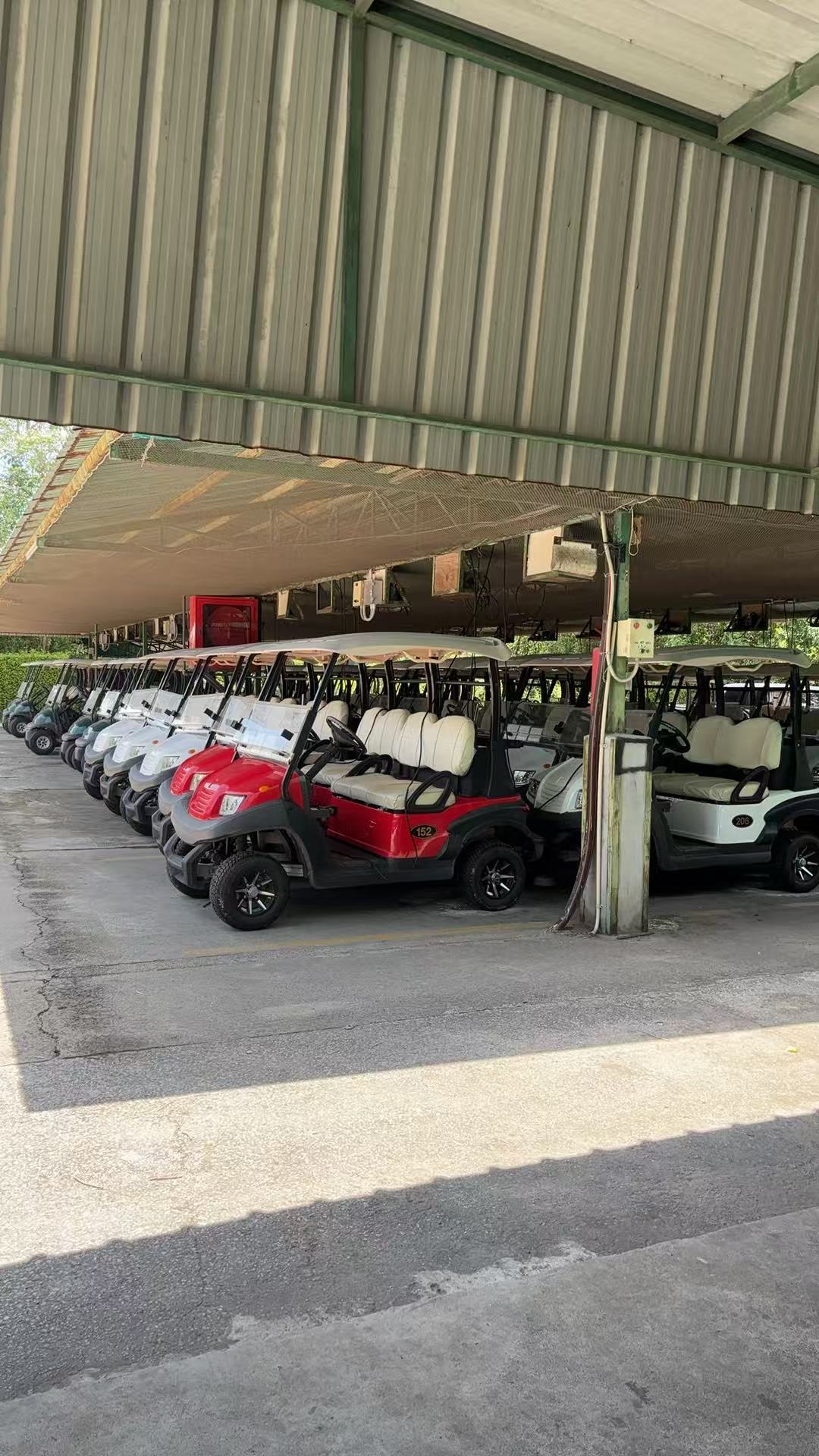
A large-scale example of project-level battery deployment comes from Thailand, where 20,000 units of the 48V 100Ah LiFePO4 golf cart battery were installed for use in golf carts. The project has a 5-year duration and was designed for high-temperature and high-humidity conditions.
In this environment, replacing lead-acid batteries with lithium reduced maintenance requirements and improved charging efficiency while lowering long-term operating costs. The battery solution was also expected to provide stable power output and reliable performance under continuous, high-frequency vehicle operation.
For buyers evaluating similar projects, this case illustrates three principles:
- Climate is a design input, not an afterthought.
- Maintenance savings can be as important as energy savings in high-utilization fleets.
- Long-duration projects need a supplier that can deliver consistent quality across large volumes.
Lithium vs. Lead-Acid: What the Comparison Means for a Project
A project-level comparison between lithium and lead-acid goes beyond upfront price.
| Factor | Lead-Acid | LiFePO4 Lithium |
|---|---|---|
| Cycle Life | ~300–500 cycles at 50% DoD | 4,000+ cycles at 100% DoD (typical premium) |
| Weight | Heavier | ~77 lbs for 48V 100Ah |
| Maintenance | Periodic watering, cleaning, equalization | Minimal |
| Depth of Discharge | Lower usable capacity | Up to 100% |
| Lifetime Cost Trend | Lower upfront, higher over time | Higher upfront, potentially lower over time |
One boundary is worth stating directly: a lithium battery is not automatically the lowest-cost choice in every project. For a low-usage cart that operates a few hours per month and is already served by a healthy lead-acid pack, the payback period for a lithium upgrade may be long. The strongest business case appears in high-utilization fleets, where cycle life, maintenance savings, and reduced downtime compound quickly.
Evaluating a Battery Supplier for Project-Scale Purchase
For project-scale purchases—whether a course upgrading 50 carts or a dealer equipping 200 new units—supplier capability matters as much as battery specifications.
One reference point is Shenzhen Sisway New Energy Co., Ltd., a lithium battery manufacturer established in 2017 that specializes in lithium iron phosphate battery packs. The company operates a 20,000 m² factory, employs approximately 150 people, and has an R&D team of 25 engineers. Its annual output is around 90,000 units, with about 50% exported, mainly to the U.S. market. Sisway holds ISO9001 certification and reports more than 100 global certifications, including CE, UL, UN38.3, and MSDS, as well as multiple patents.
For OEM and customization projects, Sisway offers production in OEM mode with customization of logo, design, size, and specifications. Monthly capacity is approximately 5,000 units, with a lead time of 15–30 days and a minimum order quantity of one unit. Every battery receives 100% testing before shipment. For after-sales support, the company maintains a U.S. after-sales service team and a U.S. overseas warehouse.
These details matter because a battery project does not end at delivery. Installation support, warranty response, and spare parts availability are part of the total cost of ownership.
Market Context: Where Golf Cart Battery Demand Is Heading
Several market signals support the shift toward lithium in golf cart projects.
- The global golf cart battery market is projected to reach USD 2.21 billion by 2030, with a CAGR of 6.8%.
- North America accounted for 44.7% of the electric golf cart market in 2024.
- Lithium-ion batteries held approximately 47% of the global golf cart battery market share by revenue in 2024.
- Battery electric vehicles represented 72.5% of the U.S. electric golf cart market in 2024.
- The 4-seater golf cart segment is the fastest-growing, with an annual growth rate of 6.8%.
In parallel, regulatory and logistics requirements for lithium batteries are tightening. UN 38.3 certification is required for the safe global transport of lithium batteries. UL 2580 covers battery safety for electric vehicles, and IEC 62619:2022 specifies safety requirements for secondary lithium cells and batteries in industrial and motive applications, including golf carts. China has also introduced export licensing rules for high-energy-density lithium batteries (≥300Wh/kg). Buyers should confirm that their supplier can provide current documentation for the destination market.
Practical Selection Checklist for Golf Cart Battery Projects
To help project owners move from specification comparison to a defensible decision, the following checklist consolidates the evaluation criteria discussed above.
- Verify the cart’s voltage system. Confirm whether the cart uses a 36V, 48V, or 72V architecture and check the controller’s voltage range. A 51.2V battery is designed for 48V systems; a 73.6V battery is designed for 72V systems.
- Measure the battery compartment. The 48V 100Ah model, for example, has dimensions of 20.55"L × 10.55"W × 8.74"H. The 72V 105Ah model measures 21.97"L × 13.11"W × 11.81"H. Size mismatch is one of the most common installation failures.
- Confirm the continuous discharge current. The cart’s motor controller may draw high current during acceleration or hill climbing. A 200A continuous BMS is common for 48V and 72V systems; peak requirements vary by model.
- Check the charger. A matched charger protects the battery and preserves cycle life. Projects should include a charger with the correct voltage and charge profile (e.g., 58.4V for 51.2V batteries).
- Define the temperature envelope. If carts are stored outdoors in winter, low-temperature charge protection is important. The 51.2V model cuts off charging at 0°C ± 4°C.
- Review the BMS protection set. Look for over-charge, over-discharge, over-temperature, over-current, short-circuit, and cell-balancing protections.
- Confirm installation components. The project should include display, charger, battery cable, wiring harness, and user manual as needed.
- Assess warranty and after-sales infrastructure. A U.S. warehouse and responsive service team reduce fleet downtime risks.
Limitations and Boundaries to Keep in Mind
No battery is the right answer for every project. The main limitations of lithium golf cart batteries include:
- Higher initial investment. Upfront procurement costs are higher than lead-acid, and the payback period depends on usage intensity.
- Cold-weather behavior. Charging below freezing is restricted by the BMS unless the battery has low-temperature charge protection. Discharge performance also declines at very low temperatures.
- Fitment variability. Cart battery compartments vary by brand and year. Drop-in compatibility must be verified against actual dimensions, terminal orientation, and cable routing.
- Charger dependency. Using an incorrect charger can trigger BMS protection or reduce service life. Projects should include a matched charger or confirm compatibility.
- Regulatory documentation. International projects require UN38.3, MSDS, and destination-country certifications. Delays can occur if documentation is incomplete.
Future Outlook for Golf Cart Battery Projects
As lithium penetration grows in the golf cart market, project owners will likely see several trends:
- More OEM collaboration. Dealers and refurbishment shops will increasingly order custom batteries with brand logos, specific dimensions, and application-tuned BMS parameters.
- Greater emphasis on monitoring. Battery displays and smartphone apps that show state of charge, voltage, current, and cycle count will become standard in fleet management.
- Regional service infrastructure. Suppliers with U.S. warehouses and local service teams will gain preference in large replacement projects.
- Stricter compliance. Export controls and safety standards will raise the bar for documentation, favoring manufacturers with established certification portfolios.
For project buyers, the practical takeaway is straightforward: start with the operating profile, then choose the voltage and capacity, then evaluate the supplier’s manufacturing and after-sales capability. That sequence reduces the risk of selecting a battery that looks good on paper but fails in the field.
Shenzhen Sisway New Energy Co., Ltd. manufactures LiFePO4 golf cart batteries in 48V, 51.2V, and 72V configurations, with OEM support and U.S.-based service. The company was established in 2017 and exports primarily to the United States.
Editors’ note: See the downloadable company brochure for additional battery specifications: Sisway Battery Company Profile (PDF)
Frequently Asked Questions
What battery specifications are most important for a golf cart replacement project?
The most important specifications are nominal voltage, capacity (Ah), continuous discharge current, BMS protections, physical dimensions, and operating temperature range. For a 48V cart, a 48V 100Ah LiFePO4 battery with a 200A BMS is a common configuration. For high-performance carts, a 72V 105Ah battery with 7728Wh of energy supports higher load power. Buyers must verify that the battery compartment dimensions match the chosen model.
Can a lithium golf cart battery be used in both golf courses and dealer refurbishment projects?
Yes. Lithium golf cart batteries are used in golf courses, golf cart dealers and resellers, and golf cart refurbishment and customization projects. Their deep-cycle mode, BMS protection, and over 4,000-cycle service life make them suitable for high-frequency daily use as well as for carts being customized for resale. The product supports power supply for golf carts, and the same battery family covers 48V, 51.2V, and 72V systems.
What operating temperature range is required for lithium golf cart battery installation?
For the Sisway 48V 100Ah and 72V 105Ah models, the charging temperature range is 0°C to 55°C and the discharging temperature range is −20°C to 55°C. The 51.2V 100Ah model specifies a charging range of 0°C to 45°C and a discharging range of −20°C to 55°C. If carts operate outside these ranges, additional thermal management or low-temperature protection is recommended.
How many cycles can a LiFePO4 golf cart battery deliver in a five-year project?
The 48V 100Ah and 51.2V 100Ah LiFePO4 golf cart batteries are rated for over 4,000 cycles. The 72V 105Ah battery is rated for more than 4,000 cycles at 100% depth of discharge and over 6,000 cycles at 80% depth of discharge. In a five-year project with daily fleet use, this cycle life can eliminate multiple lead-acid replacements and reduce total operating cost.
What does a complete lithium golf cart battery installation include?
A complete installation is typically used with a display, charger, battery cable, wiring harness, and user manual. The battery operates in deep-cycle mode with a BMS protection system. Buyers should account for these components in project budgeting and verify compatibility with the cart's existing electrical system.
Are there certification requirements for shipping lithium golf cart batteries internationally?
Yes. UN 38.3 certification is required for the safe global transport of lithium batteries, and MSDS documentation is needed for shipping. For electric vehicle batteries, UL 2580 standards apply in North America, and IEC 62619:2022 specifies safety requirements for industrial and motive lithium batteries. Buyers should confirm that the supplier provides current certification documentation for the destination market.
Can batteries be customized for OEM golf cart projects?
OEM customization is available for logo, design, size, and specifications. Monthly production capacity is approximately 5,000 units, with a lead time of 15–30 days and a minimum order quantity of 1 unit. Each battery undergoes 100% testing. Export markets include the United States, and after-sales service is supported by a U.S. team and warehouse.
What is the market outlook for golf cart batteries in 2026 and beyond?
The global golf cart battery market was approximately USD 1.49 billion in 2024 and is projected to reach USD 2.21 billion by 2030, a CAGR of 6.8%. Lithium-ion batteries accounted for about 47% of the global market by revenue in 2024. For project buyers, this means an expanding range of lithium options, more OEM services, and continued emphasis on certifications and after-sales support.
Editorial note: This article was prepared as an independent industry reference. Product and company facts are based on information provided by Shenzhen Sisway New Energy Co., Ltd. Market data sources are cited in the text.