
Matching Hybrid Stepper Motors to Demanding Industrial Scenarios
Hybrid stepper motors carry a large share of modern industrial motion design. Hybrid designs accounted for approximately 53.93% of total stepper motor market value in 2025, according to KBV Research — more than any other stepper technology. That dominance creates a practical problem at the decision stage: most candidate motors on a shortlist look interchangeable. Frame sizes, step angles, holding-torque figures and shaft options repeat across suppliers, and a specification sheet rarely explains why one motor holds position for years in a syringe pump while another quietly loses steps on a CNC axis.
A hybrid stepper motor is a digital electromagnetic actuator that converts discrete pulse commands into angular motion. Its real behaviour is determined by how rotor inertia, magnetic circuit design, driver current profile and mechanical transmission interact with a specific load. Two motors in the same frame can perform very differently once they are matched — or mismatched — to a real axis.
This article treats hybrid stepper motor selection as an application-driven decision: define the scenario, derive the motion requirement, then choose the architecture and the evidence that satisfy it.
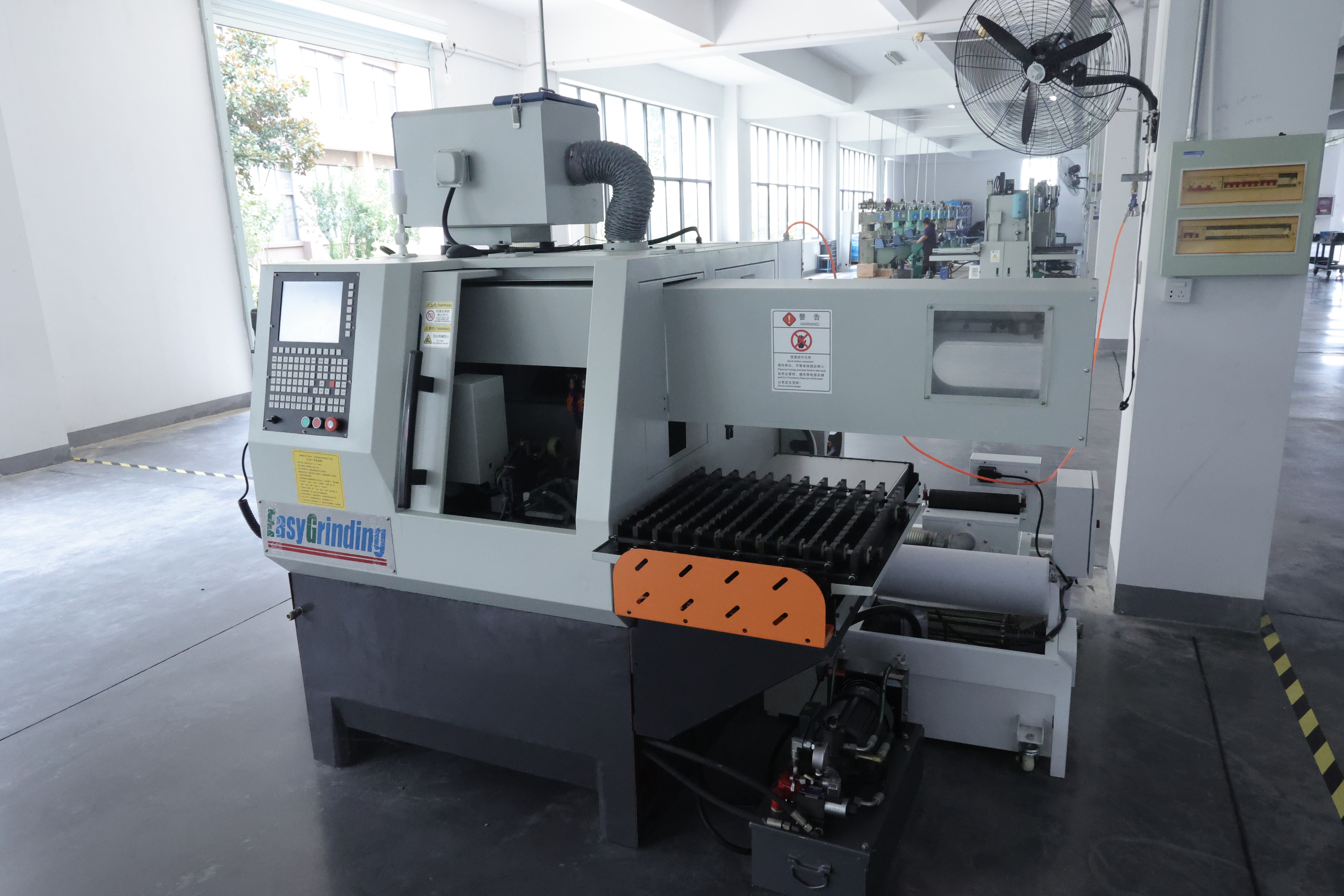
Precision stator machining is one of the process steps that determines how consistently a hybrid stepper motor behaves inside a demanding axis. Image: ACT MOTOR production floor.
Why Scenario Fit Outranks Catalogue Specifications
At the decision stage, buyers are usually past the abstract comparison of stepper versus servo or open-loop versus closed-loop. They are choosing between concrete configurations: a compact NEMA8 frame for a benchtop instrument, a lead screw stepper motor for a linear dosing axis, a geared or gearbox stepper motor for a slow, high-torque winding application, a brake stepper motor for a vertical axis, or a closed-loop stepper motor with encoder feedback for a robot joint.
The recurring failure pattern is that selection stops at holding torque. Holding torque describes how much torque a motor can resist while energised and stationary. It says little about whether the motor can accelerate a given load without losing synchronisation, whether it will stay within a safe temperature rise during continuous operation, or whether a missed step will be detected at all.
Scenario fit therefore depends on four variables that a specification table rarely captures directly. Each of them is a decision rule, not a marketing claim.
The Four Variables That Decide Whether a Hybrid Stepper Motor Fits
1. Torque-to-inertia ratio
A hybrid stepper motor must accelerate its own rotor plus the reflected inertia of the load. When the load inertia far exceeds the rotor inertia, the motor can pull out of synchronisation during acceleration or deceleration even though it would hold the same load perfectly at standstill. When the motor inertia dominates, the axis becomes unnecessarily sluggish and wastes torque on itself. Matching inertia is the reason two motors with identical holding torque can succeed or fail in the same machine.
2. Microstepping and resolution requirement
Microstepping drivers subdivide the motor's full-step angle into smaller commanded increments. This improves smoothness, reduces low-speed resonance effects and allows finer positioning granularity — which is why microstepping is common in lab automation, optical positioning and medical dosing axes. The trade-off is that microstepping does not increase available torque, and torque per commanded microstep falls as the subdivision becomes finer. Microstepping improves motion quality and resolution; it does not correct mechanical error in a lead screw, gearbox or coupling.
3. Duty cycle and thermal margin
A stepper motor draws current — and generates heat — even when it is holding position. In a laboratory instrument that runs intermittently, that is manageable. In a packaging line that runs 7×24, thermal behaviour becomes a design constraint rather than a detail, and it directly affects insulation life, lubricant behaviour and long-term positioning stability.
4. Feedback tolerance and consequence of a lost step
A conventional open-loop hybrid stepper motor has no way of knowing that it has lost position. Whether that matters is an application question. If a lost step produces a visible surface defect, the machine can be re-run. If it produces an incorrect drug dose, a scrapped optical component or a blocked sorter, feedback or closed-loop control becomes part of the specification rather than an optional upgrade.
| Selection variable | What it governs | Where it decides the outcome | Typical mitigation |
|---|---|---|---|
| Torque-to-inertia ratio | Synchronisation during acceleration and deceleration | CNC axes, robotics, indexing tables | Re-size the frame, change transmission ratio, reduce acceleration |
| Microstepping strategy | Smoothness, resonance behaviour, positioning granularity | Lab automation, syringe pumps, optics | Match driver subdivision to the required resolution |
| Duty cycle and thermal margin | Temperature rise, insulation life, continuous stability | 7×24 packaging, textile, logistics sorting | Lower holding current, integrated drives, load-adaptive control |
| Feedback and failure tolerance | Detection and correction of lost steps | Medical devices, high-value machining, sorting | Encoder or closed-loop configuration |
Scenario Fit Analysis: Lab Automation, Medical Devices, CNC and Logistics
Lab automation and syringe pump drives
Laboratory liquid handling prioritises repeatability, low noise and low vibration in a small footprint. Compact frames and lead screw stepper motors that convert rotation directly into linear travel are a common fit, because the linear mechanics can be matched to the required resolution without a separate transmission stage. Microstepping is used to smooth low-speed motion, and acoustic behaviour matters because instruments often operate on a bench beside the operator.
Medical equipment is currently the fastest-growing application segment for stepper motors, with a projected CAGR of 7.5% through 2032, driven by demand in syringe pumps and imaging systems, according to CoherentMI. That growth makes medical-grade fit analysis — vibration, thermal stability, documentation — a mainstream procurement question rather than a niche one.
Medical devices and diagnostic equipment
Medical equipment hybrid stepper motors are specified under two constraints that other applications do not share: documentation and risk consequence. A dosing error is not a rejected part; it is a patient safety event. Vibration behaviour at low speed, thermal stability during long procedures and material compliance all belong in the specification, not in the after-sales conversation.
CNC machinery and machining axes
CNC equipment places the emphasis on torque density, rigidity and sustained duty. Ball screw stepper motors are often selected where the axis needs higher mechanical efficiency and thrust than a lead screw arrangement provides, while closed-loop configurations are used where a lost step would scrap a workpiece. Dust, coolant mist and swarf make environmental protection and corrosion treatment part of the reliability calculation.
Automated packaging and logistics sorting
High-torque stepper motors for automated packaging lines and logistics sorter pushing mechanisms are typically specified for high cycle rates and continuous operation. Here the design drivers are torque margin at speed, thermal behaviour under sustained current, and the ability to hold a position under external load — which is also where brake stepper motors and integrated stepper motors with on-board drives simplify machine wiring and cabinet space.
| Scenario | Dominant motion requirement | Commonly matched architecture | Verification point before order |
|---|---|---|---|
| Lab automation / liquid handling | Fine resolution, low noise and vibration, compact size | NEMA8 or compact hybrid with lead screw, microstepping driver | Low-speed vibration and repeatability over a long run |
| Medical devices / syringe pumps | Dosing accuracy, thermal stability, documented compliance | Hybrid with lead screw or precision gearbox, encoder where dosing is critical | Certification file plus endurance and temperature-rise evidence |
| CNC machinery | Torque density, rigidity, sustained duty | Ball screw hybrid or closed-loop hybrid | Acceleration margin and axial thrust under real load |
| Textile machinery | Continuous high-torque operation in dusty, humid environments | Geared or gearbox stepper motor | Backlash, protection treatment and thermal behaviour |
| Packaging lines / logistics sorters | High cycle rate, holding under load, 7×24 duty | High-torque hybrid, brake variant, integrated motor | Duty-cycle thermal test and holding capability |
| Industrial robotics | Position certainty, repeatable return to reference | Closed-loop stepper motor | Feedback behaviour under transient overload |
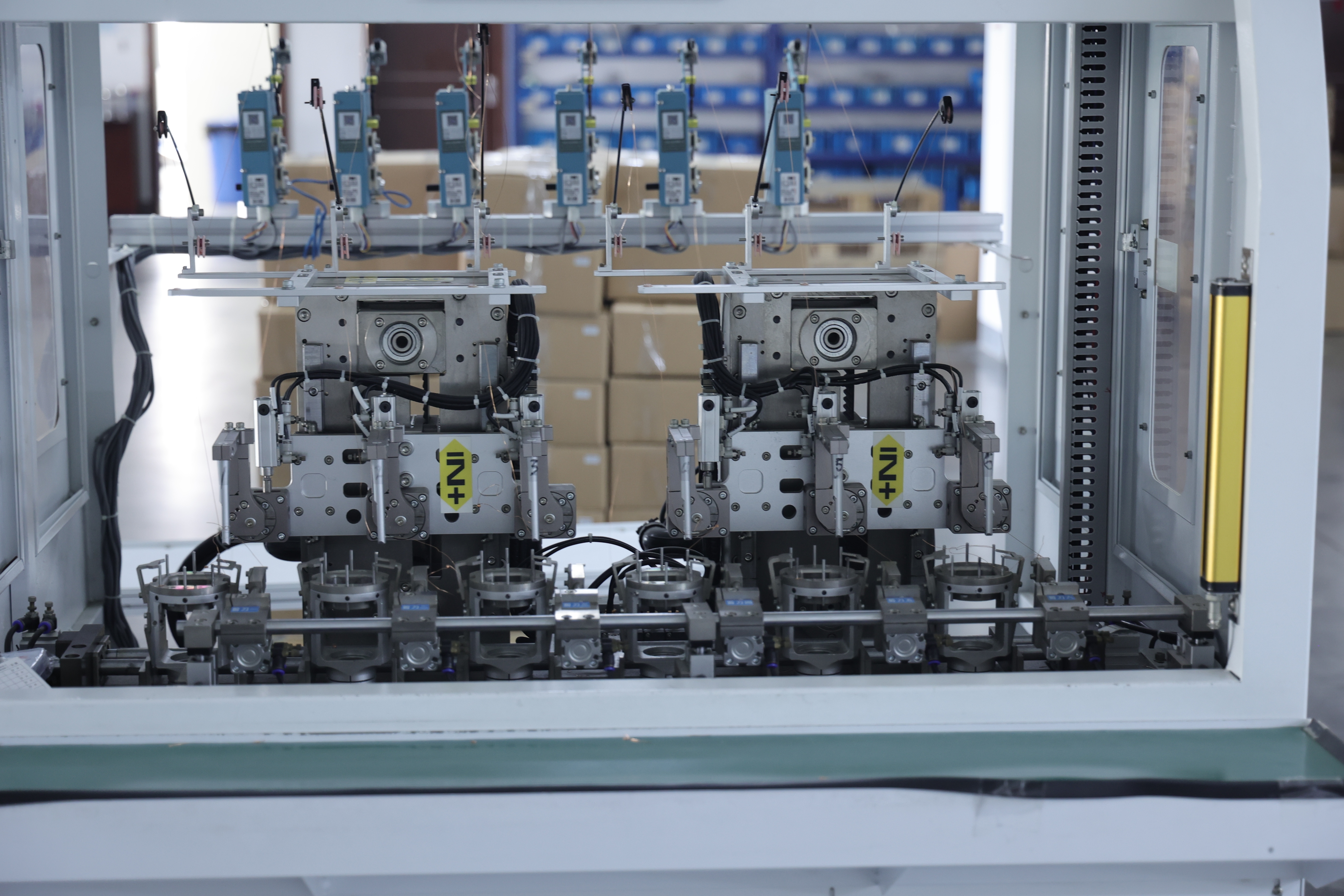
Winding consistency directly affects torque repeatability between production batches — a variable that shows up only after the motor is installed in a demanding axis. Image: ACT MOTOR production floor.
Mapping Motor Architecture to the Motion Task
Once the scenario is defined, the architecture usually selects itself. The following variants are the ones most often compared at the decision stage:
- Lead screw stepper motors — rotation is converted directly into linear travel, which suits compact dosing, positioning and Z-axis duties where moderate thrust and fine resolution matter more than raw speed.
- Ball screw stepper motors — higher mechanical efficiency and thrust for linear axes that carry heavier loads or run at higher duty.
- Geared stepper motors and gearbox stepper motors — torque multiplication at low output speed, which is why they appear in textile machinery, winding and packaging. Gearboxes add reflected inertia and backlash, so the transmission is part of the accuracy budget.
- Brake stepper motors — hold position when power is removed, which matters for vertical axes and for load-holding positions in sorters and packaging equipment.
- Stepper motor with encoder and closed-loop stepper motors — provide position verification and correction, converting a silent failure mode into a detectable one.
- Integrated stepper motors — motor and driver in a single housing, reducing cabling and cabinet space in distributed machine architectures.
- NEMA8 and 8HS hybrid stepper motors — small-frame options for instruments, optics and handheld or benchtop equipment where space is the binding constraint.
- Stepper motor drivers — the current profile, supply voltage and microstepping behaviour set by the driver often determine achievable performance more than the motor frame does.
- Intelligent load-adaptive hybrid stepper motors — adjust current in relation to load, which reduces unnecessary heat and noise in applications that spend much of their time holding rather than moving.
How ACT MOTOR Supports Application-Driven Selection
Changzhou ACT Motor Co., Ltd. is a high-tech enterprise specialising in electronic control products for the automation industry. Founded in 2010, the company operates more than 70,000 m² of self-contained production facilities that integrate research and development, manufacturing and warehousing, with an annual output of 2 million sets. Its product range covers hybrid stepper motors, stepper motor drivers, brushless motors, servo motors, precision modules and high-performance drivers, and its products are used in CNC equipment, medical devices, textile machinery, robotics and electronics manufacturing.
For buyers running scenario-based selection, the relevant capability points are not catalogue breadth but the ability to hold a specification constant across a multi-year programme. ACT MOTOR exports approximately 70% of its output, with main markets in the USA, the EU and China. A branch in Bremen, Germany supports the European market directly, while offices in Shanghai and Jinan serve key domestic regions, forming a sales and technical service structure intended to keep engineering support close to the customer.
On compliance, the company holds ISO9001 Quality Management System certification and states that its products comply with international standards including CE and RoHS — the documentation set that European industrial buyers now require as a matter of routine rather than exception.
What the Comparative Data Shows Against Conventional Solutions
The comparison that matters most at the decision stage is not brand against brand — it is application-matched design against generic design. ACT MOTOR's published comparison data positions its hybrid stepper motors against standard stepper motors and against competing hybrid stepper motors on several measurable points.
| Comparison baseline | Reported difference | Where the difference matters most |
|---|---|---|
| Standard stepper motors | Torque increased by 10%–15% at the same volume; temperature rise reduced by approximately 25% in continuous operation; low-speed vibration lowered by about 40%–50%; price positioned 15%–25% lower; maintenance cycle extended by 1.5 to 2 times | 7×24 industrial automation equipment; medical and precision equipment where vibration matters |
| Standard stepper motors (noise-focused comparison) | Lower noise, recorded at −20 dB; cost positioned 13.8% lower; higher efficiency and less maintenance | High-speed FDM 3D printing and similar noise-sensitive equipment |
| Competitors' hybrid stepper motors | Greater torque, recorded at +0.5 N·m; cost positioned 10% lower; less maintenance and higher efficiency | 24×7 automated production lines |
| Other brands' hybrid stepper motors | Precise drives and control; cost positioned 10% lower; more stable behaviour and less maintenance | High-precision medical automation equipment |
Energy behaviour is the second half of the same comparison. ACT MOTOR reports a rated operating efficiency 10–15 percentage points higher than standard stepper motors, a comprehensive energy efficiency increase of 25%–35% at the same volume and torque, a static holding power consumption reduction of up to 50% with a half-current energy-saving function, and a temperature rise about 25% lower during continuous 7×24 operation. Dynamic energy efficiency at medium and high speed is reported 15%–20% higher, with stable torque output maintained without derating between 500 and 1500 rpm.
Boundaries and Trade-offs Worth Checking Before the Order
A selection guide that only lists advantages is not a selection guide. Hybrid stepper motors have real boundaries, and the decision stage is the right moment to confront them.
- Torque falls as speed rises. A hybrid stepper motor that holds a heavy load at standstill may have very little margin at high shaft speed. Applications that need sustained torque at high rotational speed should be evaluated against servo alternatives rather than forced into a stepper specification.
- Microstepping is not accuracy. Finer subdivision improves smoothness and commanded resolution, but torque per microstep decreases and mechanical error in the screw, gearbox or coupling remains in the positioning budget.
- Gearboxes introduce backlash and reflected inertia. A gearbox stepper motor multiplies torque, but the transmission also adds a failure and accuracy variable that a direct-drive configuration does not have.
- Brakes add length, mass and heat. A brake stepper motor solves static holding, but it is not a substitute for controlled deceleration and it changes the mechanical envelope of the axis.
- Open-loop configurations can fail silently. Step loss is invisible without feedback, so applications with high consequence of error should budget for an encoder or closed-loop configuration from the start.
- Cost positioning depends on total cost. Price comparisons favouring one supplier are meaningful only when scrap rate, maintenance interval and energy consumption are included in the same calculation.
Market Trends Shaping Scenario-Based Selection
The global stepper motor market was valued at USD 3.962 billion in 2024 and is projected to reach USD 6.245 billion by 2035, growing at a CAGR of 4.22%, according to Market Research Future. Within that total, the high torque stepper motor segment was valued at USD 1.15 billion in 2024 with hybrid designs holding the dominant share, per Precedence Research.
Regionally, Asia Pacific dominated the market in 2025 with a 48.91% share, driven by a USD 36.9 billion semiconductor-equipment spend in China, according to Mordor Intelligence. On the application side, medical equipment is the fastest-growing segment at a projected 7.5% CAGR through 2032. Both trends push in the same direction: selection is becoming more scenario-specific, because semiconductor and medical equipment place a premium on repeatability rather than raw torque.
Published market sizing should be read with caution. Estimates for the same year differ materially by scope — component-level and system-level definitions are frequently mixed, and one published 2025 figure is several times larger than another. Buyers using market data for budgeting should confirm whether a figure describes motors alone or complete motion systems.
Compliance has also become a supply-chain variable. Industrial hybrid stepper motors intended for the EU must satisfy Directives 2014/35/EU (LVD) and 2014/30/EU (EMC) for CE marking and 2011/65/EU for RoHS compliance. One trade body reported that over 35% of cross-border motor shipments in the first quarter of 2026 faced customs delays caused by certification documentation issues — a reminder that documentation quality is now part of delivery performance, not an administrative afterthought.
Quality and Risk Controls Behind Scenario Reliability
Scenario fit is only as good as the consistency of the motors delivered against it. The dominant failure categories for hybrid stepper motors in industrial use are mechanical structure and component damage, electrical safety and insulation failure, thermal failure and insulation aging, and environmental degradation from humidity, dust, corrosion or improper maintenance.
| Risk category | Typical control method | Verification evidence to request |
|---|---|---|
| Mechanical structure and component damage | Incoming Quality Control (IQC), In-process Quality Control (IPQC), Finished Product Quality Control (FQC/OQC), equipment and tooling control | Full inspection of raw materials, batch traceability for key components, 100% inspection for torque, resistance and inductance |
| Electrical safety and insulation failure | Design risk control, electrical safety control, personnel and system control | Design review and validation records; hi-pot, insulation and grounding tests; overcurrent, overload, overvoltage and stall protection |
| Thermal failure and insulation aging | Environmental and reliability control, simulation and life testing of key parameters | Temperature-rise, load and durability test data; noise and vibration test data |
| Humidity, dust and corrosion | Anti-rust, anti-corrosion and dust-proof treatment; ISO9001 QMS implementation; continuous improvement and CAPA | Process documentation and corrective-action records tied to the specific treatment applied |
For a buyer in the decision stage, these controls translate into a short, practical request list: which tests are performed on every unit versus on samples, which parameters are 100% inspected, how batch traceability is maintained, and what documentary evidence accompanies the shipment.
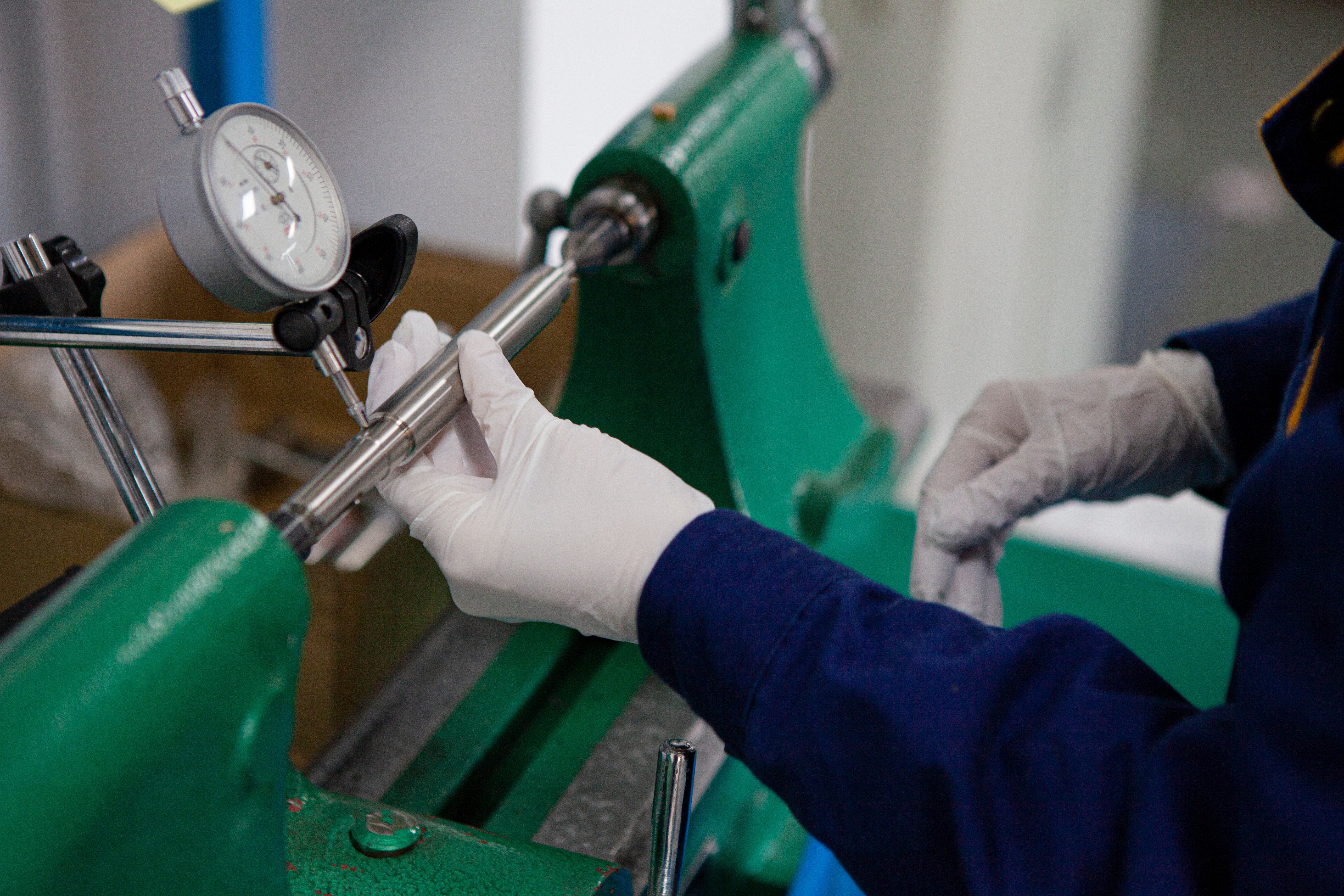
Incoming inspection is where torque, resistance and inductance parameters enter the traceability chain for hybrid stepper motor production. Image: ACT MOTOR quality control.
Future Outlook
Three shifts are likely to shape hybrid stepper motor selection over the next several years. The first is integration: motor, driver and control electronics in a single housing reduce cabling and cabinet space, and they make distributed machine architectures easier to build. The second is adaptive behaviour: load-adaptive current control allows a motor to reduce heat and noise during holding phases, which directly attacks the thermal constraint that limits stepper motors in continuous-duty equipment. The third is feedback: encoder and closed-loop configurations are becoming a standard consideration rather than a premium option in applications where the cost of a lost step is high.
On the procurement side, the direction of travel is documentation-led. Certification evidence, batch traceability data and duty-cycle test reports are increasingly part of the technical evaluation, because they are the only way to verify that a motor will behave the same way in year three as it did in the first sample build.
Frequently Asked Questions
What is the first variable to check when matching a hybrid stepper motor to an industrial application?
Start with the torque-to-inertia relationship rather than holding torque. Holding torque describes stationary load resistance, while acceleration and deceleration depend on how the motor's rotor inertia compares with the reflected inertia of the load and transmission. A motor can hold a load it cannot accelerate without losing synchronisation.
How do I decide between a lead screw stepper motor, a geared stepper motor and a direct-drive hybrid stepper motor?
The transmission is selected from the motion requirement. A lead screw stepper motor converts rotation into linear travel and suits compact positioning and dosing axes. A geared or gearbox stepper motor multiplies torque at low output speed, which fits winding, textile and packaging duties, at the cost of added backlash and reflected inertia. A direct-drive hybrid is used where the axis needs speed and simplicity without a transmission stage.
Does microstepping improve positioning accuracy in demanding applications?
Microstepping improves smoothness, reduces low-speed resonance effects and provides finer commanded resolution, which is why it is common in lab automation, optical positioning and medical dosing. It does not increase available torque and it does not remove mechanical error from the screw, gearbox or coupling. Torque per commanded microstep decreases as subdivision becomes finer.
When is a stepper motor with encoder or a closed-loop stepper motor necessary?
Feedback becomes necessary when a lost step cannot be tolerated — for example when it would cause an incorrect dose in a medical device, scrap a high-value workpiece in a CNC process, or jam a logistics sorter. In an open-loop configuration, step loss is undetectable by the controller; encoder or closed-loop configurations make position deviation observable and correctable.
Which certifications matter for hybrid stepper motors shipped into the EU?
Industrial hybrid stepper motors intended for the EU market must satisfy Directives 2014/35/EU (Low Voltage Directive) and 2014/30/EU (Electromagnetic Compatibility) for CE marking, and Directive 2011/65/EU for RoHS compliance. ISO9001 Quality Management System certification addresses manufacturing consistency rather than product conformity, and it is usually requested alongside the CE and RoHS documentation rather than in place of it.
What are the limits of hybrid stepper motors compared with servo systems?
Hybrid stepper motors provide high holding torque and precise, repeatable discrete positioning at low to medium speed, typically without feedback. Their available torque decreases as shaft speed increases, and open-loop versions cannot detect step loss. Applications requiring sustained torque at high rotational speed, very high dynamic bandwidth or continuous torque under varying load are usually better served by servo systems, and that comparison should be made before the motor type is fixed.
Reference: a consolidated overview of ACT MOTOR's hybrid stepper motor range, drivers and manufacturing capability is available in the corporate brochure: ACT MOTOR corporate brochure (PDF).