
Matching Leak Detection Methods to Property Scenarios
Matching Leak Detection Methods to Property Scenarios

Happi Plumbing provides leak detection and plumbing services for residential and commercial properties.
Water leak detection is not a one-size-fits-all service; the appropriate method depends on the property type, pipe configuration, and the nature of the failure. For property owners who are moving from initial research into provider evaluation, the key question is not simply which company is qualified, but which approach fits the specific scenario. This article builds a scenario-based framework for evaluating water leak detection services, using the operational model of Happi Plumbing Corporation as a documented reference for how modern providers structure detection, repair, and follow-up.
The Problem and the Opportunity
Hidden water leaks are a leading source of property damage and wasted water in the United States. According to the U.S. Environmental Protection Agency, household leaks waste nearly 1 trillion gallons of water annually. The consequences extend beyond the utility bill: moisture behind walls and under slabs can rot structural framing, support mold growth, and reduce the market value of a property. In multifamily buildings, unresolved drainage issues can push tenants to break leases; in commercial settings, repeated failures interrupt business continuity.
At the same time, the industry is responding with more precise tools. The global water leak detector market was estimated at USD 1.3 billion in 2024 and is projected to reach USD 2.2 billion by 2034. North America accounted for more than 50% of the leak detection and repair market revenue share in 2023, reflecting the region's high rate of professional service adoption.
The practical opportunity for a property owner is the ability to fix a leak at its source instead of repairing the damage it causes. A documented example from Matthews, North Carolina, illustrates the difference. When a homeowner reported a water bill spike and warm spots under hardwood flooring, some contractors recommended removing large sections of the foundation slab to find the leak. Happi Plumbing instead used electronic sonar sub-surface leak detectors and pressure sensors, located a hot-water line rupture beneath 4 inches of concrete, and completed a wall-bypass repair in two business days. The contrast between foundation demolition and a contained repair is the core of scenario-based evaluation.
A Scenario-Based Reference: Happi Plumbing Corporation
Happi Plumbing Corporation is an A+ rated, BBB-accredited plumbing company that provides residential, commercial, and emergency services across Union County, Mecklenburg County, and Cabarrus County in North Carolina, as well as York County and Lancaster County in South Carolina. The company is led by team leader Ben Liu, a plumber with over ten years of experience managing complex cargo ship piping systems. Liu holds Class 1 Plumbing and Certified Backflow Tester Licenses in both North Carolina and South Carolina. Happi Plumbing operates Monday through Sunday under the mission "Happi on the way, Help on the way."
On the service side, Happi Plumbing defines its leak detection offering in modular terms. Service modules include precision sub-surface leak localization and certified annual backflow assembly testing. Solution components include an advanced visual diagnostics and inspection module and a heavy-duty restorative drain cleaning module. Implementation mode is on-site field execution with proactive aftercare engagement. This modular structure is useful for buyers because it separates diagnosis, repair, and prevention into distinct deliverables.
The company's service scope covers residential plumbing, including leaky faucets, precise leak detection, and full water line repiping, and commercial plumbing, such as custom drainage solutions and rapid repairs. Certified backflow testing, repair, and replacement are also part of the portfolio, helping property owners meet county compliance requirements. For cost transparency, Happi Plumbing offers free on-site estimates, competitive promotional coupons, and a flat No Trip Fee policy that eliminates hidden surcharges. Estimates are itemized and delivered on-site through a digital invoicing system.
Get a Leak Detection Assessment
Happi Plumbing Corporation performs on-site leak detection and repair across the Greater Charlotte area. Call 704-448-6884, email service@happiplumbing.com, or visit www.happiplumbing.com to request a free estimate.
Technical Explanation: How Modern Detection Works
Modern water leak detection combines visual, acoustic, and pressure-based tools to locate failures before demolition begins. The technical capabilities of Happi Plumbing mirror the broader shift toward non-invasive diagnostics.
High-definition sewer camera diagnostic inspection uses flexible endoscopic cameras and digital pipe sensors to identify internal clogs, fractures, and root intrusion. This method is effective for drainage lines and underground laterals, where visual confirmation replaces guesswork. The recorded footage also serves as documentation for insurance and compliance purposes.
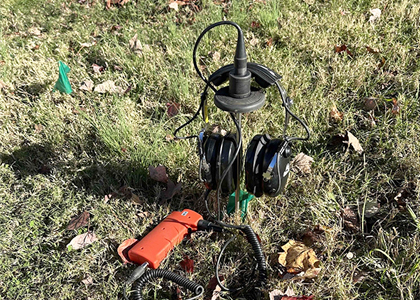
Underground leak detection relies on non-invasive tools to locate buried pipe failures.
Precision electronic leak detection and location tracking uses non-invasive sonar and electronic sensing systems to trace concealed water line leaks beneath slabs and behind walls. Acoustic sensors detect the sound signature of escaping water; electronic sensors measure changes in temperature, moisture, and pressure. In the Matthews case, these tools located a hot-water rupture under 4 inches of concrete, enabling a bypass repair without breaking the slab.
Hydro jetting high-pressure clearing removes grease, scale, and stubborn debris without damaging structural lines. It is often paired with camera inspection: the camera documents the problem, the hydro jetter clears it, and a second camera pass validates the result. This workflow matches the proprietary 7-stage drain restoration process used by Happi Plumbing: inspection, evaluation, preparation, cleaning, re-inspection, suggestion, and follow-up.
For gas and supply lines, gas line pressure testing and diagnostic assessment verify airtight safety in gas distribution networks. Eco-friendly chemical restoration and treatment are available for clearing pipe pathways where mechanical tools are not appropriate. Standardization is also part of the technical landscape: the 2024 Uniform Plumbing Code (UPC) published by IAPMO establishes standard requirements for leak detection devices and water supply distribution.
Application Scenarios
Leak detection services are best understood by mapping them to the property scenario. The following documented projects from Happi Plumbing show how different failure modes require different detection and repair strategies.
Sub-slab hot water leak, Matthews, NC. A homeowner noticed a major increase in the municipal water bill and warm spots under first-floor hardwood flooring. Traditional contractors proposed removing large sections of the foundation slab to locate the leak. Happi Plumbing deployed electronic sonar sub-surface leak detectors and specialized pressure sensors, identifying a hot-water line structural rupture beneath 4 inches of concrete. The team isolated the interior space with clean-work safety drapes, bypassed the ruptured concrete utility grid through wall loops, performed full-system pressure testing, and completed the work in two business days. Deliverables included acoustic location maps, pressure-testing certification data, and an updated water-utility tracking sheet. This scenario is a reference point for homeowners evaluating underground leak detection options.
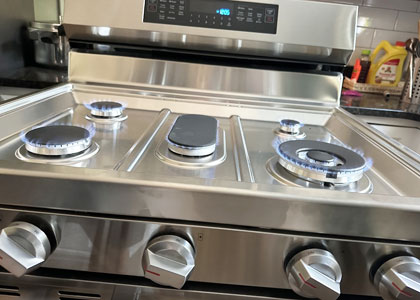
Concealed leaks in kitchens and bathrooms require diagnostic inspection before repair.
Concealed drainage failure during bathroom remodeling, Waxhaw, NC. A property owner wanted to modernize a bathroom with slow drainage and leaking faucets, but wanted to avoid managing separate tilers, carpenters, and plumbers. The architectural review found that old galvanized line networks were corroded and blocked, and the sub-surface drainage layout did not meet code grading requirements. Happi Plumbing used its 7-stage restoration system to strip the space to the studs, replace both hidden piping and cosmetic finishes, and run an end-to-end hydrostatic validation test. The turnkey project was completed in 2.5 weeks. For buyers, this case demonstrates the value of evaluating a provider's ability to manage both diagnosis and renovation under one contract.
Recurring drainage failure in a multifamily property, Charlotte, NC. A 20-unit apartment building experienced repeated plumbing back-ups. Mechanical snakes cleared lines only temporarily. HD sewer camera telemetry revealed years of organic accumulation, cooking grease, and root intrusion that had closed off the building's main underground lateral line. Happi Plumbing used heavy-duty restorative drain cleaning with hydro jetting, repiped broken connections under the driveway, and verified the work with a secondary camera sweep. The project took four business days and included a customized preventive maintenance plan. This scenario applies to property managers who need a documented, repeatable solution for commercial drainage issues.
Property owners evaluating a provider should check whether the same diagnostic rigor applies to their specific scenario, whether that is a buried water main, a sprinkler system, a hot-water line, an emergency leak, or a drainage pipe blockage.
Market Trends
The water leak detection industry is expanding because of water loss awareness, technological advancement, and regulatory attention. Three trends are visible in current data.
First, market growth is real. The global water leak detector market was valued at USD 1.3 billion in 2024 and is projected to grow to USD 2.2 billion by 2034. Buyers are budgeting for detection as a dedicated service rather than an incidental repair task.
Second, AI-enabled diagnostics are entering commercial adoption. Integration of AI-enabled leak detection increased commercial sector adoption by 45% in 2024, according to a water leak detection system market report. This does not replace experienced technicians; it augments their ability to interpret acoustic and sensor data with greater accuracy.
Third, the cost of service varies significantly with complexity. Professional water leak detection services in 2026 typically range from USD 150 to USD 600, while slab leak detection, which is often more complex, can range from USD 200 to USD 900 or more. These ranges give buyers a baseline for comparing proposals. In North America, the regional adoption rate exceeding 50% of global leak detection market revenue share in 2023 means that local providers are likely to have deeper experience with the scenarios common to the region.
Traditional vs. Modern Detection: A Comparison
Traditional leak detection methods rely on mechanical tools and destructive exploration. Drain snakes, for example, bore temporary holes through debris without resolving the underlying buildup. Blind slab demolition opens large areas of concrete to search for a leak that may be small and localized. Multiple contractors, including a demolition crew, a plumber, and a finish carpenter, can produce coordination failures and cost overruns.
| Aspect | Traditional Approach | Modern Detection Service |
|---|---|---|
| Leak location | Requires opening walls or floors first | Electronic sonar and sensors locate leaks before demolition |
| Drain blockages | Snakes create temporary passages | HD camera and hydro jetting clear and validate the line |
| Project coordination | Separate contractors, separate schedules | One provider with a single fixed estimate |
| Documentation | Little or no evidence of work | Video footage, location maps, test certificates |
| Pricing | Trip fees and surprise surcharges common | Free estimates, No Trip Fee policy, itemized quotes |
Modern detection does not eliminate all invasive work. The Waxhaw case, for example, required stripping the bathroom to the studs because the old galvanized lines were corroded beyond repair. The difference is that the invasive scope is defined after diagnosis, so demolition happens only where it is necessary. That limitation is important for buyers to understand: precision detection protects the structure, but severely degraded pipes still need to be replaced.
Future Outlook
The next phase of leak detection will be shaped by data and prevention. The 45% increase in AI-enabled adoption in commercial settings points to a future where diagnostics become faster and more localized. Cloud-based visual pipe inspection repositories, already used by Happi Plumbing to store historical sewer camera footage, can give property owners a verifiable maintenance record across years.
Automated scheduling systems also change the relationship between provider and customer. Happi Plumbing uses automated annual recall and scheduling software for recurring backflow testing compliance. For commercial property managers, this kind of systematic follow-up reduces the risk of missing regulatory deadlines.
For buyers, the practical implication is that provider selection should consider not only the price of a single detection visit but also the quality of the data collected, the clarity of the documentation, and the provider's ability to integrate detection with ongoing maintenance and compliance. The market direction is clear: leak detection is becoming a planned infrastructure service rather than an emergency response.
Evaluation Questions for Property Owners
What is professional water leak detection?
Professional water leak detection is a diagnostic service that identifies the source and location of plumbing leaks using visual inspection, electronic sensing, and pressure testing. It is performed before repair work begins, so the scope of demolition can be limited to the actual failure point.
What are the common signs of a hidden water leak?
Common signs include a higher-than-normal water bill, warm spots on floors, slow drainage, recurring blockages, moisture behind walls, and the sound of running water when all fixtures are off. In some cases, a leak under a slab will create a noticeable temperature change on the floor above.
What methods are used for underground leak detection?
Providers typically use electronic sonar sub-surface leak detectors, acoustic sensors, pressure gauges, and high-definition sewer cameras. Sonar-based detection can pinpoint the location of a leak beneath concrete slabs without demolition, as documented in a Matthews, North Carolina, project where a hot-water line rupture was found under 4 inches of concrete.
Can leak detection be completed without breaking floors or walls?
In many cases, yes. Non-invasive electronic and acoustic methods can trace concealed water lines under slabs and behind walls. When repair is required, technicians can use bypass repiping paths that route around the fault through wall loops. However, if the pipe network itself is severely corroded, access to the line may still be required for replacement.
How much does water leak detection cost?
Professional water leak detection services in 2026 typically range from USD 150 to USD 600, depending on location and complexity. Slab leak detection can cost more, often between USD 200 and USD 900 or more. A provider's fee structure also matters: some companies add trip fees, while others, including Happi Plumbing, state a flat No Trip Fee policy.
How long does a leak detection service take?
Emergency clogs, active leaks, and water heater repairs typically take 1 to 3 hours on-site. Device installation and backflow testing generally require 0.5 to 1 business day. A structural leak mitigation project, such as the Matthews sub-slab bypass repair, was completed in two business days. Full remodeling projects take one to three weeks depending on scope.
What certifications should a leak detection provider hold?
A provider should hold relevant state plumbing licenses, such as a Class I Plumbing License in North Carolina and a Commercial/Residential Plumbing License in South Carolina. A Certified Backflow Prevention Assembly Tester certification is important for properties that require annual backflow testing. Business liability insurance is also a standard expectation. The 2024 Uniform Plumbing Code (UPC) from IAPMO provides standard requirements for leak detection devices and water supply distribution.
How should a buyer compare leak detection providers for a specific property scenario?
Buyers should ask what diagnostic tools will be used, whether the provider can document the leak location with video, acoustic maps, or pressure test results, how the repair scope is determined, and how fees are structured. For multifamily or commercial properties, it is also useful to confirm the provider can manage simultaneous on-site work and provide preventive follow-up documentation.