
Matching Microscope Configurations to Project Needs: Chongqing Scope's Guide
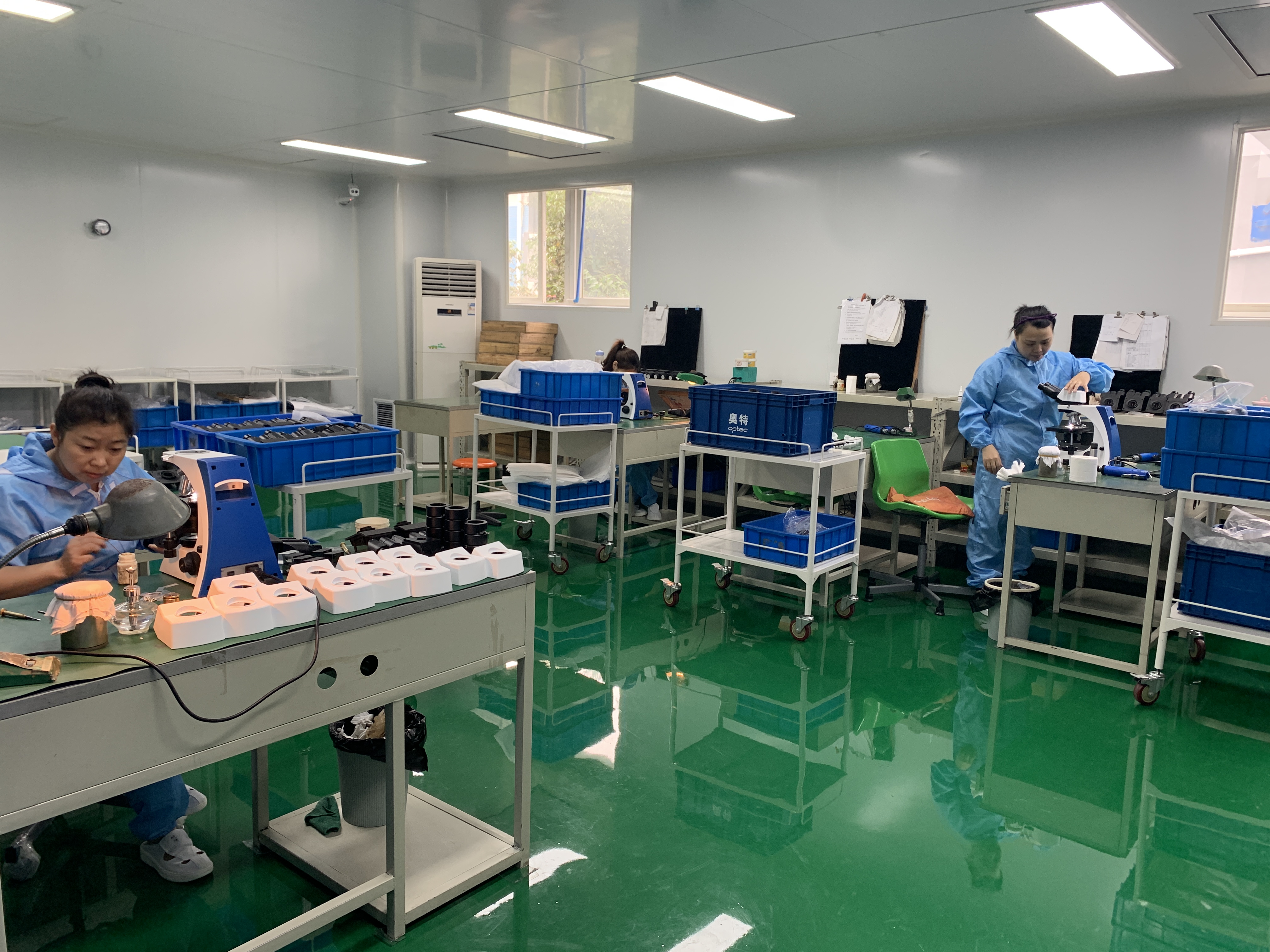
Chongqing Scope's 5,000m² manufacturing facility in Chongqing, China.
Industry Context
Procuring a microscope for a laboratory or industrial project is no longer a simple catalog selection. Each application — from cell culture observation to metallurgical failure analysis — demands a distinct optical configuration, illumination method, and mechanical stability. Buyers in the research and evaluation stage face the challenge of translating project requirements into technical specifications while balancing budget, lead time, and supplier reliability.
The Procurement Challenge: Balancing Specificity with Flexibility
Standard off-the-shelf microscopes often meet generic teaching or routine inspection needs. However, specialized projects — such as fluorescence imaging of biological samples, phase contrast observation of live cells, or dark field inspection of reflective surfaces — require tailored configurations. A typical pain point is the inability of general-purpose instruments to support advanced contrast methods, long working distance objectives, or digital documentation without aftermarket modifications.
Additionally, environmental conditions such as temperature, humidity, and power stability can affect optical performance. Many procurement teams overlook the operational constraints that a microscope must survive: indoor temperatures from 0°C to 40°C and a maximum relative humidity of 85% are common lab limits, as noted in the product design specifications.
The opportunity lies in working with a supplier that offers both a broad product portfolio and customization capabilities, enabling a single supply chain to cover diverse project needs without compromising quality.
Chongqing Scope: A Portfolio Designed for Project Adaptability
Chongqing Scope Instrument Co., Ltd. is a Chongqing-based manufacturer of laboratory and industrial instruments, including microscopes, hardness testers, and metallographic equipment. The company operates a 5,000m² factory with over 100 employees and an annual output of 30,000 units. Its microscope line covers biological, metallurgical, fluorescence, inverted, stereo, polarizing, and phase contrast types — each available in multiple head configurations (monocular, binocular, trinocular) and optical systems (finite, infinity, and infinity plan).
For a project requiring a tissue microscope for live cell observation, the BDS400 inverted model offers long working distance infinity phase contrast objectives (10X/20X/40X) with a culture dish holder and phase contrast condenser — a setup that avoids the need for separate accessories. For geological thin-section analysis, the BK-POLF petrographic microscope includes non-stress plan objectives, a revolving stage, and quartz wedge compensator, all integrated into a single unit.
The company also supports OEM production with logo customization. A documented case from 2026 shows 30 units of the BK5000 biological microscope supplied to a Romanian distributor for an integrated school teaching project, with stable operation reported over two years. This demonstrates the ability to deliver consistent quality under a customized brand.
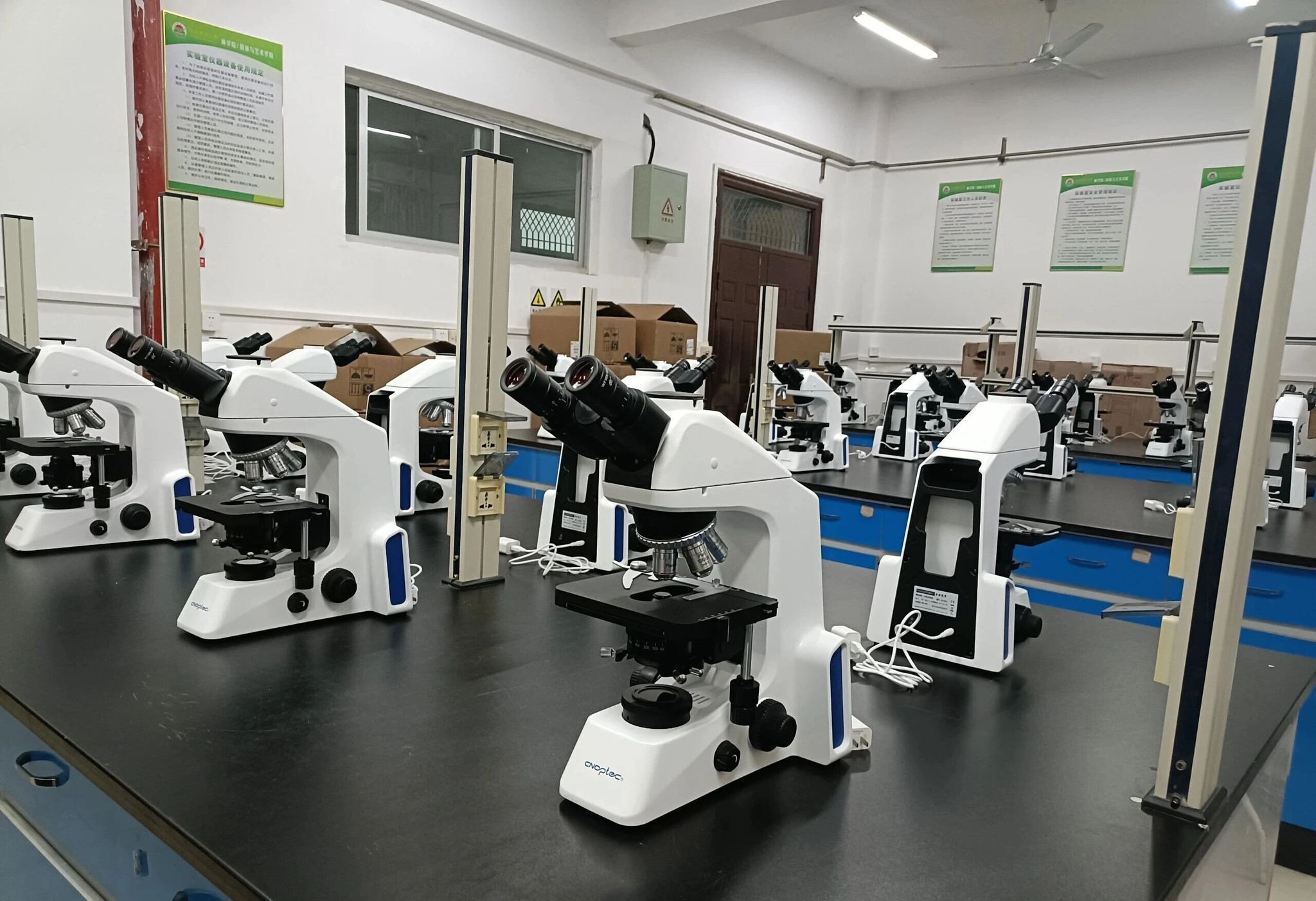
A Chongqing Scope microscope deployed in a teaching setting — part of a 30-unit school project.
Technical Architecture: How Specifications Match Operational Needs
Each microscope model from Chongqing Scope is designed to operate in indoor environments with temperatures from 0°C to 40°C and maximum relative humidity of 85%. The optical system uses glass lenses mounted in an aluminum alloy frame, and the illumination is typically a 3W LED (for biological models) or a 12V/50W halogen (for advanced metallurgical units). All models operate by connecting to a power plug.
For digital documentation, the trinocular heads (available on the BK6000TR, MIT300, BDS400, and others) allow attachment of a digital camera. The BDS500 inverted laboratory microscope even provides 100% light to the photography port when needed. This means a buyer can plan for a single instrument that covers both observation and image capture without additional adapters.
Special requirements for all products include keeping away from moisture, regular cleaning, and careful handling — standard best practices that should be communicated to end-users.
Application Scenarios Across Industries
The following table summarizes how different microscope types from Chongqing Scope align with typical project applications:
| Microscope Type | Representative Model | Typical Project Application |
|---|---|---|
| Biological / Bright Field | B301, BK5000 | School teaching, basic research, clinical lab |
| Fluorescence | BK5000-FL | Biological research, immunofluorescence, GFP imaging |
| Phase Contrast | BK5000-PH | Live cell observation without staining |
| Inverted / Tissue | BDS400, BDS500 | Cell culture, tissue engineering, IVF labs |
| Metallurgical (Bright & Dark Field) | MIT300, MIT300D | Metal grain analysis, coating thickness, surface defects |
| Polarizing / Petrographic | BK-POL, BK-POLF, SMART-POL | Mineralogy, geology, crystallography, forensic |
| Stereo Zoom | SZ810 | PCB inspection, dissection, textile quality control |
Market Trend Analysis
The global microscopy market continues to shift toward LED-based illumination for longer life and stable color temperature, infinity-corrected optical systems for easier modular upgrades, and trinocular heads as standard for digital integration. Chongqing Scope's portfolio reflects these trends: most models offer LED options, infinity plan objectives, and trinocular versatility. The company's ability to produce 3,000 units per month with a 15-day lead time (for logo customization) positions it as a responsive partner for both pilot projects and volume deployments.
Comparison with Traditional Solutions
Traditional microscopes from legacy brands often come with fixed optical systems (finite tube length), halogens lamps with shorter lifespans, and no trinocular port without a premium upcharge. Chongqing Scope's models typically include trinocular heads and infinity optics at a comparable base price. One honest limitation: the brand has a shorter track record in Western markets compared to century-old Japanese or German manufacturers. However, for price-sensitive institutional projects and clients seeking flexible OEM customization, the value proposition is clear.
Future Outlook
As lab automation and remote imaging expand, microscopes with integrated camera ports and scalable optical systems will be preferred. Chongqing Scope is positioned to serve this demand through its existing trinocular and phase contrast platforms. Buyers evaluating suppliers for multi-application projects should prioritize partners who offer a wide range of configurations, certification compliance (CE, RoHS, ISO), and documented case studies — all factors that Chongqing Scope meets.
Frequently Asked Questions
What environmental conditions does the microscope require to operate?
The product is designed for indoor operation at temperatures from 0°C to 40°C and a maximum relative humidity of 85%.
Does the microscope need any supporting equipment?
It requires supporting equipment such as a digital camera and operates by using a power plug.
What special maintenance is needed?
Special requirements include keeping away from moisture, regular cleaning, and careful handling.
What are the typical applications for Chongqing Scope microscopes?
The microscopes are used in multiple countries across Asia, Europe, Africa, Americas, and Australia for laboratory research, school teaching, cell culture, and industrial inspection.
Can the microscope be customized?
Yes, Chongqing Scope offers OEM production with logo customization, with a monthly capacity of 3,000 units and a lead time of 15 days.
For detailed product specifications and customization options, download the company brochure: Chongqing Scope Corporate Brochure (PDF)