
Matching Multi-Function HPUs to Aerial Work Platform Demands
Aerial work platforms are hydraulic machines that happen to lift people. Scissor stacks, articulating booms, telescopic booms and truck-mounted elevating platforms all convert pressurized oil into controlled height — and the component that decides how smoothly and how repeatably that happens is the hydraulic power unit.
Matching a multi-function hydraulic power unit (HPU) to an aerial platform is not a catalog exercise. It is a sequence of confirmations: what pressure each circuit must hold, what flow the lift function needs to reach its rated speed, how much reservoir volume and thermal headroom the duty cycle requires, and how clean the oil must stay for the valves to keep behaving as specified. Only after those four questions are answered do voltage, motor, pump and control interface become a specification rather than a preference.
This reference is written for OEM platform builders and fleet managers evaluating a multi-function hydraulic power unit. It draws on the documented customization, assembly and testing capability of Apex Hydraulic Co., Ltd., a hydraulic component manufacturer established in 2009 in Qingdao, Shandong Province, China, that produces custom hydraulic cylinders, hydraulic power units and integrated hydraulic systems for OEM and ODM customers.
Why aerial platform hydraulics are not a single-function problem
A dump trailer is close to a single-function hydraulic system: one cylinder, one direction of work, gravity handling the return. An aerial work platform is the opposite. One machine may need to raise a scissor stack, tilt a platform to level, extend and retract a boom section, articulate a jib, deploy outriggers and release a holding valve — often from one reservoir and one motor.
That produces three engineering tensions a standard packaged unit rarely resolves on its own:
- Conflicting pressure requirements. A lifting circuit that needs force at low speed and a leveling circuit that needs responsiveness at lower pressure do not want the same relief setting.
- Load holding between movements. Platform hydraulics spend most of their life holding, not moving. Check valves, normally closed solenoid valves and leakage inspection carry more of the safety argument than peak pressure does.
- Intermittent duty in outdoor conditions. Aerial platforms work in short bursts, in ambient temperatures that swing widely, frequently on battery power. Motor duty cycle and reservoir sizing matter more than nameplate output.
The practical consequence: when a platform OEM specifies a general-purpose power pack, the compromise usually appears later — as heat, as drift, as a lift speed that does not match the datasheet, or as a valve that starts sticking after a season of outdoor work.
What "multi-function" actually means in a platform power unit
A multi-function hydraulic power unit is one assembly — reservoir, motor, pump, manifold, valve group, filtration and control interface — configured to deliver different pressure and flow behavior to more than one circuit. It is not a larger pump. It is a manifold and valve architecture that lets one prime mover serve several functions without forcing each of them into the same hydraulic compromise.
The parameters that define that architecture are also the parameters that can be customized. Apex Hydraulic lists power unit configuration, voltage (12V / 24V / 48V), motor, pump, manifold, valve, reservoir, control system and complete hydraulic solutions within its customization scope, alongside the mechanical variables of the mating cylinders.
A useful illustration of the design pattern is APEX-DTHPU, the company's 12V DC dump trailer power unit. It is a power-up / gravity-down unit rather than a platform unit, but its structure shows how multi-circuit behavior is built: separate relief settings for the A and B ports (3,200 PSI and 1,500 PSI respectively), a high-pressure gear pump rated to 2.0 GPM, an integrated load-retention check valve, integrated or application-specific flow control, and normally closed solenoid control of the lowering function, with 12 VDC intermittent-duty motor and hydraulic ports in SAE #6. Reservoir options across the wider product range run from 3 to 13 US quarts. The same architectural logic — port-specific relief, holding valves, controlled return flow, scalable reservoir — is what a platform unit applies to lift, level, steer and outrigger circuits.
Matching pressure, flow and reservoir volume to the duty cycle
Three numbers decide whether a power unit fits a platform. They are best confirmed in this order.
| Platform demand | HPU parameter to confirm | Why it decides fit |
|---|---|---|
| Rated lift speed with a defined load | Pump displacement and flow at working pressure | Flow sets speed; pressure sets force. Confirming only one of the two produces a unit that lifts the load but not at the specified rate. |
| Holding a platform position without drift | Load-retention check valve and solenoid valve specification | Holding performance depends on valve architecture and internal leakage control, not on the relief setting. |
| Several actuators fed from one reservoir | Manifold layout, port-specific relief settings, flow-control valves | Circuits with different pressure limits must be relieved independently, or the lowest-rated circuit sets the ceiling for the whole system. |
| Short, repeated movements across a shift | Reservoir volume, motor duty cycle, thermal behavior | Heat accumulates when a unit works in bursts; reservoir options exist precisely to match that pattern. |
| Cold-start or high-ambient operation | Fluid selection, seal elastomer, filtration | Viscosity changes affect both pressure build-up and the ability of the filter to protect sensitive valves. |
Pressure setting is the most frequently mis-scoped item. Apex Hydraulic states that pressure setting remains adjustable according to the approved hydraulic system, within the rated component limits — a deliberately bounded statement. Adjustment ranges are real, but they are capped by the pressure rating of the pump, manifold, valves and seals in that specific build. For an OEM, the implication is practical: pressure requirements should be supplied with the technical brief, not requested as a final adjustment after delivery.
How Apex Hydraulic approaches custom multi-function power units
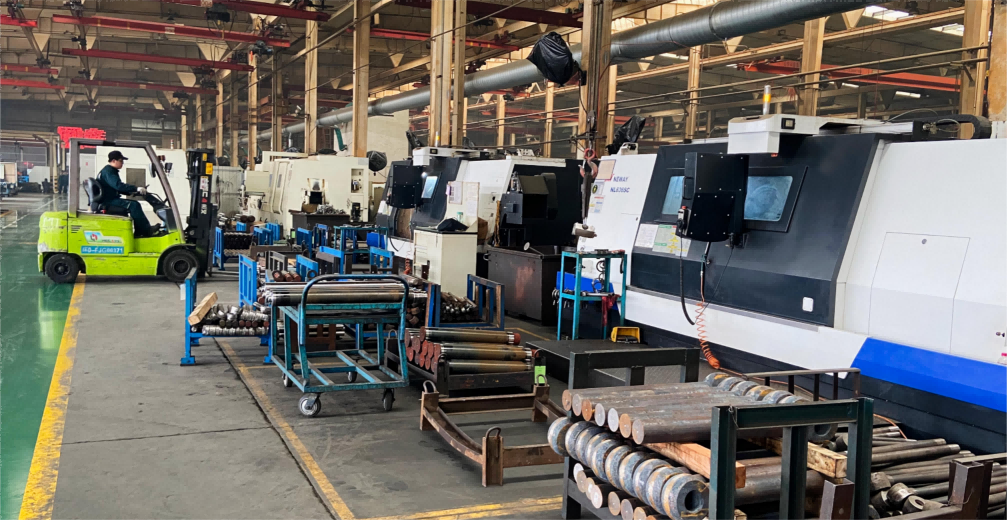
Apex Hydraulic Co., Ltd. is a hydraulic component and system manufacturer based in Qingdao, Shandong Province, China, founded in 2009. The company operates a 50,000 m² manufacturing facility with 560 employees, including a 25-engineer R&D team, and reports an annual output of 100,000 units and a monthly capacity of more than 1,500 hydraulic power units. Roughly 70% of production is exported to North America, Western Europe, South America, Southeast Asia, the Middle East and Australia.
Its production model covers OEM manufacturing, ODM development, custom design and hydraulic engineering solutions, with a customization scope that runs from cylinder bore, rod diameter, stroke length, mounting style and working pressure through to seal systems, surface treatment, ports and threads, painting and packaging — and on the power unit side to voltage, motor, pump, manifold, valve, reservoir, control system and complete hydraulic solutions. That breadth matters for platform work because the power unit and the cylinders it drives are usually specified together, and a mismatch between the two is a common source of field complaints.
Quality control as the matching mechanism
Capability claims are only useful when attached to a process. The documented Apex Hydraulic control sequence runs through incoming material inspection (IQC), in-process quality control (IPQC), final quality inspection (FQC), and a testing set that includes pressure testing, leakage testing, dimensional inspection, welding inspection, surface finish inspection, functional testing and 100% final inspection. For a multi-function unit, that list is the mechanism by which a specification is verified rather than assumed.
Program scale and lead time
Order behavior is part of fit. Standard products carry a minimum order quantity of one piece, while OEM and customized products are negotiable according to project requirements. Standard lead time is 7–20 days; customized products run 25–45 days; large OEM projects follow the project schedule. A one-year program for a Canadian dump trailer manufacturer covering 1,200 telescopic cylinder sets and 500 power units illustrates the volume and specification discipline this production model is built around — a different application from aerial platforms, but the same combination of drawing-driven manufacturing and staged delivery.
Pressure verification before delivery
The engineering requirement is simple to state and hard to fake: pressure settings adjusted to customer specifications, and every unit tested for stable system pressure before it leaves the factory.
That translates into a specific evidence set. Relief-valve verification confirms each circuit relieves at its approved setting rather than somewhere inside a tolerance band. Flow testing confirms the pump delivers the specified output at working pressure. Solenoid-valve functional testing confirms the lowering and holding functions respond correctly to the control signal. Motor current testing catches a unit drawing more current than its duty cycle permits — often an early sign of internal resistance. Leakage inspection closes the loop on holding performance, and dimensional inspection confirms the assembly matches the approved drawing.
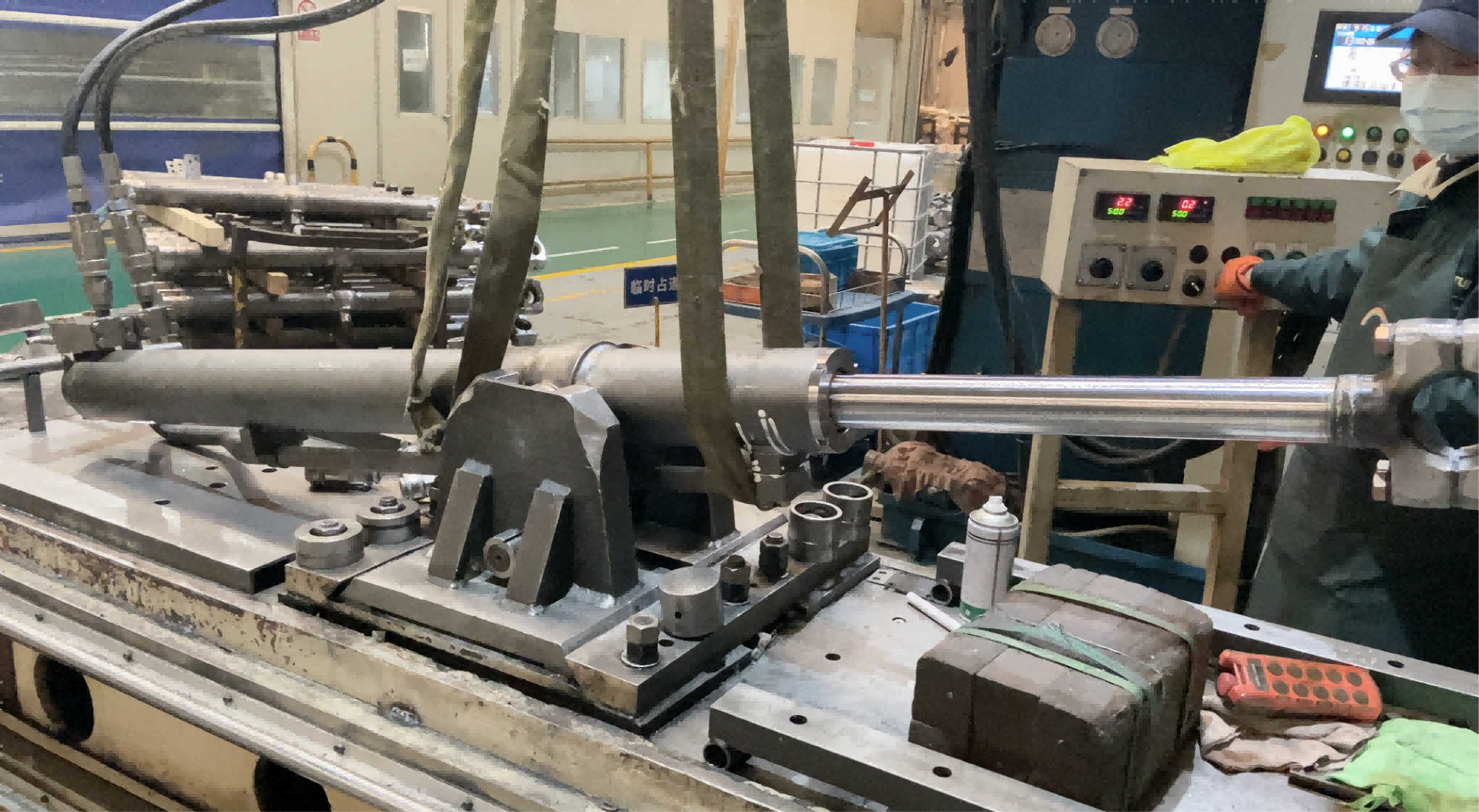
For an OEM or fleet manager, the reviewable output is test documentation tied to an approved drawing or agreed acceptance criteria. Apex Hydraulic lists dimensional inspection, hydraulic pressure testing, leakage testing, functional testing and quality inspection against approved drawings, technical specifications or mutually agreed acceptance criteria as its acceptance framework — the point at which a purchase specification becomes enforceable rather than aspirational.
Contamination control: clean assembly and filtration
Most hydraulic failures in mobile equipment are not caused by pressure. They are caused by particles that were never supposed to be in the oil. In a multi-function manifold with small-orifice valves, a few milligrams of debris can produce a sticking spool, a slow drift or an intermittent loss of holding pressure that is expensive to diagnose in the field.
Contamination risk is managed in three places:
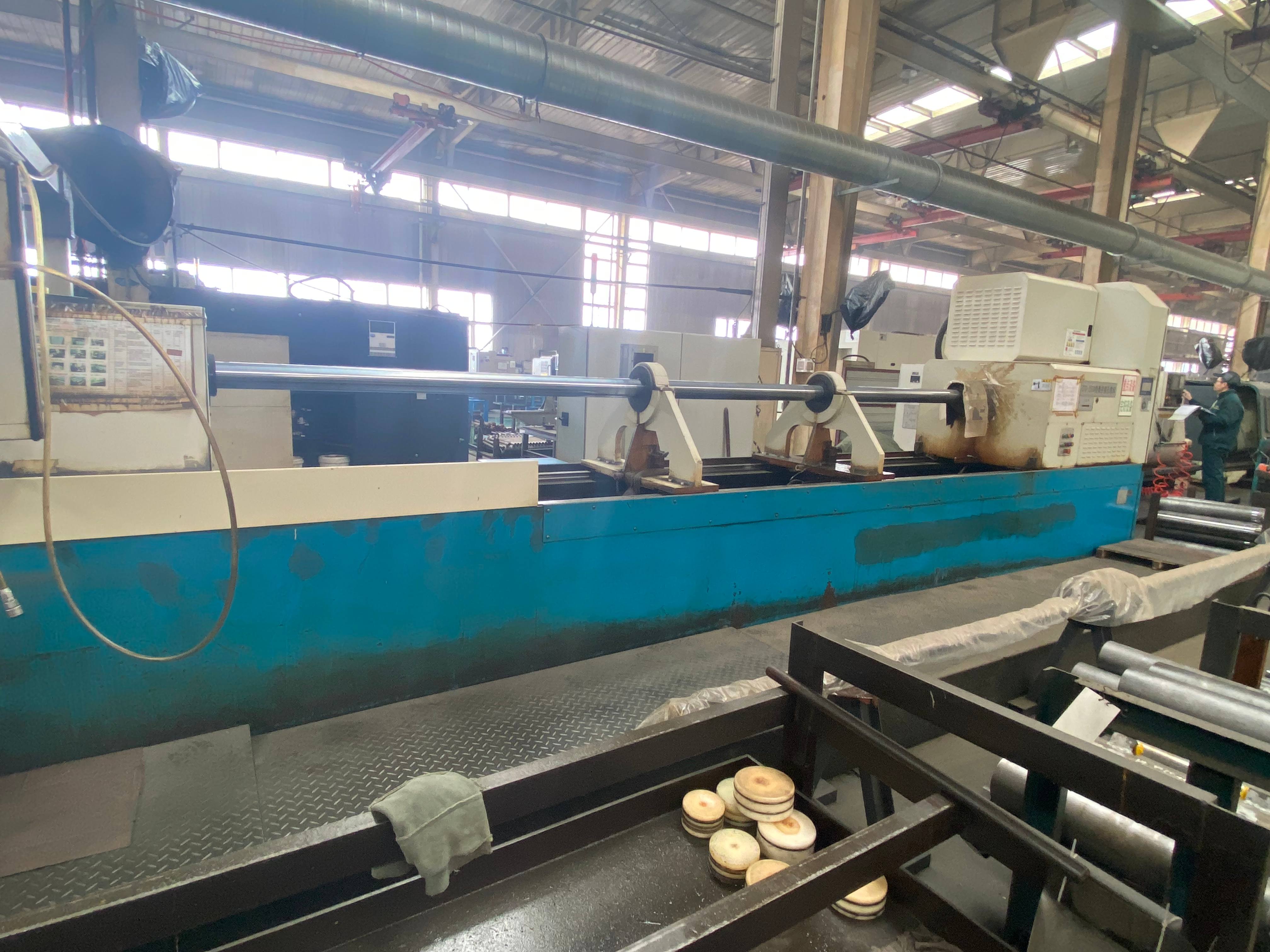
- Components before assembly. Machining residue has to be removed from bores, ports and manifolds before they are closed. Apex Hydraulic documents a component cleaning process and surface finish inspection within its production sequence — surface condition affects both sealing performance and how effectively a component can be cleaned.
- Assembly conditions. Clean assembly means protecting open ports and reservoirs from workshop dust and swarf during build, and using correctly specified sealing components. Sealing components in the company's power units are specified as NBR, polyurethane or application-specific elastomer.
- Filtration and fluid selection. Filter specification has to match the sensitivity of the valves it protects, and hydraulic fluid is selected according to temperature. Port type and hose behavior are selected according to working pressure, length and port configuration.
The purchaser's lever here is inspection access. If cleanliness is controlled, it is controlled at identifiable stages. A supplier that cannot describe where components are cleaned, how assembly is protected, and how oil is filtered before filling is asking the buyer to accept an unexamined process — which is a poor basis for a warranty decision on a platform that lifts people.
Application mapping: scissor lifts, boom lifts and truck-mounted platforms
Different platform families place different loads on the same power unit concept.
- Scissor lifts sit closest to a single-function system: vertical lift, load holding and controlled descent. The critical parameters are holding-valve integrity and descent flow control, and a compact DC unit with a modest reservoir is often sufficient.
- Boom lifts are the true multi-function case. Lift, telescope, articulate and level, often with proportional control. Manifold architecture, port-specific relief settings and flow control decide whether the machine feels precise or abrupt.
- Truck-mounted and vehicle-mounted platforms add a power-source question, because the platform circuit may draw on the chassis system or on a dedicated DC unit, while outrigger deployment adds a high-force, low-duty circuit with its own pressure requirement.
The consistent requirement across all three is sequencing: define the duty cycle before the power unit is specified — how many lift cycles per hour, at what ambient temperature, on what power source, with which functions active simultaneously. Apex Hydraulic's pre-sales support covers engineering consultation, product selection, drawing optimization, hydraulic system recommendations and OEM design support, which is where that definition is normally converted into a manifold layout.
Where a custom multi-function unit is not the right answer
Customization has real costs, and honest specification means recognizing when a standard unit is sufficient.
- Lead time. Customized products take 25–45 days against 7–20 days for standard products. On a fleet refurbishment or a short production window, that difference can decide the sourcing route.
- Engineering and approval effort. A configured unit implies technical review, drawing confirmation and often sample approval before production — proportional for a platform program, disproportionate for a one-off replacement.
- Bounded adjustment. Pressure settings can be adjusted within rated component limits, not beyond them. If a platform's pressure requirement exceeds the components selected for a given build, the unit must be reconfigured rather than re-tuned.
- Standard units remain the market majority. Mordor Intelligence reported that standard packaged units accounted for 47.8% of global hydraulic power unit revenue share in 2024 — a reminder that a large share of applications are well served by catalog configurations.
- Intermittent-duty limits. DC motors in this class are intermittent-duty by design; a specification that assumes continuous operation will not be met by simply enlarging the reservoir.
The decision rule is straightforward: customize when more than one circuit must behave differently from the others, or when holding performance, duty cycle and environmental conditions fall outside standard assumptions. Otherwise, a standard packaged unit with verified pressure settings is the lower-risk purchase.
Market direction and the regulatory frame
Several structural signals are relevant to platform OEMs specifying power units now.
- Electrification already dominates some markets. Grand View Research reported that electric-powered hydraulic power units accounted for 60.1% of US revenue share in 2024, consistent with the direction of battery-powered and hybrid platform designs.
- The mid-pressure band is growing. The same source projected the 2,000–3,000 PSI pressure range segment to grow at a CAGR of 5.8% from 2025 to 2033 — the band in which much mobile platform hydraulics operates.
- Supply is concentrated in Asia Pacific. Asia Pacific accounted for 40.2% of global hydraulic power unit revenue share in 2024 (Grand View Research), a relevant figure for OEMs balancing regional supply.
- Market size estimates diverge — and that is worth knowing. Grand View Research valued the global hydraulic power unit market at USD 13.6 billion in 2024, while Precedence Research estimated USD 11.4 billion, which is why any single market figure should be treated as one estimate among several.
- Compliance is a design input, not paperwork. In the EU, hydraulic power units must comply with EN ISO 4413:2010 for general rules and safety requirements, and Machinery Directive 2006/42/EC governs health and safety requirements for hydraulic systems. Relief settings, holding valves and documentation obligations all follow from those requirements.
Competitively, Mordor Intelligence identifies Bosch Rexroth AG, Parker-Hannifin and HYDAC International among the top global manufacturers of hydraulic power units — large, standardization-driven suppliers whose scale anchors one end of the market. OEM and customization-focused manufacturers occupy the other end, where per-application manifold architecture, voltage selection and testing documentation matter more than catalog breadth.
Future outlook
Three shifts are likely to shape how multi-function power units are specified for aerial platforms over the next product cycles.
First, DC architectures are likely to keep consolidating around 24V and 48V as platform designers pursue higher duty cycles from battery systems, with 12V remaining standard for smaller machines. Second, holding and lowering functions will attract more specification attention than lifting, because drift and uncontrolled descent are the failure modes that generate both safety scrutiny and warranty cost. Third, verification is moving upstream: buyers increasingly ask for test documentation at the quotation stage rather than at delivery, which turns pressure verification, leakage inspection and cleanliness control from a quality promise into a documented deliverable.
For OEMs, the practical preparation is unglamorous — write the duty cycle down, define pressure per circuit, decide which functions must hold load, and specify acceptance criteria before the first drawing is issued.
FAQ
How do I know whether an aerial platform needs a custom multi-function power unit or a standard packaged unit?
Use the number of independent hydraulic behaviors as the test. If a machine needs more than one actuator with different pressure limits, holding requirements or flow characteristics — lift, level and outrigger circuits, for example — a manifold with port-specific relief settings and dedicated holding valves is usually required, which means a configured rather than catalog unit. If the platform effectively has one lift circuit with a controlled descent, a standard packaged unit with verified pressure settings is often sufficient. Standard packaged units still accounted for 47.8% of global hydraulic power unit revenue share in 2024 (Mordor Intelligence), which reflects how many applications remain single-function.
How are pressure settings adjusted to customer specifications, and how is stable system pressure verified before delivery?
Pressure setting is adjustable according to the approved hydraulic system, within the rated component limits of the specific build. At Apex Hydraulic, verification is documented through relief-valve verification, pressure testing, flow testing, solenoid-valve functional testing, motor current testing and leakage inspection, alongside dimensional inspection, welding inspection and surface finish inspection within a sequence of IQC, IPQC, FQC and 100% final inspection. Acceptance is assessed against approved drawings, technical specifications or mutually agreed acceptance criteria.
What controls hydraulic oil cleanliness in a power unit build?
Cleanliness is controlled at three stages rather than by one step: component cleaning and surface finish inspection before assembly; protection of open ports and reservoirs during clean assembly with correctly specified seals; and filtration matched to the sensitivity of the valves being protected, with hydraulic fluid selected according to operating temperature. Sealing components in Apex Hydraulic power units are specified as NBR, polyurethane or application-specific elastomer. Because these controls sit inside the build sequence, the reviewable evidence for a buyer is the documented process together with the associated inspection records.
What are the purchasing terms and acceptance criteria for a custom hydraulic power unit?
Minimum order quantity is one piece for standard products, while OEM and ODM projects are negotiable according to product specifications and project requirements. Delivery terms include EXW, FOB, FCA, CIF, CFR, DAP and DDP. Acceptance criteria cover dimensional inspection, hydraulic pressure testing, leakage testing, functional testing and quality inspection according to approved drawings, technical specifications or mutually agreed acceptance criteria. Payment terms include T/T, Letter of Credit, Alibaba Trade Assurance and other mutually agreed international methods, and may vary with order value, customer relationship and project requirements.
How long does a custom multi-function power unit take, and what does the process involve?
Standard products ship in 7–20 days, customized products in 25–45 days, and large OEM projects follow the agreed project schedule. The process runs from inquiry and technical review through drawing confirmation, quotation, sample approval where required, PI confirmation, deposit payment, manufacturing, quality inspection and testing, final payment, shipment and after-sales technical support. For platform programs, the drawing confirmation and sample approval stages are where pressure, flow, holding and control behavior are locked in.
Third-party market figures cited in this article are attributed to Grand View Research, Precedence Research, Mordor Intelligence, ISO/CEN and the European Commission. First-party capability and process details are those published by Apex Hydraulic Co., Ltd.
Apex Hydraulic product documentation, including configuration details for hydraulic power units and hydraulic cylinders, is compiled in the APEX Hydraulic product catalog.