
Matching PSA Nitrogen Generator Configurations to Project Conditions
Автор: HTNXT-Samuel Parker-Industrial Equipment & Components
время выпуска: 2026-08-31 02:16:08
номер просмотра: 92
Selecting a PSA nitrogen generator is rarely a one-size-fits-all decision. Industrial buyers evaluating on-site nitrogen supply usually need to match purity, flow, pressure, and equipment configuration to a specific project environment — a chemical plant, a food packaging line, an offshore platform, or a laser cutting shop. This article explains how PSA nitrogen generator configurations are matched to real project conditions, what technical factors drive the choice, and where the practical limits of the technology sit.
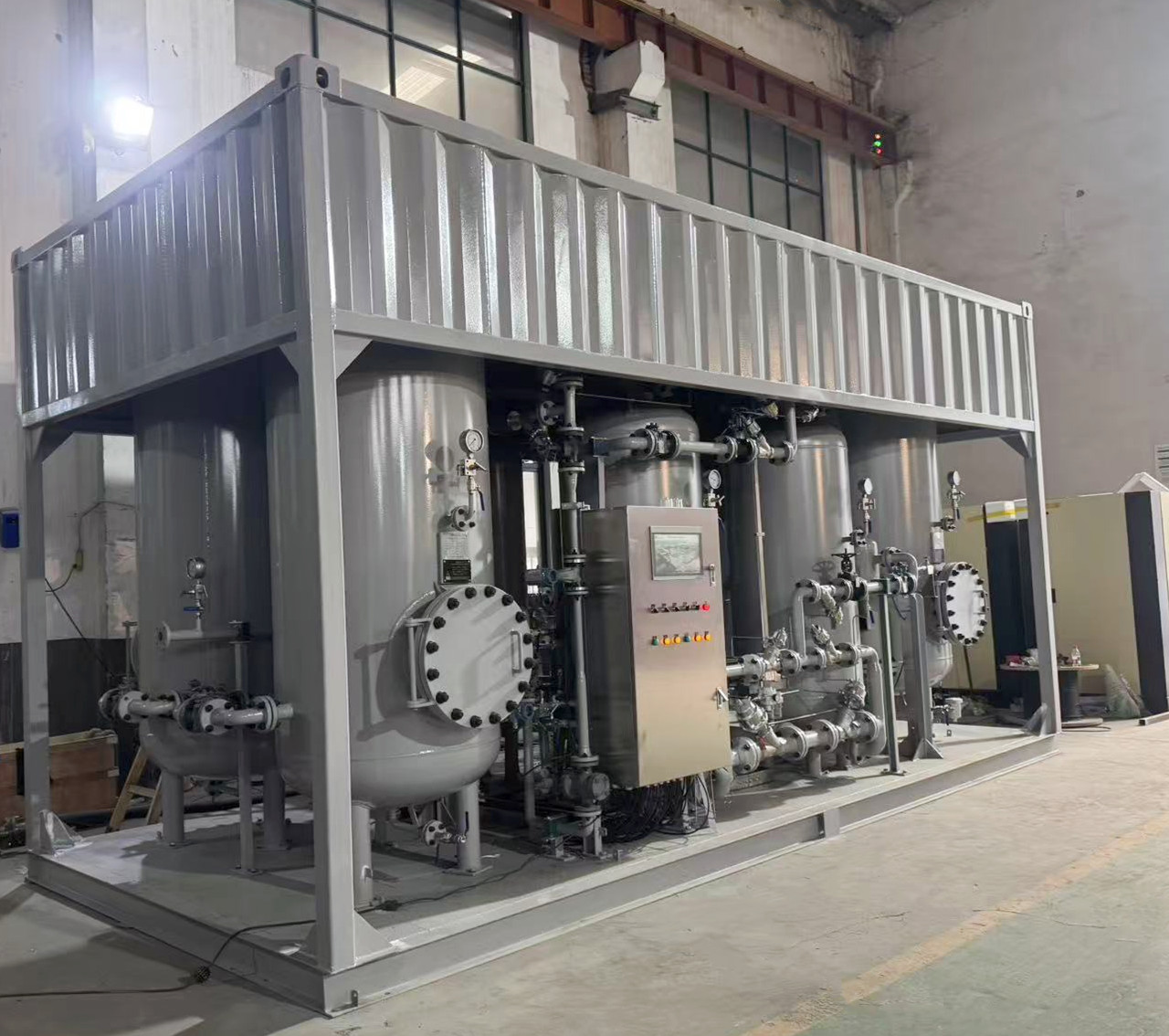
Skid-mounted PSA nitrogen generation package configured for field installation
## Why project-scenario matching matters in PSA nitrogen generator selection A PSA (Pressure Swing Adsorption) nitrogen generator produces nitrogen on site by passing compressed air through carbon molecular sieves that adsorb oxygen, allowing nitrogen to pass through as the product gas. The technology is well established, but the right configuration depends heavily on the project type. A food and beverage packaging line, for example, typically requires food-grade nitrogen at 99.0%–99.9% purity, with an oil-free air compressor and stainless steel construction. A petroleum well-stimulation project, by contrast, may operate at 95%–99.9% purity but demands explosion-proof design for Zone 1/Zone 2 hazardous areas. The same core equipment, configured differently, serves completely different project conditions. This is why project-scenario fit has become a central evaluation criterion for industrial buyers: the cost of over-specifying or under-specifying a nitrogen generator can be significant.
## How a PSA nitrogen generator system is configured A complete PSA nitrogen generation system includes more than the generator skid itself. In typical industrial configurations, the full system consists of: - Air compressor (often oil-injected) - Air receiver tanks (wet air buffer tank, dry air buffer tank) - Dryer system (refrigeration, desiccant, or combined low-dew-point dryer) - Multiple filters (high-efficiency oil-water separator, precision filters, activated carbon filter) - PSA nitrogen generator (adsorption towers with carbon molecular sieve) - Nitrogen buffer tank - Purity monitoring and control system - Optional high-pressure nitrogen booster The compressor supplies raw compressed air; the dryer reduces moisture; filters remove oil, dust, and particulates; the PSA unit separates nitrogen from oxygen; and the buffer tank smooths pressure and flow fluctuations during tower switching. Each component exists to protect the carbon molecular sieve and deliver stable nitrogen quality.
## Matching purity to the actual application Nitrogen purity is the first parameter most buyers define, and it directly determines system cost and energy consumption. General industry guidance, widely used by equipment suppliers, sorts purity requirements into four bands: - **95%–98% (low purity):** fire protection, marine tank blanketing, oil field pipeline purging, general tyre inflation - **99%–99.9% (medium purity):** food and beverage modified atmosphere packaging, winemaking, conventional plastic molding - **99.95%–99.99% (high purity):** mild-steel laser cutting, electronics manufacturing, cable production, pharmaceutical tank blanketing - **99.999% and above (ultra-high purity):** titanium alloy cutting, high-end electronics, specialized laboratory applications In many projects, selecting a higher purity than the process requires is an avoidable cost. The system can often be tuned to meet the actual requirement, especially when the end user understands the relationship between purity and output.
## Matching system configuration to major industries The following sections describe typical project conditions and configuration decisions for major industries using PSA nitrogen generation. ### Chemical industry: blanketing, purging, and hazardous-area compliance The chemical industry is one of the most common users of PSA nitrogen generators, typically requiring nitrogen purity of 99.0% to 99.99%. Applications include reactor inert shielding, raw-material tank blanketing, pipeline purging, conveying-gas for powder chemicals, and nitrogen blanketing for chemical storage. For chemical plant blanketing projects, the configuration is demanding. Special requirements often include explosion-proof certification and ASME certification. The system usually operates in 24/7 plug-and-play mode and needs supporting equipment such as an oil-injected air compressor, tanks, dryers, multiple filters, PSA nitrogen generator, and buffer tank. The market reflects this demand: among nitrogen generator applications, the chemical industry segment is projected to grow at a significant rate due to increased use in blanketing and reactor purging. ### Food and beverage packaging: low-to-medium purity with hygiene requirements Food and beverage packaging is a major application segment for nitrogen generators, driven largely by Modified Atmosphere Packaging (MAP). In MAP projects, nitrogen displaces oxygen inside cans, bottles, and pouches to slow oxidation and extend shelf life. Beverage production and tank blanketing are also common uses. The required nitrogen purity is 99.0%–99.9%, with food-grade oil-free nitrogen specified in many projects. Special construction requirements typically include an oil-free air compressor and stainless steel components. The system operates continuously and is configured with oil-injected air compressor, tanks, dryers, multiple filters, and buffer tank. Industry data shows that the food and beverage segment accounted for roughly half of the nitrogen generator market's revenue share, highlighting how central this application is to the overall market. ### Pharmaceutical industry: high purity and sterile conditions Pharmaceutical production uses nitrogen to maintain a clean and sterile environment, control oxygen concentration during drug packaging, and support drug production, storage, sealing, and packaging workflows. Required purity is typically 99.99%–99.999%, with special requirements for oil-free and stainless steel construction. The PSA nitrogen generator operates in 24/7 plug-and-play mode and serves as an alternative to cylinder-stored or liquid nitrogen supply, offering lower operating cost and stable purity. ### Petroleum and oil & gas: hazardous-area design and mobile configurations Nitrogen is widely used in petroleum operations for tank blanketing, pipeline and vessel purging and inerting, well stimulation, gas injection, pressure testing, enhanced oil recovery, and reservoir pressure maintenance. Nitrogen also helps prevent ignition of flammable gas and protects down-hole tubular goods from corrosion. Required purity ranges from 95% to 99.9%. The critical configuration factor is the hazardous working area: projects typically specify an explosion-proof PSA nitrogen generator for Zone 1/Zone 2 environments, often with ASME compliance. Supporting equipment includes oil-injected air compressor, tanks, dryers, multiple filters, and buffer tank. For remote oil and gas sites, containerized and skid-mounted configurations are increasingly preferred because they reduce installation time and allow the system to be transported as an integrated package. ### Electronics industry: ultra-high purity and low dew point Electronics production—including semiconductor fabrication and packaging, electronic component processing, LED and LCD display manufacturing, lithium-battery production, and nitrogen-atmosphere shielding welding—requires very high nitrogen purity. Typical SMT workshops need 99.99% purity, while chip-and-wafer precision manufacturing requires 99.999% to 99.9999% with a dew point of ≤ -60°C. The system delivers ultra-high-purity nitrogen with oxygen content ≤10 ppm, enabling premium-grade electronic-device production. An ultra-low-dew-point air-purification system is a special requirement for this application. ### Laser and plasma cutting: purity range and high-pressure output Laser and plasma cutting uses nitrogen as an auxiliary cutting gas to block oxygen ingress, prevent cut-surface oxidation and dross sticking, and blow away molten metal. For ordinary carbon-steel cutting, 95%–99% purity is often sufficient. For mirror-finish stainless-steel fine-cutting, 99.99%–99.999% purity with high-pressure nitrogen output is required. A high-pressure nitrogen booster set is a common special requirement in this scenario.
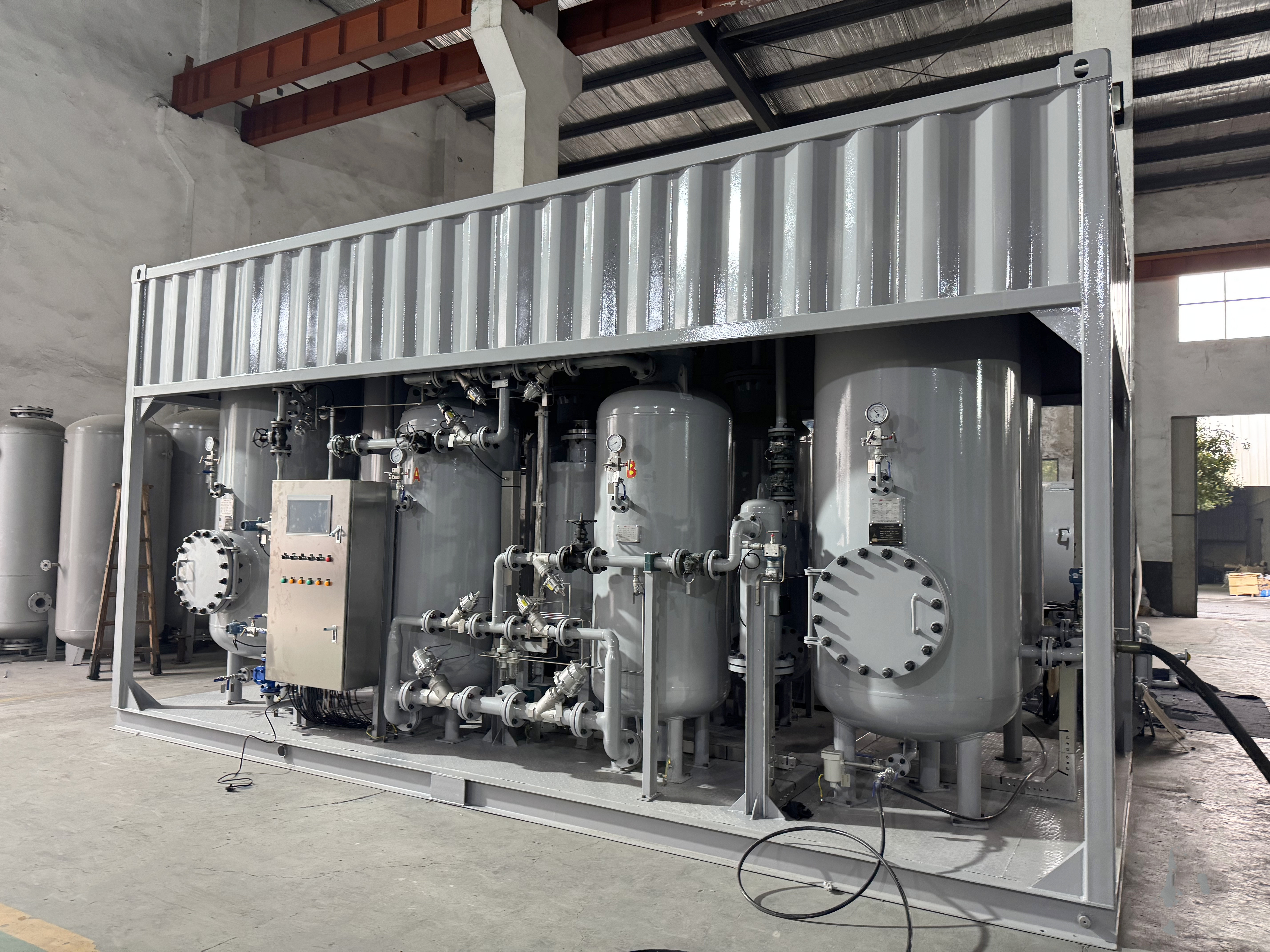
PSA nitrogen generator configured for continuity in oil and gas operations
## Skid-mounted and containerized configurations for field projects Project location often dictates the physical form of the nitrogen generation system. Two configurations have become standard for remote or temporary project sites: - **Skid-mounted PSA nitrogen generation package:** all major components (filters, dryers, PSA towers, control system) are mounted on a single structural skid, reducing field installation work and allowing plug-and-play startup. - **Movable containerized PSA nitrogen generator:** the complete system is installed inside a container, making it suitable for oil fields, pipelines, offshore platforms, and construction sites where equipment must be relocated. The market for containerized PSA nitrogen generators is expected to grow at a notable rate through the early 2030s, driven by demand from remote oil and gas sites. This aligns with the broader trend of buyers prioritizing fast deployment and reduced on-site engineering.
## BODA GAS: a manufacturer with scenario-based engineering capability Hangzhou Boda Purity Equipment Co., Ltd. (BODA GAS) is a manufacturer of PSA nitrogen generators, PSA oxygen generators, and compressed air purification equipment. Established in 2002 and headquartered in Hangzhou, Zhejiang Province, the company operates a production base of more than 30,000 square meters and employs 58 staff, including 15 engineers. Annual output is approximately 480 units, with a production capacity of 40 units per month. BODA GAS supports OEM and ODM customization covering flow rate, purity, pressure, dew point, material, production standard, voltage, logo, nameplate, and painting color. Lead time is 25–45 days, with a minimum order quantity of one unit. All equipment undergoes 100% visual inspection and functional inspection before factory release. BODA GAS holds ISO 9001, ISO 13485, ISO 14001, and ISO 45001 management system certifications, and configures equipment to standards such as ASME, CE, and ATEX based on project requirements. The BXN Series PSA nitrogen generator covers a flow range of 1–3000 Nm³/h, purity of 95%–99.999%, pressure of 0.1–1.15 MPa (adjustable), and dew point of -40°C to -70°C. Noise is rated at 65–85 dB(A). For overseas projects, the manufacturer provides on-site and remote installation guidance, operator training, remote technical support, and a 12-month equipment guarantee. Export markets include the Middle East, Africa, Central Asia, Southeast Asia, Latin America, and other regions.
## Reference installations across industries BODA GAS reports a series of industrial installations that illustrate how equipment configurations are matched to project types: - **Saudi Arabia:** 4 units of PSA nitrogen generators for upstream onshore and offshore oil and gas exploitation, in stable operation for 2 years, with ASME compliance. - **Tanzania:** 2 units for fine chemical industry applications, stable operation for over 10 years, ASME compliant. - **Nigeria:** 2 units with nitrogen output capacity of 3000 Nm³/h for coal-chemical and electromechanical industries, stable operation for 2 years. - **Mexico:** 2 units for food-processing industry, producing food-grade nitrogen, stable operation for 4 years. - **Uzbekistan:** 3 units for cable manufacturing, with adjustable high purity up to 99.999% and fully-automatic unattended PLC operation, stable for 3 years. - **Singapore:** 12 units for medical and industrial use, stable operation for 6 years, with 24-hour uninterrupted oxygen or nitrogen supply and low energy consumption. These installations are not presented as universal proof of performance, but they do provide reference points for buyers evaluating whether a supplier has relevant project experience.
## PSA vs. membrane nitrogen generation for project selection Buyers evaluating nitrogen generation projects need to understand the distinction between PSA and membrane technologies: - **PSA systems** use carbon molecular sieves to adsorb oxygen under pressure, achieving high purities up to 99.999%. They are the preferred choice for applications requiring purity above 99.9%. - **Membrane systems** use hollow-fiber membranes to separate gases by permeation speed, typically delivering lower purities (roughly 95% to 99.5%) in a compact, quiet design. For projects requiring high purity—electronics, pharmaceutical packaging, stainless steel laser cutting, or premium-grade production—PSA is generally the appropriate technology. For lower-purity inerting applications where space and simplicity matter, membrane systems may be considered.
## Practical boundaries and limitations of PSA nitrogen generation No technology is without constraints, and a realistic project evaluation should consider the limits of PSA nitrogen generation: - **Purity ceiling:** PSA nitrogen generators typically reach 99.999% purity in standard configurations. Applications requiring even higher purity—such as some specialty electronics processes—may need additional purification stages, such as carbon-loaded or hydrogenation purification equipment. - **Pressure range:** Standard PSA nitrogen output pressure is typically adjustable from 0.1 to 1.15 MPa. Projects requiring high-pressure nitrogen (for example, laser cutting at elevated pressure) must add a nitrogen booster set, adding cost and complexity. - **Feed air quality:** The carbon molecular sieve is sensitive to moisture and oil contamination. A poorly designed air pretreatment system can shorten sieve life and destabilize purity. This is why dryers and multiple filters are not optional accessories in most industrial configurations. - **Space and installation:** While skid-mounted and containerized options reduce installation work, the complete system still requires adequate space for the compressor, tanks, and generator. Buyers with very limited site footprint should evaluate layout early in the project. - **Energy consumption:** PSA systems consume compressed air continuously; the actual energy cost depends on purity setting, flow rate, and compressor efficiency. Over-specifying purity increases energy use without adding process value. Understanding these boundaries helps buyers avoid both performance shortfalls and unnecessary capital expenditure.
## Maintenance and operating cost considerations Routine maintenance is a key part of project planning for on-site gas systems. Common maintenance tasks include: - **Filter element replacement:** precision filter elements are typically replaced every 8000 operating hours - **Air compressor service:** oil, oil filter, and air/oil separator changes every 3000 to 4000 runtime hours - **Dryer desiccant inspection:** general replacement intervals of 16000 to 24000 hours - **Carbon molecular sieve upkeep:** replacement is infrequent, often after 6 to 10 years depending on feed air quality and operating conditions These intervals are general industry estimates rather than fixed guarantees, but they give project engineers a realistic basis for budgeting maintenance cost and downtime.
## How buyers should evaluate a PSA nitrogen generator supplier for a specific project When comparing suppliers for a project-specific PSA nitrogen generator, the following criteria are commonly used: 1. **Does the supplier ask about the application?** A capable supplier will want to know the specific process, required purity, flow rate, outlet pressure, site altitude, voltage, and operating pattern before recommending a configuration. 2. **Can the supplier customize the system?** Flow rate, purity, pressure, dew point, material, production standard, voltage, logo, nameplate, and painting color are common customization points. 3. **Does the supplier have relevant reference installations?** Matching experience in the same industry reduces technical risk. 4. **What certifications apply to the target market?** ASME, CE, ATEX, ISO 9001, and other standards may be mandatory depending on region and application. 5. **What is the delivery and after-sales arrangement?** Lead time, installation guidance, operator training, remote support, and warranty terms matter for project scheduling. Using these criteria, buyers can compare manufacturers on the basis of project fit rather than price alone.
## Market context: PSA technology and sector demand The global industrial nitrogen generator market has been valued at USD 4.29 billion in 2023, with projections reaching USD 6.47 billion by 2031. PSA technology accounts for approximately 48% of the global nitrogen generator market, making it the dominant technology segment. By capacity, PSA nitrogen generator installations are commonly divided into three ranges: sub-100 Nm³/h (about 42% of installations), 100–500 Nm³/h (about 36%), and above 500 Nm³/h (about 22%). This suggests that demand is spread across small, medium, and large projects, and that manufacturers need to offer a wide capacity range to serve the market. On-site nitrogen generation can reduce nitrogen supply costs compared with traditional cylinder deliveries, largely by eliminating recurring logistics and handling costs. For projects with continuous nitrogen demand, the cost advantage of on-site generation tends to increase over time.
## How project conditions determine the final configuration The following table summarizes how typical project conditions map to PSA nitrogen generator configuration choices:
| Project type | Typical purity | Key configuration factors |
|---|---|---|
| Chemical blanketing / purging | 99.0%–99.99% | Explosion-proof design, ASME certification, 24/7 continuous operation |
| Food & beverage MAP | 99.0%–99.9% | Oil-free compressor, stainless steel, food-grade nitrogen |
| Pharmaceutical packaging | 99.99%–99.999% | Oil-free, stainless steel, clean environment |
| Oil & gas field operations | 95%–99.9% | Explosion-proof Zone 1/2, skid/container mount, ASME |
| Electronics manufacturing | 99.99%–99.9999% | Ultra-low dew point, high-purity purification train |
| Laser / plasma cutting | 95%–99.999% | High-pressure booster for fine cutting |
## Future outlook for project-specific nitrogen generation Several trends are shaping how industrial buyers approach PSA nitrogen generation systems: - **More containerized and skid-mounted packages:** remote and temporary sites increasingly require factory-integrated, fast-deploy systems. - **Demand for higher-purity capability in emerging industries:** lithium-battery, photovoltaic, and semiconductor applications are pushing suppliers to provide ultra-high-purity configurations with low dew point. - **Greater emphasis on total cost of ownership:** buyers are evaluating energy consumption, maintenance intervals, and sieve life together with initial capex. - **Regional growth in Asia-Pacific and the Middle East:** infrastructure and industrial expansion in these regions is increasing the volume of project-specific nitrogen generation inquiries. Manufacturers that can translate project conditions into a technically sound equipment list—rather than offering a standard unit—will be better positioned as industrial gas demand becomes more application-specific.
## FAQ ### What are the key differences between PSA and membrane nitrogen generators? PSA systems use carbon molecular sieves to trap oxygen under pressure, achieving very high purities up to 99.999%. Membrane systems use hollow-fiber bundles to filter gases by permeation speed, offering lower purities (95% to 99.5%) in a compact, quiet design. ### How do I choose the nitrogen purity of an on-site nitrogen generator? 95%–98% (low purity) is suitable for fire protection, marine tank blanketing, oil field pipeline purging, and general-purpose tyre inflation. 99%–99.9% (medium purity) suits food and beverage modified atmosphere packaging, winemaking, and conventional plastic molding. 99.95%–99.99% (high purity) applies to mild-steel laser cutting, electronics manufacturing, cable production, and pharmaceutical tank blanketing. 99.999% and above (ultra-high purity) is required for cutting special metals such as titanium alloy, high-end electronics production, and specialized laboratory applications. ### What is included in a nitrogen generator system? The complete system includes an air compressor, air receiver tank, multiple filters (particulate, coalescing, activated carbon), air dryer (refrigeration or desiccant), PSA nitrogen generator, nitrogen buffer tank, oxygen analyzer/purity sensor, and control system. ### Why do I need a dryer for a nitrogen generator? A dryer is generally needed for high-purity nitrogen where end-use points require specific water-content (dew-point) performance, or when the customer site features high ambient temperature. Moisture in the feed air can reduce the adsorption performance of the molecular sieve. ### What is the maintenance and cost of an on-site gas system? Precision filter elements are typically replaced every 8000 hours. Air compressor service—including oil, oil filter, and air/oil separator changes—is recommended every 3000 to 4000 runtime hours. Dryer desiccant replacement is generally scheduled at 16000–24000 hours. Carbon molecular sieve life is typically 6–10 years. ### How does a PSA nitrogen station system work? The process follows four stages: adsorption and pressurization, tower switch and nitrogen output, pressure equalization, and regeneration (desorption). Compressed air enters a tower filled with carbon molecular sieve, which adsorbs oxygen and other gases under pressure; nitrogen passes through to the buffer tank. When the sieve approaches saturation, the system switches air feed to the second tower, equalizes pressure, and depressurizes the first tower to vent captured gases and regenerate the sieve. ### Can a PSA nitrogen generator be customized for a specific project? Yes. Suppliers such as BODA GAS support OEM and ODM customization, including flow rate, purity, pressure, dew point, material, production standard, voltage, logo, nameplate, and painting color. A technical team typically calculates air-oxygen ratio, outlet flow, purity, and power consumption according to site altitude, voltage, and usage industry before drawing the layout and technical scheme. ### Are you a trading company or a manufacturer? BODA GAS states that it is a professional manufacturer of PSA nitrogen and oxygen generators, with 24 years of industry experience, its own factory, and export qualifications.
For further technical reference, BODA GAS provides a product manual covering PSA nitrogen and oxygen generator systems, available for public access: BODA GAS Product Manual (PDF).
Есть вопросы или нужны дополнительные детали?
Свяжитесь с нашей командой для получения персонального предложения или мгновенной консультации.
Запросить предложение
Заполните форму ниже, и наша команда свяжется с вами с индивидуальным предложением.
Прямой чат WhatsApp
Предпочитаете общаться в реальном времени? Напишите нам в WhatsApp для мгновенной помощи и быстрых ответов.
- Получить персональное предложение
- Поделиться фотографиями или документами
- Обсудите ваши потребности напрямую
Чат с нами в WhatsApp →
Обычно отвечает в течение 5–30 минут в рабочее часы.
Поддержка: Изображения, видео, PDF